-
-
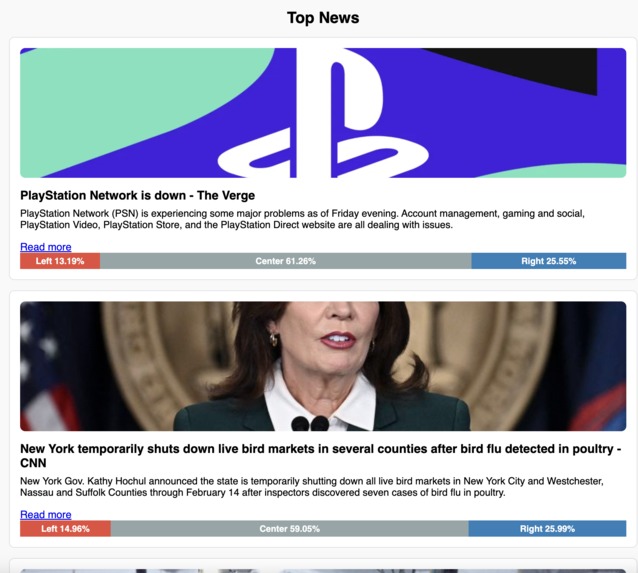
Content/Results from API/AI Model
-

Poli-Bias Logo
-
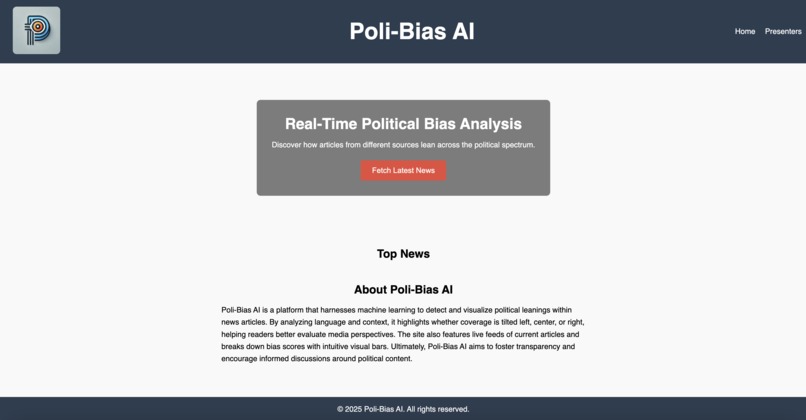
Landing Page
-
-
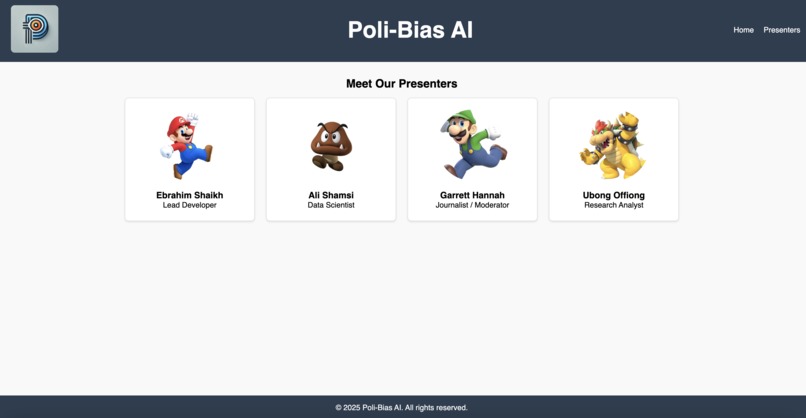

Inspiration
We built Poli-Bias AI after noticing how easily biased coverage shapes public opinion. Our team wanted to create a tool that encourages readers to question headlines, spot potential slants, and engage with news more critically. Seeing friends and family wrestle with echo chambers online pushed us to find a practical solution.
What it Does
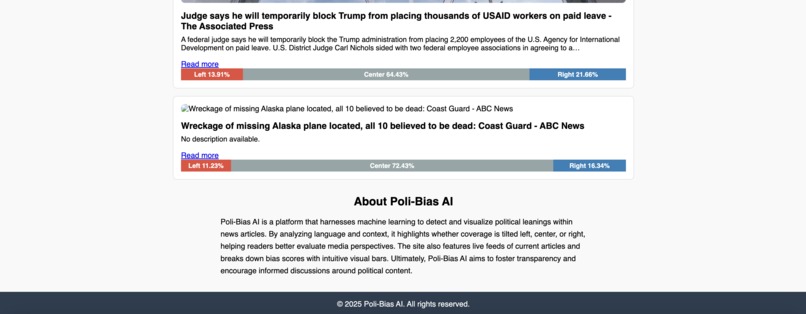
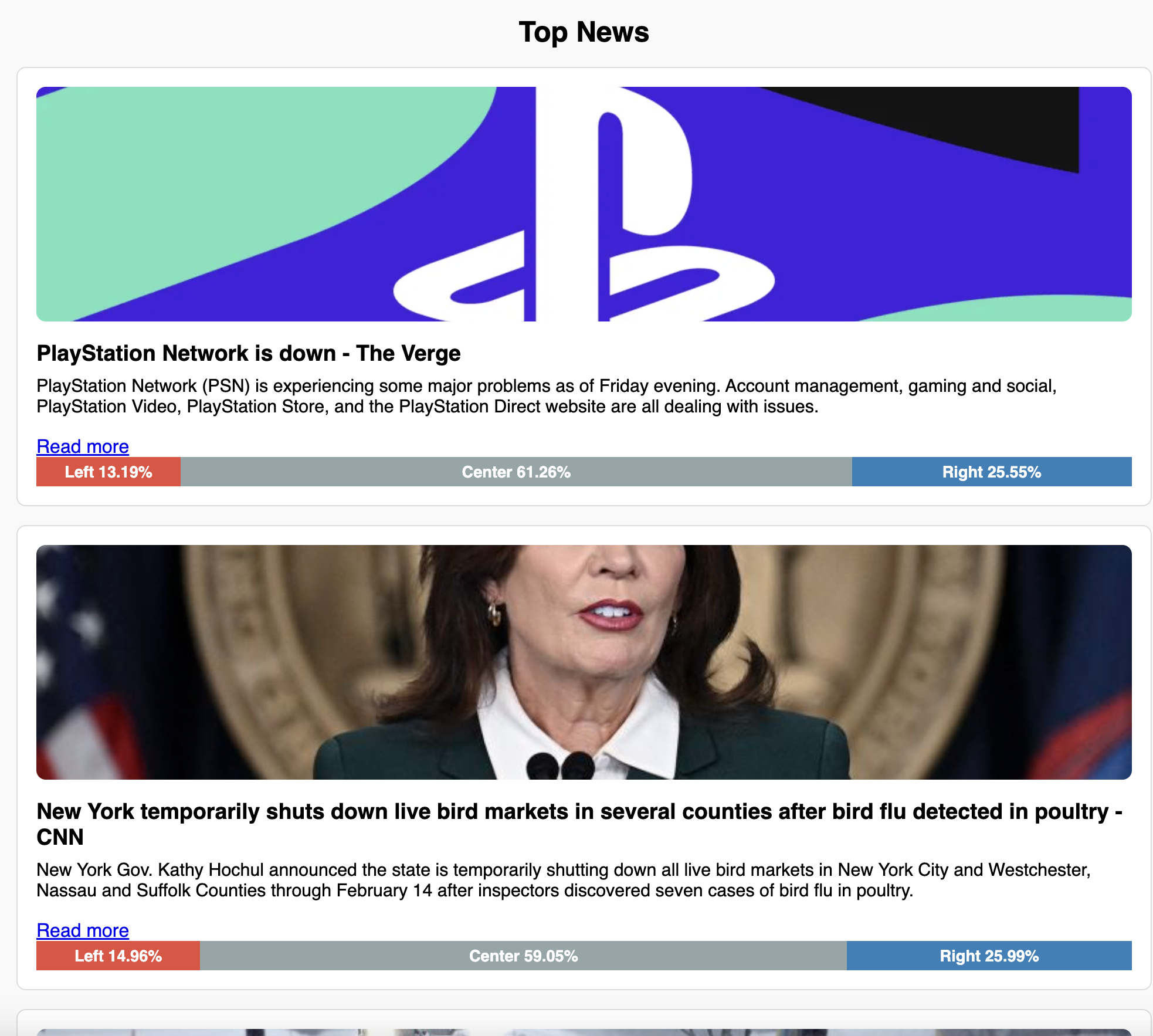
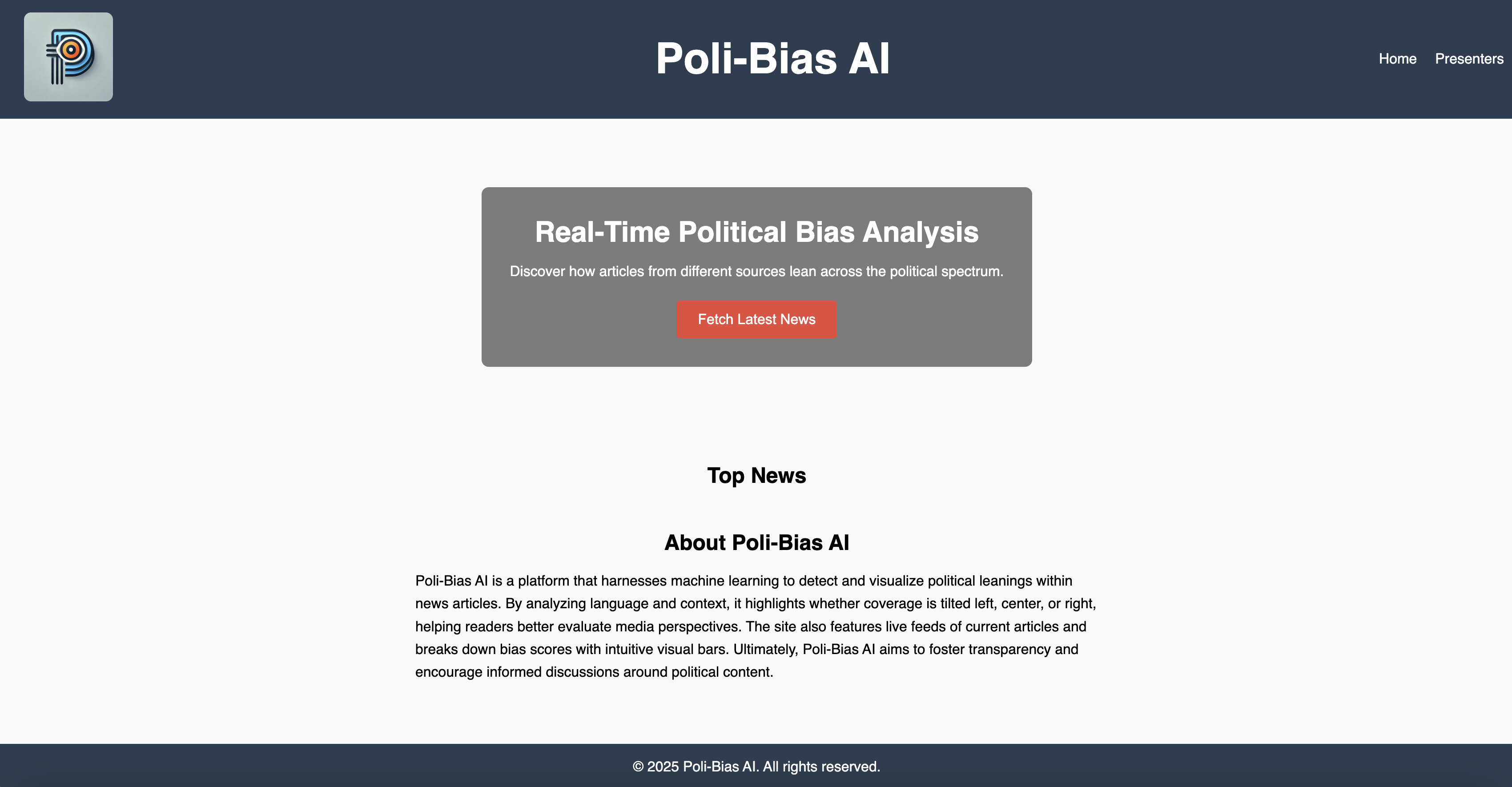
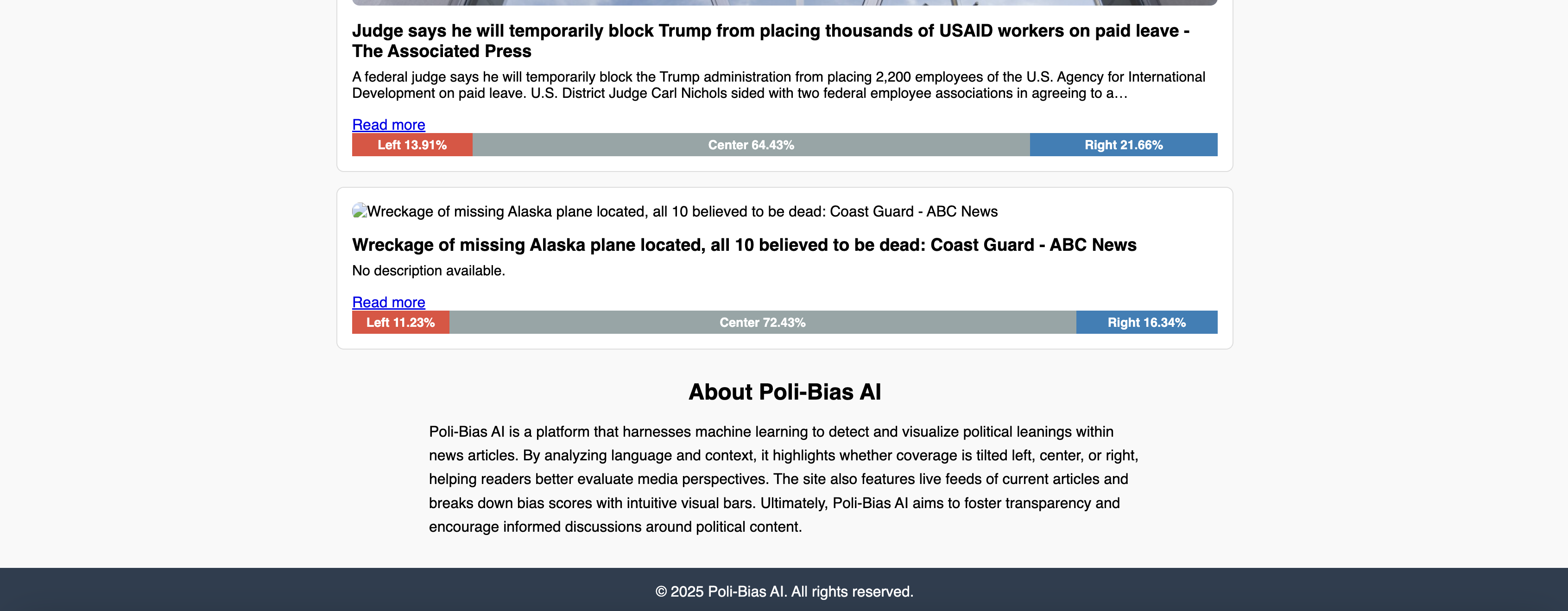
Poli-Bias AI fetches the latest news articles, then uses a zero-shot AI model to classify each piece as left-, center-, or right-leaning. It displays these results in a simple, color-coded bar, helping readers quickly gauge where each headline might stand on the political spectrum.
How We Built It
Flask Backend
- Written in Python to host the
facebook/bart-large-mnlimodel for text classification. - Receives article text from the front end, returns bias distribution as JSON.
- Written in Python to host the
Front End
- Built with HTML, CSS, and JavaScript.
- Fetches headlines via NewsAPI.org, sends them to the backend for bias analysis, and renders the results in intuitive bars.
Zero-Shot Classification
- Leveraged Hugging Face Transformers to perform classification without specialized fine-tuning.
- Carefully experimented with label phrasing ("Left," "Center," "Right") to minimize ambiguous or "Uncertain" outputs.
Challenges We Ran Into
- Model Performance:
bart-large-mnlican be computationally heavy, so we had to optimize the inference process for timely responses. - Label Wording: Small changes in how we named each category significantly affected classification results.
- Ethical Considerations: Recognizing that no model is perfectly unbiased, we remain transparent about the tool's limitations and encourage users to consider the results alongside other sources.
Accomplishments That We're Proud Of
- Successfully integrating a large NLP model into a lightweight Flask service.
- Designing a clean, user-friendly interface that presents bias data at a glance.
- Demonstrating real-time bias breakdowns for multiple articles within one dashboard.
What We Learned
- Zero-Shot Nuances: We learned how label choices can drastically influence the model's classification.
- Team Collaboration: Coordinating data science and web development tasks taught us the importance of clear communication.
- Practical AI Deployment: Hosting a large model in a hackathon environment drove home the need for efficiency and caching strategies.
What's Next for Poli-Bias AI
- Fine-Tuning: Collecting domain-specific data to further improve accuracy.
- Expanded Data Sources: Incorporating more diverse news outlets and potentially other languages.
- User Feedback Loop: Allowing readers to flag misclassifications, feeding that data back into our system for continuous learning.
- Deeper Analysis: Exploring sentiment, author-level bias, and time-based trends to give more nuanced insights into political reporting.


Log in or sign up for Devpost to join the conversation.