-
-
Start
Inspiration
The inspiration for "Polarity" comes from a desire to create a unique and engaging physics-based game that combines strategy and reflex-based gameplay. We aimed to build a game where players could control objects using magnetic forces, making it more interactive and fun. The concept draws on themes of polarity and magnetism, blending simple mechanics with complex challenges that increase in difficulty as players progress.
What it does
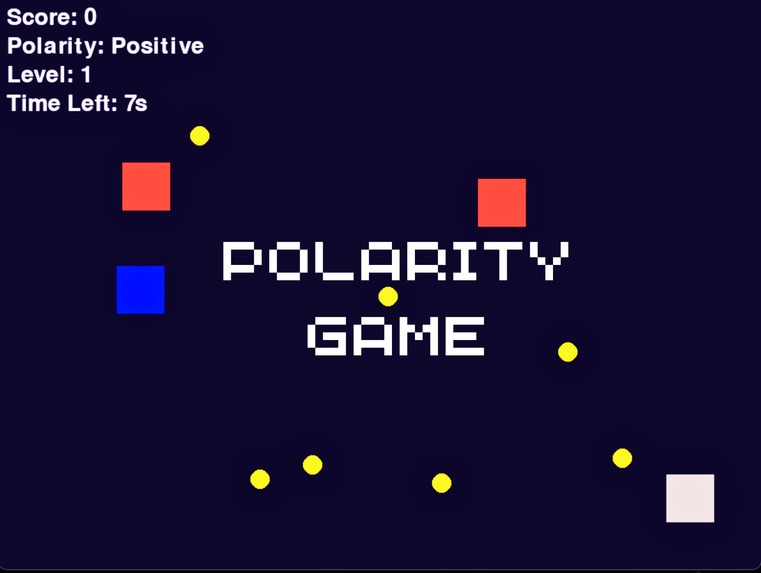
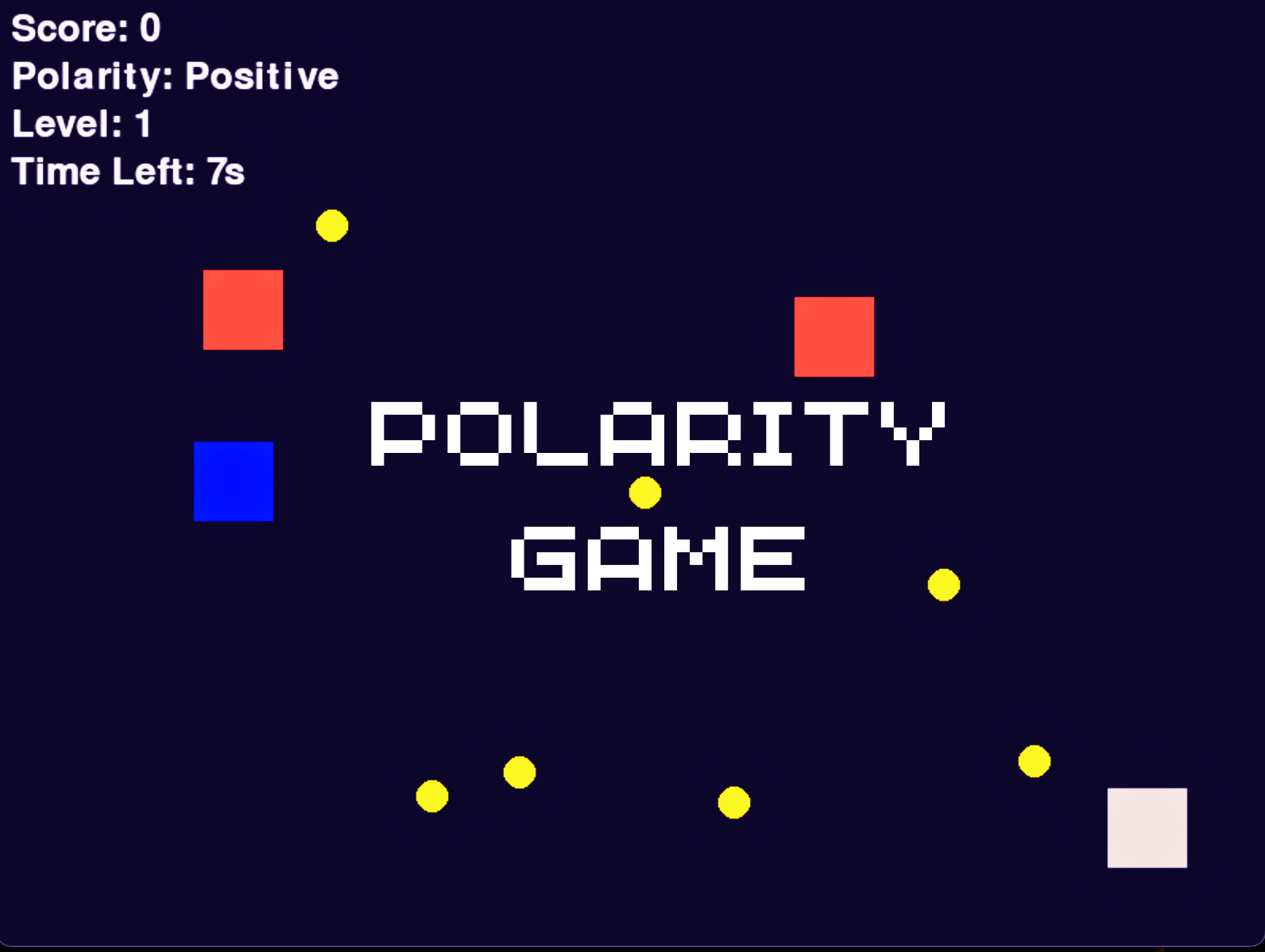
"Polarity" is a dynamic puzzle-platformer where players control a character with the ability to switch between positive and negative polarities. The goal is to navigate through different levels, avoid obstacles, collect items, and solve physics-based challenges. The game features a timer, score system, and various levels of difficulty, all while using the mechanics of magnetic attraction and repulsion.
How we built it
We built "Polarity" using Pygame, a set of Python modules designed for writing video games. The game is structured with a custom physics engine to simulate magnetic forces, a player-controlled character with adjustable polarity, and various interactive elements such as collectibles and magnets. We also integrated background music and sound effects, with assets downloaded from GitHub, to create a more immersive experience. The game was designed to run smoothly with intuitive controls and optimized performance.
Challenges we ran into
One of the main challenges was implementing the magnetism system, which had to simulate realistic attraction and repulsion forces based on polarity. Balancing the game’s difficulty was also tricky, as we wanted to make it accessible to casual players while still offering a challenge for experienced gamers. Additionally, setting up a smooth transition from the main menu to the game and ensuring compatibility across different platforms required troubleshooting and testing.
Accomplishments that we're proud of
We are proud of successfully combining the magnetism mechanic with a game that’s not only fun but also challenging. The physics-based gameplay, paired with intuitive controls, has turned out to be engaging for players. The incorporation of timed levels, sound effects, and progressively difficult challenges has created a well-rounded experience. Additionally, our use of Python and Pygame has allowed us to create a polished game with smooth mechanics and minimal loading times.
What we learned
Through this project, we learned more about game physics, especially related to forces and magnetism. We also gained experience in game development workflows, including designing levels, optimizing performance, and handling user interactions. Additionally, we learned about packaging Python games for distribution, integrating sound effects, and testing across multiple platforms for compatibility.
What's next for Polarity Game
Moving forward, we plan to add more levels with increasing difficulty and new mechanics such as power-ups or enemies. We would also like to implement a multiplayer mode, allowing players to compete or cooperate in solving challenges. There's also potential to refine the UI/UX, making the menu and in-game HUD more polished and user-friendly. We hope to release the game on more platforms and gather user feedback to continue improving the experience.

Log in or sign up for Devpost to join the conversation.