-
-
Home
-
Features
-
-
Inspiration
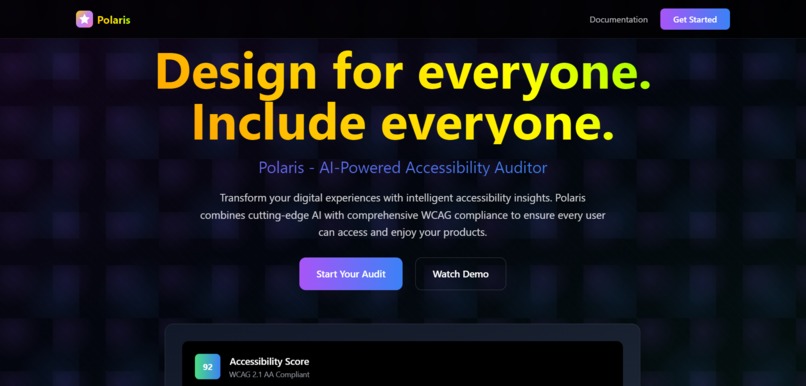
My brother has partial blindness - he can see bright colors but not dull ones. When I tried to make a greeting card he could read, I realized how many design choices exclude people with disabilities. This inspired Polaris to make accessible design the foundation of every creative project.
What it does
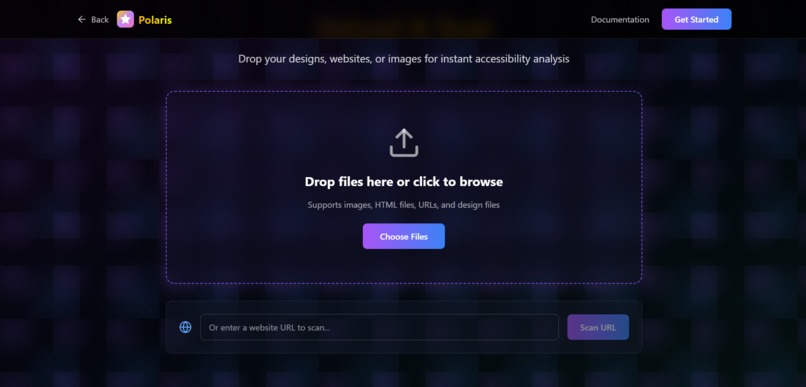
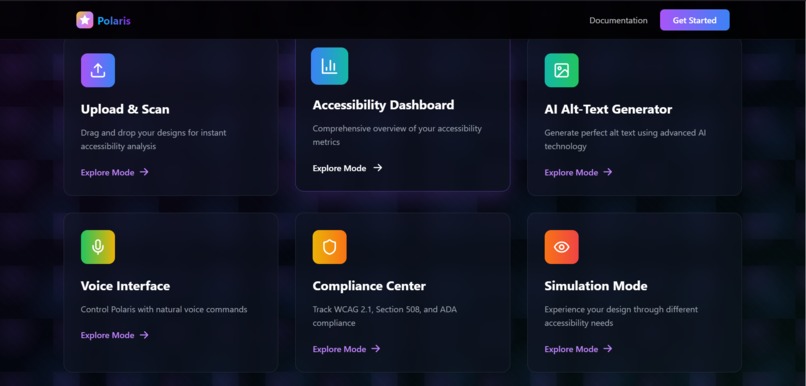
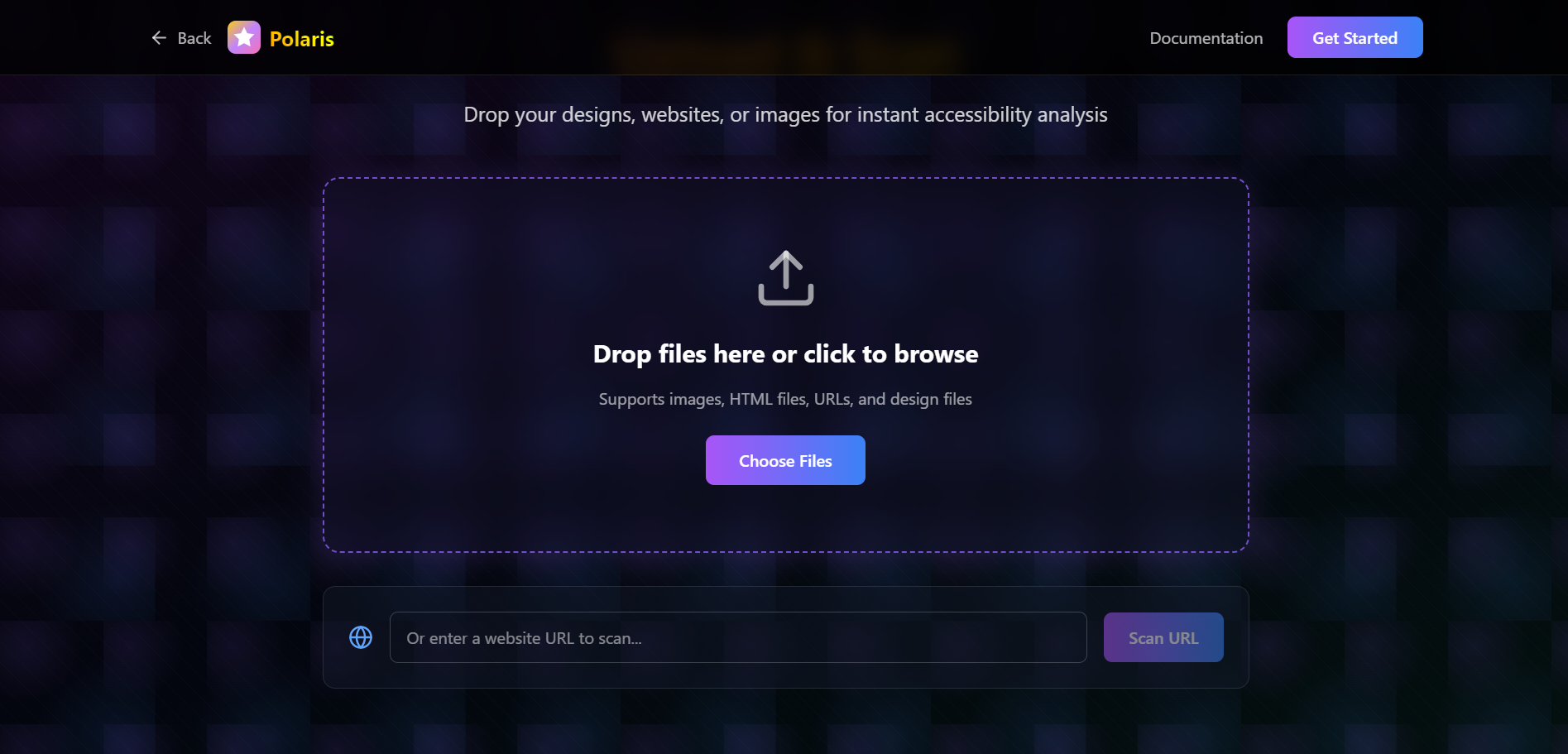
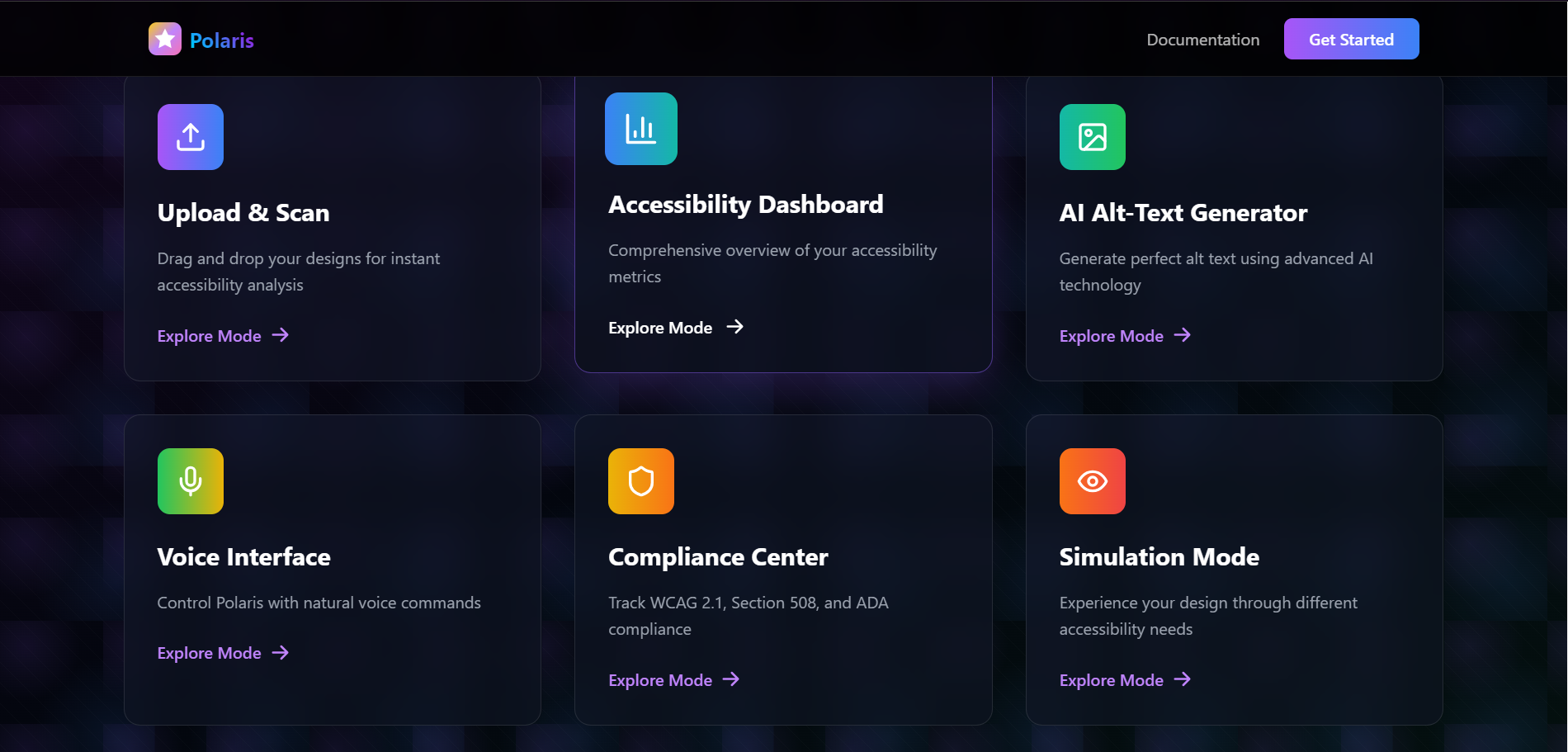
- Real-time accessibility scanning - Checks color contrast, typography, and layout issues instantly
- AI alt-text generation - Creates meaningful descriptions for images automatically
- Disability simulation modes - Lets designers experience their work from different perspectives
- Voice-to-design commands - Enables users with motor impairments to create through speech
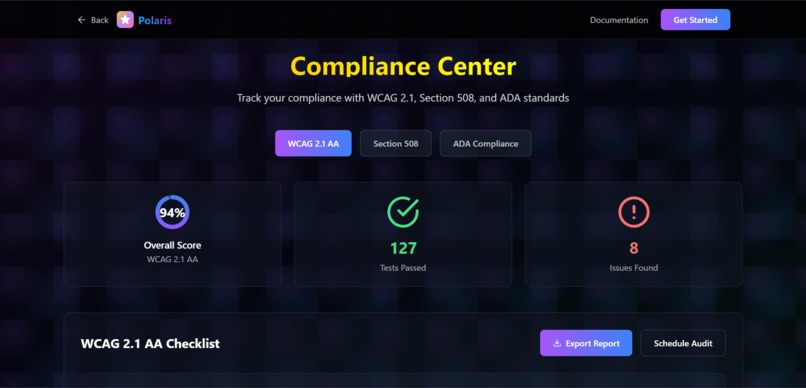
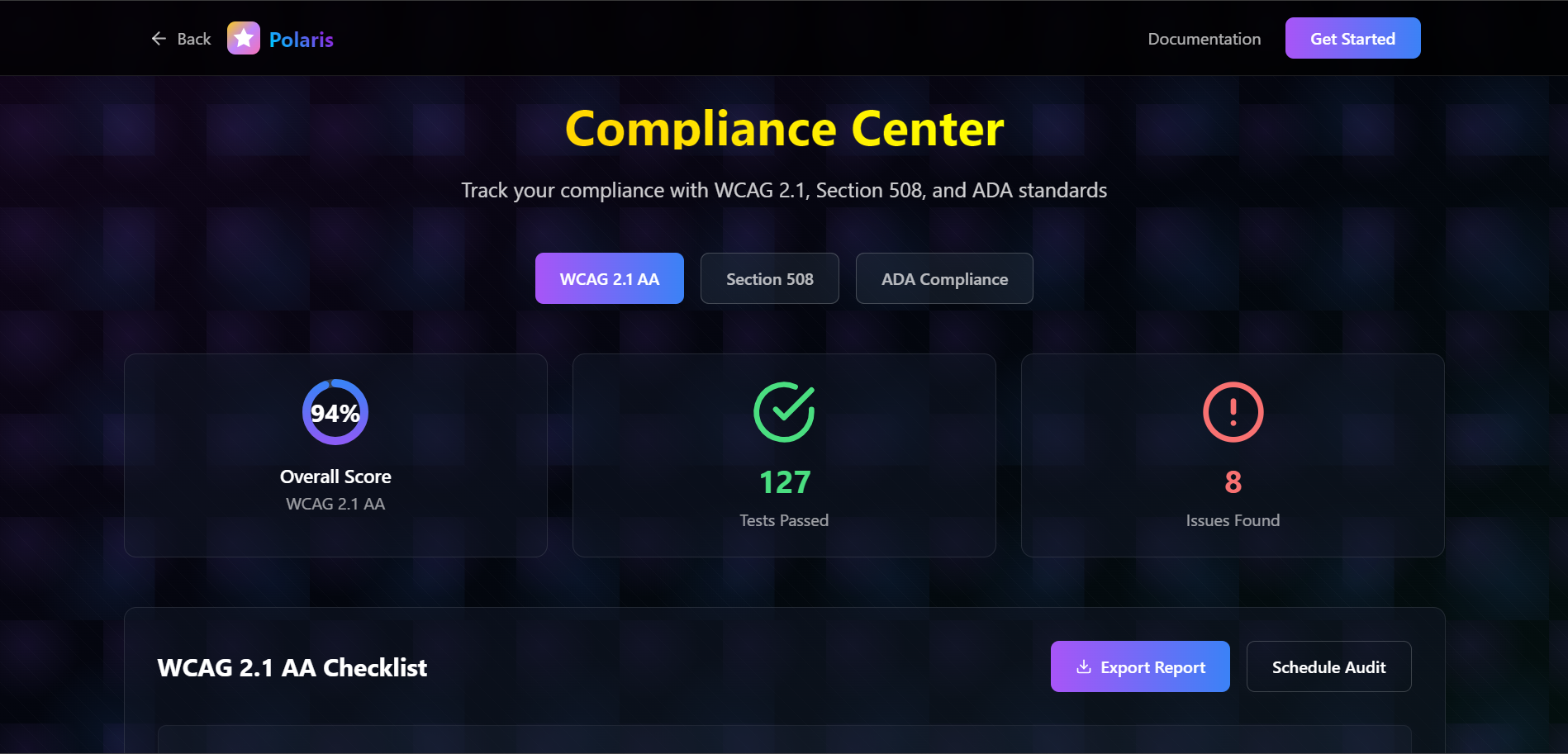
- Compliance dashboard - Generates legal reports for ADA/WCAG requirements
- Community impact tracker - Shows how many people with disabilities can access your designs
How we built it
- Built frontend using emergent AI technologies for intelligent interface adaptation
- Integrated computer vision APIs for color contrast analysis
- Used natural language processing APIs for content evaluation
- Implemented machine learning models for layout optimization
- Connected speech recognition APIs for voice commands
- Integrated haptic feedback APIs for visual impairment support
Challenges we ran into
- Balancing technical compliance with genuine usability for disabled users
- Maintaining real-time performance while processing multiple visual elements
- Creating accurate disability simulations without oversimplification
- Integrating multiple APIs while keeping the user experience seamless
Accomplishments that we're proud of
- Created a deeply personal tool that bridges designers and users like my brother
- Transformed legal compliance into creative inspiration
- Built something that makes digital content accessible to millions
- Developed a platform that changes how designers think about inclusivity
What we learned
- Accessibility enhances creativity rather than limiting it
- Personal experiences drive the most impactful technology solutions
- AI can educate designers about disability experiences
- Compliance and creativity work together when accessibility is built from the start
What's next for Polaris
- Scale to reach more designers and organizations
- Partner with disability advocacy groups for user-centered development
- Develop predictive AI models for accessibility issues
- Create comprehensive training resources for inclusive design
- Make accessible design the industry standard
Built With
- axecore
- color.js
- css3
- html5
- javascript
- node.js
- openai
- react
- wcag
- webapi


Log in or sign up for Devpost to join the conversation.