Inspiration
My mother runs a small business, and for as long as I can remember her decisions have been made on the fly: restock when the shelf looks empty, run a promo when sales feel slow, cut costs when the bank balance looks scary. She works incredibly hard, but there's never been anyone to tell her which problem to fix first.
After finishing SPM (high school), I started helping her manage the business, and I kept seeing the same thing: the answers were already in her own numbers (her sales, her receipts, her stock). Nobody had time to read them. Small business owners are never taught how to make decisions or how to grow; they learn by trial and error, often expensive error.
Most small business owners don't lack effort. They lack direction. I had the skills to do something about that, so I built Polaris, a North Star for small businesses.
What it does
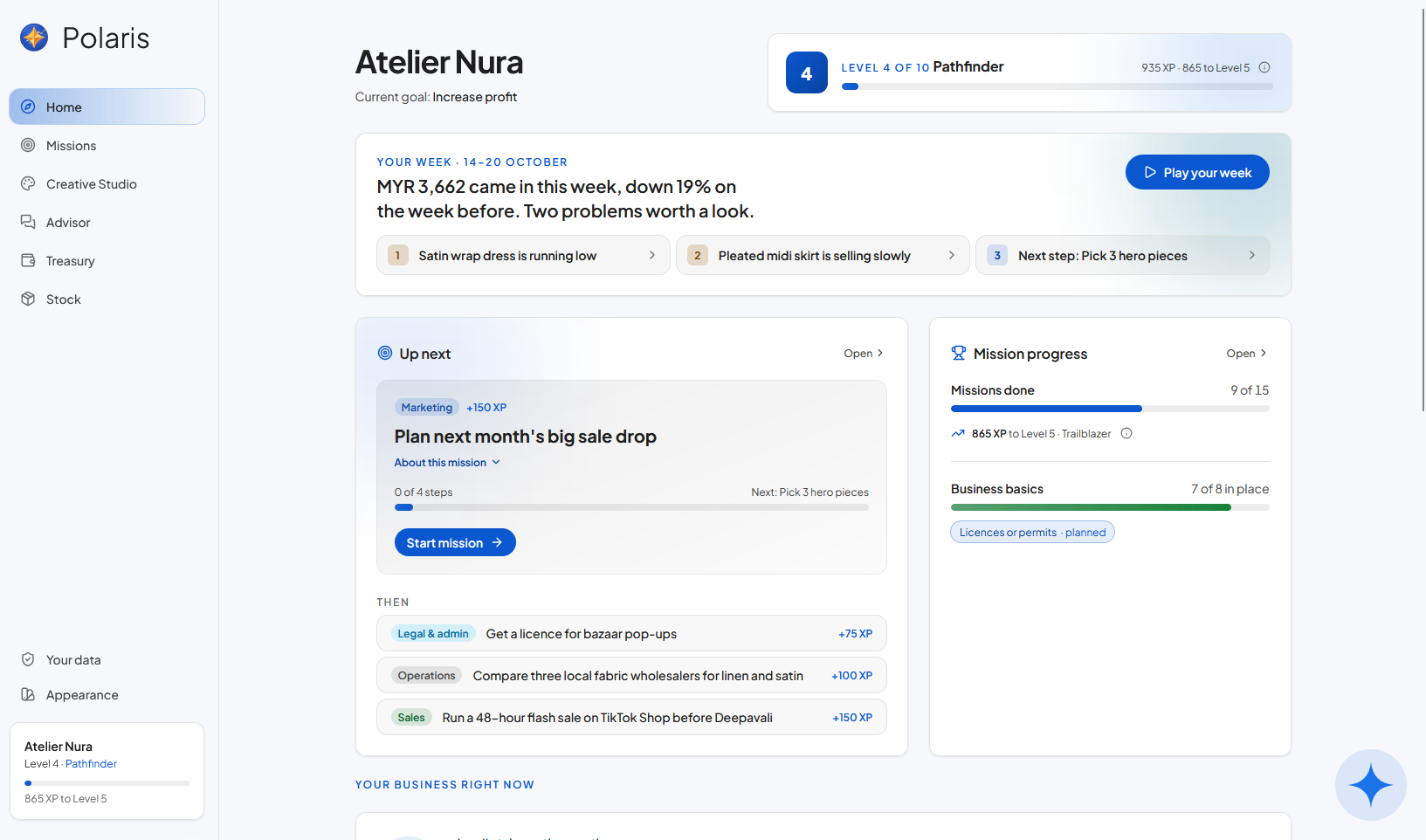
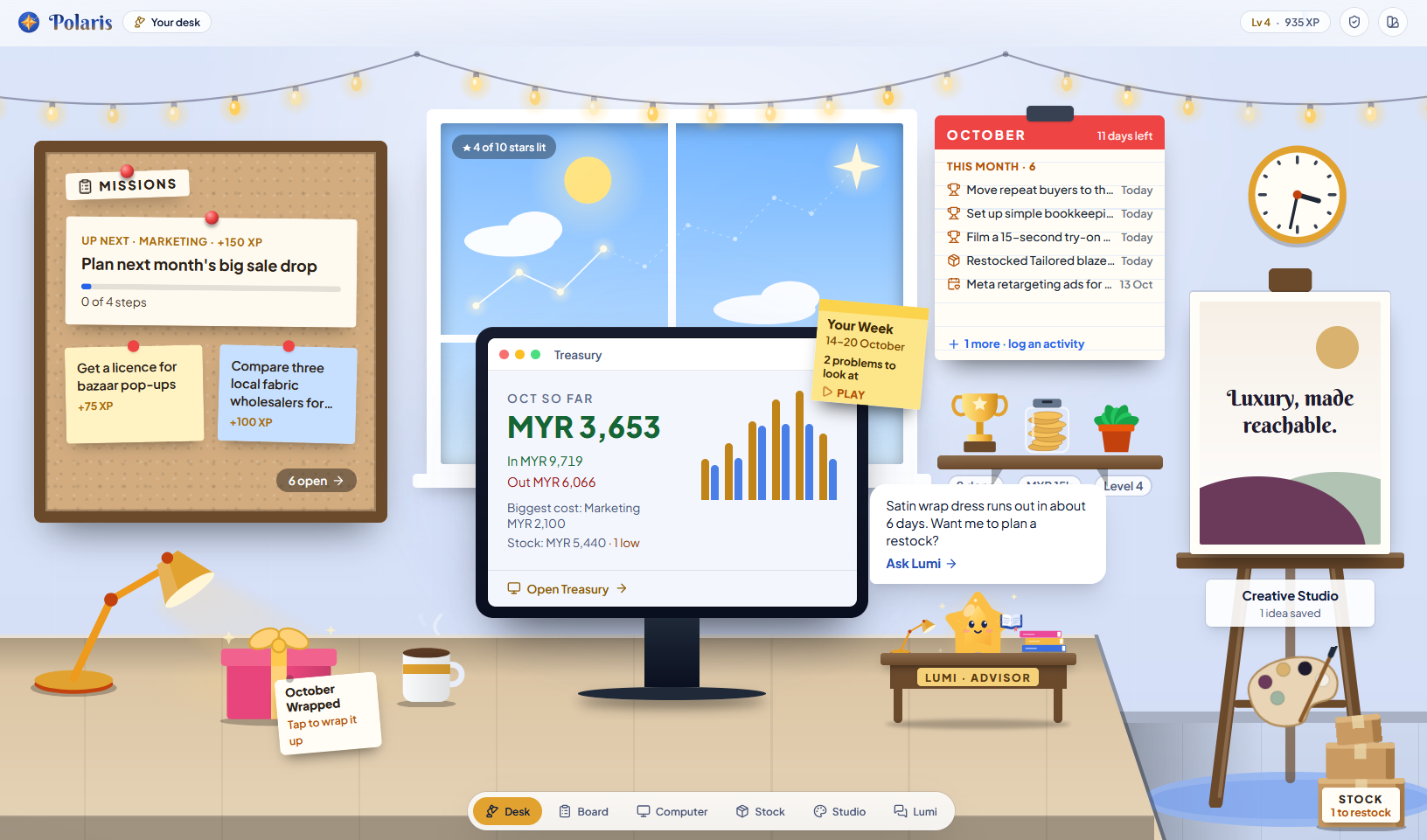
Polaris reads a shop's own sales, costs and stock, shows the few problems that matter this week, and helps the owner act on them. The owner always decides; Polaris shows the numbers, explains them, and offers options.
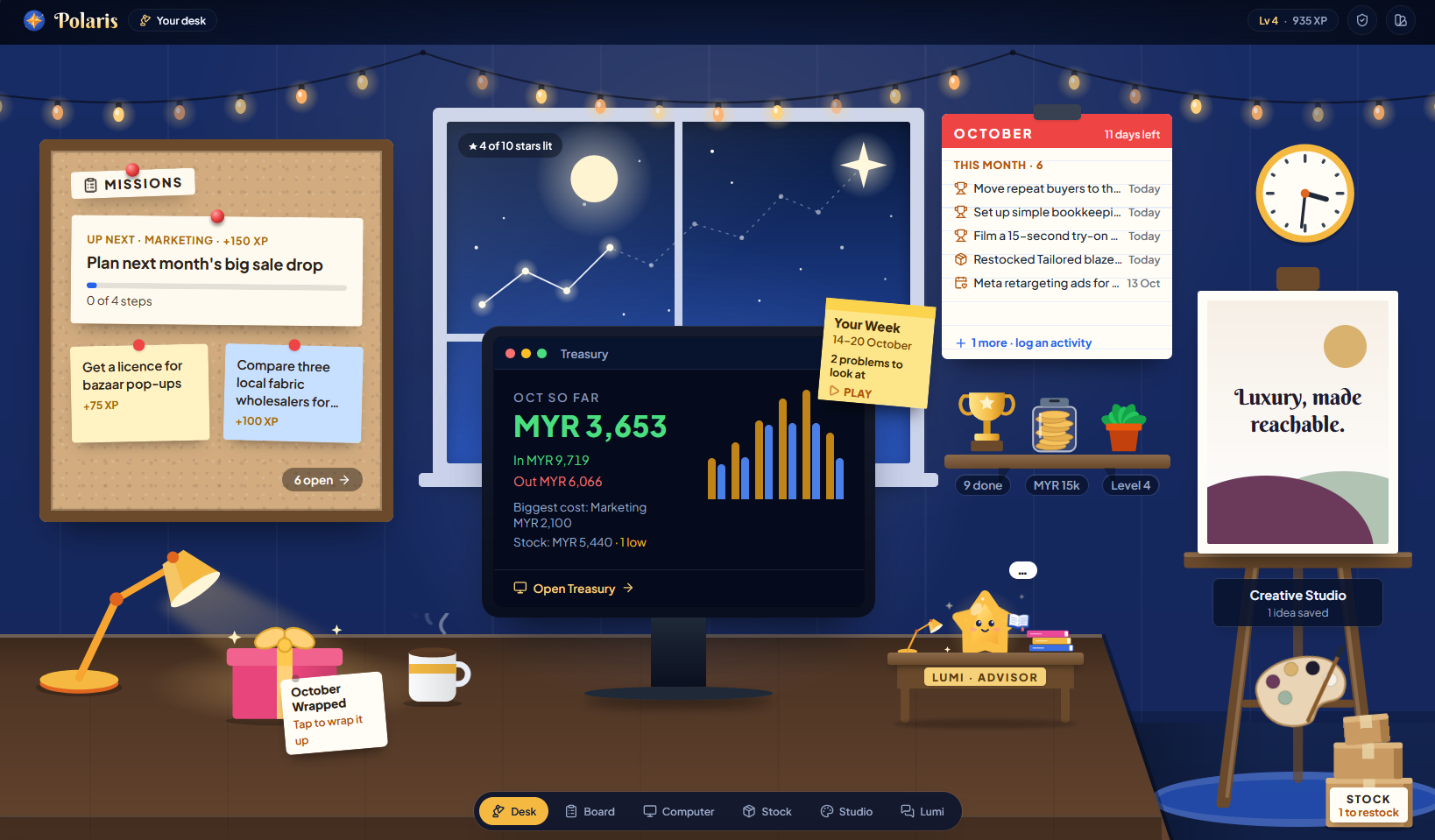
- Your Week: a short story of the week: money in and out, the best seller, and the top problems, each with what it's costing and some options.
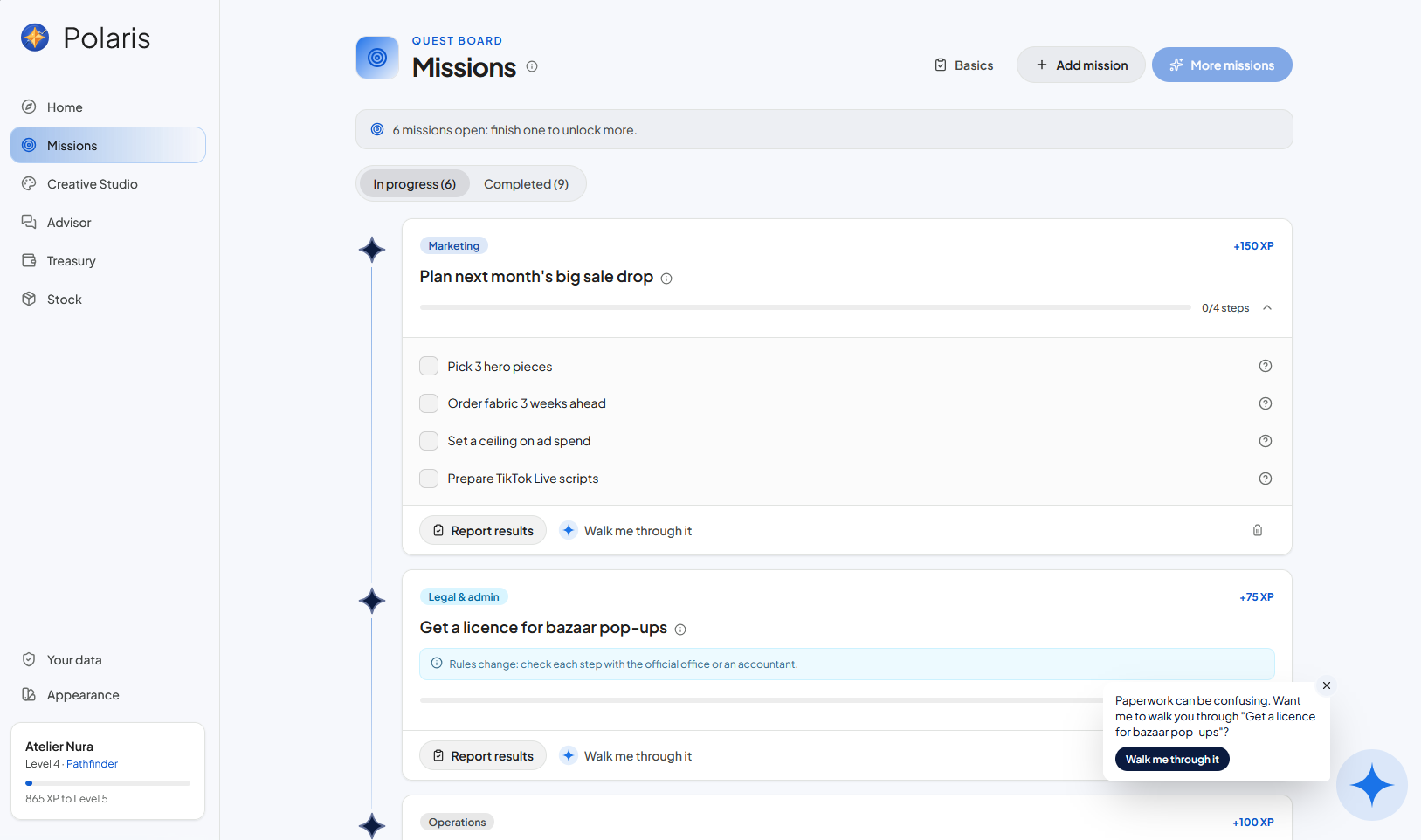
- Missions: problems become small, step-by-step plans with XP and levels. When the owner reports back, the AI checks the work was really done.
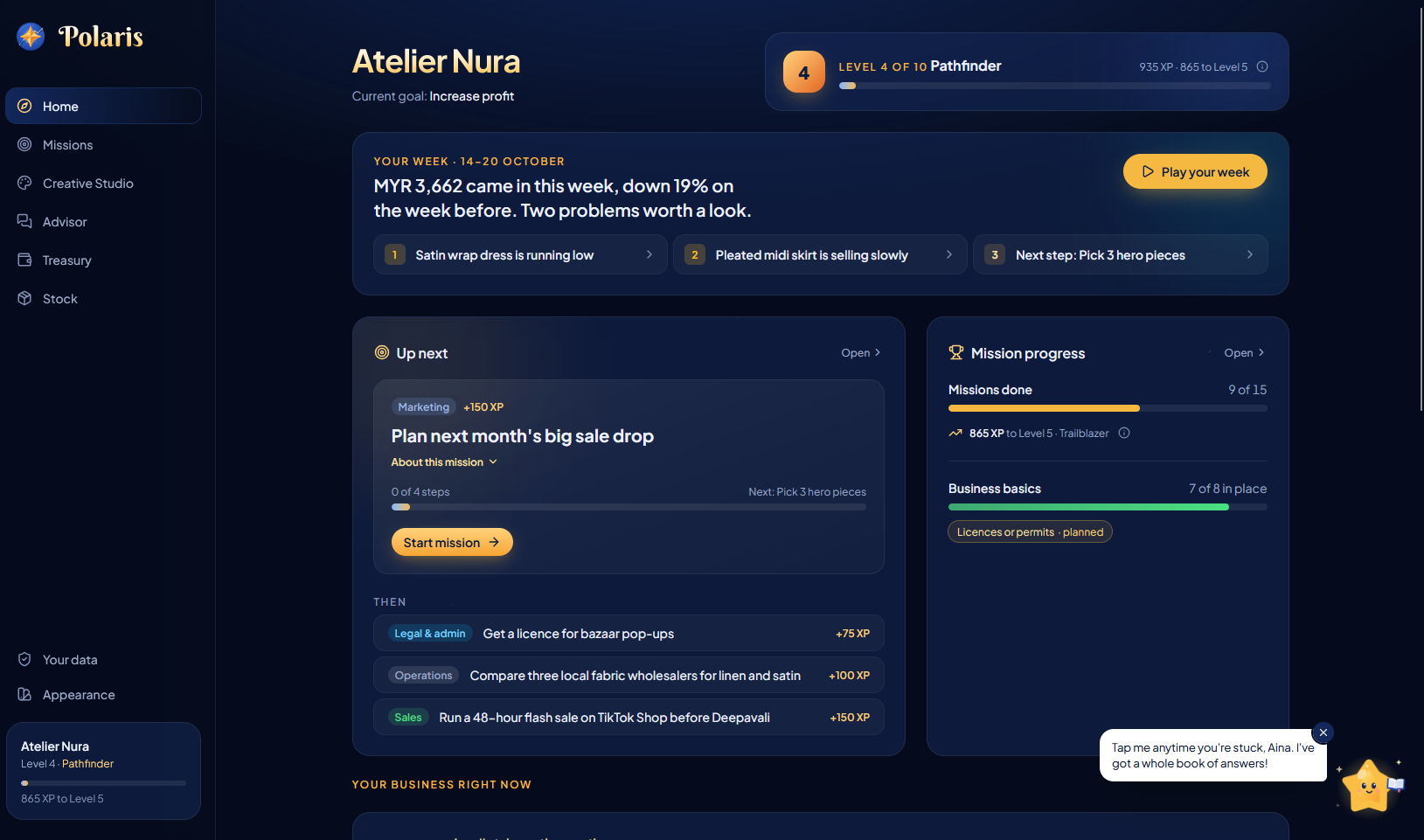
- Lumi, the AI guide: a chat that answers using the shop's real margins and stock, and turns advice into a mission in one tap.
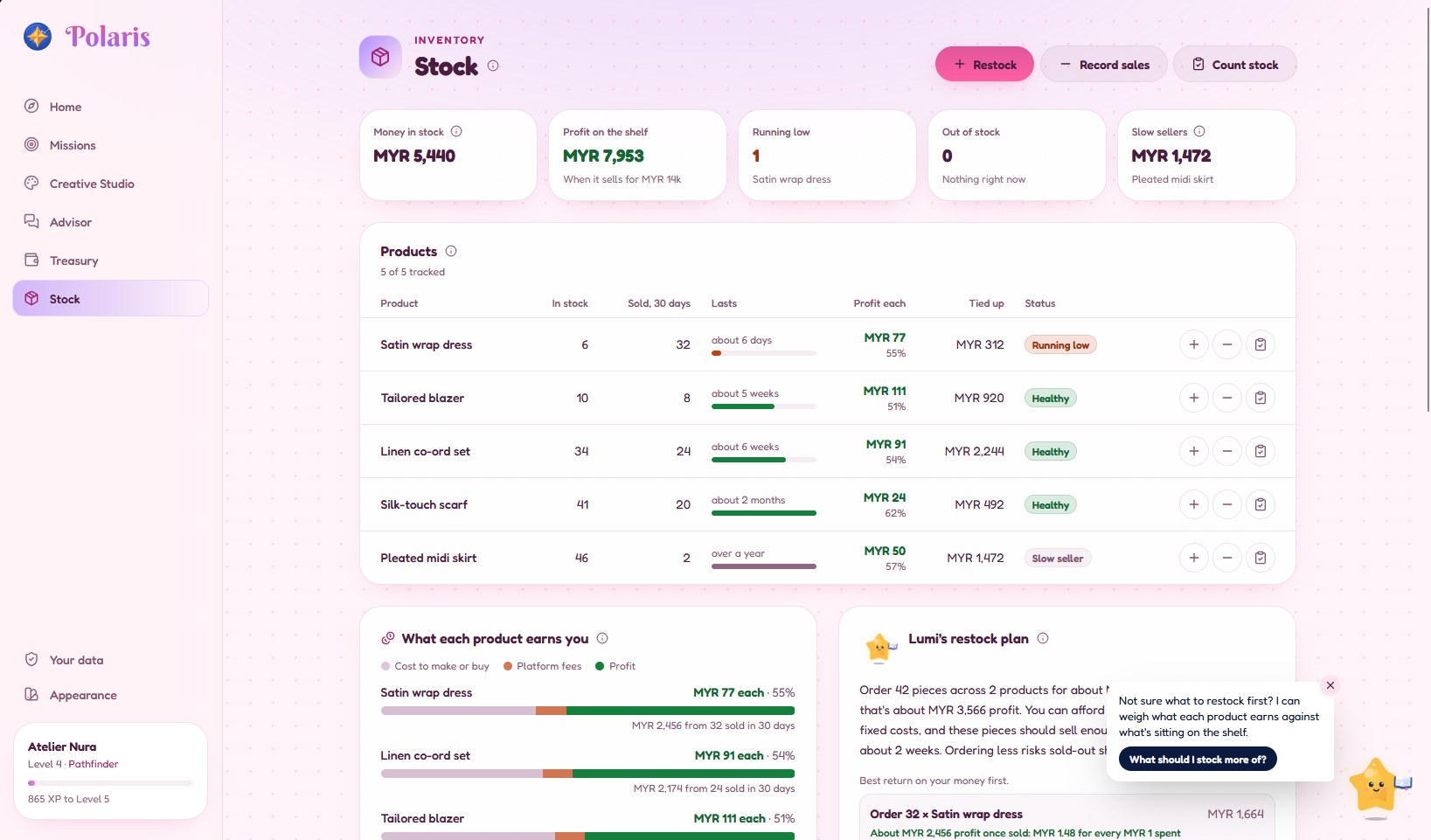
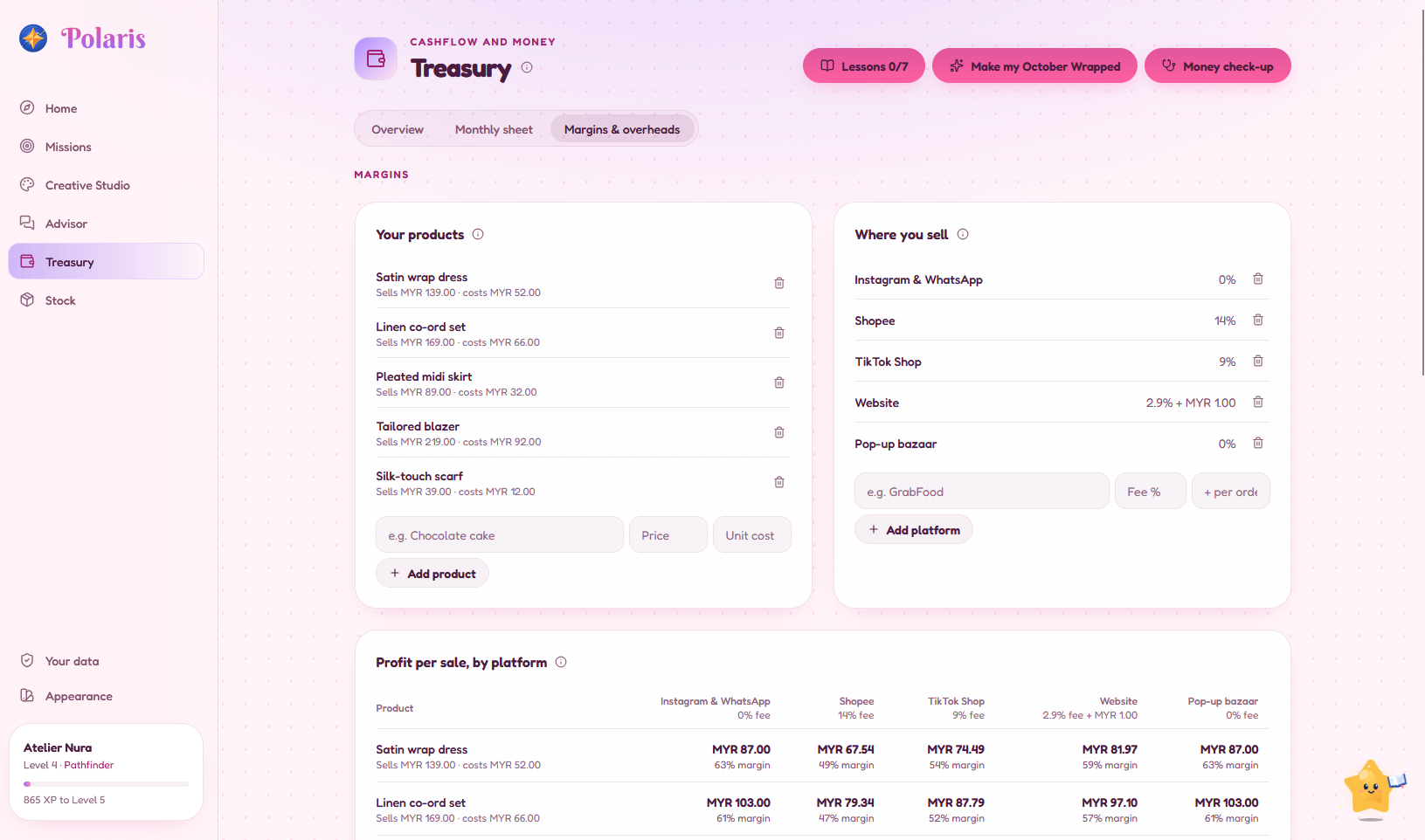
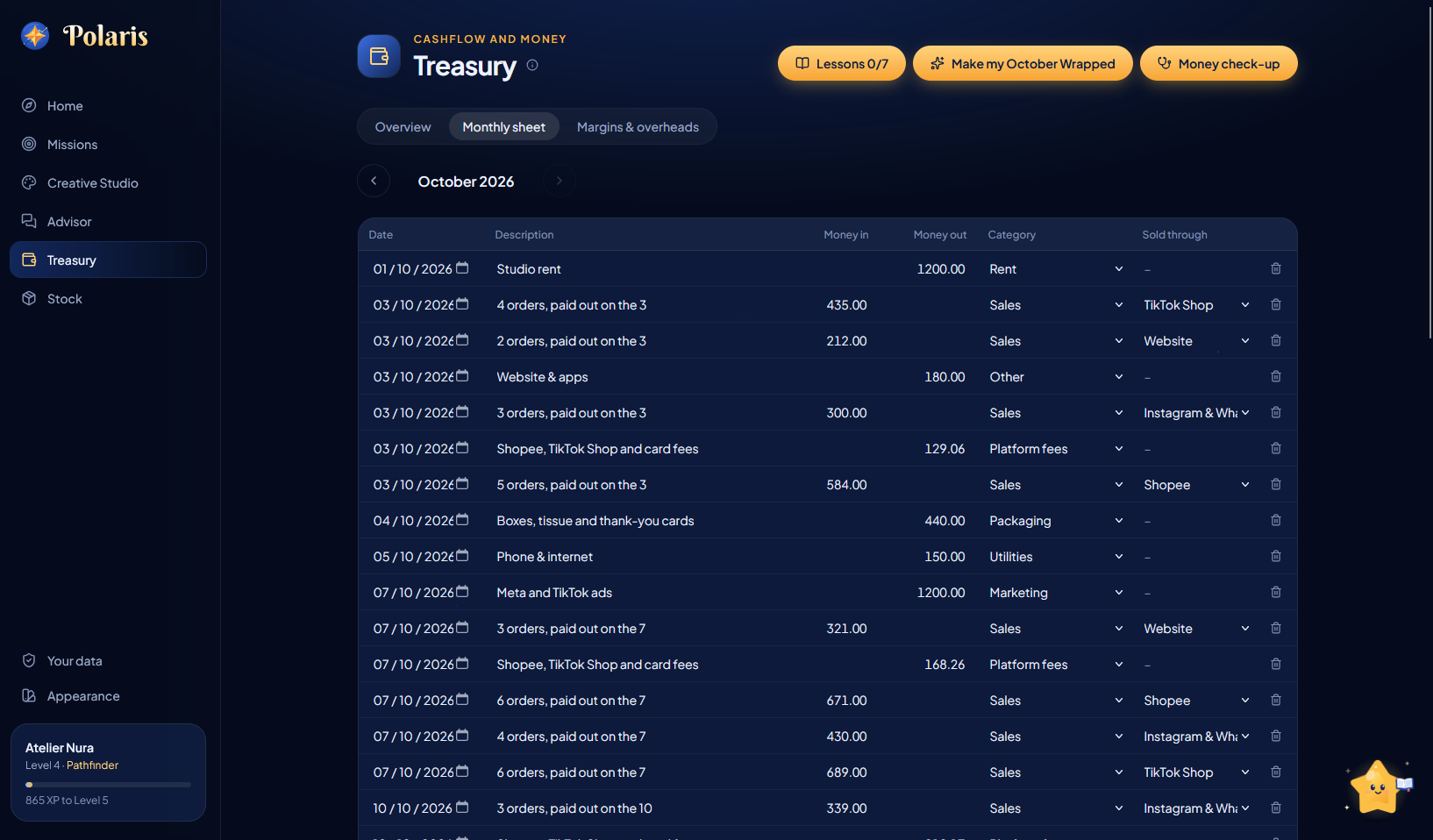
- Treasury & Stock: cash flow, margins after platform fees, cash runway, what's running low or selling slowly, and a restock plan that fits the cash the shop actually has.
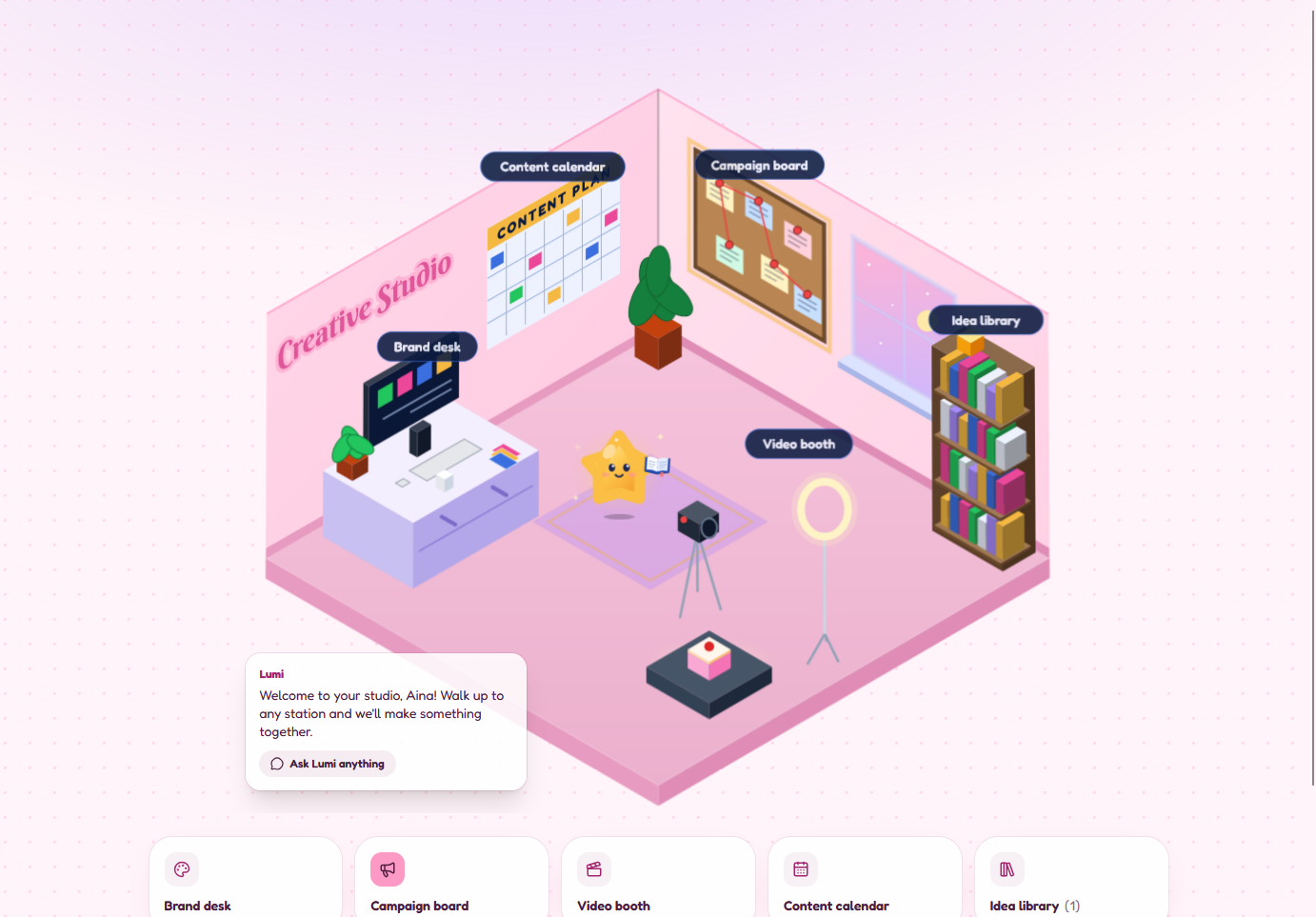
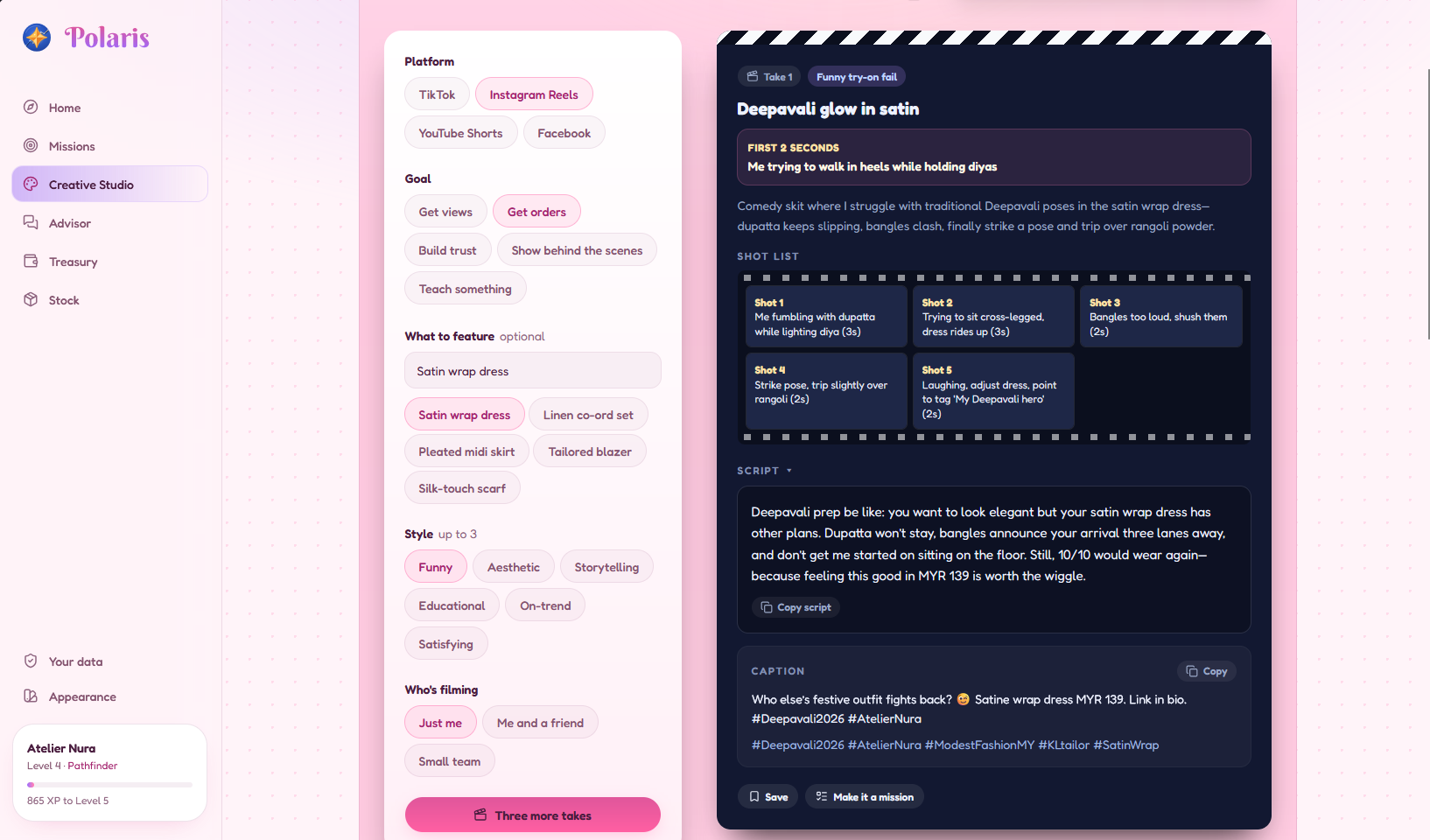
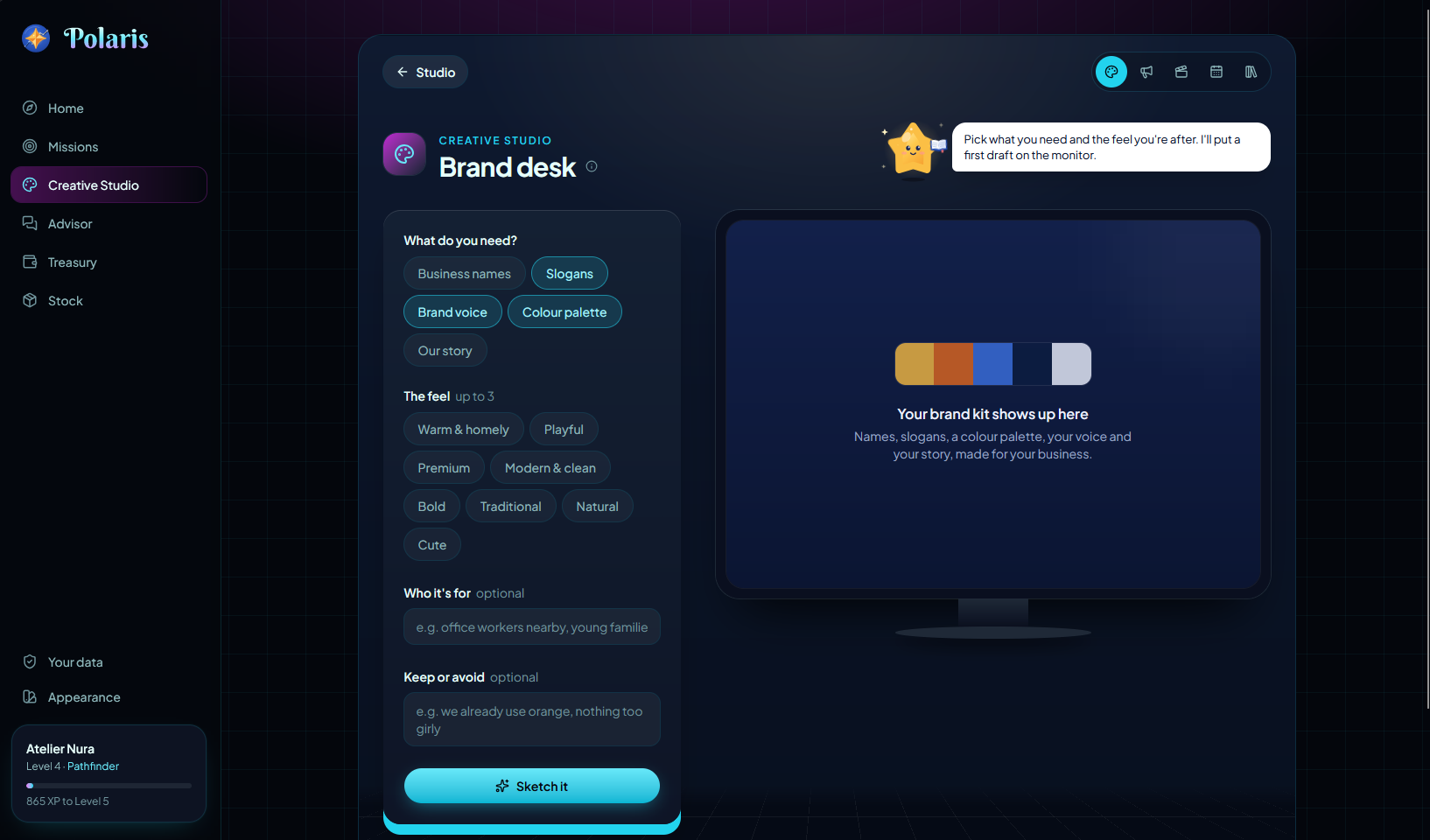
- Creative Studio: brand kits, campaign plans, content calendars and video storyboards for when an opportunity comes up.
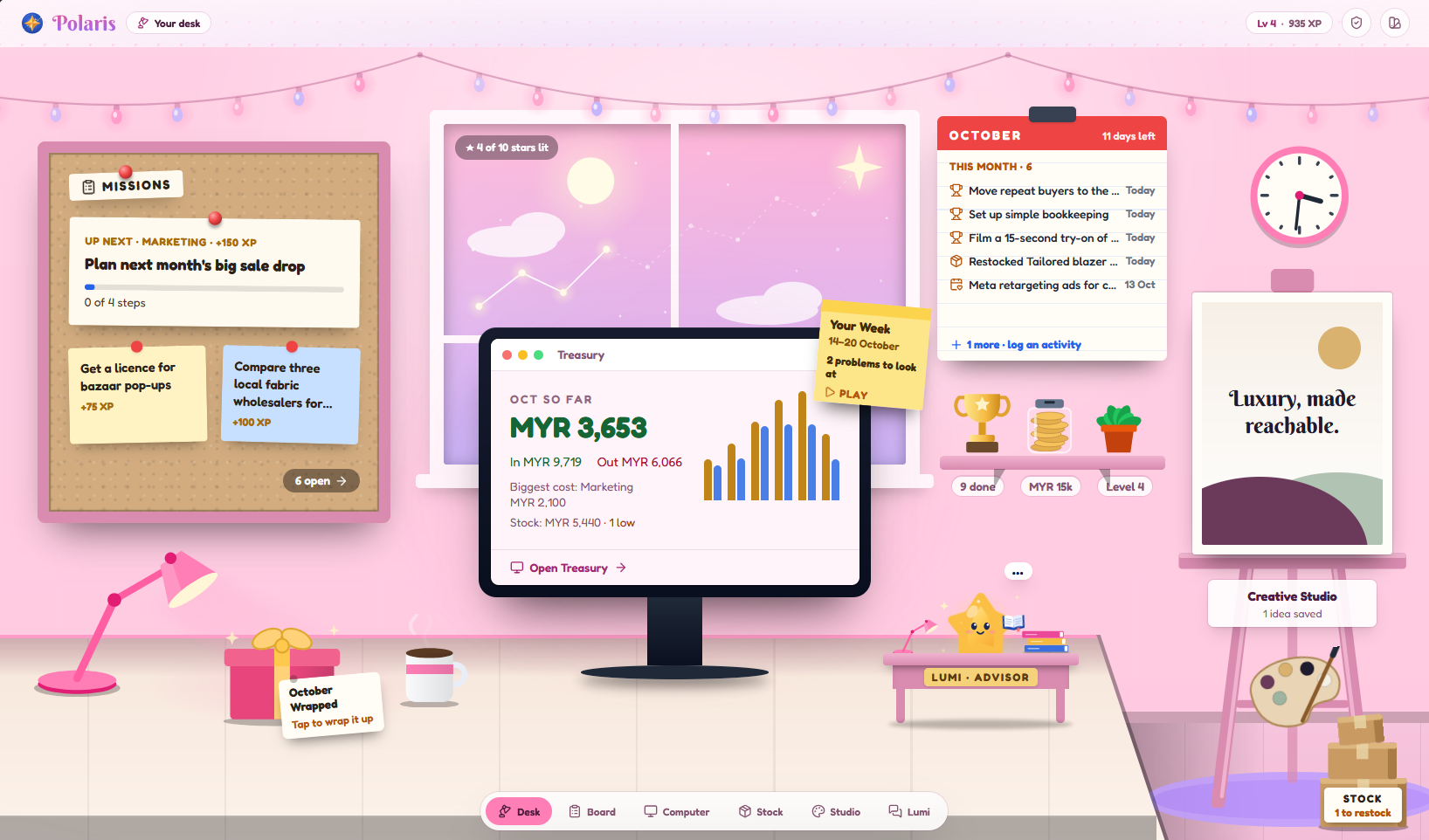
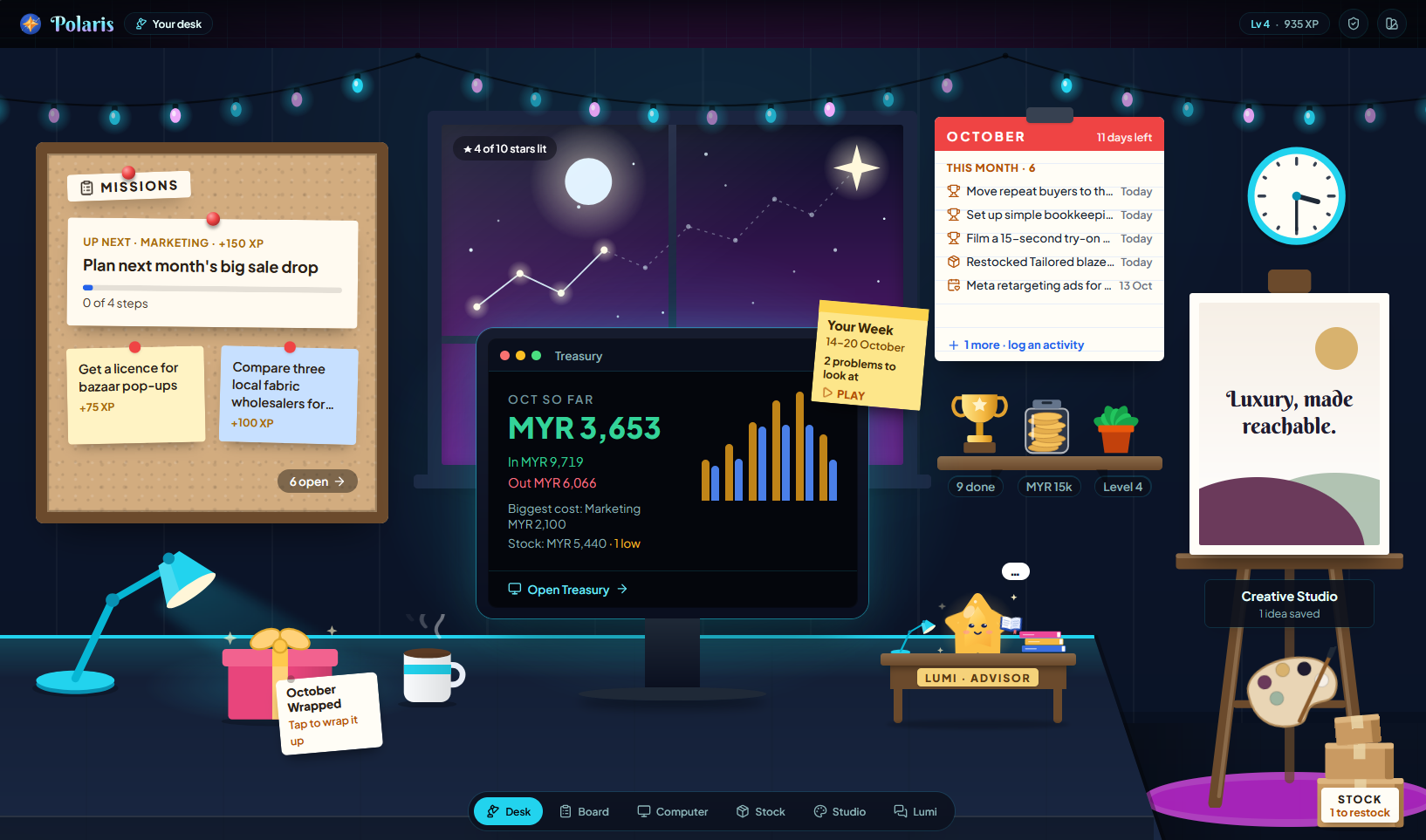
- Yours to customise: five themes, light and dark, and either a classic dashboard or an interactive desk "world".
How we built it
Polaris is a Next.js 16 app written in TypeScript with Tailwind CSS 4, deployed on Vercel. The shop's data stays in the owner's browser; there are no accounts and no database.
Every AI feature runs on NVIDIA Nemotron through Nebius Token Factory, using the OpenAI-compatible API, so the whole integration is one small server-only file. Each job gets the model it needs:
- Nemotron 3 Super, reasoning off: chat, missions, mission reviews, the Creative Studio and restock plans. These are fast, everyday calls; turning reasoning off roughly halved the wait (about 10 s to 5 s for a five-mission plan).
- Nemotron 3 Ultra, reasoning on: the deep Money check-up and the monthly "Month Wrapped" report.
- Gemma 3 27B: only to read photos of bank statements, since Token Factory has no NVIDIA vision model. Nemotron then sorts the rows into categories.
The most important design rule is numbers come from code, words come from the model. Every figure is computed in TypeScript and handed to Nemotron as a fact. For example, profit per unit after a platform's fees, for price p, unit cost c, commission f% and fixed fee f₀:
$$ \text{profit} = p - c - \left(\frac{f}{100}\,p + f_0\right) $$
How long stock lasts uses the recent selling pace, where s₃₀ is units sold in the last 30 days and d is days on record (at least 7, so a few days of sales don't give a wild pace):
$$ \text{days left} = \frac{\text{stock on hand}}{s_{30} / d} $$
And cash runway, when the shop is losing money, uses the average monthly loss over the last three months:
$$ \text{runway (months)} = \frac{\text{cash in the bank}}{\text{average monthly loss}} $$
The model's job is to explain these numbers and suggest options, never to invent them.
Challenges we ran into
Time, and a lot of it. Polaris was built in two weeks. I wanted it to be a complete experience, not a demo that falls apart when you click the wrong button, so many nights I stayed up until morning making sure every page, every flow and every edge case actually worked. Huge thanks to my loyal tea for keeping me awake through all of it. ☕
Learning everything at once. I didn't come into this as an experienced developer. In those two weeks I had to learn the whole craft: how a modern web app is structured, UI/UX design, animations that feel smooth instead of distracting, version control, deploying to the web, keeping an API key safe, and hunting down bugs I didn't even know could exist. Every feature meant learning something new first, then building it, then finding out what I'd got wrong.
Making it something people can trust. Underneath the late nights were some hard problems:
- The AI making up numbers. Early on, the model would confidently quote figures that weren't in the data. For someone making real money decisions, that's dangerous, so I built the whole app around one rule: numbers come from code, words come from the model.
- Keeping missions honest. If XP is free, people just click "done". So Nemotron checks each report against the mission and says "Almost there" when the answers don't add up.
- Proving the advice actually helps. My first simulated market treated all stock as one pile, which hid the restocking mistakes Polaris is meant to catch, so I rebuilt it to track each product.
- The holes you only find by using it. Full walkthroughs kept turning up surprises: brand-new products flagged as "slow sellers", the app guessing US dollars for Malaysian users, and advice slipping past the mission limit. Each one meant rethinking the rule, not just patching it.
Accomplishments that we're proud of
- A complete, working app in two weeks, live at polaris-jade-ten.vercel.app, with nine AI features and a demo business anyone can load.
- Evidence the advice works. I simulated a fashion shop for six months against the same market, with Nemotron playing the owner: once following Polaris, once on autopilot. Polaris came out ahead in all four runs:
| Run | Profit following Polaris | Profit on autopilot |
|---|---|---|
| 1 | RM 11.5K | −RM 154 |
| 2 | RM 16.3K | RM 262 |
| 3 | RM 1,396 | −RM 4,982 |
| 4 | RM 14.3K | RM 6,427 |
In the latest run, following Polaris made about 2.2× the profit (RM 14.3K vs RM 6,427).
- Advice you can trust: every number is exact because it's computed in code, and the AI reviews reports instead of handing out free XP.
- Built with care for the owner's data: no accounts, data stays in the browser, the API key never leaves the server, AI routes are rate-limited, and card numbers in uploaded statements are blanked before anything reaches the model.
- An app that feels like yours: five themes, light and dark, and an interactive desk world where each part of the app is a room.
What we learned
I learned what it takes to build an app from start to finish: planning features, committing and pushing, deploying, and many sleepless nights of debugging. I studied UI/UX design and animation so the app would feel calm and friendly rather than like a spreadsheet, and I learned to hunt for the holes in my own work instead of assuming it was finished.
I also learned how to work with AI, not just call it. Claude helped me enormously as a coding partner, and building on Nemotron taught me where language models shine (explaining, planning, writing) and where they need guardrails (numbers).
Most of all, I learned that the hard part isn't the code. It's making something a busy owner like my mother would actually open on a Tuesday night and trust.
What's next for Polaris
- Testing Polaris with real small businesses, starting with my mother's.
- Expanding to use other languages to make it more inclusive
- Optional sync between devices, for owners who run the shop from both phone and laptop.
Built With
- exceljs
- gemma
- lucide
- nebius
- nemotron
- next.js
- node.js
- openaisdk
- react
- react-markdown
- sonner
- tailwind
- typescript
- unpdf
- vercel
- zustand
