-
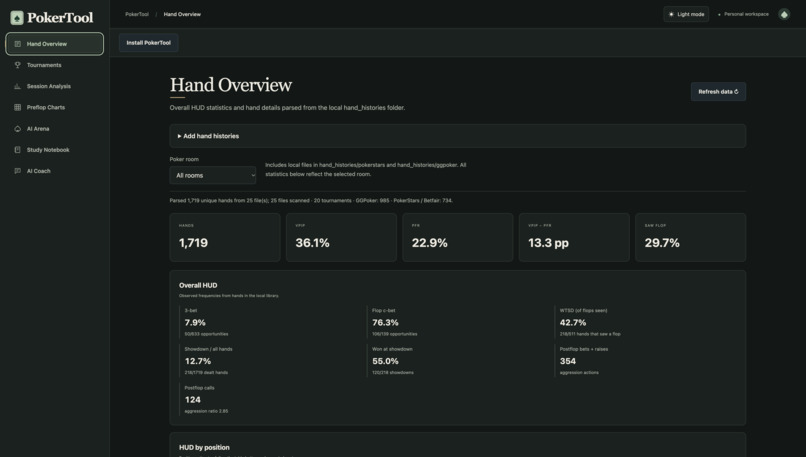
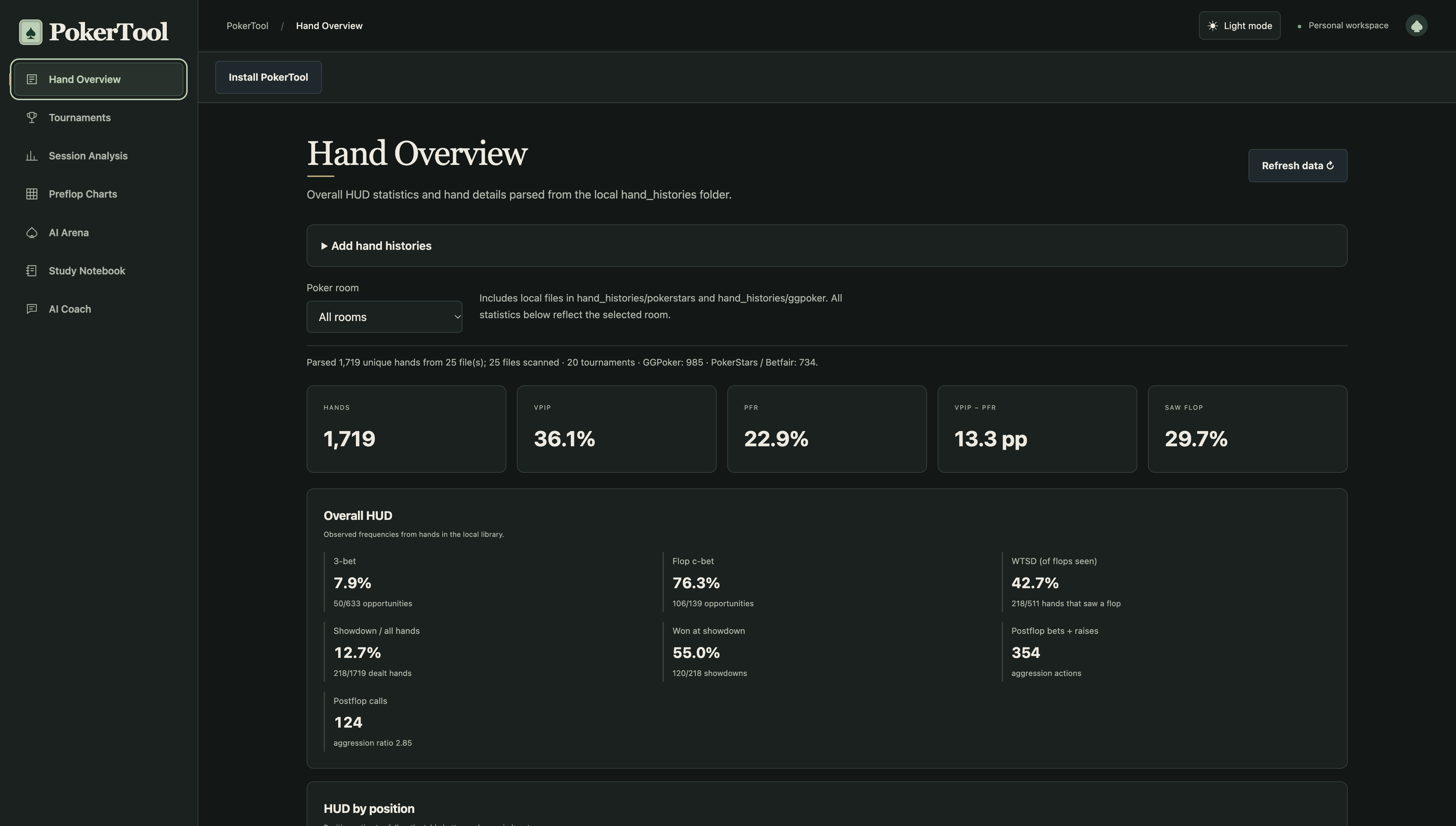
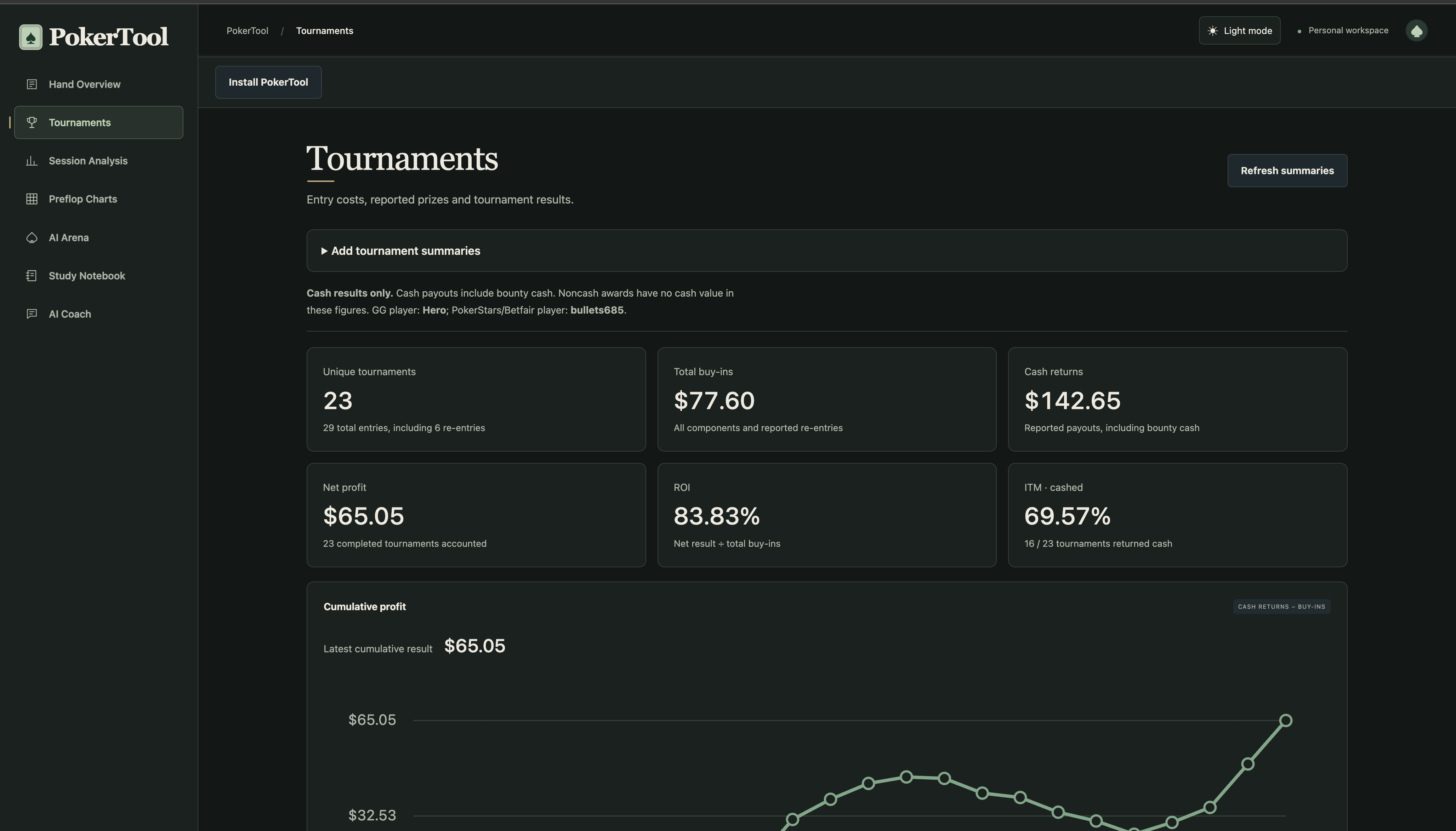
Home Page - Handoverview
-
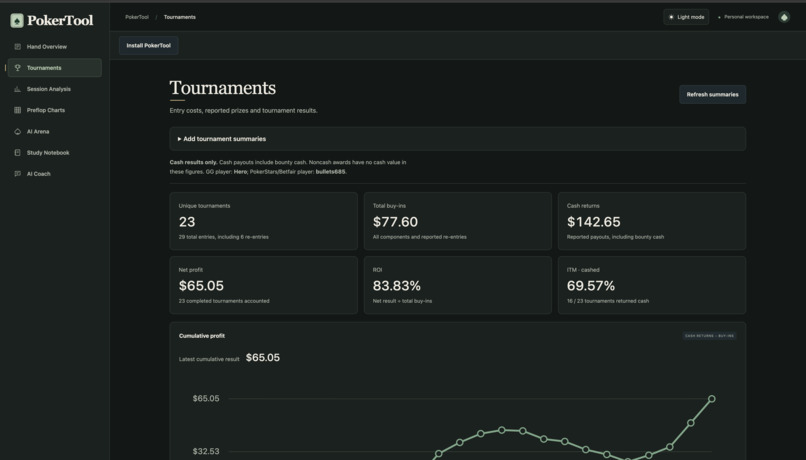
Tournament Page
-
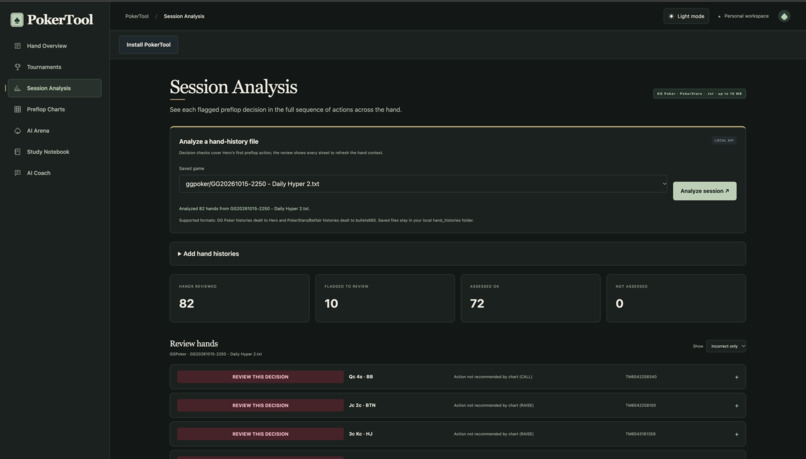
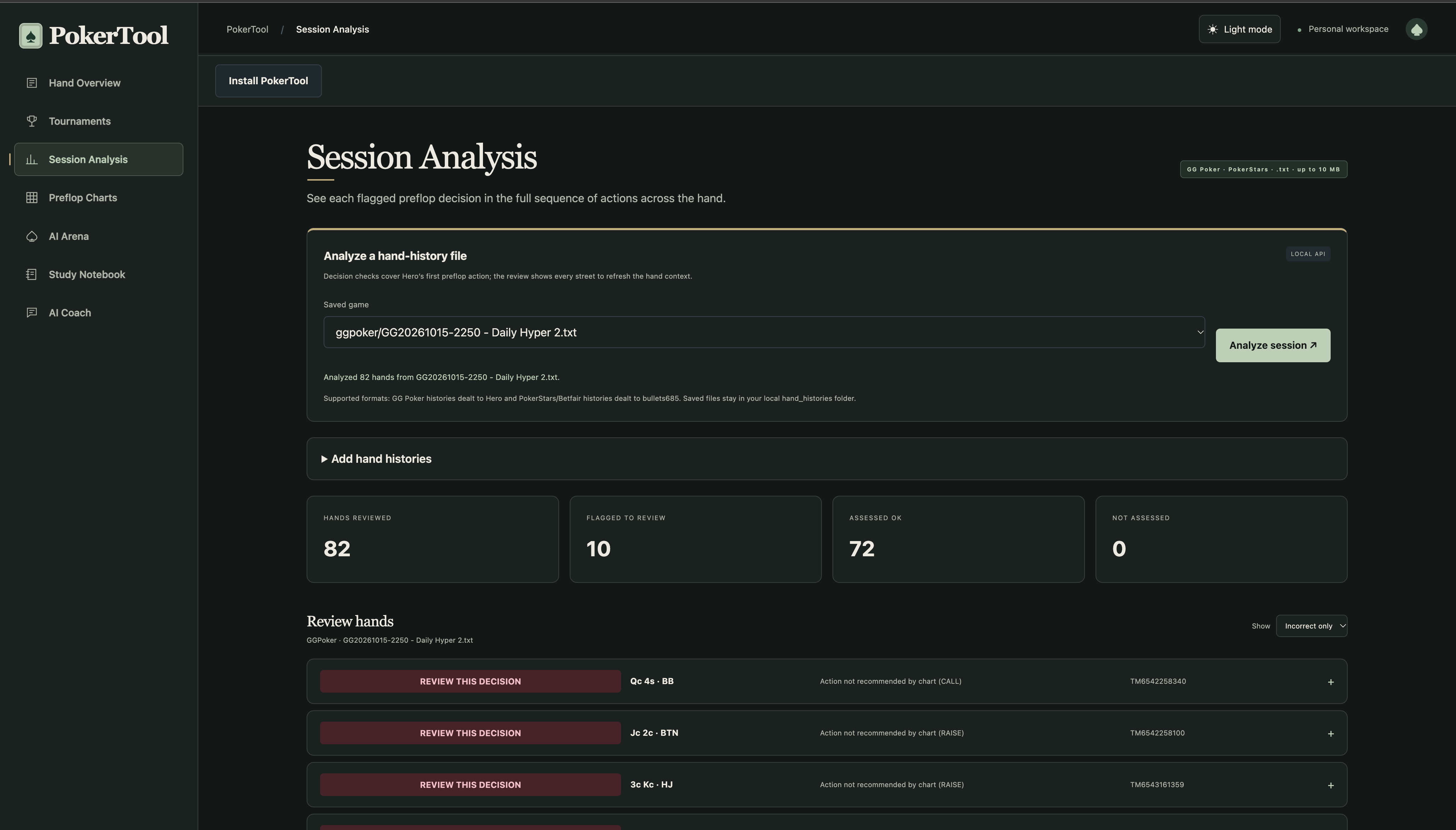
Session Analysis Page
-
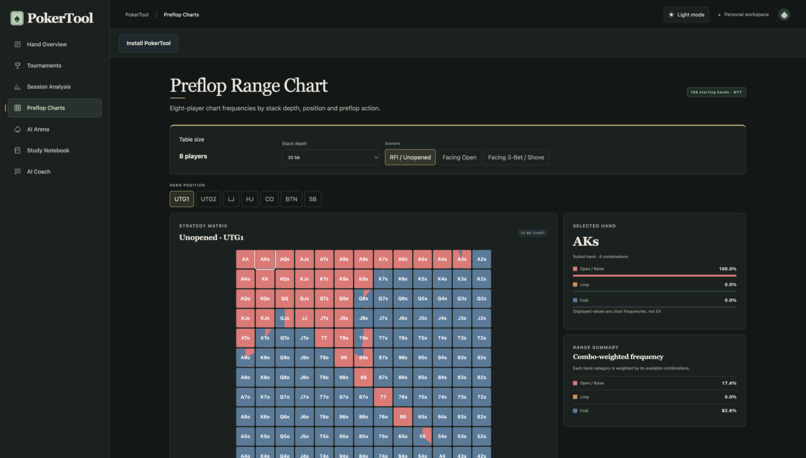
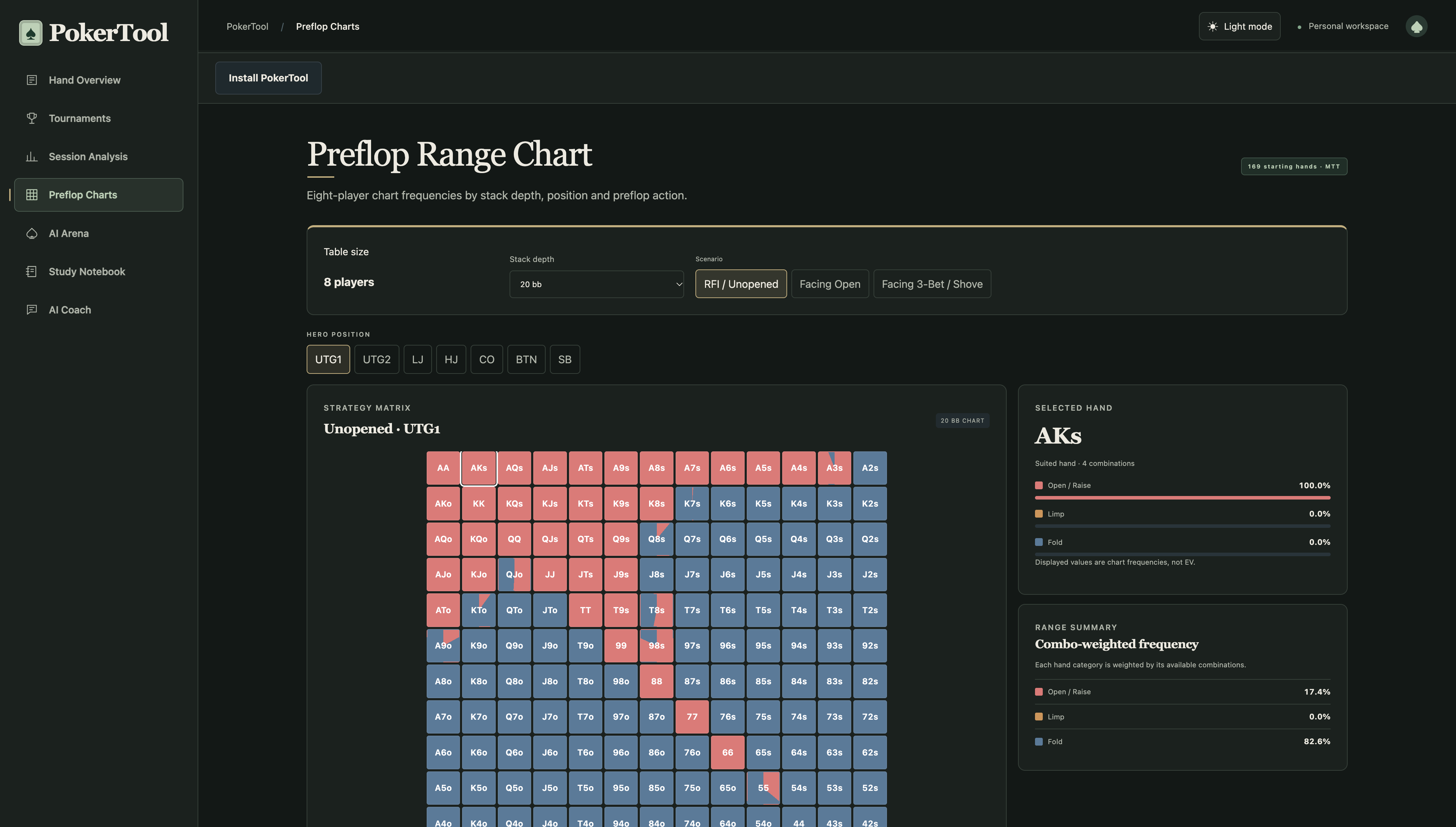
Preflop Charts
-
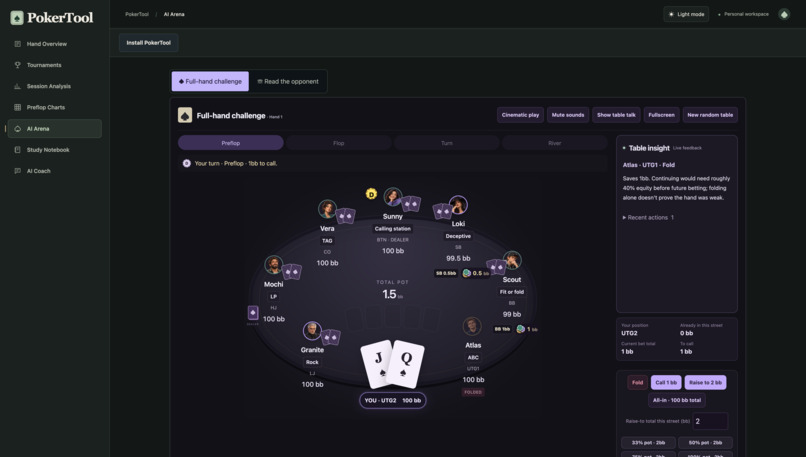
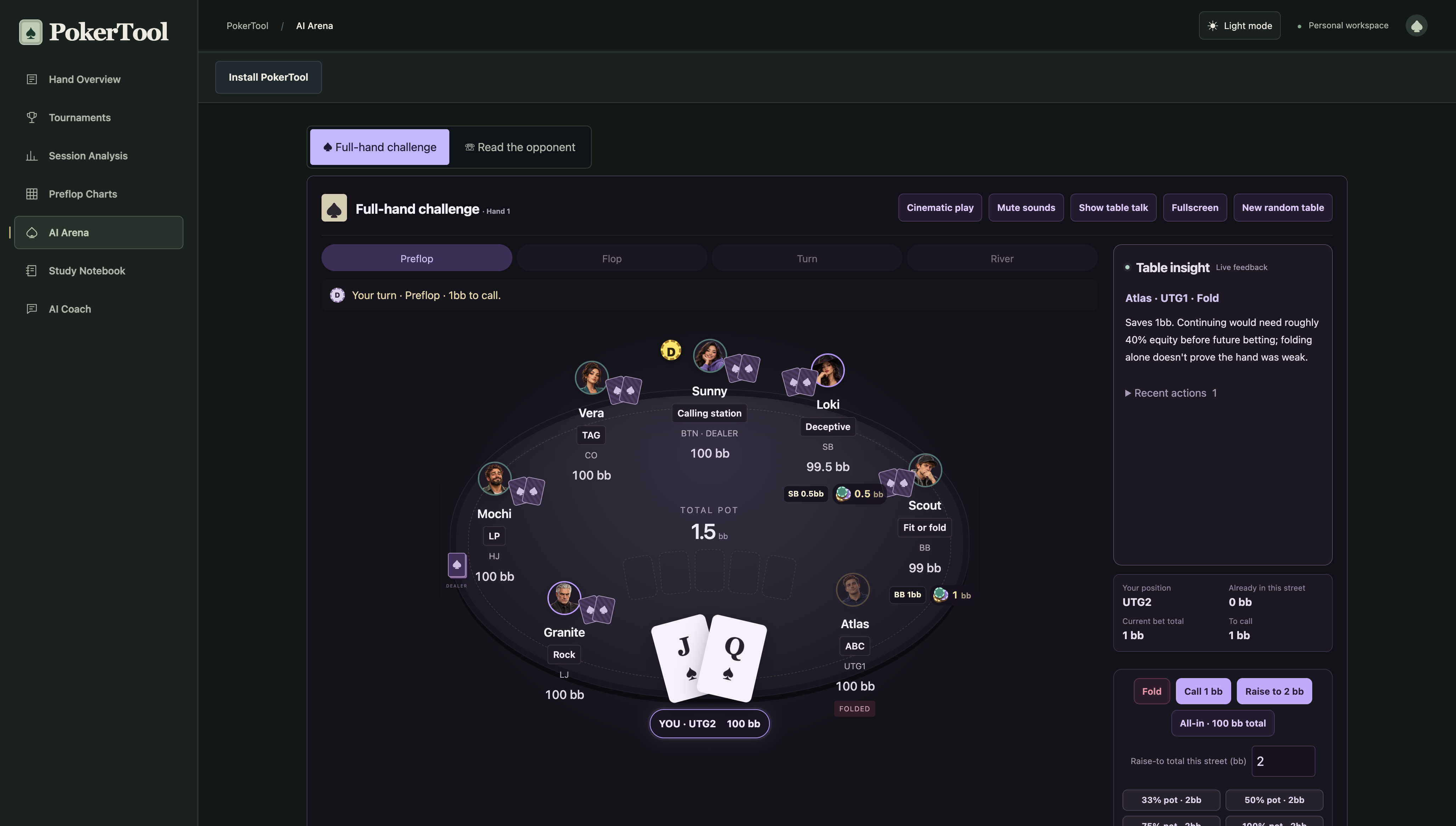
AI Arena
-
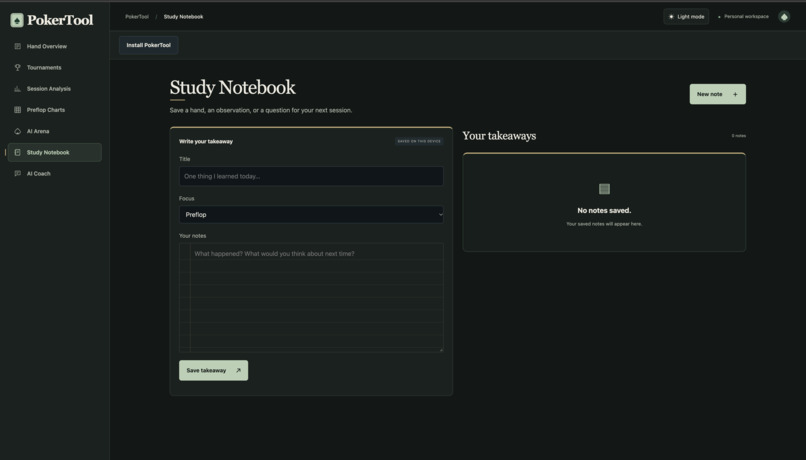
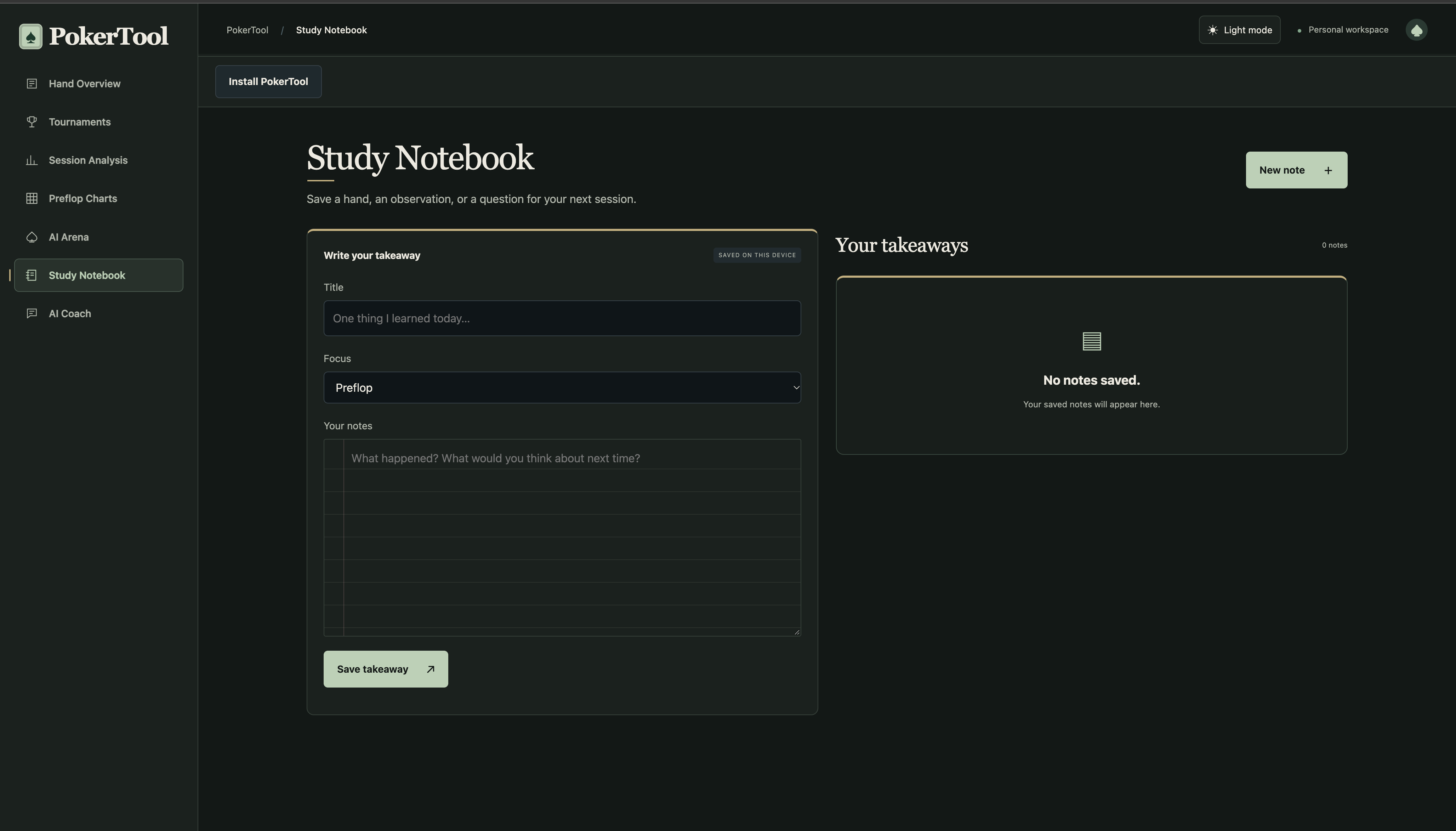
Study Notebook
-
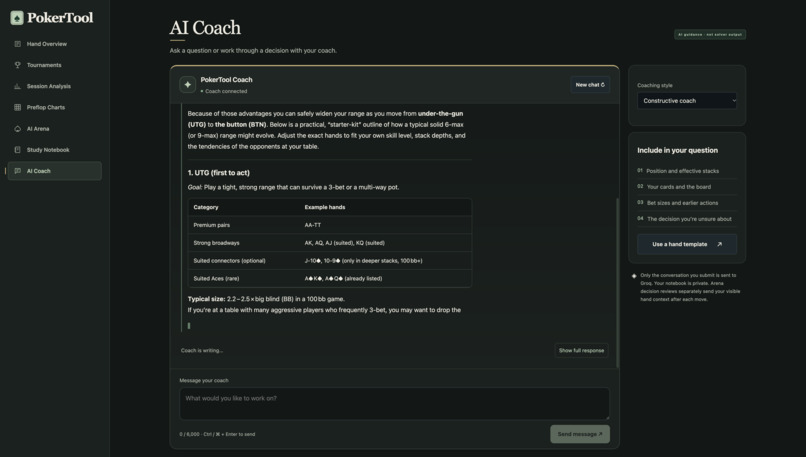
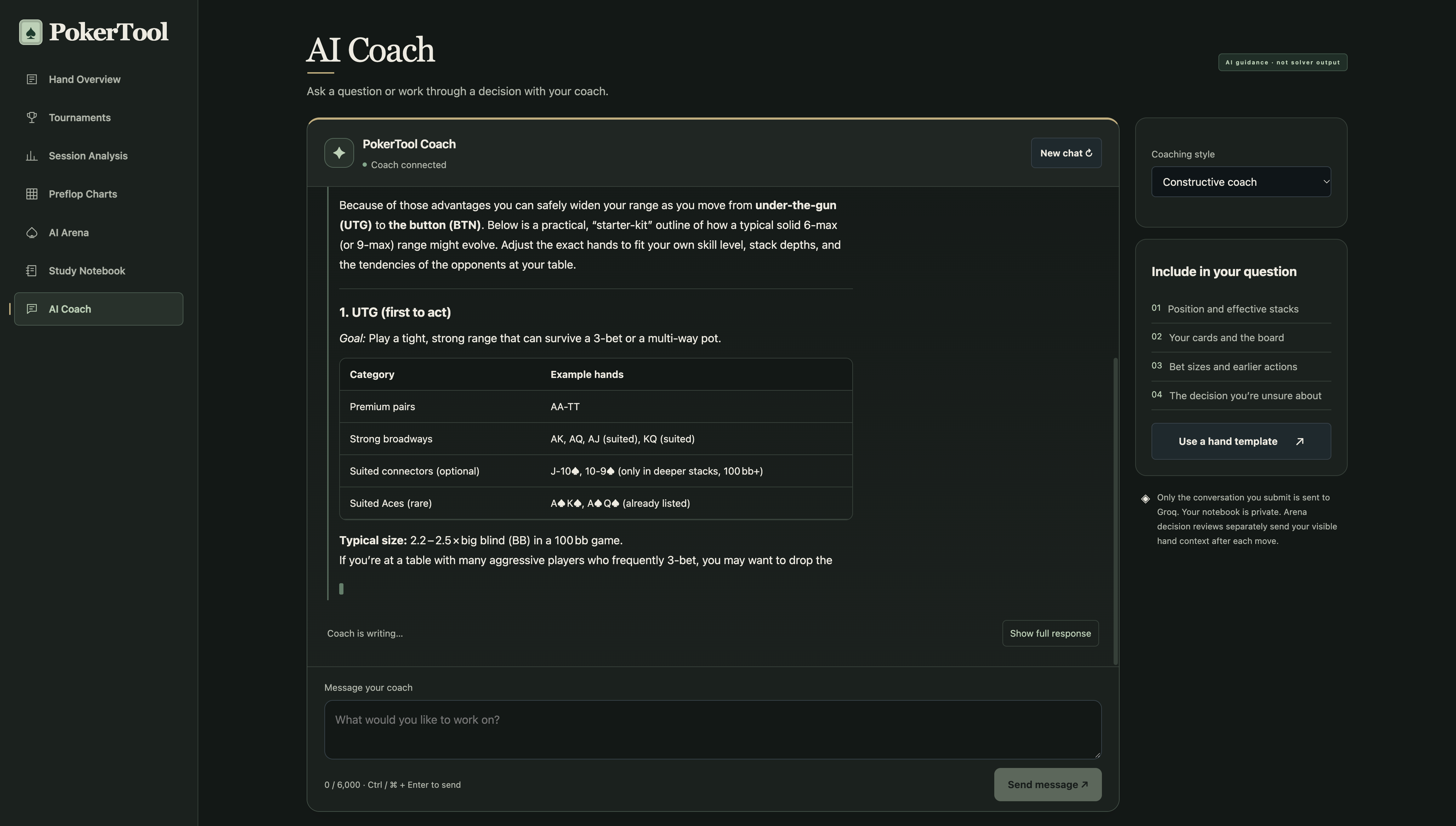
AI Coach - Powered by Groq
Inspiration
Poker gives you feedback after every hand, but the result doesn’t always tell you whether you made a good decision. You can play well and lose, or make a mistake and win. That makes learning the game surprisingly difficult. We wanted to build somewhere people could practise, ask questions and understand their decisions without putting real money on the table. That became PokerTool.
What it does
PokerTool brings practice and review into one place. You can play against seven opponents with different personalities, explore preflop ranges, talk through a hand with an AI coach, and save something useful in your notebook.
We also built tools for importing hand histories and tournament summaries, so players can look back at their sessions and understand their results. For us, the goal was to make poker study feel approachable enough that someone would actually want to keep doing it.
How we built it
We built the interface with React, Vite and custom CSS, with a Python FastAPI backend for parsing files, analysing hands and connecting to Groq for AI coaching.
The Arena combines poker rules with 13 opponent archetypes. A Calling Station calls too often; a Nit waits for stronger hands. Preflop feedback uses our supplied charts where they cover the situation, with heuristic analysis for other decisions. We haven’t connected a live GTO solver.
We also made the interface work on phones and added a separate QR page so people could join the demo from their own devices.
Challenges we faced
Getting a poker table to look right was only part of the work. We also had to handle betting order, different stack sizes, all-ins and side pots while keeping the action understandable.
Another challenge was separating what the player knew when making a decision from what happened later. Feedback shouldn’t judge a move using cards that hadn’t been revealed yet.
We spent time simplifying the interface too. Adding information was easy; making it readable, especially around an eight-player table on a phone, took more thought.
What we learned
We learned how much care sits behind features that seem simple. A profit figure depends on correctly handling duplicate files and missing results. A useful explanation needs more than a “correct” or “incorrect” label.
Working together also meant connecting different interests: poker strategy, software development and economics. The project gave us a practical reason to question each other’s assumptions and keep refining what we had built.
What we’re proud of
Within a 24-hour university hackathon, we brought a playable poker table, coaching, charts and session review into one working project.
There is still plenty we want to improve, but we’re proud that someone can sit down, play a hand and leave with a better question or a clearer understanding than they started with.
What’s next
We’d like to improve the mobile table, expand decision coverage and turn repeated mistakes into personalised practice sessions. Longer term, we want to explore a proper solver integration.
For now, we want people to try it, tell us where it helps and show us where it falls short.
Contributors
- Arthur Davies | LinkedIn | https://www.linkedin.com/in/arthur-davies-66b3bb325/
- Daniel Collings | LinkedIn | https://www.linkedin.com/in/daniel-collings-701b13315/)
- Pritam Gurung


Log in or sign up for Devpost to join the conversation.