-
-
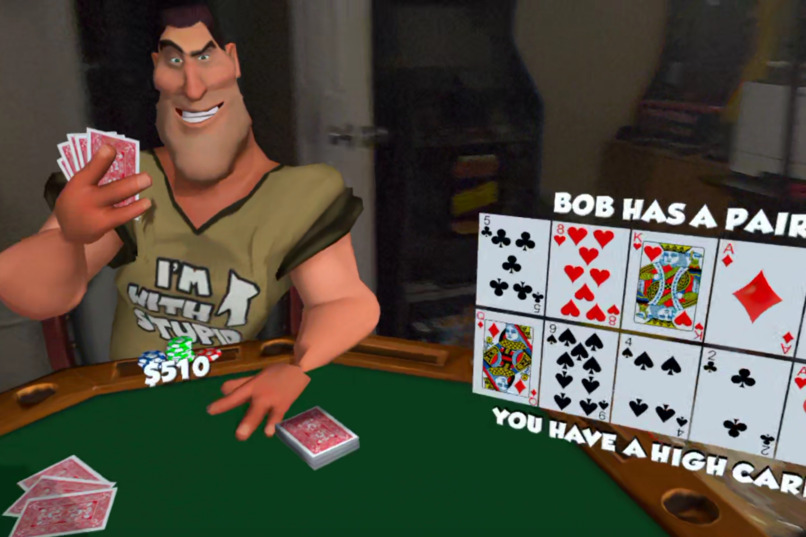
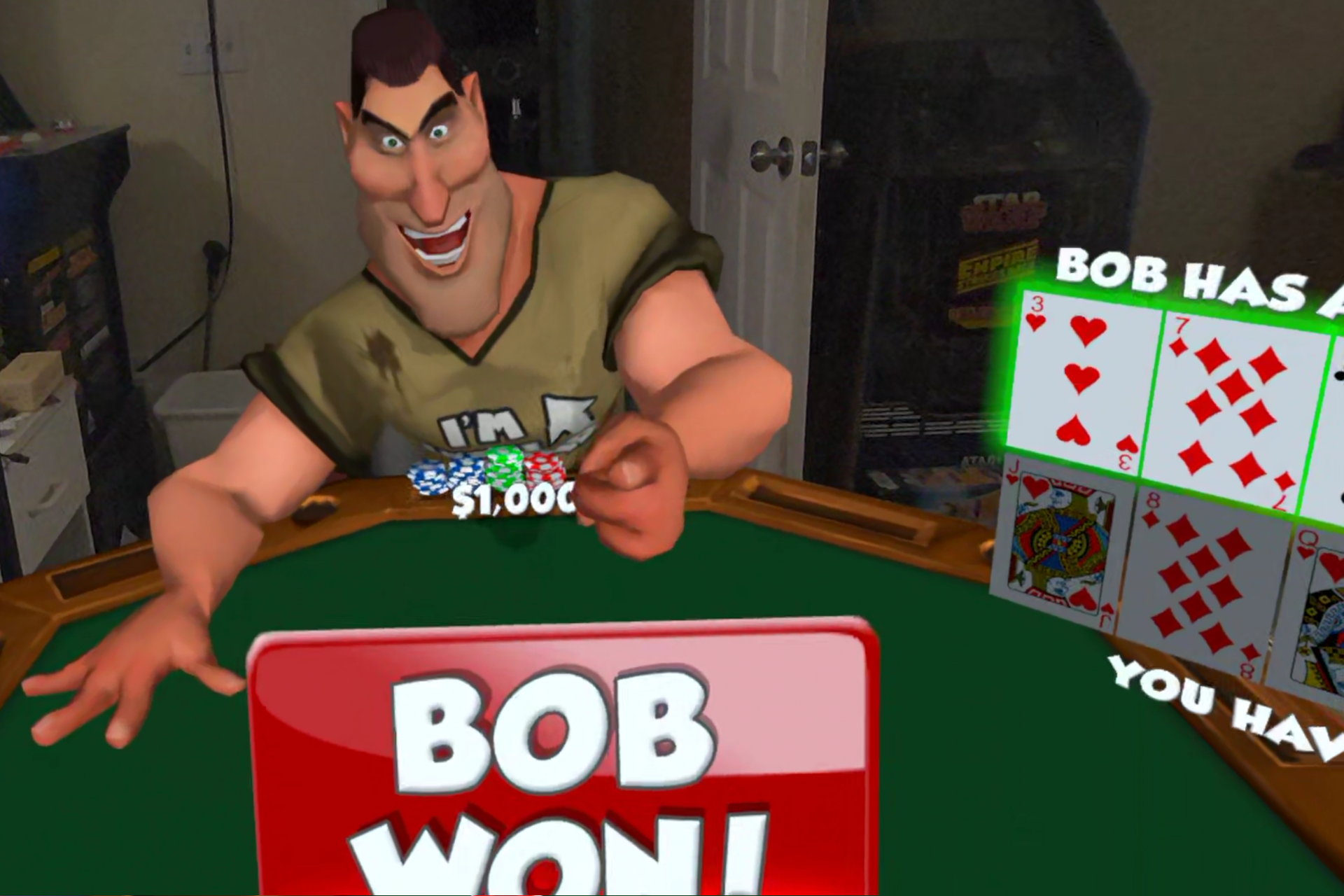
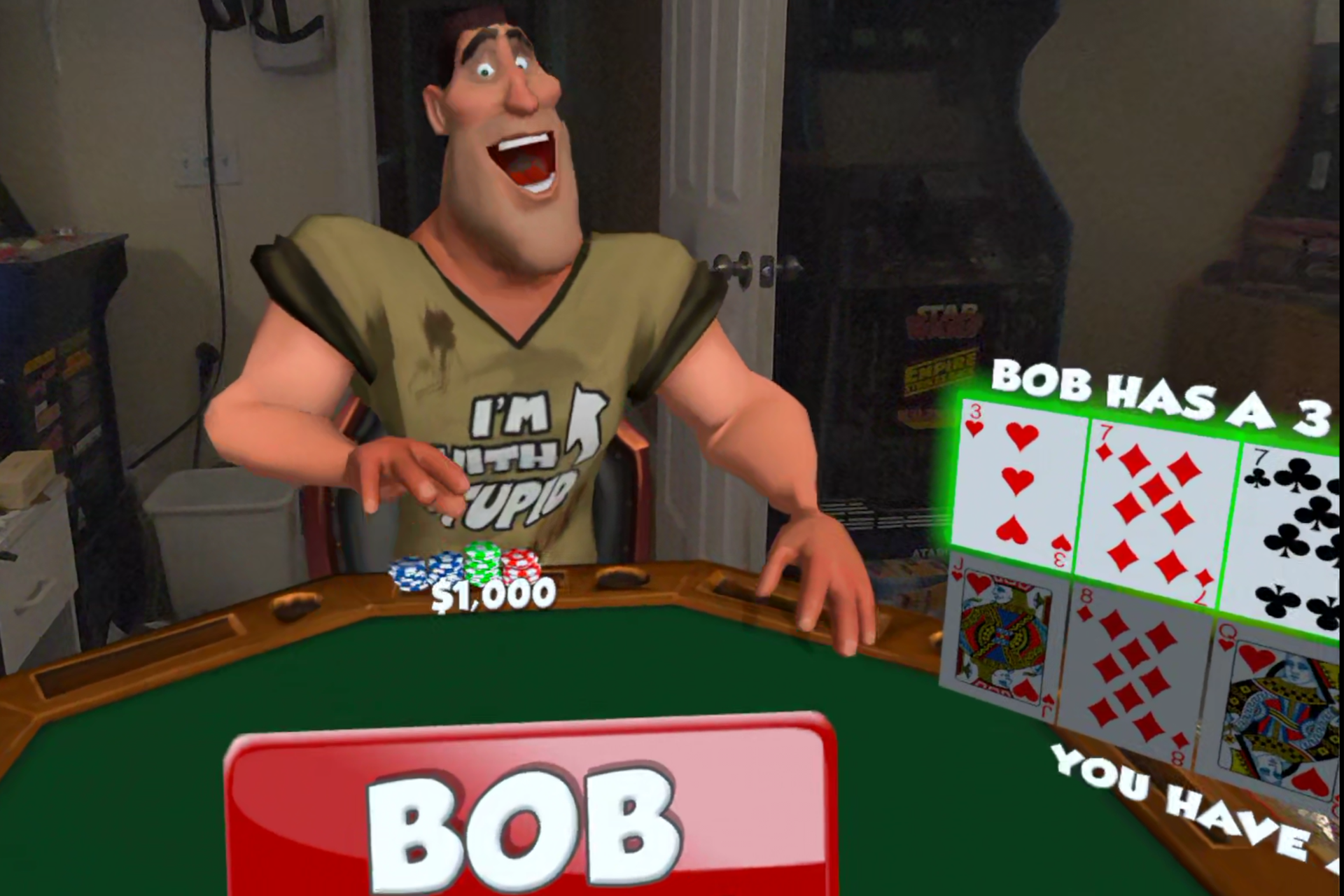
Bob gloats as he wins the hand.
-
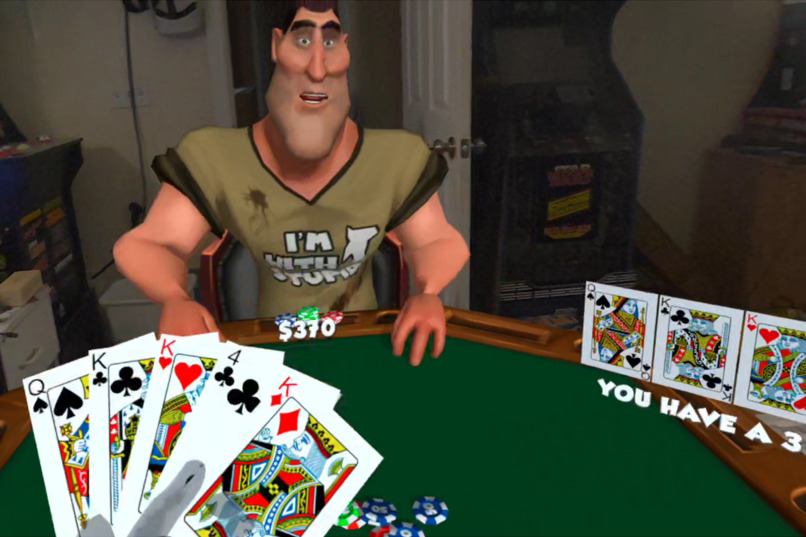
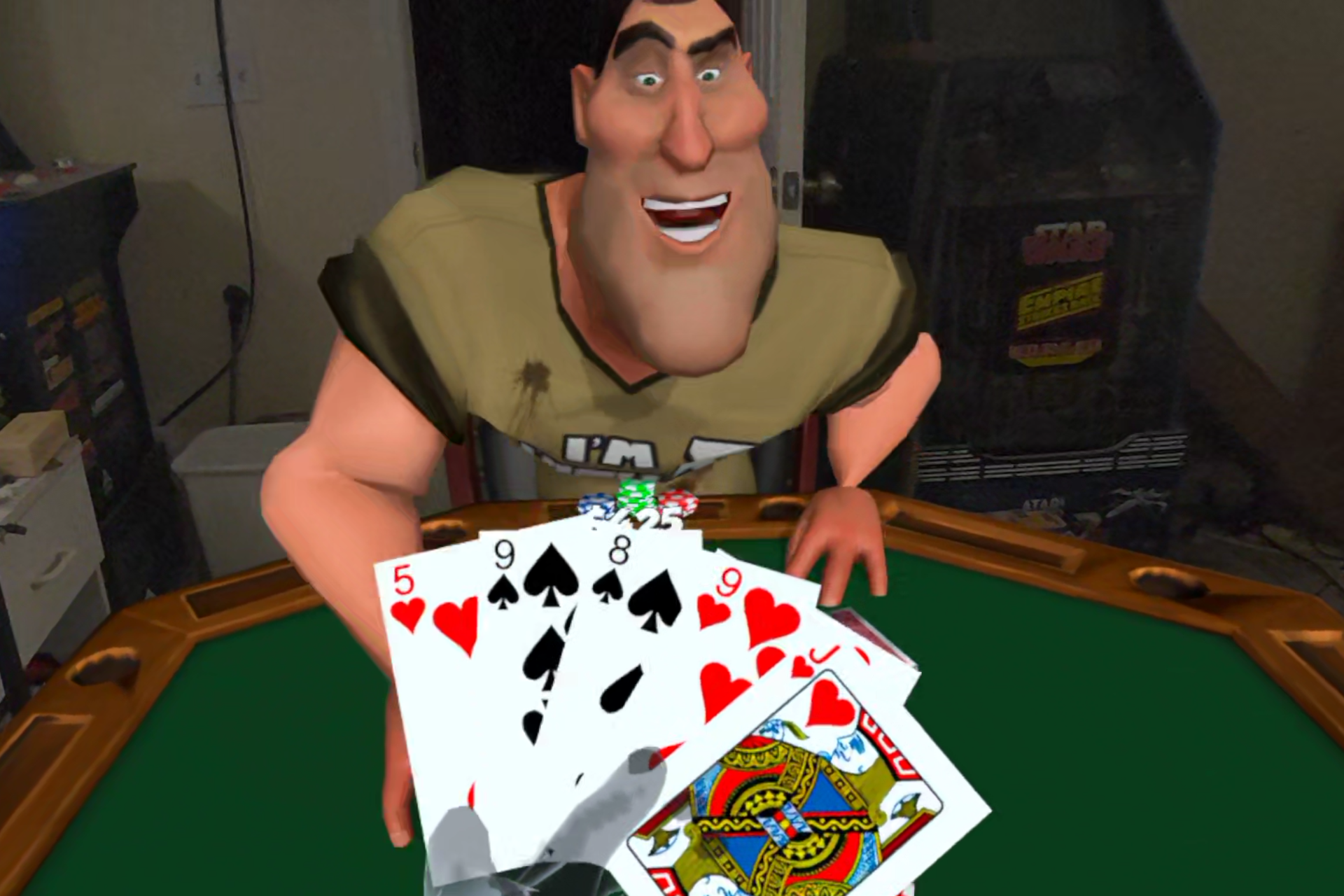
Bob is shocked to see that the player has a three of a kind.
-
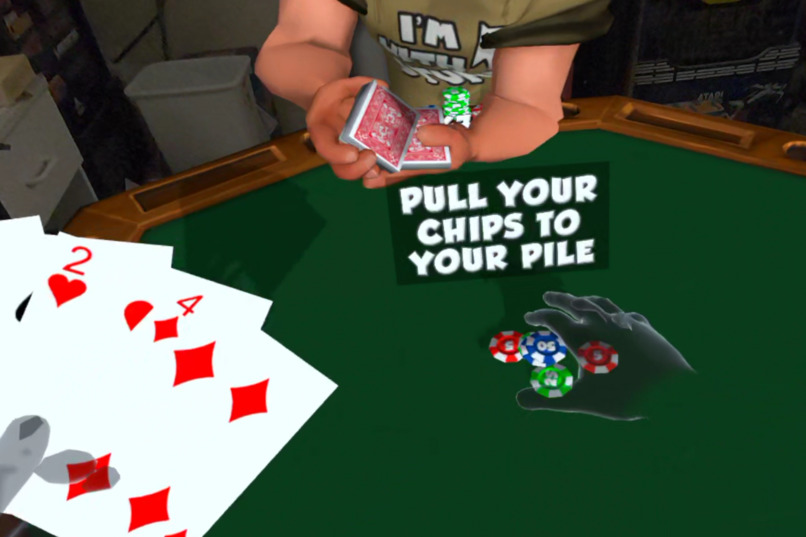
The player drags their chips back to their pile after winning the hand.
-
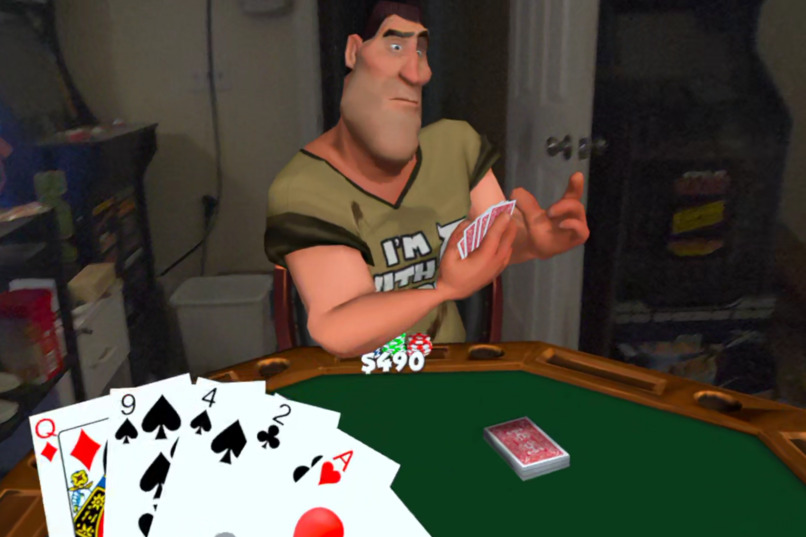
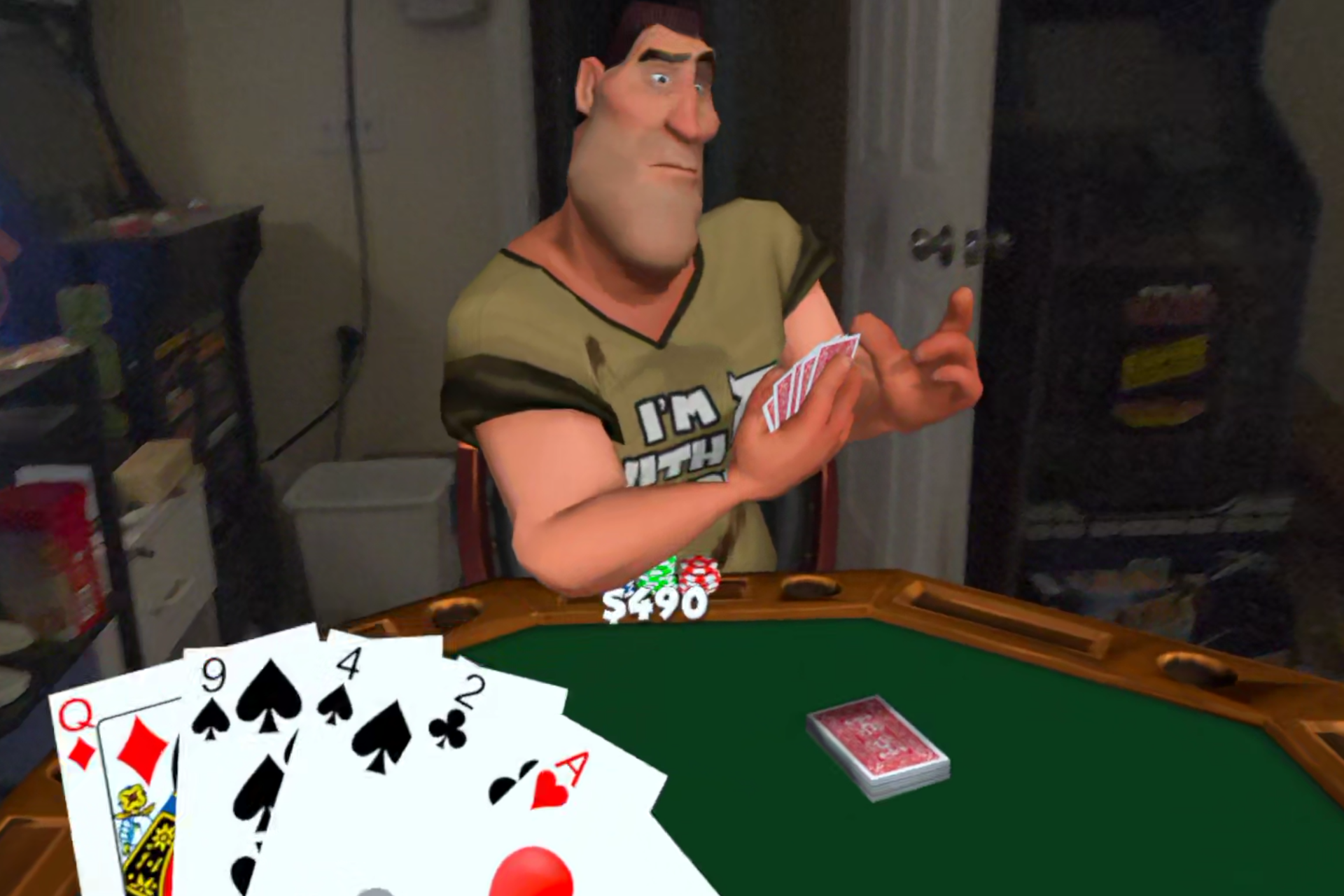
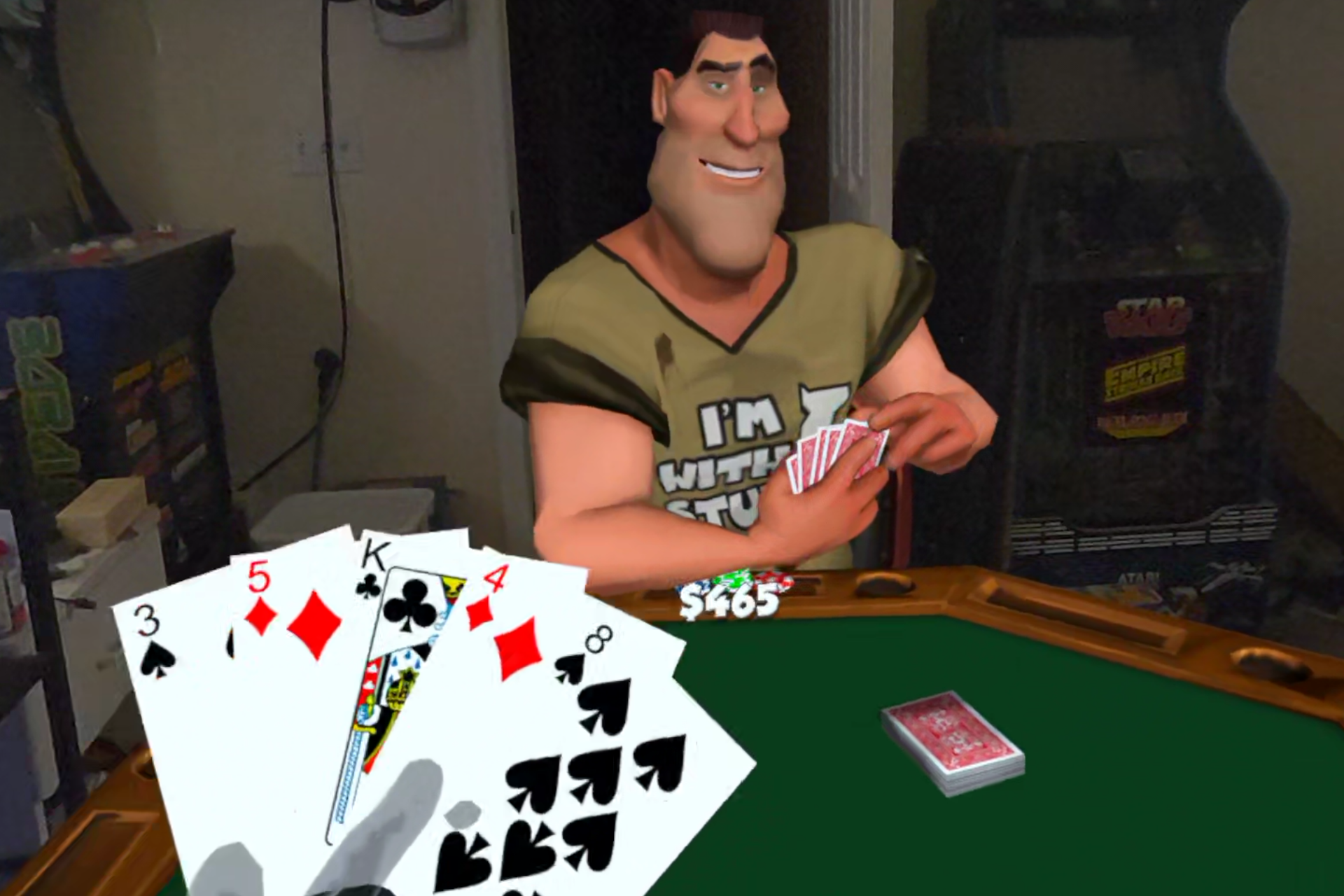
Bob mulls over what his choice will be.
-
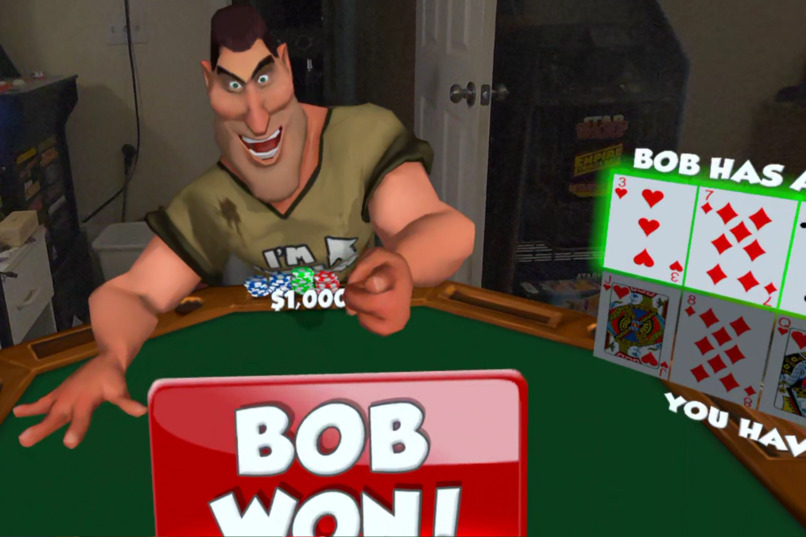
Bob laughs maniacally after winning all of the player's money.
-
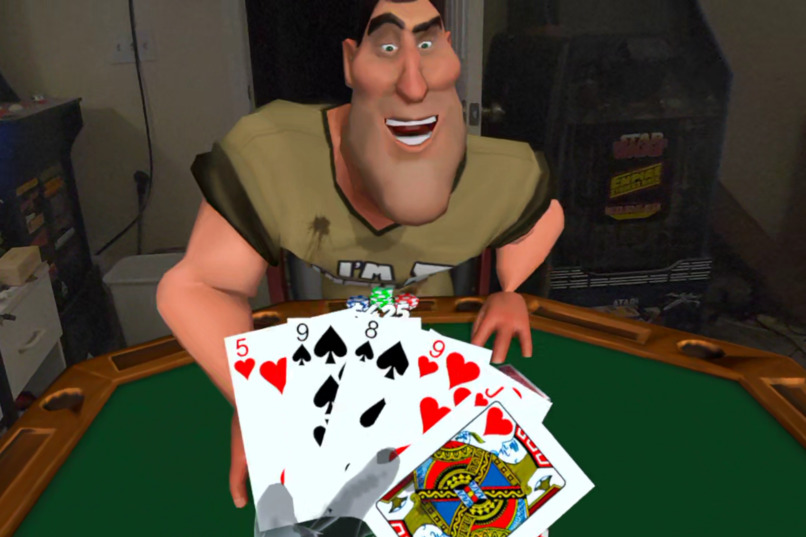
Bob checks the player's cards to see who won the pot.
-
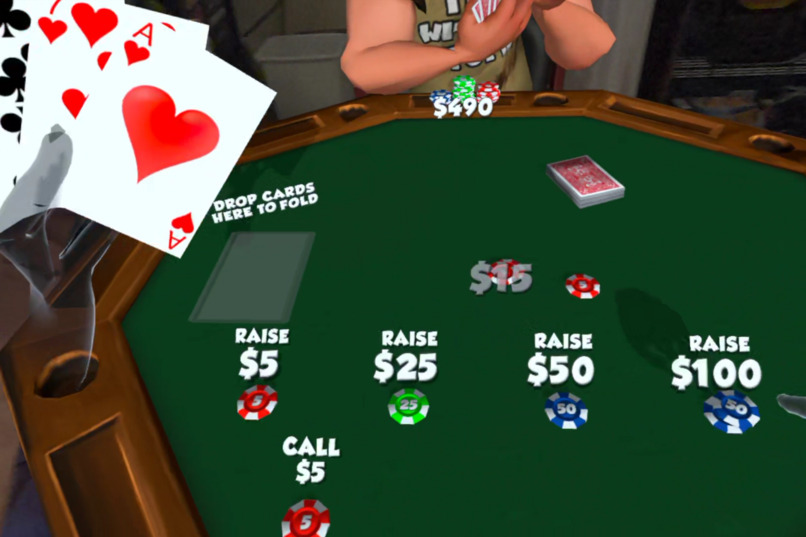
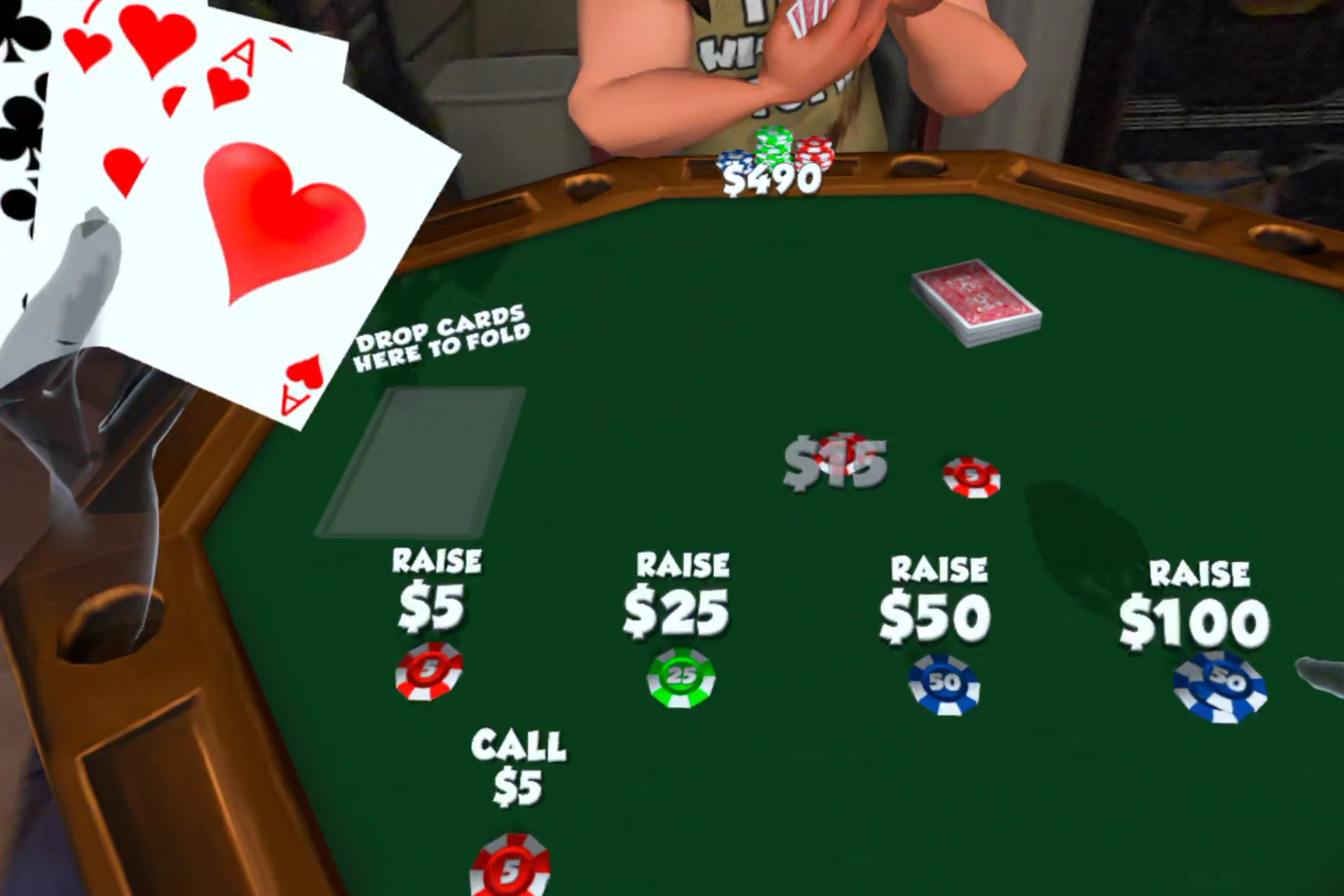
The player decides if they want to call, raise or fold their cards.
-
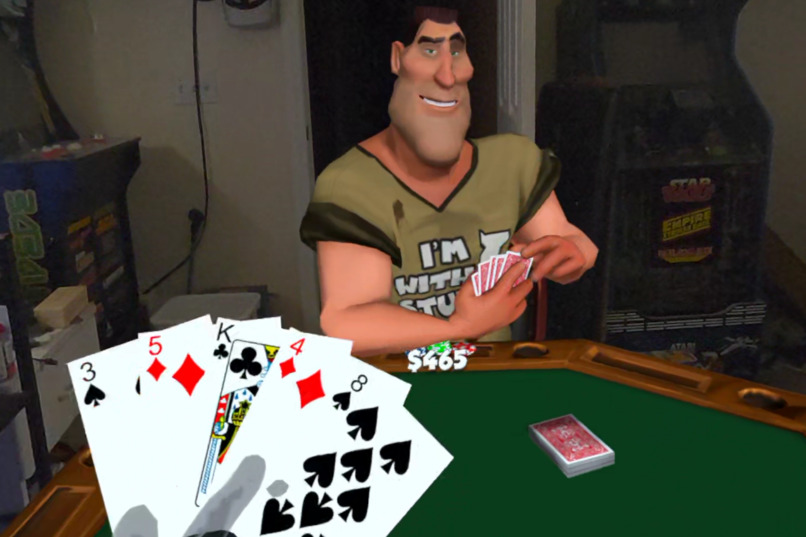
Bob grins at the player after betting.
-
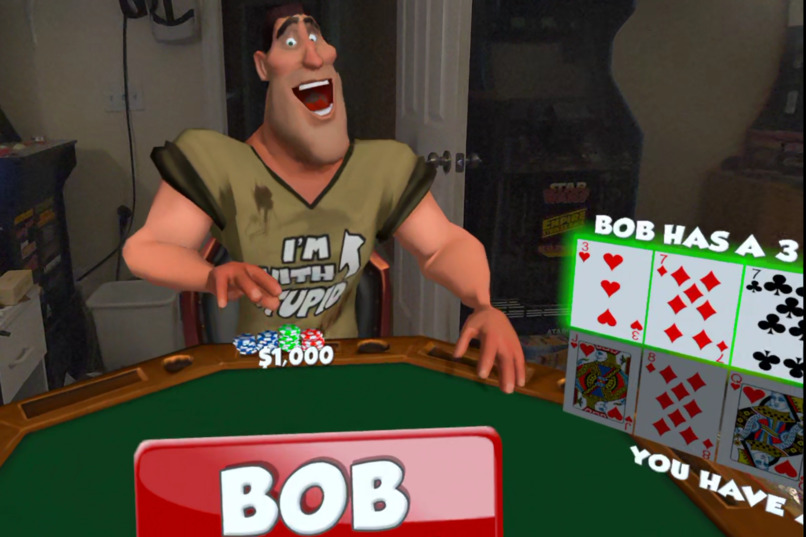
Bob continues to laugh at the player after winning all of the chips.
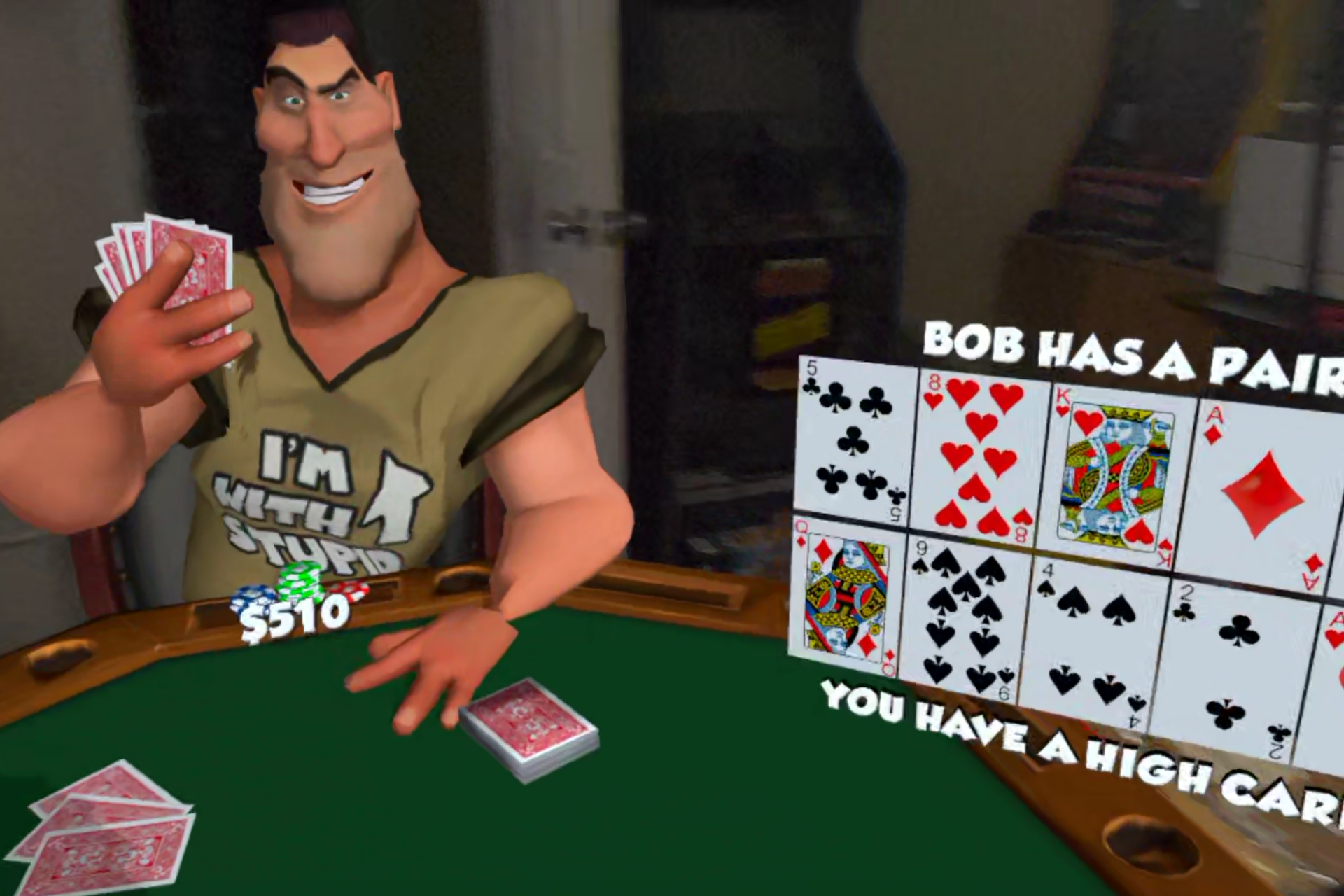
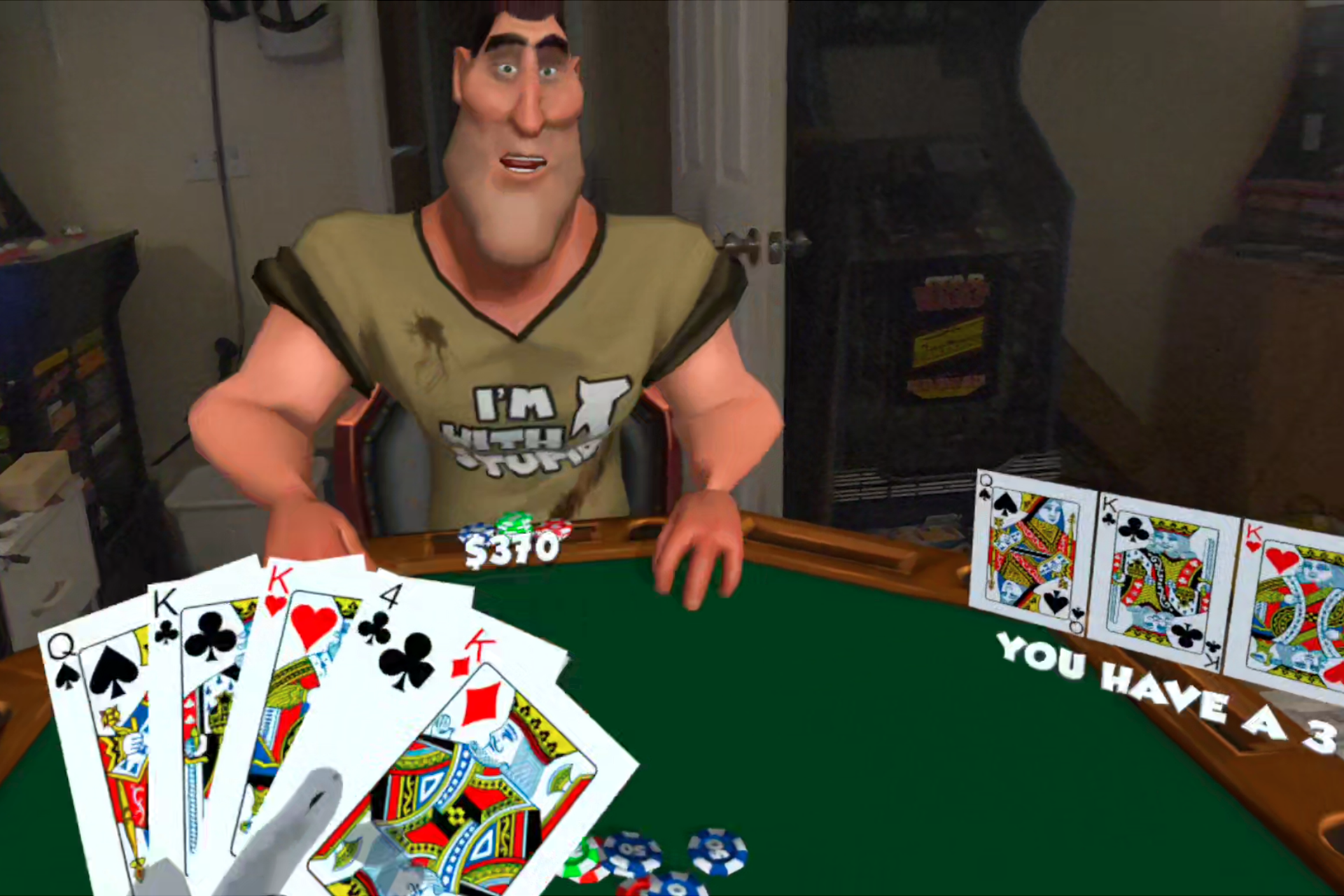
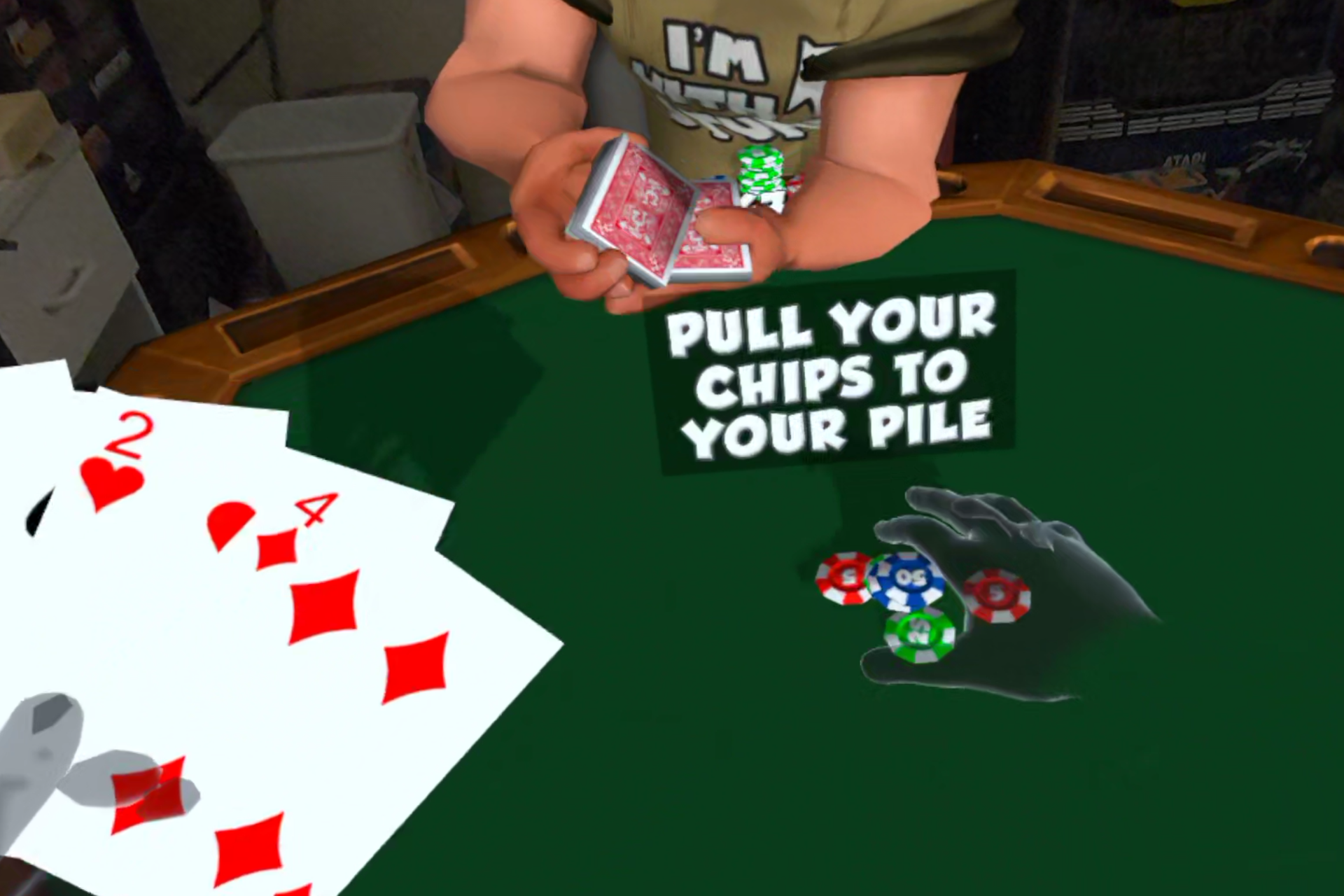
Inspiration
I’ve been a long time VR game player (from the Vive to the Quest 2 and then to the Quest 3) and an even longer indie game developer link (8 games released on mobile, PC and console dating back to 2011). But I’ve always been intimidated by the idea of developing for VR. My day job for the last quarter century has not been game development but rather character animation for television and film link. Everything in game dev (design, coding, etc.) has all been self-taught. But this competition was the catalyst I needed to take the plunge. And after a whirlwind 7 weeks (I was late to the party and got a slow start), I’ve fallen in love with taking my game dev skills and creating immersive gaming experiences. The only regret is that it took me this long to finally develop for VR.
What it does
“Poker with Bob - VR” is a traditional 5 card draw poker game against Bob – a feisty, antagonizing and emotional opponent that gloats when he wins and whines when he loses. The Bob character is comprised of over 7 and a half minutes of character animation that ensures that the interactions avoid any level of repetition. The player is fully immersed in the gaming experience on all levels. The game fully recreates a real-world experience of sitting at a poker table. The player grabs chips and tosses them into the pot and drags them back to their stack when they win. They also pick up their cards on new deals, lift up and toss discards, collect replacement cards and add them to their hand just like you would in the real world.
How I built it
The game was created in Unity 6.3. It is an adaptation of my very first mobile game, “Poker with Bob,” that I released for iPhone 1 back in 2011. I adapted it for the iPad and Android as they became available over time. Bob is a 3d character in the original version and didn’t require any major revisions. But everything else in the original version was comprised of 2d sprites and had to be reconstructed in 3d. Since this was my first VR game, Unity’s “Welcome to Meta XR SDK” was a Godsend. It offered tons of samples to help me wrap my head around adapting my game to VR. And the building block components saved countless hours of me banging my head against my poor, defenseless keyboard. These tools enabled me to quickly iterate and come up with the best system for a “hands-only” gameplay system.
Challenges I ran into
The first challenge started even before I got to the VR content. When I created “Poker with Bob” in Unity back in 2011, I wrote it in the long-since depreciated UnityScript. So, the first week was devoted to rewriting the entire game in C# and then start converting it to VR. I initially tried to make all scripts dynamically handle either VR or non-VR gameplay. But it became unwieldy right away and I had to back up and make VR/non-VR versions of all the script. The next step was converting all of the 2d sprites to 3d objects. The trickiest challenge came from the poker chips. The chip stacks in the mobile version were just 9 pre-rendered sprites that I swapped out to approximate the real count. But this time I couldn’t fake it and had to create a system that dynamically rebuilt the chip piles but also spread the chips out evenly to avoid only having a stack of one chip value. That paled in comparison to the challenge of converting the original game’s simple button presses into full hand interactions. A single click on mobile now involved things like what item is a hand picking up? How do I position it in the hand? Which hand held the cards or chips? Did the hand drop the cards or chips and if so, where did they land. The lion’s share of my dev time went into integrating all of this and then refining the pickup/release interactions to make them as intuitive as I could.
Accomplishments that I'm proud of
The first thing I’m proud of is that I successfully adapted my original mobile game into my first VR game in only seven weeks. Taking into account the initial learning curve along with the trial & error of discovering best practices, I’m thrilled that it came together as fast as it did. The next thing I’m proud of is the level of immersion that I believe the player will experience. I think the game now accurately simulates what it really feels like to sit across from an opponent in a game of 5 card draw. Fully bringing the player into the experience. Whether it’s using your hands to select cards and discard them or reaching your hands out and dragging a giant, winning pile of chips back to your stack of chips. I believe it’s a truly natural and immersive experience.
What I learned
The biggest thing I learned is that I was an idiot for waiting this long to create my first VR game due to unwarranted intimidation from the learning curve and complexity. I believe that I now have fully acquired all of the basic fundamentals I need to create an all-new VR experience or maybe pull from my own catalog of other games that I’ve created and adapt them to VR as I did for “Poker with Bob.”
What's next for Poker with Bob - VR
The first thing to do is to add some elements that were excluded due to the deadline. I want to restore the options menu that allows adjustments to the audio and also adds a tutorial for those that have never played 5 card draw poker before. Also, the game has 5 levels of play with different cash stakes and different environments. I couldn’t get that working in time so I had to limit gameplay to just the first level. I want to build 3d environments that match the visual esthetics of the mobile game’s 2d backgrounds for the 5 levels of play so people can turn off the passthrough and find themselves in a casino whose elegance matches the level of the cash stake. For those that keep the passthrough active I’d like to have some of that environmental geometry (tables, chairs, slots) pop up intelligently in the player’s real-world environment. Finally, I’d really like to add a multiplayer component where the Bob character is physically controlled by the other player. Maybe even use the facial capture abilities of the device to drive Bob’s expressions and mouth motions.


