Abstract
We believe that this project provides a nice exploration into the ability to create a poker engine that mirrors the analytical capabilities of a chess engine, while incorporating external social and emotional factors based on research. Utilizing the Hume AI Expression Measurement API, we dove into how facial expressions can influence player performance, and we hope that, in the future, this can transform poker education for beginner players, balancing the playing field for all.
Inspiration
Ryan is an up and coming poker fan! In our research, we discovered some of the interesting connections between poker and facial expressions that can dictate game performance. As a foray into the study of decision making, we decided to create something that could quantify some of the in-game decisions that used to always seem like a whim.
What it does
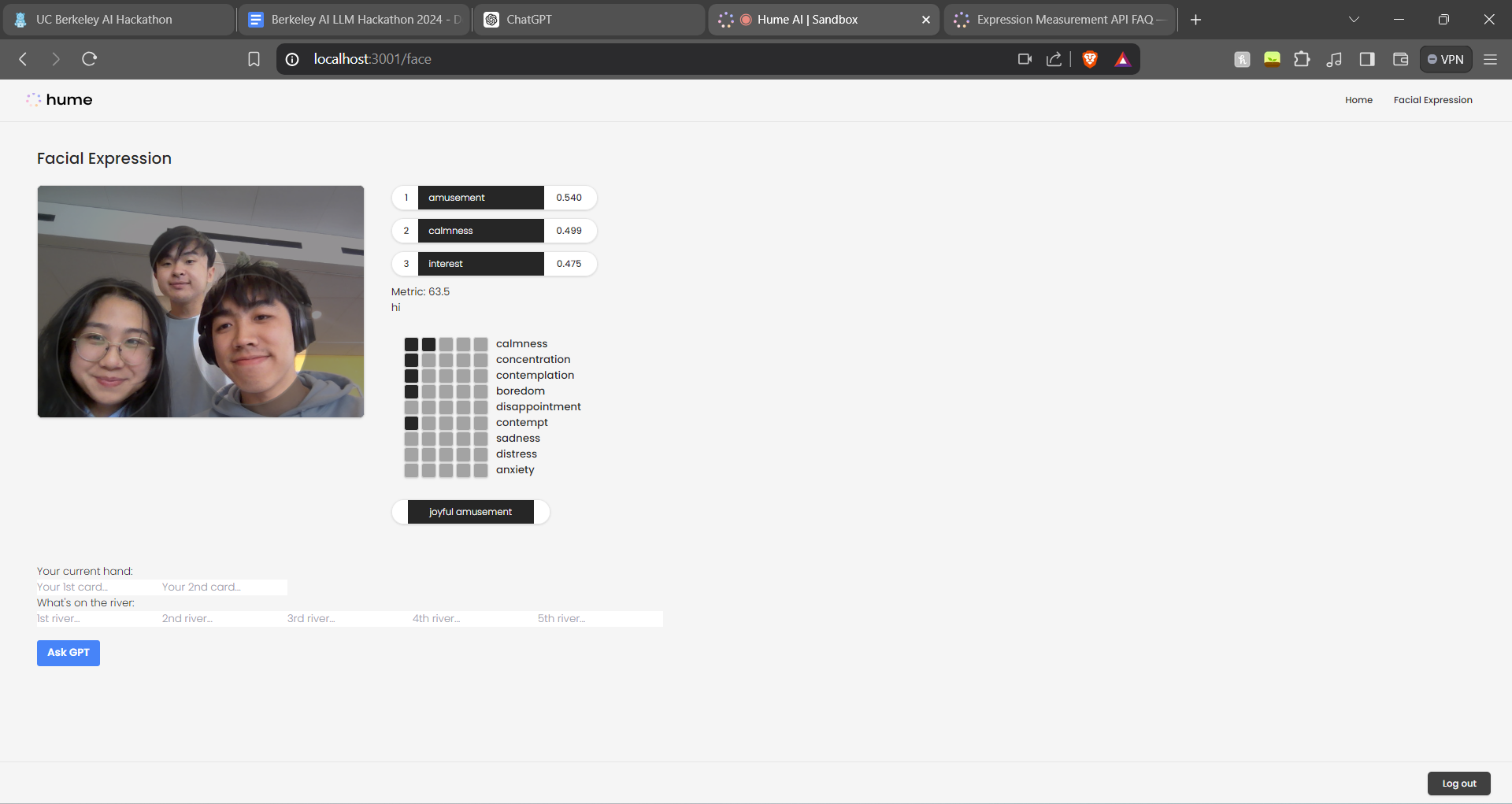
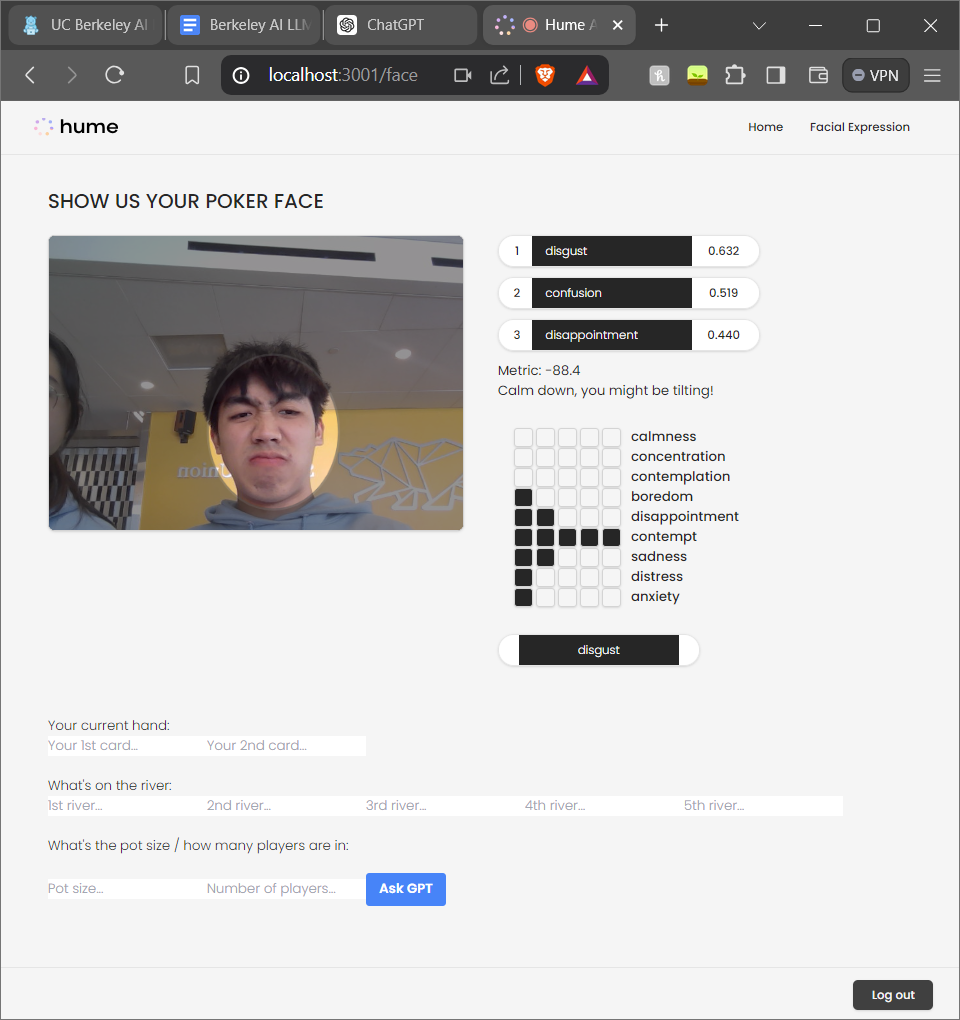
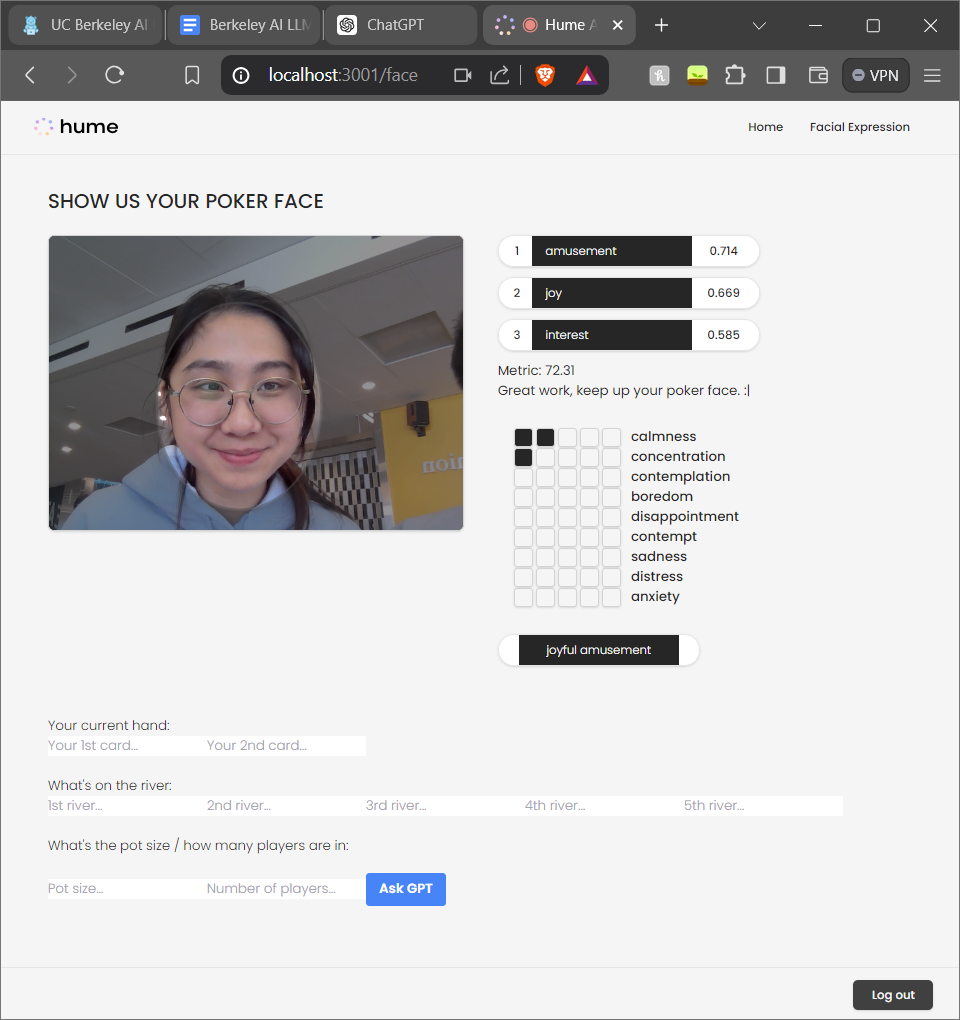
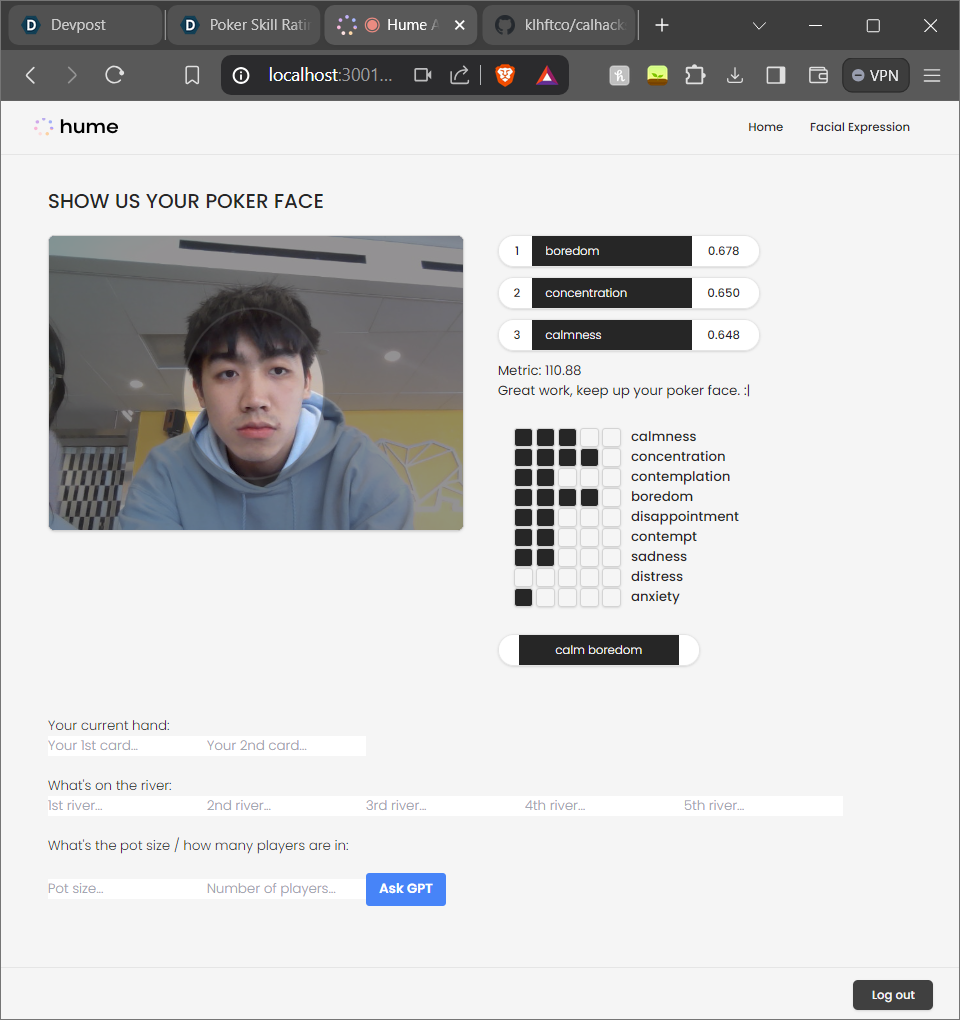
It uses Hume AI's Expression Measurement API to measure key emotions and return a metric that tells how a player might be performing emotionally. Additionally, the bot also offers a tool to query GPT4 about the condition of the field, suggestions on how to play, and more.
How we built it
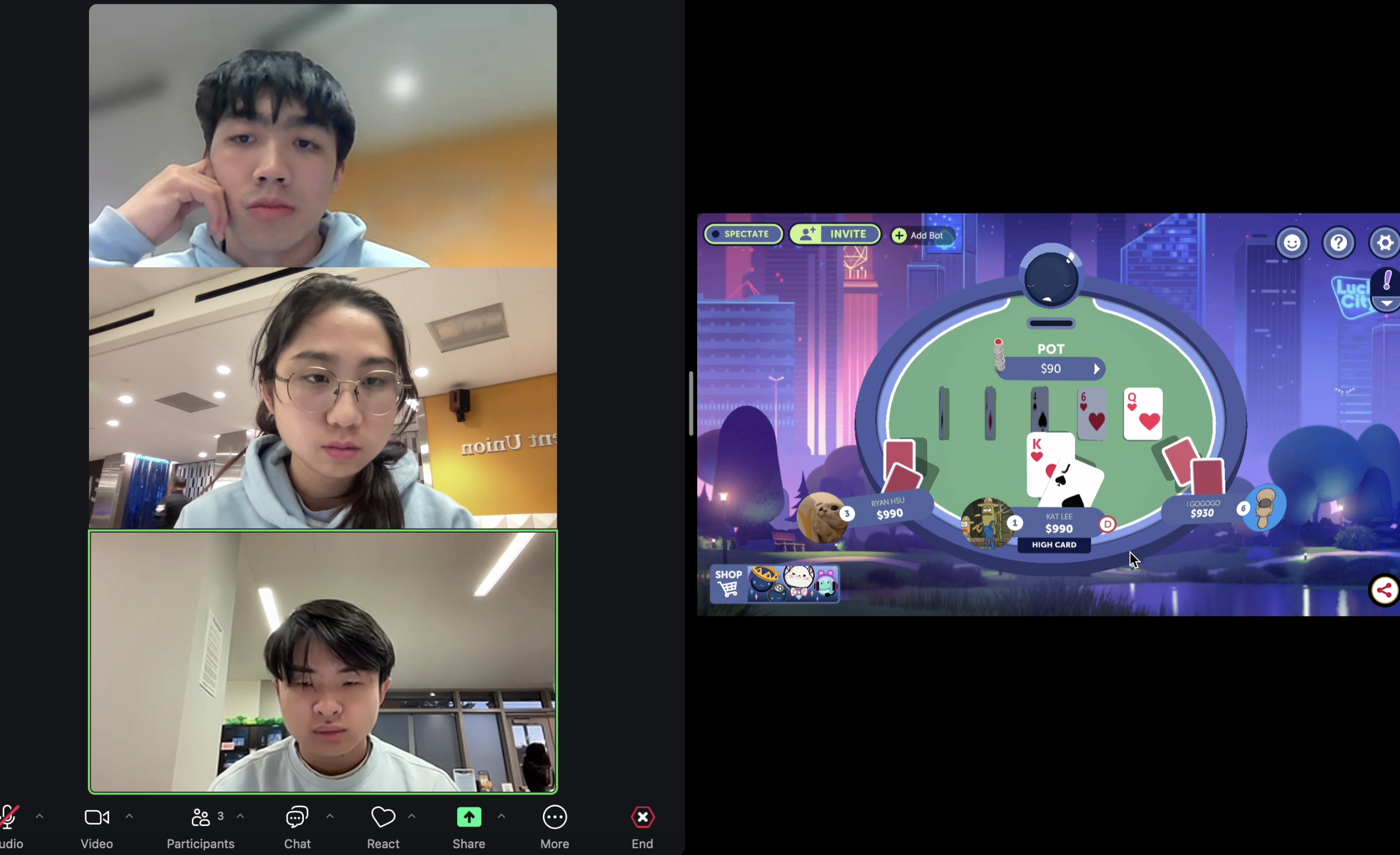
We did not sleep... we recorded ourselves playing poker and used Hume AI's expression measurement tool to analyze key emotions that are more correlated with folding and winning, allowing us to create a metric that reflects the performance of the player.
Challenges we ran into
- Setting up and understanding what exactly web sockets do / how to livestream
- Data Analysis: analyzing our own poker data was interesting! but also difficult due to the large amounts of data we had to review in a short amount of time
Accomplishments that we're proud of
- Learned a lot of poker
- +$3.15
- Staying up all night
What we learned
- How to use web sockets to livestream data into a streaming API
- How emotions can affect personal and interpersonal game performance
- How to use Hume AI APIs
What's next for Poker Skill Rating w/ Hume AI
- Incorporating poker theory from other existing probability / poker engines
- Studying and incorporating how self emotions can impact other's decision making.
- Incorporating tone of voice for the various players
References
M. Laakasuo, J. Palomäki, and M. Salmela, “Emotional and Social Factors influence Poker Decision Making Accuracy,” Journal of Gambling Studies, vol. 31, no. 3, pp. 933–947, Mar. 2014, doi: 10.1007/s10899-014-9454-5.


Log in or sign up for Devpost to join the conversation.