Inspiration
POKE was born out of a personal necessity. I found myself doom-scrolling for 10-12 hours a day and saw firsthand how it negatively affected my mental health, and that of my friends. I noticed that whenever we were together, whether at dinner or just hanging out, we were all constantly stuck on our phones - physically present, but mentally absent.
After watching the series Adolescence and seeing similar behavior in the world around, I knew something had to change. The brain-rot had to be stopped.
I wanted to find a way to help us all break free from the screen and appreciate the outside world. I needed a way to gently poke us out of the doom scroll. That's how the idea and the name for POKE came to be.
What it does
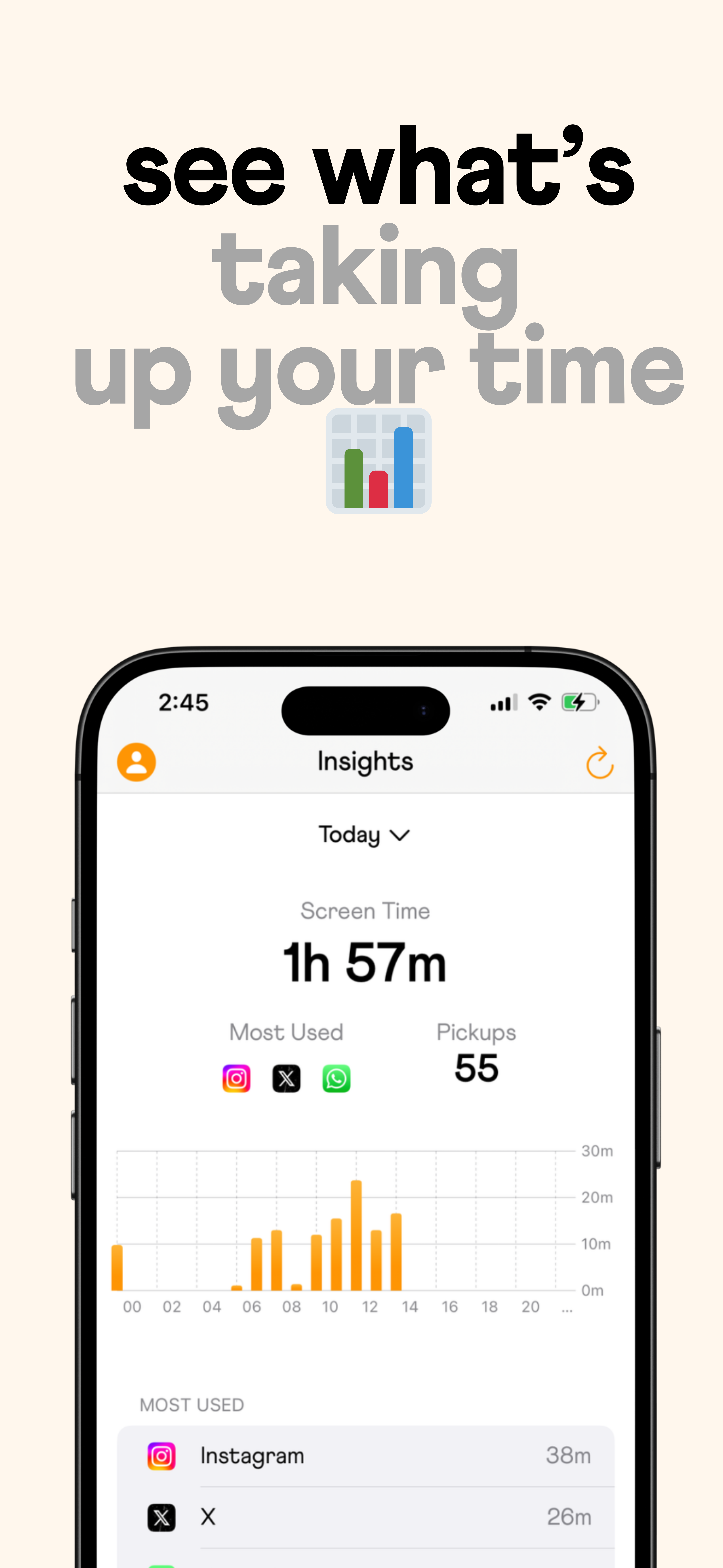
Poke is a social screen time app that transforms digital wellness from a lonely struggle into a shared challenge with friends. Instead of relying on willpower alone, it uses public accountability and friendly competition to help you build healthier phone habits.
Here’s how it works:
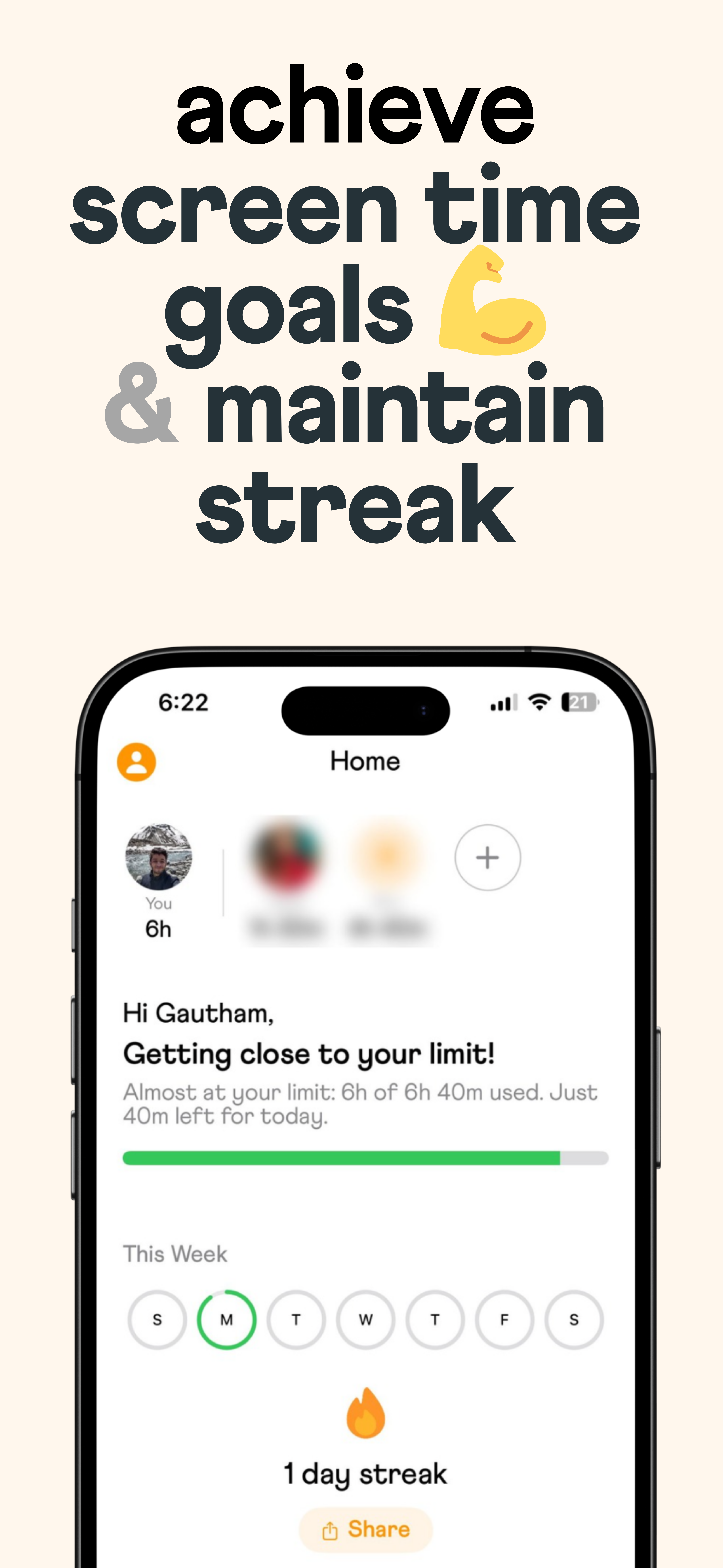
Set Your Goals, Build Your Streaks: You define your own success by setting daily screen goal. Poke tracks your progress with a motivating streak counter, encouraging you to stay consistent.
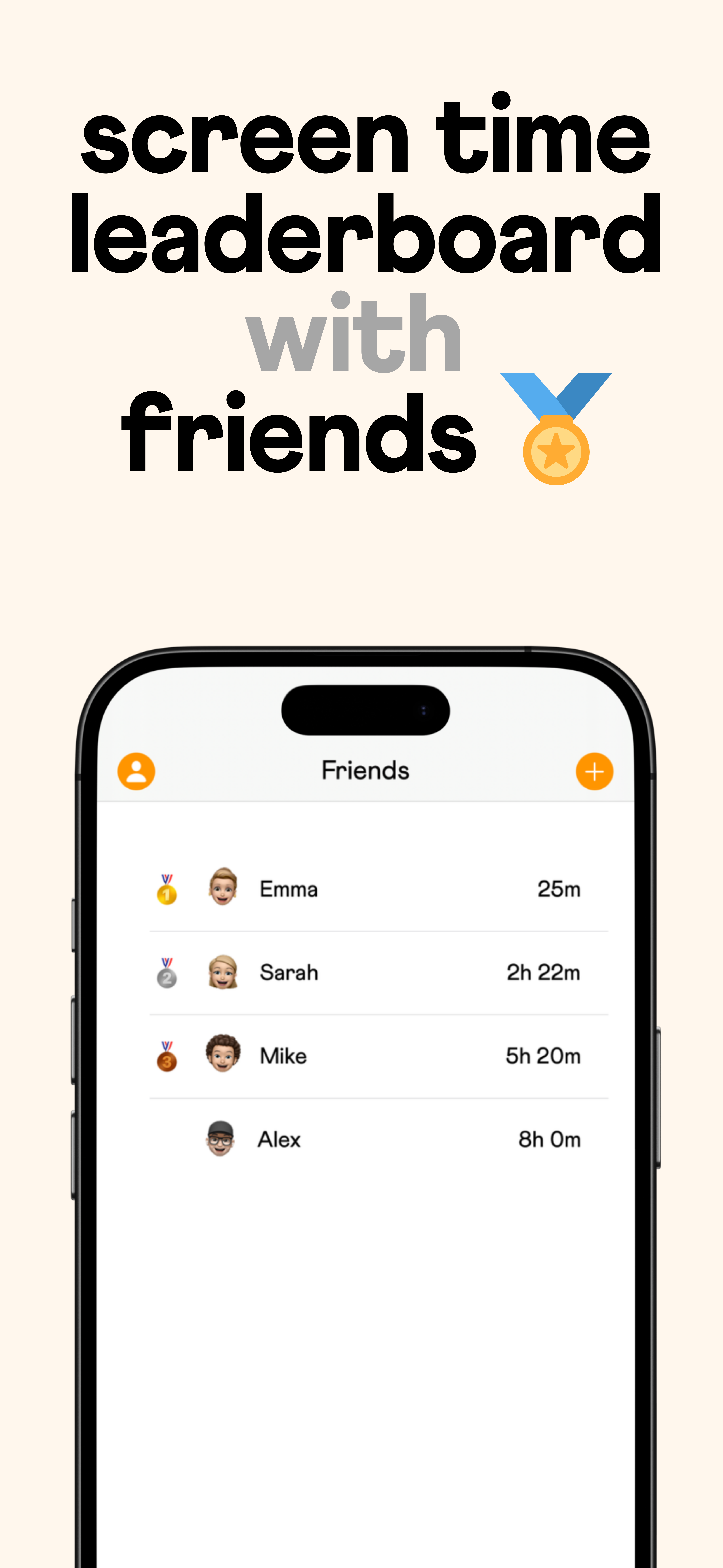
Compete on a Social Leaderboard: You invite a trusted circle of friends to join you. Your goals and daily progress become public within this group, and a shared leaderboard creates a fun, competitive environment that motivates everyone to put their phones down.
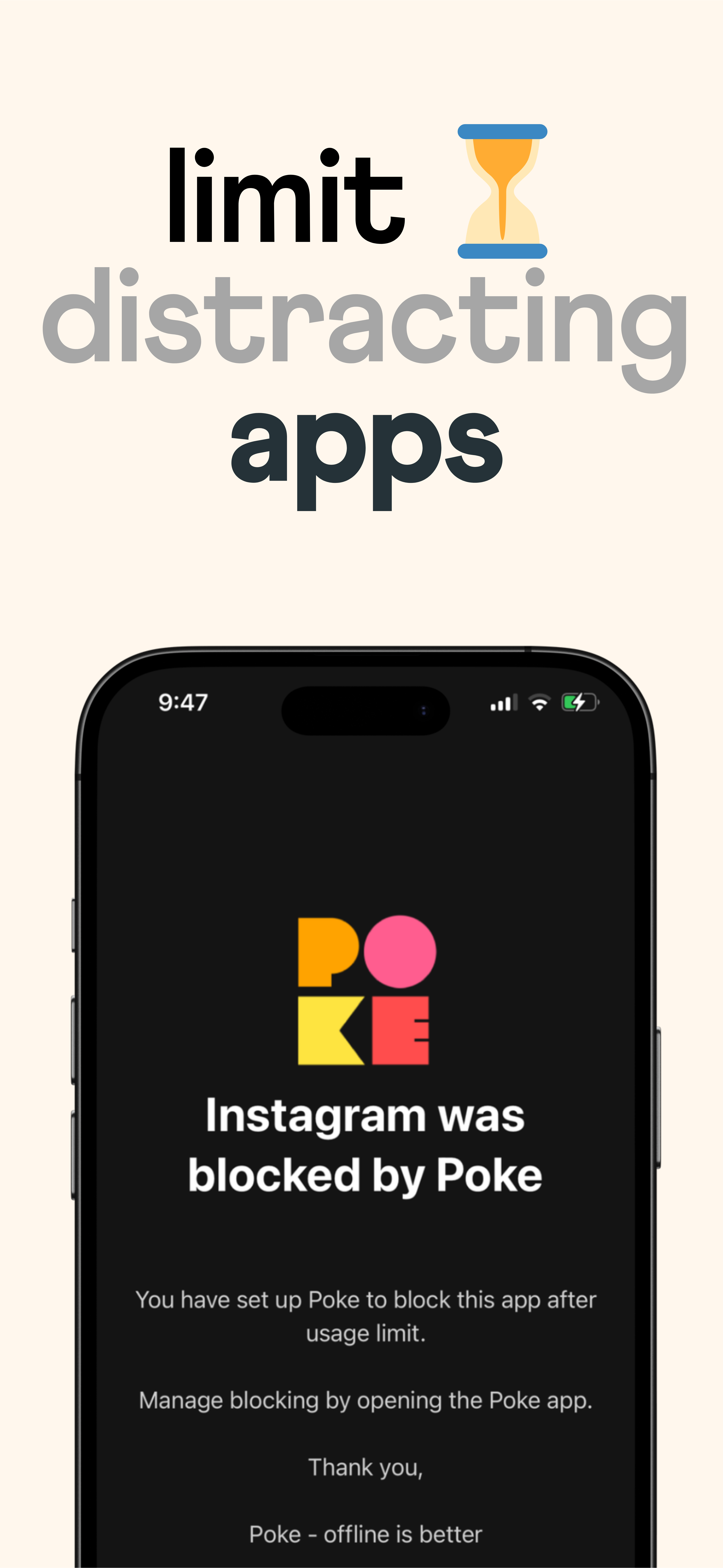
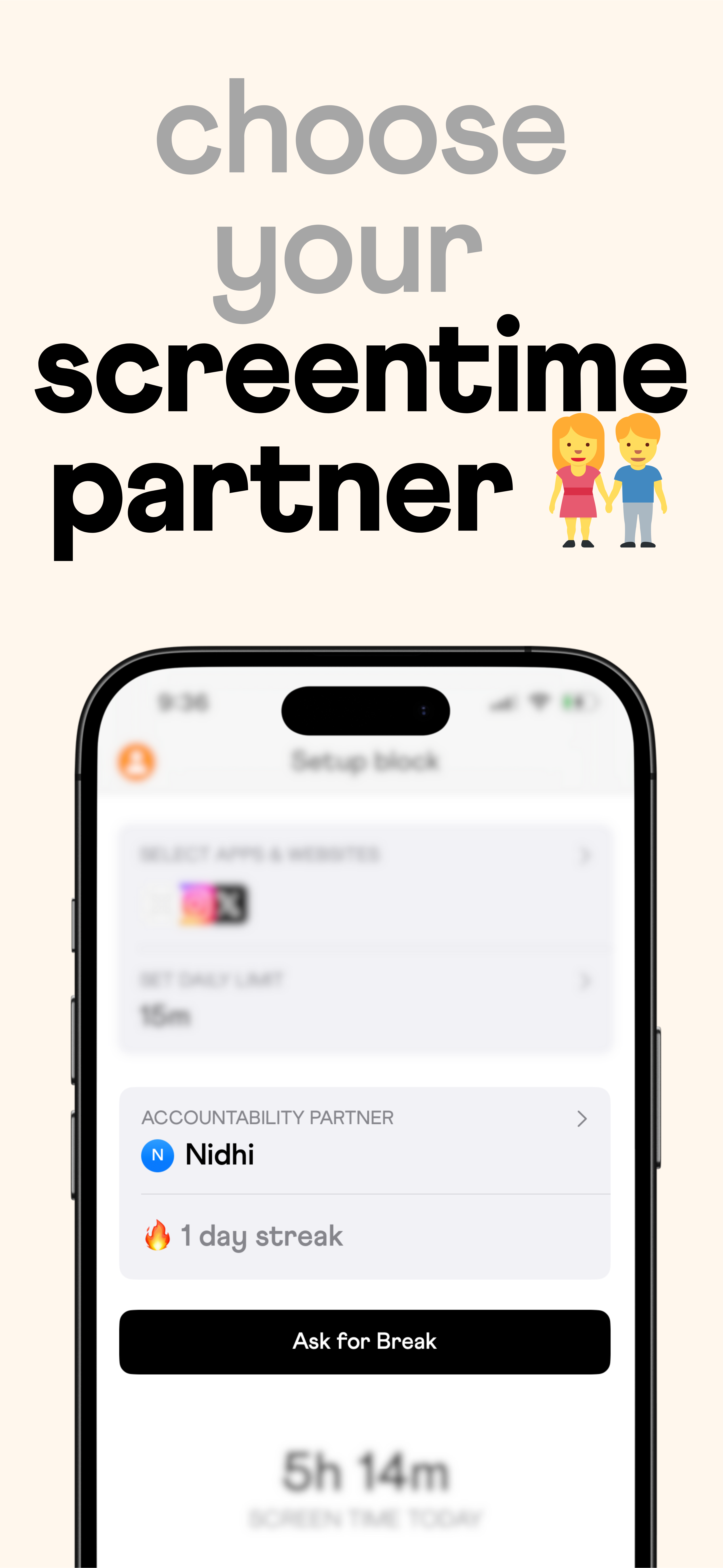
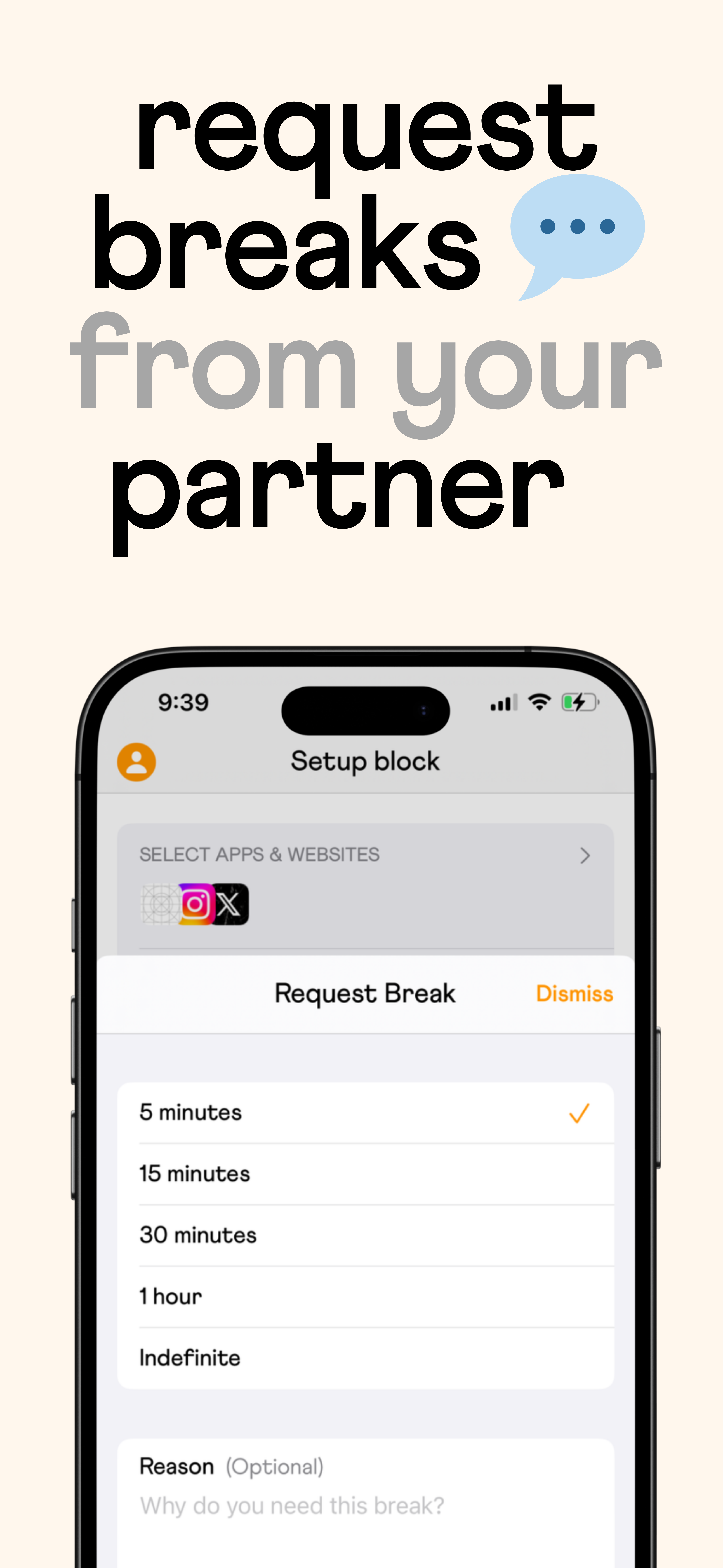
Use a Real Accountability Partner: This is a core feature. Once you reach your self-imposed limit on an app, Poke blocks it. To get temporary access, you must send a real-time request to your designated accountability partner. They have the power to approve or deny it, helping you stick to the goals you committed to.
In short, Poke makes you accountable not just to yourself, but to your friends
How we built it
Poke has been built with continuous, real-world feedback from the very people it's designed for: my friends. The journey wasn't a straight line.
My initial idea was to replace the dopamine we get from social media with something less addictive but still satisfying. The plan was that when a user hit their self-imposed limit on an app like Instagram, Poke would block it and redirect them to harmless mini-games, like popping virtual bubble wrap or solving math challenges. While great in theory, it failed in practice. My friends found it more annoying than helpful and simply uninstalled the app to get back to scrolling.
This failure forced me back to basics. I remembered a simple, analog trick I used to use: I'd give my phone to my roommate and ask him not to give it back until I completed my work. That was the "aha!" moment. What if I could digitize that exact interaction, but only for specific apps?
That's how the "social accountability" aspect of Poke was born. This core idea immediately sparked others, like creating a healthy sense of competition with a leaderboard.
Challenges we ran into
We faced two major challenges during development: one technical and one conceptual.
First, the technical hurdle was integrating with Apple's Screen Time API. As a web developer building my first native mobile app, the learning curve was steep. This was made significantly more difficult by the lack of documentation and community resources for the API. It had numerous quirks and bugs that required a lot of trial and error to navigate, making the core app-blocking functionality a constant challenge to build and stabilize.
Second, we faced a conceptual design challenge. Most self-improvement apps are "habit-building" apps, and there are well-established design patterns for them. Poke, however, is a "habit-breaking" app. Figuring out how to create an experience that motivates users to stop doing something, without feeling overly restrictive or negative, was a major focus. We had to design a system that felt supportive and empowering, rather than a purely restrictive tool.
Accomplishments that we're proud of
By far, the accomplishment I'm most proud of is the real-world impact Poke is having on my friends. Seeing them effectively cut down their screen time using a tool I built has been incredibly rewarding.
Many of them regularly share screenshots of their long-running streaks with me, proud of their progress. I'm constantly bombarded with feedback and new ideas to make the app better.
Most importantly, for many of my friends, opening up Poke to keep track of their screen time has become a positive habit in itself. Knowing that the app has successfully become a part of their daily routine for digital wellness is the biggest win I could have asked for.
What we learned
This project taught me two foundational lessons about building a product.
First and foremost, be obsessed with the problem, not the product. If I had stubbornly stuck to my initial idea for Poke with its mini-games, it would have failed. That version was a solution I was attached to, but it wasn't the right one for the actual problem. Learning to let go and pivot based on real-world failure was the most critical step in this journey. The goal is to solve the user's problem, no matter what form the solution takes.
Second, I learned the immense value of investing in a small group of early users and iterating relentlessly based on their feedback. Instead of building in isolation, the right approach was to get an unpolished—but carefully built—version into the hands of friends as quickly as possible. Their honest feedback became the compass for the entire project. This process proved that you shouldn't wait for perfection; you should launch, listen, and improve from there.
What's next for Poke: Screen Time Social
The journey for Poke has just begun, and the roadmap is focused on making the experience even more engaging and effective. Our next steps are centered around two key areas:
1. Enhanced Gamification and Motivation
To make the habit-breaking process more fun and rewarding, we plan to introduce:
- Achievements and Levels: A full progression system to reward users for hitting milestones and maintaining long streaks.
- Smarter Notifications: More dynamic and personalized reminders that help users stay mindful of their goals throughout the day.
2. More Powerful and Flexible Blocking Controls
To give users more fine-tuned control over their digital environment, we will be improving the core blocking functionality with:
- Advanced Blocking Schedules: Users will be able to set multiple duration-based blocks (e.g., "block after 2 hours of usage") and time-window-based blocks (e.g., "block from 9 AM to 5 PM").
- "Unblocking Challenges": To add a layer of mindful friction, we're excited to introduce optional challenges that a user must complete before unblocking an app. This could be a simple countdown timer to force a moment of reflection or even a physical challenge like doing a set of pushups.
Built With
- revenuecat
- supabase
- swiftui

Log in or sign up for Devpost to join the conversation.