-
-
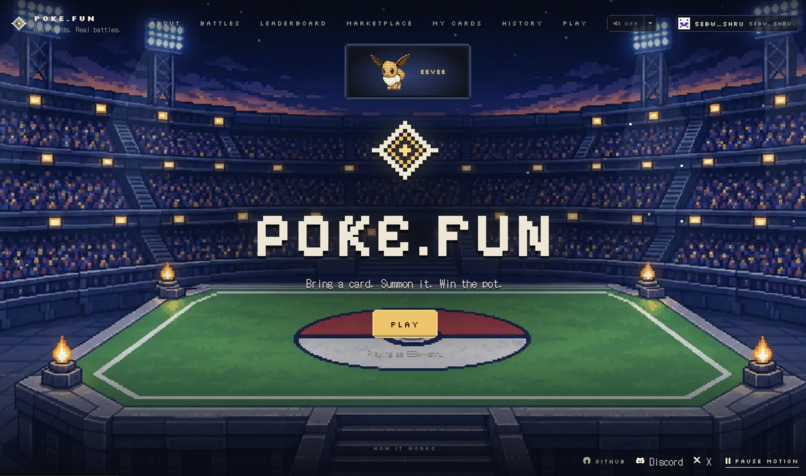
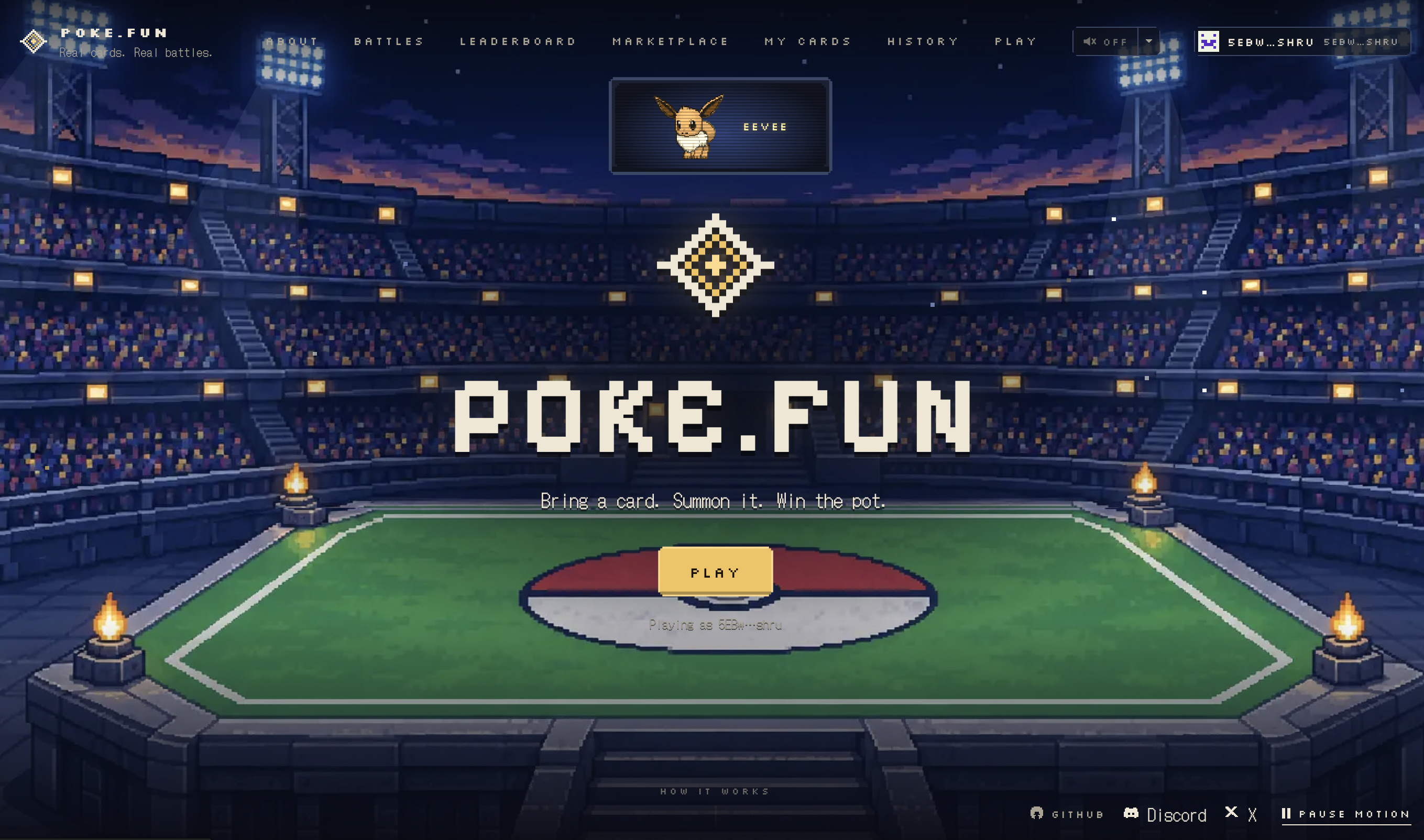
Home Page
-
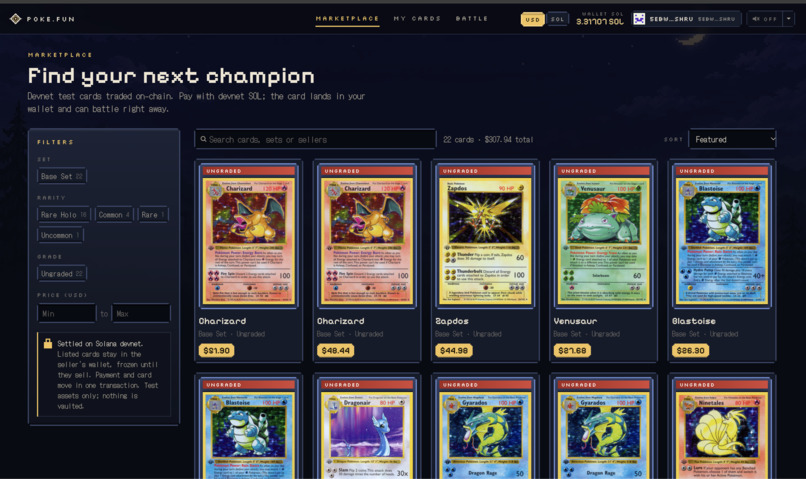
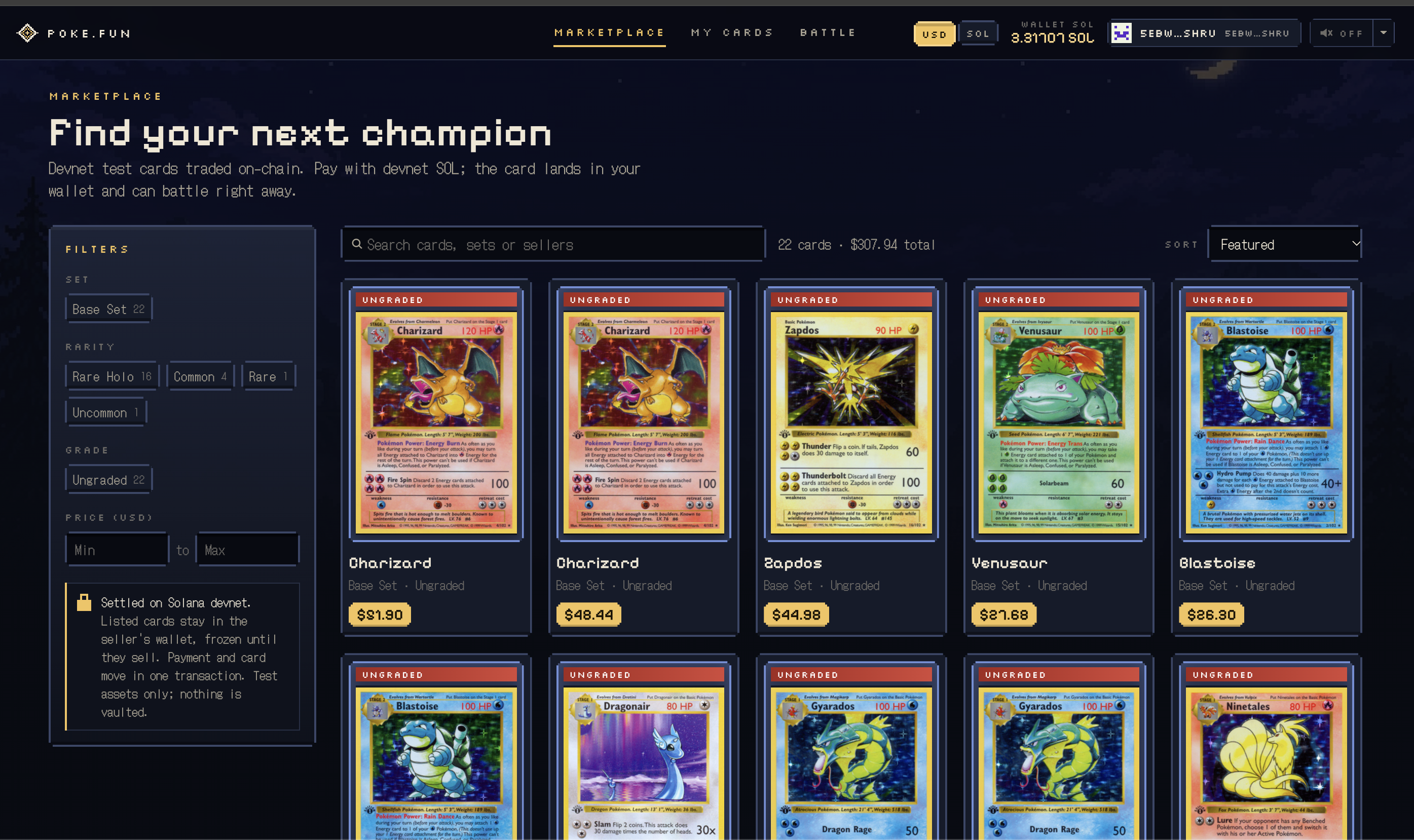
Marketplace
-
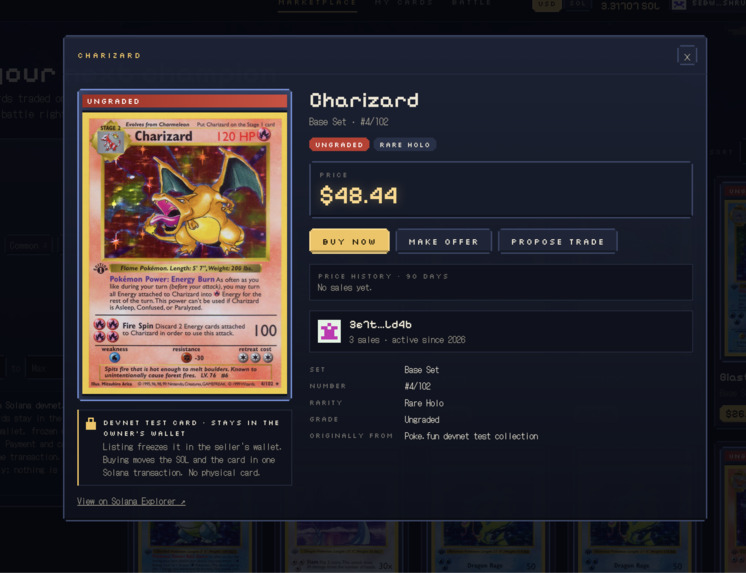
Propose trades
-
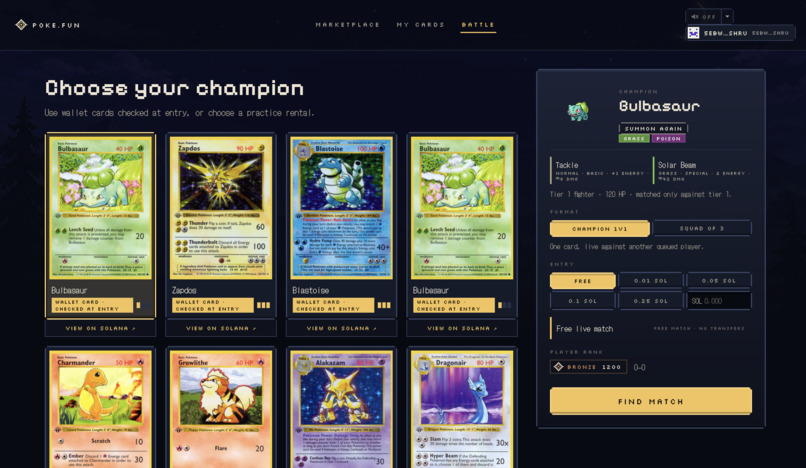
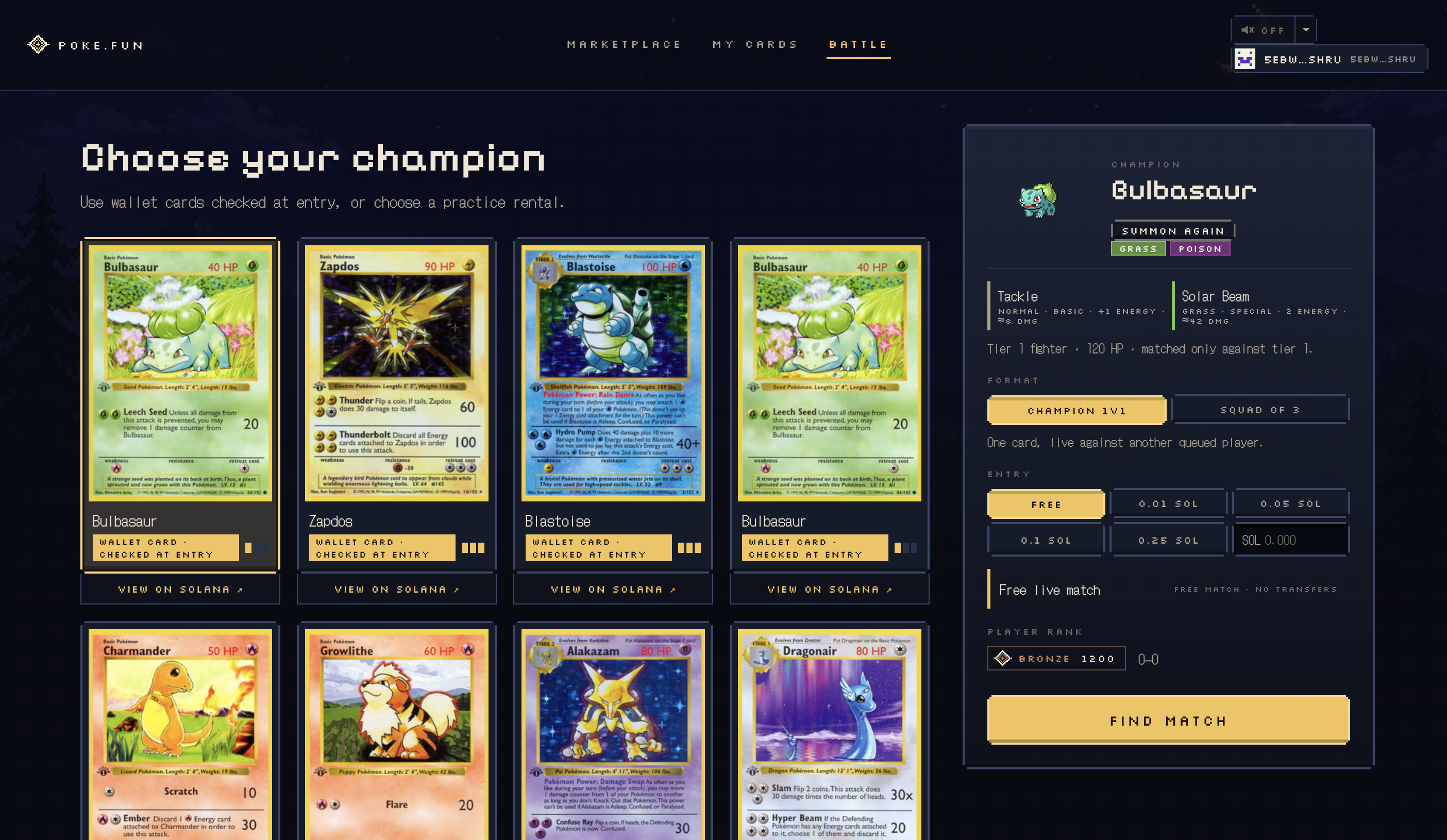
Battle Page
-
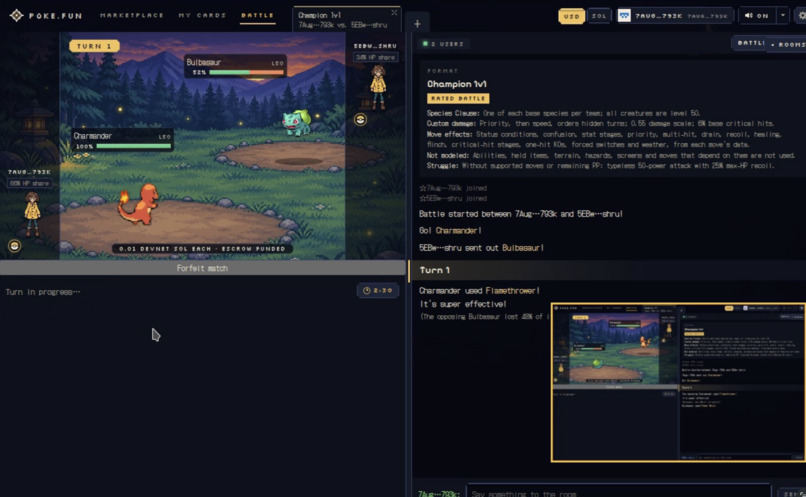
Gameplay

Inspiration
Pokémon cards were already big on NFT marketplaces. On Collector Crypt, about 81% of pack spending in July 2026 went toward Pokémon packs. But once you got a card you liked, it mostly sat in a vault while you waited to see if it went up in value.
We love Pokémon, and we wanted to actually play with the cards we collect. So we built Poke.fun. You can summon your favorite Pokémon, fight your friends, and trade cards with them.
What it does
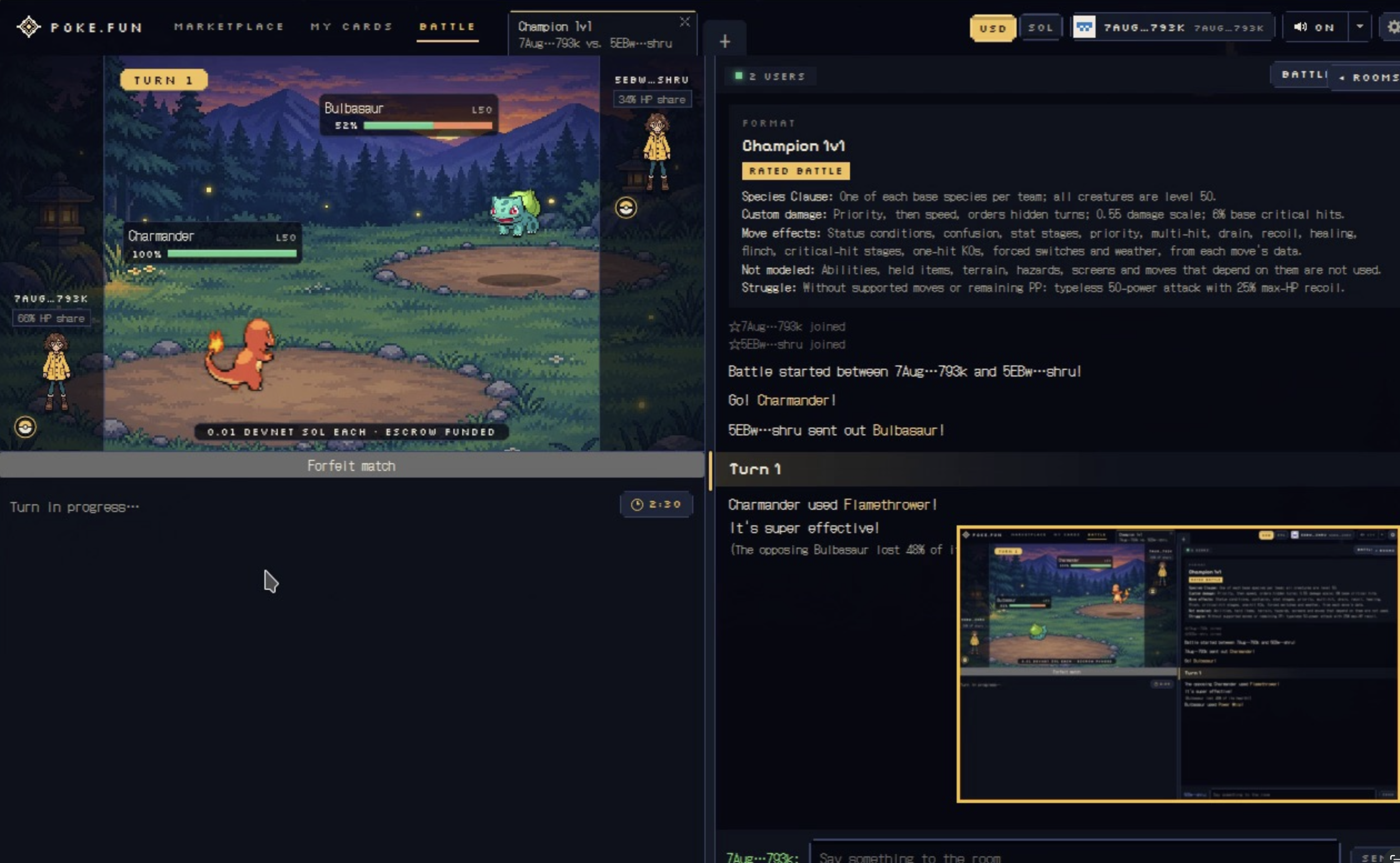
Poke.fun lets players collect, battle, and trade Pokémon card NFTs in their browser. Players connect a Solana wallet, mint test cards, choose a fighter or a three-card squad, and battle other trainers.
The marketplace lets players list cards and purchase them with SOL. Payment and NFT transfer happen atomically, and purchased cards appear in the buyer’s collection.
How we built it
We built the frontend with Next.js, React, and TypeScript, backed by a Go server for matchmaking, battle simulation, and results. Pokémon stats, moves, and type matchups come from PokéAPI data.
We used Solana, Anchor, and Metaplex Core for NFT ownership and marketplace transactions. Phantom provides wallet connection and signed authentication, while a Go index keeps collections, listings, and sale history synchronized with the blockchain.
Challenges we ran into
One of our biggest challenges was making Poke.fun easy to get into for people who’ve never used crypto. We built guest mode and rental cards so anyone can jump into a free battle without setting up a wallet. Players can connect Phantom later if they want to collect or trade cards.
Behind the scenes, keeping ownership in sync across wallets, battles, and the marketplace was tricky. A listed card needed to stay in its owner’s wallet and remain playable, while being locked against transfers that could invalidate the sale.
We also had to handle the gap between a transaction confirming on Solana and that update showing up in the app. Devnet funding limits and hosting permissions added a few hurdles during deployment.
Accomplishments that we’re proud of
We verified the complete mint → list → buy → transfer flow against a local Solana validator running the real marketplace and Metaplex Core programs.
We also replaced fake wallet authentication and generated inventory in the main flow with verified signatures and blockchain data. Validation included 39 contract checks, backend tests, battle tests, and a successful production frontend build.
What we learned
We learned that blockchain ownership is only useful when the entire application respects it. Collections, matchmaking, and purchases all need to agree on who owns a card.
We also learned how much clear feedback matters. Submitting a transaction, confirming it, and displaying its indexed result are distinct steps that players need to understand without knowing the underlying infrastructure.
What’s next for Poke.fun
Our next step is completing public Devnet deployment and making onboarding smoother so more players can test collecting, battling, and trading together.
From there, we want to expand card support, improve battle balance, and strengthen persistence and transaction recovery. Before considering mainnet, we’ll need independent contract review and further security testing.
Built With
- anchor
- go
- next.js
- node.js
- phantom
- pokeapi
- privy
- react
- render
- rust
- solana
- typescript
- websockets


