-
-
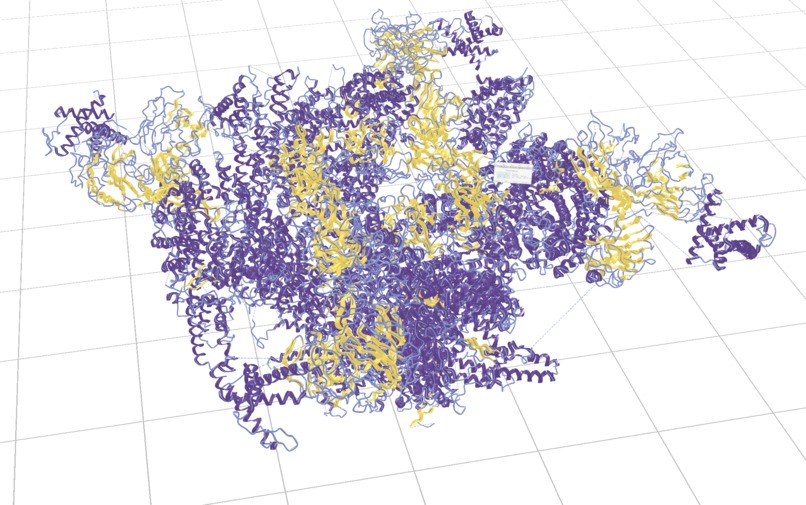
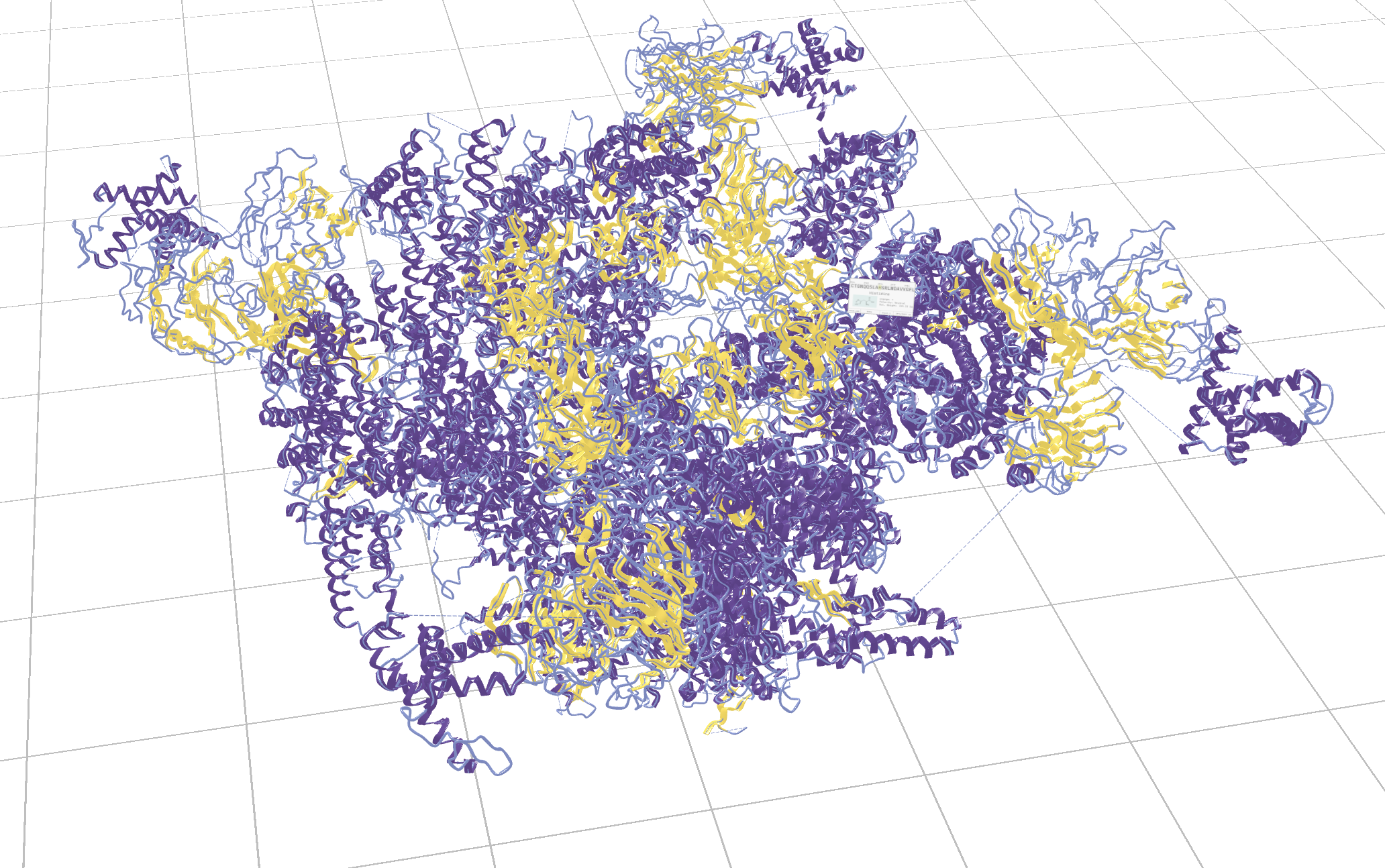
a bird's eye view of a complex protein in VR
Inspiration
Kathryn recently graduated with a bioinformatics degree. As part of her masters project, she did one of the first mappings of validated variants to domains within the RYR1 protein, a key protein for muscle function. This protein is an example of something that is super hard to work with because it’s massive, and traditional tools struggle to work with it. By placing this protein in VR, scientists are able to see the complex spatial structure of the protein. Furthermore, by taking it into a cross-platform environment, we can have groups of scientists identify and discuss areas of interest in the protein for research in drug discovery, drug design, and protein-protein interactions. The MX Ink Stylus allows for affordances related to technical collaboration.
What it does
Our prototype places a massive protein in VR and exposes this to a shared virtual environment where users of the Logitech MX Ink Stylus can interact with protein and see metadata related to sequences for collaborative analysis and sensemaking. We currently use a prototype interface with mockups containing real amino acid data. For example, when you're looking at a binding pocket, being able to tap each residue lining and see its properties (residue #, chain #, charge, polarity, size).
How we built it
We used the Stylus’s WebXR capability with Three.js based project. Brahma.js opens source library to provide spatial locomotion techniques, shared user interfaces, and avatar embodiment. We assigned secondary structure algorithms to replace subjective, manual interpretation and enable accurate, standardized comparisons of structures. We used bioinformatics techniques to ensure accurate 3D visualization.
Challenges we ran into
The protein is really massive, so we had to create custom rendering techniques. We had to iterate on the design; as designing spatially is a novel paradigm. We also had to perform bioinformatics processes to create missing residues from within the source protein database file.
Accomplishments that we're proud of
- Integration of the Logitech MX INk in a cross-platform environment.
- Spatial rendering of a massively large protein.
- Custom secondary structure DSSP algorithm implementation for protein 3D visualization.
What we learned
- Interaction techniques and capabilities of Logitech MX Ink Speed.
- How to integrate massive scientific datasets with Logitech products.
- AI-assisted coding techniques to generate novel rendering approaches for molecular visualization.
Built With
- bioinformatics
- dssp
- pdb
- three.js
- webxr


Log in or sign up for Devpost to join the conversation.