-
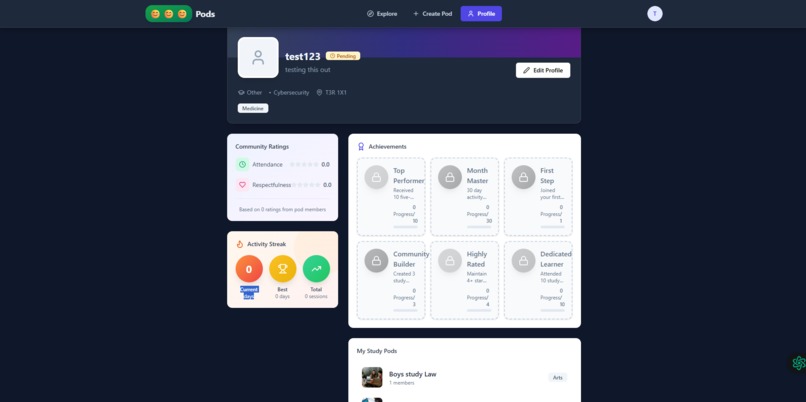
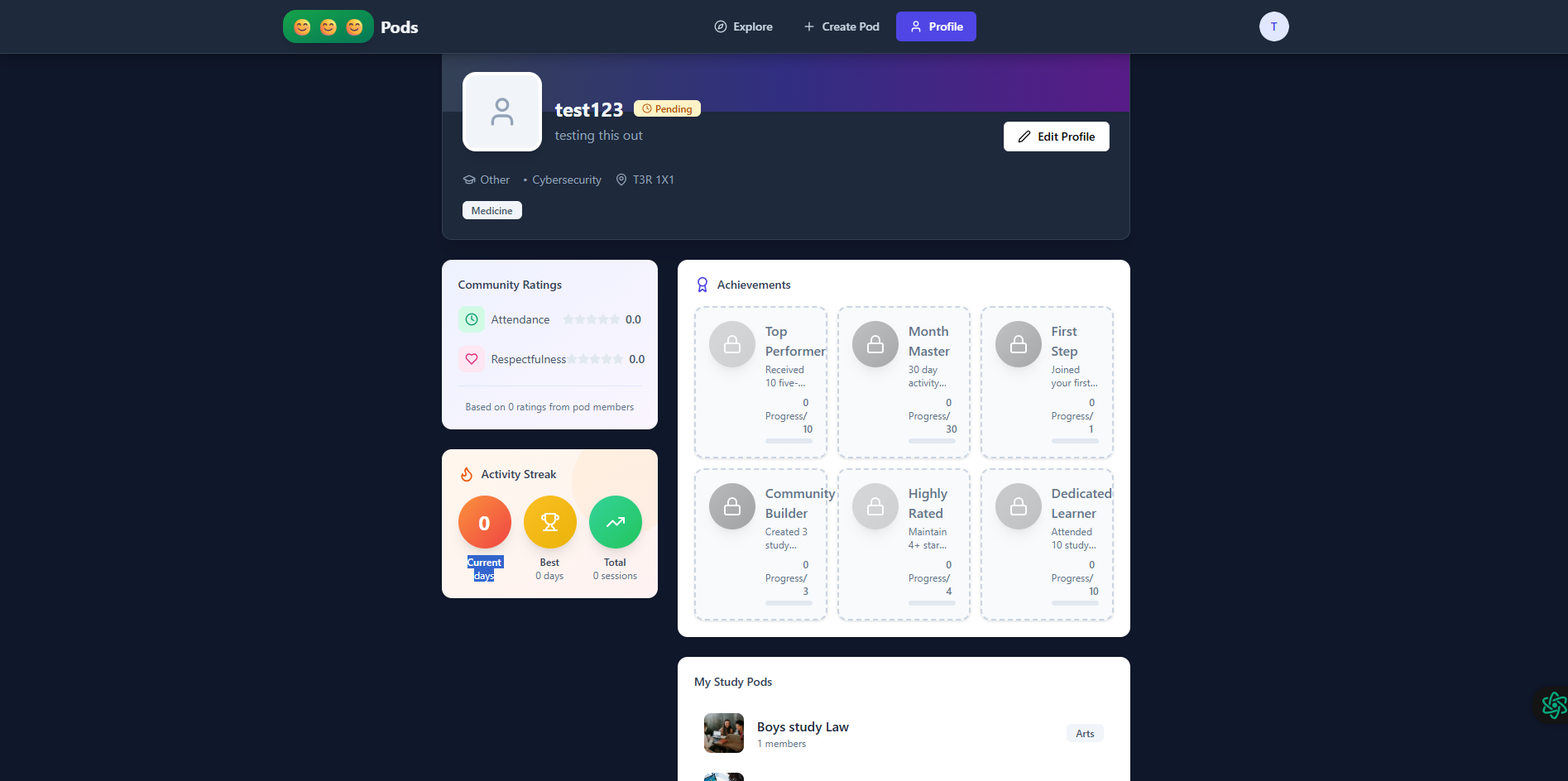
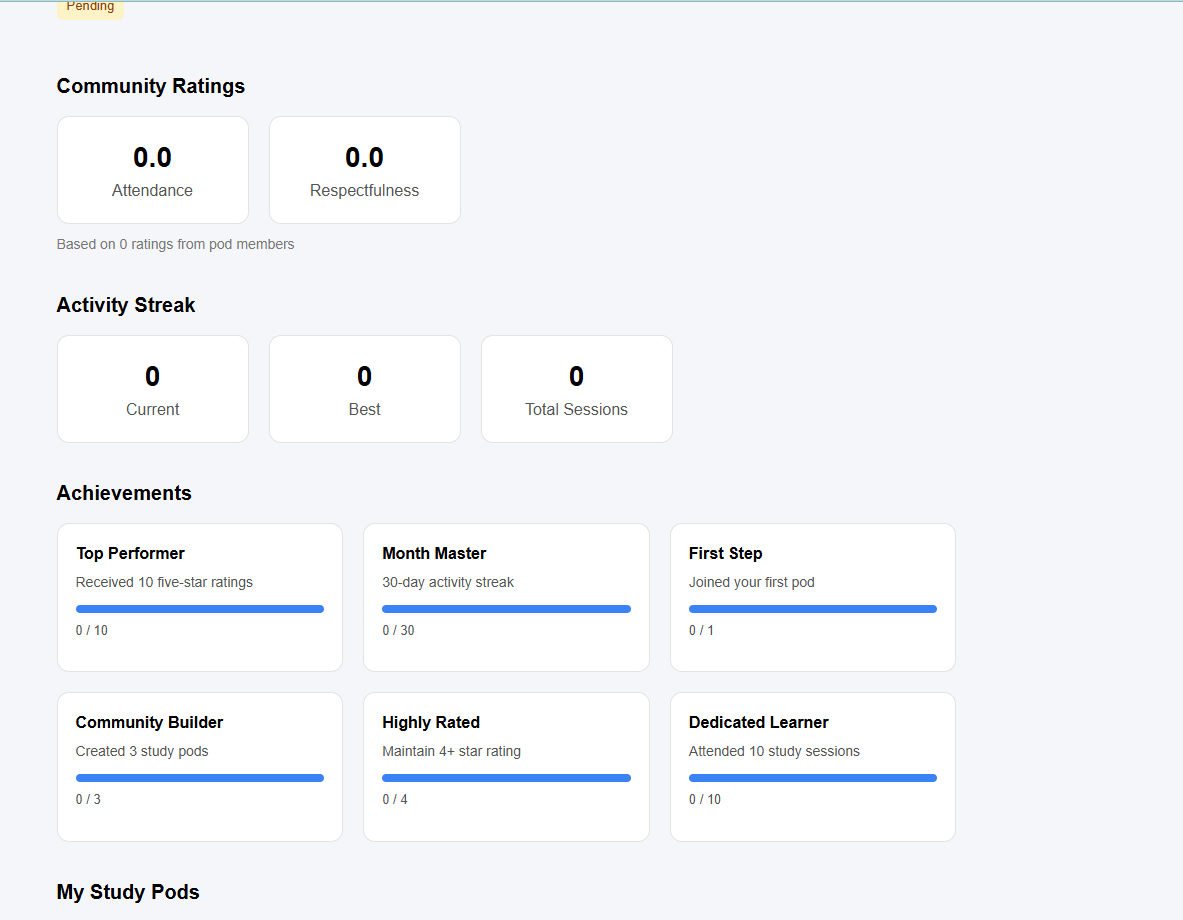
Profile
-
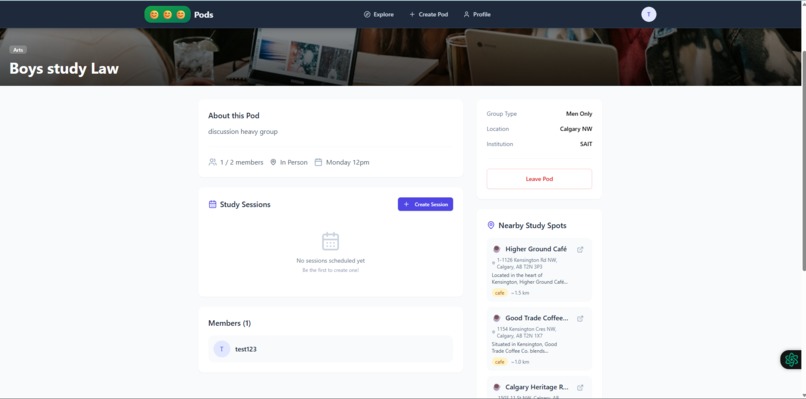
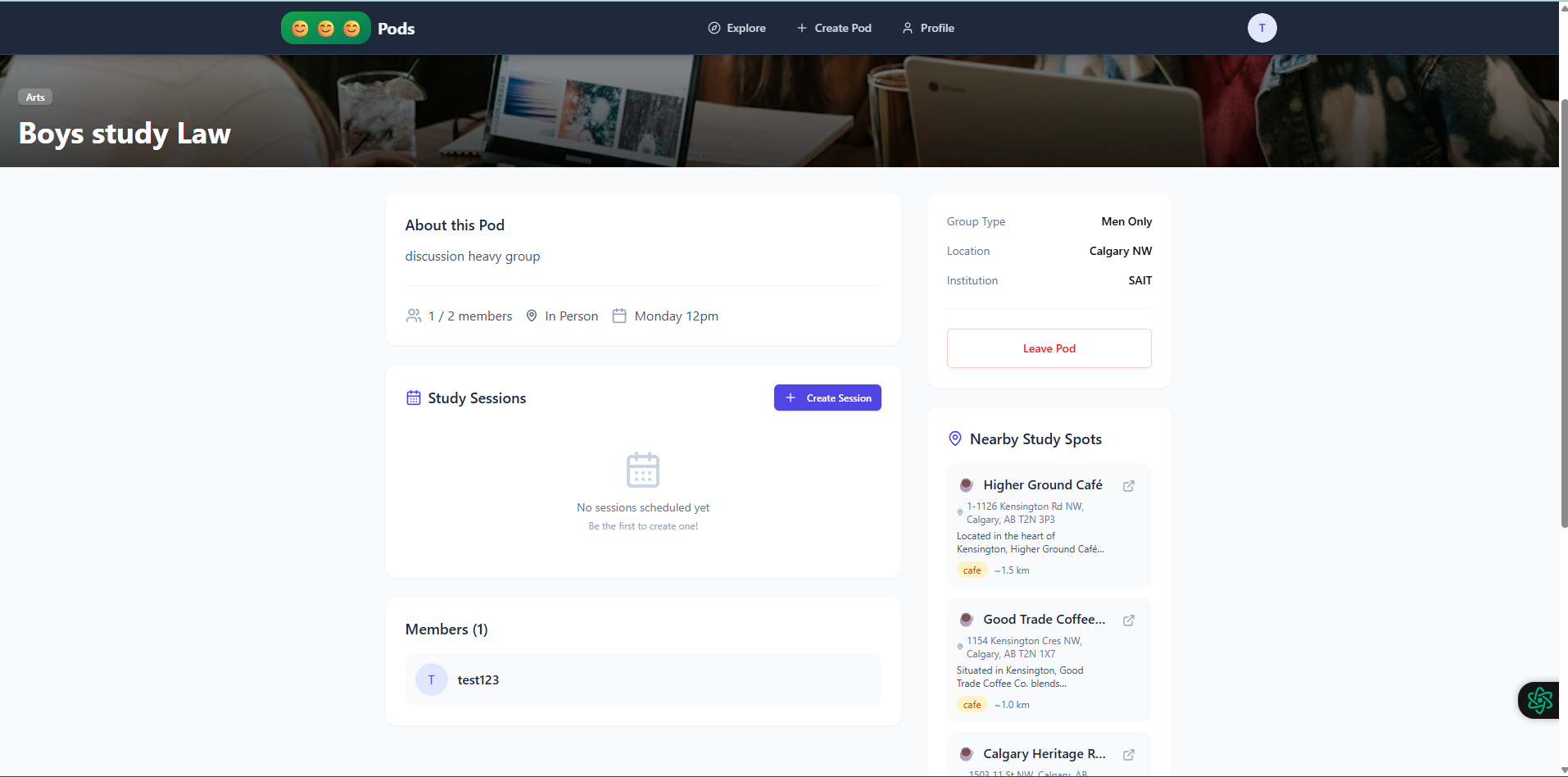
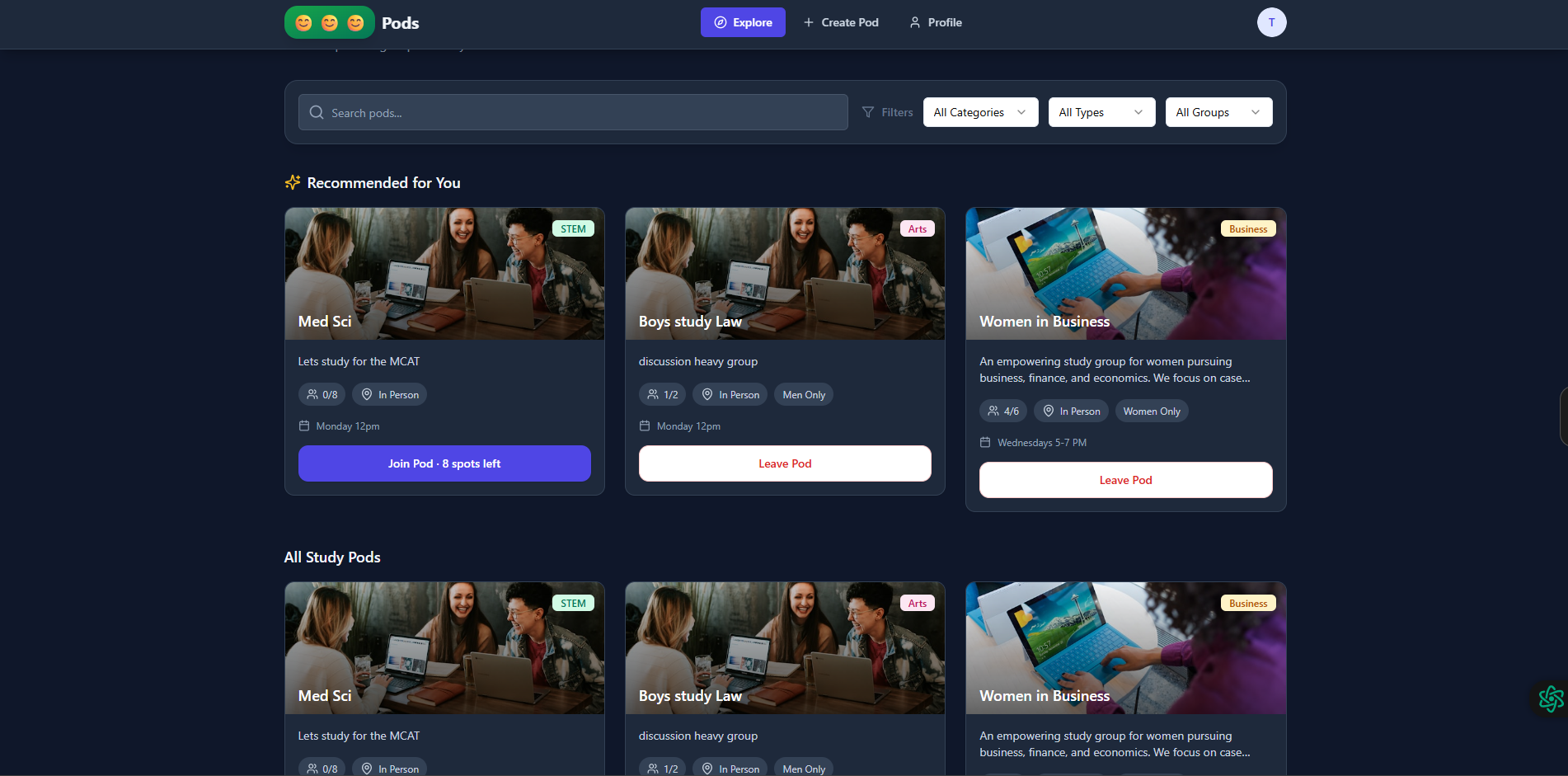
View Details for Pods with additional cafe suggestions near you
-
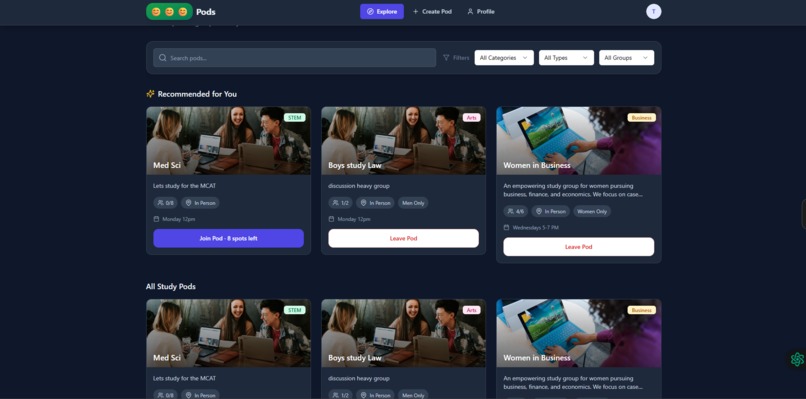
Explore page with custom Pod added
-
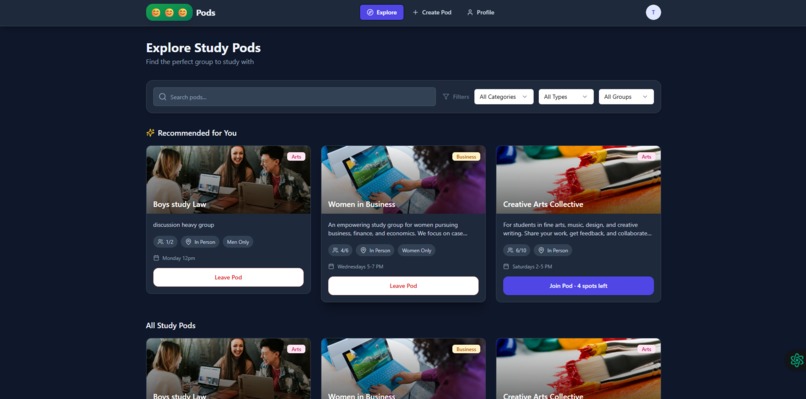
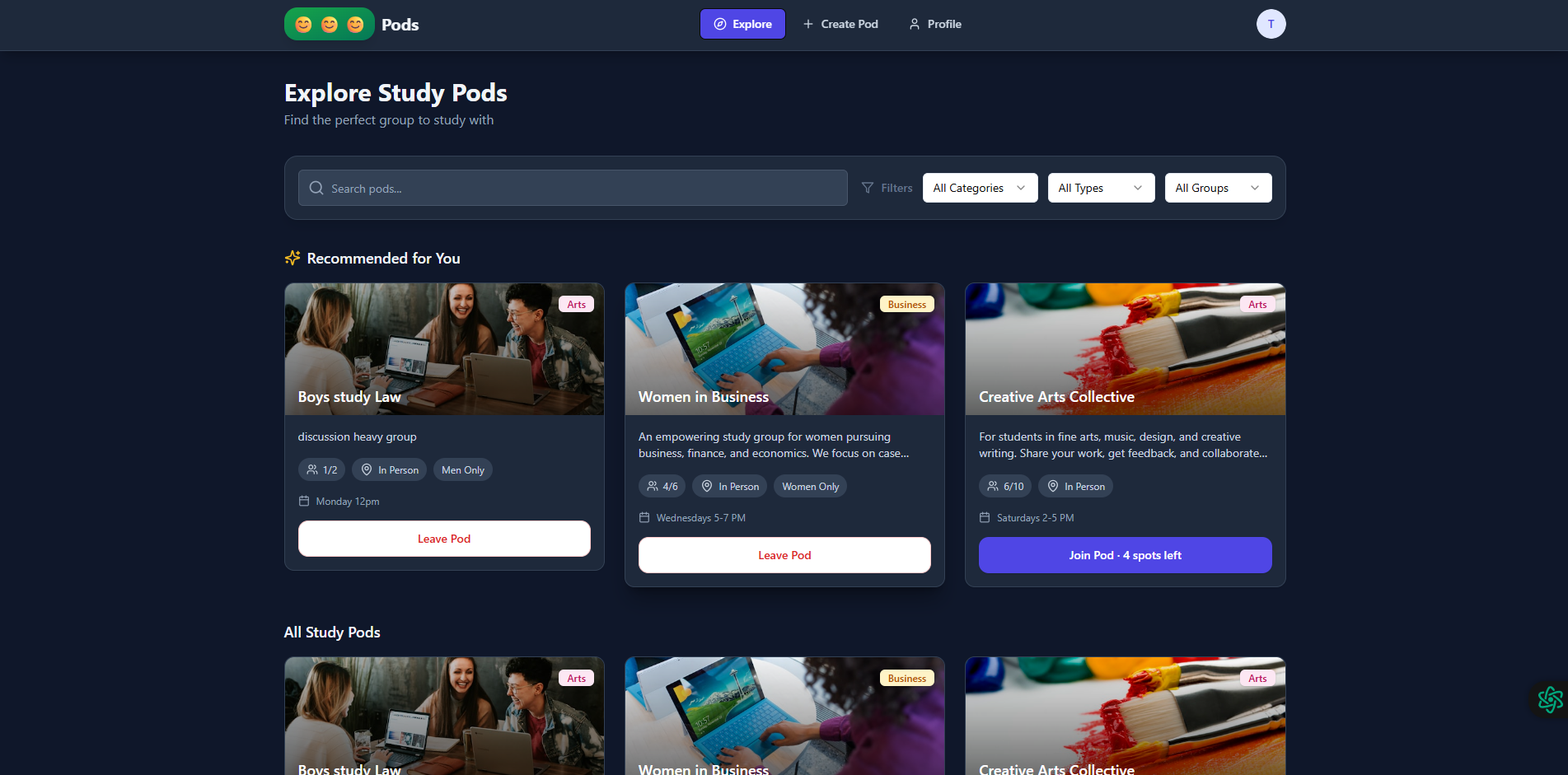
main explore page for Pods
-
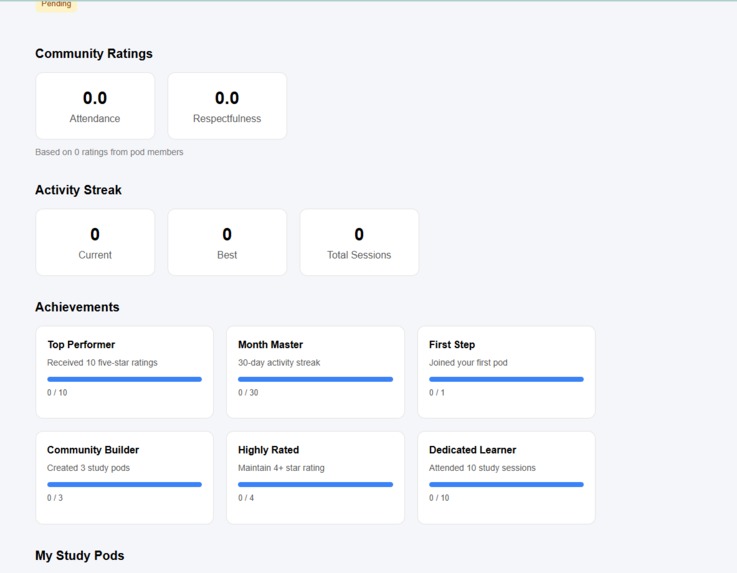
Skeleton Site --> First stage
-
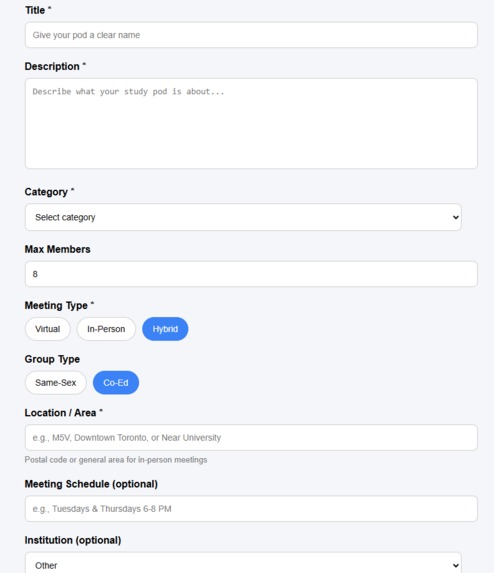
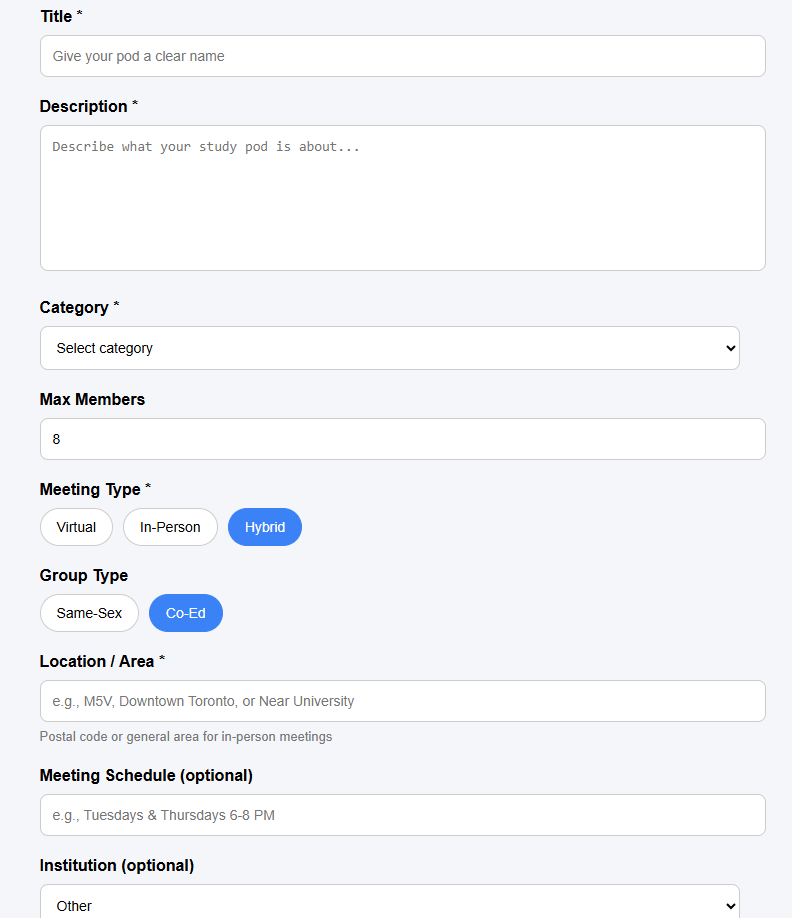
Skeleton Create Pod
Vision
Our vision is to make connection a built-in part of studying so no student has to succeed alone
Inspiration
Pods started with a feeling we couldn’t ignore. While researching student life, we came across hundreds of posts and reviews from university students describing the same experience: doing everything “right,” yet feeling deeply alone. Students talked about going to lectures, completing labs, joining clubs, and still graduating without a single meaningful connection. The words that kept repeating were isolated, invisible, disconnected. One review described university as “the most depressing experience of my entire life,” not because of academic difficulty, but because of the loneliness. Another student wrote about forcing themselves to talk in class, joining clubs, and attending events, only to feel like everyone else already belonged somewhere else. These weren’t rare outliers. There were hundreds of stories just like this. What made this even more striking was a statistic we encountered in our research: nearly 70% of post-secondary students report feeling isolated or lonely during their studies. This wasn’t a personal failure or a lack of effort; it was a systemic problem.
What We Learned
University environments assume that connection will happen naturally. Sit next to people in lectures. Join a club. Work in groups. But in reality, most of these spaces are passive, crowded, and intimidating. Students often don’t know who to approach, how to approach them, or whether their efforts will even be welcome. We realized that isolation isn’t about students being antisocial; it’s about friction. The friction of starting conversations, the fear of being awkward, and the uncertainty of whether you belong.
What it does
Pods turns studying from a solo grind into a shared experience. Instead of sitting alone in lectures, libraries, or Discord servers hoping to “click” with someone, Pods connects verified post-secondary students into small, compatible study groups called pods based on program, location, and how they actually like to study. Every pod is intentional. No random group chats. No awkward introductions. Just real students who want the same thing: focus, accountability, and connection. With Pods, you’re matched with people nearby who share your academic goals and boundaries, making it easier to show up, stay consistent, and feel like you belong. You can join a pod, leave if it’s not the right fit, and rematch without pressure. Studying becomes more than just getting through assignments; it becomes a way to build routine, confidence, and community. Pods doesn’t ask students to be louder, more outgoing, or more social. It removes the friction that makes connection hard in the first place. Because university is challenging, but it shouldn’t be lonely.
How We Built Pods
Pods was designed to remove that friction. Instead of asking students to repeatedly put themselves out there, Pods creates small, intentional study groups—or “pods”—made up of verified post-secondary students. Students are matched based on compatibility factors like program, location, and preferences, so when they join a pod, everyone is there for the same reason. By keeping groups small and purpose-driven, Pods turns studying into a shared experience rather than a solitary one. It gives students a clear reason to meet, talk, and build trust—without the pressure of forced socializing or random encounters.
Challenges We Faced
One of the biggest challenges was balancing safety, privacy, and accessibility. Students want connection, but they also want to feel secure. That’s why verification was a core part of our design—so users know they’re connecting with real students from real institutions. Another challenge was designing something that didn’t feel like “just another social app.” Pods isn’t about endless messaging or superficial profiles. It’s about creating real-world connections through shared goals and accountability.
Why Pods Matters
University should be challenging but it shouldn’t be lonely. Pods exists because too many students are graduating feeling unseen, disconnected, and regretful, not because they didn’t try, but because the system didn’t help them connect. We built Pods to make sure fewer students feel like they went through some of the most important years of their lives alone.
What's next for Pods
Pods is designed to scale with students, not overwhelm them. Next, we plan to expand Pods with smarter matching logic that adapts over time using attendance patterns, study preferences, and pod feedback to continuously improve group compatibility. We envision campus-level rollouts where Pods integrates with university systems for streamlined verification, while remaining privacy-first and student-controlled. As adoption grows, Pods can support:
- Course-specific pods
- Time-based and goal-based matching -Cross-faculty collaboration
- Insights into student engagement trends (anonymized) Because Pods isn’t just a study tool but a scalable infrastructure for connection, accountability, and belonging across post-secondary education.
Built With
- base44
- chatgpt
- firebase
- gemini
- visual-studio


Log in or sign up for Devpost to join the conversation.