Inspiration
As a podcaster myself, I spent endless nights editing audio, drafting show notes, and manually publishing across platforms—wasting time I could’ve spent creating content. I saw fellow creators in my network struggling with the same pain points: the production grind was overshadowing the joy of podcasting. That’s when I knew I needed to build a tool that automates the tedious parts, so creators could focus on what matters—their voice.
What it does
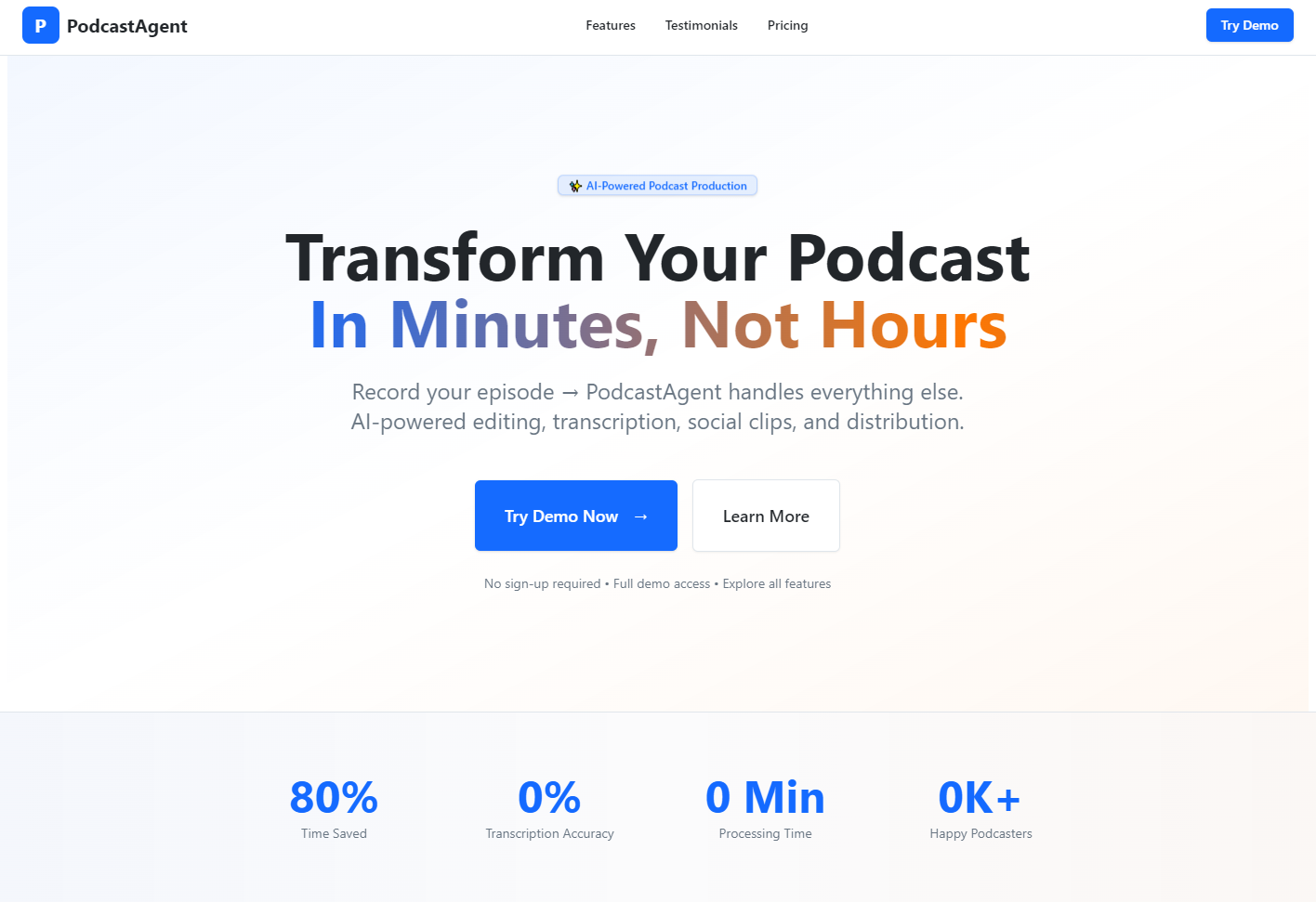
PodcastAgent is an all-in-one platform that transforms raw podcast recordings into professional, publish-ready content. It uses AI to edit audio (removing filler words/silences), generate show notes/transcripts/blog posts, create branded social clips with subtitles, and publish episodes to Spotify, Apple Podcasts, and more—all with minimal manual work.
How we built it
We started by mapping core user workflows (upload → edit → create → distribute) and prioritizing AI-driven features. The backend was built with Python/Node.js, leveraging AWS for scalable audio processing and PostgreSQL for data storage. We integrated OpenAI’s API for transcription/content generation and FFmpeg for audio/video manipulation. The frontend (React) focused on intuitive UX—like interactive waveform timelines and drag-and-drop scheduling. We tested with real podcasters to refine the AI accuracy and UI flow.
Challenges we ran into
The biggest hurdle was hitting our 95% accuracy target for filler word removal—regional speech variations made it hard to train the AI model. We also faced API rate limits with podcast platforms during bulk publishing, and ensuring smooth audio/video rendering across different file formats took weeks of debugging FFmpeg configurations.
Accomplishments that we're proud of
We achieved 99% transcription accuracy for clear English audio and cut average episode processing time to 8 minutes per hour of raw recording. Early beta users reported a 70% reduction in production time, and the social clip tool’s auto-generated subtitles and branding features became a fan favorite—creators loved the one-click share to social platforms.
What we learned
Building for creators means prioritizing flexibility: even with AI automation, users want control (e.g., accepting/rejecting AI edits). We also learned that seamless third-party integrations make or break adoption—streamlining OAuth connections to podcast platforms was critical for user retention. Most importantly, testing with real users early and often kept us from over-engineering features no one needed.
What's next for this project
We’re expanding audio enhancement features beyond noise reduction, adding support for longer episode durations for enterprise users, and building out advanced analytics (listener retention, drop-off points). We also plan to integrate with popular recording tools and add multi-language transcription to serve more creators—all while keeping the core mission: making podcast production effortless.

Log in or sign up for Devpost to join the conversation.