Inspiration
As a lifelong podcast fan who spends 3+ hours weekly tuning into shows like The Daily and Huberman Lab, I kept craving more than just listening—I wanted to talk about the episodes, connect with people who shared my passion, and engage directly with the creators I admired. I noticed there was no simple, accessible space for this—most platforms required logins, were clunky, or focused on just one part of the experience. That’s when I decided to build something for people like me: a community hub that puts connection at the center, no barriers attached.
What it does
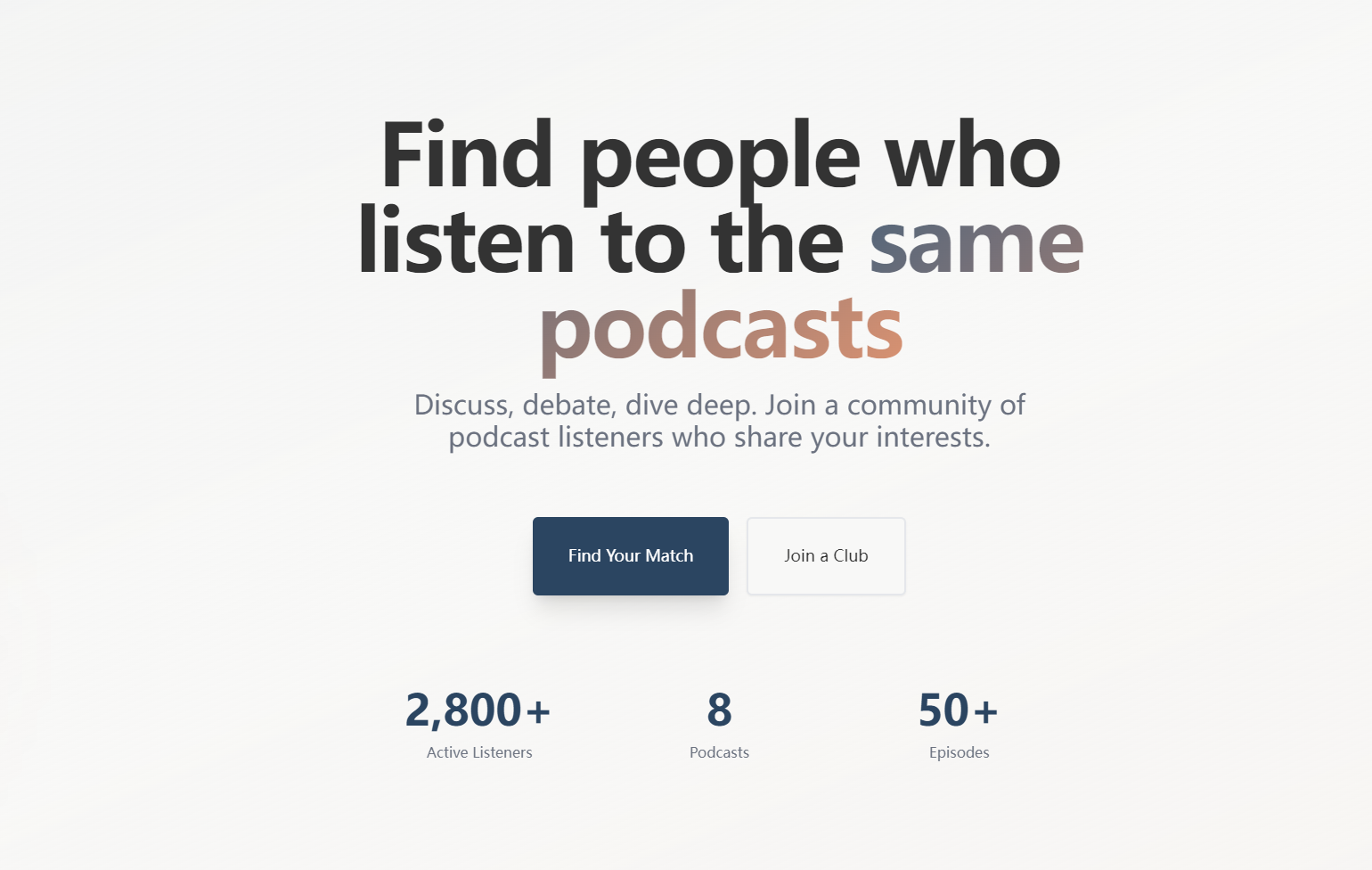
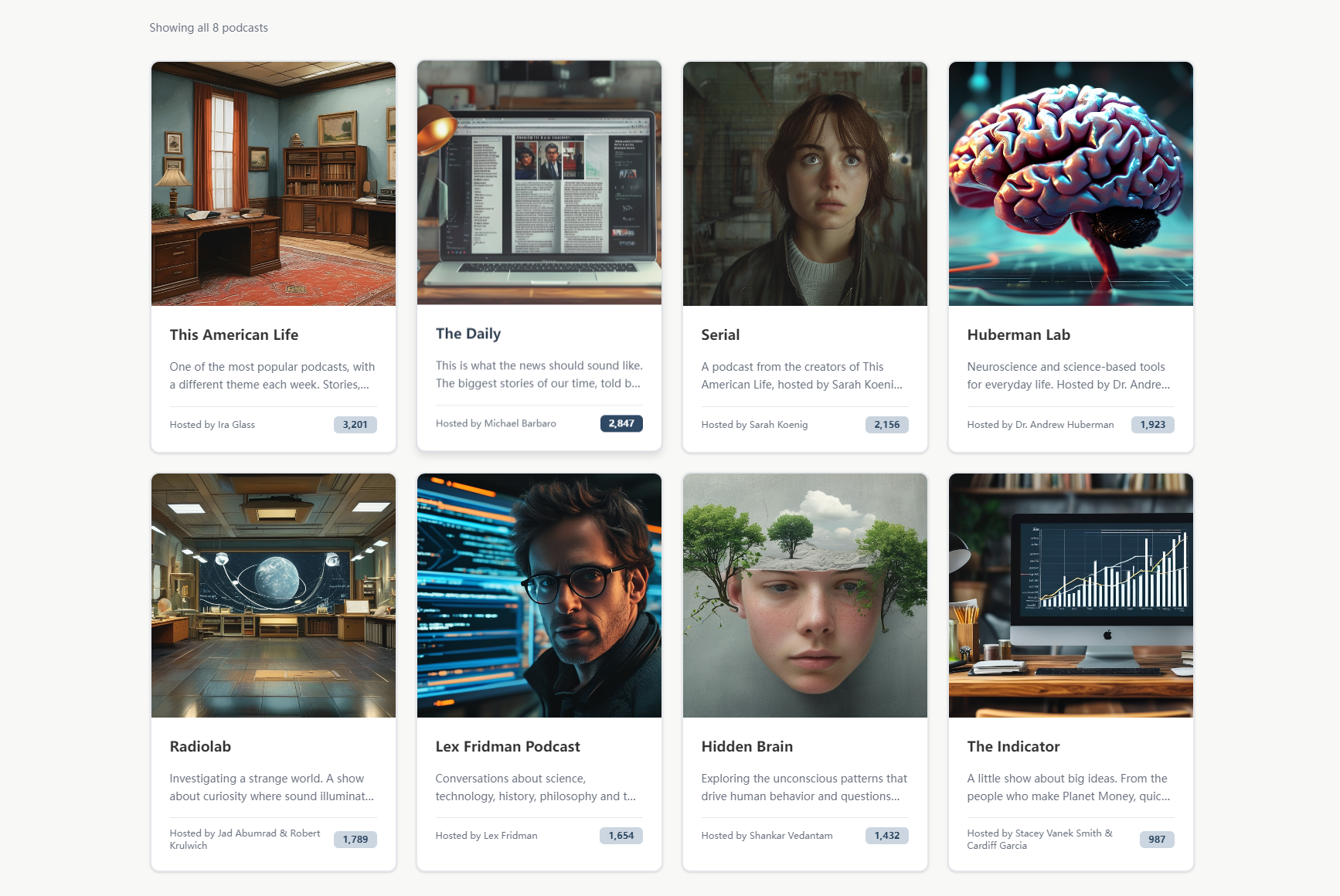
Podcast Listener Club is a mobile-responsive web app that lets podcast lovers connect globally. You can discover listeners with similar tastes, join episode-specific discussions (with threaded replies and comment tagging), explore personalized podcast recommendations, check out AMA schedules with creators, and join topic-based clubs (like True Crime or Science & Philosophy groups) with regular meetings—all without logging in.
How we built it
I started by mapping out core user journeys: from landing on the homepage (with trending podcasts and hot discussions) to diving into episode threads or AMA details. I used React for the front end to keep the UI responsive and dynamic, paired with Node.js for backend logic. Firebase handled data storage for discussions and club details, while AWS hosted the app for global accessibility. I integrated podcast data APIs to pull real show/episode info and used Bootstrap to ensure mobile responsiveness across all pages.
Challenges we ran into
The biggest hurdle was designing the listener matching feature to feel organic and relevant—balancing simplicity with enough detail to make connections meaningful. I also struggled with making the threaded comment system intuitive on mobile, as nested replies can get messy on small screens. Additionally, structuring the AMA calendar to display upcoming and archived sessions clearly required iterating on multiple calendar plugin configurations to hit the right flow.
Accomplishments that we're proud of
We created a fully accessible platform—no logins, no paywalls, just instant access to all features. The mobile design works seamlessly on phones and tablets (critical for on-the-go podcast fans), and the listener matching and recommendation features feel personal and tailored to real podcast preferences. Most importantly, every page ties back to the core goal: building community, whether it’s a debate on a Hidden Brain episode or joining a weekly True Crime club discussion.
What we learned
I deepened my skills in responsive design for global audiences, learned how to integrate multiple APIs while keeping the user experience smooth, and discovered the importance of simplicity—removing login barriers made the app feel welcoming, which is key for building community. I also learned that user-centric design means prioritizing small details: like making comment tags (Agree/Disagree/Insightful) easy to use, or ensuring AMA archives are easy to search and browse.
What's next for this project
First, we want to add search functionality to let users find specific podcasts, episodes, or clubs faster. We also plan to expand the club feature to let users suggest new topic-based groups, and enhance the AMA experience with live session support. Long-term, we hope to partner with smaller podcast creators to feature their AMAs and grow the community beyond mainstream shows—making space for niche podcasts and their fans too.

Log in or sign up for Devpost to join the conversation.