Inspiration
We both love podcasts and know how powerful they can be for shifting your mindset or helping you feel less alone. But sometimes, when you're in a certain mood — like stressed, tired, or even just bored — it’s hard to know what to listen to. We wanted to build something simple that understands how you're feeling and instantly recommends something that fits.
What it does
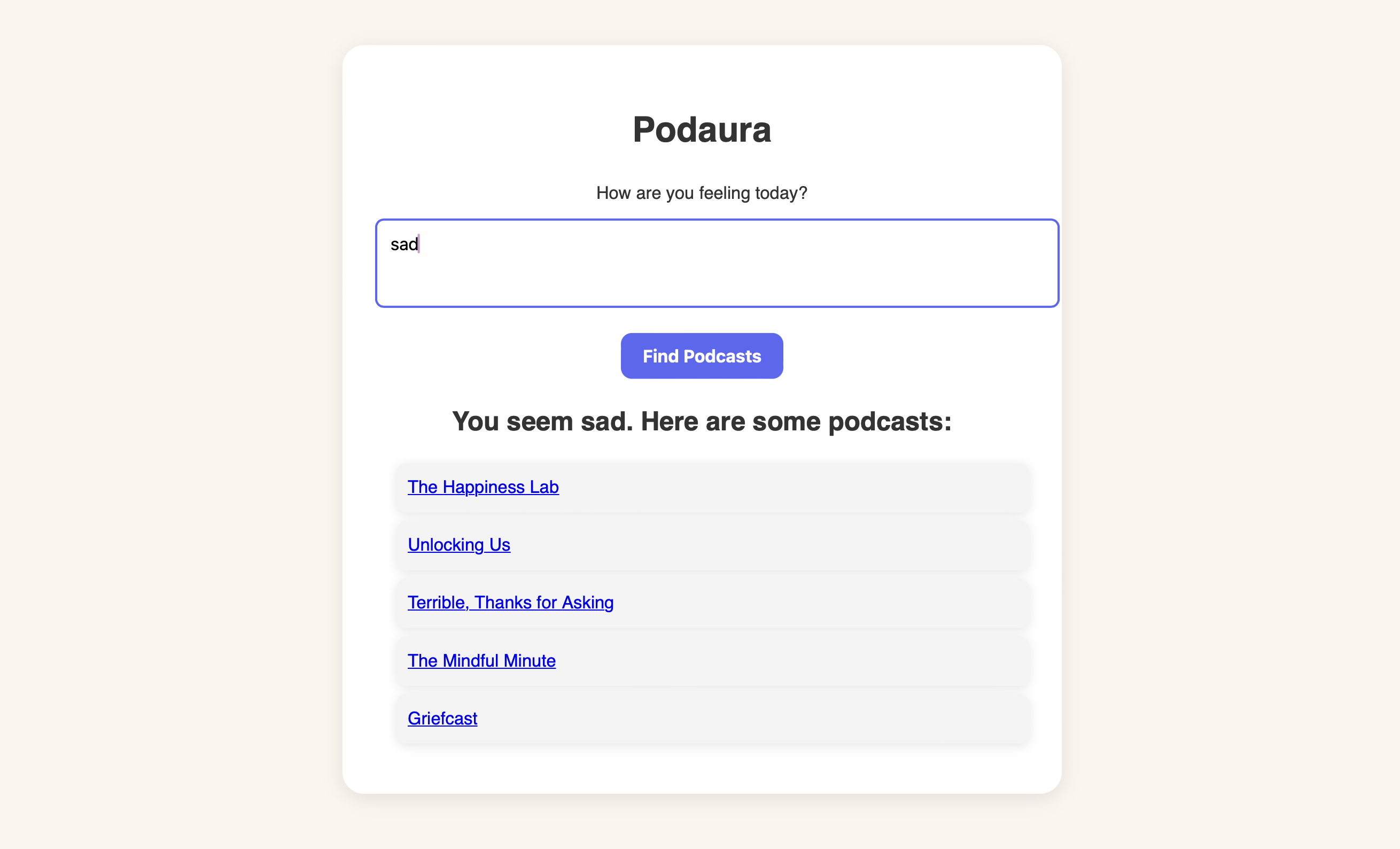
PodAura takes what you type — like “I feel overwhelmed” or “I’m feeling super motivated today” — and figures out your mood. Based on that, it shows you a few podcast suggestions that match how you're feeling. Whether you're sad, stressed, happy, or anything in between, it recommends something that might help, entertain, or calm you down.
How we built it
We built it using Python and Flask for the backend, with a simple HTML/CSS front-end. We used TextBlob to analyze sentiment (positive, negative, etc.), and added a custom list of keywords to detect more specific moods like “stressed,” “motivated,” “tired,” or “bored.” Then we matched each mood to curated podcast suggestions — all from free public platforms like TED, The Calm Collective, or Radiolab.
Challenges we ran into
Getting the mood detection to work how we imagined was tricky. Just using sentiment analysis wasn’t enough — for example, “I’m overwhelmed” and “I’m bored” can both seem neutral to a basic model. So we had to go deeper and add keyword detection to better match real feelings. We also had to figure out how to set up and use GitHub + Codespaces together, which was new for us.
Accomplishments that we're proud of
We got the core idea working in less than 24 hours. The app actually understands what you’re saying and gives you something helpful in return. That feels really rewarding. We also figured out how to use Flask, GitHub, and new Python libraries we hadn’t touched before.
What we learned
We learned a lot about how to connect the front-end to a Python backend, how basic NLP (natural language processing) works, and how important it is to make apps that feel human and thoughtful. We also learned a lot about debugging.
What's next for PodAura
We’d love to make the mood detection smarter — maybe train a model on actual emotion-labeled text. We also want to let users pick genres, save favorite podcasts, and maybe even speak or upload an image for mood detection. There's a lot of potential, but even now, we think it's a cool, simple tool that helps people feel heard.

Log in or sign up for Devpost to join the conversation.