-
-
Pod Robot
Inspiration
In Minecraft, the world only loads where a player is standing. The real world is a bit like that: remote forests and wetlands rarely get visitors, so we don't know which animals live there right now. Camera traps help, but someone usually checks them weeks later. By then a decline has already happened.
We wanted a sensor that reports animals live and fixes itself, since no one is out in the woods to restart it. That's why we used QNX, a real-time operating system.
What it does
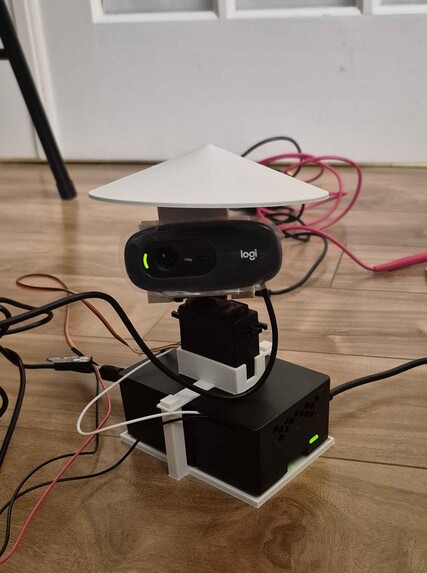
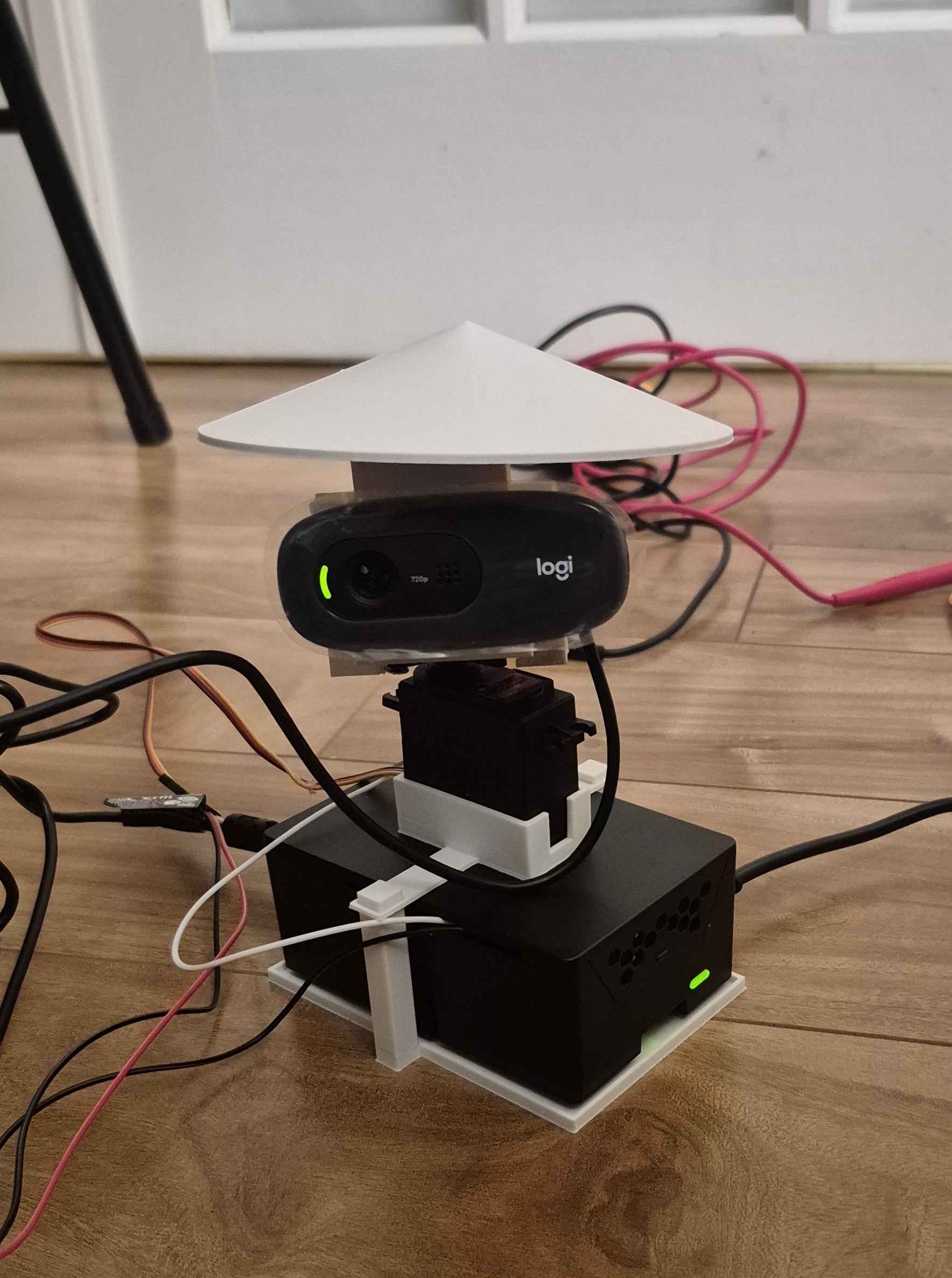
The Pod is a Raspberry Pi 5 running QNX with a webcam.
- It spots animals on the device with AI, about 14 times a second.
- It sends a tiny record for each animal visit to a laptop. It never sends video.
The laptop uses the visits to estimate how many animals live in an area, forecast the next 10 years, warn when sightings drop, and suggest where conservation money helps most. A dashboard shows the live camera with boxes around animals, plus charts.
How we built it
- Each job on the Pi is its own program: camera, AI, tracking, saving, sending, and a supervisor that watches and restarts the others.
- The AI is TensorFlow Lite from QNX's open-source ports, built on the Pi itself.
- The ground station is plain Python with SQLite. The dashboard is plain HTML and JavaScript.
- Four teammates each worked with a Claude AI coding agent. Each pair owned its own files and logged every change, so we didn't overwrite each other.
Challenges we ran into
- The AI wouldn't build on QNX. There's no official version, so we fixed one build problem after another.
- Laggy camera. A bug gave the AI higher priority than the camera, so the camera starved.
- No detections. The first model we downloaded gave 19,206 raw boxes. We switched to a better build.
- Flickering, wrong boxes. Weak detections flashed for one frame, so we made the tracker need several frames before counting a visit.
- The Pi thinks it's 1970 until it reaches the internet, because it has no clock battery.
- Flaky Wi-Fi and networking the whole weekend.
Accomplishments that we're proud of
With QNX real-time priority, it kept working under the same load.
We're also proud that:
- It works end to end on real hardware: an animal in front of the camera shows up on the laptop.
- It lost 0 of 45 visits when we shut the laptop's server down and brought it back.
- We tested our forecast on 46 years of real moose counts. We report how often it was wrong instead of hiding it.
What we learned
- Real-time is about priority, not raw speed.
- Look at the worst case, not the average.
- Small separate programs recover from crashes better than one big one.
- Getting AI onto hardware is mostly setup work, not the model itself.
What's next for The Pod
- Night vision with infrared
- More sensors: temperature, moisture, air quality
- An AI model that knows more local animals (deer, fox, raccoon, moose)
- A weatherproof, solar-powered case
- Many Pods linked by long-range radio where there's no Wi-Fi
