-
-
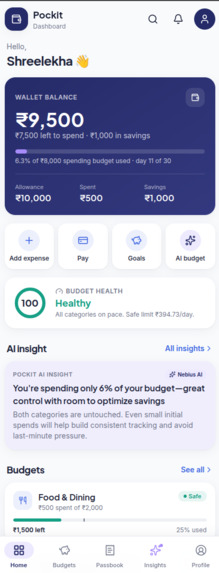
home page
-
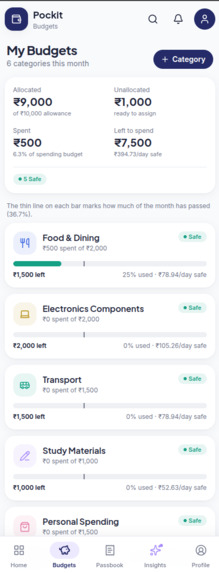
budget page
-
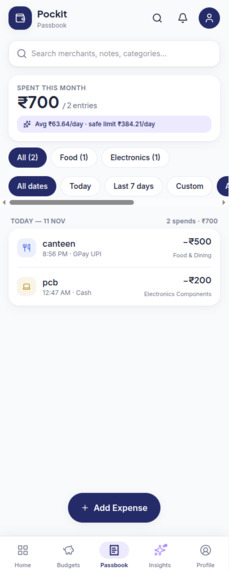
passbook
-
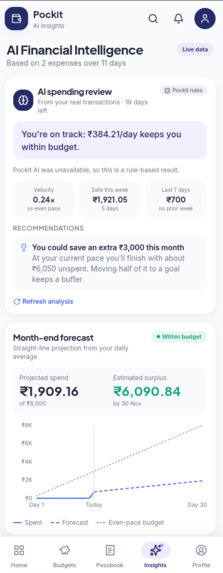
ai analysis- 1
-
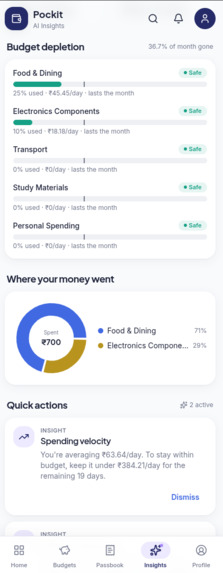
AI analysis - 2
-
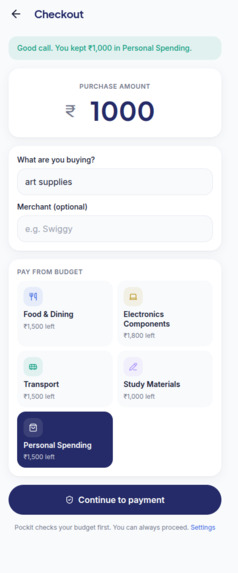
Checkout
-
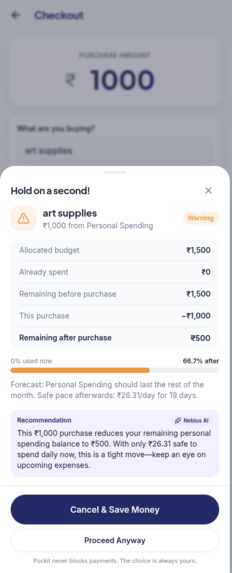
warning page
-
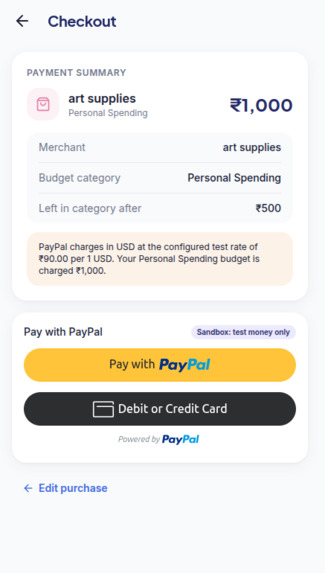
payment page
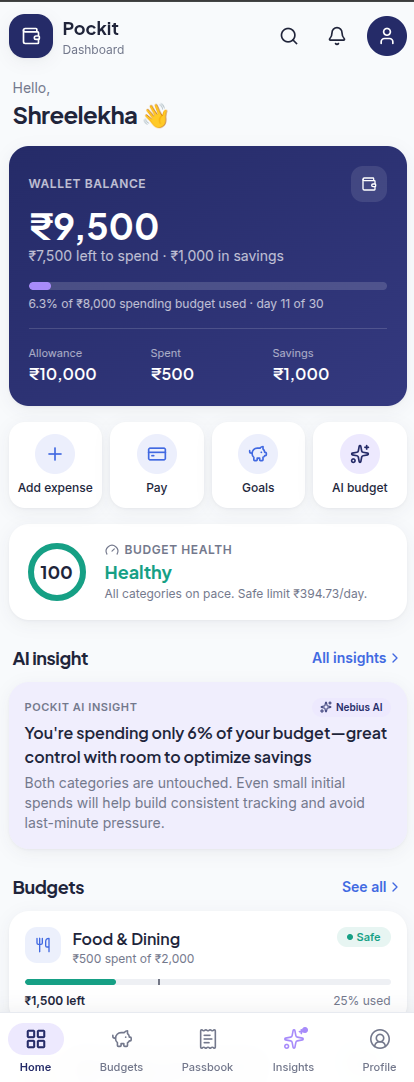
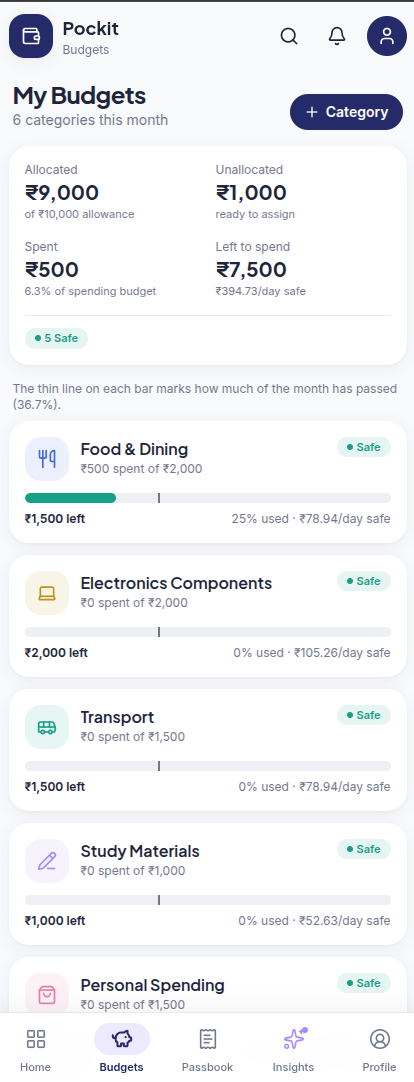
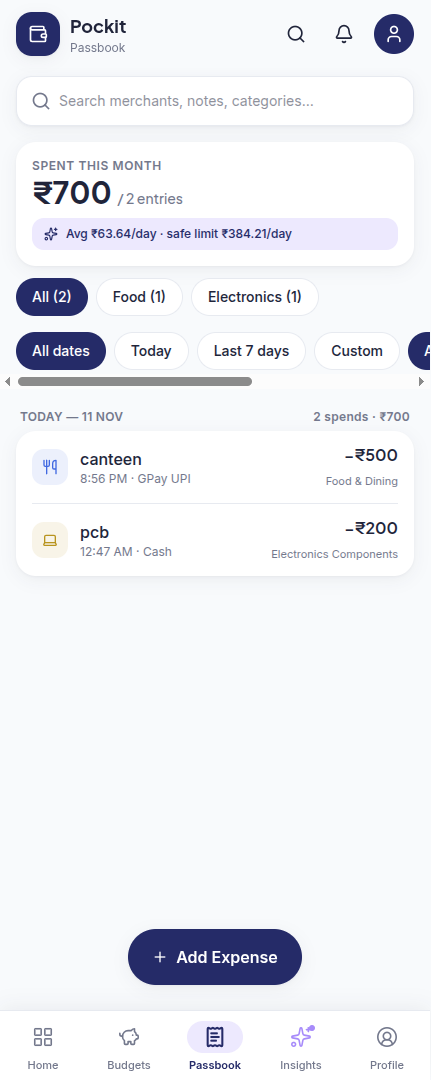
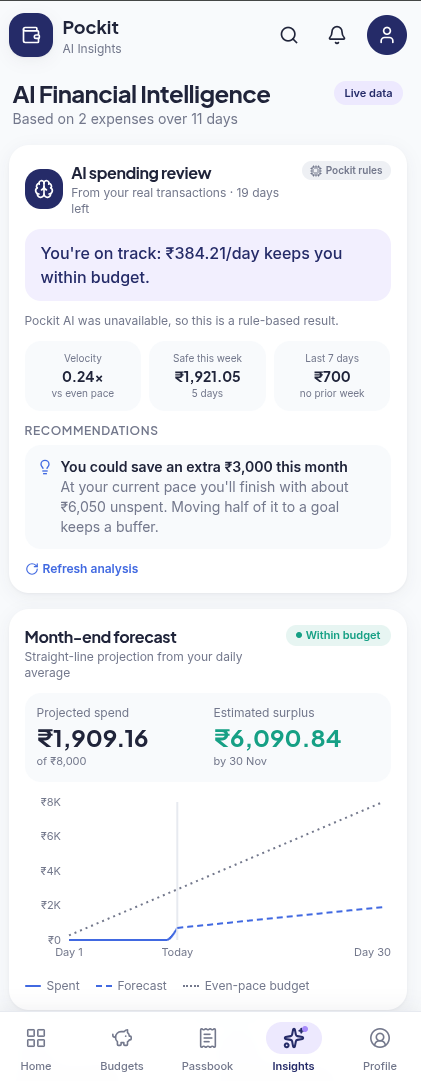
Pockit — Make Every Rupee Count.
Inspiration
Managing money as a student is harder than it looks. A limited monthly allowance has to cover food, travel, shopping, subscriptions, college projects, savings and unexpected expenses. It is easy to lose track of spending and realise too late that there isn't enough money left for something important.
Most expense trackers tell you where your money went. But we wanted to build something that helps students decide where their money should go before they spend it.
That idea inspired Pockit — an AI-powered student financial companion designed to make budgeting proactive, personalised and accessible.
Our goal was to move beyond traditional expense tracking and create an application that understands a student's financial situation, provides meaningful recommendations and helps them make better everyday financial decisions.
What It Does
Pockit combines personal budgeting, spending intelligence and generative AI into one platform.
1. AI-Powered Budget Allocation
Users describe their monthly allowance, expenses, lifestyle and savings goals in natural language. AI analyses their financial context and suggests a personalised budget allocation. Users can review, edit, regenerate and approve the suggestions.
2. Smart Budget Buckets
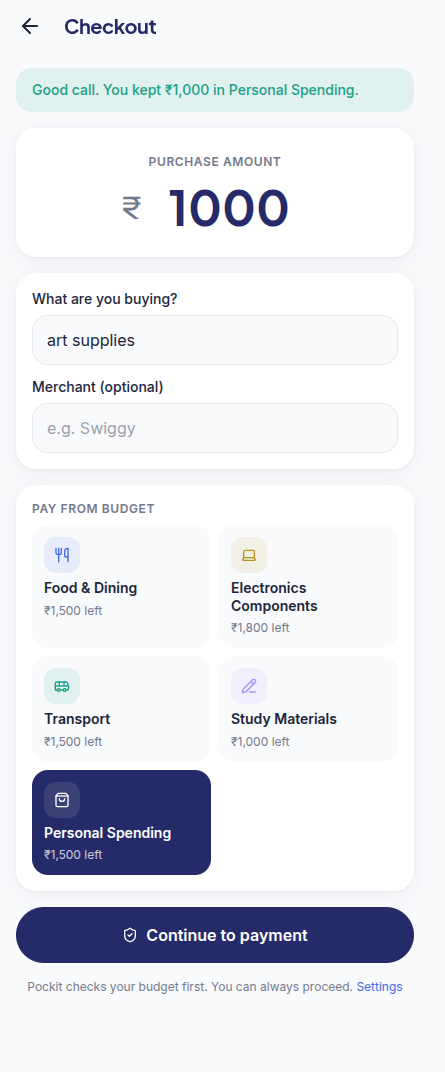
Users organise their money into virtual categories such as Food & Dining, Essentials, Shopping, Travel, Projects and Savings. Each bucket tracks its allocated amount, spending and remaining balance.
3. Pre-Payment Budget Guard
A purchase shouldn't become a financial regret.
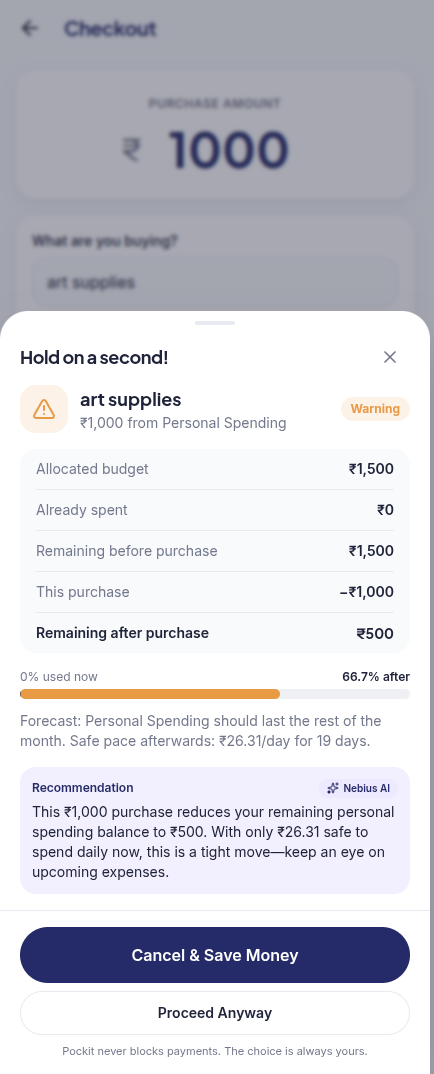
Before spending, Pockit evaluates the proposed expense against available funds and category budgets. It provides contextual warnings when a purchase could affect the user's financial plans. The final decision always remains with the user.
4. Spending Intelligence
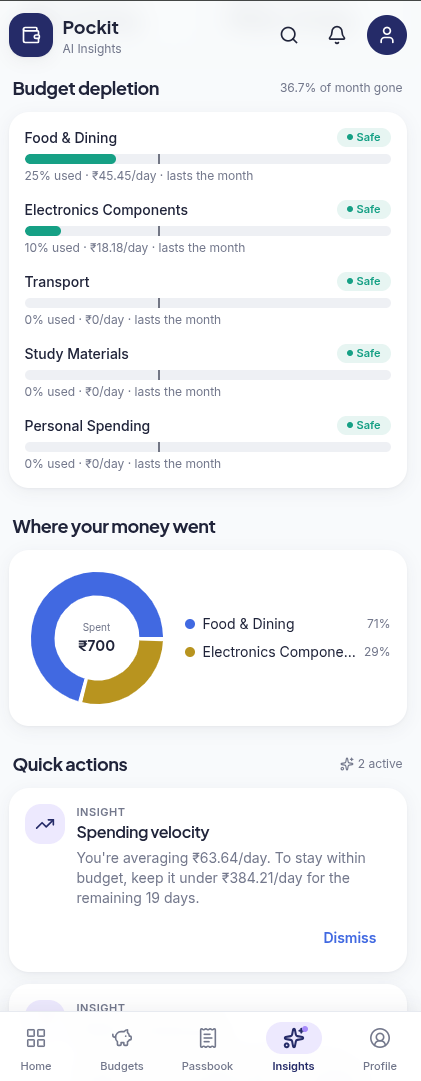
Pockit analyses spending patterns, category-wise expenses, spending velocity and budget depletion to generate insights and month-end financial forecasts.
5. AI Financial Copilot
Users can ask questions about their actual financial data in natural language, such as:
- Am I spending too much on food?
- Can I afford a ₹1,000 purchase?
- How much should I save this month?
- Which category needs attention?
6. Savings Goals
Users can create savings goals, track progress and understand how everyday spending affects their longer-term financial plans.
7. PayPal Sandbox Integration
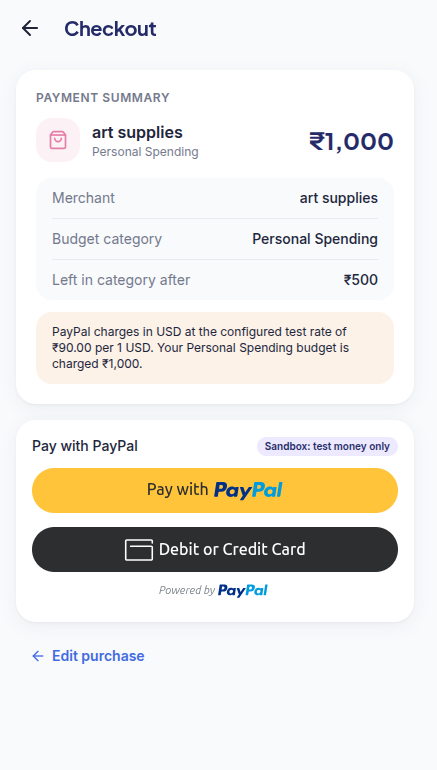
Pockit implements PayPal Orders API integration with server-side order creation, capture verification and transaction safeguards. Automated payment tests cover currency validation, failed captures and idempotency.
The actual Sandbox buyer-approval flow currently encounters a merchant-currency compatibility issue, so successful end-to-end payment completion has not yet been verified.
How We Built It
We developed Pockit using a modular full-stack architecture.
Frontend: React, Vite and Tailwind CSS were used to create a responsive, mobile-first interface. Recharts powers financial visualisations and spending insights.
Backend: Node.js and Express provide REST APIs for authentication, budgeting, transactions, savings goals, AI interactions and payments.
Database: PostgreSQL stores user accounts, financial records, budgets, transactions and savings goals.
AI Integration: We integrated Nebius Token Factory using the Qwen3-235B-A22B-Instruct-2507 model to power personalised budget allocation, financial insights and natural-language conversations.
Payments: PayPal Orders API v2 was integrated in Sandbox mode, with server-side validation and capture safeguards.
A key architectural decision was separating deterministic financial calculations from AI-generated recommendations. Balances, allocations, currency conversions and transaction updates are handled by backend logic rather than relying on an LLM to perform financial operations.
This ensures that AI provides explanations and guidance while the backend remains responsible for financial accuracy and data integrity.
Challenges We Faced
1. Making AI Financially Reliable
One of our biggest challenges was ensuring that AI recommendations remained consistent with actual financial data. We separated financial calculations from AI reasoning and added validation and grounding mechanisms to reduce unsupported recommendations.
2. Building Context-Aware Financial Guidance
Generating generic budgeting advice was not enough. We wanted Pockit to understand the user's remaining funds, category allocations and spending pace. This required carefully structuring financial context before passing it to the AI assistant.
3. Payment Integrity
Integrating PayPal required handling order creation, buyer approval, capture verification, currency conversion and duplicate requests. We implemented server-side safeguards and automated tests to ensure unsuccessful or unverified payments do not update financial records.
The Sandbox merchant's currency compatibility presented an additional challenge during end-to-end testing.
4. Balancing Simplicity and Functionality
We wanted the application to feel approachable for students without oversimplifying financial information. Designing a clean interface while supporting multiple financial features required careful prioritisation.
What We Learned
Building Pockit taught us that integrating AI into a financial application requires much more than connecting an API to an LLM.
We learned the importance of:
- Separating deterministic business logic from probabilistic AI outputs.
- Grounding AI responses in structured, real user data.
- Designing reliable financial transaction workflows.
- Building and testing secure REST APIs.
- Managing database consistency and payment idempotency.
- Creating user-friendly interfaces for complex information.
Most importantly, we learned that useful AI should not simply provide answers. It should help people make better decisions.
What's Next?
We envision Pockit becoming a more comprehensive financial companion for students.
Future improvements include:
- Automated expense capture through supported financial integrations.
- Receipt scanning and intelligent expense categorisation.
- Recurring expense and subscription detection.
- More advanced financial forecasting.
- Improved savings recommendations and goal planning.
- Expanded payment integrations.
- Production deployment and stronger operational monitoring.
Final Thought
Financial literacy shouldn't begin when someone starts earning a salary.
Students deserve tools that help them understand their money, develop healthier spending habits and make informed financial decisions early.
Pockit aims to make every rupee count — one decision at a time.
Built With
- ai-assistant
- artificial-intelligence
- budgeting
- express.js
- financial-forecasting
- financial-literacy
- fintech
- generative-ai
- javascript
- jwt-authentication
- llms
- nebius-ai
- node.js
- paypal
- personal-finance
- postgresql
- qwen3
- react
- recharts
- rest-api
- spending-analytics
- student-innovation
- tailwind-css
- vite
