-
1
-
2
-
3
-
4
-
5
-
6
-
7
Inspiration
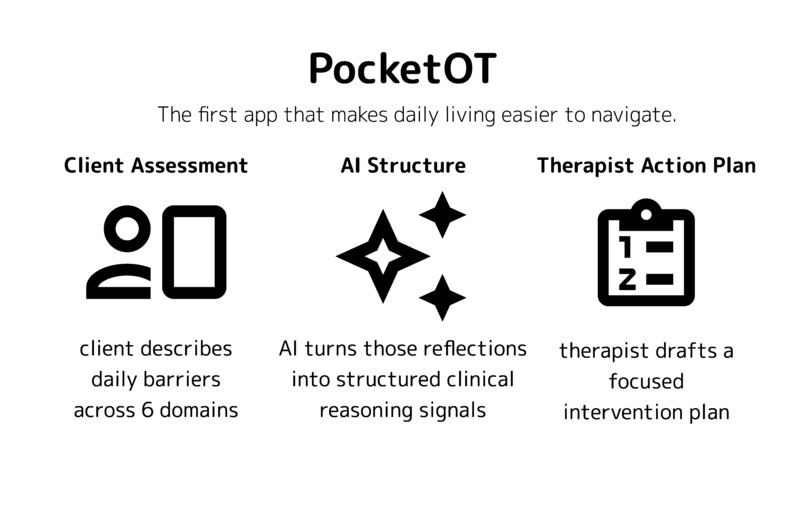
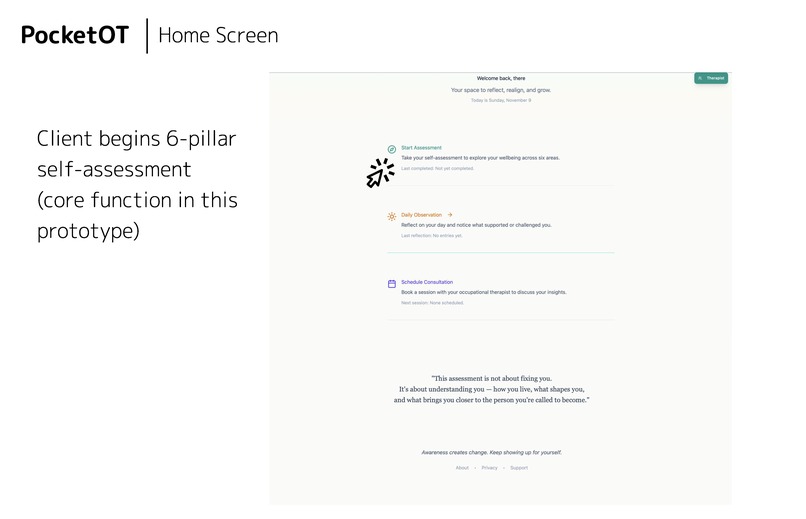
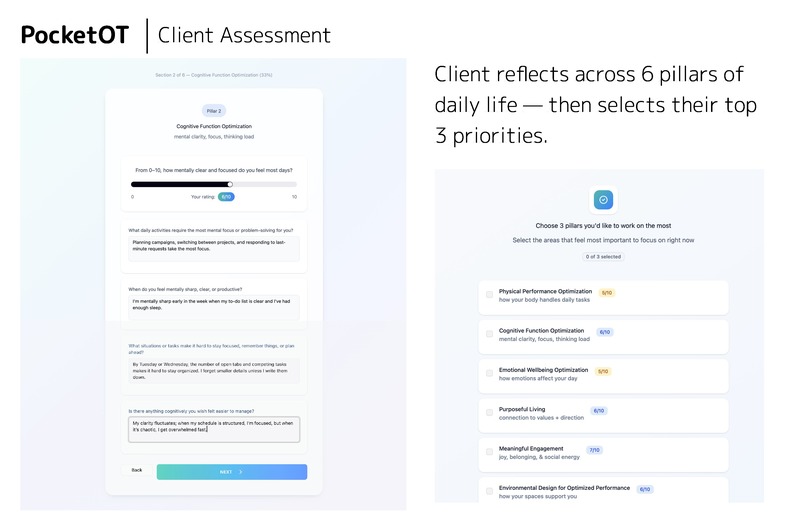
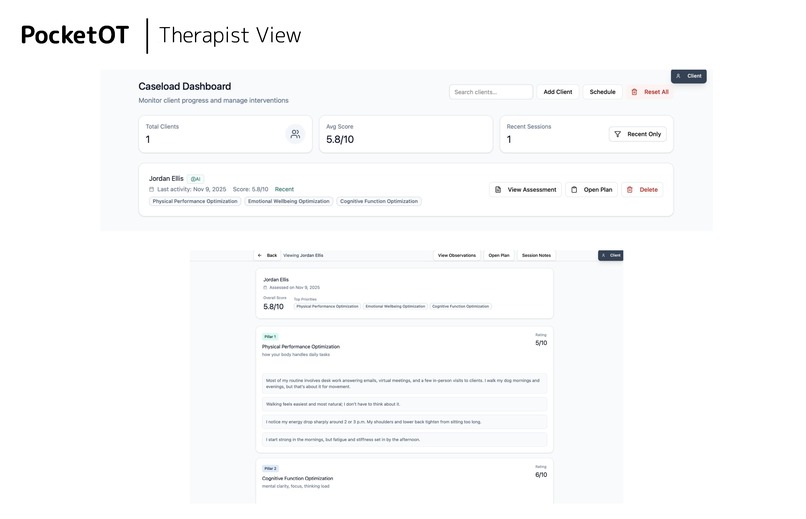
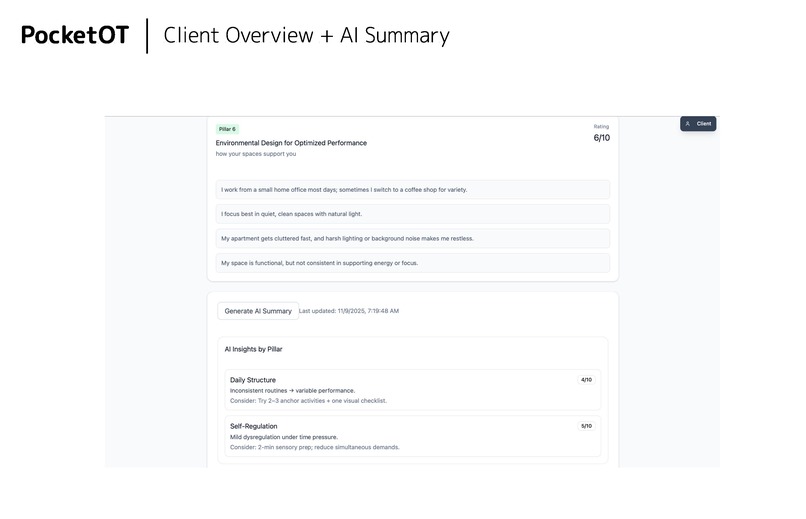
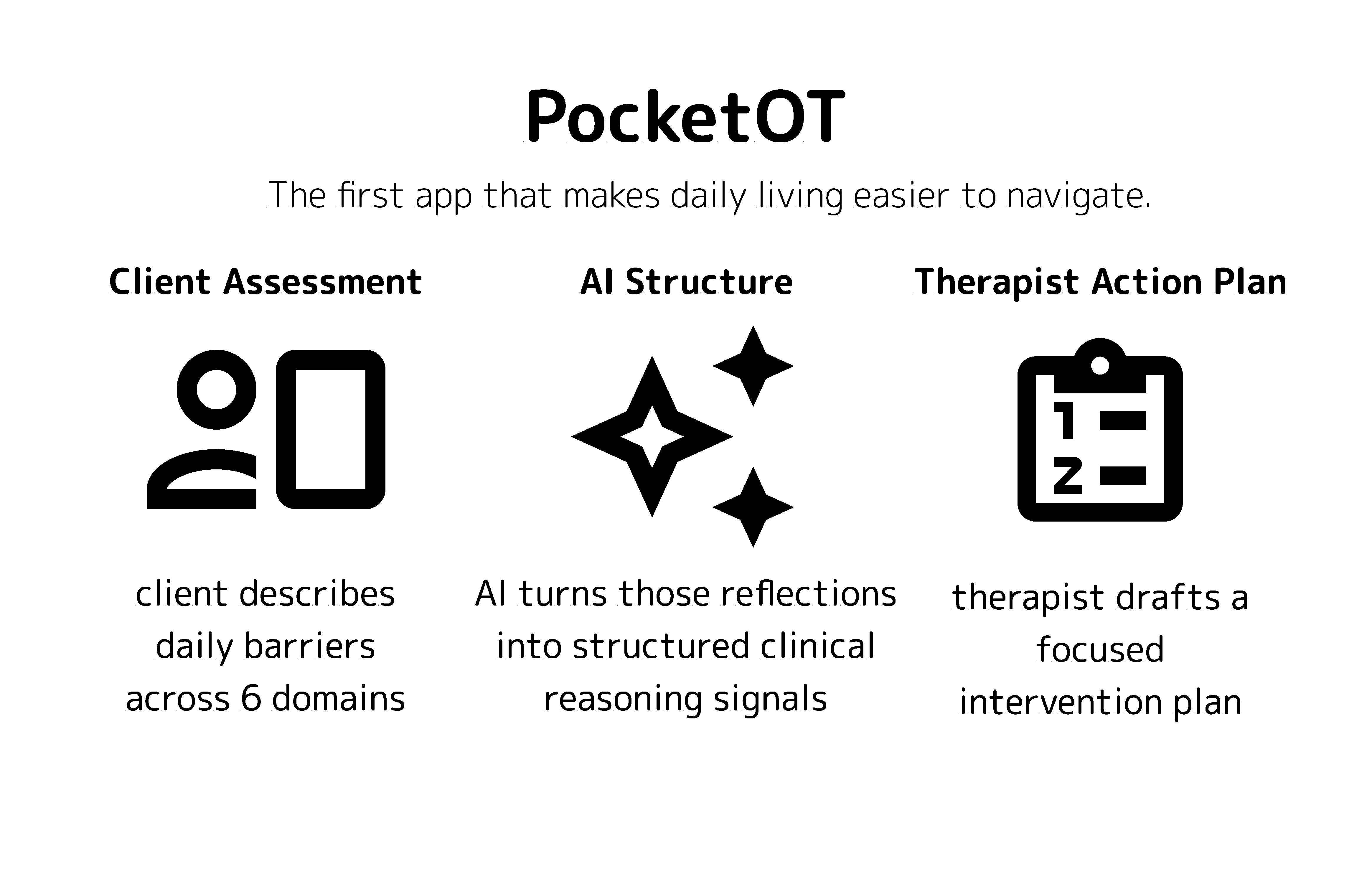
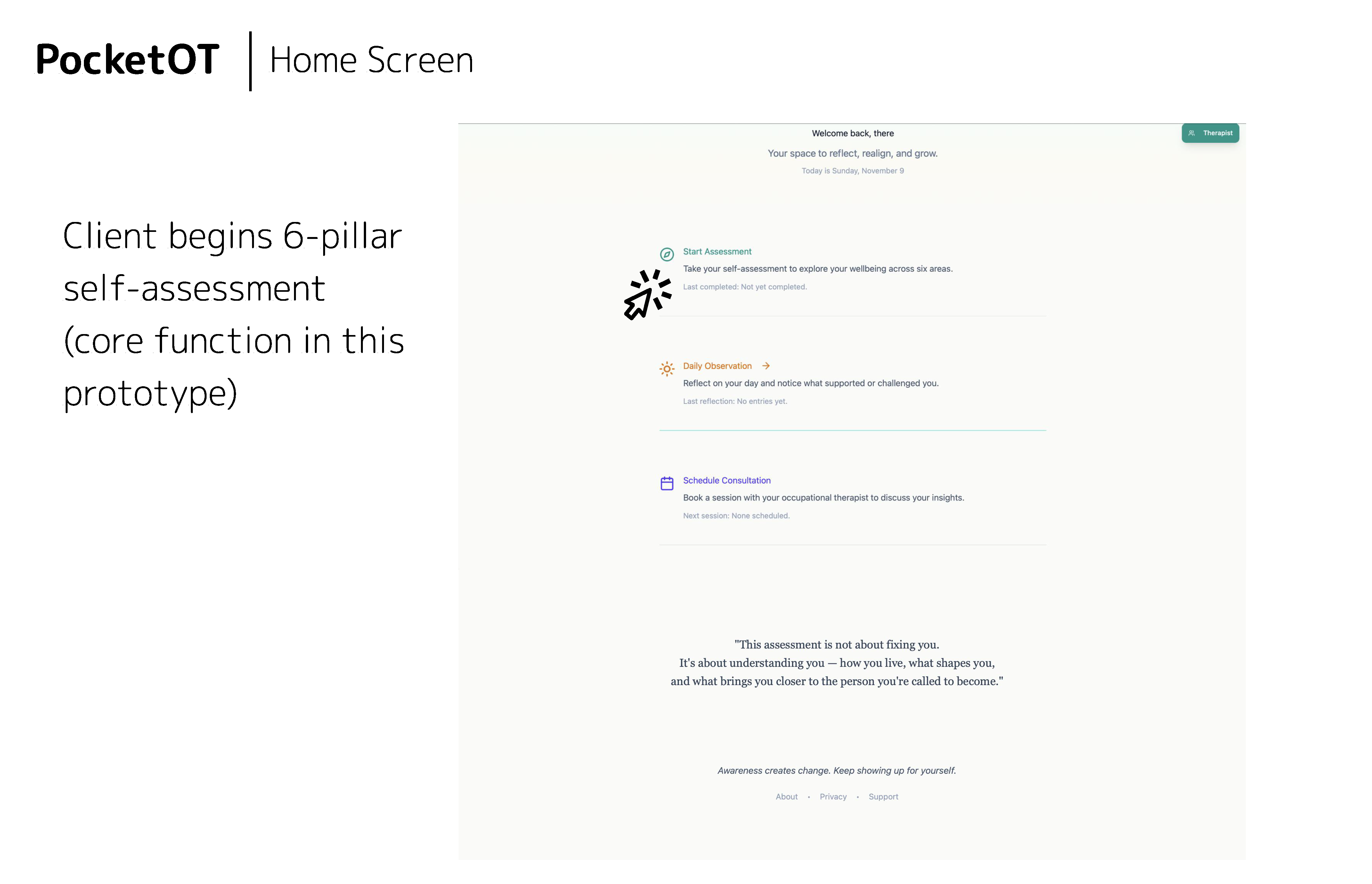
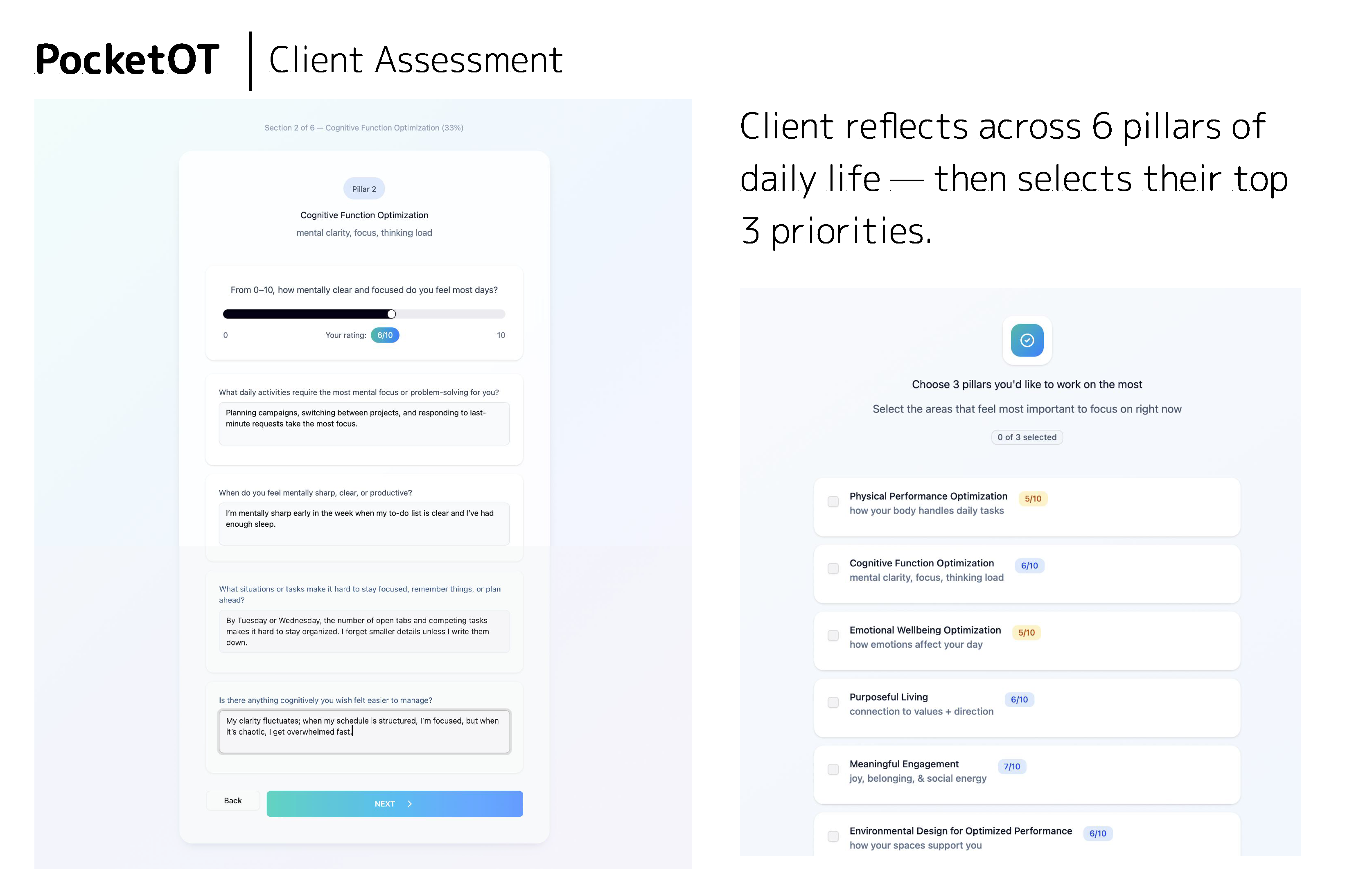
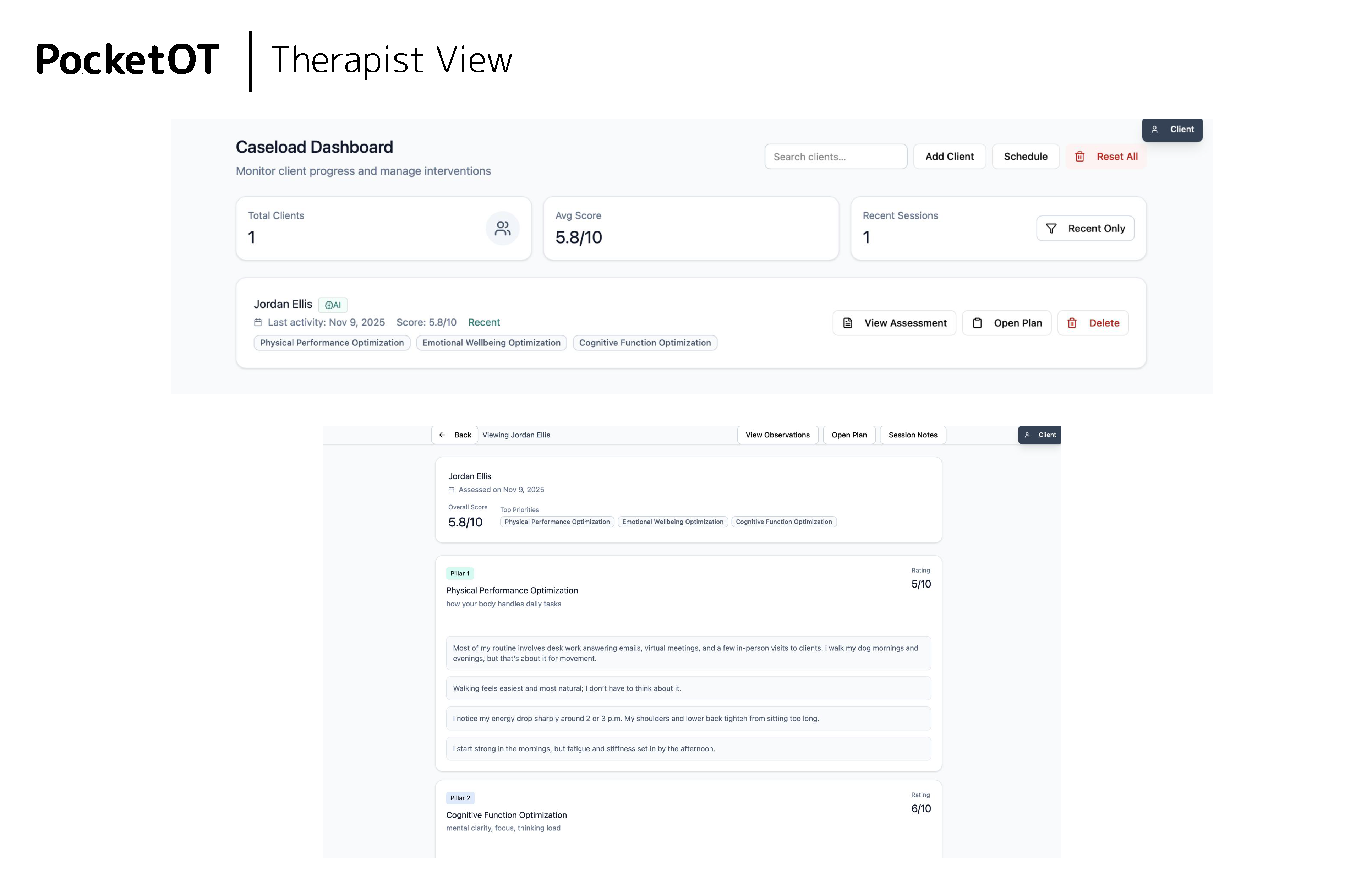
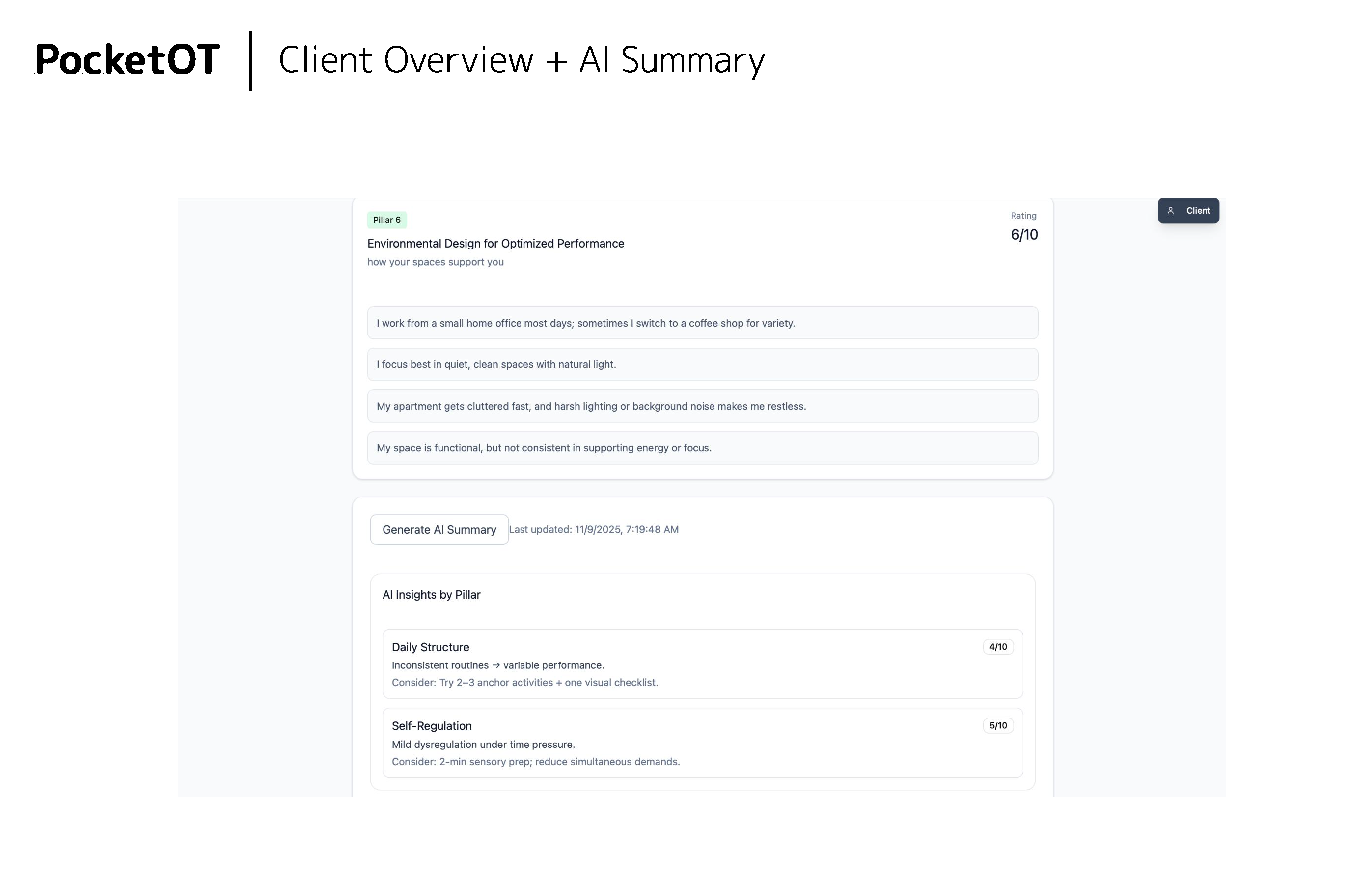
Pocket OT is a digital platform that brings occupational therapy to everyday life. It allows users to complete personalized assessments that identify areas affecting their wellbeing whether physical, cognitive, emotional, or environmental. Using AI-powered analysis, it generates clear, human-centered reports that highlight strengths, barriers, and priorities for growth. Users can then schedule consultations with licensed therapists, track progress, and access practical recommendations rooted in occupational science. In essence, Pocket OT makes evidence-based therapy accessible beyond the clinic, empowering people to take an active role in optimizing their health, function, and daily life.
What it does
Pocket OT connects people to the power of occupational therapy through technology. It helps users understand how their daily habits, environments, and routines affect wellbeing, then offers personalized insights and guidance to improve them. By blending AI with human-centered therapy, Pocket OT makes it easier for anyone to access meaningful, occupation-based care anytime, anywhere.
How we built it
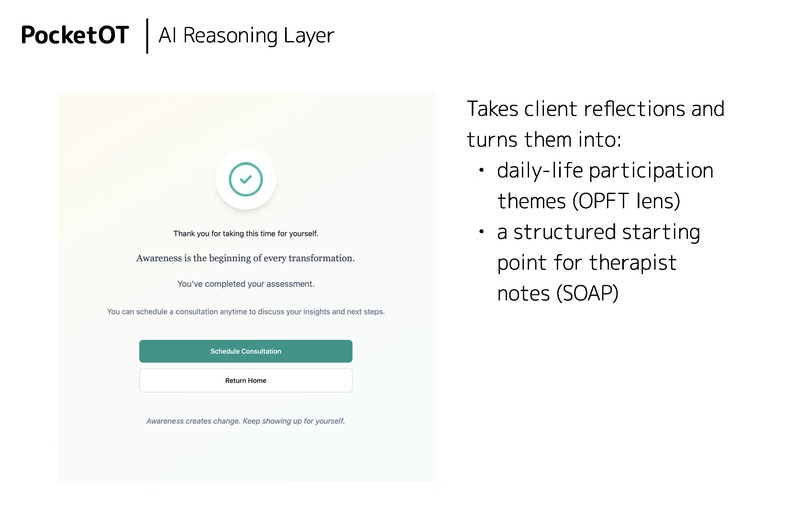
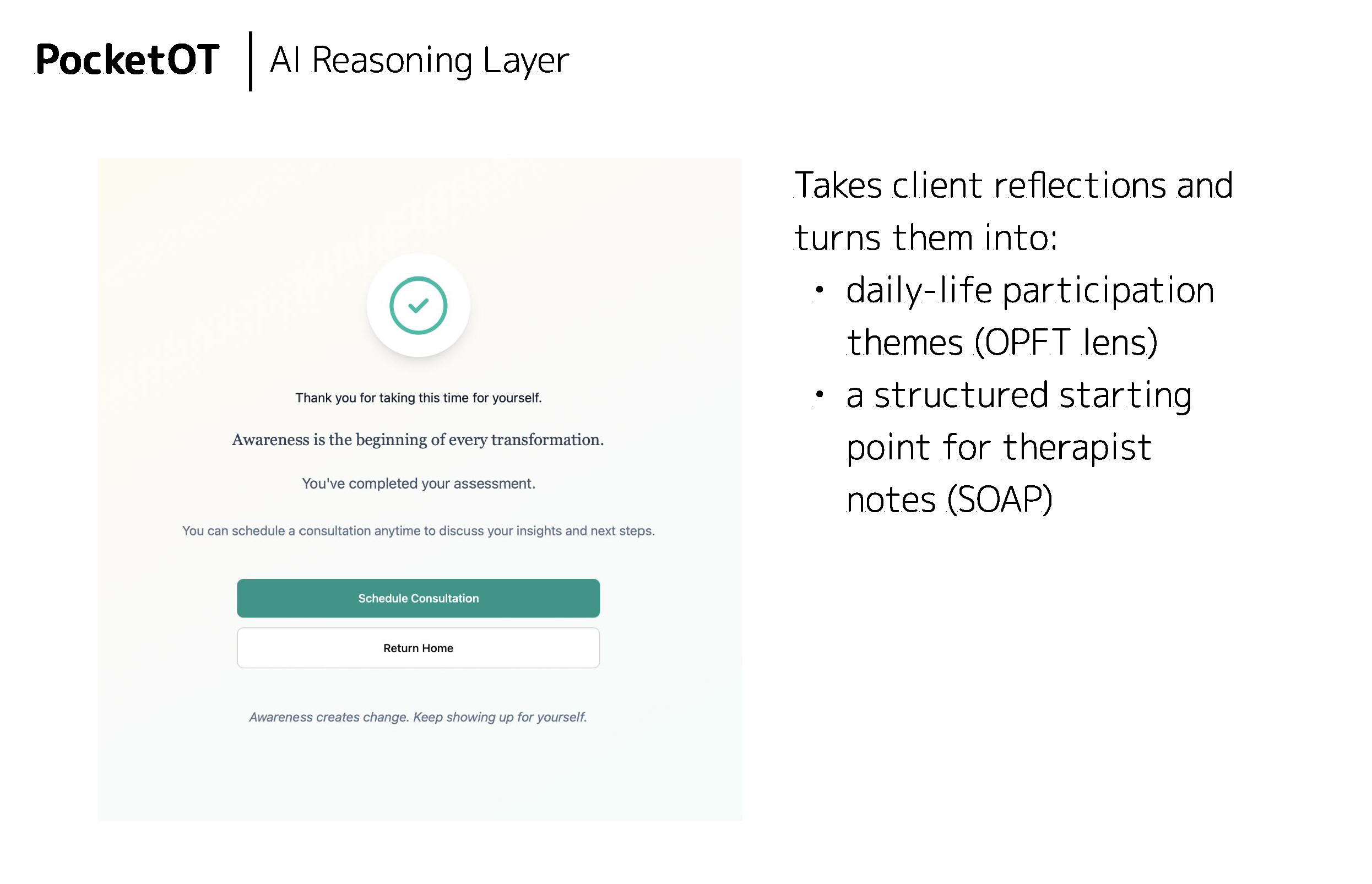
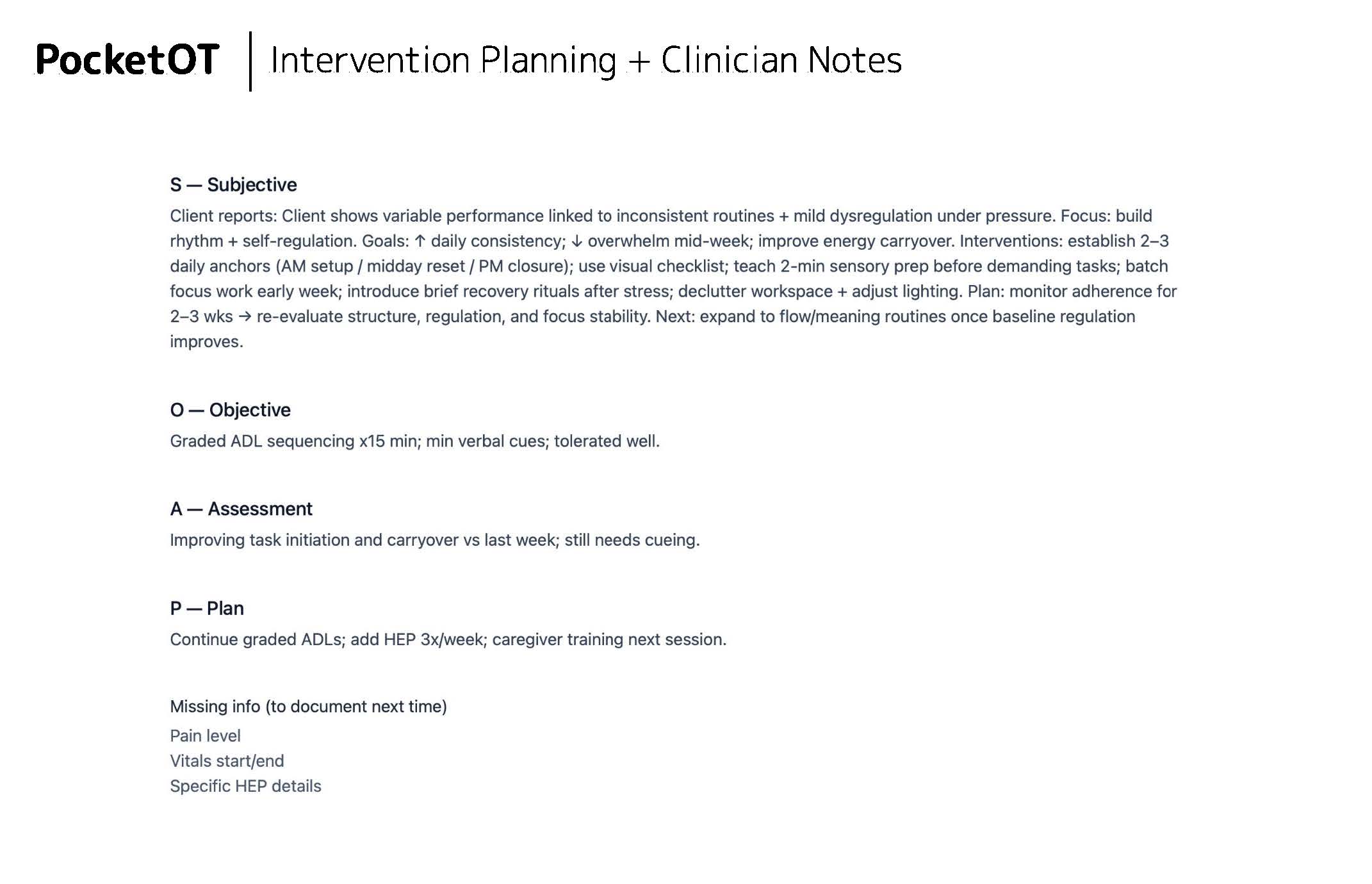
We built a lightweight flow where the UI collects the client’s reflection sentences, sends them to the model with clear formatting rules, and the model returns fields an OT can quickly review.
Challenges we ran into
preventing hallucination + forcing the model to only use the client text wording that stays non-diagnostic and non-causal.
Accomplishments that we're proud of
Neither of us come from traditional software engineering backgrounds — so building a working end-to-end product in a weekend was a real stretch goal.
We pushed ourselves to:
- stand up a functional UI from scratch
- wire client + therapist flows in one connected experience
- experiment with AI-assisted structuring logic
For us, the biggest win wasn’t just about making screens, it was proving to ourselves that we could take a clinically grounded workflow and create usable digital interaction around it.
What we learned
Considering patient autonomy when identifying areas for OT to focus/prioritize.
What's next for PocketOT
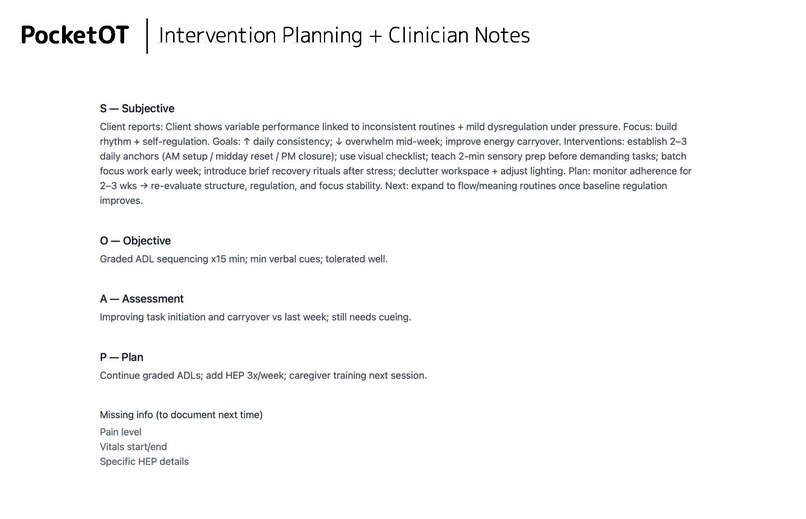
Next, Pocket OT will expand its features to include progress tracking, scheduling consultations, and AI-powered session notes for therapists. Our goal is to build a seamless system where users can measure growth, stay engaged, and receive ongoing, personalized support making occupation-based therapy more accessible, scalable, and impactful worldwide.
Team
Othneil Lewis (www.linkedin.com/in/othneil-lewis-458bbb28b)- Duke Occupational Therapy Student.
Stephanie Sorto-Moreno (https://www.linkedin.com/in/stephaniesorto/) — UX Research / Digital Health (Design & Technology Innovation, MEng @ Duke)

Log in or sign up for Devpost to join the conversation.