PocketOps — Your AI Copilot, With Your Control
Inspiration
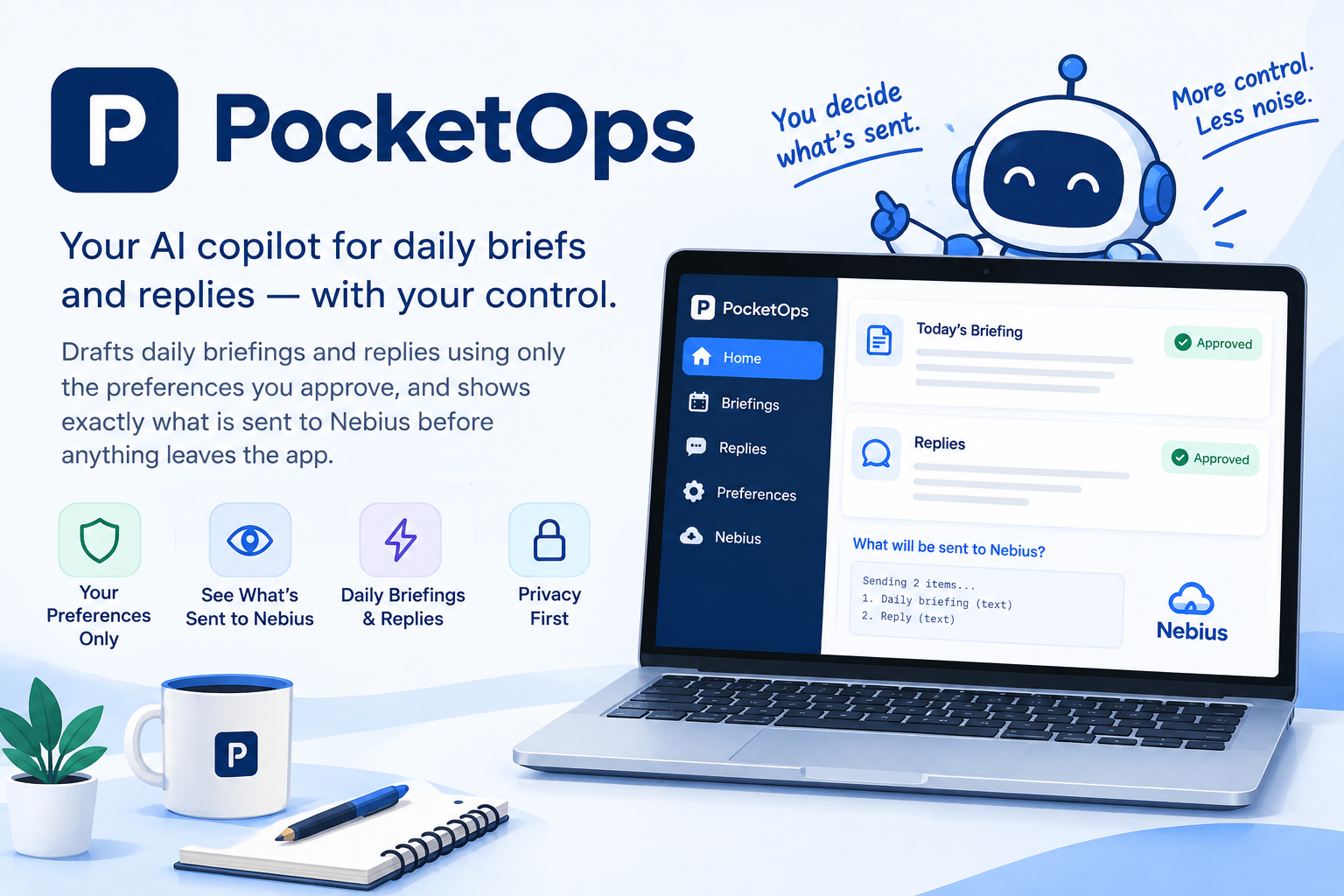
AI can help people prepare daily briefings and write replies, but sharing information with AI services raises important questions about privacy and control. We built PocketOps to make AI assistance more transparent, allowing users to choose the information they want to include and review the exact text before approving it.
What it does
PocketOps helps users prepare daily briefings and replies from selected notes and tasks. It lets users apply approved writing preferences, review generated drafts, edit or redact content, and decide what gets sent to the AI service.
Key features include:
- Daily briefings: Prepare summaries from selected notes and tasks.
- Reply drafting: Create draft replies using relevant supporting information.
- User-approved preferences: Save and reuse writing preferences only after approval.
- Review before sending: Inspect, edit, redact, or cancel content before approving it.
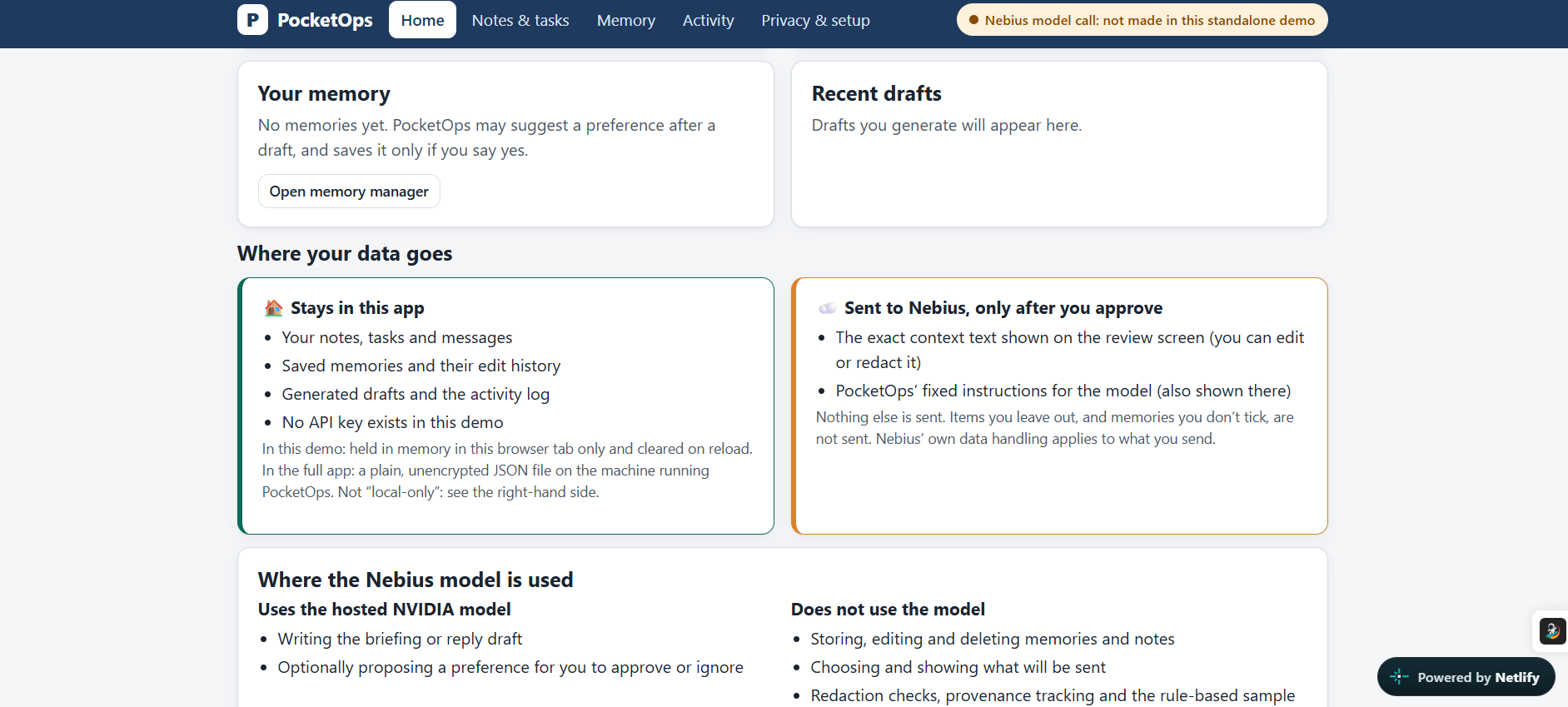
- Transparency: See the information and instructions intended for the Nebius AI service.
- Privacy controls: Keep unselected information and preferences out of the approved request.
How we built it
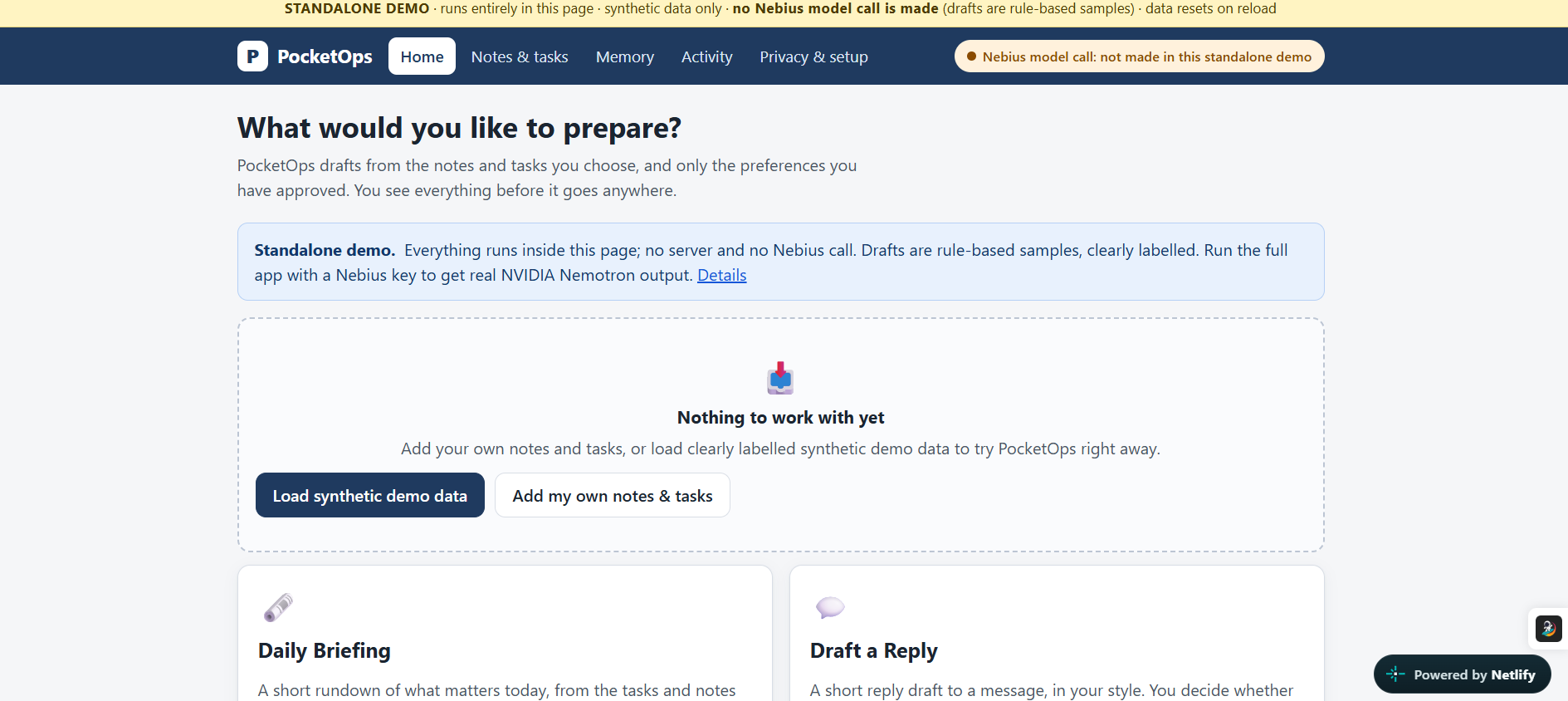
We developed PocketOps as a web-based HTML application with an interactive interface for managing notes, tasks, preferences, briefings, and replies. The workflow guides users from selecting information to reviewing a draft and approving what may be sent.
The project includes a standalone demonstration mode with clearly labelled, rule-based sample drafts. This makes it possible to explore the main workflow without configuring a server or making a real Nebius model call. The full application can be configured to use Nebius Token Factory for AI-generated output.
Challenges we faced
One of the main challenges was balancing convenience with user control. An AI assistant should not automatically share every available piece of information. We addressed this by designing an explicit review-and-approval step before sending content.
Another challenge was making the demo useful without requiring API credentials. We included a sample mode so users can experience the workflow while understanding that the displayed drafts are examples rather than live AI responses.
We also focused on making saved preferences transparent, giving users control over which preferences are applied and which information is included.
What we learned
Building PocketOps helped us understand the importance of privacy-aware AI design, clear user consent, and transparent data flows. We learned that a useful AI assistant should do more than generate text: it should also help users understand what information is being used and retain control over the final decision.
What's next
Future improvements could include a more advanced briefing engine, additional integrations, stronger storage protection, and expanded controls for managing saved preferences and AI requests.
Our goal: Make AI assistance useful, transparent, and controlled by the person using it.
Built With
- ai
- css
- html
- javascript
- nebius-token-factory
- privacy
- web

Log in or sign up for Devpost to join the conversation.