About PocketLab
The Inspiration
We were inspired by the untapped potential of smartphone sensors for education. Every student carries a device with accelerometers, gyroscopes, and microphones, but these powerful scientific instruments are primarily used for games and social media. We wanted to democratize science education by transforming these everyday devices into portable laboratories.
What We Built
PocketLab is a comprehensive web-based science laboratory that leverages smartphone sensors and interactive simulations to create an immersive learning experience.
Core Features
Real-Time Sensor Suite
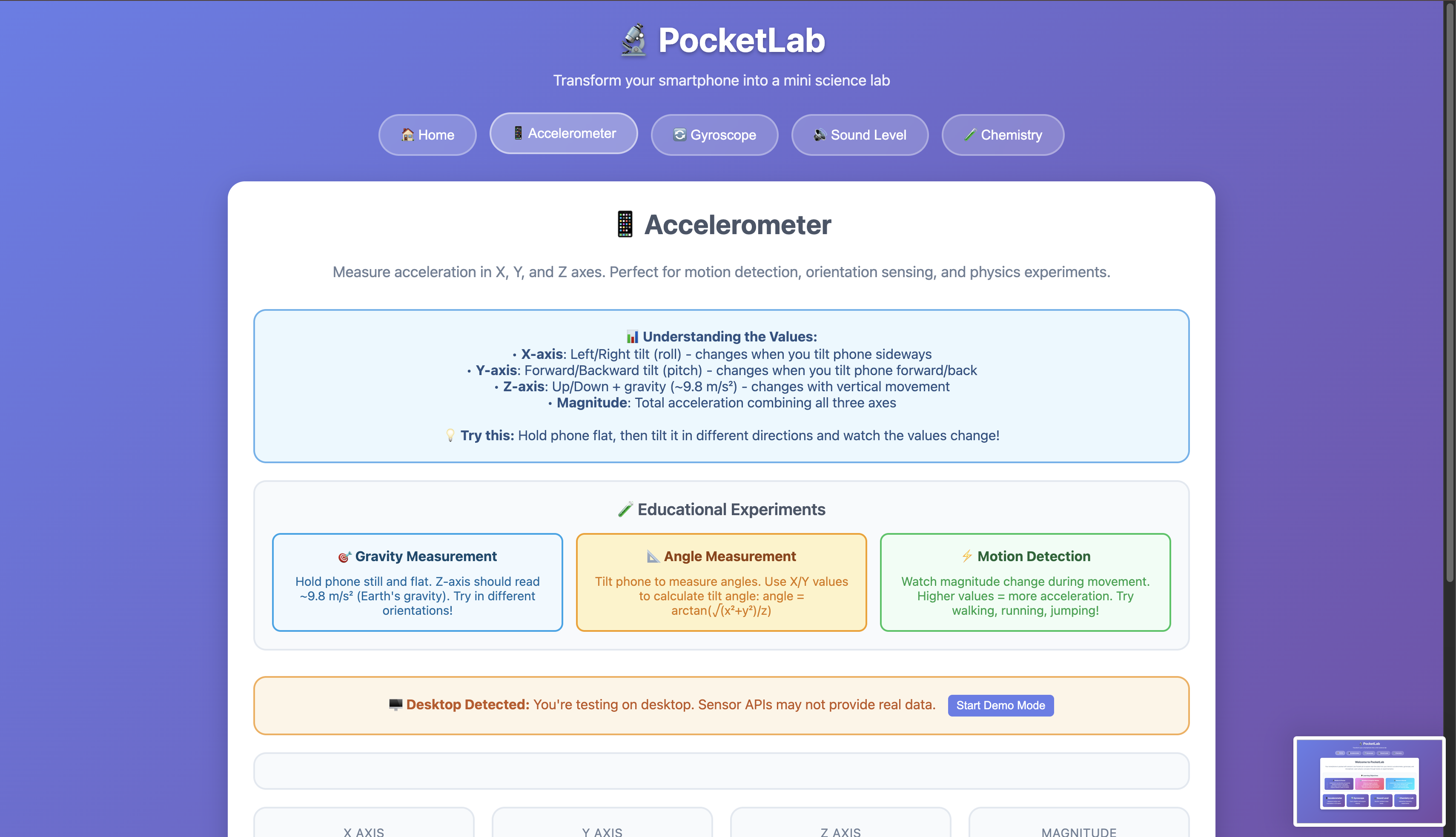
- Accelerometer: Live 3D motion tracking with educational context about gravity, forces, and Newton's laws
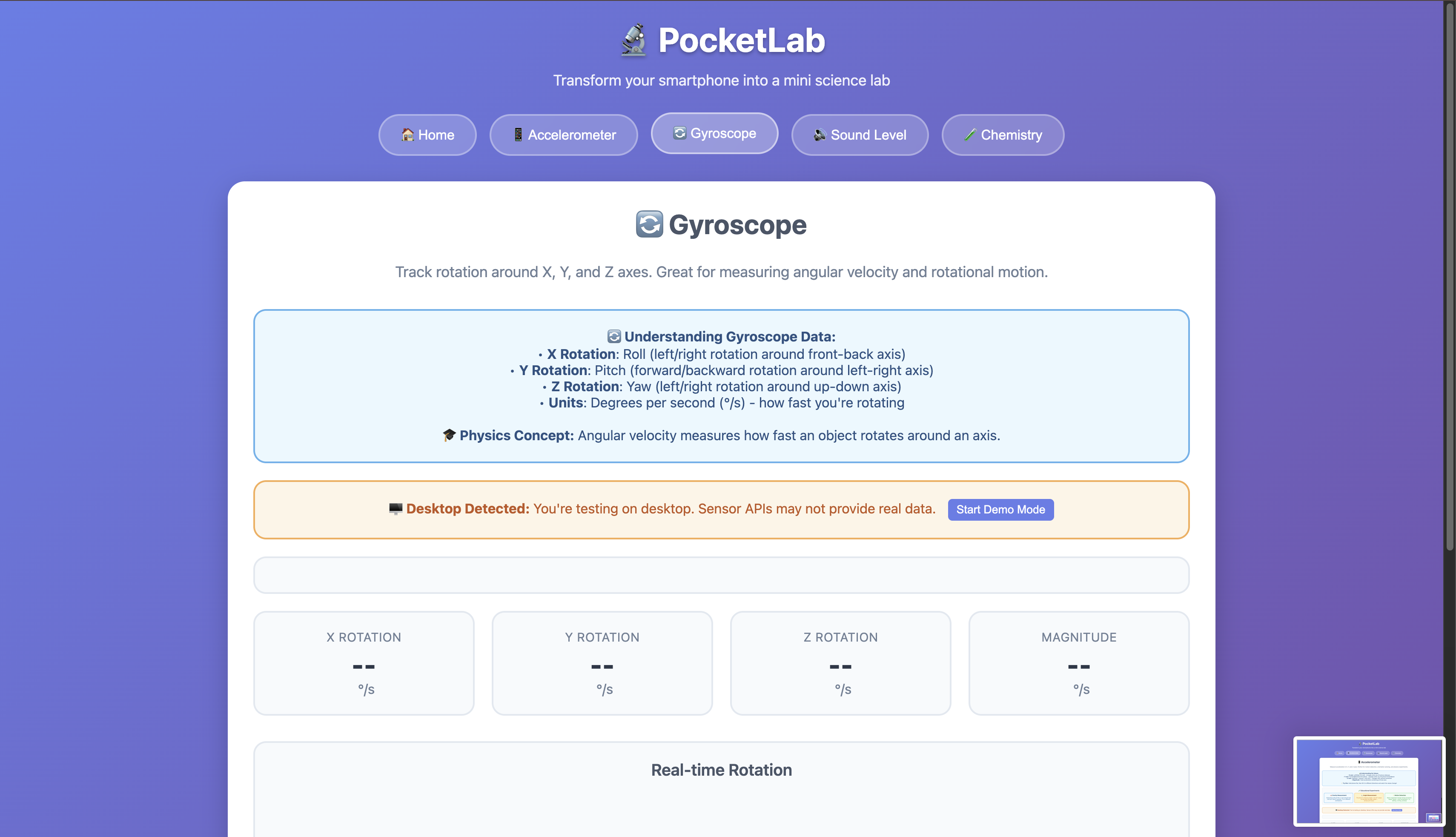
- Gyroscope: Angular velocity measurement with interactive level indicators inspired by Apple's compass
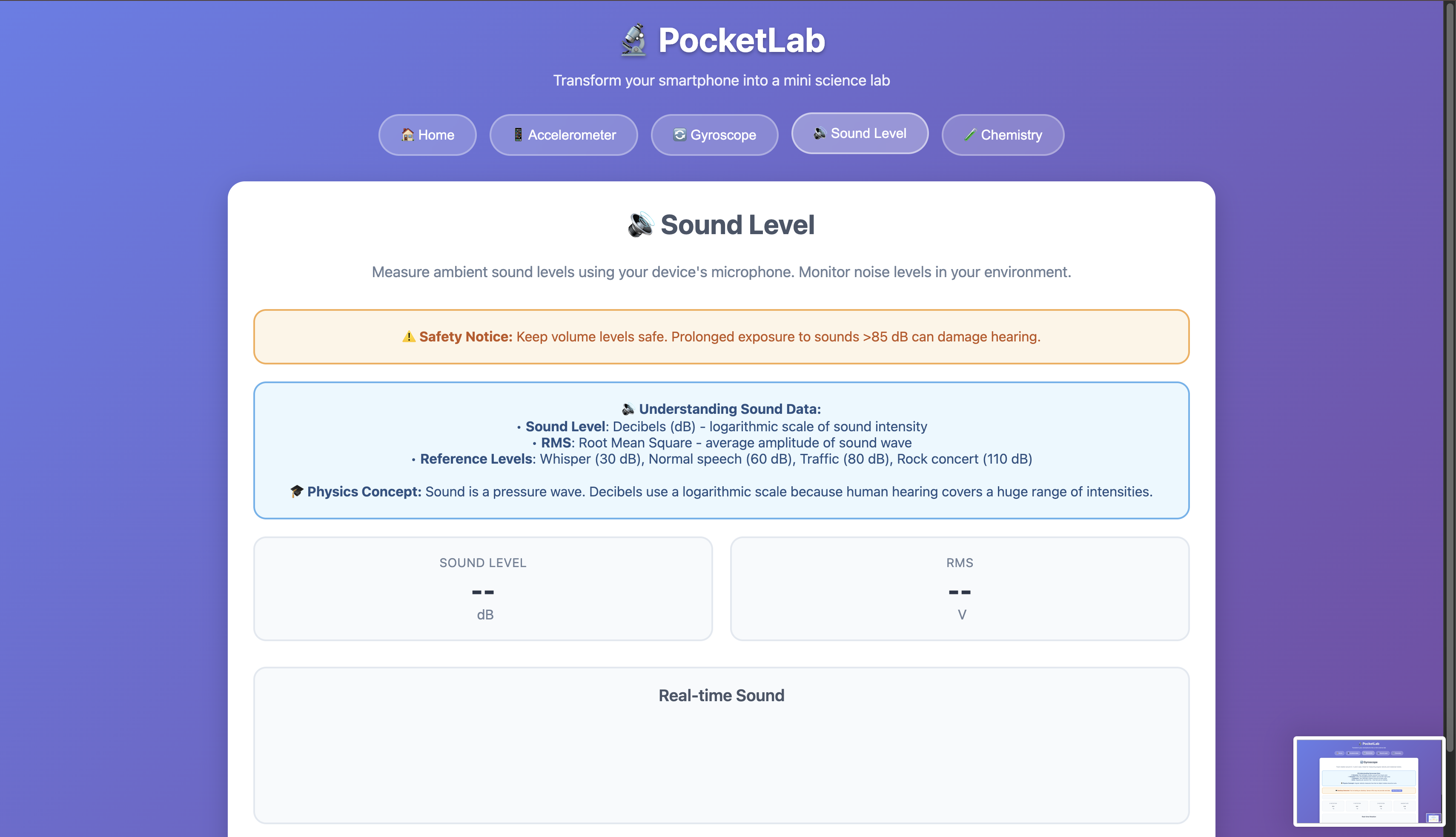
- Microphone: Sound level analysis with safety warnings and wave property explanations
Interactive Chemistry Laboratory
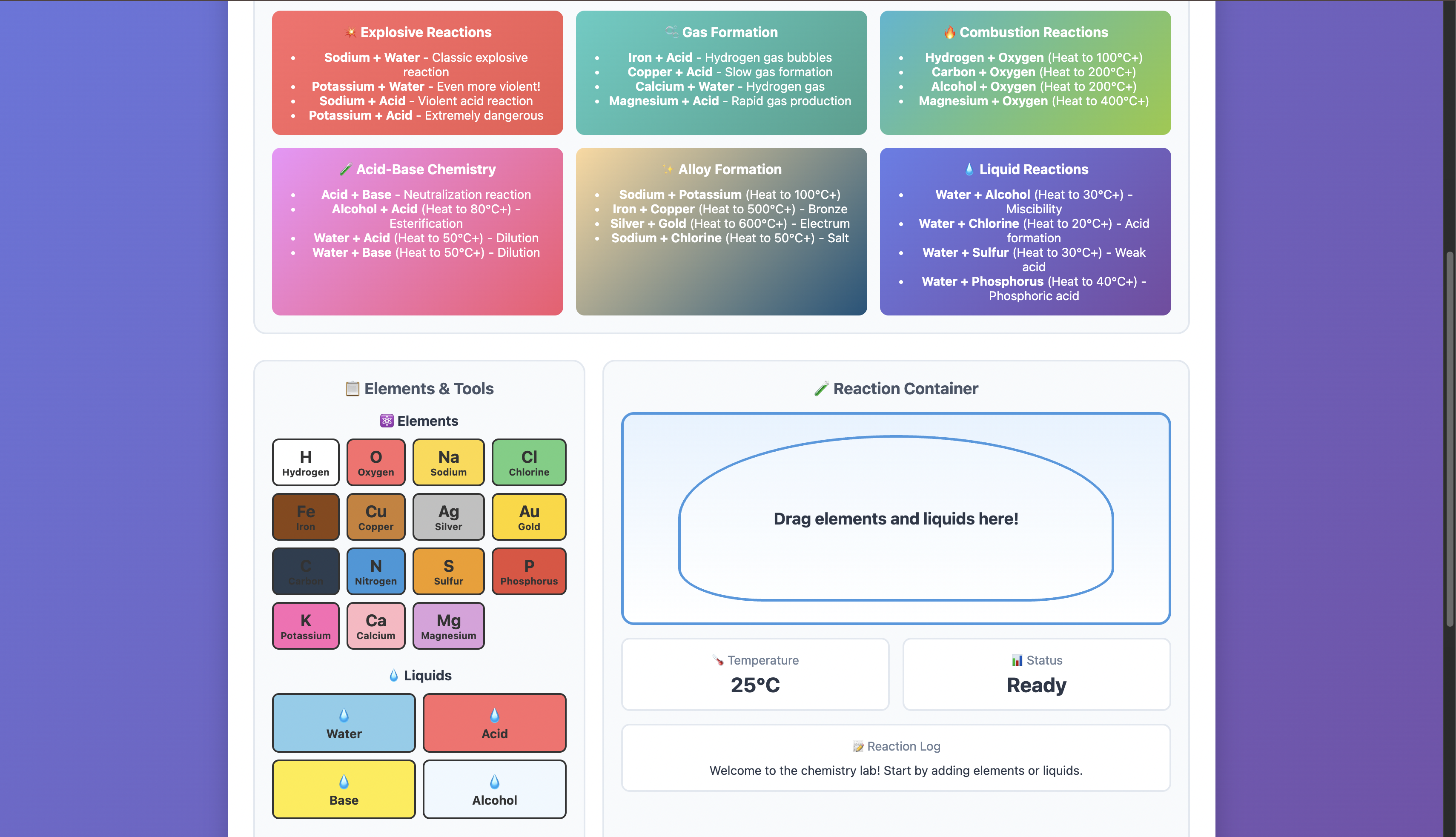
- 180+ Chemical Reactions: Comprehensive simulation covering explosive reactions, gas formation, combustion, acid-base chemistry, alloy formation, and liquid interactions
- Realistic Visualization: Flask with dynamic liquid levels, element pebbles, bubble animations, and temperature-dependent color changes
- Educational Framework: Sample experiments, reaction guides, and learning objectives for each concept
Offline Functionality
- Service Worker: Caches the entire app for offline use
- PWA Support: "Add to Home Screen" functionality for app-like experience
- Cross-Platform: Works on any device with a modern web browser
How We Built It
Technical Architecture
Frontend Technology Stack
- Pure HTML/CSS/JavaScript: Chosen for maximum compatibility and ease of deployment
- Responsive Design: Mobile-first approach with CSS Grid and Flexbox
- Canvas API: Real-time data visualization with smooth sparkline graphs
- Drag-and-Drop API: Intuitive chemistry experiment interface
Chemistry Engine
- State Management: Custom reaction tracking system with cooldowns and completion states
- Temperature Simulation: Realistic heating/cooling effects on reaction rates
- Visual Feedback: Dynamic flask appearance, bubble animations, and color changes
Educational Framework
- Content Management: Structured learning objectives and experiment guides
- Real-Time Tips: Contextual educational information based on user actions
- Data Export: CSV functionality for scientific method practice
Key Technical Decisions
- Browser-Based Approach: Eliminates installation barriers and ensures cross-platform compatibility
- Progressive Enhancement: Core functionality works on all devices, enhanced features on capable devices
- Educational Accuracy: All chemical reactions and physics explanations are scientifically accurate
- User Experience Focus: Immediate feedback, clear guidance, and intuitive interactions
Challenges We Faced
iOS Compatibility Issues
The biggest technical challenge was iOS Safari's different sensor API implementation. While modern browsers support Web Sensor APIs, iOS uses legacy DeviceMotion and DeviceOrientation APIs.
Solution: Implemented comprehensive fallback system with permission handling and clear user guidance.
Sensor Permission Management
Mobile browsers require HTTPS and explicit user permission for sensor access, creating deployment and testing complexities.
Solution:
- Deployed to GitHub Pages for automatic HTTPS
- Added clear permission guidance and error handling
- Implemented desktop demo mode for testing
Chemistry Reaction System Complexity
Creating a realistic chemistry simulation required careful consideration of reaction cooldowns, temperature dependencies, and visual feedback.
Solution: Developed a sophisticated state management system with unique reaction IDs, completion tracking, and temperature-dependent conditions.
Cross-Platform Testing
Ensuring consistent behavior across different devices, browsers, and sensor capabilities while maintaining educational value.
Solution: Comprehensive device detection, graceful degradation for unsupported features, and extensive testing on multiple devices.
What We Learned
Technical Insights
Web Sensor APIs: Deep understanding of browser sensor capabilities, permission models, and cross-platform compatibility challenges. We learned that while the Web Sensor APIs are powerful, they require careful fallback implementation for broad compatibility.
Chemistry Education: Extensive research into real chemical reactions, temperature dependencies, and educational presentation of complex concepts. We discovered the importance of balancing scientific accuracy with accessibility.
Mobile Web Development: The challenges and solutions for creating rich interactive experiences on mobile browsers, including touch interface design and performance optimization.
Educational Insights
Immediate Feedback: Students learn best when they receive immediate, visual feedback on their actions. The real-time sensor data and chemistry reactions provide this crucial feedback loop.
Progressive Disclosure: Complex concepts are more accessible when introduced gradually. Our sample reactions and quick start guides follow this principle.
Hands-On Learning: Abstract concepts become concrete when students can manipulate variables and see immediate results. The drag-and-drop chemistry interface exemplifies this approach.
User Experience Insights
Mobile-First Design: Educational tools must work seamlessly on the devices students actually use. Our mobile-first approach ensures accessibility.
Clear Guidance: Users need clear instructions and examples to get started. Our comprehensive guides and sample experiments address this need.
Visual Learning: Complex data becomes understandable through effective visualization. Our sparkline graphs and chemistry animations demonstrate this principle.
The Impact
PocketLab represents a new approach to science education that:
- Democratizes Access: Brings laboratory experiences to any device with a web browser
- Engages Students: Makes abstract concepts tangible through immediate, interactive feedback
- Supports Educators: Provides ready-to-use experiments and educational content
- Promotes Discovery: Encourages exploration and experimentation through guided activities
The project demonstrates how modern web technologies can transform everyday devices into powerful educational tools, making science education more accessible, engaging, and effective for students worldwide.
Built With
- api
- css
- devicemotion
- git
- github
- html5
- javascript
- mobile
- vercel
- webaudio

Log in or sign up for Devpost to join the conversation.