Inspiration
AI has made it easier to write an app, but getting it onto an iPhone still takes a lot of setup. Signing, provisioning, and App Store review are a lot to deal with for something you only want to share with your family or club.
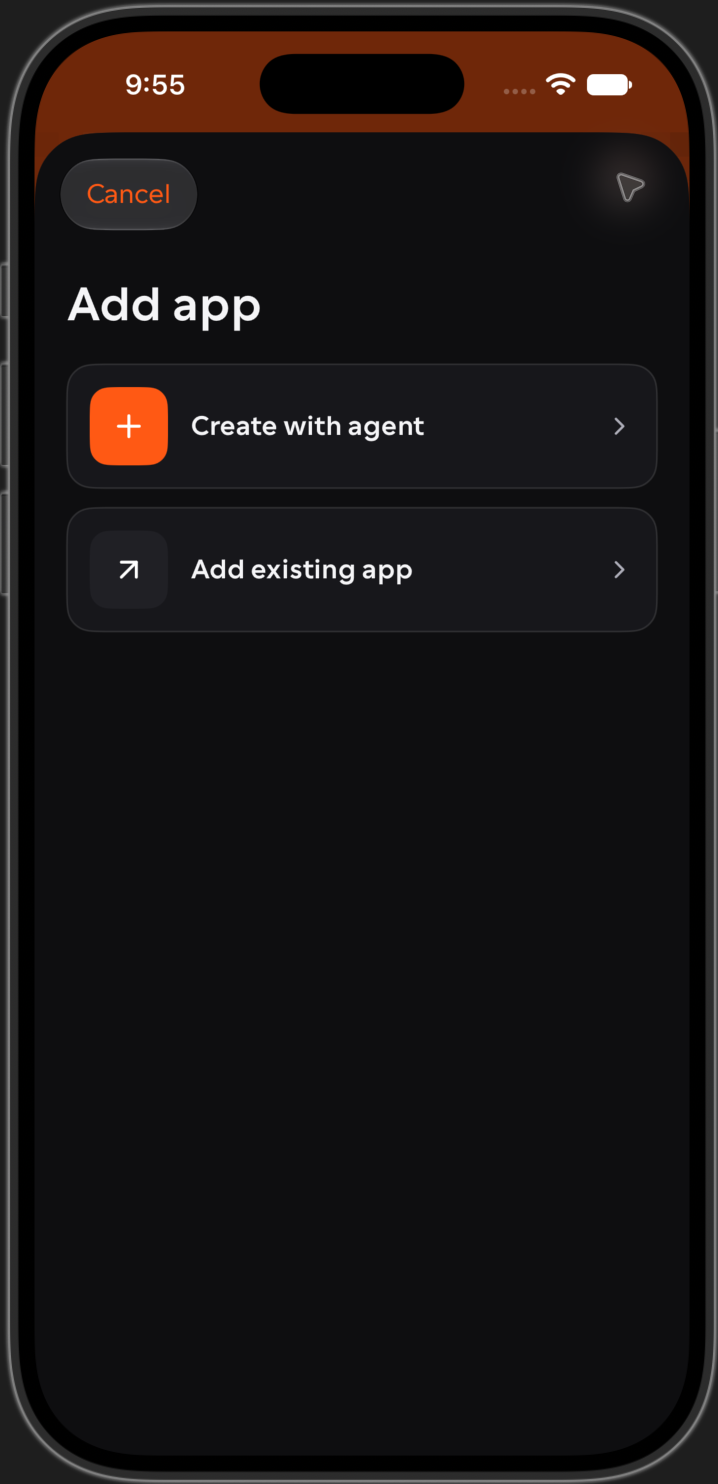
That’s where Pocket started. We wanted people to build a small app and share it without managing a separate iOS release. Pocket runs those web apps inside an existing iPhone app and keeps them in one place.
We also wanted those apps to use more of the phone. A group’s walking app should be able to record a route with the screen locked. A score tracker should be able to put an update on the Home Screen. Pocket’s native bridge gives hosted apps access to these capabilities.
What it does
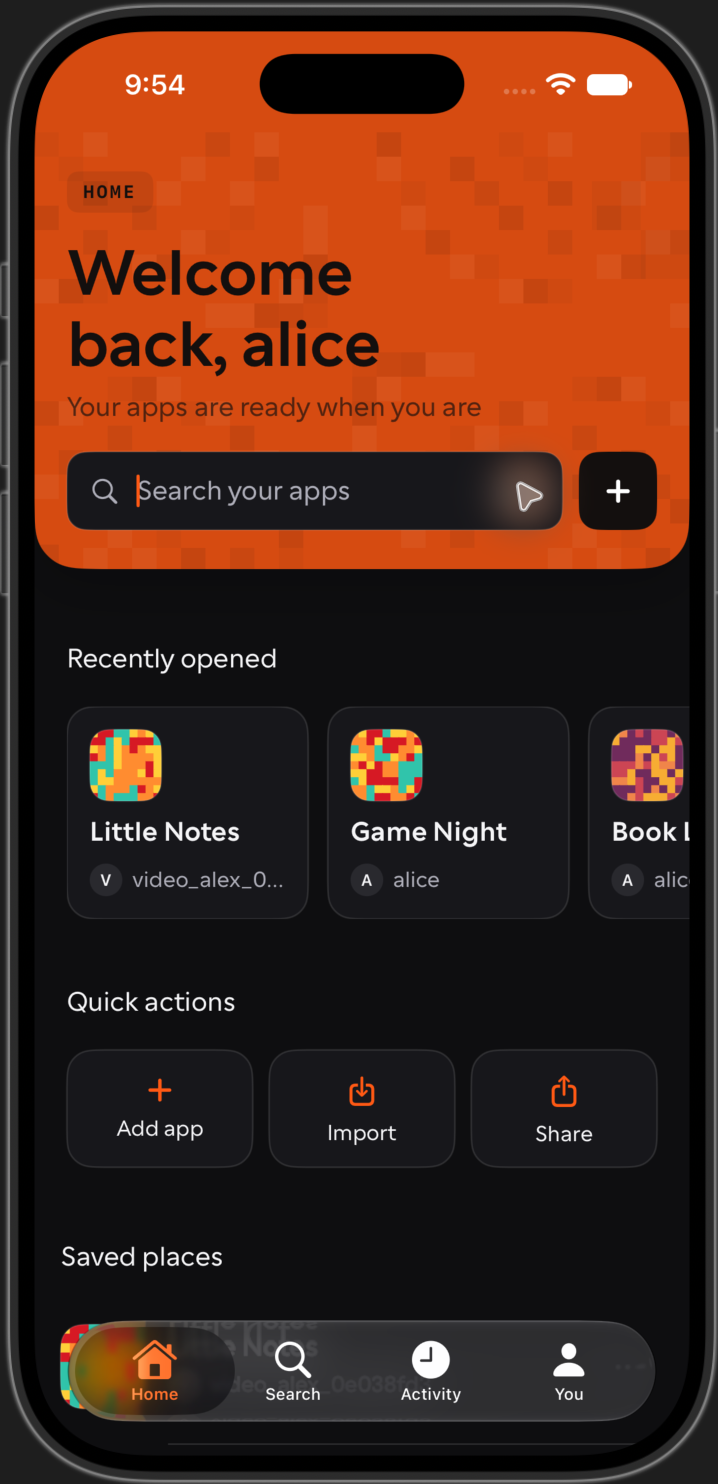
Pocket is a home for apps made by small groups, for themselves.
A fraternity could make a list for a house tradition, with fields that mean something to its members. A club could create an app around its own activities and choices. A family could create a score tracker for its homemade game, using its own categories.
The point is being able to make something specific without turning it into a standalone software project. Your group defines what it needs, creates the tool, and keeps it somewhere everyone with access can return to.
The current builder supports lists, number trackers, and polls with configurable fields. These provide the records, scores, and responses behind small group activities. Custom game logic is beyond the current prototype.
Pocket keeps these apps in an iPhone library. Members can contribute to shared data, and the owner controls who has access. Existing hosted websites can also be added to the library.
Hosted apps can use Pocket’s JavaScript bridge to trigger native haptics, read motion and orientation, access today’s steps and walking distance, and start native GPS recording that continues while the screen is locked or Pocket is in the background. They can also publish text to a native Home Screen widget that users add and configure.
Each capability requires consent. Recording has a native Stop control, and apps can only access their own recorded routes. Creators currently add these bridge calls themselves; the generated templates do not add them automatically.
How we built it
Pocket’s iPhone app uses SwiftUI and WebKit. A plain-language request becomes a build job for a TypeScript worker using NVIDIA Nemotron.
The agent creates a structured app specification, then runs checks for valid fields, browser-script syntax, saving and deleting records, and access isolation. Failed checks return to the model for repair before the app becomes ready.
SpacetimeDB stores accounts, app listings, build jobs, permissions, and shared records. The gateway and worker run in Docker on Vultr, with Caddy handling HTTPS. Shared pages refresh their data every five seconds.
The native bridge connects JavaScript promises to a fixed set of Swift handlers through WebKit. Core Motion provides movement and pedometer data, Core Location handles background route recording, and WidgetKit displays app-published cards. Pocket checks the calling app’s HTTPS origin and presents native permission prompts before granting access.
Route collection runs natively while the web page is suspended. The prototype retains the latest 1,000 points in memory, limits recording to eight hours, and stops if Pocket is terminated. Widget updates follow iOS’s refresh schedule. Simulator builds and targeted checks pass; background recording and sensor behavior still need physical-device validation.
Challenges we ran into
A group app needs to remain useful after its first demonstration. Members need to reopen it, find previous entries, contribute their own, and lose access when the owner removes them.
That made persistence and permissions central to the implementation. We kept access rules in the backend and required checks before generated apps could be published.
We also had to define a realistic boundary for generation. The current builder supports a small set of dependable interactions rather than promising that every group’s idea can already be built.
Accomplishments that we're proud of
We connected creation, persistent data, and shared access in one workflow.
In the Book Loan demonstration, two accounts added entries to the same app. The owner could see the other person’s contribution, and revoking access prevented the recipient from continuing to access the data.
The iPhone shell and original developer tools predate HackUTD. This version connects that foundation to the generated-app runtime and SpacetimeDB backend.
What we learned
An app can matter deeply to a small group without being useful to anyone else.
The opportunity is in the details generic products cannot anticipate: a family’s scoring categories, a club’s terminology, or a house tradition. Making those details inexpensive to turn into working software gives groups more control over the tools they use.
What's next for Pocket
We want to support more of the rules that make each group different: custom scoring, conditional actions, and richer interactions for private games and activities.
Those capabilities are future work. Today, Pocket provides the foundation: create a focused tool, keep its data, and share it with the people it was made for.
Built With
- caddy
- docker
- mcp
- node.js
- nvidia-nemotron
- solana
- spacetimedb
- swift
- swiftui
- typescript
- vultr
- webkit
