-
-
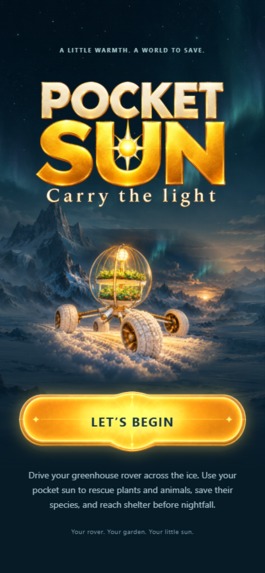
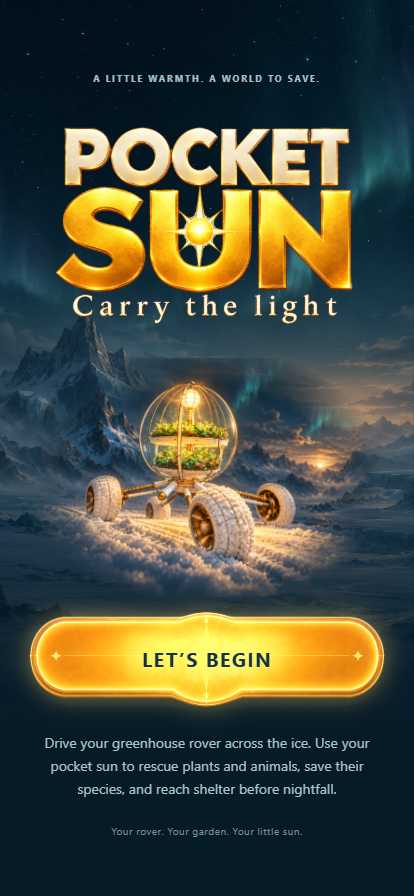
title screen
-
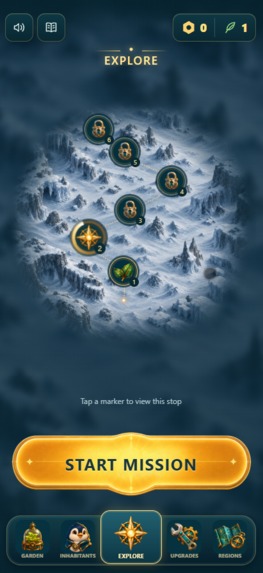
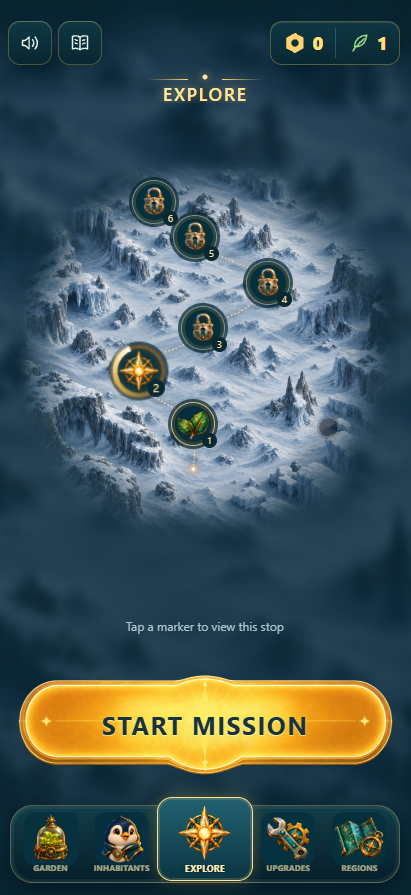
main menu with exploration map
-

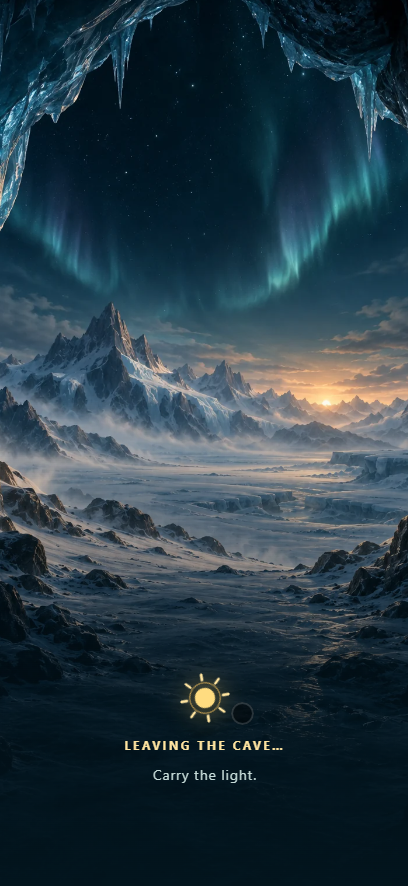
exploration loading screen
-
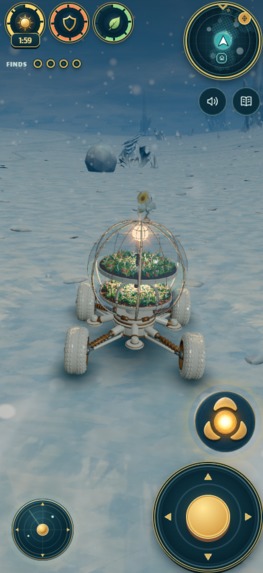
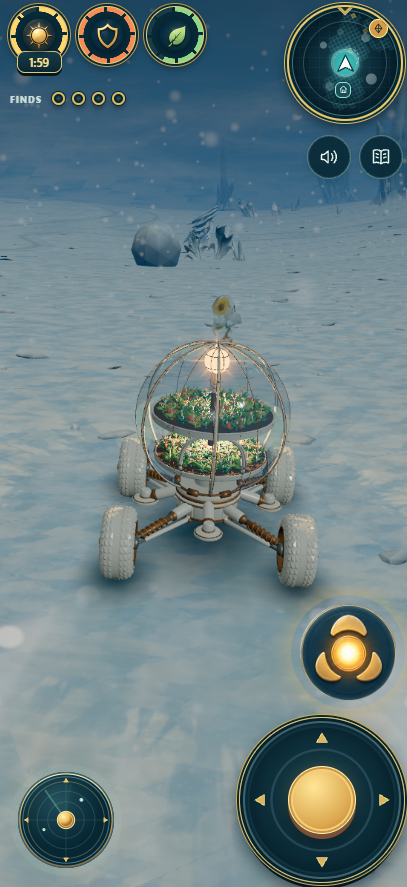
exploring the ice desert in mission 1
-
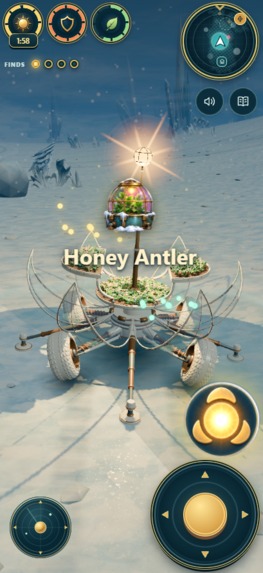
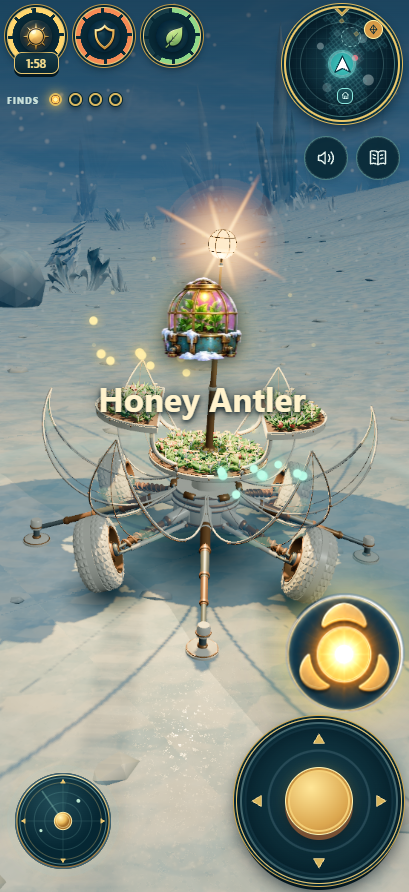
using pocket sun to thaw frozen plants and animals
-
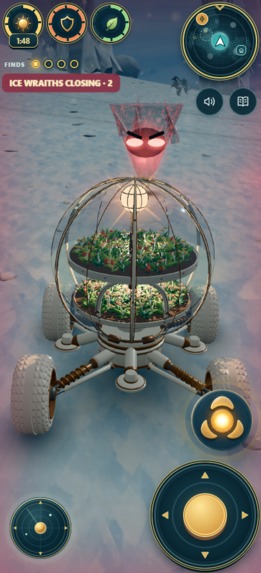
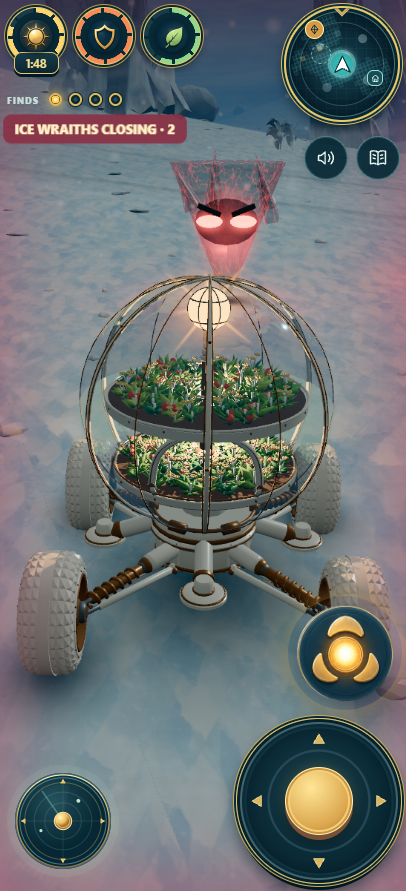
ice ghosts follow and try to stop us
-
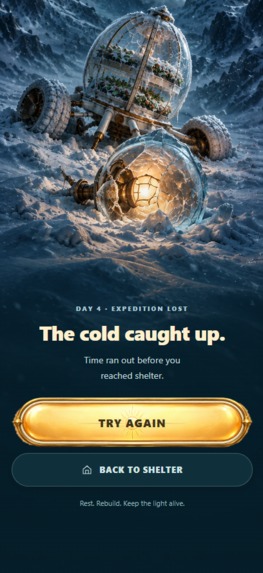
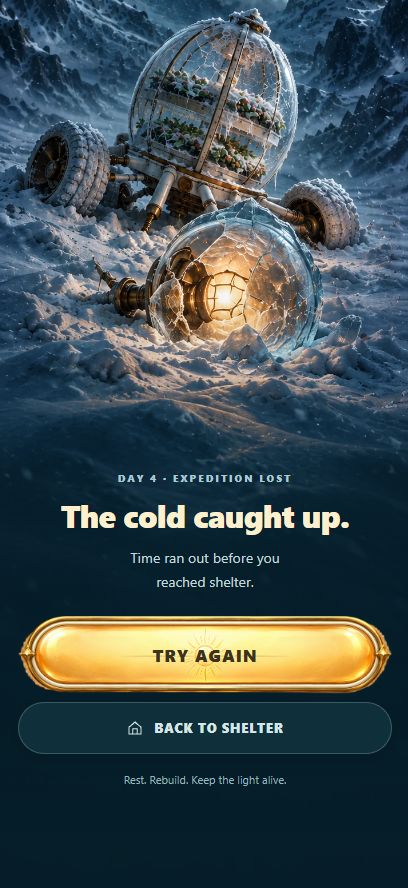
lost screen
Inspiration
Pocket Sun began with an image: a greenhouse on wheels carrying a tiny artificial sun through a frozen world. We wanted to make a survival game where the things you bring home are alive. Rescuing a plant or an animal gives each expedition a purpose beyond collecting another resource.
That contrast shaped the game: cold landscapes outside, a warm and growing collection inside. Your rover becomes a record of the life you have saved.

What it does
Pocket Sun is a single-player, portrait Survival & Resource Management game. Drive into the ice, scan for buried finds, park your rover, and deploy its sun to thaw resources and rescue species. Reach shelter before your daylight, power, or hull runs out, then spend recovered parts and seeds on rover upgrades.

Six routes take you farther into the frozen landscape. Optional supplies can extend an expedition, giving you a reason to investigate beyond the required stops. Back at shelter, rescued animals join your collection and plants fill the rover's garden. Select a plant to look closer and see its name and recorded rescue day and location.
How we built it
We built Pocket Sun through iterative prompting with AI coding tools, including Codex. AI did the heavy lifting across the game implementation, interface, visual effects, tests, and submission tooling. We directed the concept, reviewed the results, and refined the experience through repeated feedback. The build log records that process and the decisions that changed along the way.
The project uses Svelte, TypeScript, Vite, and Three.js. A shared simulation drives gameplay and automated checks, while a dedicated worker handles driving physics. AI-generated artwork, supplied 3D assets, and audio were integrated into the game, with models and textures processed for a compact mobile build.
A separate exporter assembles readable game code into one HTML file and packages third-party libraries and assets locally for offline play.

Challenges we faced
Making a 3D driving game readable and comfortable in portrait orientation took repeated iteration. Steering, braking, reversing, scanning, and deploying the sun needed to work without crowding the screen. We also had to balance exploration with guidance: enough information to find the next rescue, while leaving room to search.

Another challenge was keeping the design focused. Early versions included hunger, crop management, and habitat capacity. We removed those systems to put rescuing species at the center of the experience.
What we learned
We learned that visible progress matters: a rescued plant sitting in your rover makes a collection feel tangible. We also learned to pair AI iteration with verification. Automated tests help protect the rules, but browser checks are still needed for touch controls, layout, rendering, and offline asset loading.

What's next
We want to expand the journey toward a permanent living valley, with deeper relationships between rescued species and more meaningful route choices, while preserving simple mobile controls and the pleasure of bringing life home.
Built With
- codex
- css
- html5
- javascript
- openai
- python
- svelte
- three.js
- typescript
- vite
- vitest
- web-workers
- webgl

Log in or sign up for Devpost to join the conversation.