-
-
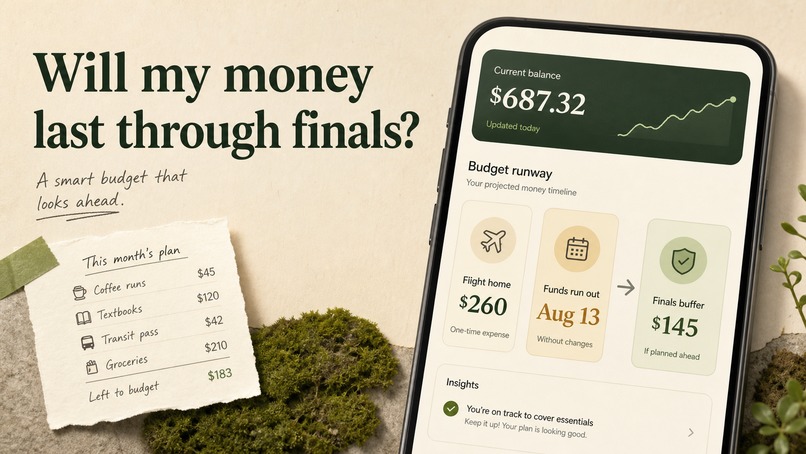
Pocket Semester shows whether Alex’s budget lasts through finals—and which tradeoff protects it.
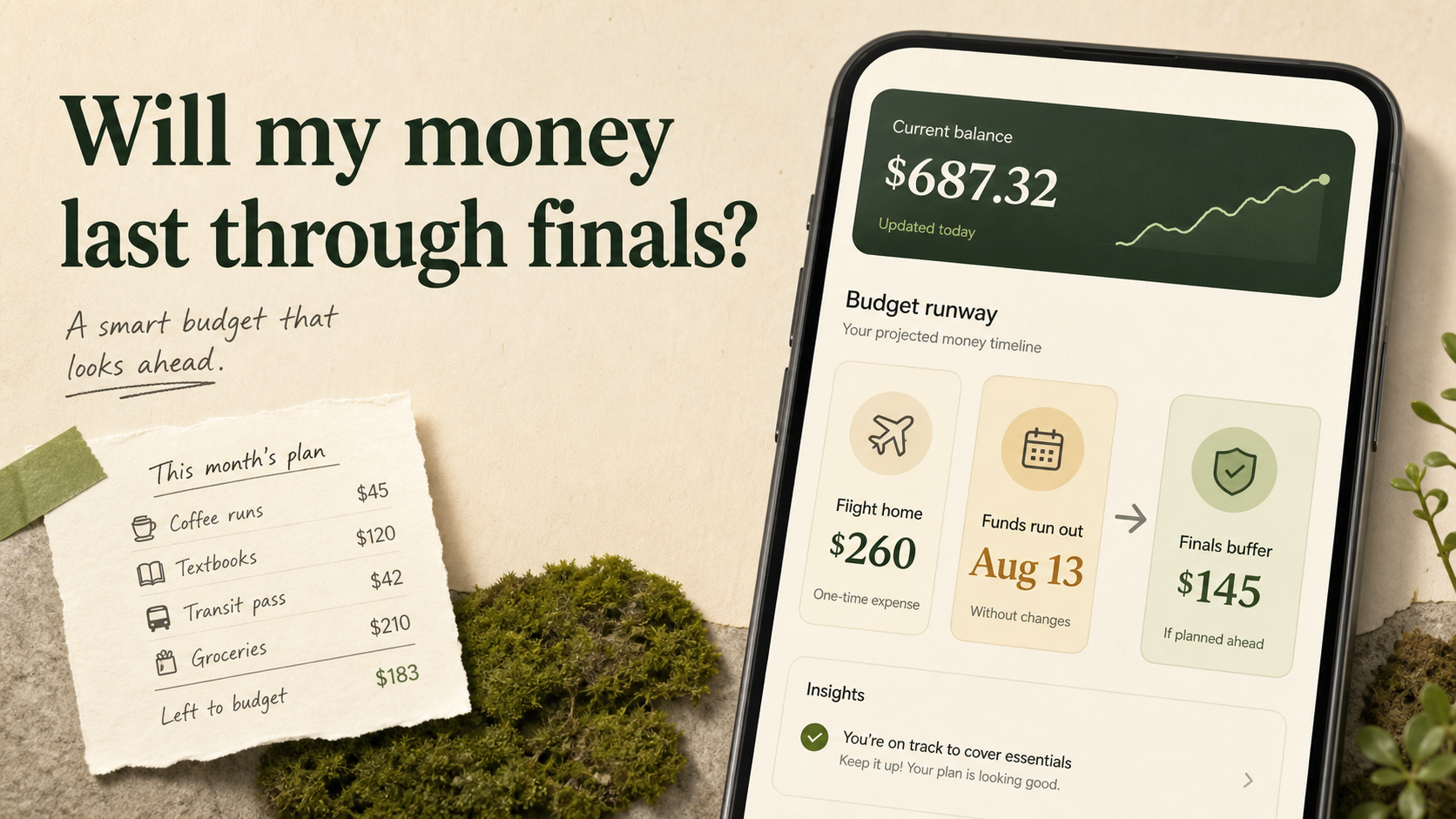
Most student budgeting apps stop at the end of the month. Pocket Semester starts with the question students actually ask: will my money last through finals?
Pocket Semester is a student-first budget coach for the term ahead. Add an expense manually or by CSV, review a transparent category plan and month-end forecast, then test a planned purchase against a deterministic semester runway. The runway makes the tradeoff visible: it shows whether the current plan covers the rest of the term, the projected finals buffer or shortfall, and what a smaller weekly adjustment changes.
The public /demo path is intentionally browser-only and resettable. It uses realistic fictional student data, never asks for bank credentials, and lets judges follow the full loop in under a minute: add an expense, see its category and budget/finals effect, then refresh a coaching plan.
AI and Codex disclosure
Pocket Semester was designed and implemented during OpenAI Build Week with Codex using GPT-5.6. Codex accelerated the product framing, semester-runway engine, provider boundary, structured validation, responsive/accessibility improvements, realistic demo data, and tests.
The deployed runtime uses Gemini because Build Week credits apply to Codex/ChatGPT rather than API use. The interface truthfully labels live Gemini output, local fallback suggestions, saved category rules, and example demo plans. It does not claim that Gemini results are generated by GPT-5.6.
AI is used only for expense categorization and practical coaching language. Integer-cent budget, forecast, and semester-runway calculations are deterministic, so an AI model never invents financial balances or savings impacts.
Try it
Open https://pocket-semester.vercel.app/demo. No account is required. Use Add expense with auto-categorization, then review the category consequence and semester effect at the top of the workspace. The demo resets on reload.
Privacy
The public demo is fictional and browser-only. Pocket Semester does not request or store bank credentials. Budget guidance is educational only, not financial, tax, credit, or investment advice.
Built With
- gemini-api
- gpt-5.6
- next.js
- openai-codex
- react
- typescript

