-
-
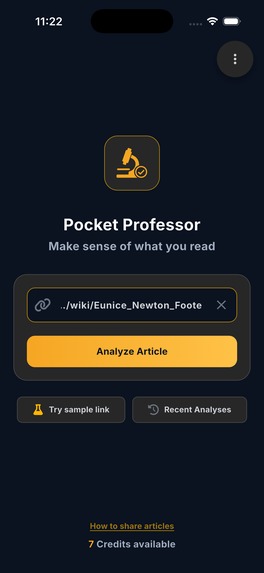
App main screen
-
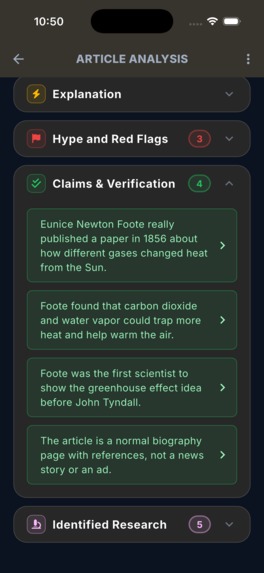
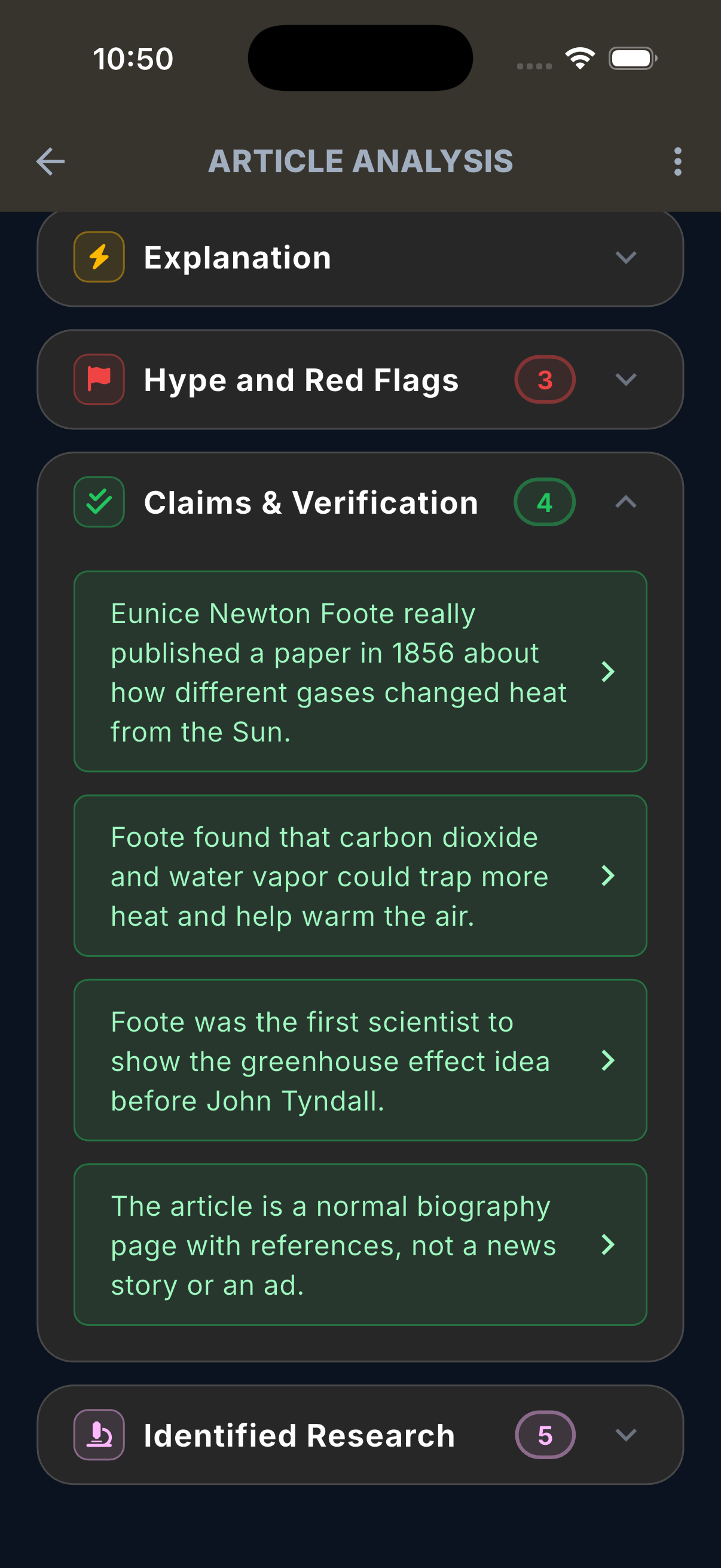
App article analysis screen with details expanded
-
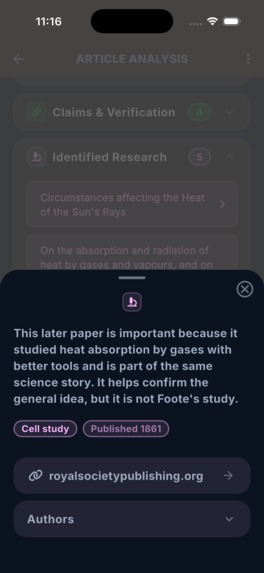
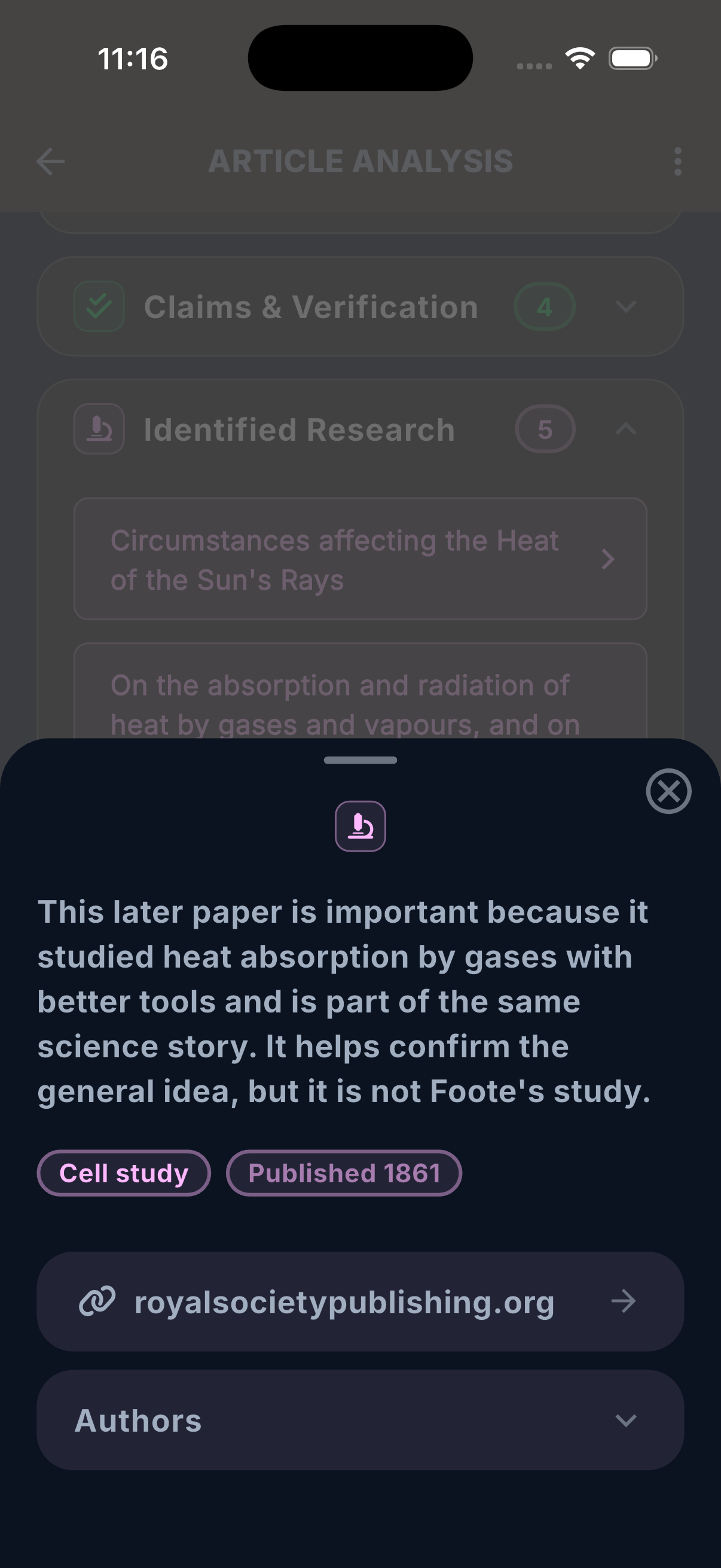
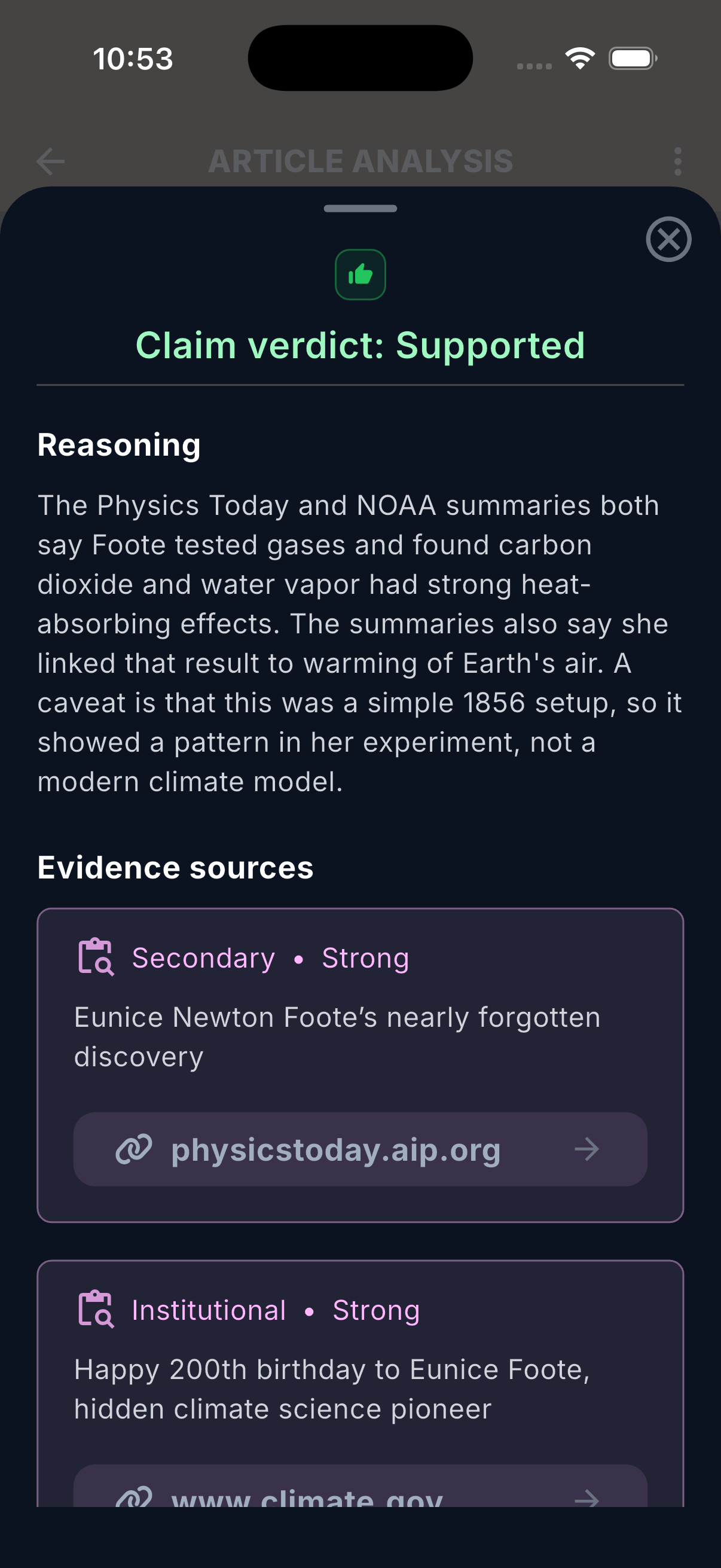
App article analysis screen with secondary research bottom sheet
-
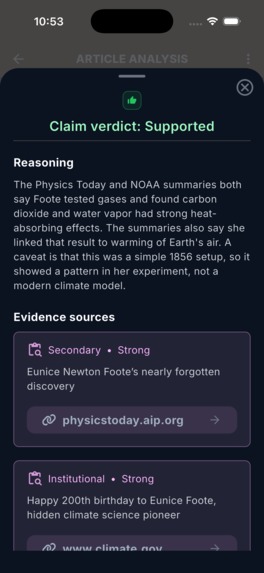
App article analysis screen with research bottom sheet
-
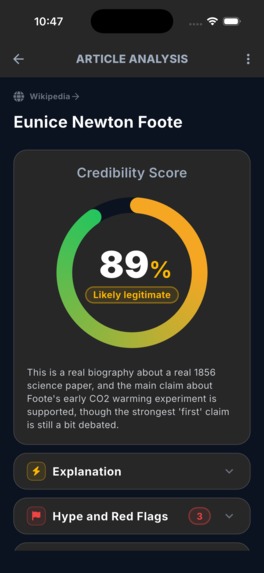
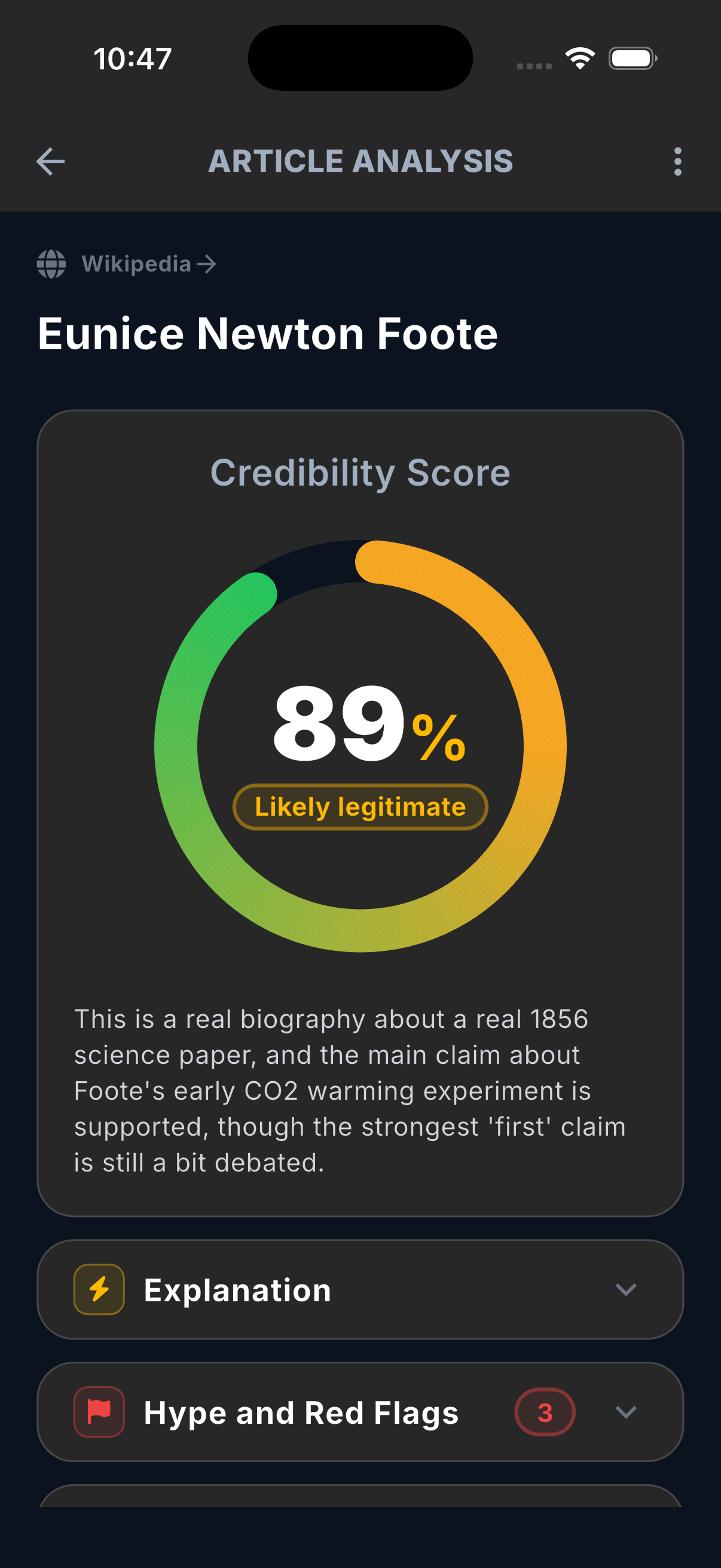
App article analysis screen
-
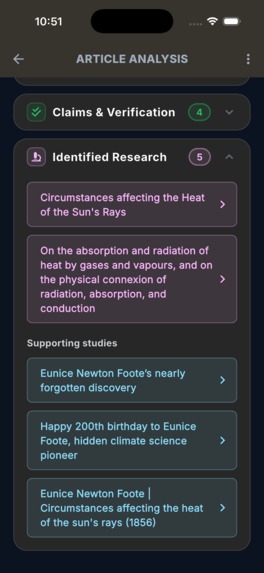
App article analysis screen with details expanded
-
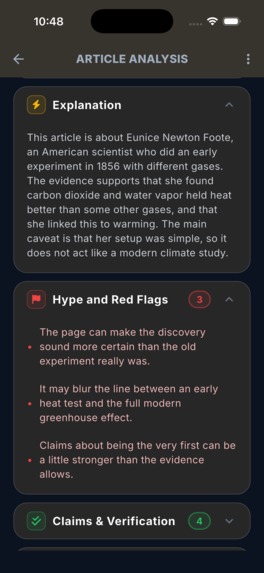
App article analysis screen with details expanded
-

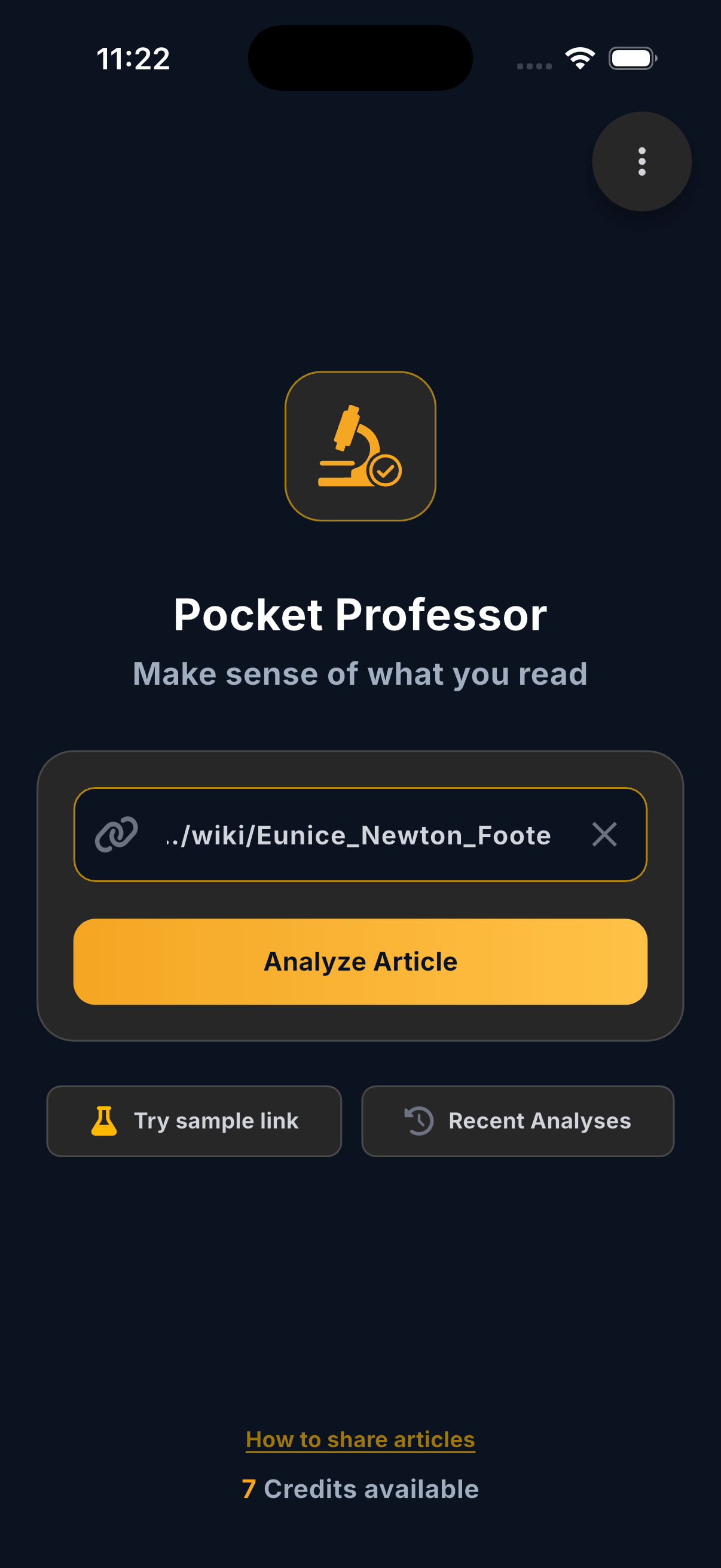
1024x1024 uncropped app icon

Inspiration
Important claims reach us constantly through news articles, blogs, social media, and shared links. Unfortunately, the headline often travels much further than the evidence behind it.
Research-based articles can oversimplify studies, overlook limitations, confuse correlation with causation, or present uncertain findings with too much confidence. Checking the original evidence is possible, but it requires research experience and most importantly time that many readers do not have.
I built Pocket Professor to make that first step easier. It helps readers pause, inspect the evidence, and make a more informed judgement about what they are reading.
What it does
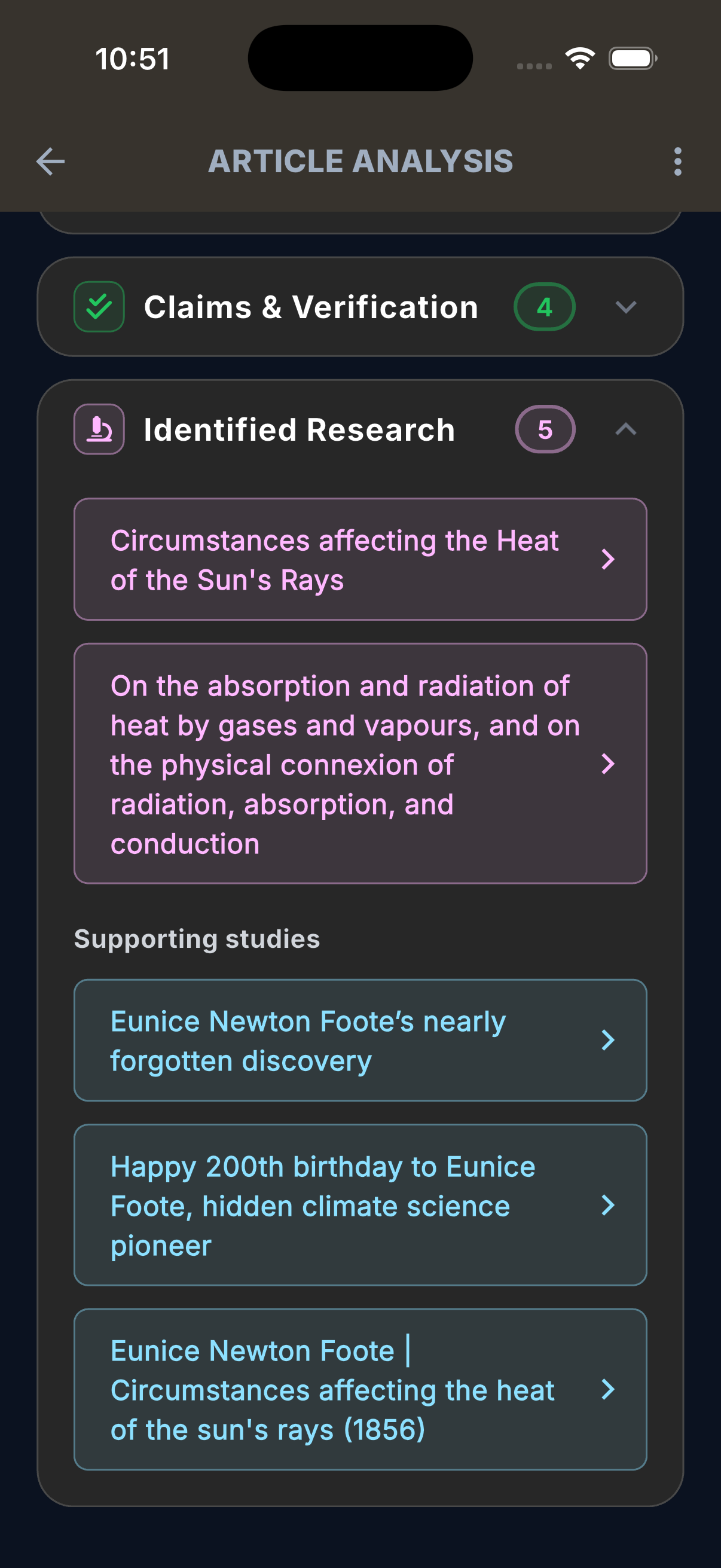
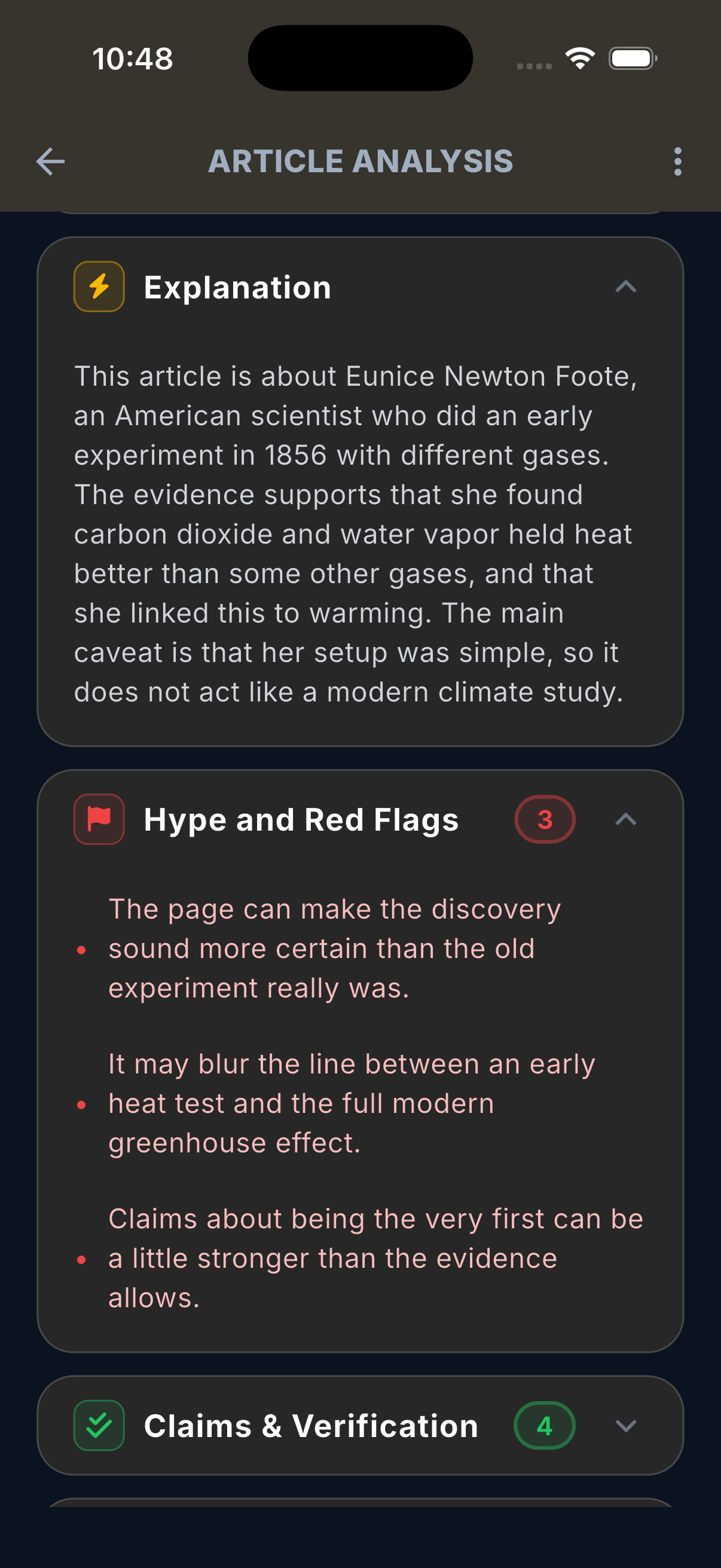
Pocket Professor provides a structured, AI-assisted analysis of an article.
Users can paste an article URL or share a page directly from their browser. Pocket Professor then:
- Summarises what the article is saying
- Identifies its principal claims
- Finds the research and sources connected to those claims
- Compares claims with primary and credible sources
- Shows whether individual claims are supported, partially supported, contradicted, inconclusive, or unverifiable
- Assesses the quality of the article’s sourcing
- Identifies hype, red flags, missing information, and potentially overstated conclusions
- Provides an overall credibility assessment
- Links back to the article and relevant sources so readers can inspect the evidence themselves
Completed analyses are saved in the user’s history. Longer analyses run in the background, and users can receive a notification when the result is ready.
Pocket Professor does not attempt to replace human judgement or declare an article absolutely true or false. Its purpose is to make the reasoning and evidence presented in the article easier to examine.
How I built it
The mobile application was built with Flutter and Dart for iOS and Android.
A NestJS API accepts article requests and passes longer-running work to a background processing system built with BullMQ and Redis. PostgreSQL and Prisma provide durable storage for users, analysis requests, results, and credit transactions.
The analysis pipeline currently uses the OpenAI Responses API with web search and structured output schemas. It first examines the submitted page, then identifies and checks important claims against primary or otherwise credible sources.
Firebase Cloud Messaging notifies users when asynchronous analyses finish.
RevenueCat powers the in-app credit purchases on both Apple and Google platforms. Store purchases are connected to Pocket Professor accounts, while backend webhooks process purchases and refunds safely and idempotently.
Challenges I ran into
One of the largest challenges was presenting uncertainty responsibly. A single credibility score is easy to understand, but it can hide the reasoning that produced it. I therefore designed the results around progressive disclosure: readers see a concise assessment first and can then inspect individual claims, evidence, source quality, research details, and limitations.
Another challenge was making a long-running AI and web-research workflow reliable on mobile. The system needed background jobs, retries, durable state, credit reservation and settlement, result history, and push notifications.
Cross-platform purchasing introduced another set of challenges. Purchases can be delayed, repeated, cancelled, or refunded, so RevenueCat webhook processing and the credit ledger were designed to prevent duplicate credit grants and correctly handle reversals.
Accomplishments that I am proud of
- Shipping Pocket Professor publicly on both Google Play and the Apple App Store
- Making article submission as simple as pasting or sharing a link
- Turning a complex research process into a structured, readable mobile experience
- Showing the reasoning behind credibility assessments instead of presenting an unexplained score
- Building a reliable asynchronous analysis and notification system
- Implementing cross-platform credit purchases and refund handling through RevenueCat
- Giving readers direct access to the underlying articles and research
What I learned
Building Pocket Professor reinforced that credibility cannot be reduced to a binary true-or-false label. Good information literacy requires looking at the strength of the evidence, the quality of the sources, uncertainty, limitations, and whether an article’s wording accurately reflects its sources.
I also learned that responsible AI product design involves making uncertainty visible. When evidence is insufficient, the system should say that a claim is inconclusive or unverifiable rather than forcing a confident answer.
From a product perspective, I learned that the technical research is only half the problem. The result must also be understandable to someone who is not a scientist or professional fact-checker.
Monetization and RevenueCat
Pocket Professor uses credits instead of requiring a recurring subscription. This allows occasional readers to purchase analyses when they need them without taking on another monthly commitment.
RevenueCat provides localized store products and purchasing across iOS and Android. Users can choose from Starter, Value, and Pro credit packs. RevenueCat webhooks connect each purchase to the correct Pocket Professor account and support idempotent purchase processing and refund handling.
This model aligns revenue with the real cost of performing an AI-assisted analysis while giving users a clear understanding of what they are buying.
Social impact
Pocket Professor was designed to support critical thinking and information literacy.
Misleading interpretations of scientific, health, environmental, and other research-based claims can affect both individual decisions and public discussion. Pocket Professor helps people investigate those claims by exposing the evidence, sources, uncertainty, and missing context behind an article.
The goal is not to tell people what to think. It is to give them a practical way to examine why a claim may—or may not—deserve their confidence.
What’s next
The next major feature I want to build is research tracking.
Users will be able to follow research studies that interest them and receive notifications when meaningful developments occur—for example, when a study enters a new phase, changes status, publishes results, or releases an important update.
This would turn Pocket Professor from a tool used to investigate a single article into an ongoing research companion. After discovering a study through an article analysis, users could continue following its progress instead of relying on occasional news coverage.
I also plan to improve the clarity and transparency of analyses, support a wider range of sources, expand accessibility and localization, and make it easier to save and share important evidence.
Built With
- bullmq
- dart
- docker
- firebase-cloud-messaging
- flutter
- nestjs
- openai-api
- postgresql
- prisma
- redis
- revenuecat
- riverpod
- typescript

Log in or sign up for Devpost to join the conversation.