Inspiration
Poker night always needs a deck, a dealer, someone to track the turn and the bet, and enough players to fill the table. We wanted the table to handle all of that. It deals the cards, runs the betting, and fills empty seats with bots at three skill levels, so you can play with two people or a full table.
What it does
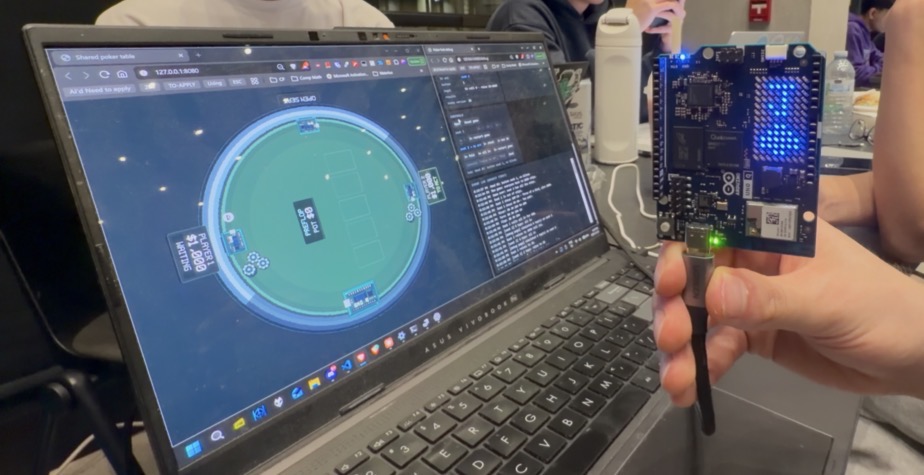
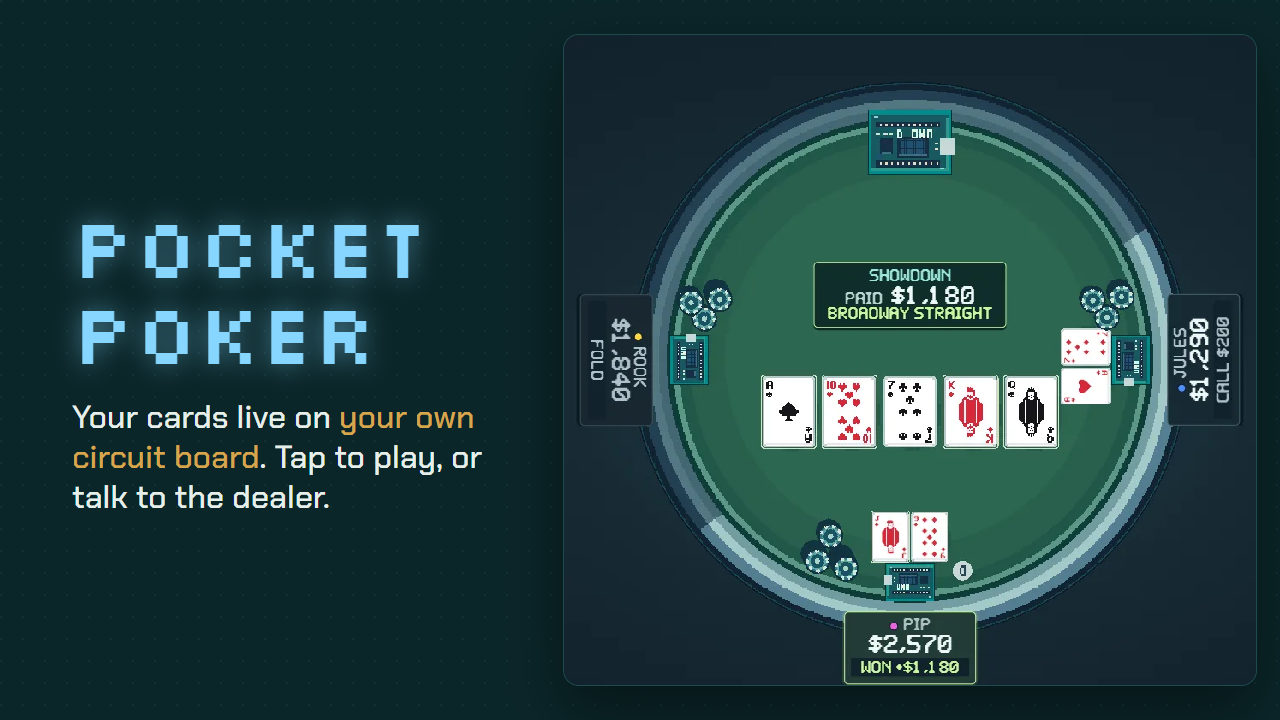
Pocket Poker is No-Limit Texas Hold'em where each player's Arduino UNO Q is their seat. Your two hole cards show up only on your board's LED matrix, and a shared pixel-art table screen shows everything public: stacks, bets, the pot and the community cards. You play by tapping your board's button (1 tap check/call, 2 raise, 3 fold, 4 all in) or by just saying it, like "raise to forty" or "shove". A voice dealer reads back what it heard, you tap once to confirm, and it calls the action: "Ana, the action is on you. 20 to call."
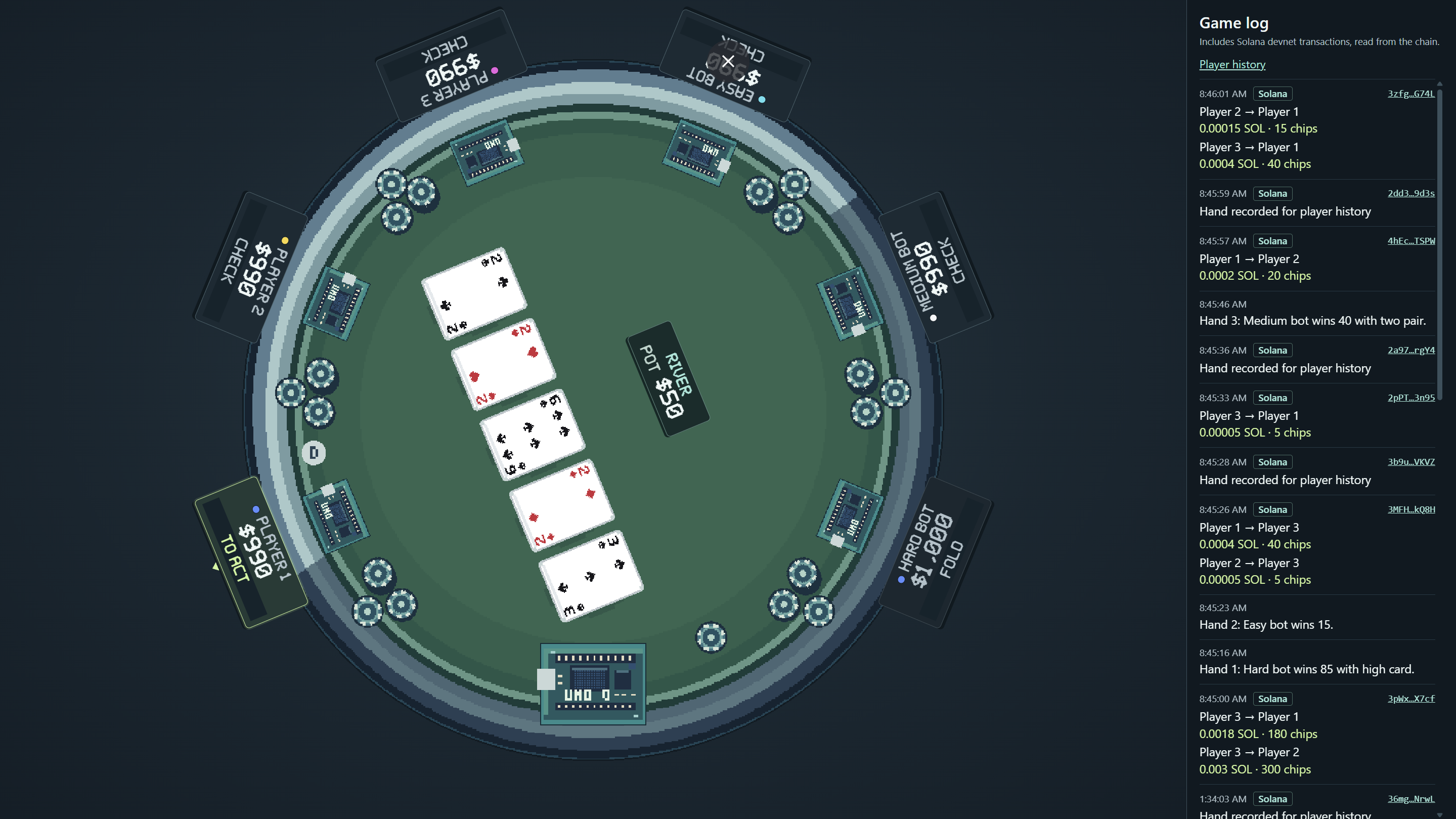
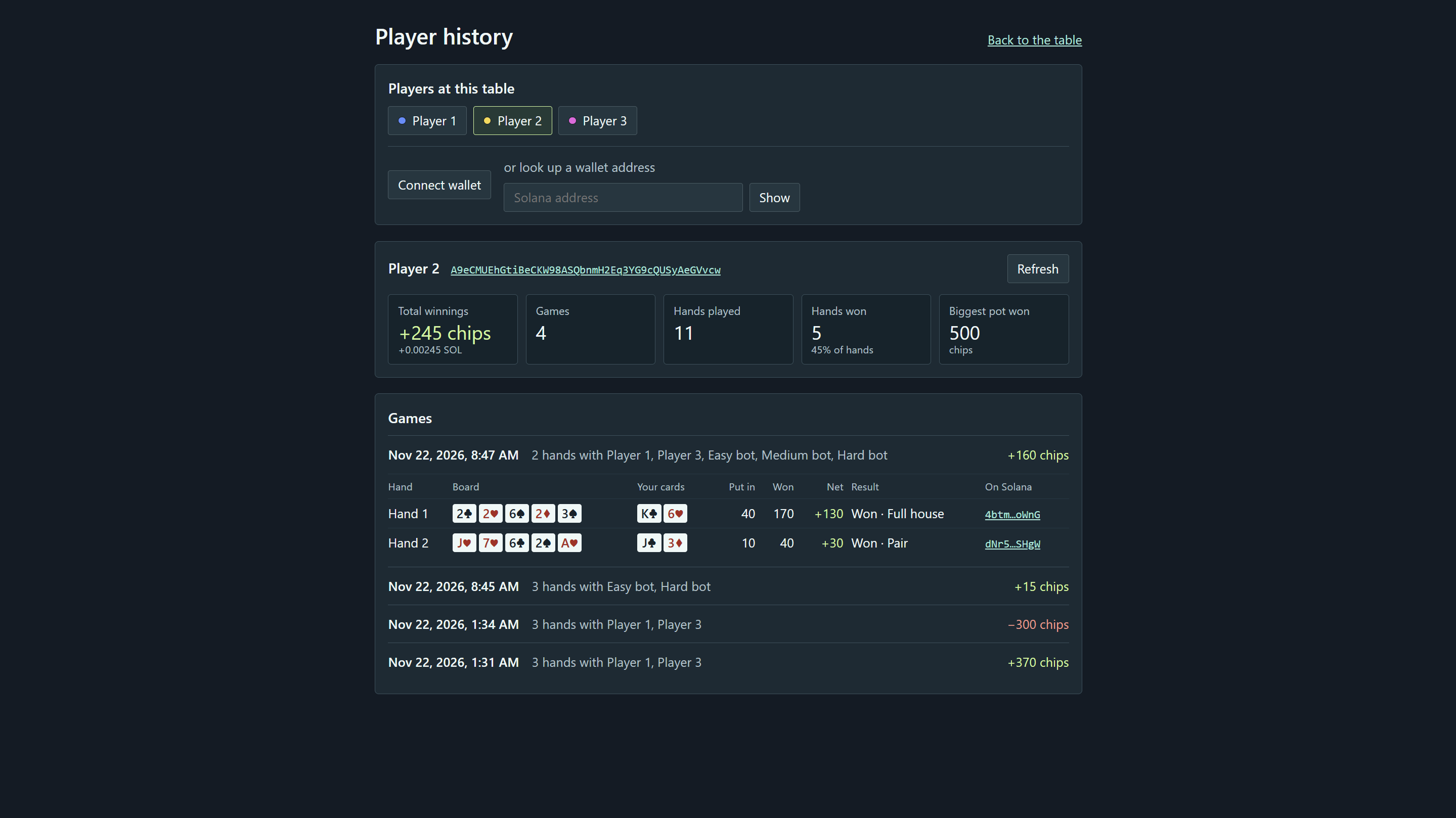
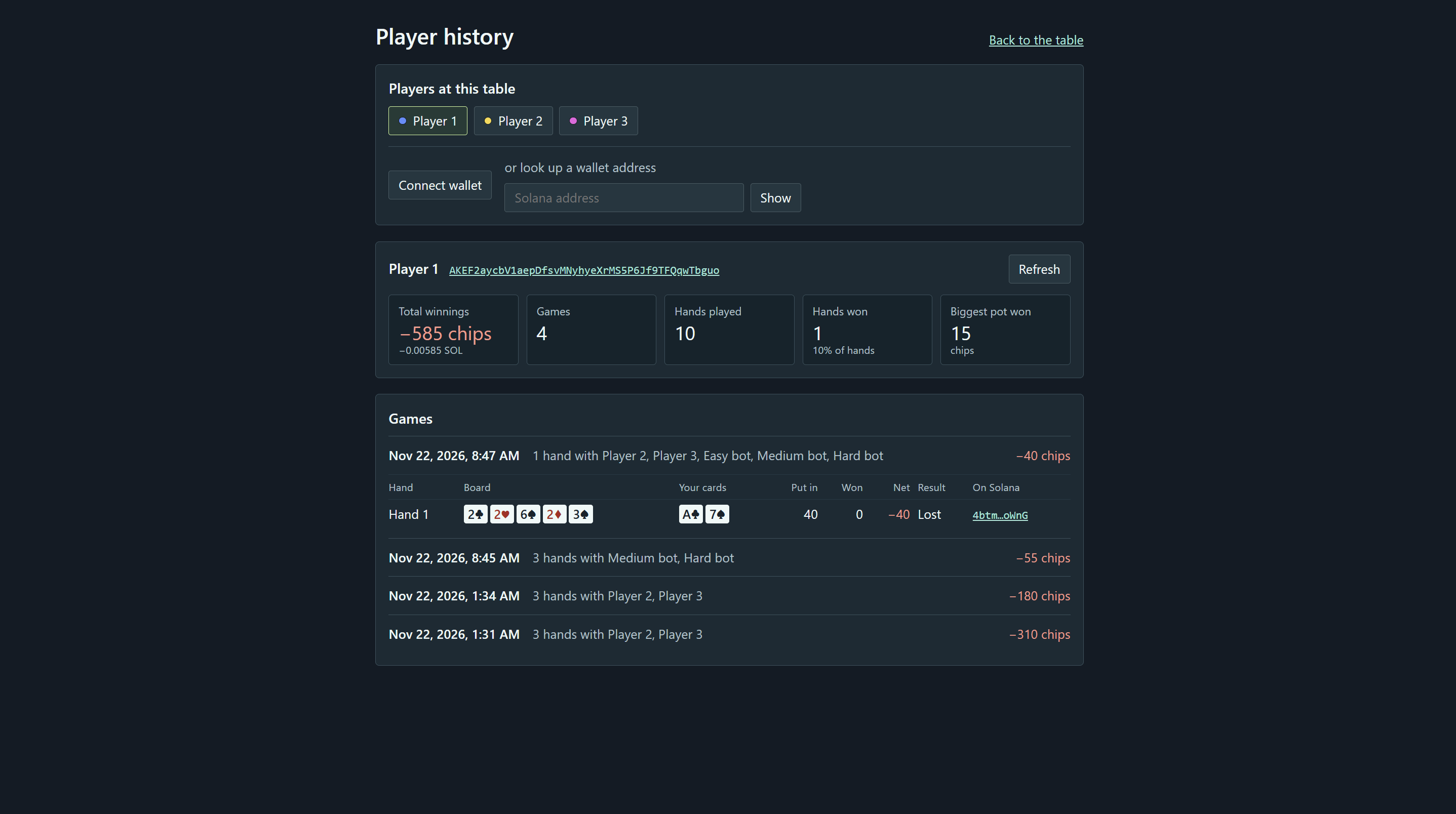
Short on players? Add bots at easy, medium or hard, up to six seats. Chips are real devnet SOL: when a hand ends the losers' wallets pay the winner on-chain, every hand is recorded on Solana, and each player gets a history page with their winnings and past hands.
How we built it
- Boards: The UNO Q's microcontroller draws the cards, seat number and a trophy or big X at the end of each hand on the 8×13 matrix. RGB LEDs show your turn, whether you've folded or won, and your seat colour. Its Linux side runs a Python client that sends button taps to the hub as JSON over TCP, and restores the screen if the board hiccups.
- Hub: A Python server on a laptop with a full Hold'em engine (betting rounds, side pots, split pots, best-5-of-7 hand ranking). Hole cards never leave the boards.
- Bots: The boards double as a computing cluster. When a bot needs to decide, every board's cores run Monte Carlo simulations of the hand at once, and the results are added up into the bot's odds of winning. Workers only ever see the bot's own cards and the board, so bots can't cheat. Hard bots also guess opponents' hands from how they bet.
- Table screen: A pixel-art poker room in the browser, updated live with Server-Sent Events, with buttons to deal and to add or remove bots.
- Voice: Silero VAD → faster-whisper on the GPU → our own parser that understands poker slang and sizing ("three-bet", "half pot", "see your 20 and raise 40") and fixes common mishearings. Piper does the dealer's voice.
- Solana: Each seat has its own devnet wallet. We build and sign the transfers ourselves with Ed25519 (no Solana SDK), and each finished hand is written on-chain as a memo. Players can connect a Phantom wallet and claim a seat with a signed message.
Challenges we ran into
- Networking: Campus Wi-Fi blocks devices from talking to each other, and Tailscale failed because the UNO Q's kernel is missing a firewall feature it needs. We switched to USB with adb port forwarding and wrote a script that reconnects boards and reflashes any that come back without their sketch.
- Audio: Bluetooth earbuds could play sound through the board, but their mic was silent on its Bluetooth chip, so listening moved to the laptop.
- A loud hackathon room: We tuned the listener to start only on speech louder than the room, stop as soon as it has a complete action, and ignore Whisper's made-up words.
- Devnet: The faucet was closed and the RPC is rate-limited, so payments carry over between hands and the log backs off when it hits the limit.
Accomplishments that we're proud of
- A real No-Limit Hold'em engine with side pots
- Turning the players' own boards into a computing cluster for the bots
- Private hands that are never sent anywhere except the player's own board
- Saying your move out loud in poker slang and having it understood
- A permanent on-chain record of every hand, with transactions we build ourselves
What we learned
How the UNO Q splits work between its Linux processor and its microcontroller, how to spread work across several small boards, how Solana transactions work under the hood, and how much tuning speech recognition needs before it works in a noisy room.
What's next for Pocket Poker
- Spoken prompts in each player's earbuds ("Your turn, 20 to call")
- Moving the hub from a laptop to a Raspberry Pi 5 so the table runs on its own
Built With
- arduino-uno-q
- entire
- python
- solana
- whisper
