Inspiration
Pocket Llama started with a simple idea: sites like Hugging Face let people share powerful local models, giving users privacy, control, and access to intelligence that normally sits behind a subscription.
The problem is that running local AI still feels like something reserved for people who enjoy spending Saturday night debugging CUDA errors.
We wanted to change that. Pocket Llama makes local AI something you can actually pick up, use, and own.
What it does
Pocket Llama is a completely local AI assistant. It doesn't need the internet, a data center, or your personal information to work.
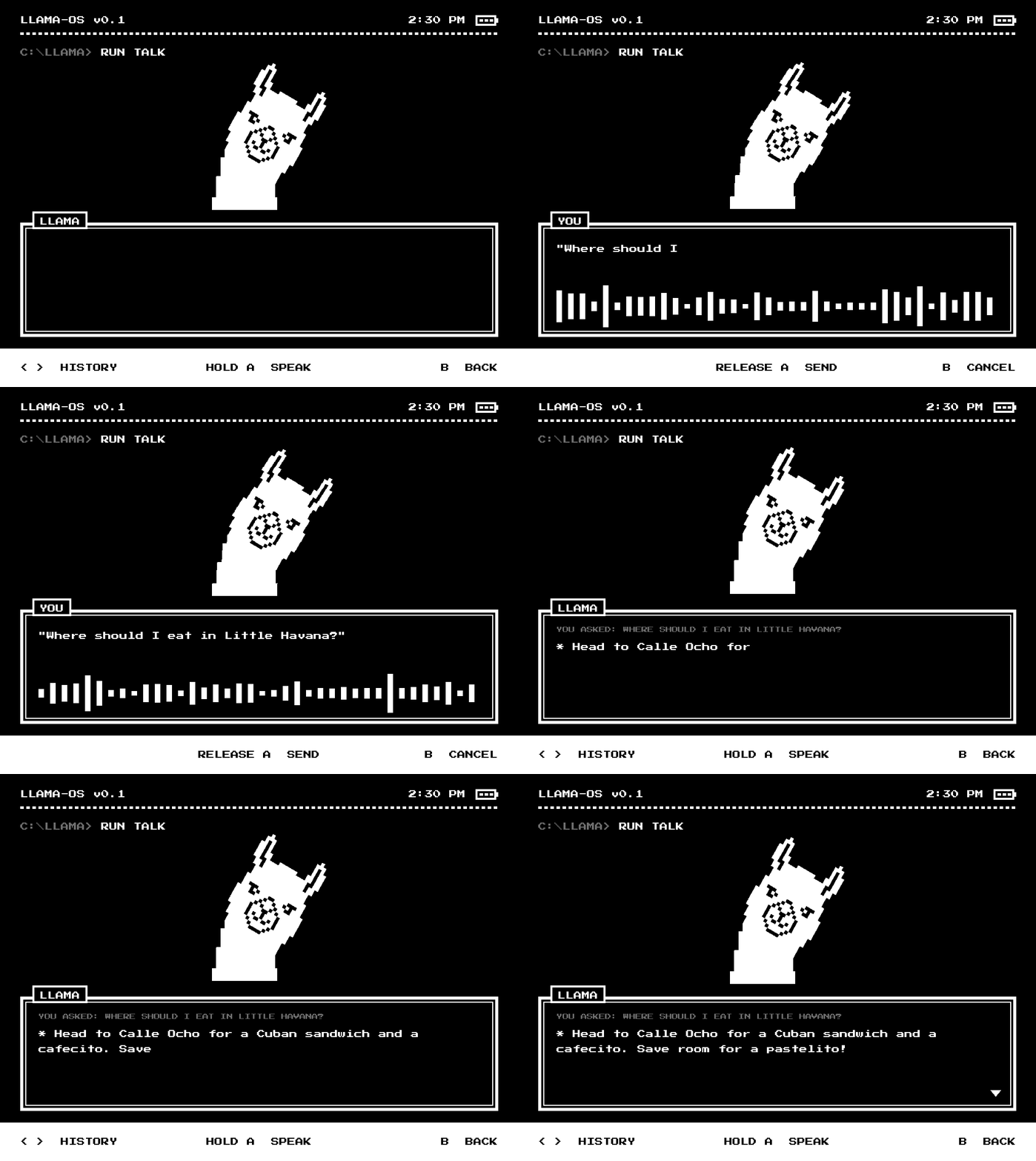
In its handheld form, Pocket Llama runs local language models and works as a voice-controlled assistant for everyday questions and tasks.
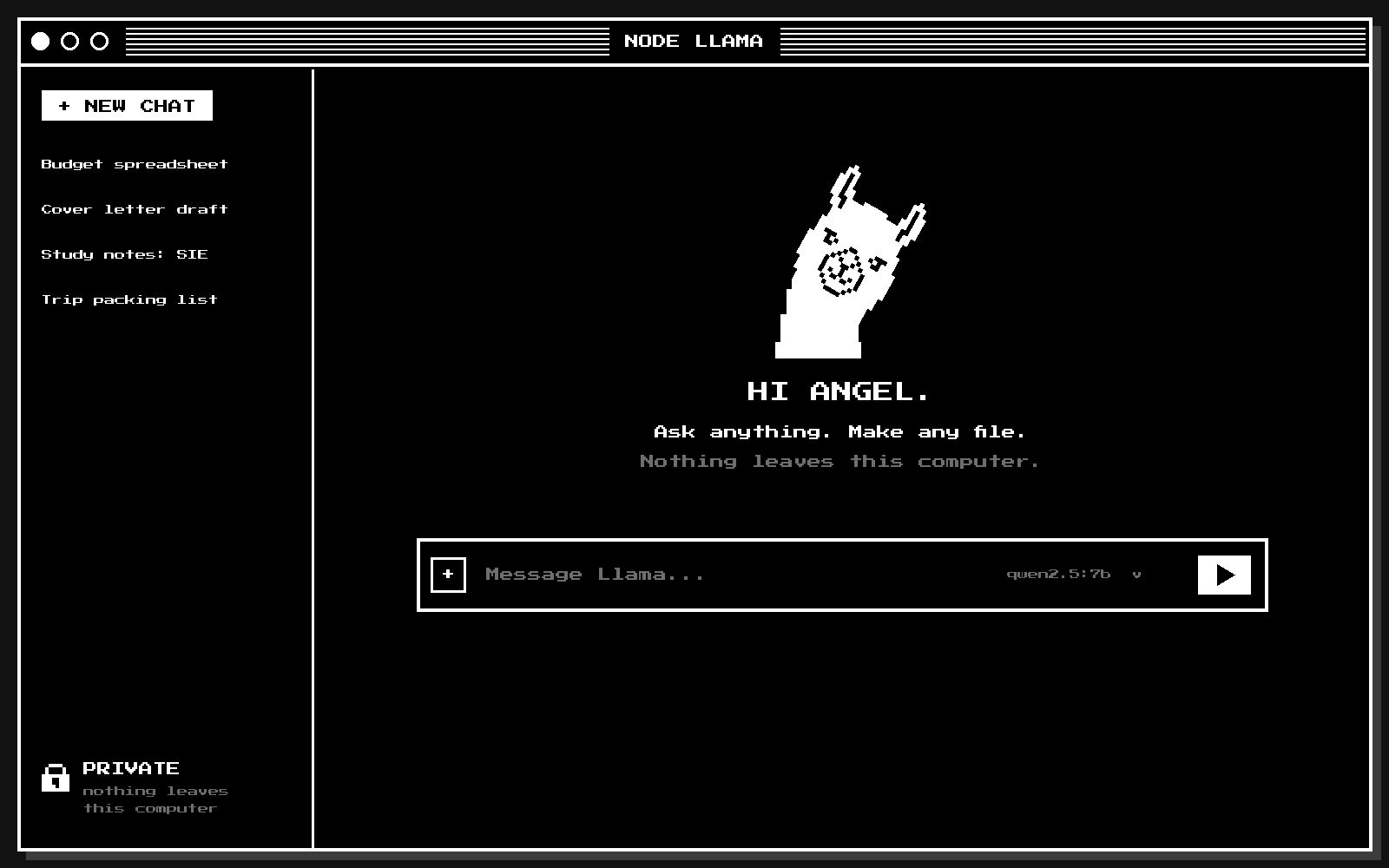
Connect it to your computer through Node Llama, and it becomes much more powerful. It can act as an agentic coding assistant, automate work on your computer, help manage projects, or run background workflows.
The biggest difference is simple: you own the intelligence and you own the data.
Your conversations stay on your hardware instead of taking a field trip through someone else's servers.
How we built it
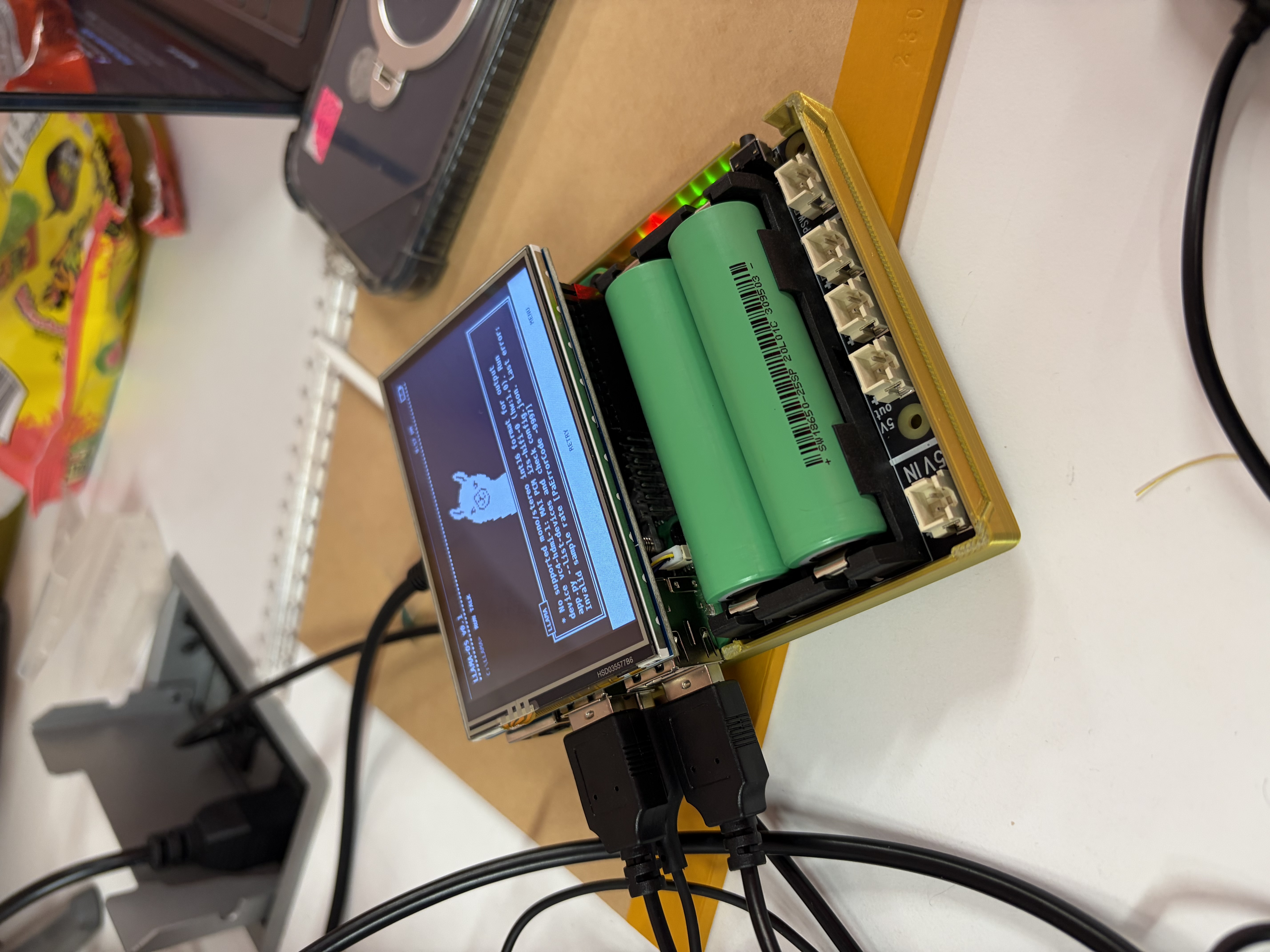
Pocket Llama runs on a custom Linux-based operating system built around a Raspberry Pi 5 with 16GB of RAM.
The handheld device runs a fine-tuned Qwen3 6B model. When connected to Node Llama, it can use a larger Fable 5-tuned Qwen 3.8 10B model for more demanding agentic tasks.
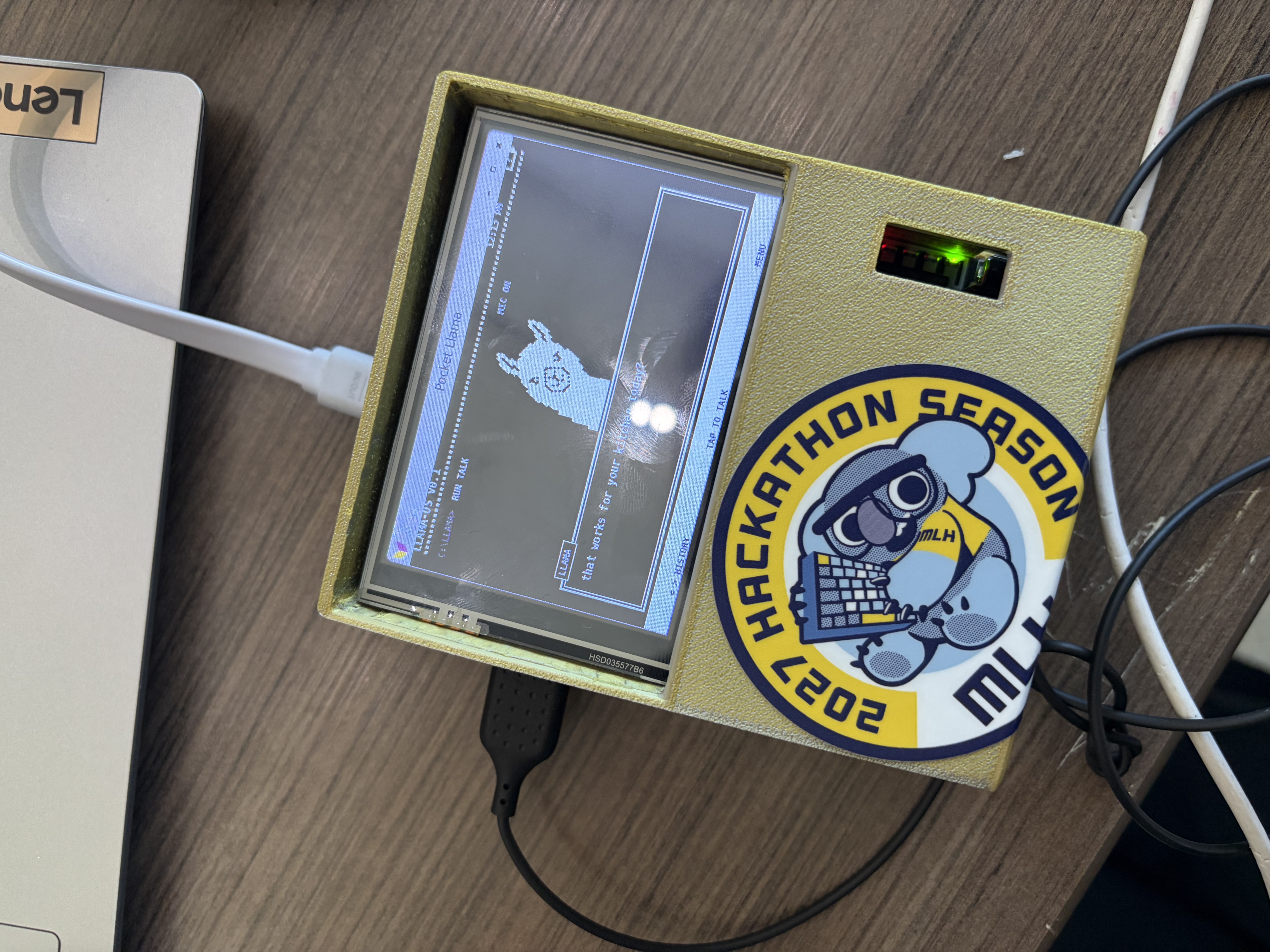
We also built Pocket Llama OS, Node Llama, and a custom 3D-printed enclosure designed specifically for the device.
Challenges we ran into
One of our first challenges was deciding how Pocket Llama should actually be controlled. We considered making the entire device voice-only, but that quickly raised the question: what happens when you want it to do something much more complicated?
Node Llama became the answer. Pocket Llama stays simple and portable, while Node Llama gives it a full desktop interface and much deeper control.
The enclosure was another adventure. We designed it in CAD using exact measurements.
The 3D printer politely disagreed.
Several prototypes later, we finally created a case with a snug fit that still keeps the retro handheld look we wanted.
Accomplishments that we're proud of
We're especially proud that we:
- Fine-tuned our own local models.
- Built Pocket Llama OS.
- Created Node Llama as a companion agentic desktop system.
- Designed and prototyped our own physical enclosure.
- Connected everything into one working local AI ecosystem.
More importantly, we turned local AI from something that usually lives inside a terminal window into something you can actually hold.
What we learned
Building Pocket Llama showed us how much control becomes possible when AI runs locally.
Cloud models are incredibly powerful, but using them often means giving up some control over where your information goes, how the system works, and what happens when the internet disappears.
Local models flip that relationship.
As AI becomes more involved in our work and personal lives, we believe people will care much more about where their data goes and who controls the intelligence they depend on.
Pocket Llama is our answer to that.
What's next for Pocket Llama
The Raspberry Pi 5 is only the beginning.
Our next step is building more powerful Pocket Llama hardware capable of running significantly larger models while keeping the same portable form factor and privacy-first approach.
The long-term goal is simple:
Make Pocket Llama powerful enough that owning your AI feels just as normal as owning your laptop.
And maybe make one less subscription show up on your credit card every month.
Built With
- 3.5-inch-spi-touchscreen
- 3d-printing
- cad
- custom-linux-os
- fable-5
- gguf
- hailo-8
- javascript
- llama.cpp
- local-llm-inference
- local-networking
- node-llama
- node.js
- openssh
- piper-tts
- pocket-llama-os
- python
- qwen-3.8-10b
- qwen3-6b
- raspberry-pi-5-16gb
- raspberry-pi-os
- ssh
- unsloth
- whisper
- x1201-ups


Log in or sign up for Devpost to join the conversation.