Inspiration
I have spent years designing XR interactions, and the moment that never gets old is watching someone who has never worn a headset reach out and touch something. Controllers make that moment feel like a tool. I wanted a game where your bare hands are the whole controller, small enough to play at a desk, a sofa or an airplane seat, and gentle enough that a non-gamer can pick it up in minutes.
The picture in my head was a tiny world sitting in your real room, with you as its giant, kind guardian. And because I grew up loving creature-collecting games, that world needed little creatures to find, raise and care for.
What it does
Pocket Isle is a cozy, hands-only mixed reality creature-collecting adventure.
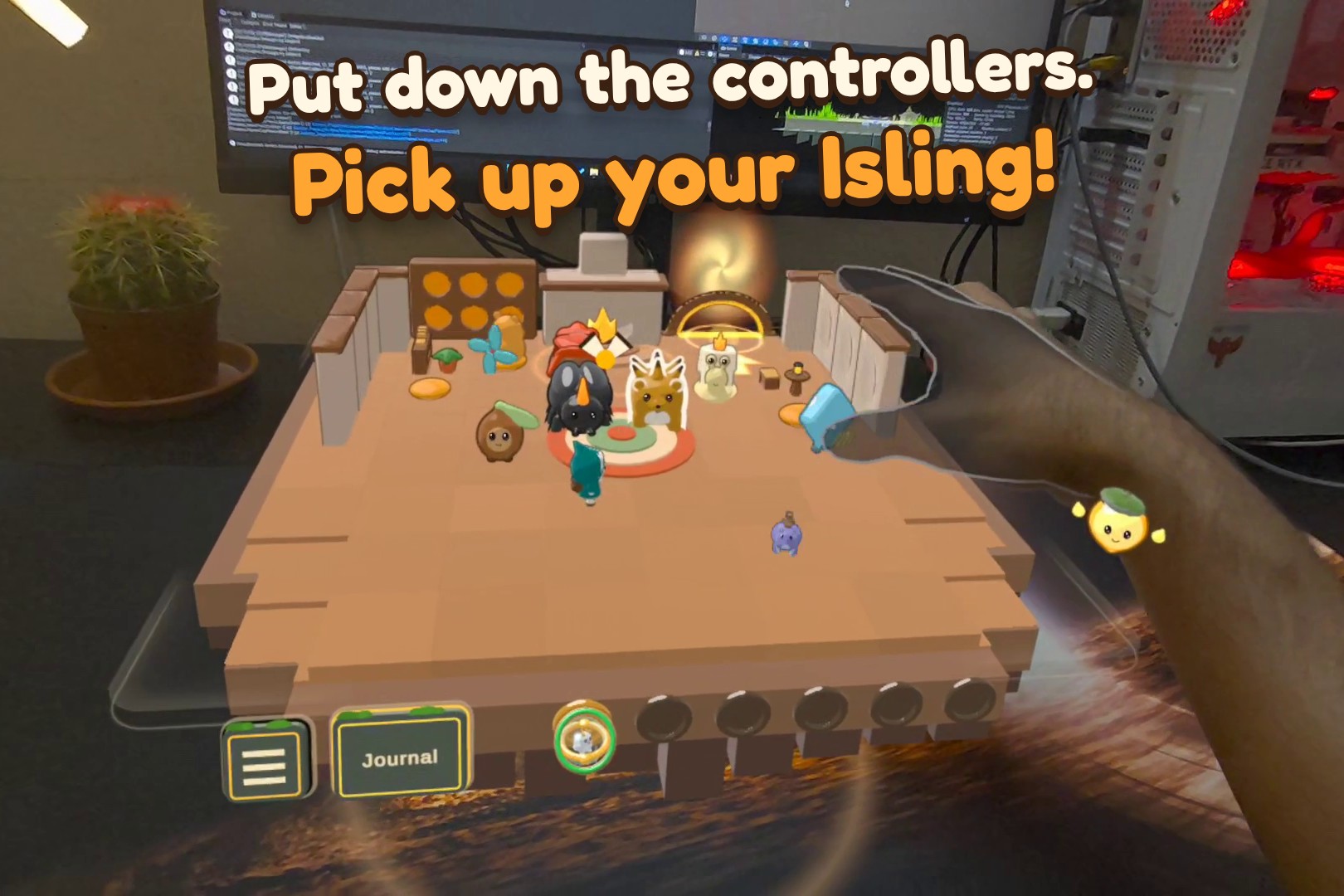
- A glowing shard floats in your room. Touch it and it unfolds into a ~70 cm floating island that you grab, carry to your desk and resize with two hands. The island is a window onto a scrolling world below.
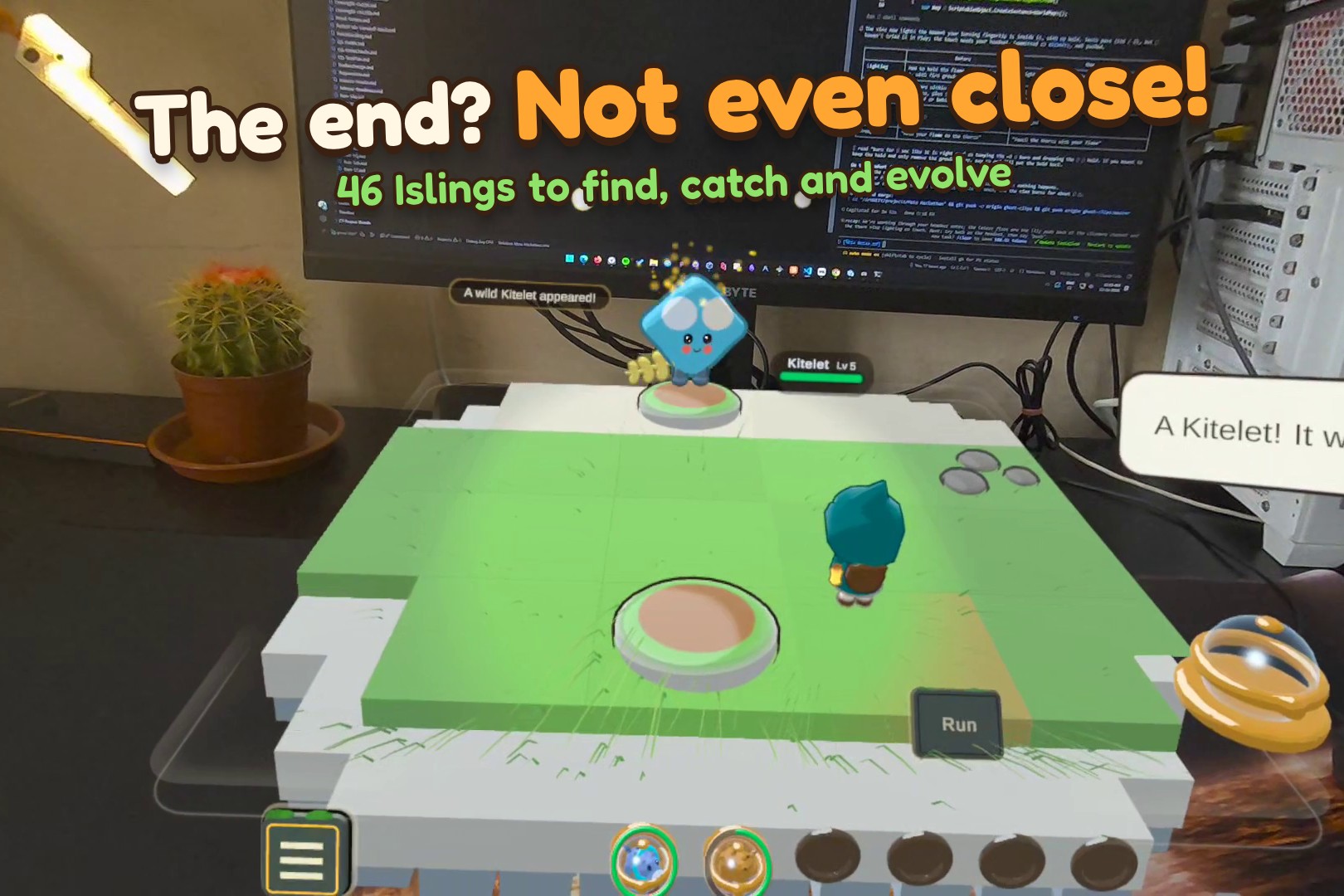
- Pick up your Isling: choose a starter from three pods, then catch 46 Islings (fire, water and wind) in turn-based battles, raise them, and watch them evolve in your palm.
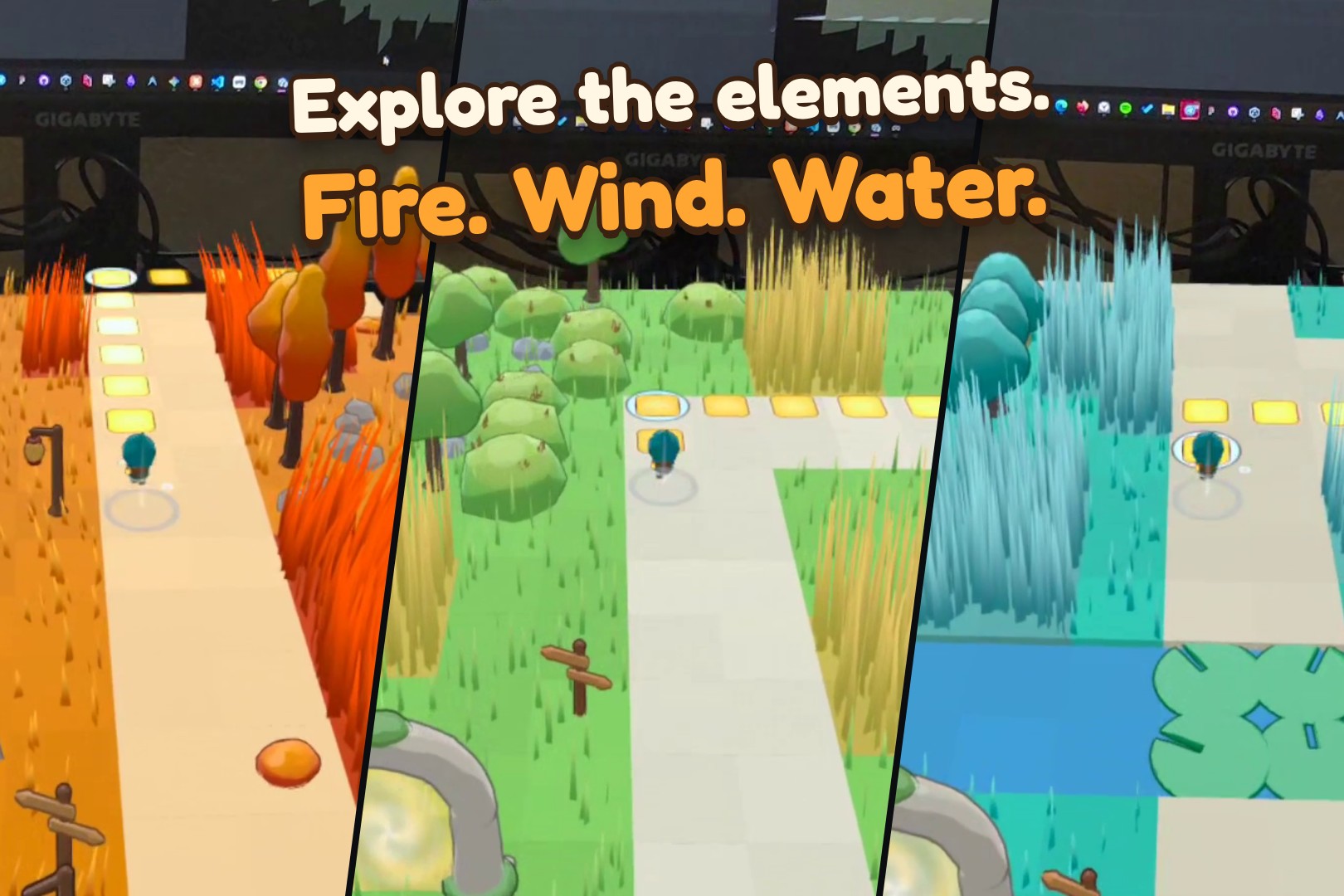
- Three elemental realms have gone quiet, and each teaches one gesture and pays it off later:
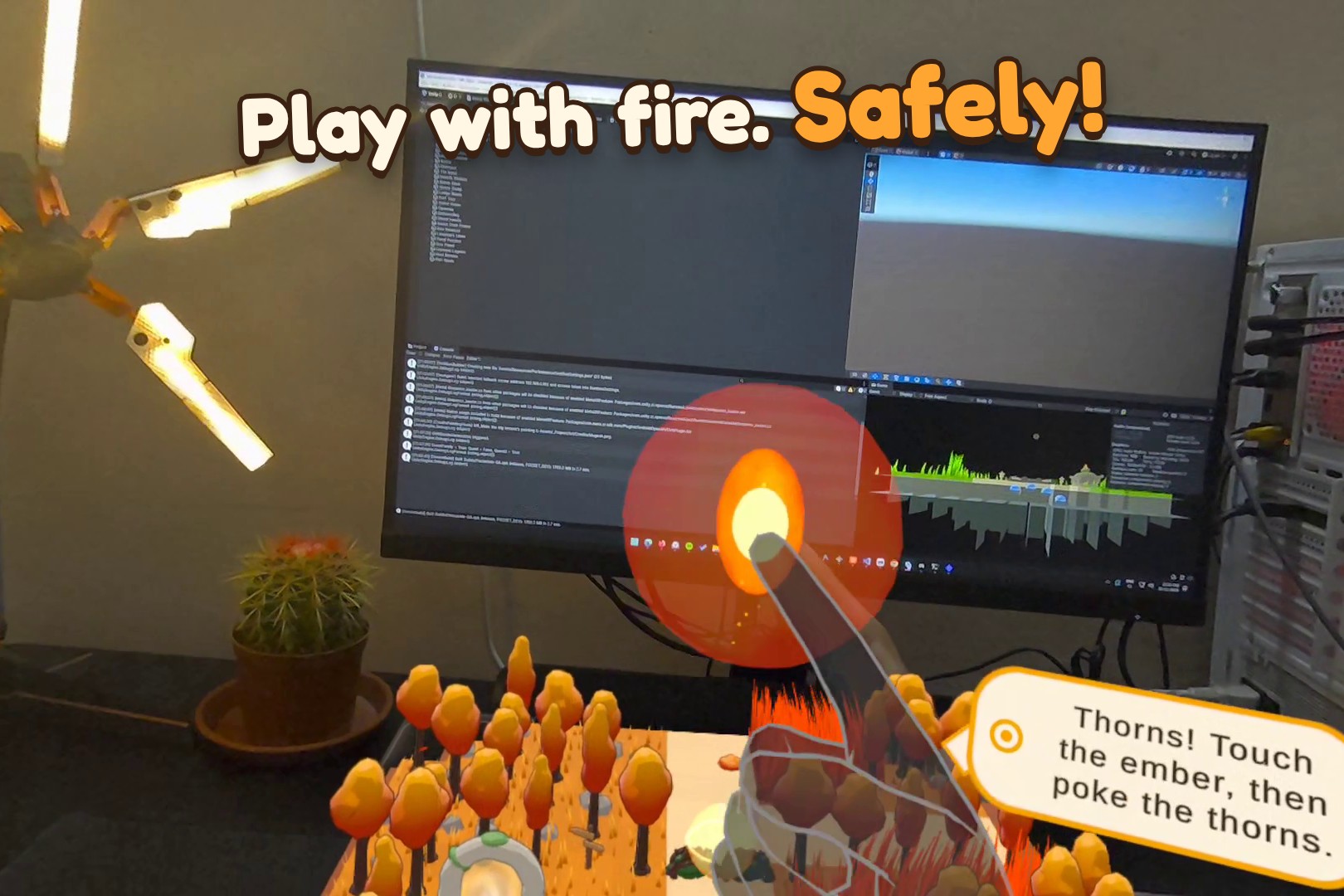
- Cinderwood (fire): carry an ember on your fingertip to burn away thorns, cup your hands around a dying village flame, light lanterns, pump the bellows.
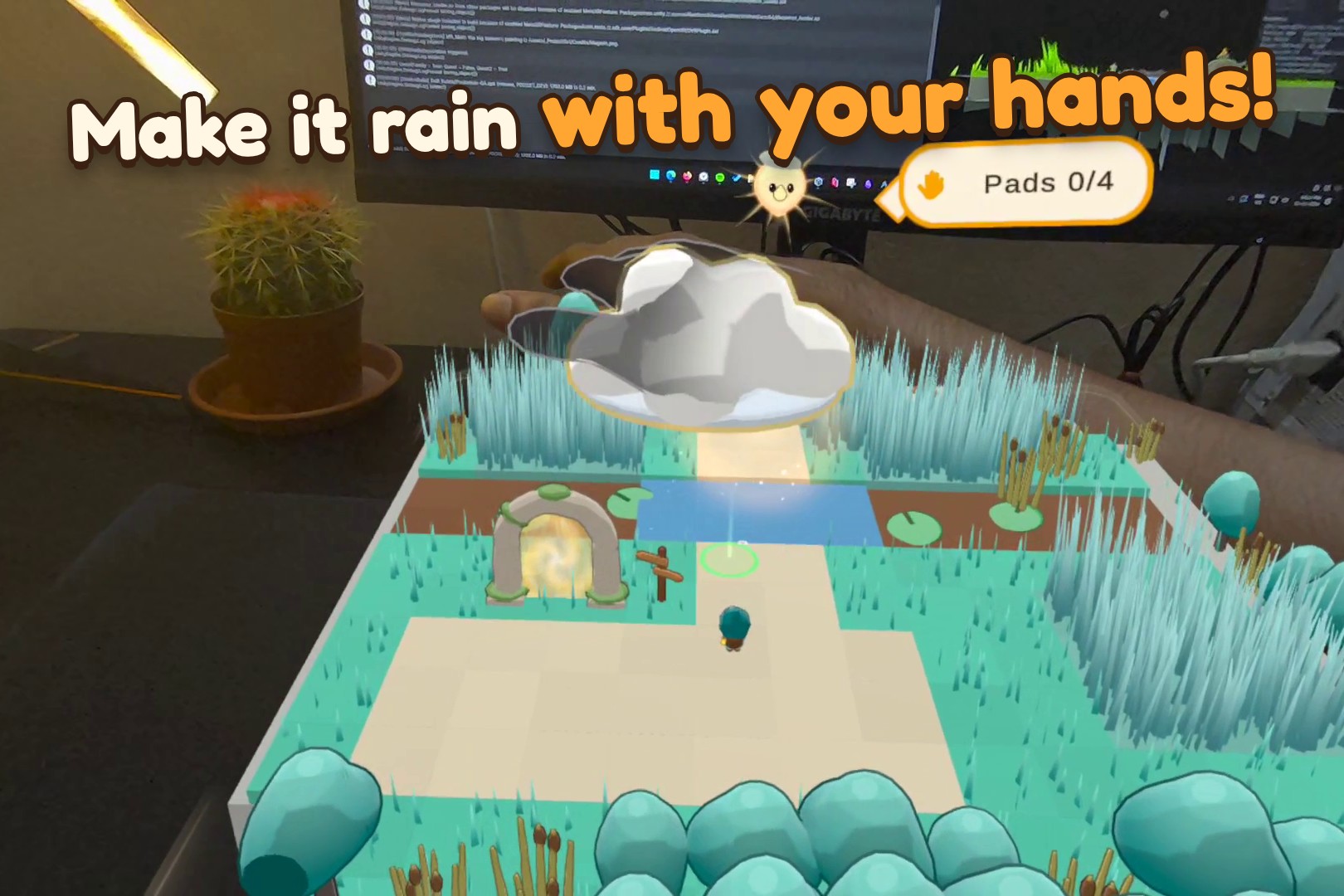
- Lilymere (water): rain from your open palm swells a stream, poke lily pads into a bridge, scoop water and pour it onto frozen falls.
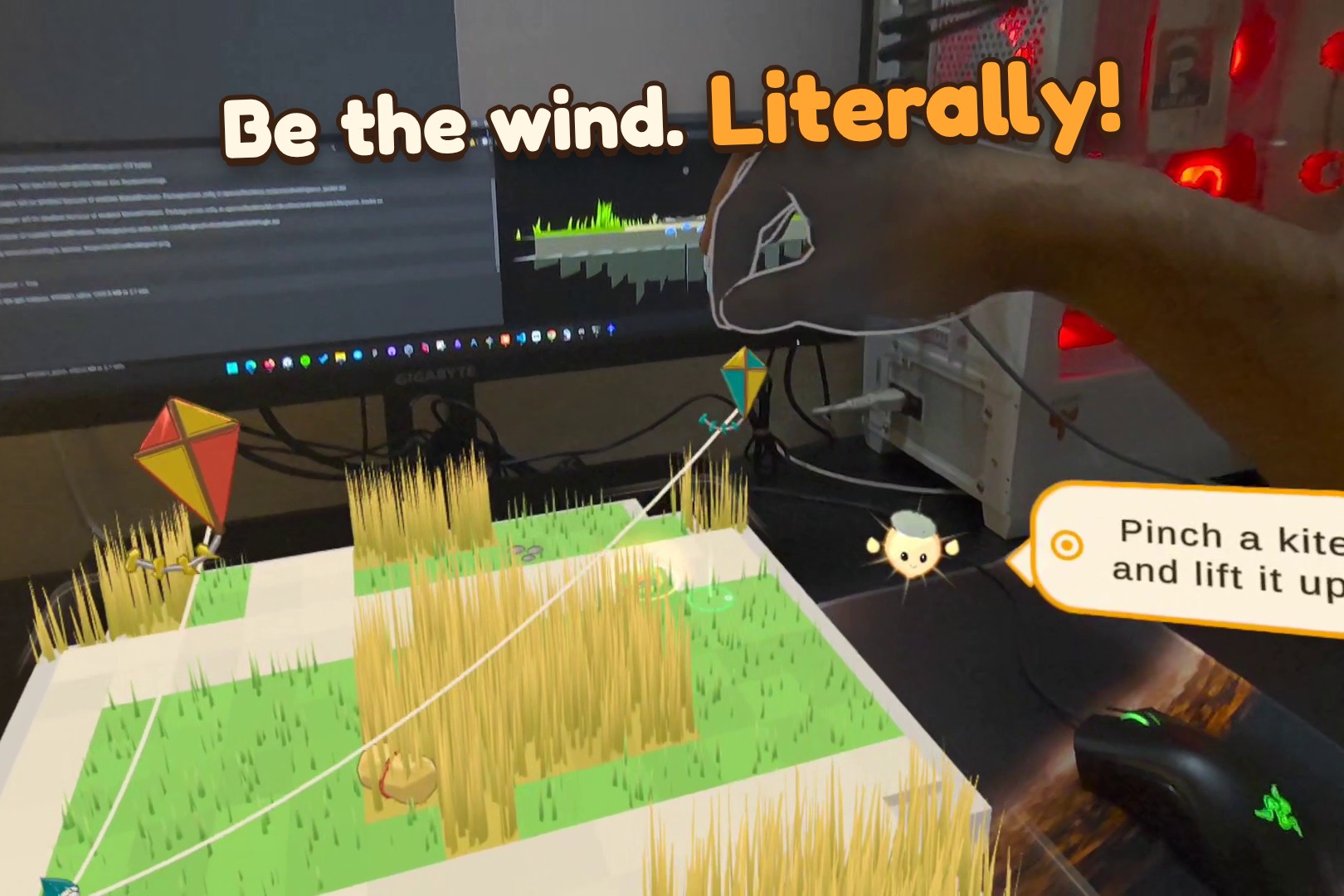
- Galewick (wind): sweep clouds away, flick the windmill's sails, pinch kites and pull them up out of the island into your real room.
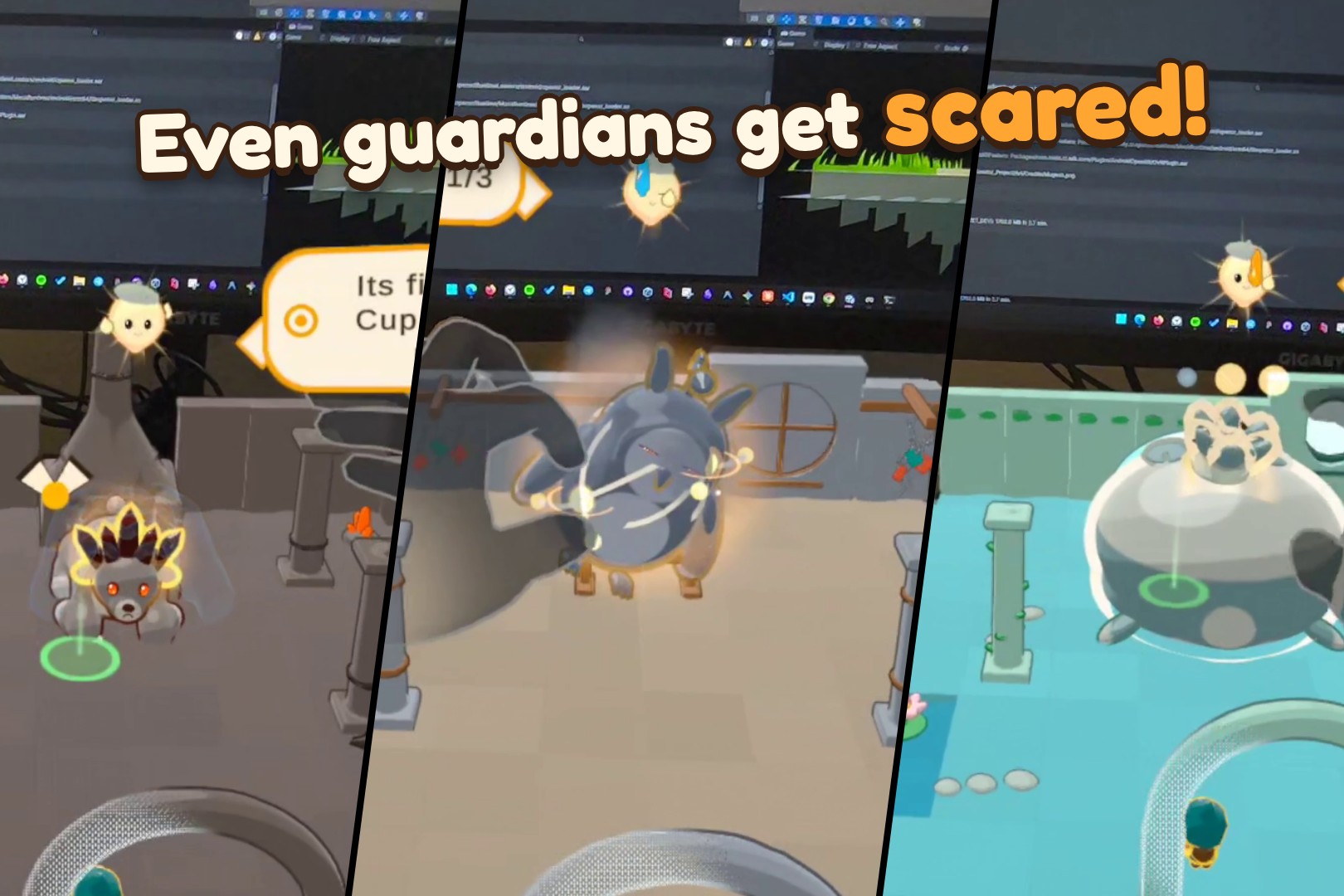
- Three frightened Keepers guard the shards. Each wakes with its own hand moment: untangle Galeowl's knots, knock on Tidemother's shell, cup the dying fire on Hearthstag's crown. Then you calm them in battle and carry their shards home, where the statue wakes as the Heart of the World.
- After the story the island stays open: keep exploring, complete your Journal, and rematch the Keepers.
- A Quick Journey mode (~10–12 minutes) shows the whole arc for first-time players.
The music is the reward: an unrestored realm has only ambience, and when you bring it back to life its theme blooms in.
How I built it
- Unity 6 + URP + Meta XR SDK v207 on Quest 3, built solo from Oct 21, 2026.
- Hands only, no controllers anywhere. Meta Interaction SDK poke and hand grab for touching and grabbing; custom hand-pose detection for palm-up rain, cupped hands, scoop-and-tilt pouring, fingertip carrying, flicks, sweeps and two-hand untangling; thumb microgestures (swipe to walk the explorer, tap to stop) read straight from OVRPlugin.
- Look + pinch on everything: an adaptive head-gaze ray pitched toward the island, so nobody strains their neck, works as a low-effort alternative to every reach.
- Passthrough is the stage: the island is anchored in your room, kites and lanterns rise into your real space, and the Spirit guide and the creatures' speech bubbles live around you. When room data is already available, MRUK drops a soft shadow onto the real table or floor below the island. The game never forces a room scan or a permission prompt.
- Art without textures: every prop is a toon SDF shape baked into a mesh at edit time, with rigid pivot parts and inverted-hull outlines, which keeps the scene light enough for a smooth frame rate on Quest 3.
- Walking on a tiny island: I wrote a swipe-count simulator that walks every main route and hundreds of random routes, and tuned the paths until the explorer only stops where a road truly turns or branches.
- Sound: synthesized sounds plus sound effects made with ElevenLabs (paid plan).
Challenges I ran into
- Teaching people who have never used mixed reality. Every gesture got a ghost hand that shows it once, a short "verb first" hint, and a look + pinch fallback, so nobody is ever stuck. Friends who had never tried MR finished the tutorial on their own.
- Moving a tiny character with your thumb. Early versions stopped at every ragged tile, so players needed three swipes to cross one field. Measuring swipes per route, like clicks in UX, made walking feel effortless.
- Hands colliding with hands: a pinch can read as a thumb tap, the island's grab can steal a pinch meant for a creature pod, and a hand can drift into the system-menu gesture. Each needed its own guard.
- Readable text in a real room: bubbles that never sit behind a creature or inside a prop, kept at comfortable distances, with an automatic overlap check in my test run.
Accomplishments that I'm proud of
- A complete game, from the first touch of the shard to the ending and beyond, built solo in about four weeks.
- Watching non-gamer friends laugh as they made it rain from their palm and pulled a kite out of the island into the room.
- Every interaction in the game is a real hand gesture, and every one of them also works by looking and pinching.
What I learned
Hands-only design is mostly about forgiveness: generous targets, clear signifiers, and always a second way to do the same thing. And mixed reality is at its best when the virtual world reaches into the room, not when it simply sits there.
What's next for Pocket Isle
- A big world to explore. The three realms become the start of a much larger region: many islands linked by a world map, each one a new place to discover and bring back to life.
- A deeper story. Why the realms went quiet, who the Lantern Spirit really is, and what the Keepers are protecting, told across chapters.
- Better Islings. More species, richer evolutions, personalities, and Islings that hop off the island to roam your desk.
- Co-op mode. Friends in the same room around one shared island, or together online, solving two-handed and two-player puzzles.
- Play and battle with friends. Friendly battles between your teams, trading, and showing off your collection.
- Launch on the Meta Horizon Store, with spatial anchors so your island is waiting exactly where you left it.


