-
-
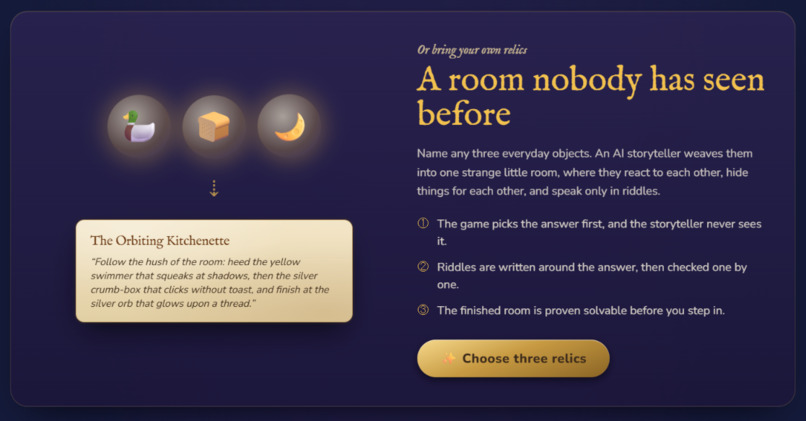
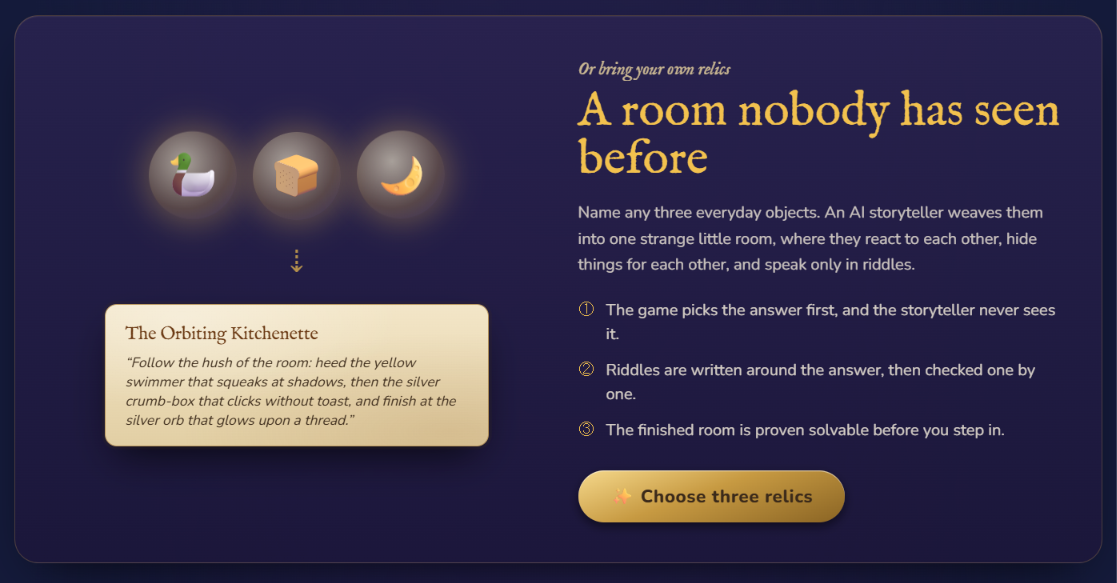
Choose 3 items
-
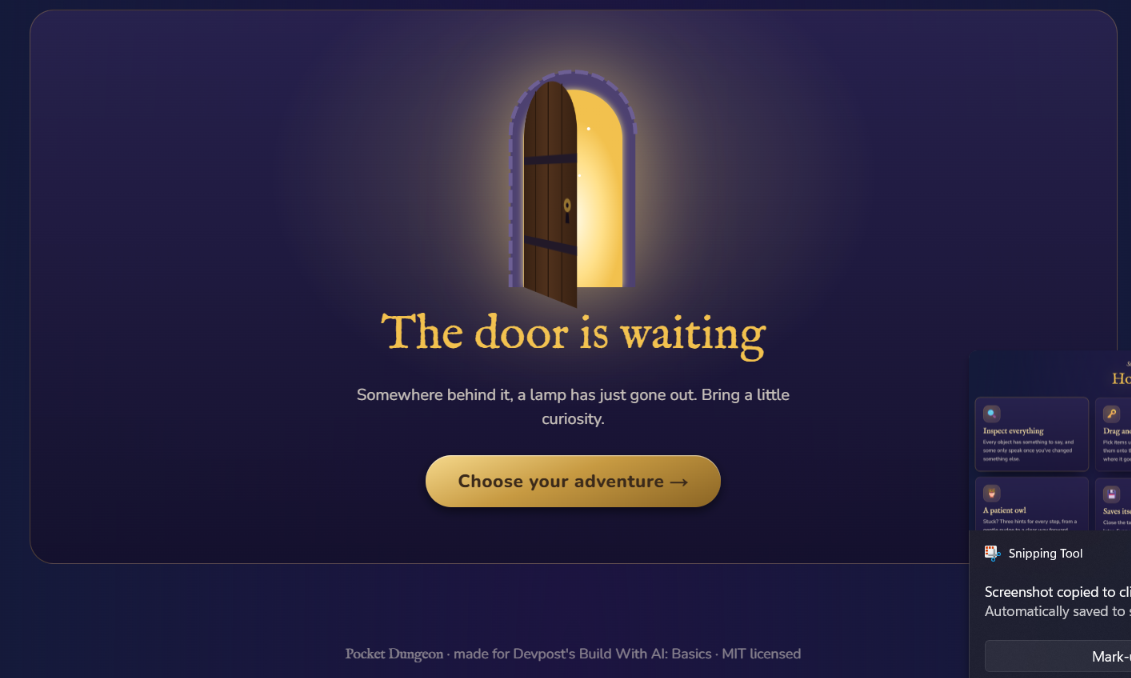
Door is waiting to be opened!
-
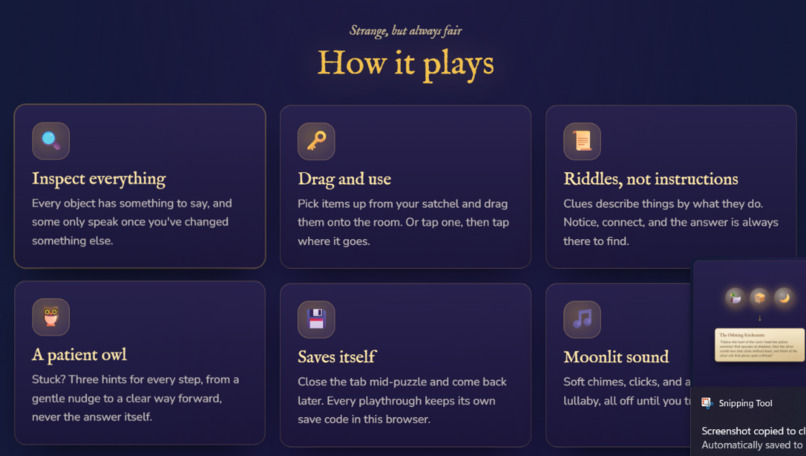
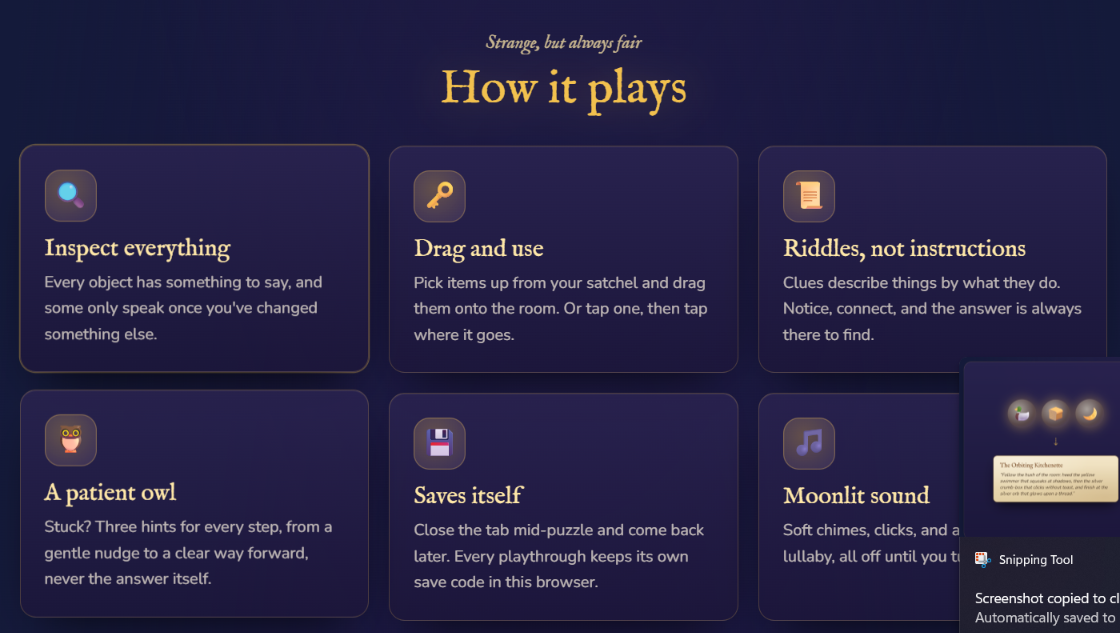
How to play
-
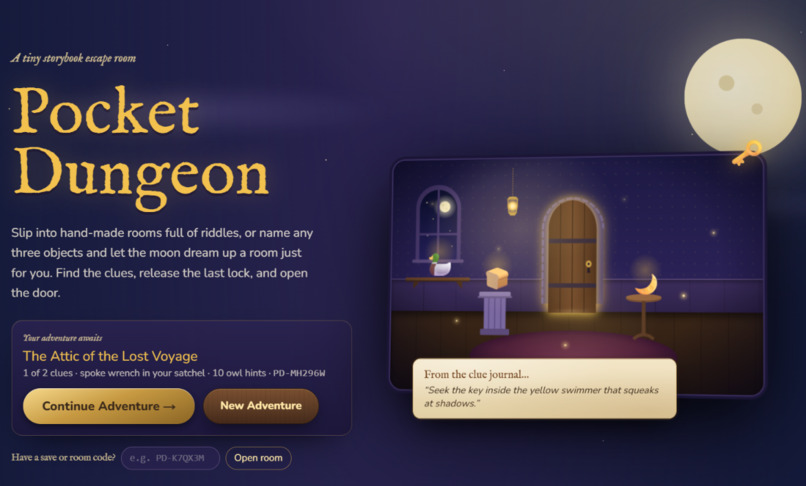
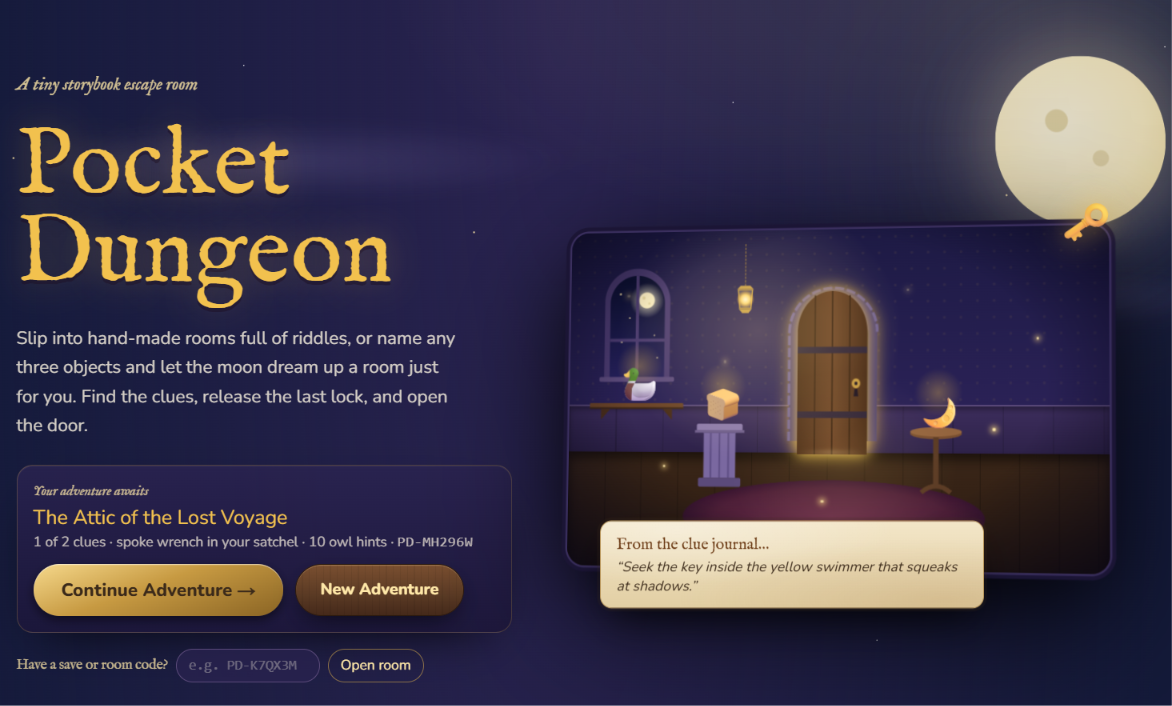
Pocket Dungeon
-
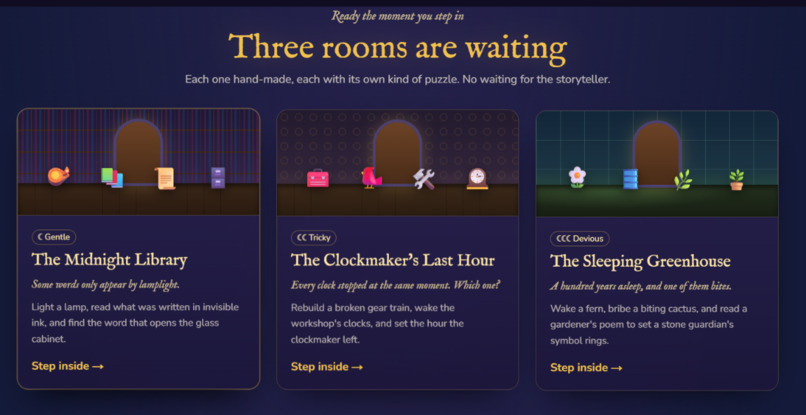
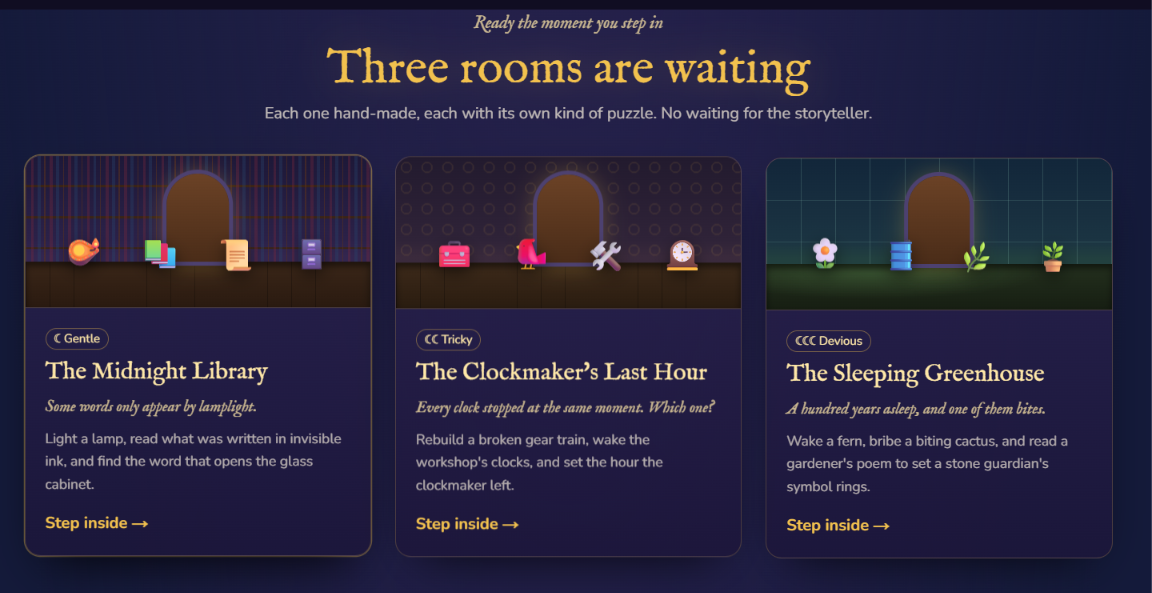
Pre made games
-
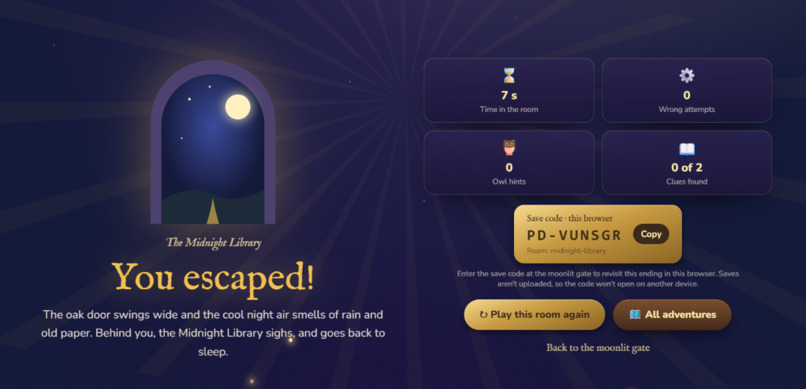
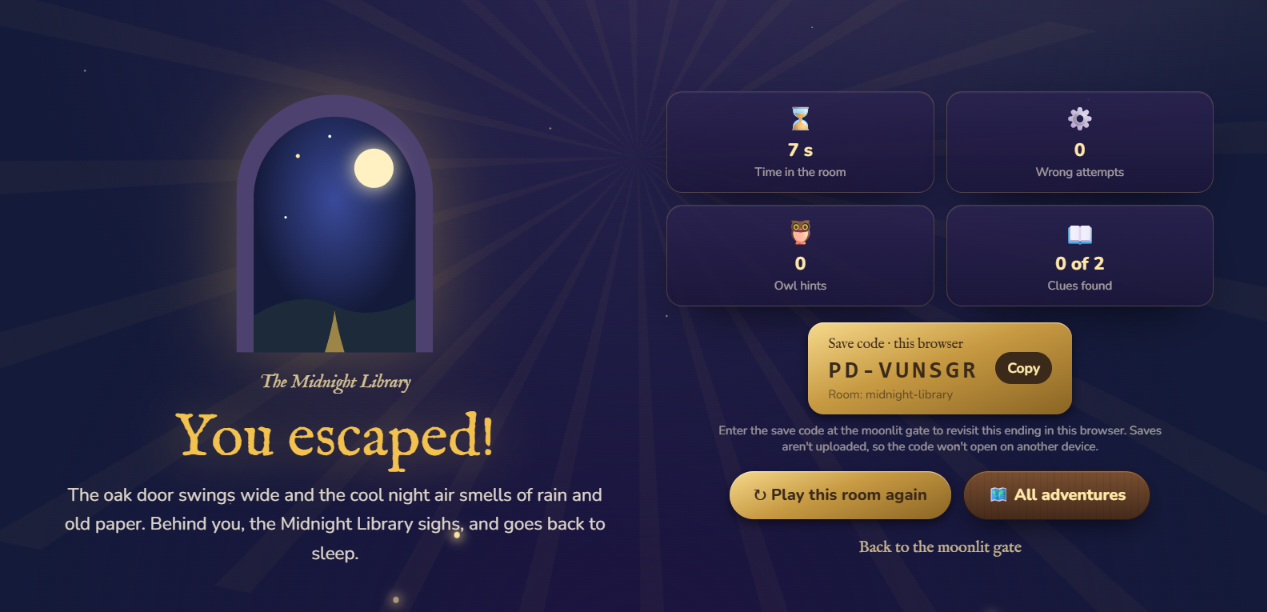
Success!!!
Inspiration
I wanted to build something that felt more like stepping into a strange little story than using another AI-powered app.
I love the idea behind escape rooms: ordinary objects can hide unexpected meanings, and solving a puzzle feels rewarding when all the clues finally connect. I wondered what would happen if I let players choose three everyday objects and used AI to turn them into the beginning of a mysterious escape-room adventure.
That idea became Pocket Dungeon — a moonlit, storybook world where familiar objects become part of something wonderfully strange.
What it does
I built Pocket Dungeon as an AI-powered, point-and-click escape-room game.
Players choose three everyday objects and enter a room inspired by their choices. They can explore the environment, inspect objects, collect items, uncover clues, solve surreal riddles, and work toward escaping.
I wanted the game to combine AI-generated storytelling with puzzles that have consistent, solvable rules. Instead of letting a chatbot decide whether a puzzle is solved, I made the game engine responsible for puzzle state and win conditions.
My goal is to make each adventure feel personal, mysterious, and satisfying to solve.
How we built it
I built Pocket Dungeon using Next.js, React, and TypeScript, with Google's Gemini API generating room content.
One of my most important design decisions was separating creative generation from game logic. I use Gemini to generate room descriptions and clue text, while the game engine manages puzzle facts, object interactions, and escape conditions. I also validate generated content against a schema and game-specific rules before using it.
I added a classic fallback room to provide an alternative when AI generation is unavailable or produces unusable content.
For the visual direction, I drew inspiration from illustrated storybooks and moonlit fantasy environments, using deep blues, muted purples, and warm golden highlights to create a cozy but mysterious atmosphere.
Challenges we ran into
My biggest challenge was making AI-generated puzzles creative without making them unreliable.
A room can sound magical but still be frustrating if a riddle is too obvious, a clue is ambiguous, or the generated story contradicts the actual solution. I had to think carefully about which parts AI should control and which parts needed deterministic rules.
I also wanted Pocket Dungeon to feel like a real game rather than a collection of text responses and buttons. Making exploration, inventory, clues, feedback, and the final escape feel connected has been an important part of the process.
These challenges pushed me to focus on validation, clear puzzle rules, and the overall player experience—not just AI generation.
Accomplishments that we're proud of
I'm proud of turning a simple idea—three everyday objects—into the foundation for an interactive mystery.
I'm also proud of separating AI-generated content from deterministic game logic. This lets me experiment with creative room descriptions and riddles while keeping the underlying puzzle solvable.
Building content validation and a fallback experience has also helped me make the game more robust than a basic prompt-and-response demo.
Most importantly, I wanted to make generative AI feel playful and immersive: something players explore and interact with, rather than simply ask questions.
What we learned
I learned that generating creative content is only one part of building a good AI-powered game.
The experience also depends on reliable state management, meaningful interactions, clear feedback, and rules that remain consistent even when the generated story changes.
I learned to give AI freedom where it adds value—atmosphere, storytelling, and clues—while keeping critical game mechanics under the application's control.
I also learned that a working feature isn't necessarily a polished experience. Visual design, puzzle fairness, and the small details of interacting with the world matter just as much as the underlying technology.
What's next for Pocket Dungeon
I want to make Pocket Dungeon feel even more like a complete point-and-click adventure.
My next priorities are a richer illustrated SVG environment, more meaningful object interactions, drag-and-drop inventory mechanics, atmospheric sound, and a cohesive visual style across the landing page, gameplay, and ending screens.
I also want to improve persistence so players can return to unfinished adventures, while making room generation more resilient through configurable model fallback and better error handling.
My long-term vision is to create a collection of small, surreal escape-room adventures where the objects players choose shape the mysteries they encounter—and every room invites them to look a little closer.
Built With
- gemini
- nextjs
- react
- typescript
- zod