
View presentation at the following link: https://youtu.be/Iw4qVYG9r40
Inspiration
During our brainstorming stage, we found that, interestingly, two-thirds (a majority, if I could say so myself) of our group took medication for health-related reasons, and as a result, had certain external medications that result in negative drug interactions. More often than not, one of us is unable to have certain other medications (e.g. Advil, Tylenol) and even certain foods. Looking at a statistically wider scale, the use of prescription drugs is at an all-time high in the UK, with almost half of the adults on at least one drug and a quarter on at least three. In Canada, over half of Canadian adults aged 18 to 79 have used at least one prescription medication in the past month. The more the population relies on prescription drugs, the more interactions can pop up between over-the-counter medications and prescription medications. Enter Medisafe, a quick and portable tool to ensure safe interactions with any and all medication you take.
What it does
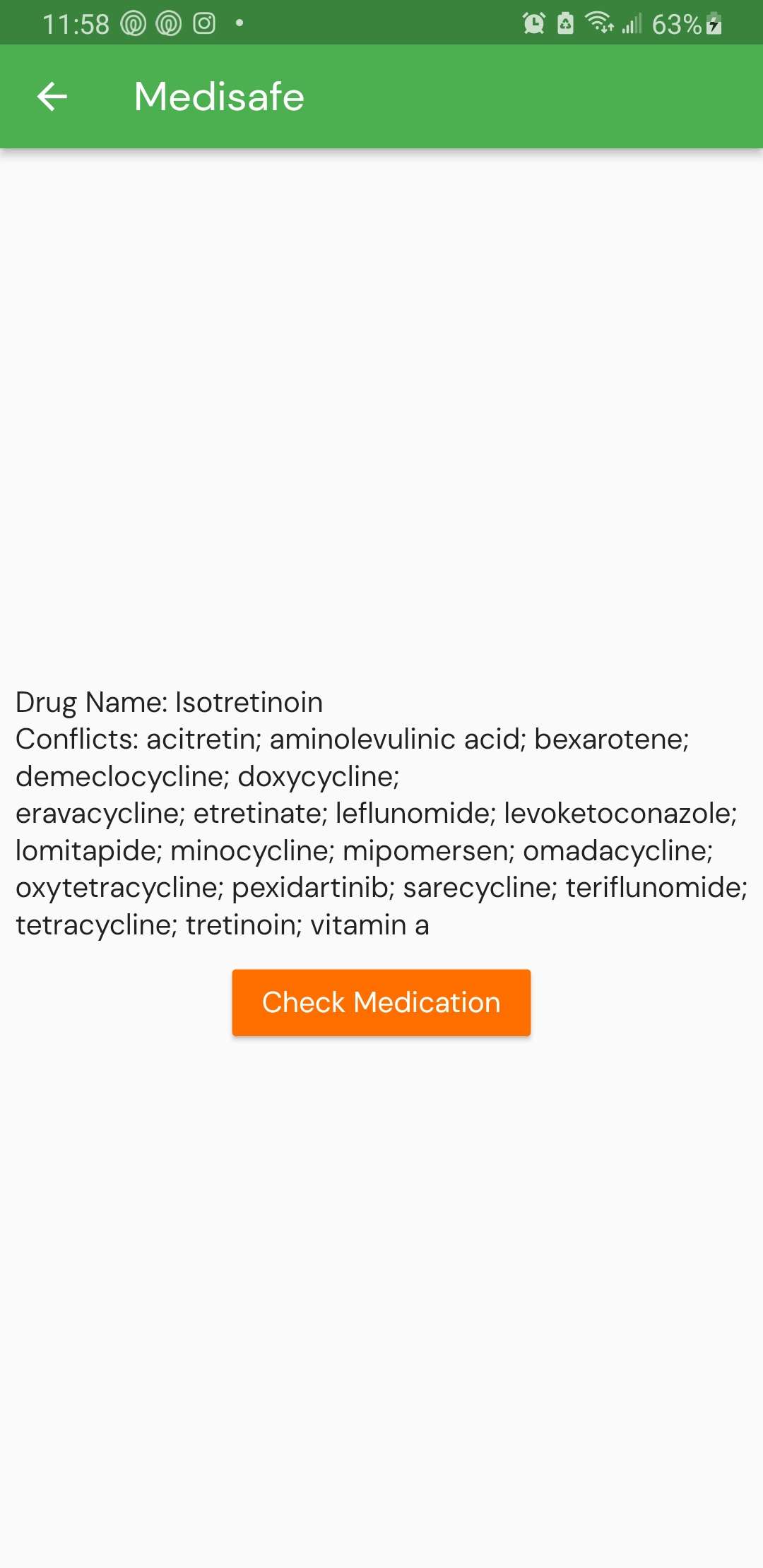
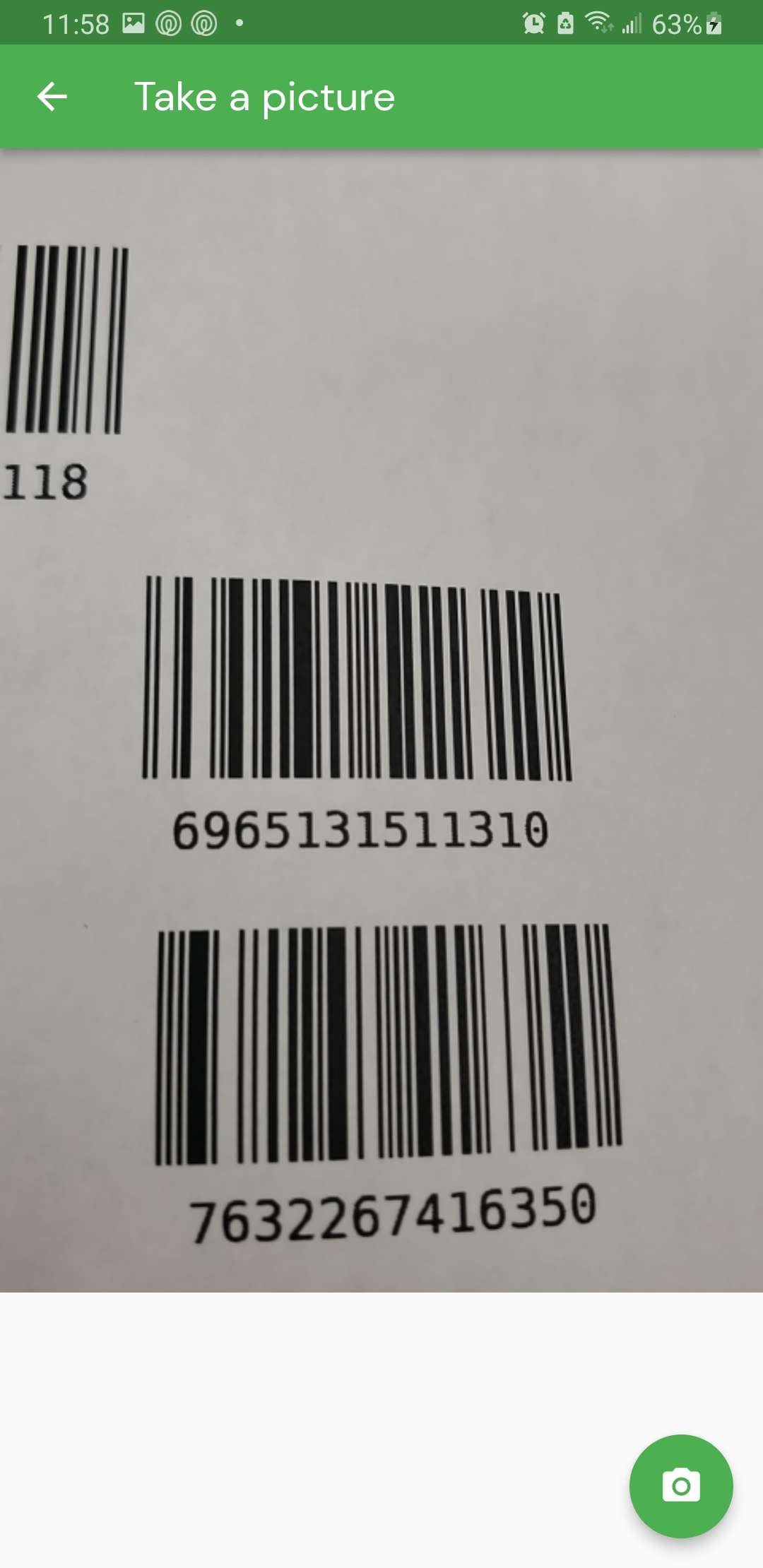
Our mobile application scans barcodes of medication and outputs to the user what the medication is, and any negative interactions that follow it to ensure that users don't experience negative side effects of drug mixing.
How we built it
Before we could return any details about drugs and interactions, we first needed to build a database that our API could access. This was done through java and stored in a CSV file for the API to access when requests were made. This API was then integrated with a python backend and flutter frontend to create our final product. When the user takes a picture, the image is sent to the API through a POST request, which then scans the barcode and sends the drug information back to the flutter mobile application.
Challenges we ran into
The consistent challenge that we seemed to run into was the integration between our parts. Another challenge that we ran into was one group member's laptop just imploded (and stopped working) halfway through the competition, Windows recovery did not pull through and the member had to grab a backup laptop and set up the entire thing for smooth coding.
Accomplishments that we're proud of
During this hackathon, we felt that we really stepped out of our comfort zone, with the time crunch of only 24 hours no less. Approaching new things like flutter, android mobile app development, and rest API's was daunting, but we managed to preserver and create a project in the end. Another accomplishment that we're proud of is using git fully throughout our hackathon experience. Although we ran into issues with merges and vanishing files, all problems were resolved in the end with efficient communication and problem-solving initiative.
What we learned
Throughout the project, we gained valuable experience working with various skills such as Flask integration, Flutter, Kotlin, RESTful APIs, Dart, and Java web scraping. All these skills were something we've only seen or heard elsewhere, but learning and subsequently applying it was a new experience altogether. Additionally, throughout the project, we encountered various challenges, and each one taught us a new outlook on software development. Overall, it was a great learning experience for us and we are grateful for the opportunity to work with such a diverse set of technologies.
What's next for Medisafe
Medisafe has all 3-dimensions to expand on, being the baby app that it is. Our main focus would be to integrate the features into the normal camera application or Google Lens. We realize that a standalone app for a seemingly minuscule function is disadvantageous, so having it as part of a bigger application would boost its usage. Additionally, we'd also like to have the possibility to take an image from the gallery instead of fresh from the camera. Lastly, we hope to be able to implement settings like a default drug to compare to, dosage dependency, etc.


Log in or sign up for Devpost to join the conversation.