-
-
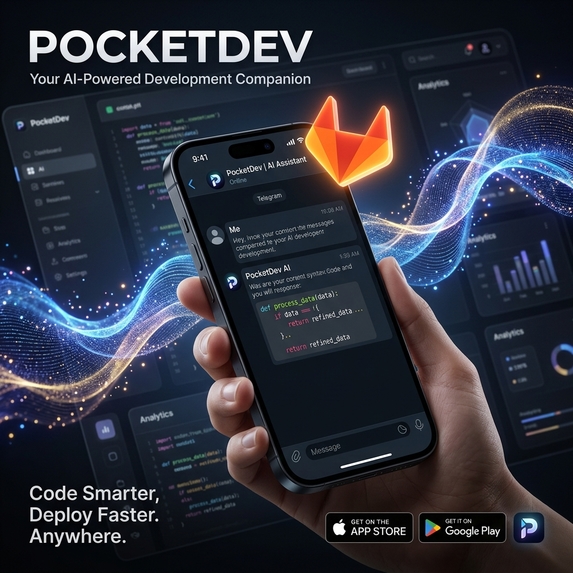
PocketDev - Manage your dev team and cloud IDE agents from your phone.
-
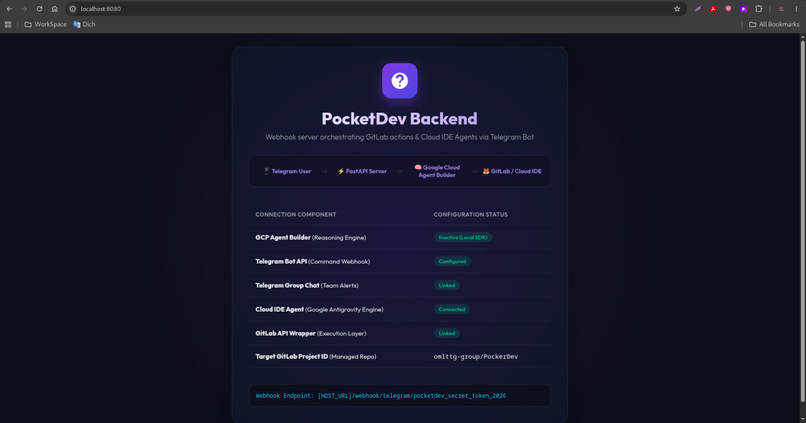
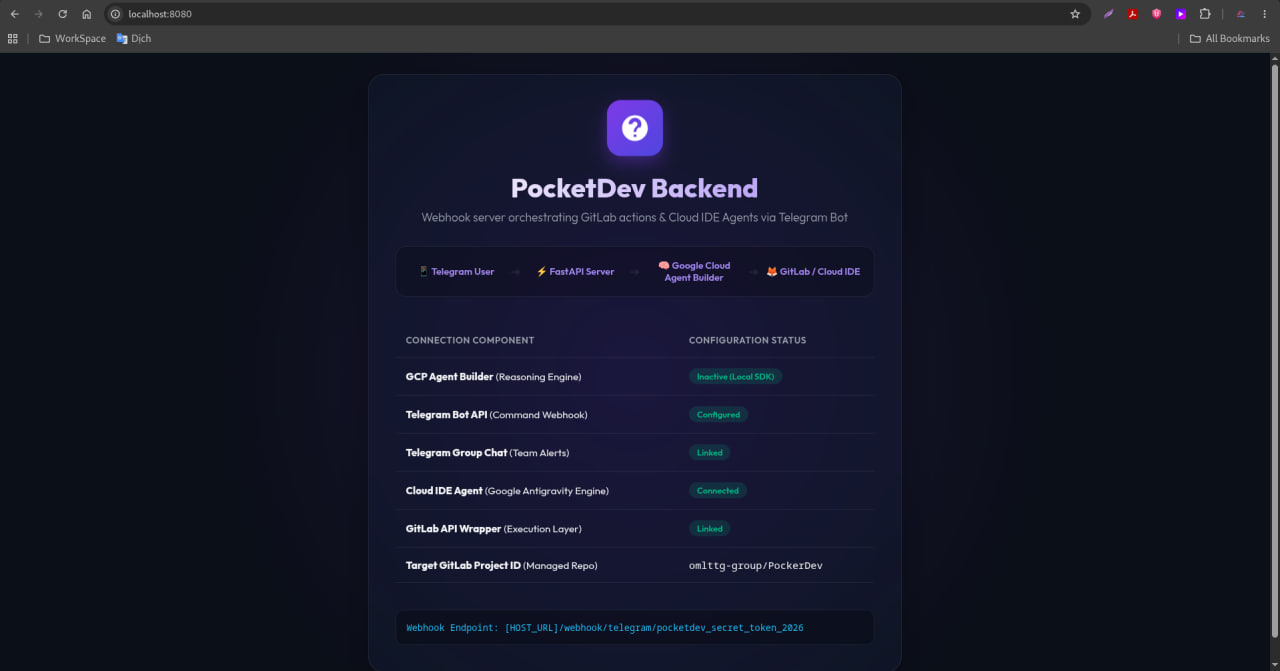
PocketDev Backend Dashboard showing the system architecture and connection status of Telegram, GCP, and GitLab.
-
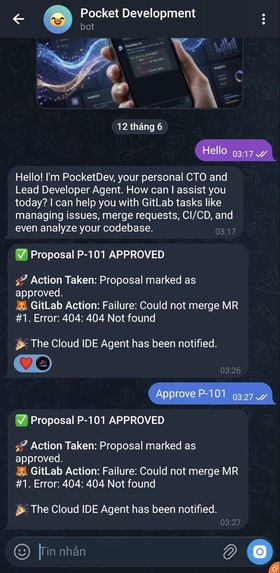
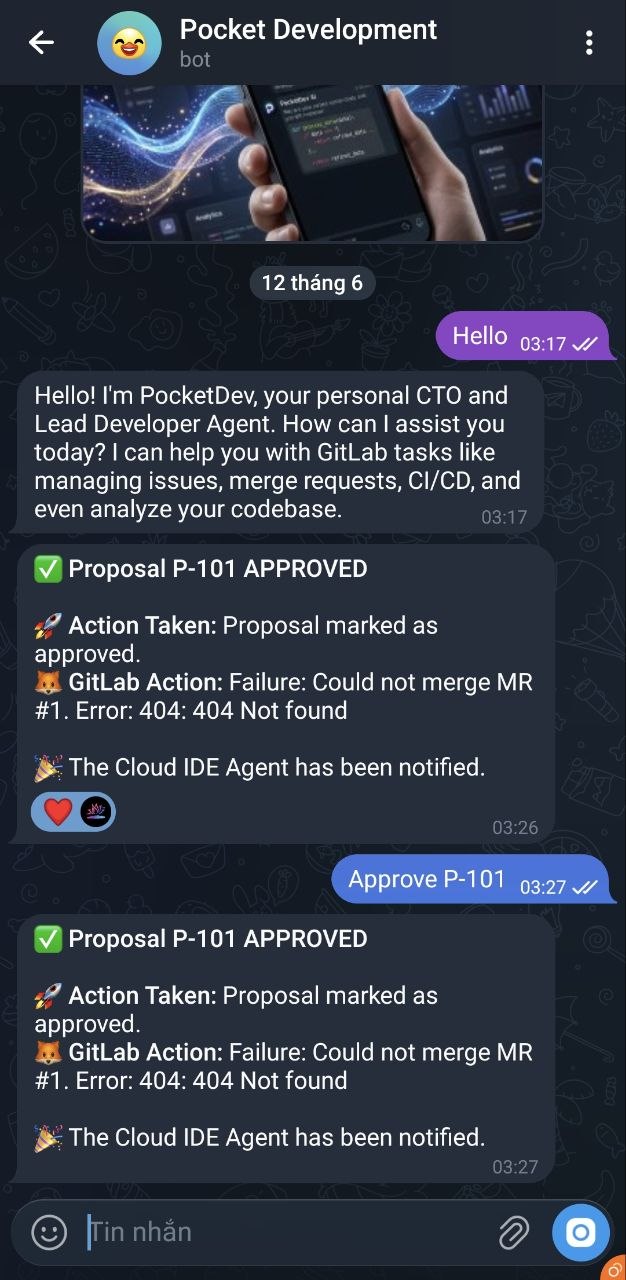
PocketDev Telegram Bot interface: approving development proposals and tracking GitLab action updates directly in chat.
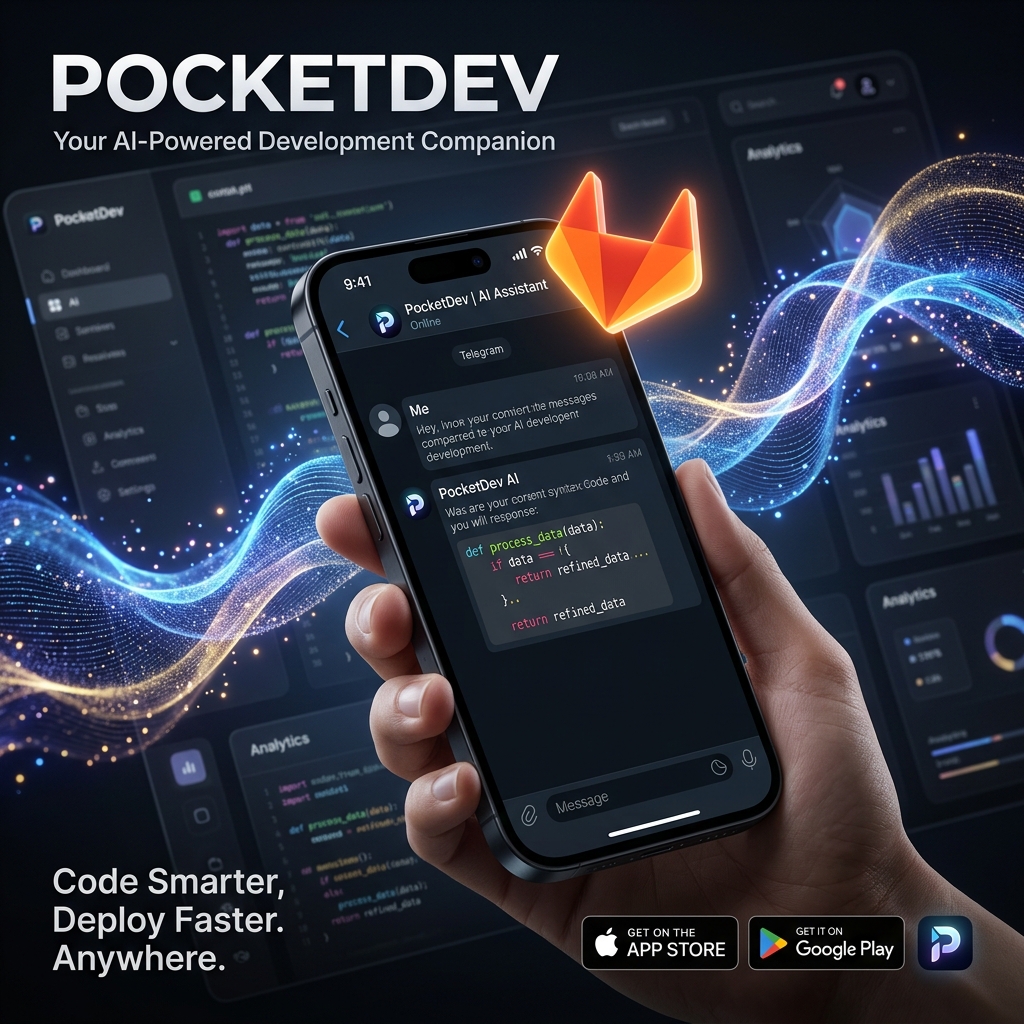
Inspiration
As CTOs, Technical Leads, or Project Managers, we are constantly on the move. However, managing a software development lifecycle usually requires us to be glued to our laptops—reviewing AI code proposals, checking CI/CD pipelines, and creating tasks.
We asked ourselves: What if you could manage your entire engineering workflow, coordinate human developers, and supervise autonomous AI IDE Agents straight from your pocket while grabbing a coffee?
This inspired us to build PocketDev (Pocket Development) — a highly mobile, action-oriented "Pocket CTO" assistant operating entirely inside Telegram, utilizing the raw reasoning power of Gemini and the system integration capabilities of the GitLab Model Context Protocol (MCP).
What it does
PocketDev bridges the gap between managers, GitLab repositories, and autonomous Cloud IDE Agents:
- Real-time IDE Agent Supervision: Cloud IDE Agents can register code/command proposals via our REST API. The CTO receives an instant push notification on Telegram and can approve (
Approve P-XX) or reject (Reject P-XX) the changes instantly with deterministic bypass routing (zero-latency execution). - GitLab CI/CD Integration: Approving a proposal automatically accepts and merges the corresponding GitLab Merge Request, triggering the CI/CD pipeline.
- Intelligent Team Delegation: The CTO can chat with the assistant (e.g., "Assign backend database optimization to dev_alex"). Gemini automatically plans the execution path, creates a structured issue on GitLab assigned to
dev_alex, and broadcasts a tagged notification to the team's Telegram Group Chat. - Planning & Architecture Brain: PocketDev leverages Gemini for codebase architecture analysis and task decomposition, automatically breaking down complex goals into independent sub-tasks on GitLab.
- Glassmorphic Connection Dashboard: A sleek, premium web interface to monitor local server status, Telegram Bot connection, and active IDE Agent integrations at a glance.
How we built it
We engineered PocketDev using a robust and modern stack:
- Brain & Orchestration: Gemini AI acting as the planning engine for multi-step tasks, mapping natural language intent into structured Python tool calls.
- Backend Web Framework: FastAPI and Uvicorn handling high-concurrency async webhook routing and REST APIs.
- GitLab MCP Integration: Built an MCP Client Adapter in Python to route API payloads directly to an external GitLab MCP Server using JSON-RPC protocols, with a seamless fallback to the local GitLab python SDK.
- Database: A lightweight, local-first JSON state database (
data/proposals.json) ensuring robust offline capabilities. - Frontend Dashboard: Built using semantic HTML5 and Vanilla CSS using glassmorphic cards and responsive grids.
Challenges we ran into
- Bypassing AI Latency: Routing Telegram approval commands through a generative model caused unnecessary delays. We resolved this by implementing an instant webhook intercept that matches regex patterns (e.g.,
Approve P-\d+) and executes database updates deterministically in milliseconds. - JSON-RPC Client Implementation: Hand-crafting the HTTP client adapter to align with the formal Model Context Protocol (MCP) server requirements for GitLab tools was challenging but ultimately achieved.
- Secure Multi-User Access: Restricting bot commands to authorized CTO IDs while allowing group chat broadcasts required careful routing configurations and environment variable management.
Accomplishments that we're proud of
- 100% Automated Test Coverage: Developed a complete mock integration test suite verifying webhook routing, tool execution, GitLab MCP fallbacks, and proposal registration.
- True Mobile-First Experience: Created a functional workflow where a user can completely review, approve, merge code, and assign tasks with zero laptop interaction.
What we learned
- Deeply understood the design philosophy behind the Model Context Protocol (MCP) and how it standardizes AI integration with external platforms.
- Gained insights into optimizing system instructions for Gemini models to consistently generate precise tool calls in multi-step planning loops.
What's next for Pocket Development
- Multi-tenant support: Allowing multiple organizations to host and customize their own PocketDev instances securely.
- Direct Cloud Deployment: Triggering serverless deployments (e.g., Google Cloud Run) directly from Telegram chat commands.
- Interactive Mobile UI: Utilizing Telegram Web Apps (Mini Apps) inside the bot chat to provide interactive code diff previews before approving proposals.

Log in or sign up for Devpost to join the conversation.