-
-
-

-
-
-
-
-
-

App Icon
-
Unframed Screenshot
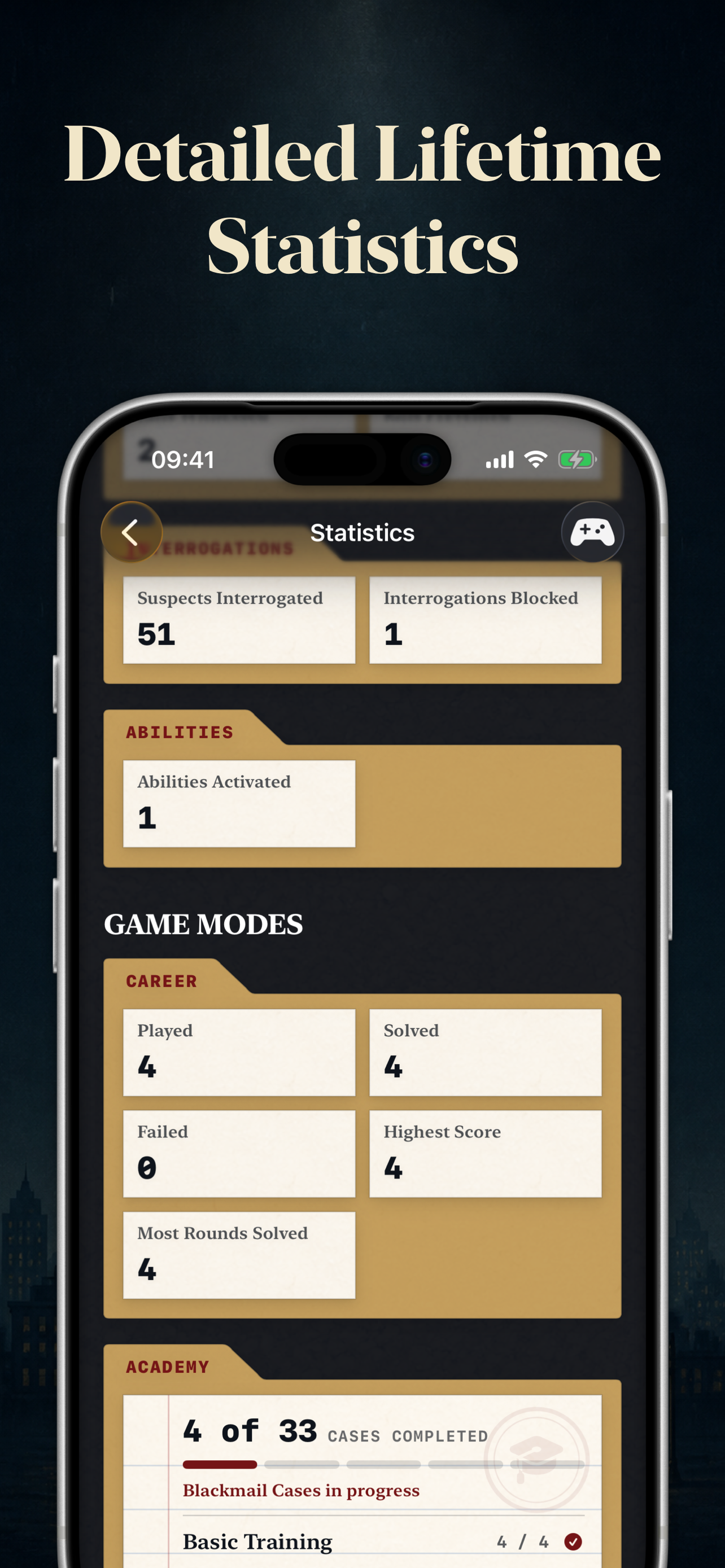

What is Pocket Detective?
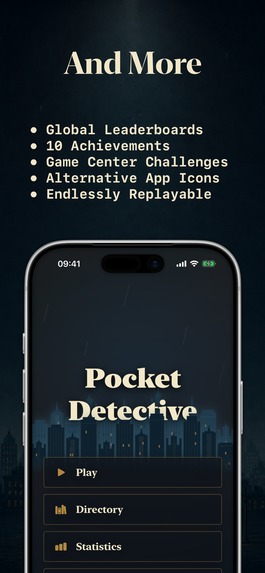
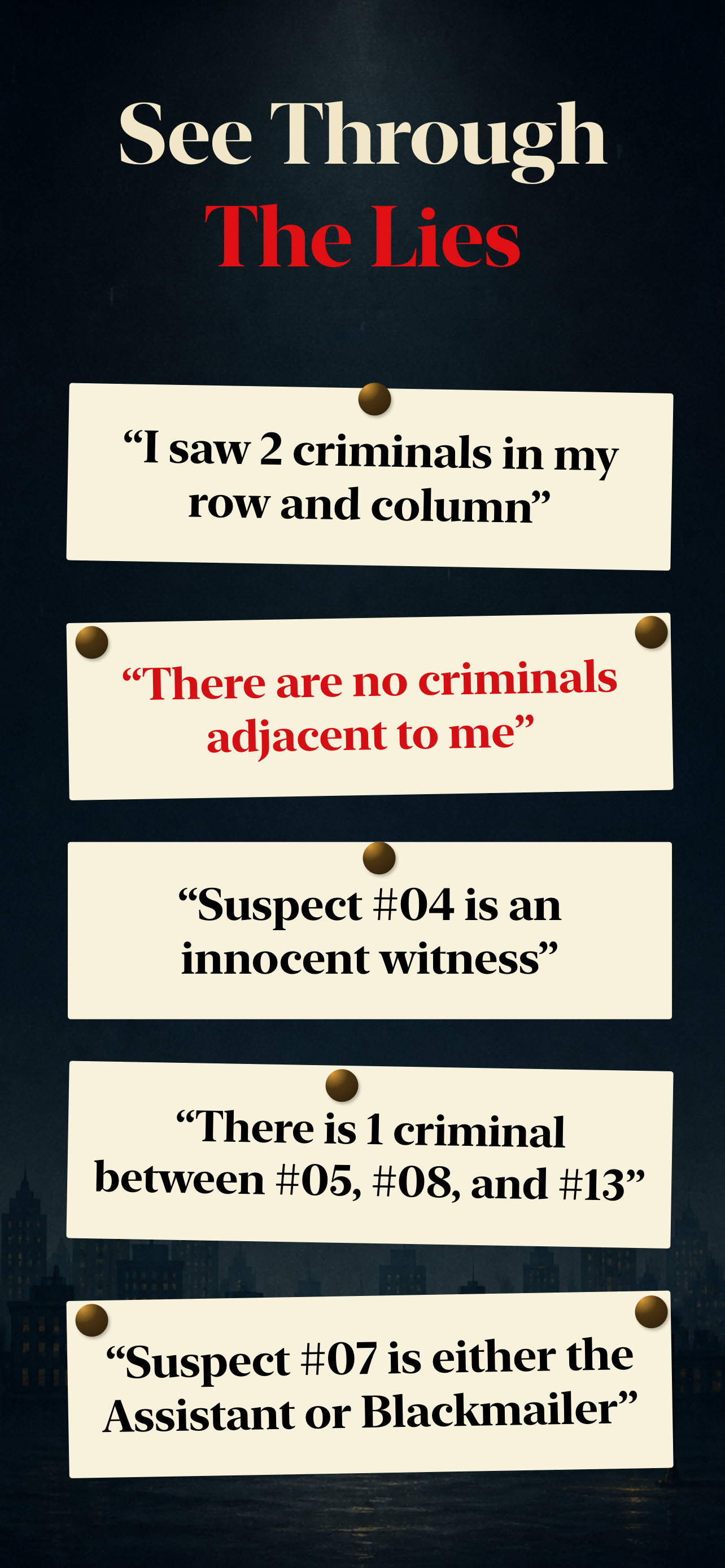
Pocket Detective brings social deduction to a single-player investigation on iPhone and iPad. Study a case file, interrogate suspects, and work out who deserves to be arrested. Each new piece of information can change your theory. The challenge is knowing which information you can trust.
Hidden roles, conflicting evidence
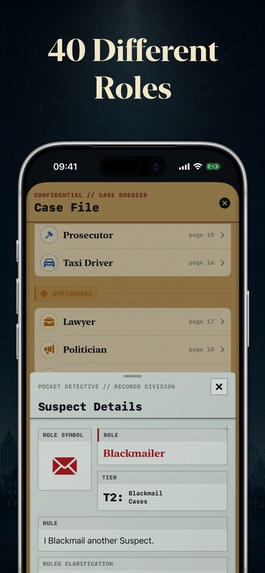
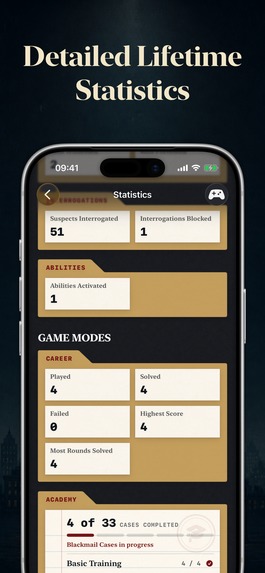
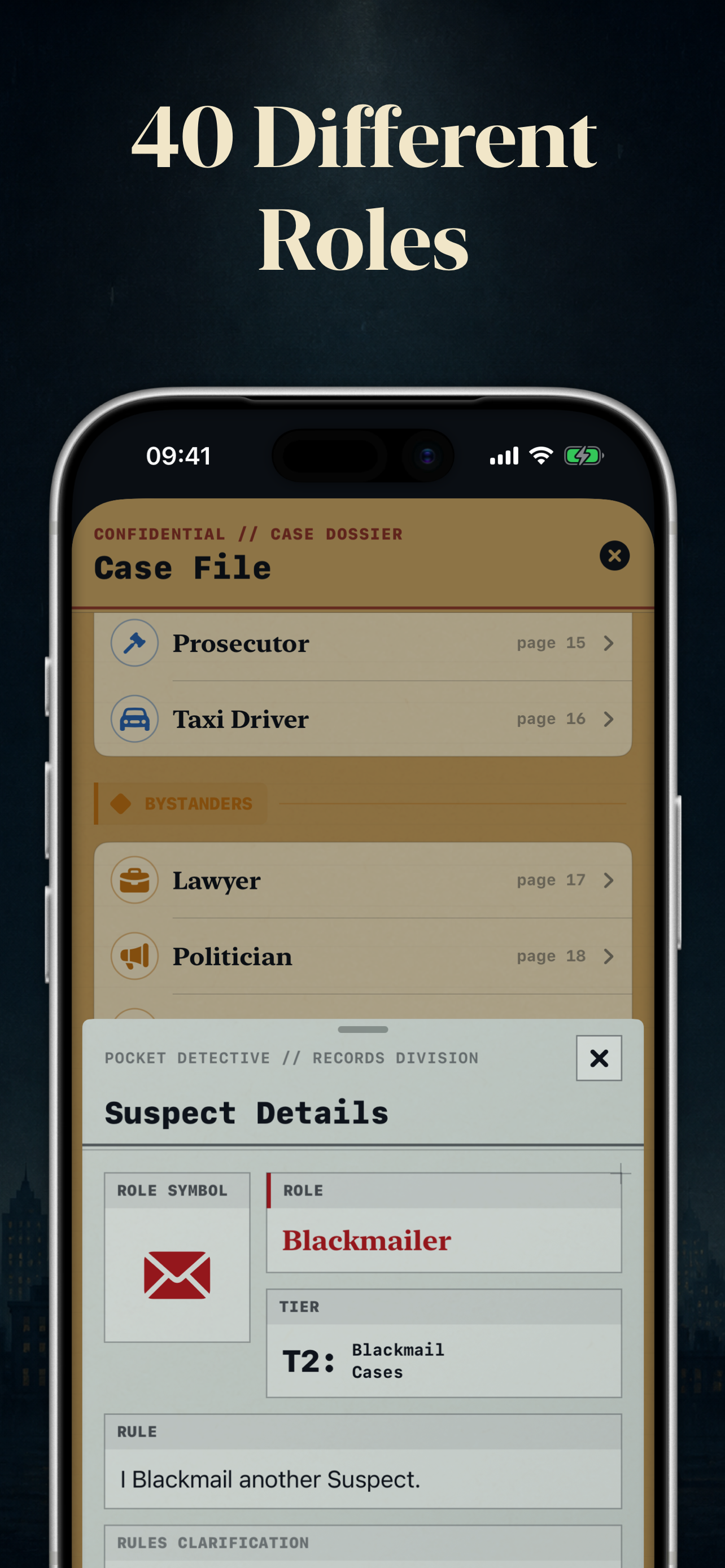
The game has 40 roles with different information, abilities, and effects on the investigation. A Hitman, for example, kills another suspect every 4 interrogations you do.
Understanding how roles interact is part of solving the case. You need to consider both what a suspect tells you and what might have influenced their testimony.
Four ways to investigate
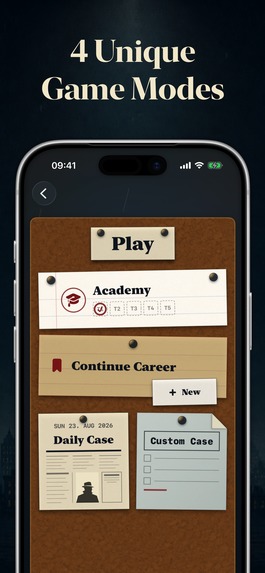
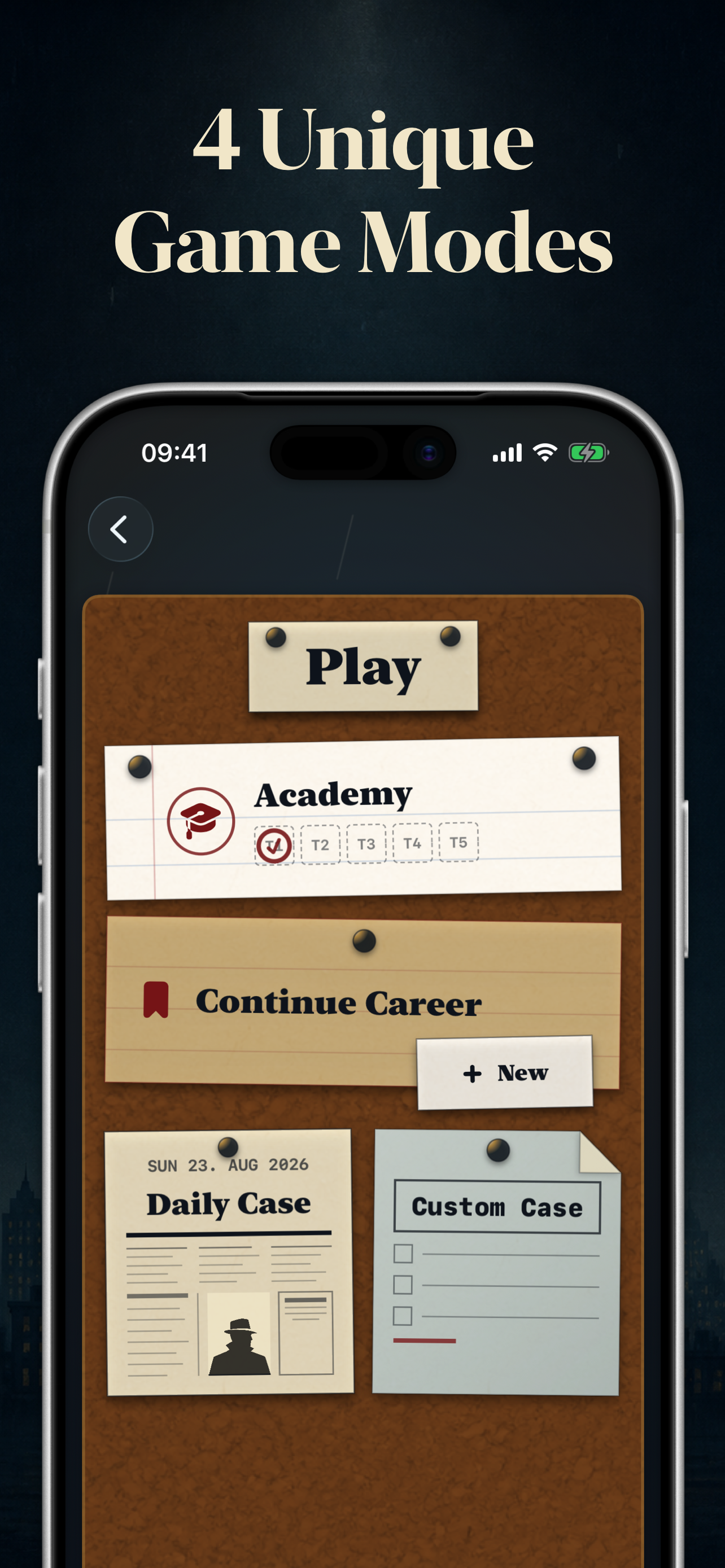
- Academy: Learn the roles and mechanics through 34 handcrafted cases, building towards more complex investigations.
- Career: Solve as many cases as possible before your three lives run out.
- Daily Case: Take on the same new case as every other player each day.
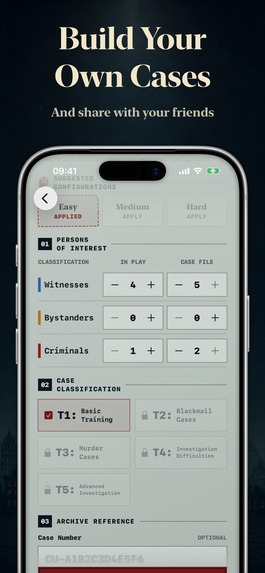
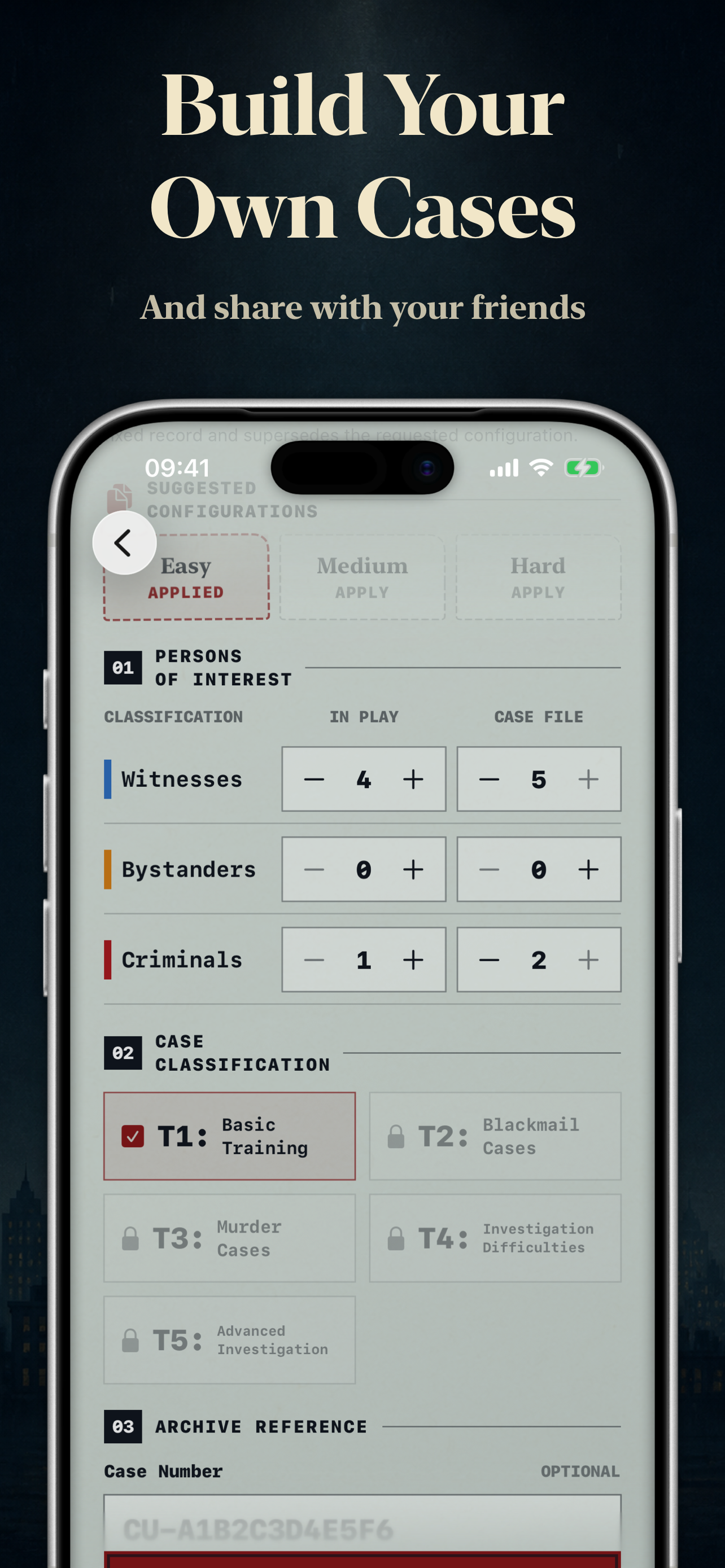
- Custom Case: Build your own case configurations and replay previous ones.
A detective’s desk
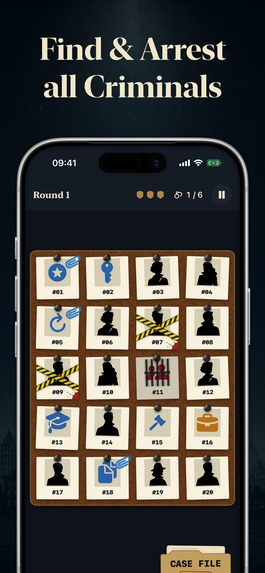
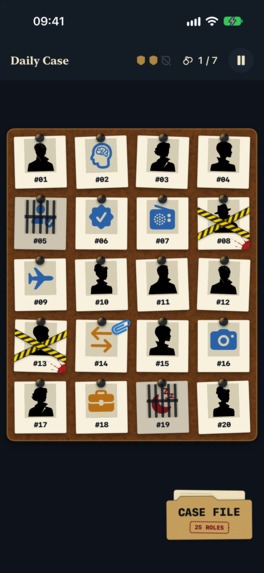
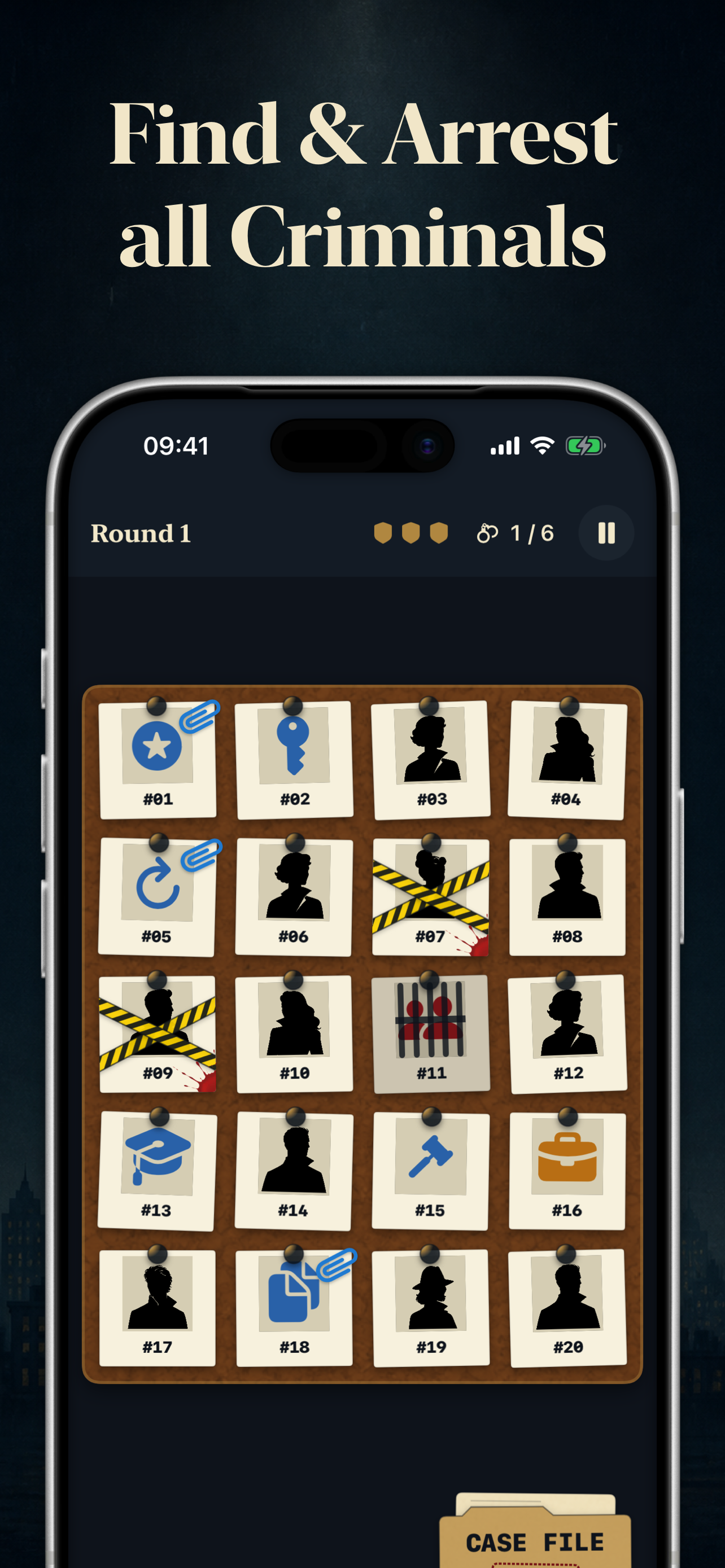
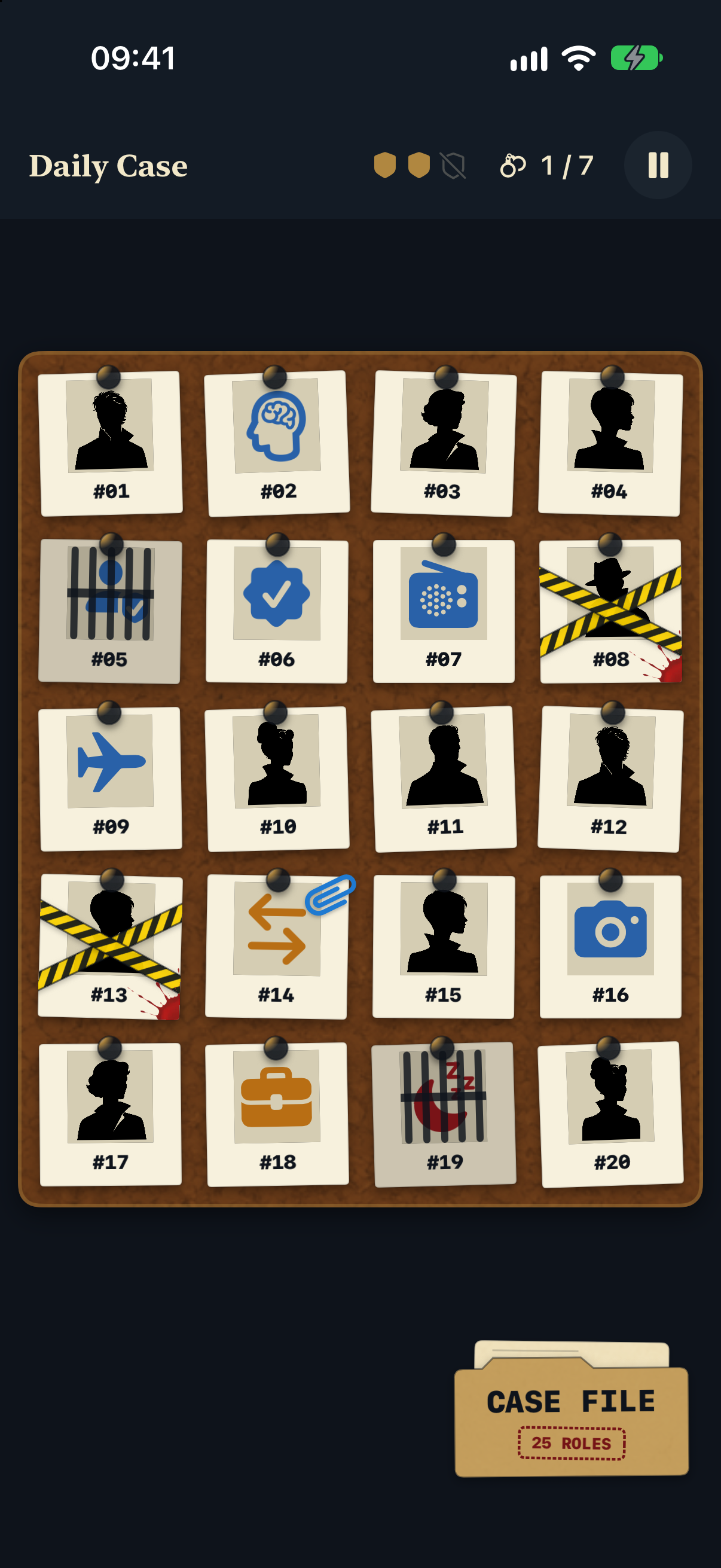
The noir art direction carries through the interface. Suspect photographs sit on a cork evidence board, and reports present the details of each interrogation. Paper textures, stamped markings, and a dark city skyline give the game the character of a detective’s office.
On iPad, the investigation board and suspect report sit side by side, so you can examine testimony while keeping the other suspects in view.
How it is built
Pocket Detective is built natively in SwiftUI for iPhone and iPad. A separate Swift game engine handles the rules and role interactions, with seeded generation making cases reproducible. Investigations run locally and can be played offline.
Try it, then unlock the full game
Players can learn the basics in the first Academy tier for free. A one-time purchase unlocks the full game, with RevenueCat handling the purchase, access entitlement, and restoration.
This model lets players understand the deduction mechanics before deciding to buy. The purchase gives them more cases and systems to explore, while learning the roles and solving each investigation remain the progression.
The appeal is that moment when a suspicious detail finally makes sense. A statement you dismissed becomes useful, a role interaction explains a contradiction, and you have enough evidence to make the arrest.
Built With
- swift
- swiftui

Log in or sign up for Devpost to join the conversation.