-
-
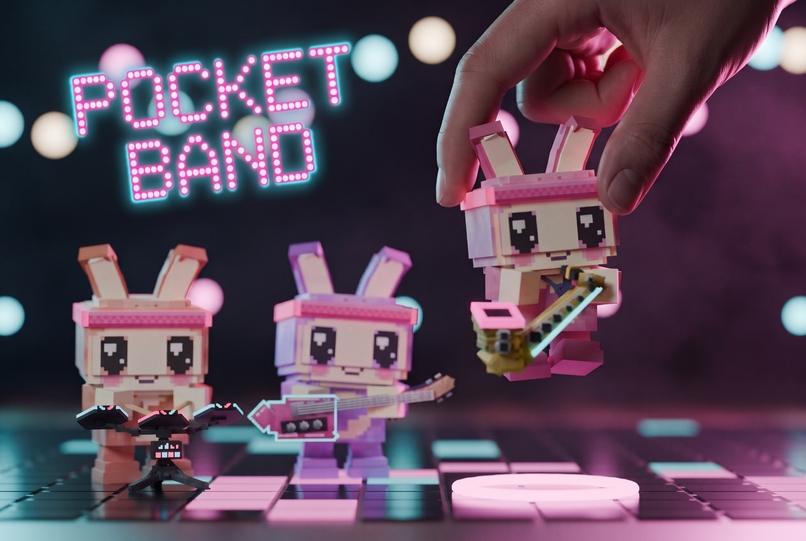
-
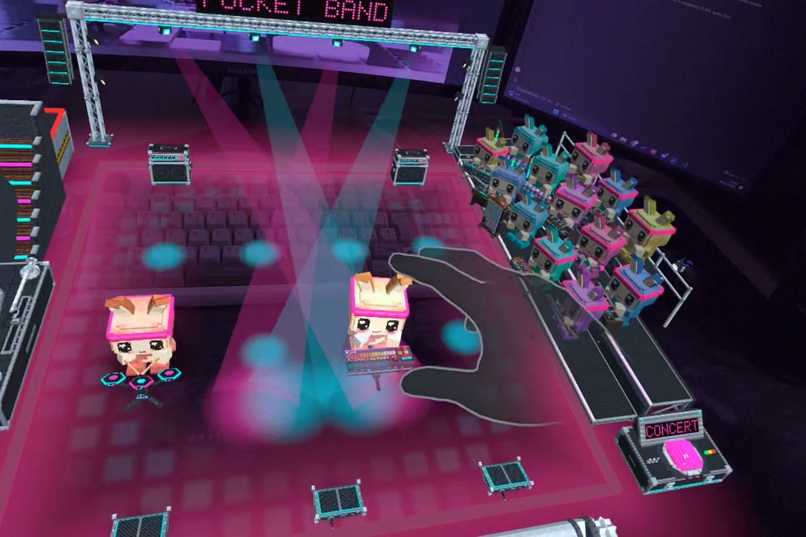
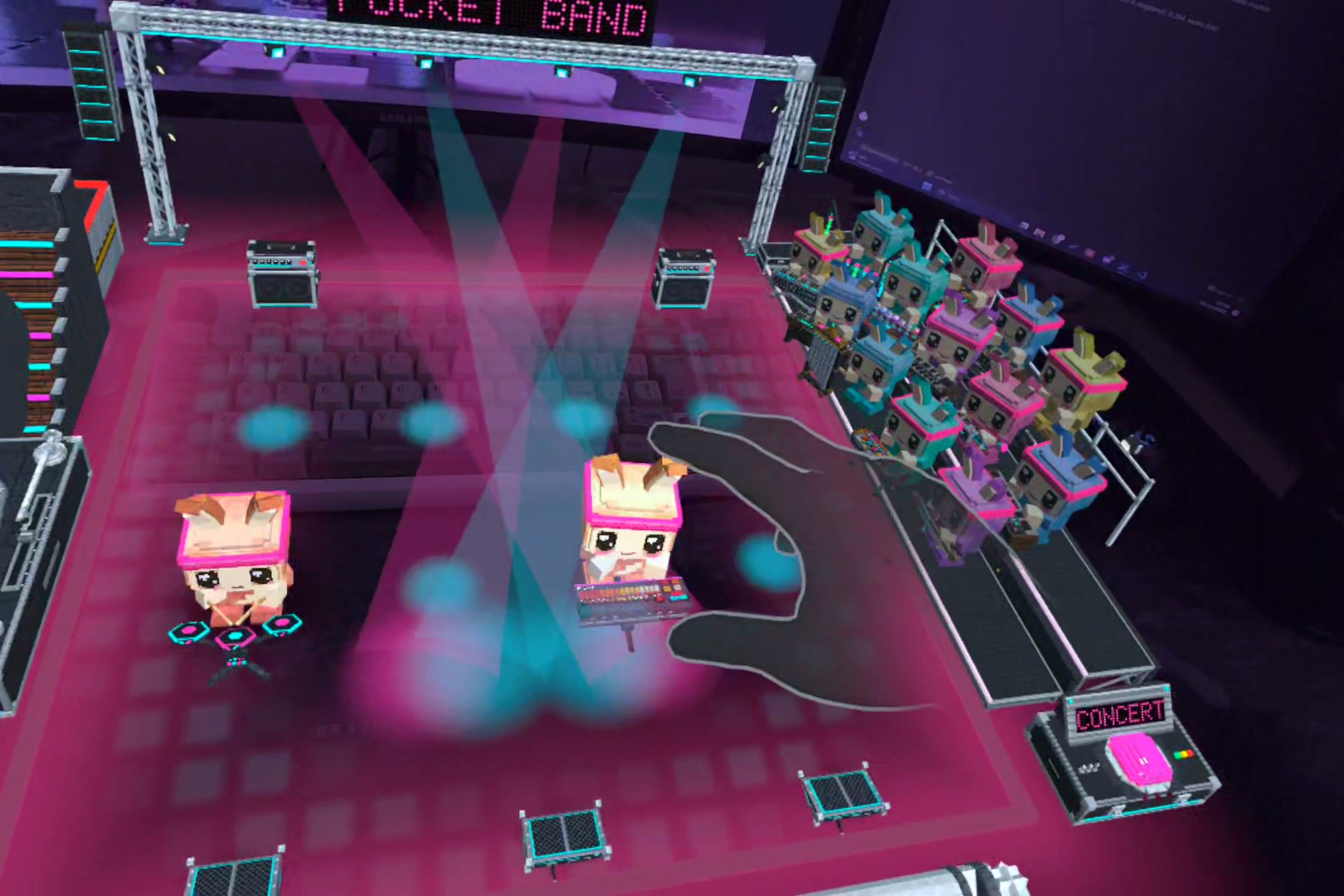
Pick up a musician with your hand and put it on the stage. It starts playing along.
-
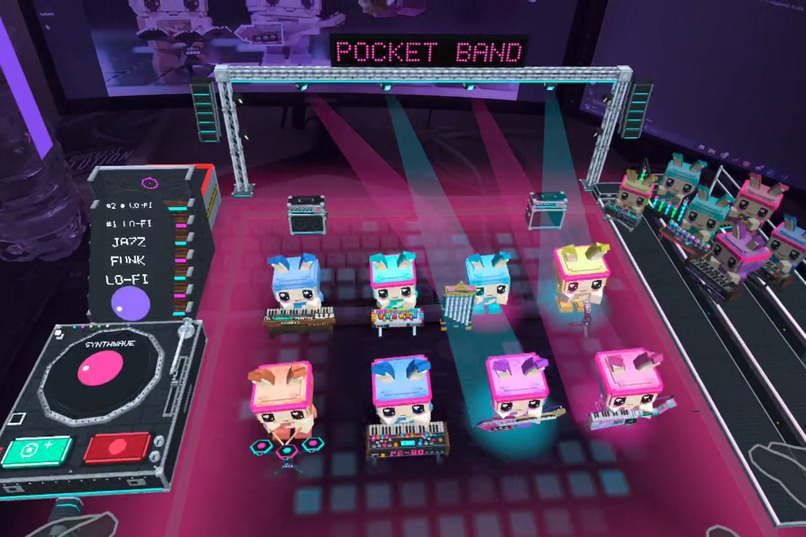
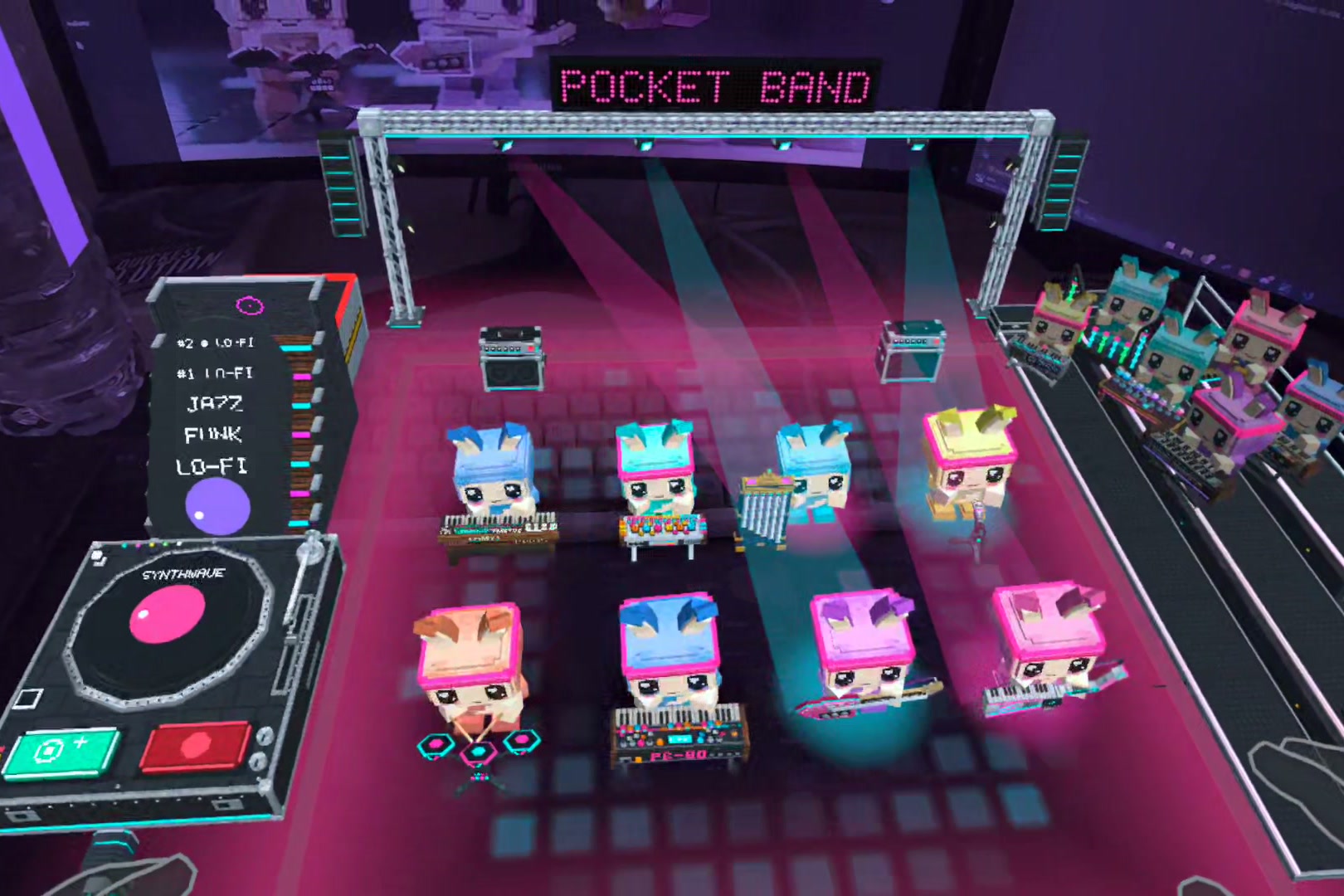
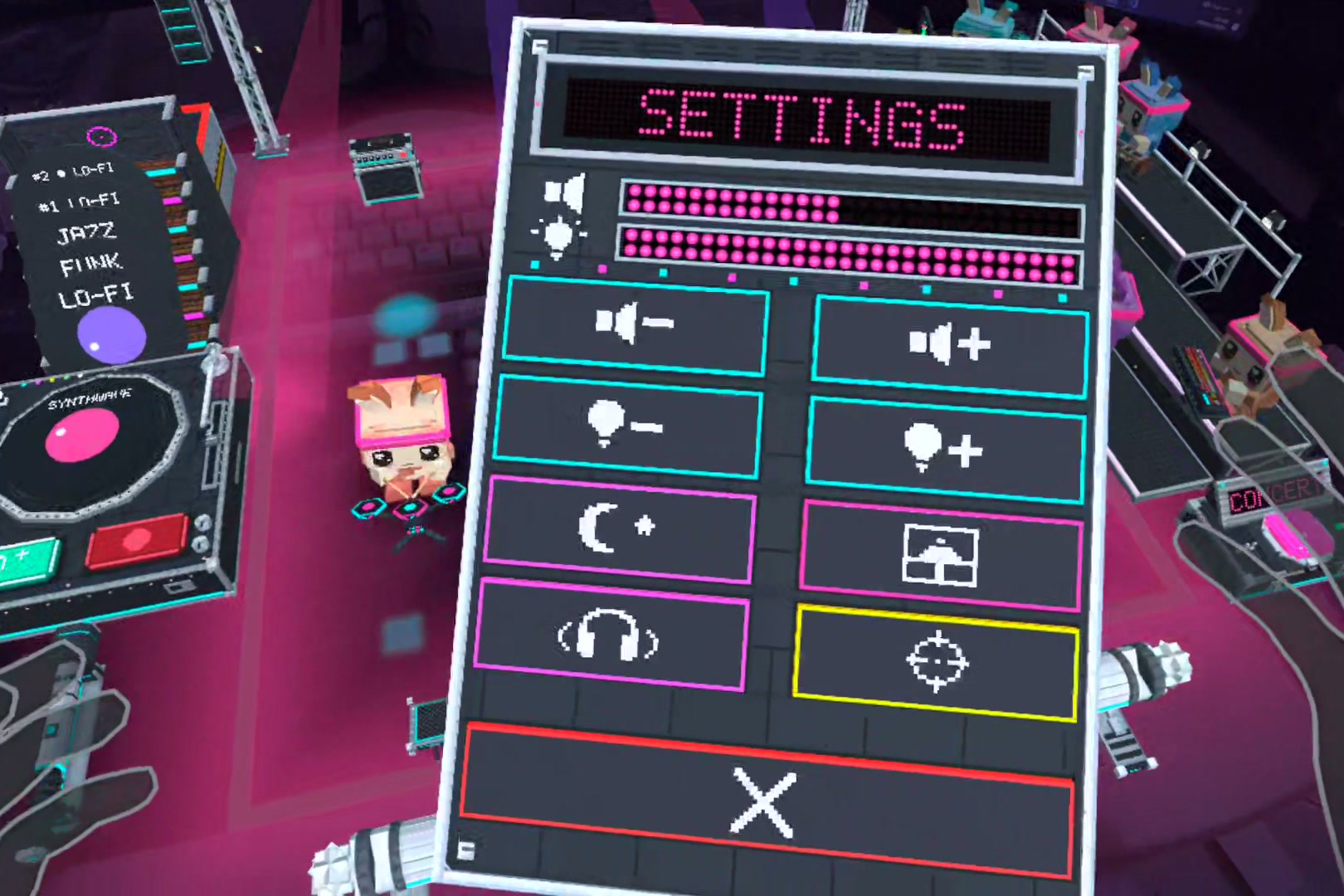
Eight musicians on stage, each one playing its own part. The record player on the left picks the song.
-
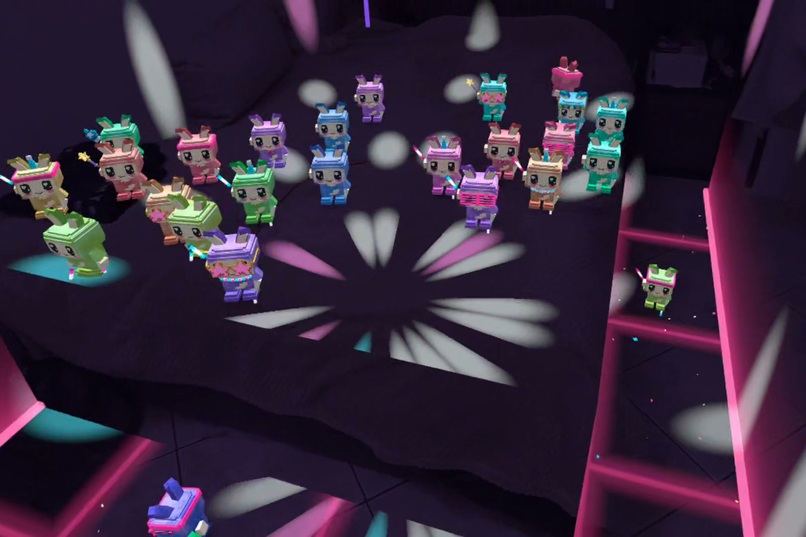
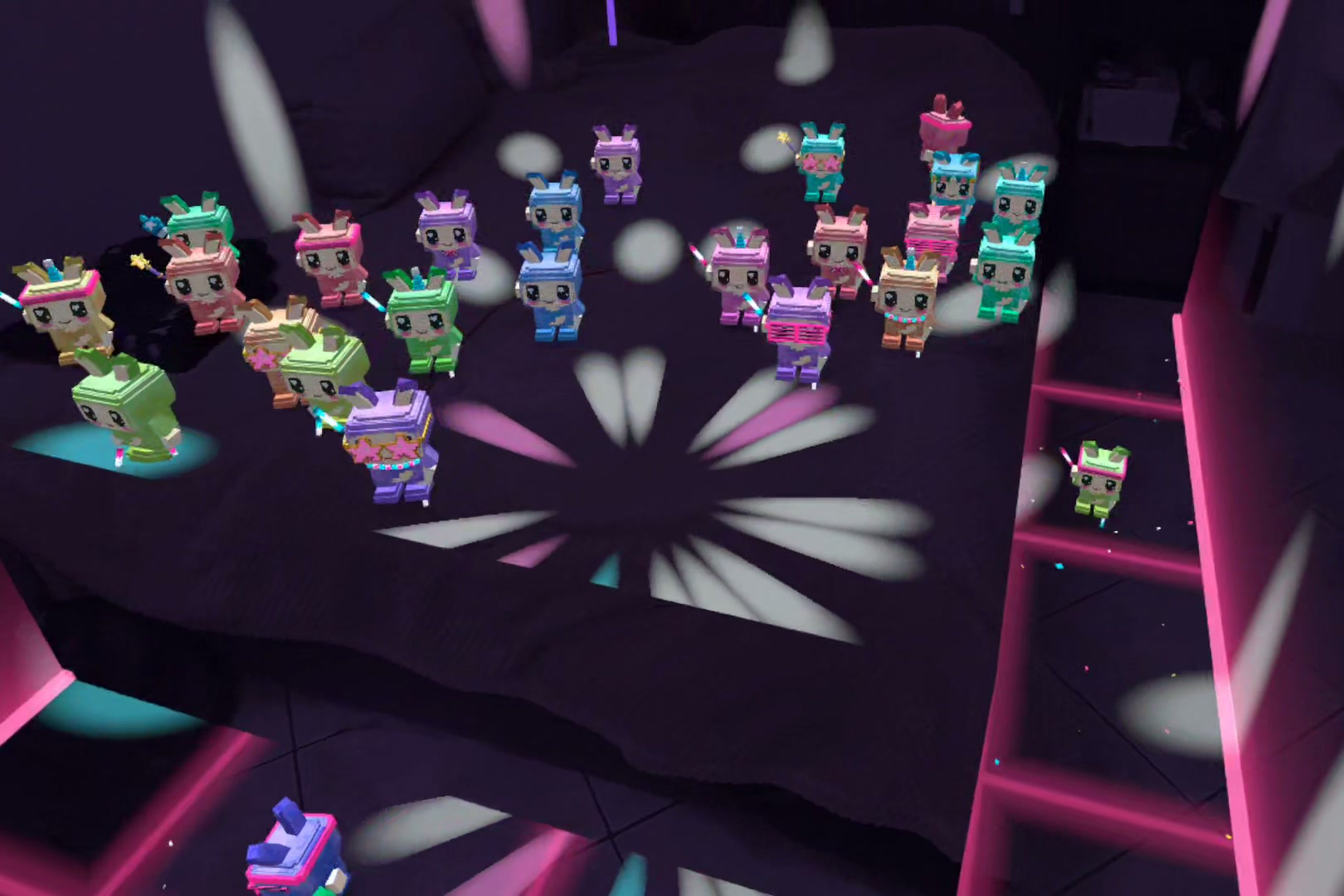
Press CONCERT and the fans leave the table to dance around your room. Here they took over the bed.
-
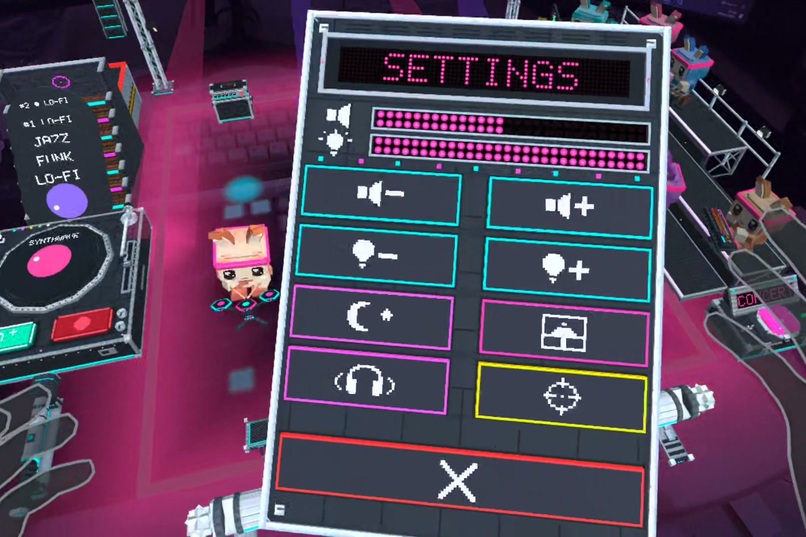
Settings open from your wrist: volume, lights and recentering the stage.
Inspiration
I wanted music in mixed reality that you could sit back and watch, then reshape with your hands whenever you felt like it.
My first plan was a band that played your own songs. It hit three walls: streamed audio can't be captured on the headset, the best recognition model was far too big for a Quest, and the songs weren't mine to ship. So the band brings its own songs, and you decide who plays.
What it does
Pocket Band finds the table in your room scan and puts a 40 cm stage on it. The room dims, neon lights up your real wall corners, and two musicians start playing.
Each musician is one part of the song: drums, bass, a sax, a vocoder, a laser harp. The rest wait on a riser to the right. Set one on the stage and it comes in on the next bar in a shower of sparks. Lift it off and its part drops out.
Drop a record on the turntable to change the song (synthwave, lo-fi hip hop, funk or jazz). Save turns your band into a new record, and a handheld spotlight solos whoever you point it at.
After you start the concert, the band jumps onto your bed, your shelves and the windowsill, and you hear each musician from where it stands. Lasers hit your walls. Up to forty little fans come out from behind the furniture, dance on the beat, climb onto the bed, start a conga line and wave when you look at them.
How we built it
Unity 6, URP, OpenXR and Meta XR SDK v207. Every grab and button is Interaction SDK, MRUK finds the table, walls and furniture, and Meta XR Audio puts each part inside its musician.
All the parts of a song run together on the audio clock from the start. Adding a musician only opens its gain on the bar line, to the sample, so nothing can drift. Chords stay on the melody's pentatonic notes, which keeps any mix in key.
The songs come from a browser studio as stems plus a JSON of every note and kick, and that data drives the animation. The voxel models were made with CrashPanel, my own asset tool. The crowd walks a navmesh built from your scan, with climbing links up the sides of low furniture, and each fan is a single draw call.
Challenges we ran into
Grabbing a 6.5 cm musician with bare hands. My own grab code made the hand jump, so I moved everything onto Meta's components.
Passthrough has no depth, so neon behind the sofa showed straight through it. Now the scanned furniture hides virtual light.
MRUK 207 froze on older room scans, Meta's own sample included. I reported it, and Pocket Band doesn't wait for it: after 12 seconds the stage reads the table height from your palms.
And the first concert was fine but flat. The drop and the crowd came out of that.
Accomplishments that we're proud of
It plays from the first second, and no combination of musicians is out of key. Entrances land on the exact sample. The whole table fits inside 70 degrees of view, ready for narrower glasses. With no room scan at all, on a plane for example, the concert still happens on a ring of risers around the stage.
What we learned
Start from the whole song, not from silence. You hear it working before you touch anything.
Passthrough only earns its place when the room changes what happens. If you can switch it off and lose nothing, it's a backdrop.
What's next for Pocket Band
A room for every song: rain on your real windows for lo-fi, low light and haze for jazz. Look at a musician and pinch to pick it up, for the VR Glasses. More songs. Target launch on the Meta Horizon Store: March 2027.
