-
-
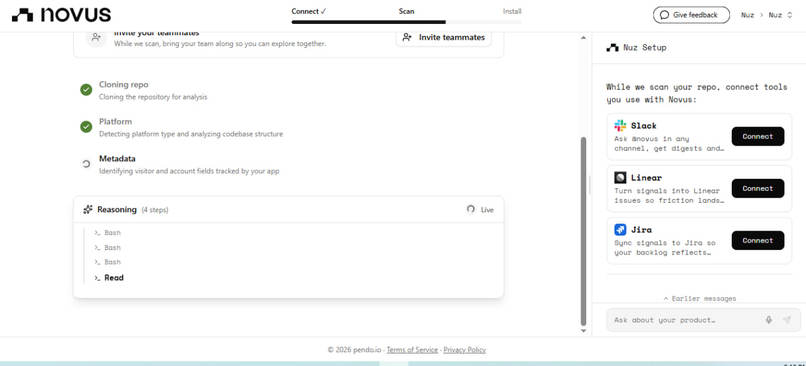
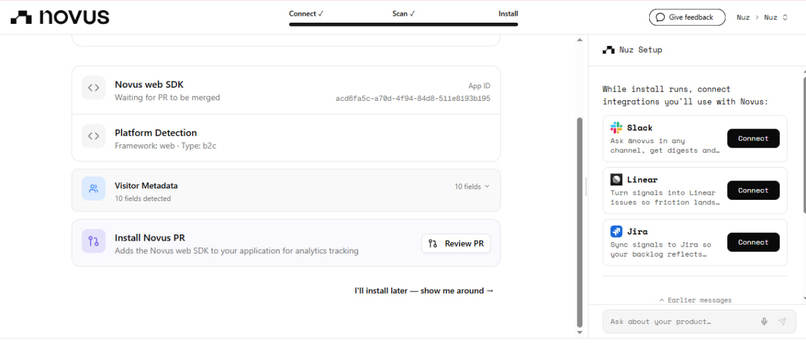
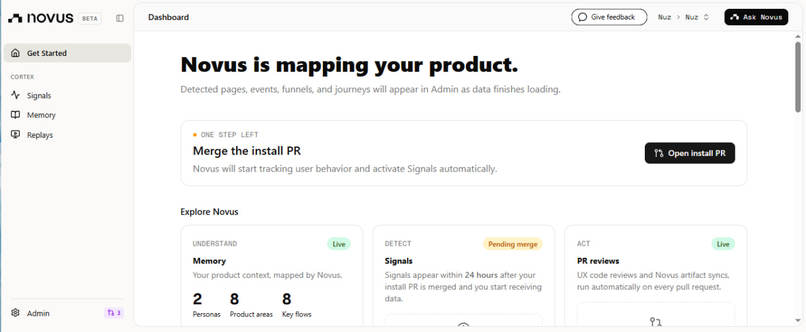
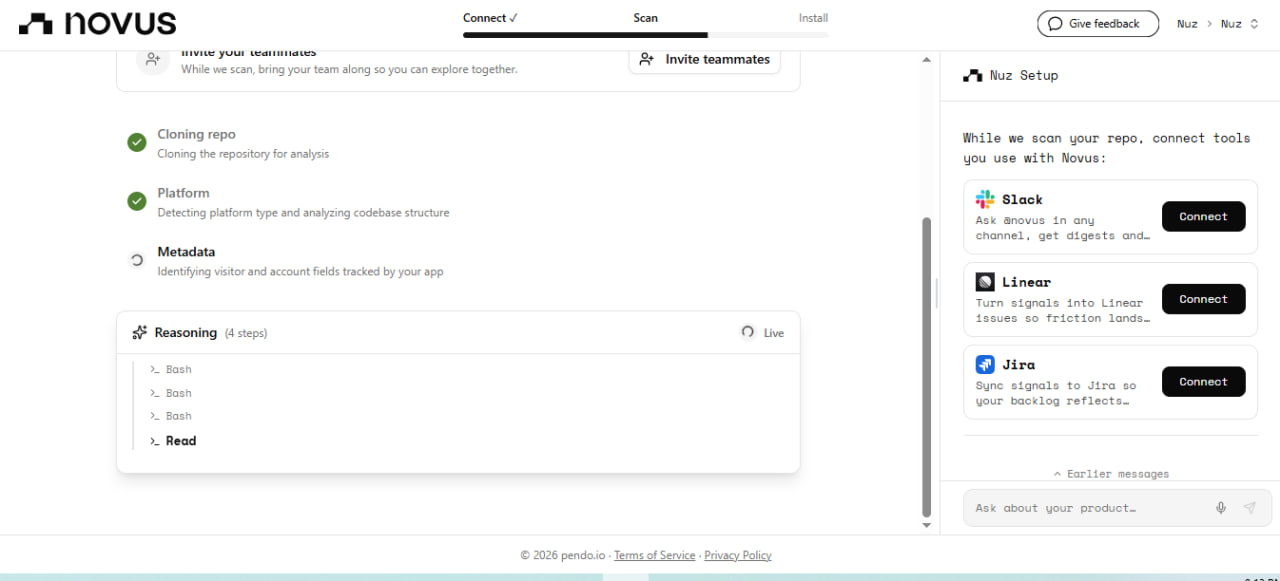
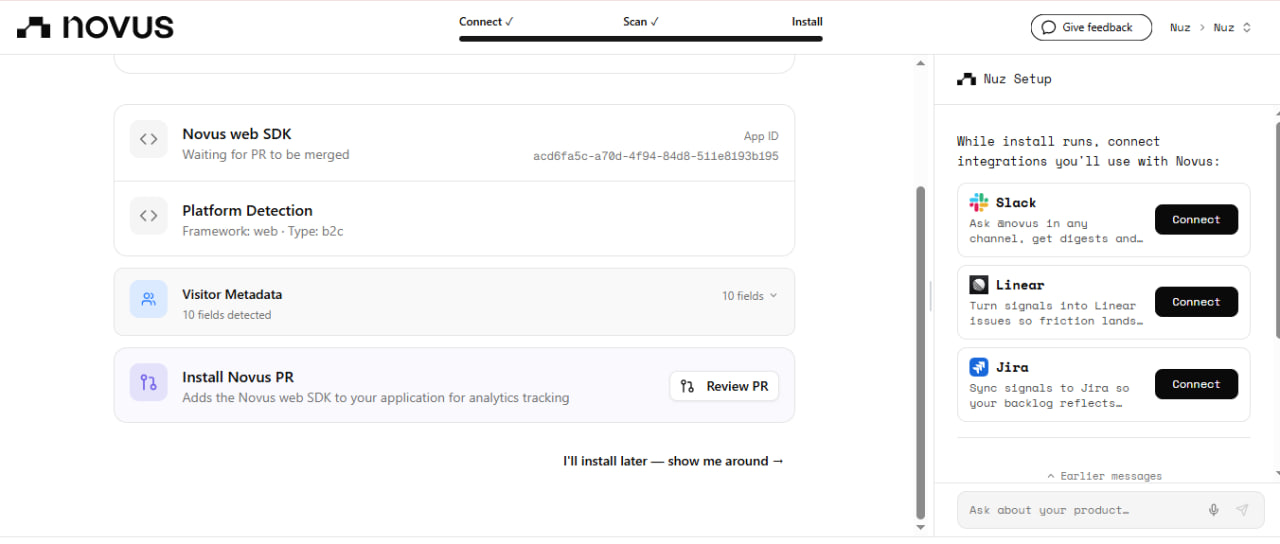
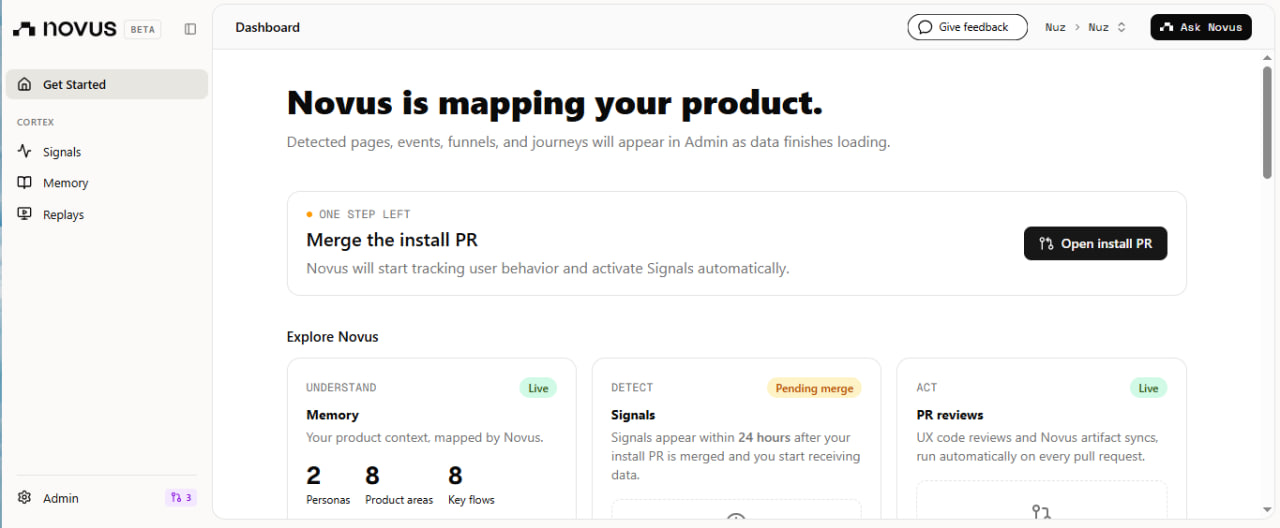
Novus.ai proof of installation
-
-
-
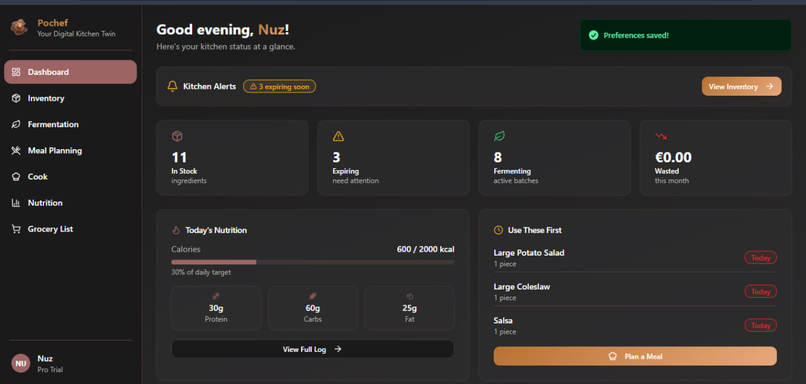
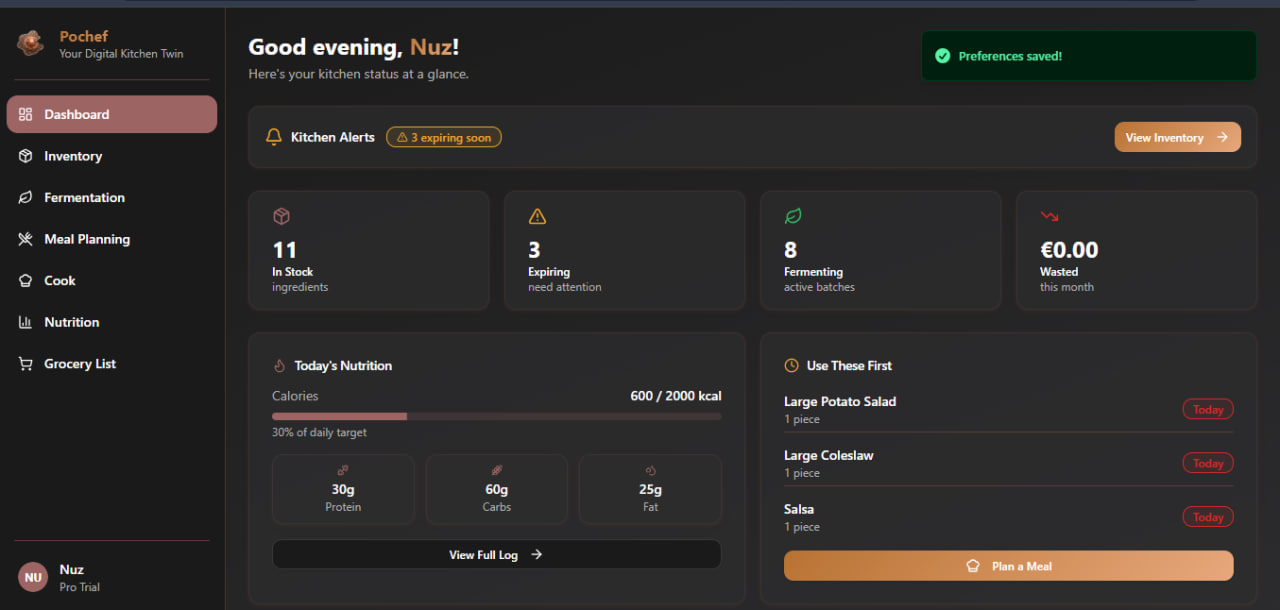
Welcome to Pochef!
-
-
-
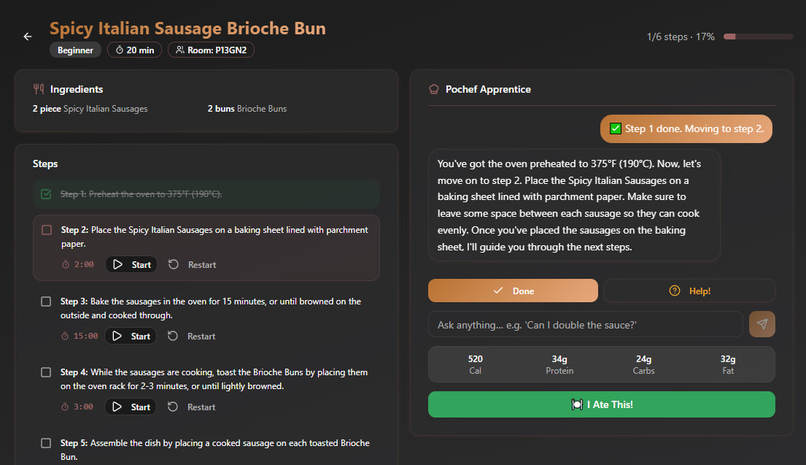
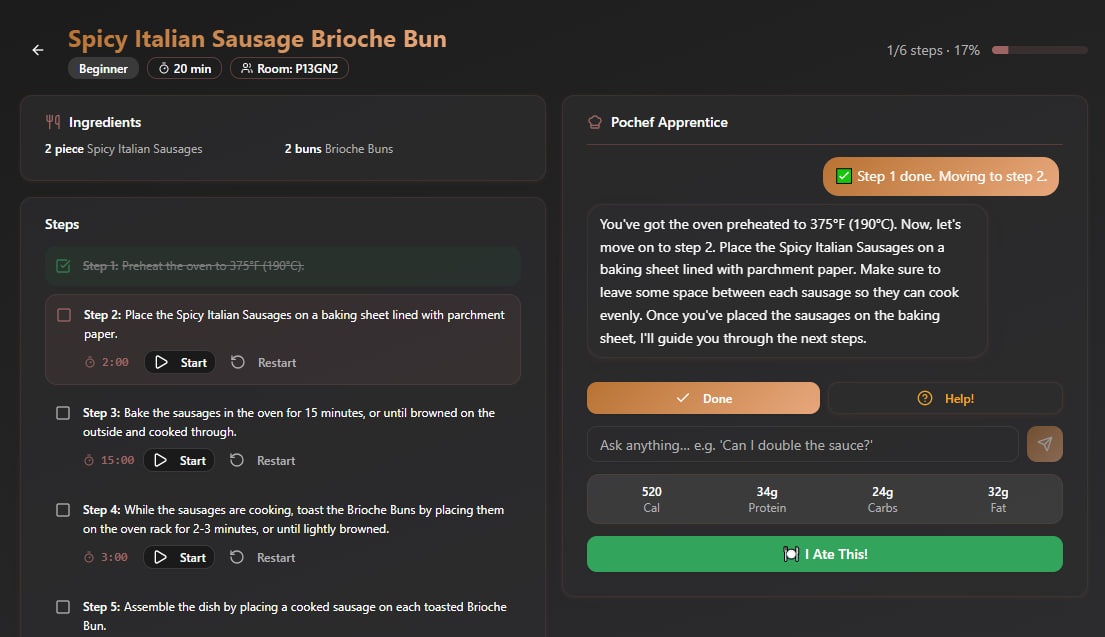
Side-by-side assistant
-
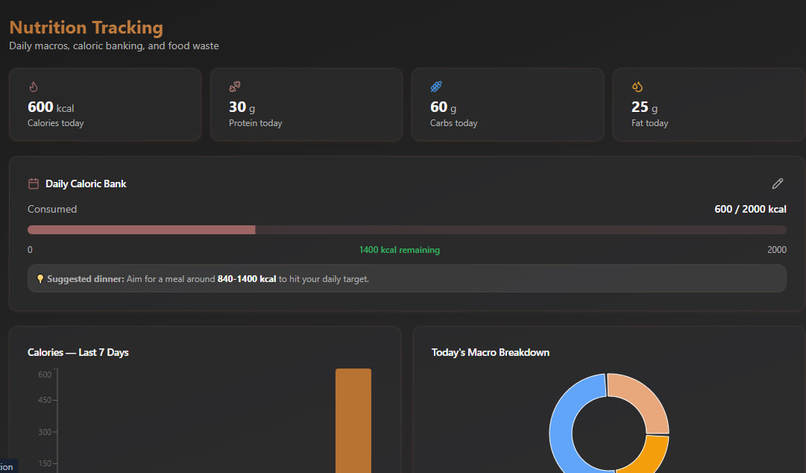
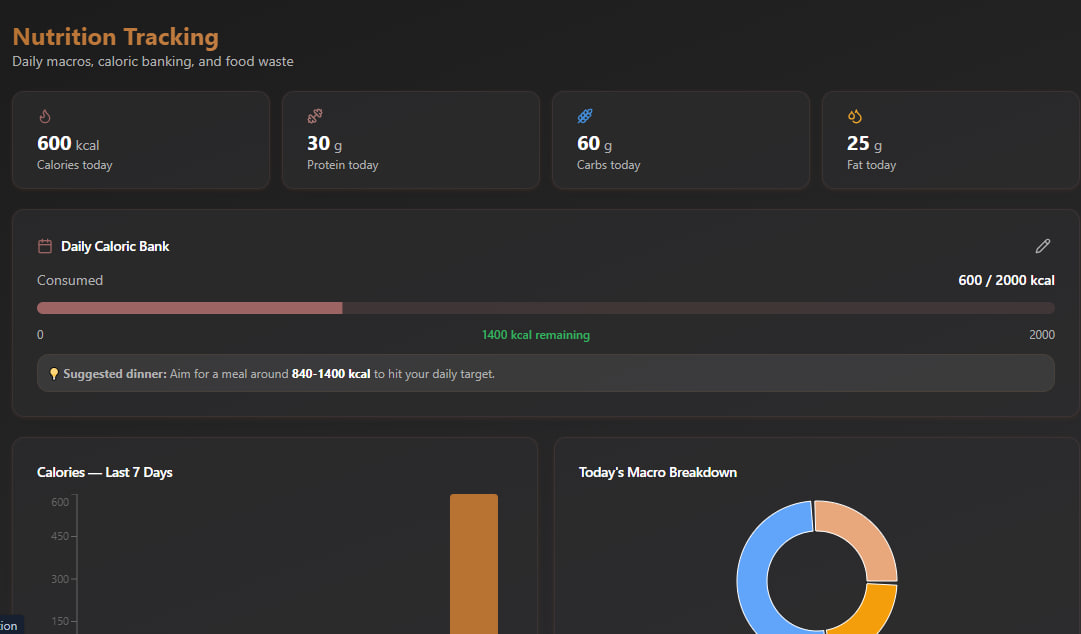
Nutritional logs
-
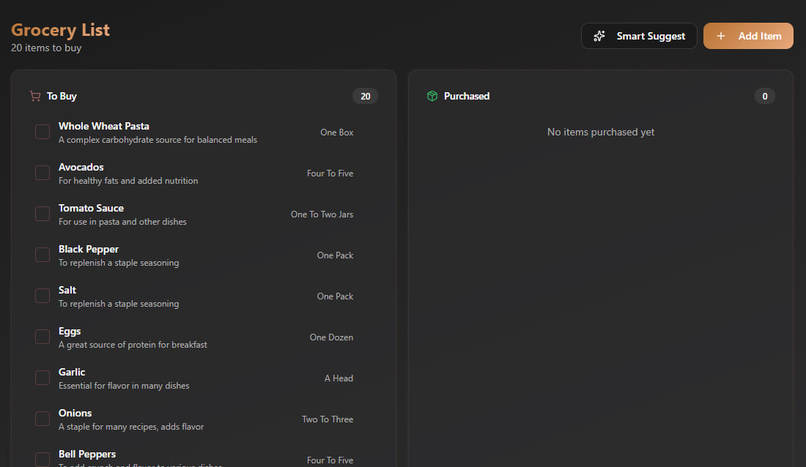
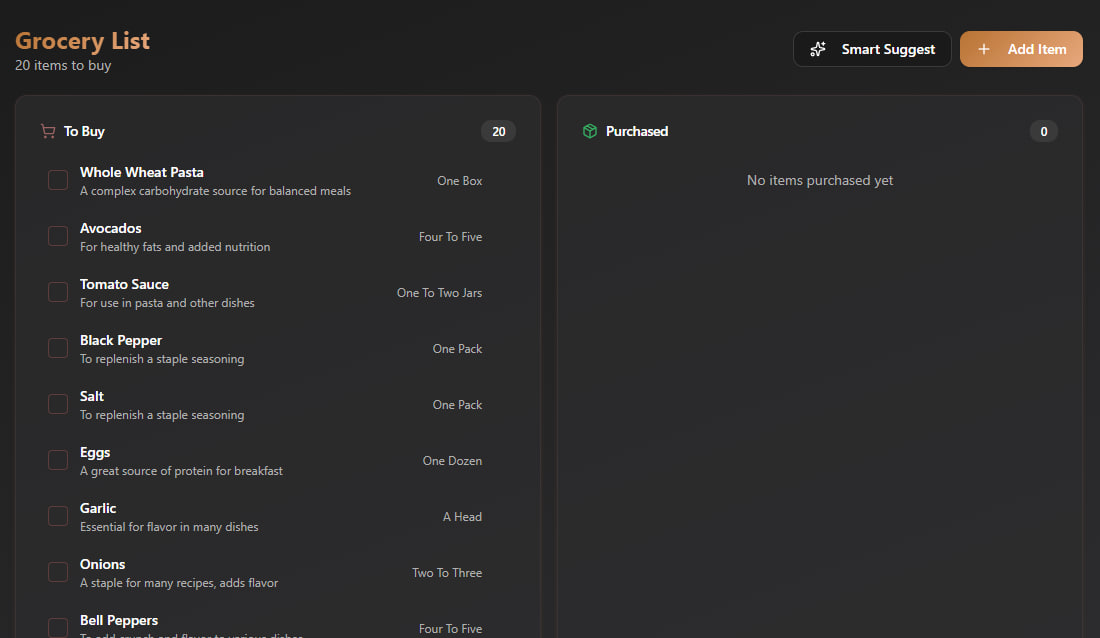
Grocery list
-
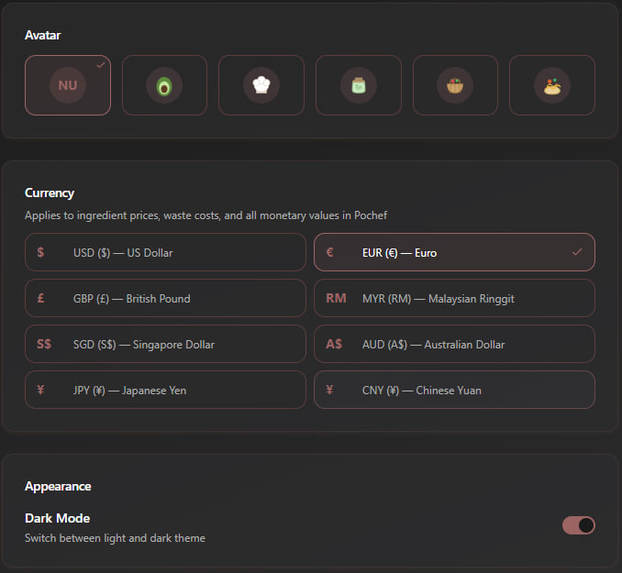
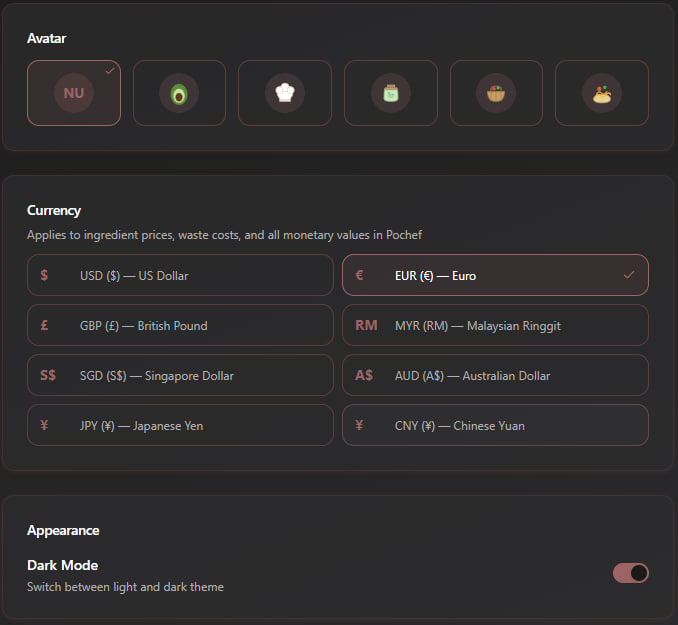
The preference page
-


Inspiration
Mind the Product's "Everyone Ships Now" challenge said: grab any idea anywhere... and just build it. So I did.
The idea came from two things that have bugged me for years:
First: My family grocery shops once a week. Every single time, we stand there stuttering, trying to remember what's actually in the fridge. We'd buy what we already had, forget what we didn't, and end up with doubles—sometimes triples—of the same ingredients. Those extras? Straight to the compost bin. It's expensive, it's wasteful, and it's honestly just frustrating.
Second: I genuinely enjoy cooking. My family cooks every weekday, so we're constantly itching to try new dishes instead of defaulting to fried rice on repeat. But the friction is real. Typing out my entire refrigerator inventory into an LLM is tedious. Looking up recipes online usually means finding something that looks great—only to realise I'm missing half the ingredients.
Oh, and there was that phase where my family experimented with yoghurt, kombucha, and kefir. We used paper tapes for dates and Excel for timelines. Tracking fermentation stages was a nightmare.
So when the trigger came around, I decided to drill all in and create Pochef—in three days or less.
What it does
Pochef is a cooking assistant that lives in your kitchen. Like your close sibling, it just couldn't live without you nor your kitchen.
Here's how it works:
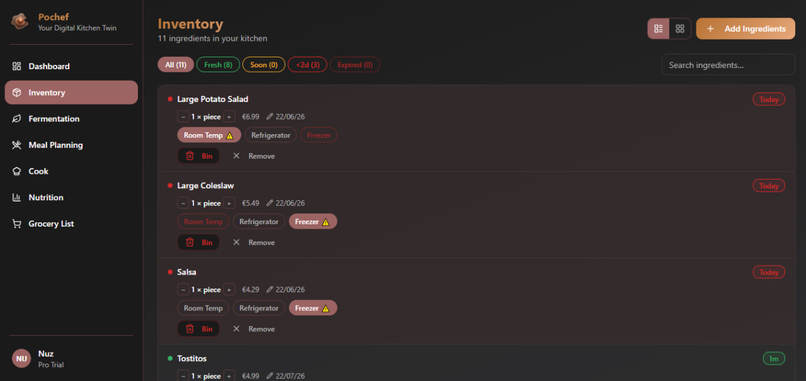
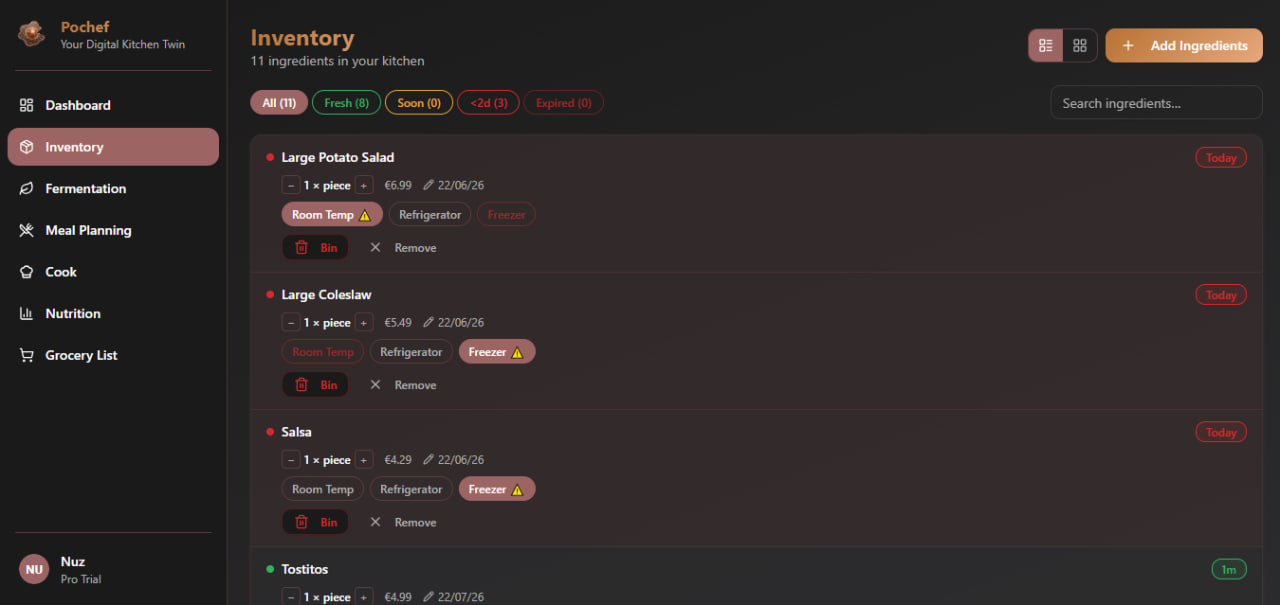
Smart Inventory Management: Add ingredients by scanning receipts or manual entry with a few taps. Pochef auto-estimates, predicts, and tracks expiration dates, storage locations, and even monitors ripening produce.
Fermentation Dashboard: Remember that kombucha phase? Pochef tracks fermentation batches for pickles, yoghurt, kefir, kombucha, natto, sauerkraut, kimchi, and sourdough starters. It sends in-app alerts like "Day 4: Burp your pickles to release CO₂" and shows expected appearance images so you know your batch is on track.
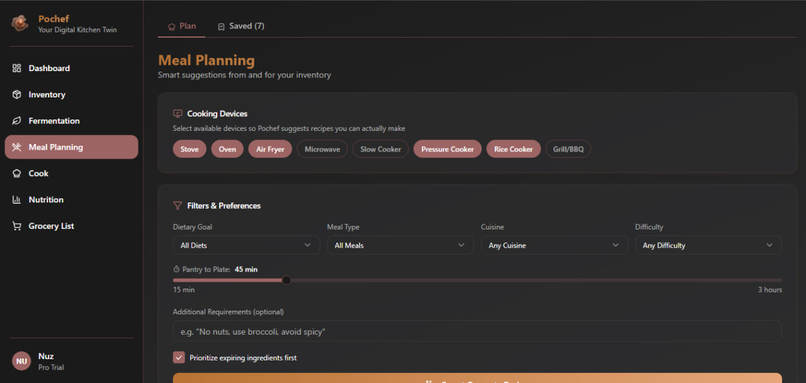
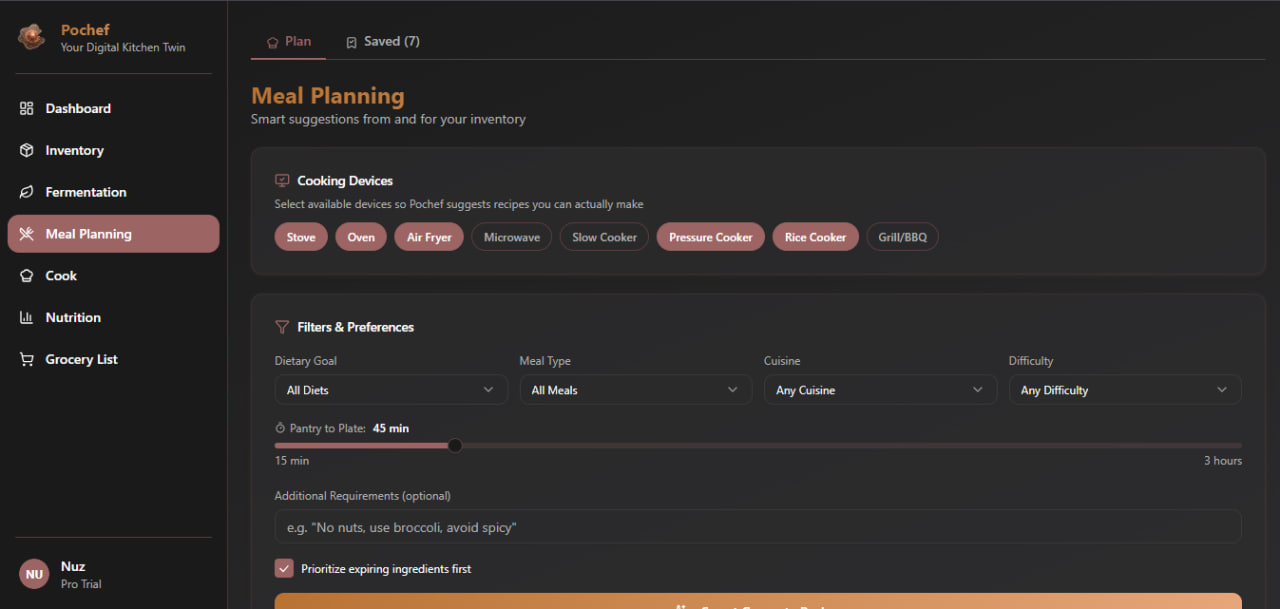
Meal Planning: By default, Pochef prioritises ingredients that are expiring soon. You can filter by dietary goals, meal type, difficulty, cuisine, and even natural-language constraints like "Remove tomatoes", "Less spicy" or "Cut down grease". There's a "Pantry to Plate" time slider—from 15 minutes to 3 hours—so you only see recipes that fit your actual available time.
The "Use-Up Mode": Select an ingredient and Pochef asks: "Use 100% of this in one dish, or split it between two meals?" It generates plans that exactly use up what you have, sparing little space for indecisiveness.
The Expert of Dish X: Every recipe comes with step-by-step instructions, built-in timers, and checkboxes. But the showstopper is the hybrid chat interface—you can type questions mid-cooking ("How do I make this crispier?" or "Can I marinate for 15 minutes instead of 30?") and your Pochef assistant responds without losing track of your current step. It maintains a persistent thread per recipe session, so it remembers exactly where you left off even if you close the browser.
"I Ate This" Button: When you finish cooking, click one button. Pochef deducts ingredients from your inventory, logs the meal's macros to your daily nutrition profile, and adjusts future meal suggestions to fit your remaining caloric budget.
Smart Grocery Lists: The app automatically generates shopping lists from meal plans and low inventory, cross-referencing what you already have so you only buy what you need.
So, is this just another recipe app? No. Most recipe apps are glorified cookbooks. Pochef is a digital twin of your entire kitchen—it knows what you have, what's about to go bad, what you should cook, and exactly how to cook it, all while updating itself in real-time.
How I built it
Built with: MeDo, Supabase (auth + Postgres), and with pride, Novus.ai.
APIs used:
- Groq for recipes, smart estimation, detection, and smooth conversation
- Gemini 2.0 Flash for receipt OCR and dish imagery
Design: Copper Rose + Glassmorphism—warm, sophisticated, and modern. It evokes the warmth of cooking with the clarity of a modern assistant.
Hour 0–24: The general "skeleton" of the app, with the basic version of Dashboard, Inventory, Fermentation, Meal Planning, Cook, Nutrition, and Grocery Lists.
Hour 24–48: Personally lived with pre-Pochef to experience firsthand the bugs, inconsistencies, and inconveniences. Implemented the landing page for a polished feel.
Hour 48–perhaps less than that: Novus.ai integration, final test run, the demo video, and writing this. Sharpened and deployed.
Challenges I ran into
Fermentation timelines are complex. Different foods have different stages, temperatures, and action points. I built a modular system where each fermentation type has its own tracking logic and notification schedule.
The 72-hour time constraint was brutal. Three days sounds like a lot until you realise you need auth, a database, various API integrations, a responsive UI that displays dozens of ingredients without "jumping", and a fully deployed product. I had to ruthlessly prioritise: inventory management and meal planning came first, ripeness tracking and recipe imagery almost got cut. I set hard cutoffs—if a feature wasn't working by hour 48, it shipped without it.
3. I had zero experience with Novus.ai, and frankly, I was anxious about it. I'd never used it before. I kept putting it off, worried it would be a complicated integration that would eat into my already-tight timeline. When I finally installed it? It took five minutes. Copy-paste a script tag, configure a few events, and you're done. The anxiety was completely unfounded.
Accomplishments I'm proud of
Shipped in three days. From idea to working product in 72 hours—that's the "Everyone Ships Now" spirit.
The cooking assistant remembers everything. The persistent thread ID means you can close your browser, come back, and the AI still knows exactly what step you're on. No "where was I?" moments.
Fermentation dashboard. Tracking kombucha primary/secondary fermentation, sourdough starter activity, and pickles—all with visual timelines and action prompts. My past self is very proud.
Novus.ai integration. The hackathon required it, but honestly, it changed how I think about shipping. I instrumented the real moments—and suddenly I wasn't guessing. Novus even opened a PR on my repo with a sitemap it built from usage data.
What I learned
Build the thing that solves a problem you actually have. I started with my family's grocery frustration and my cooking itch. That made every decision easier—I knew exactly what mattered because I was building for myself, my family, and those who share the same really specific itch.
The "shipped" bar is lower than you think. A rough idea executed beautifully beats a big idea executed messily. Pochef isn't perfect, but it works end-to-end—a stranger can land on the URL and use it.
AI tooling collapses the distance between idea and shipped. I used AI-assisted development the whole way—MeDo, OpenAI, Gemini, DeepSeek. The stack is tough tech but the AI layer is what made Pochef possible in three days.
Put the hard logic in the database. Atomic inventory updates in Postgres beat any client-side guard. Supabase Row Level Security ensures users can only access their own data.
Ship with feedback from day one. Novus.ai forced me to think about what to measure before I shipped. That shaped the product—I added waste tracking and fermentation notifications because I realized they'd be the most valuable metrics to observe.
What's next for Pochef
- B2B pivot: Pochef's inventory engine could work for restaurants—or culinary entrepreneurs.
- Smart grocery: Recommend where to buy missing ingredients or integrate e-shopping into Pochef.
- Dedicated waste reduction tracking: Show users exactly how much money they're saving (or wasting). That's the real value prop.
- Multi-language support: Your language is your home, and your home means that you're enjoying every moment..
Built for World Product Day 2026 — "Everyone Ships Now" by Mind the Product x Novus.ai.
Pochef: Your Digital Twin for the Kitchen.
Built With
- gemini-api
- groq
- medo
- novus
- supabase

Log in or sign up for Devpost to join the conversation.