-
-
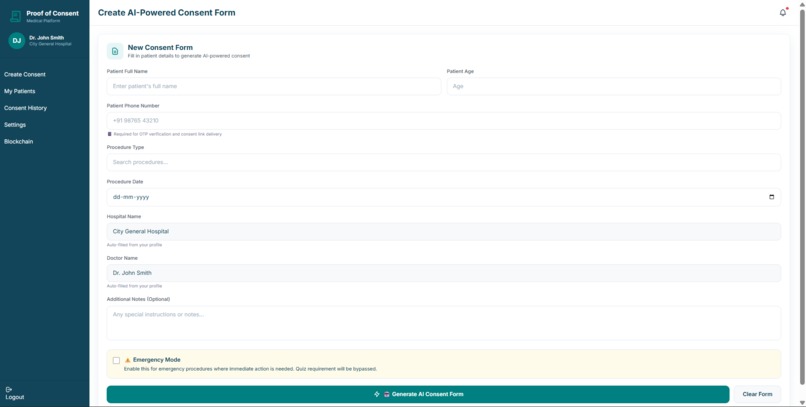
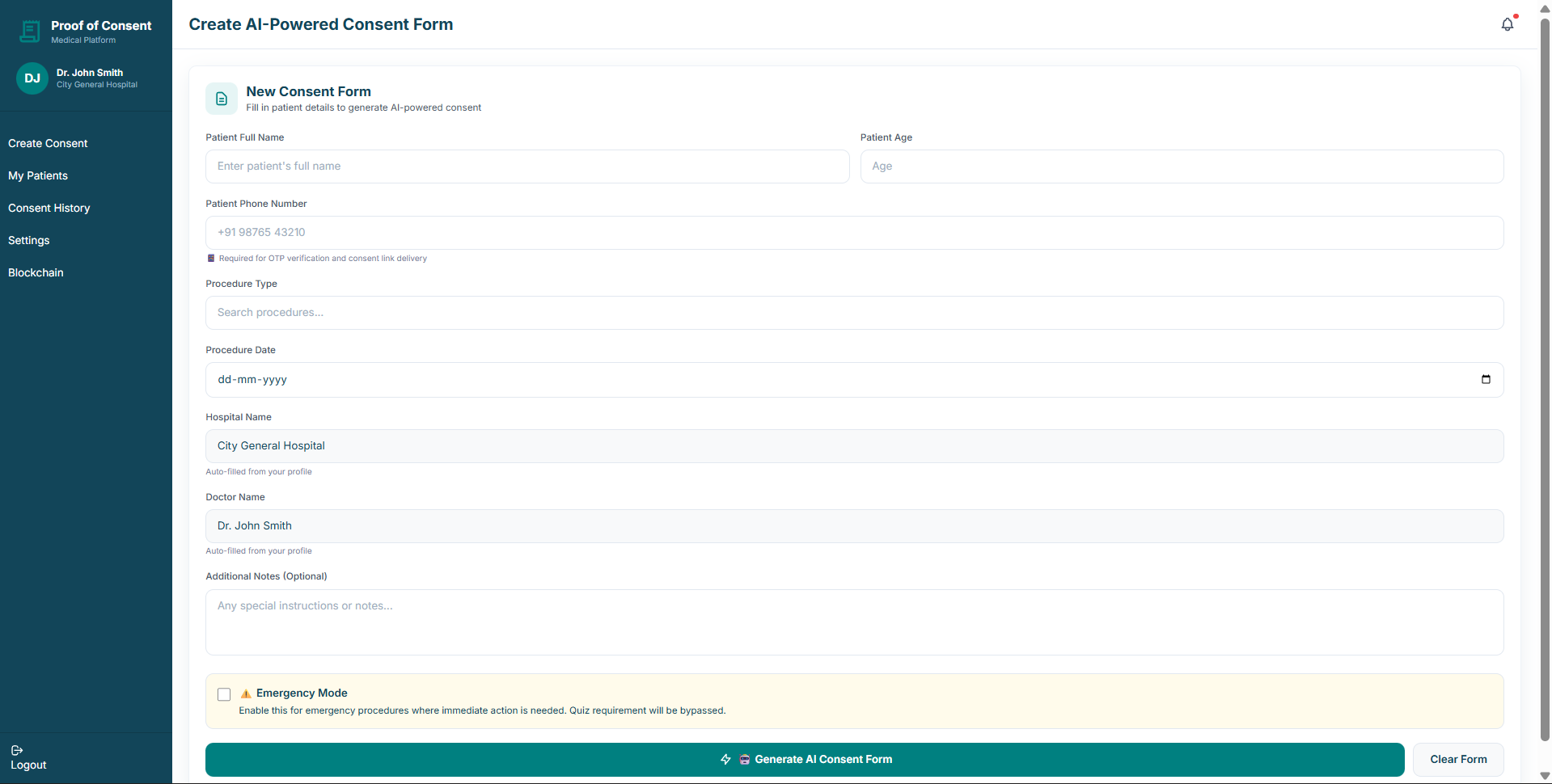
Doctor Dashboard
-
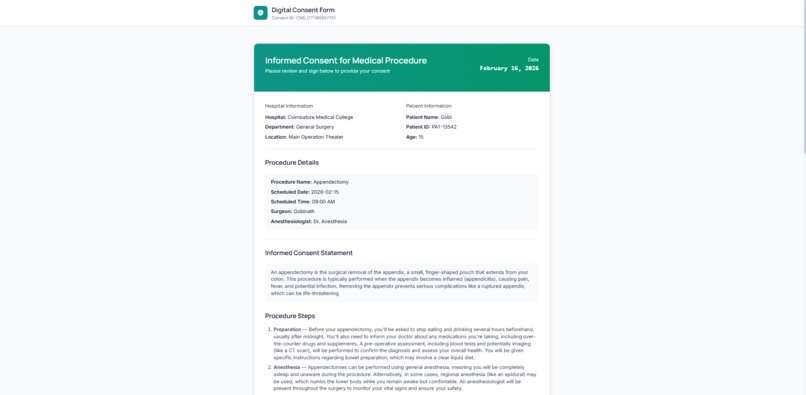
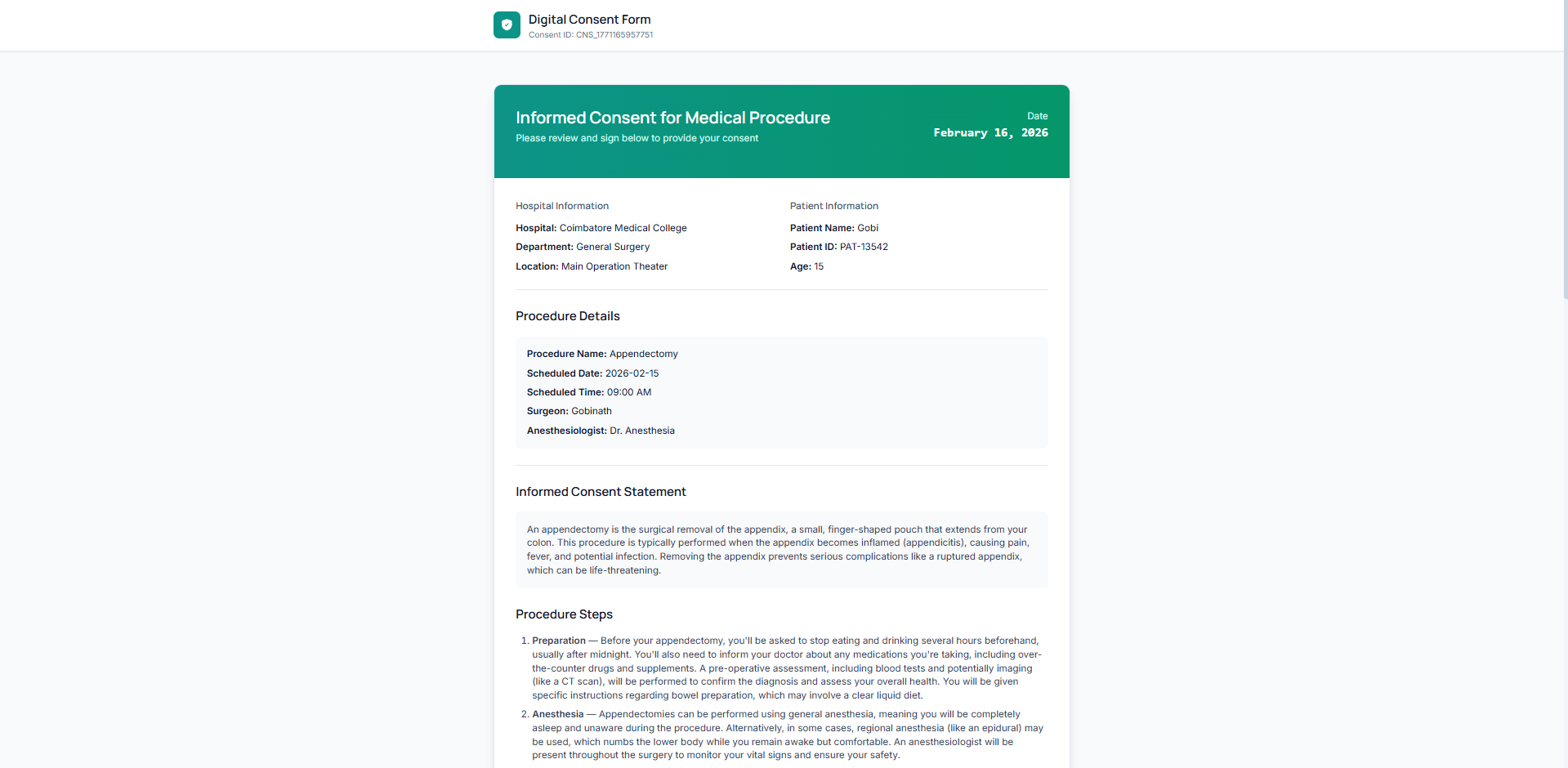
Digital Content Signature
-
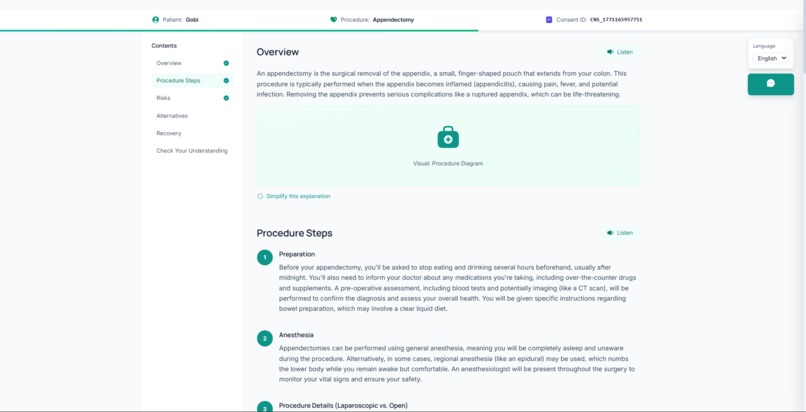
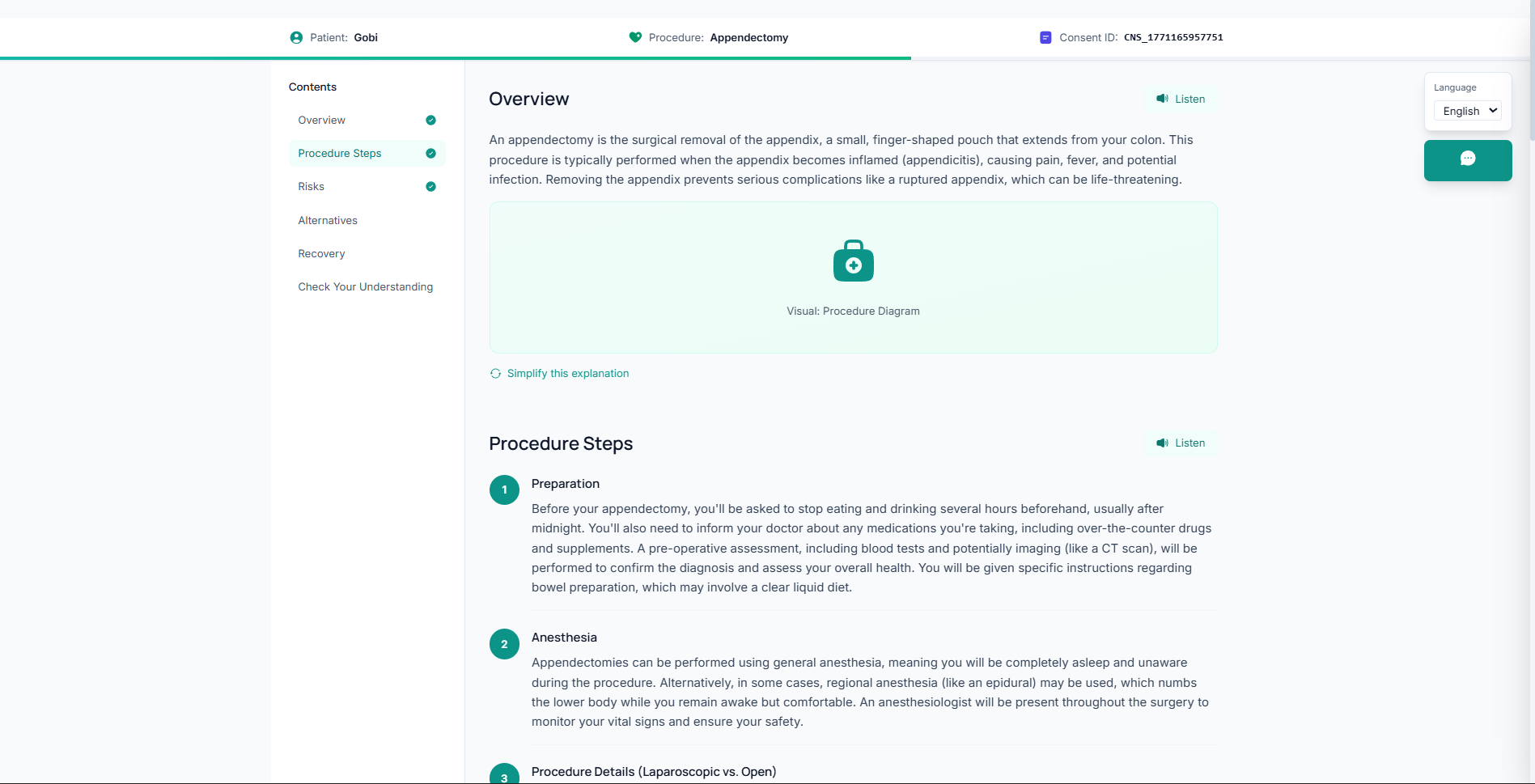
AI Explanation
-
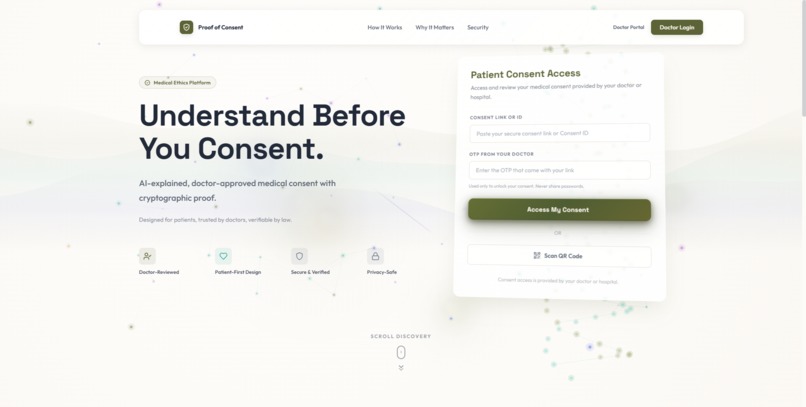
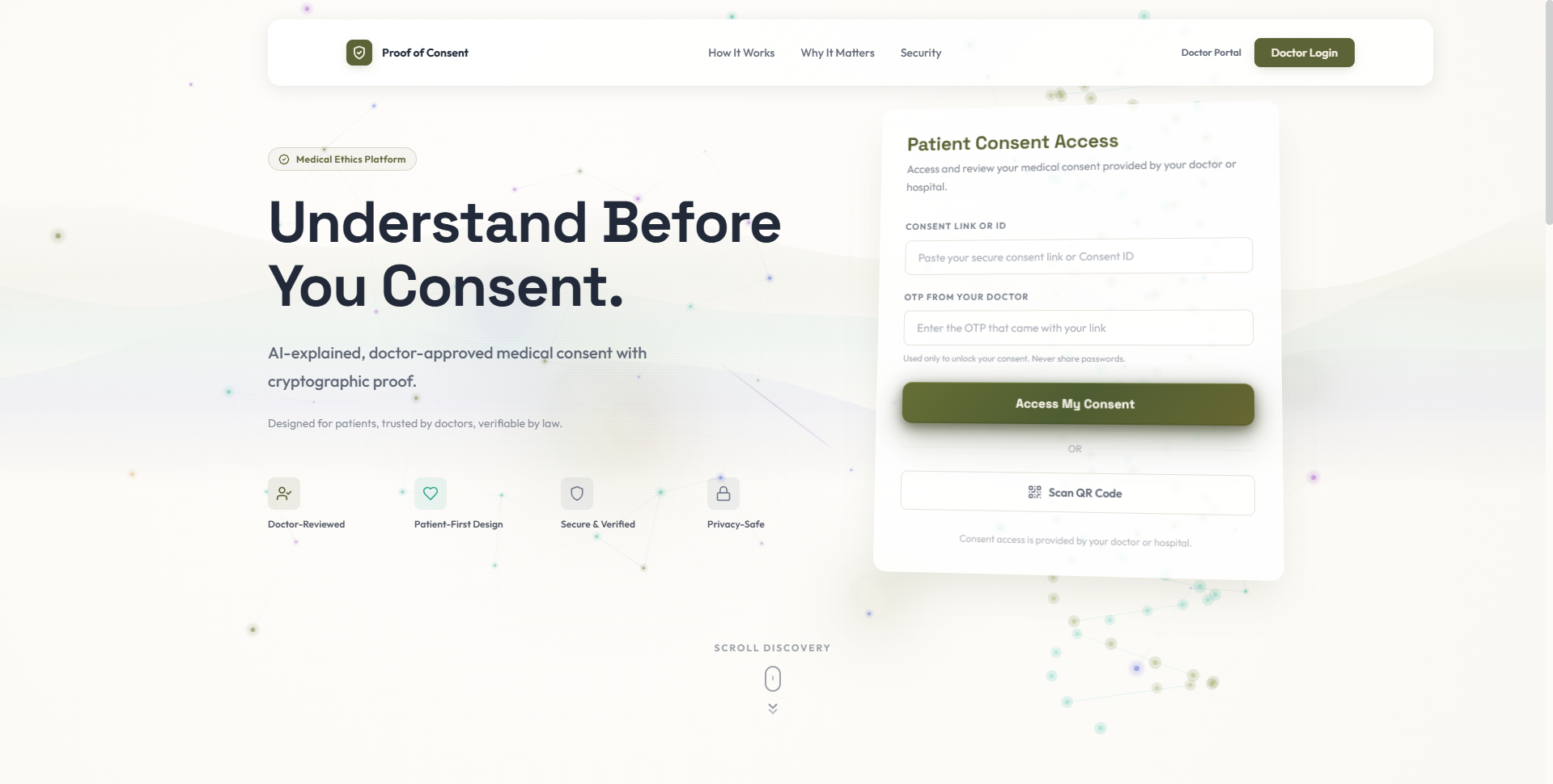
Landing Page
-
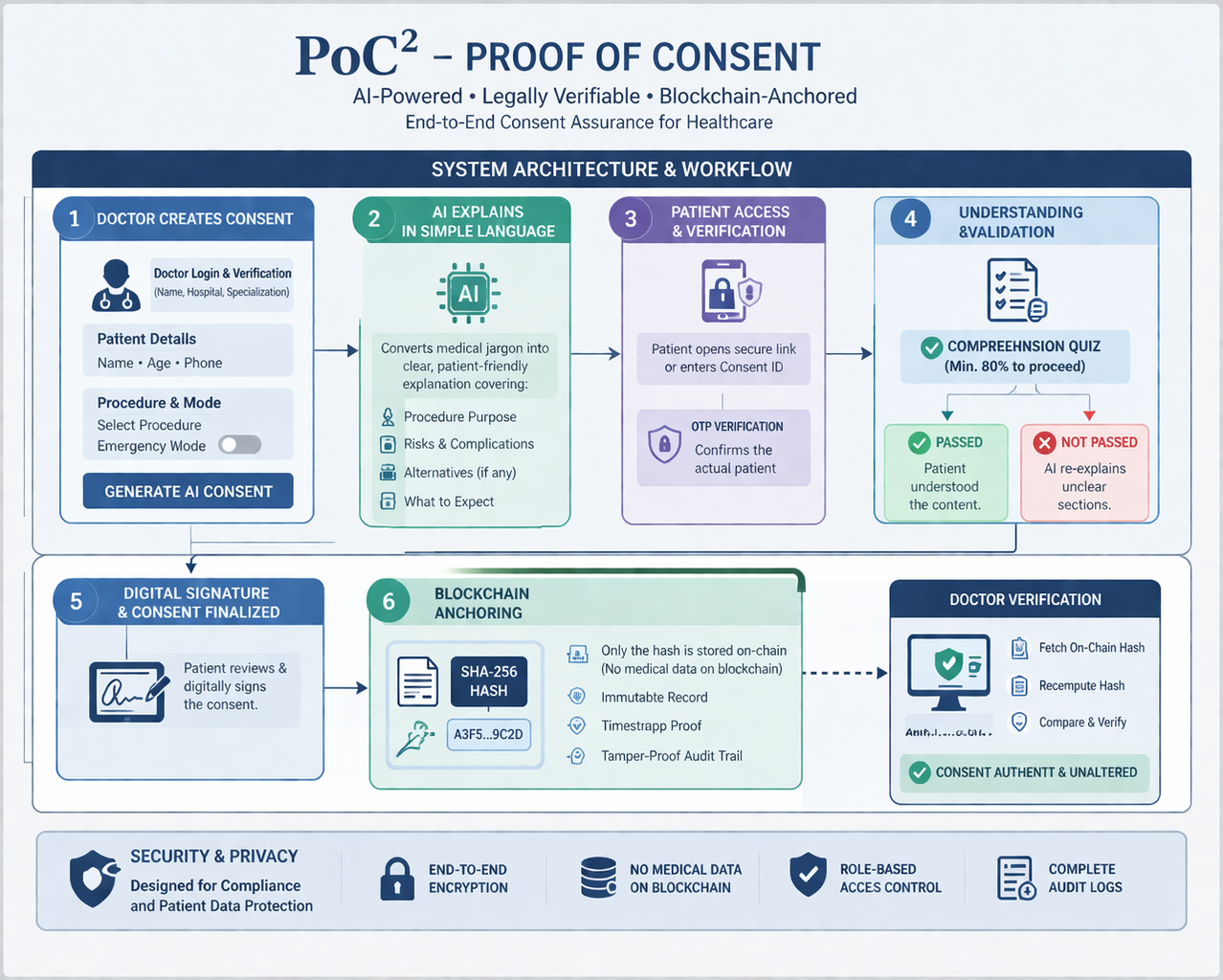
Architecture
Proof of Consent (PoC²)
Inspiration
One simple question inspired this project:
"Did the patient truly understand the consent form before signing?"
In hospitals today, consent often becomes a rushed signature on a complex form filled with medical jargon. Patients may feel pressure. Doctors remain legally vulnerable. And when disputes arise, courts ask:
Was the patient truly informed?
We realized that the real problem is not documentation — it is proof of understanding.
That is how Proof of Consent (PoC²) was born. We wanted to transform consent from a paper event into a verifiable process.
What it does
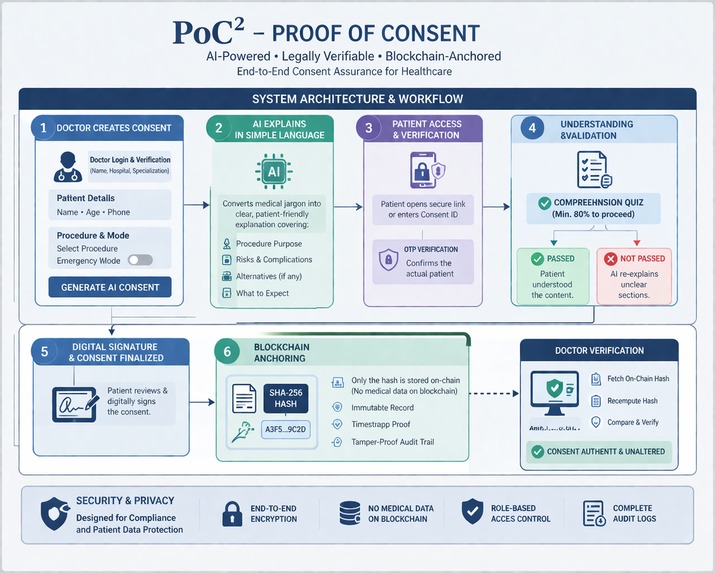
PoC² is an AI-assisted, blockchain-anchored medico-legal consent system that ensures consent is clearly explained, actively understood, authenticated, digitally signed, and tamper-proof.
Instead of assuming understanding, we measure it. The patient must answer key procedure-related questions. We calculate comprehension using:
\( \text{Understanding Score} = \frac{\text{Correct Answers}}{\text{Total Questions}} \times 100 \)
The system only proceeds if:
$$ \text{Understanding} \geq 80\% $$
If the score is lower, the AI re-explains misunderstood sections in simpler language and the patient retakes the quiz. This creates measurable proof that the patient actively engaged with the information.
How we built it
Step 1: Doctor Creates Consent
The doctor logs in, enters patient details and procedure information, and the system generates a unique Consent ID with a secure link.
Step 2: Patient Identity Verification
The patient opens the link and verifies their identity via OTP to prevent impersonation.
Step 3: AI Explanation
Instead of medical jargon, AI explains what the procedure is, why it's needed, the risks and benefits, and alternatives. AI assists understanding — it does not replace human responsibility.
Step 4: Understanding Assessment
The patient answers critical questions. If below the threshold, AI re-explains and the patient retries until comprehension is demonstrated. Consent becomes a learning-confirmed process, not a blind signature.
Step 5: Digital Signature + Blockchain Integrity
Once signed, the formatted consent packet is hashed:
$$ H = \text{SHA256}(\text{Consent Packet}) $$
Only the cryptographic hash is stored on blockchain — no medical data is placed on-chain. If anyone modifies the consent later:
$$ \text{SHA256}(\text{Modified Packet}) \neq H $$
This instantly proves tampering. Blockchain ensures timestamp integrity, non-repudiation, and immutable proof.
Tech Stack:
- Frontend: React, Tailwind CSS
- Backend: Node.js, Express
- Database: MongoDB
- Blockchain: Solidity, Hardhat
- Web3: Ethers.js, MetaMask
- Cryptography: SHA-256
Challenges we ran into
Legal Responsibility
AI cannot legally certify understanding. We redesigned the system so human responses prove comprehension, while AI only assists.
Privacy vs Blockchain
Healthcare data cannot live on a public chain. We solved this by anchoring only cryptographic hashes, keeping all medical information off-chain.
Identity & Coercion Risks
We added OTP verification and structured flow to reduce proxy consent risks and ensure the actual patient is giving consent.
Technical Determinism
Ensuring identical hashes required strict JSON normalization and timestamp formatting:
const hash = sha256(JSON.stringify(sortedConsentObject));
Even small changes in key order can produce different hashes. Precision matters in cryptographic systems.
Accomplishments that we're proud of
✔ Measurable understanding — We created a quantified, verifiable method to prove patient comprehension, not just documentation
✔ Ethical AI integration — AI assists without replacing human judgment or legal responsibility
✔ Privacy-preserving blockchain — Only hashes on-chain, full medical privacy maintained off-chain
✔ Tamper-proof integrity — Immutable cryptographic proof that protects both patients and healthcare providers
✔ Legal defensibility — Structured evidence trail that can withstand medico-legal scrutiny
This is not just a digital consent form. It is Medico-Legal Consent Assurance Infrastructure.
What we learned
Building PoC² taught us that:
Technology must respect law and ethics — Healthcare innovation requires careful consideration of legal frameworks and ethical boundaries
AI should assist, not replace — The best use of AI in healthcare is augmenting human decision-making, not substituting it
Blockchain is for integrity, not storage — The power of blockchain lies in verification and immutability, not as a database for sensitive information
Legal defensibility requires structure — Code alone isn't enough; the entire process must be designed with legal standards in mind
Deterministic systems are crucial — In cryptographic applications, even minor inconsistencies in data formatting can break the entire verification chain
What's next for PoC² - Proof of Consent
Multi-language support to serve diverse patient populations and ensure understanding across language barriers
EHR system integration for seamless adoption in existing clinical workflows
Advanced analytics dashboard to help hospitals identify common comprehension gaps and improve patient education
Witness and family member verification for complex or high-risk procedures
Regulatory compliance certifications across different healthcare jurisdictions (HIPAA, GDPR, etc.)
Mobile app development for easier patient access and improved user experience
Telemedicine integration to support remote consent processes
Final Thought
Consent should not be a checkbox. It should be a transparent, ethical, and verifiable process.
With AI assisting understanding and blockchain protecting integrity, Proof of Consent ensures that when someone asks:
"Was the patient truly informed?"
There will not be doubt. There will be proof.
Built With
- ai
- blockchain
- css
- ethers.js
- express.js
- hardhat
- html
- metamask
- node.js
- react
- sha-256
- solidity
- tailwind
- web3


Log in or sign up for Devpost to join the conversation.