-
-
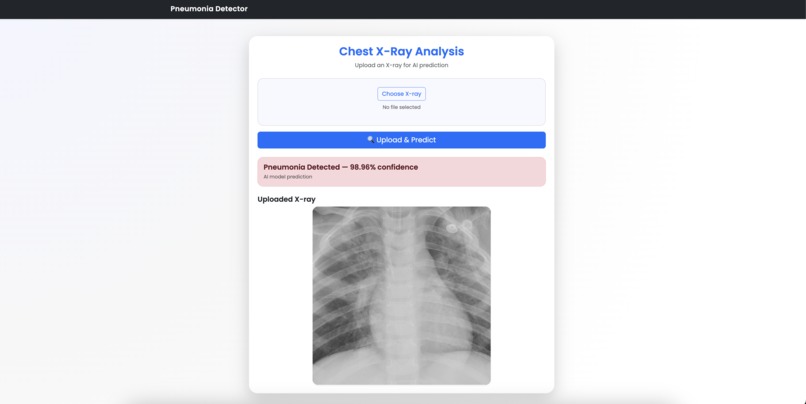
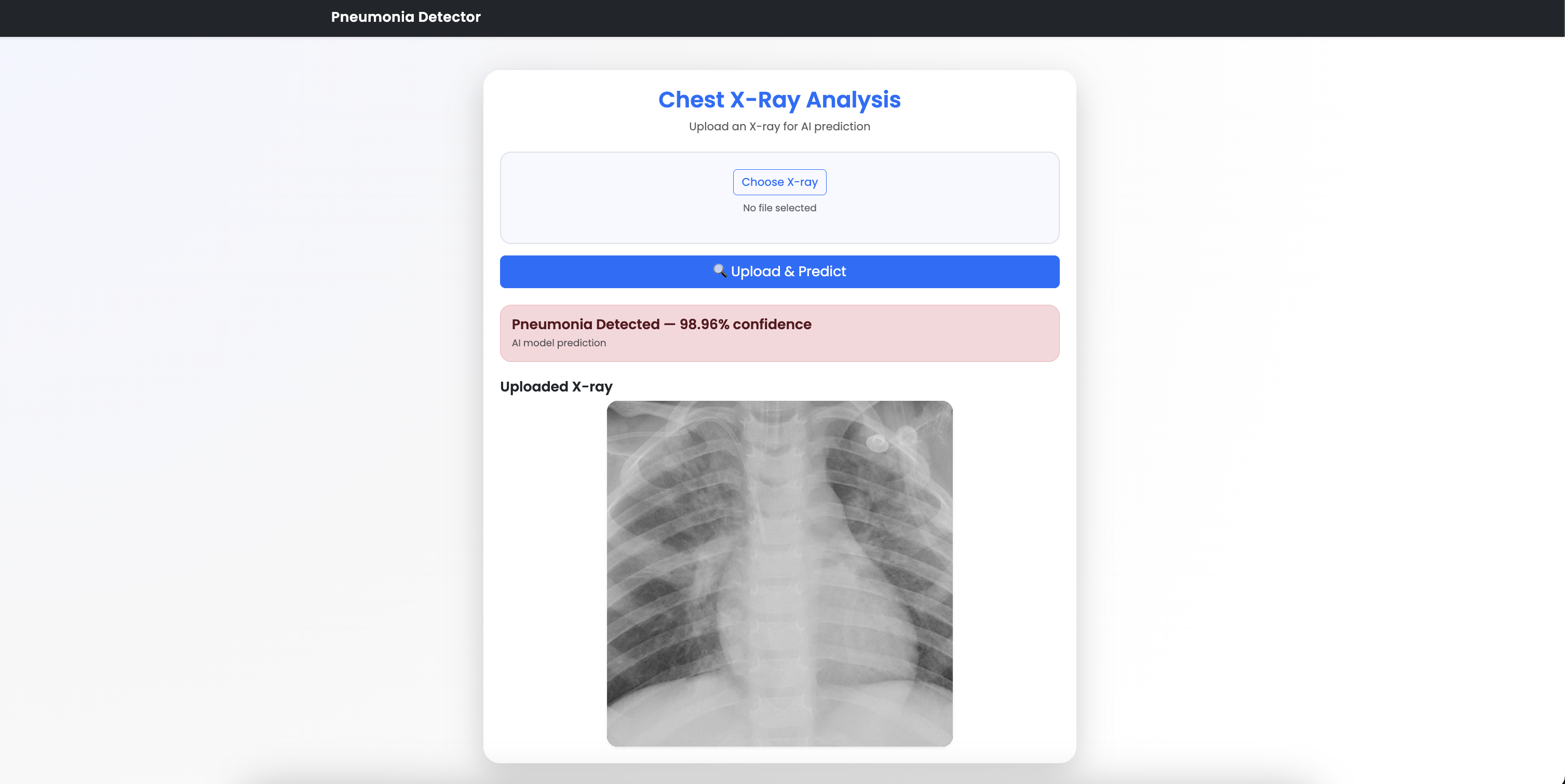
Pneumonia
-
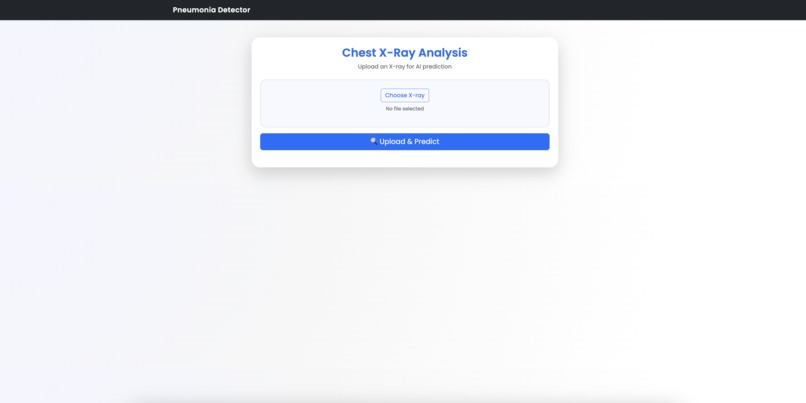
Demo
-
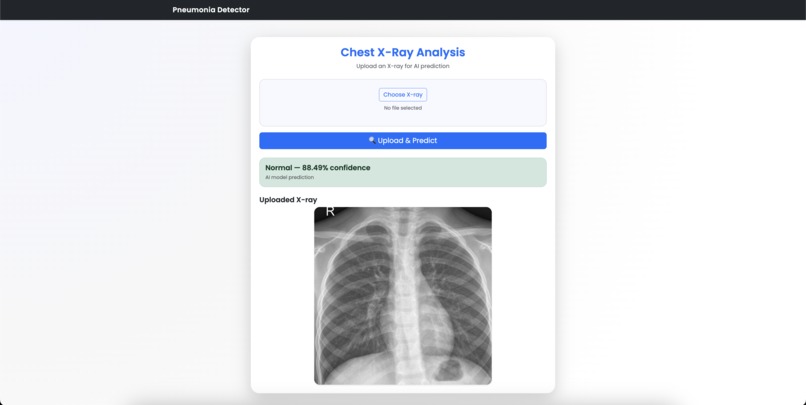
Normal
Inspiration
Pneumonia causes millions of infections every year, yet diagnosis still depends heavily on manual X-ray interpretation. I wanted to build an accessible tool that shows how AI can support, not replace, medical professionals, especially in settings where radiologists are overworked or unavailable. The idea was to create a simple, educational prototype that anyone can try.
What it does
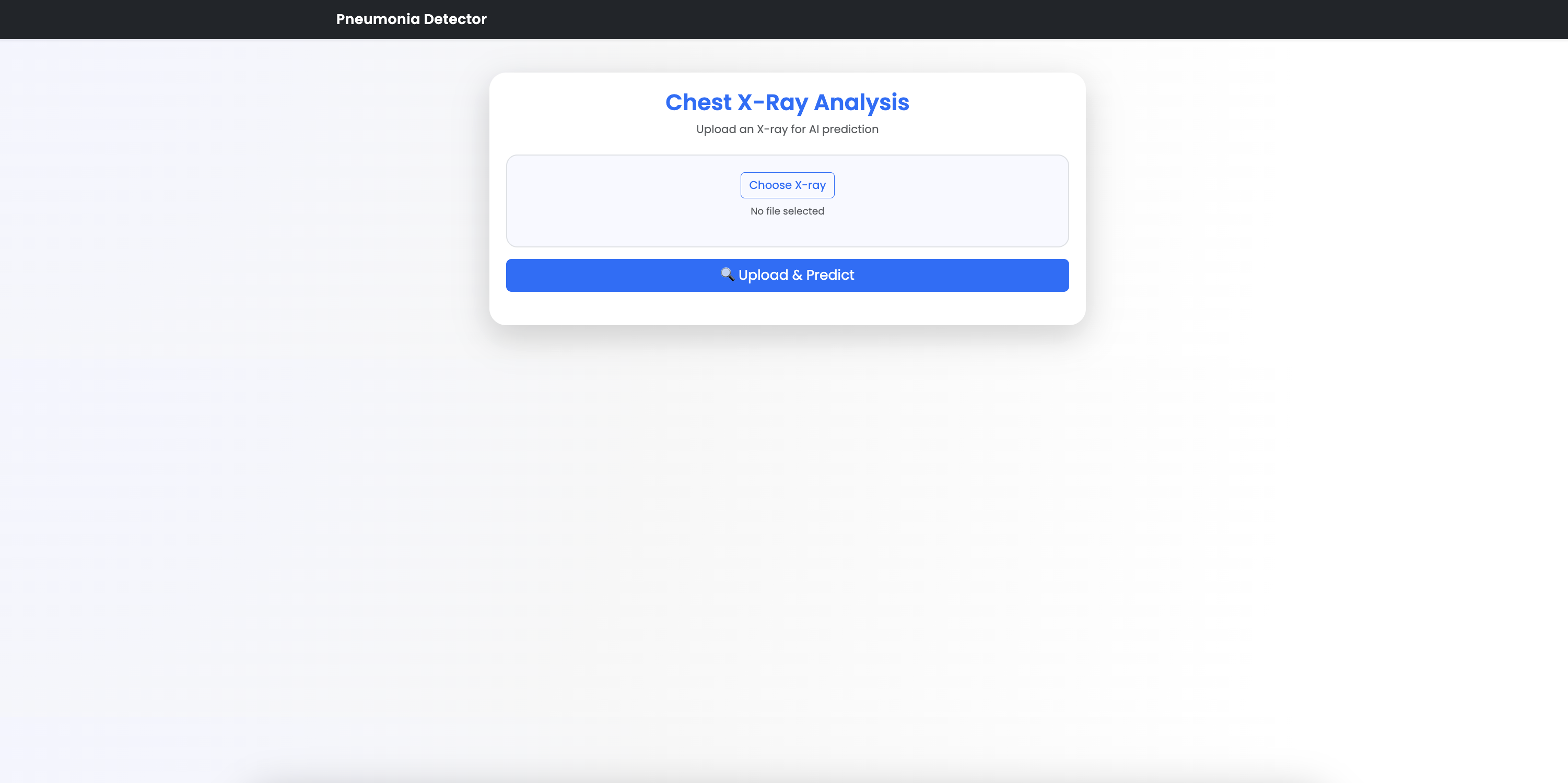
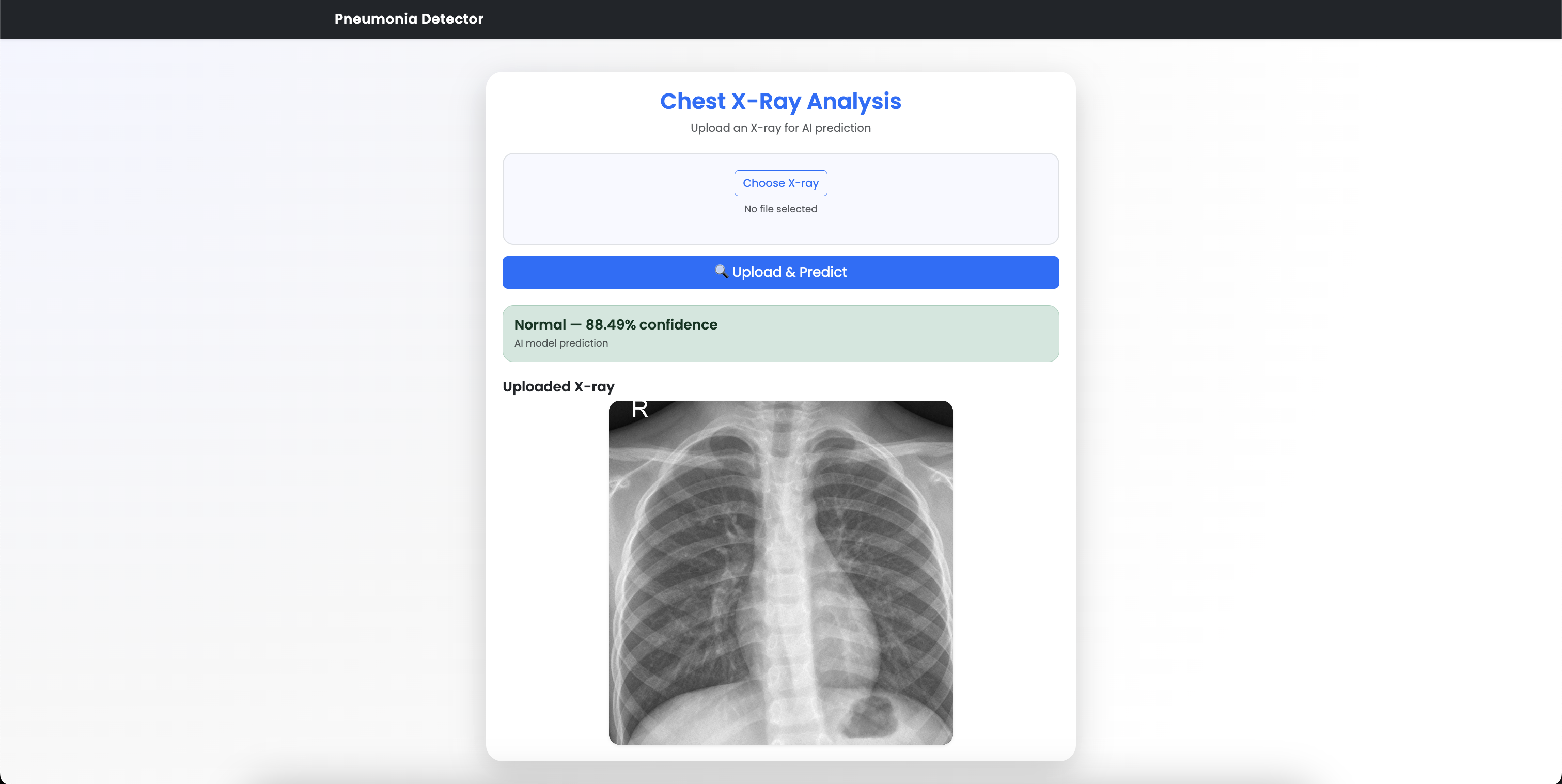
The web app allows users to upload a chest X-ray and instantly receive:
- A prediction: Normal or Pneumonia
- A confidence score
- A preview of the uploaded image
The model performs binary classification:
[ \hat{y} \in {0,1} ]
And the confidence score is computed as:
[ \text{Confidence} = \max(p, 1 - p) \times 100\% ]
How we built it
- Used the Kaggle Chest X-Ray Pneumonia dataset
- Trained a lightweight CNN in TensorFlow/Keras
- Preprocessed images (150×150, scaling, augmentation)
- Achieved ~94% training accuracy and ~80% test accuracy
- Integrated the model into a Flask web app
- Designed a clean UI using Bootstrap 5
Challenges we ran into
- Matching preprocessing between training and Flask
- Fixing environment issues (TensorFlow + macOS ARM conflicts)
- Handling distorted X-ray previews in the UI
- Dealing with dataset imbalance (more pneumonia images)
Accomplishments that we're proud of
- Built a complete end-to-end ML + web system
- Achieved reliable, fast predictions
- Designed a simple, intuitive interface
- Fully documented the project with a clean GitHub repo
What we learned
- How to train and deploy CNNs
- The importance of consistent preprocessing
- Flask development for ML inference
- Debugging full-stack ML applications
- UX considerations for medical tools
What's next for Pneumonia X-Ray Detector
- Cloud deployment (Render, AWS, DigitalOcean)
- Adding Grad-CAM heatmaps for explainability
- Training with more diverse datasets
- Multi-disease classification expansion
- Further UI/UX and accessibility improvements


Log in or sign up for Devpost to join the conversation.