-
-
Page 1
-
Page 3
-
Page 4
-
Page 2
Inspiration
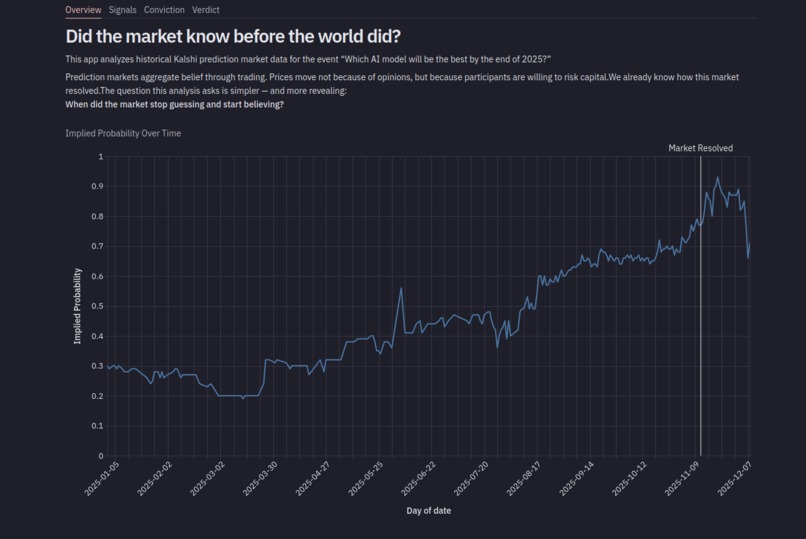
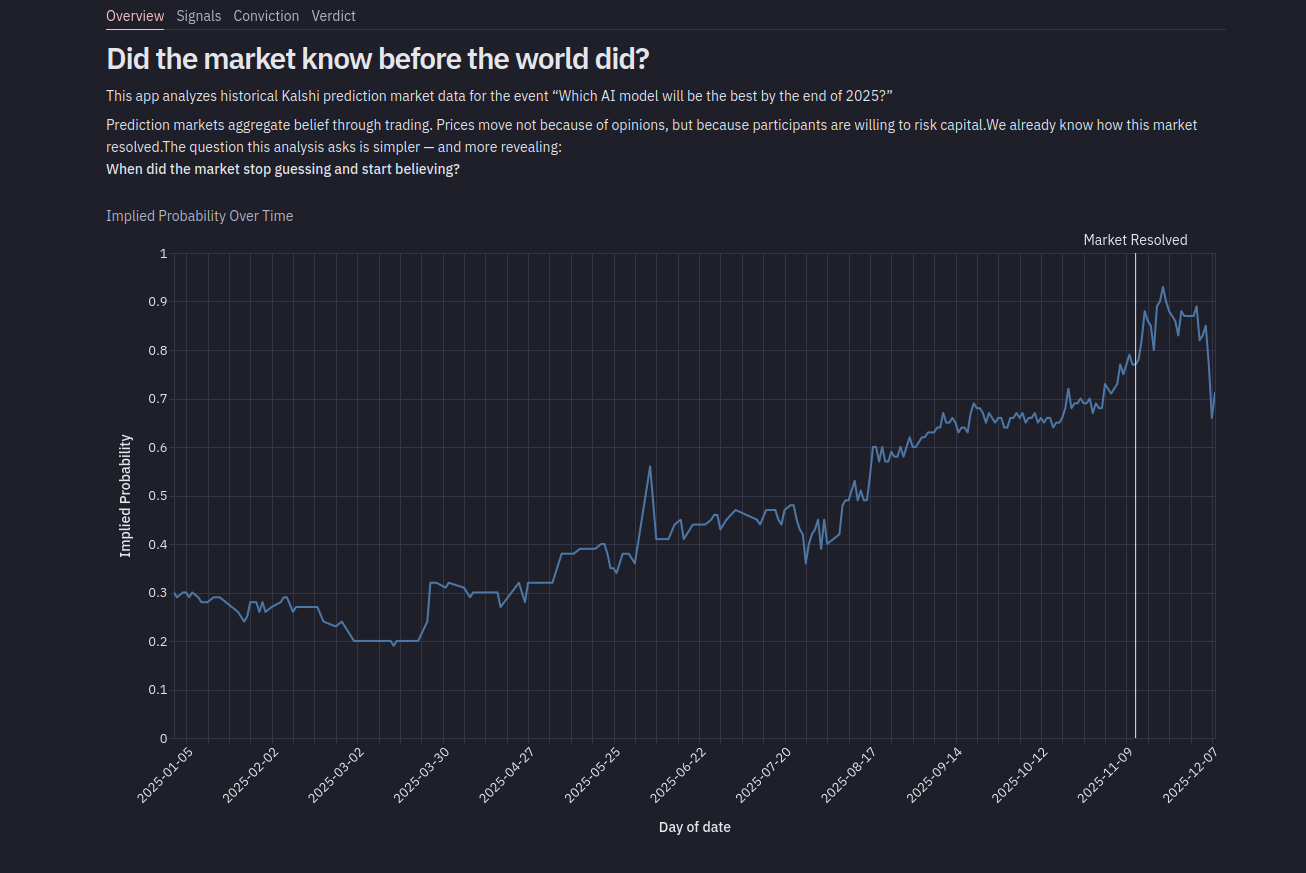
We were inspired by the concept of the "wisdom of the crowds" and wanted to know if prediction markets could identify the winning AI model before the general consensus formed. Instead of just analyzing data, we wanted to find the specific moment the market stopped guessing and started believing. We asked: Did the market know before the world did?
What it does
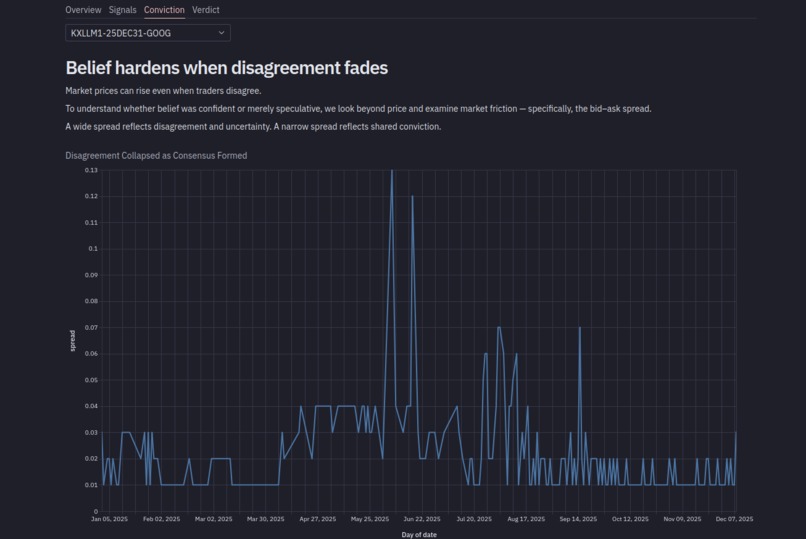
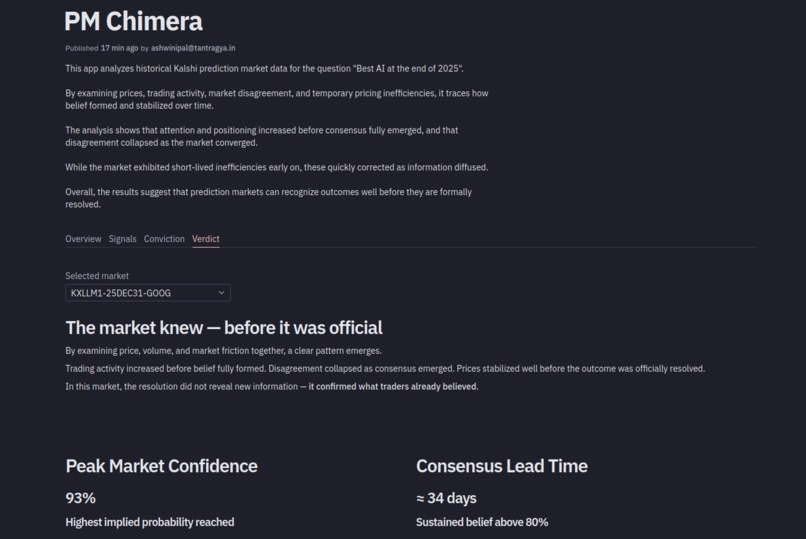
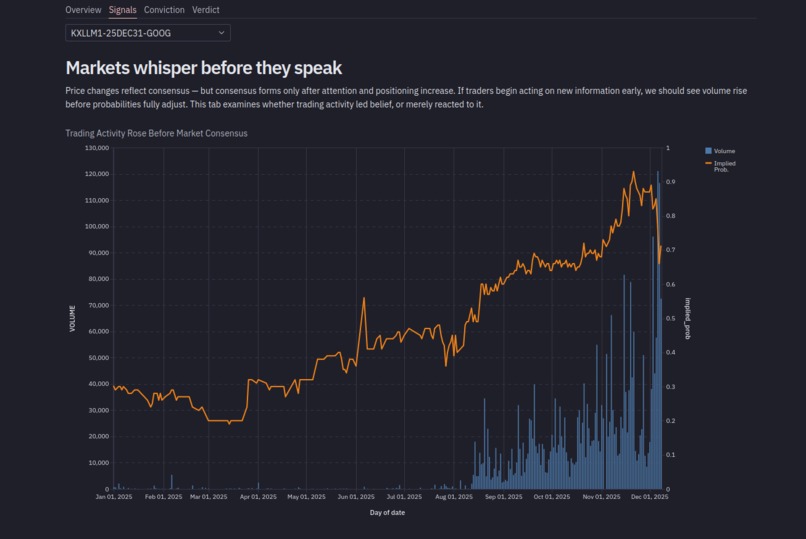
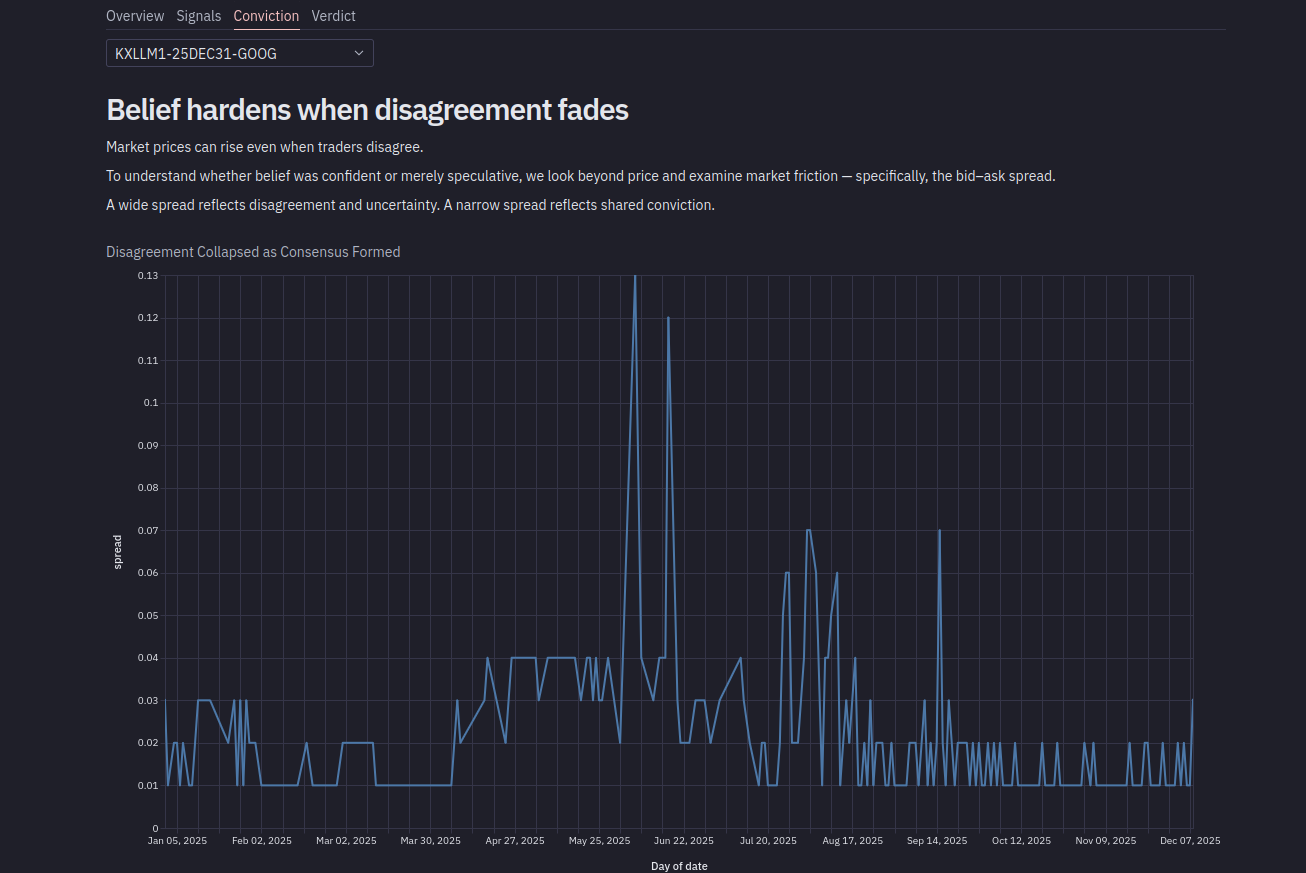
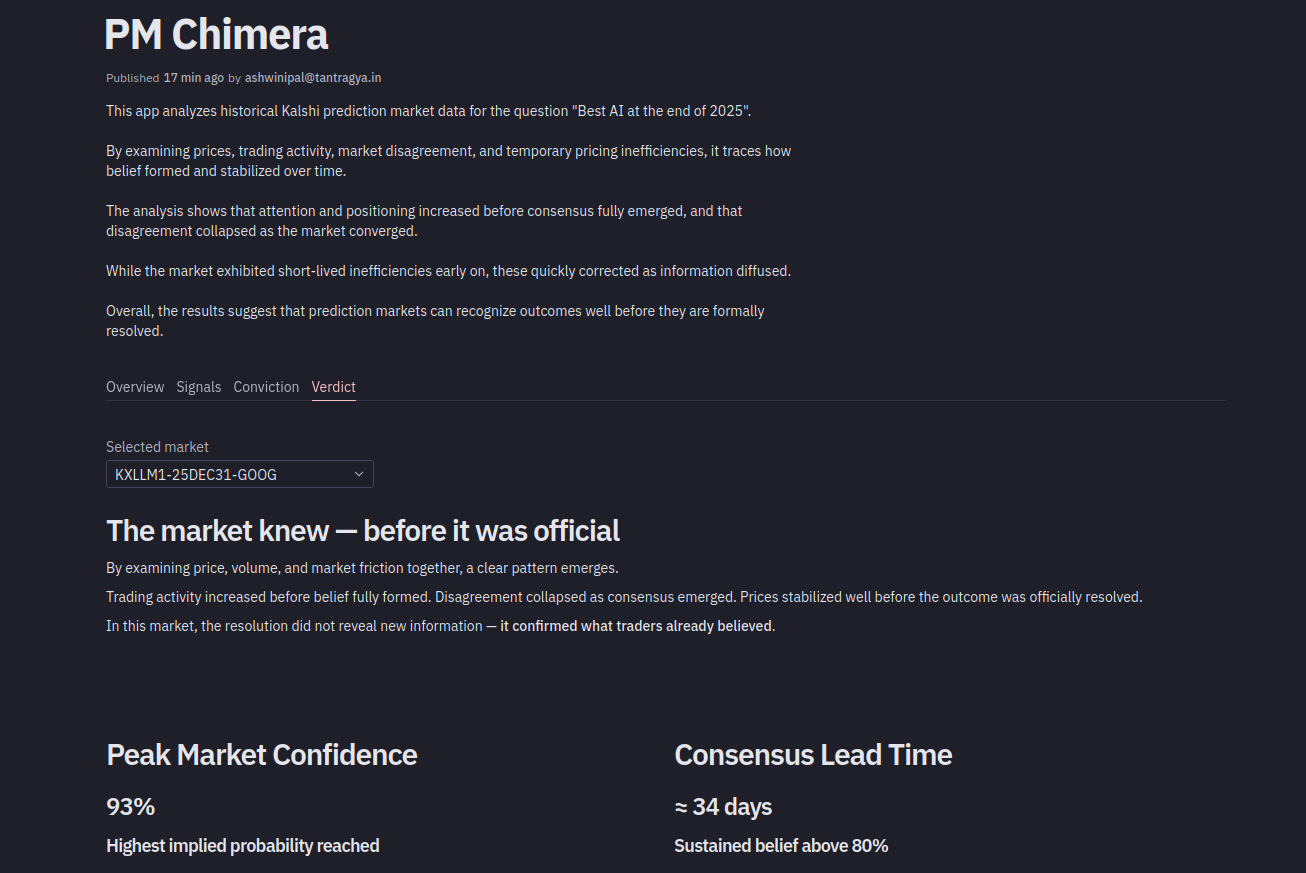
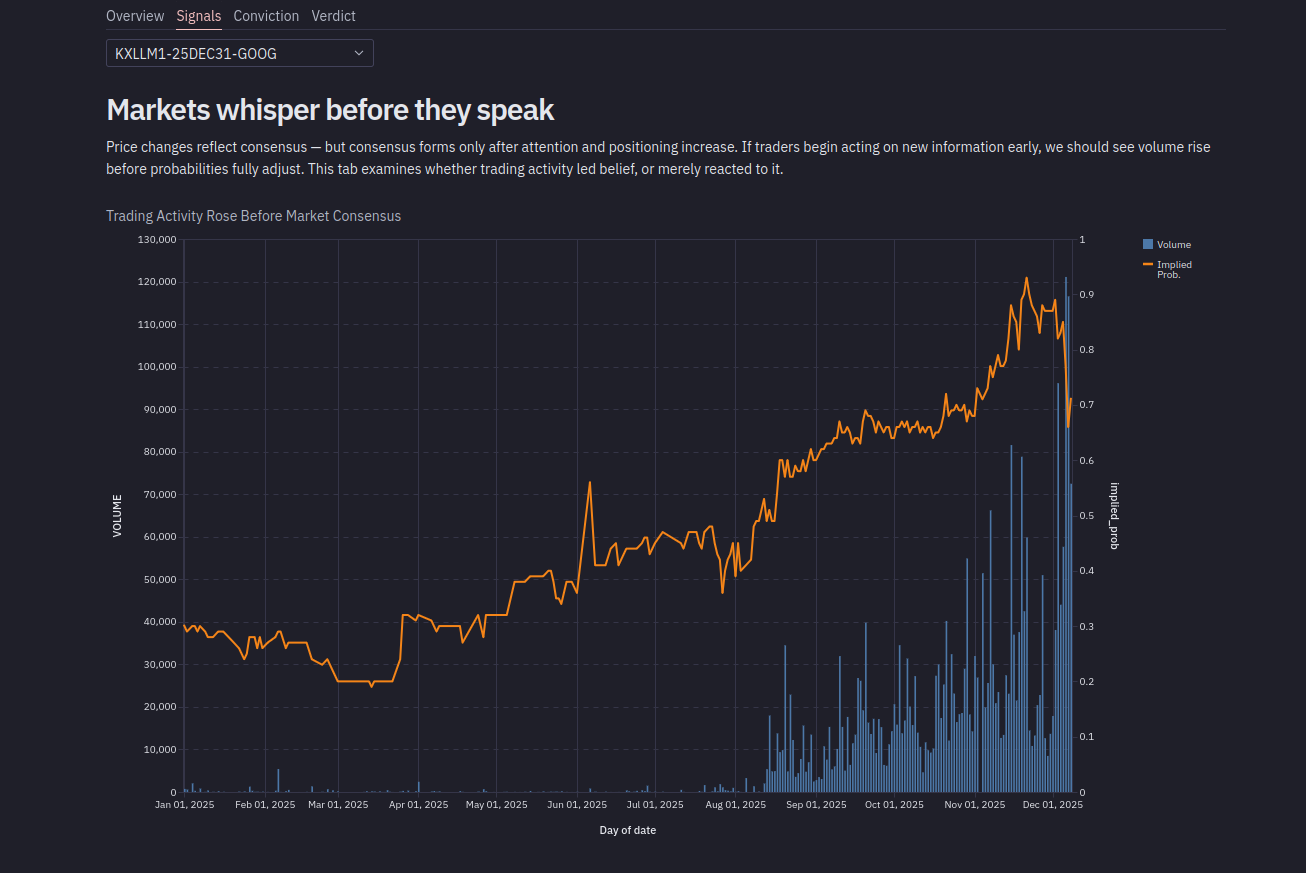
PM Chimera is an interactive data story built on Hex that performs a "retrospective autopsy" on market efficiency. It analyzes historical Kalshi prediction market data for the "Best AI of 2025" event. Rather than a standard dashboard, it guides users through four narrative acts to reveal when trading volume signaled a shift, how the bid-ask spread proved conviction, and exactly when the market settled on Google (GOOG) as the winner—long before the official resolution date.
How we built it
We built the app using Hex to leverage its capabilities in combining Python code, visualizations, and narrative text. We used Pandas to clean and normalize the raw CSV dataset, filtering for daily granularity to preserve the critical lead-lag effects in the data. The architecture relies on a global input parameter (selected_market) that filters a canonical dataframe (viz_df) across four distinct tabs: Overview, Signals, Conviction, and Verdict.
Challenges we ran into
Our biggest challenge was narrative. Initially, the project was technically sound but "emotionally flat"—it read like a data report rather than a discovery. We had to shift from being descriptive to being opinionated, specifically avoiding the trap of simply explaining our Pandas and JSON logic. We also had to rigorously define "consensus" to ensure our claims about the market "knowing" early were statistically defensible and not just noise.
Accomplishments that we're proud of
We are most proud of our Verdict tab. Our analysis successfully proved that the market stabilized at a 93% peak probability roughly 34 days before the official resolution. We demonstrated that trading volume (attention) actually spiked before prices fully repriced, and that bid-ask spreads tightened significantly during the final consensus window. We managed to reframe the project from "analyzing predictions" to showing how "the market didn't predict the winner—it noticed them first."
What we learned
We learned that information diffusion in markets is visible in microstructure—specifically that disagreement (spread) collapses before prices stabilize. We also learned that for hackathon submissions, narrative restraint is a strength; showing one clear, annotated chart often outperforms a clutter of confusing visualizations.
What's next for PM Chimera
We plan to expand the analysis to other prediction markets to test if this "informed positioning" pattern holds true across different sectors. We also aim to implement dynamic filtering to allow users to switch between competitors (like OpenAI vs. Meta) in real-time to see how the "Signals" and "Conviction" metrics compare between winners and noise.


Log in or sign up for Devpost to join the conversation.