Inspiration
I saw first‑hand how much time teams waste on status meetings, risk checks, and manual plan updates. I wanted to build a system that treats AI as a proactive partner—automating routine PM tasks so real people can focus on strategy and execution.
What I Learned
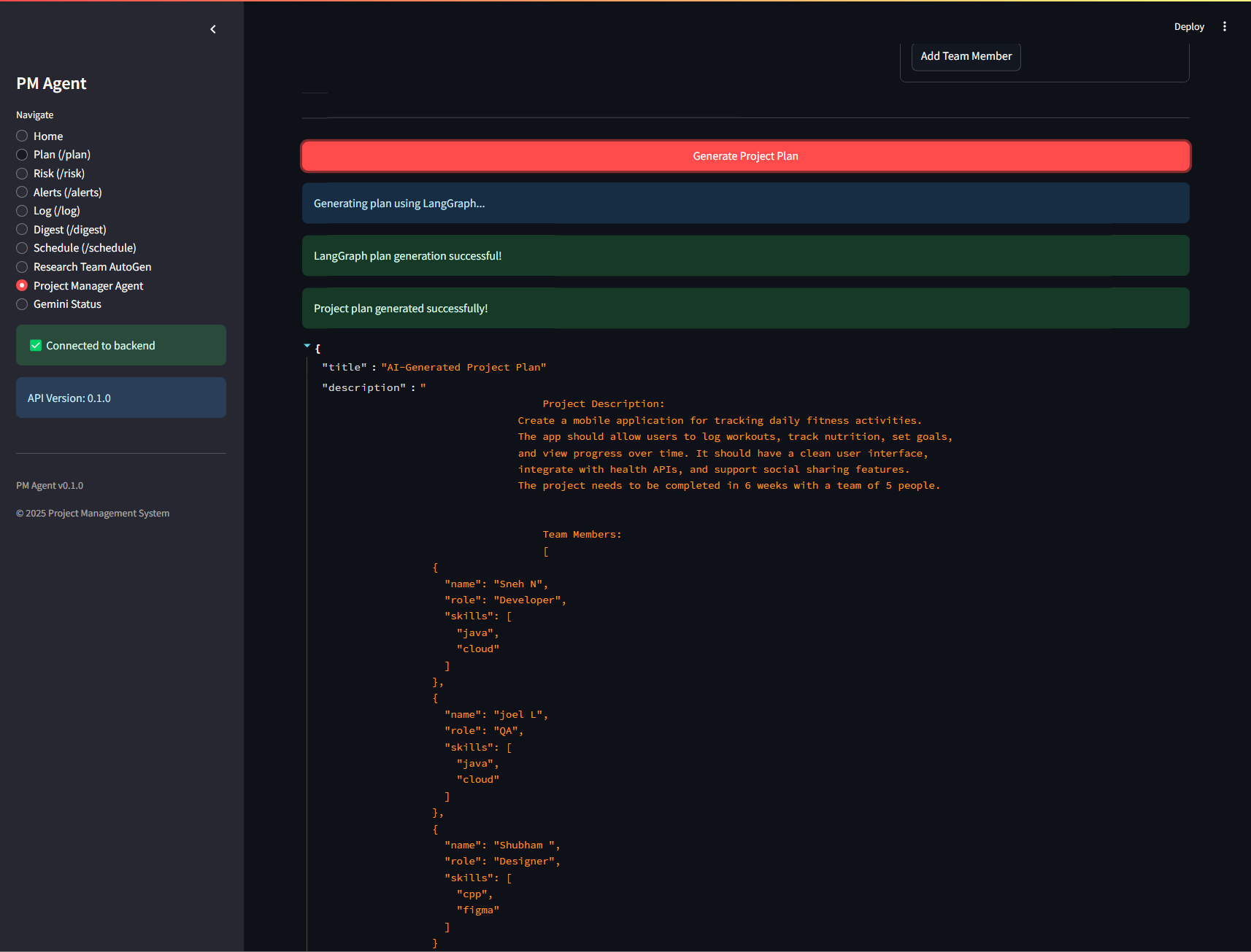
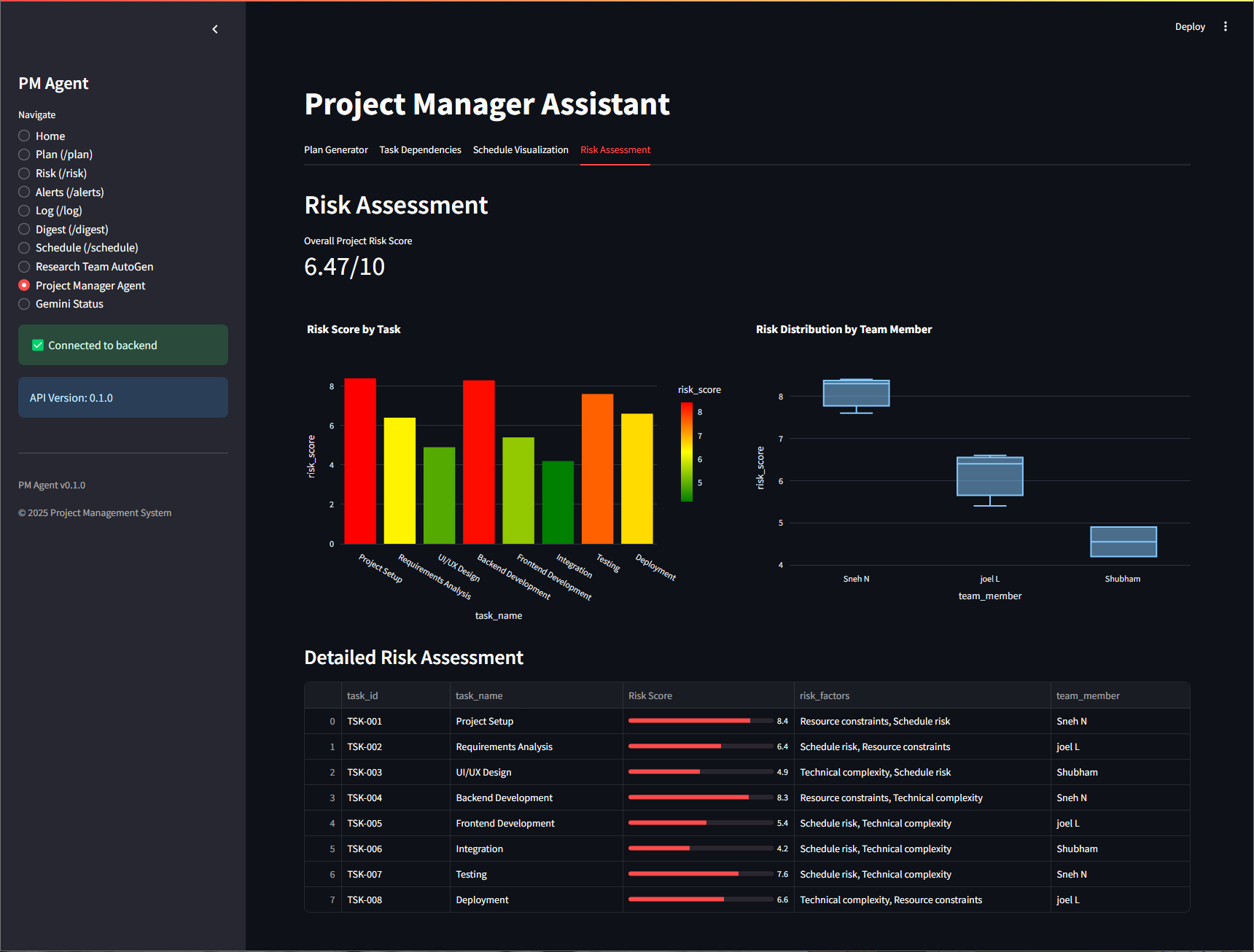
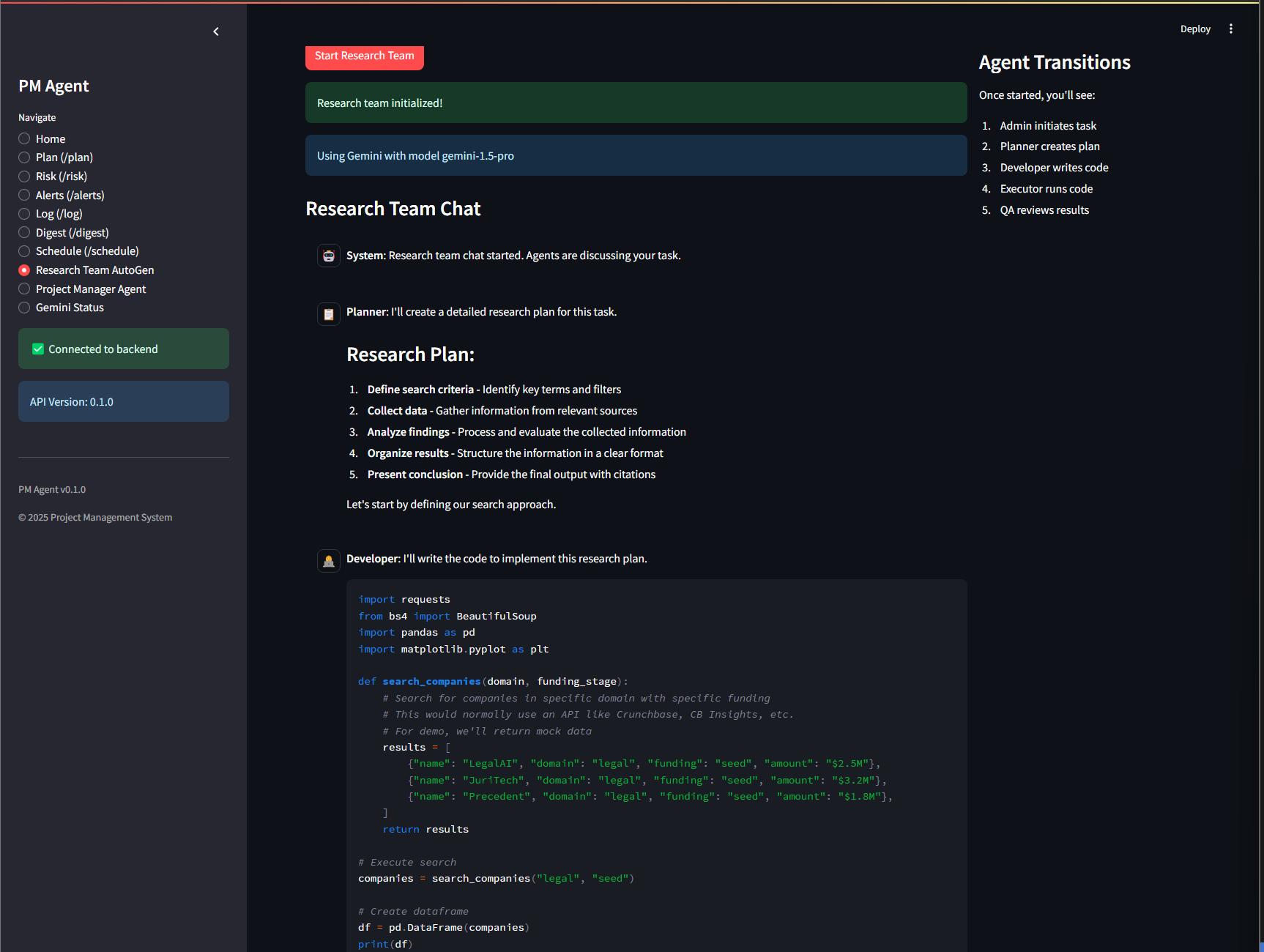
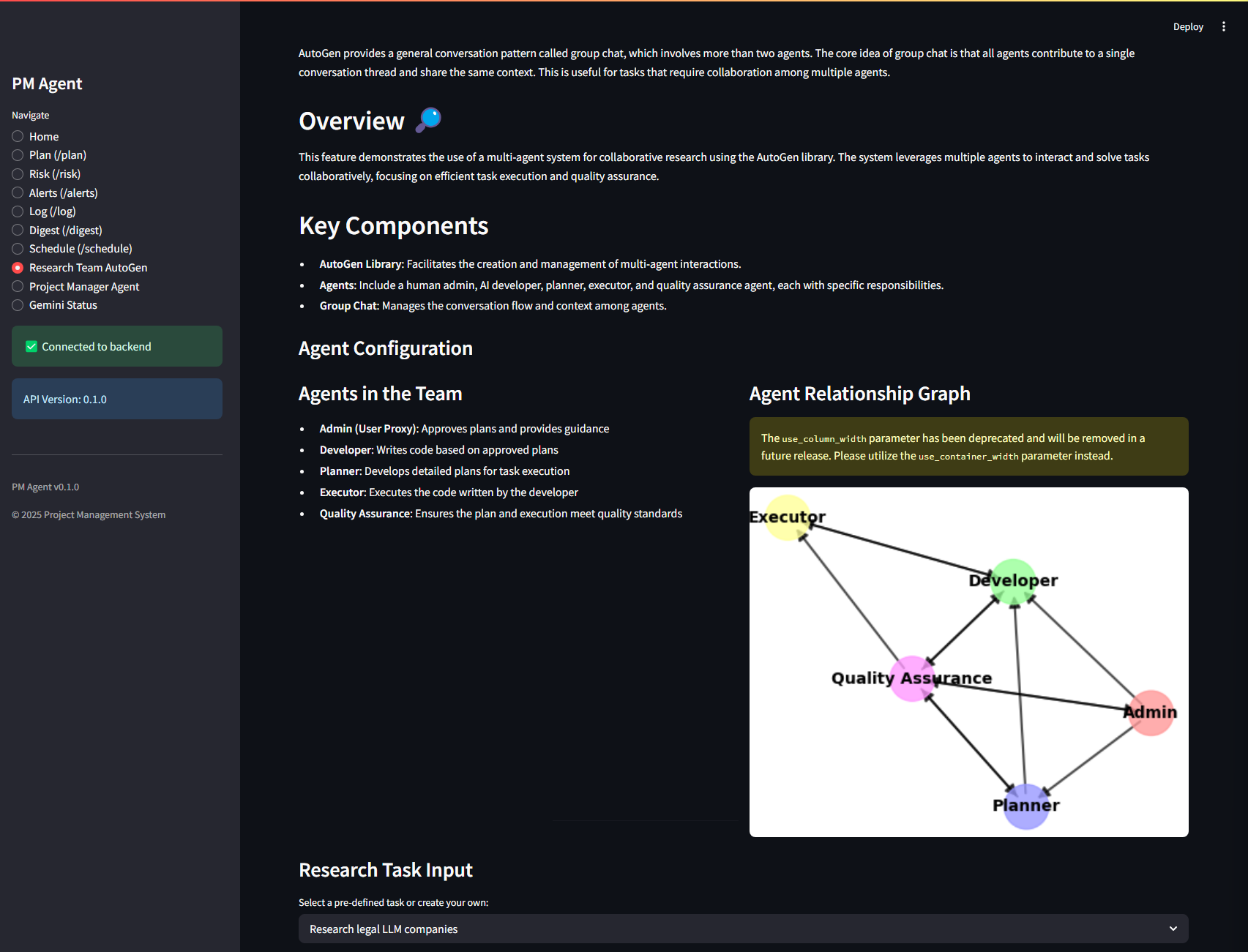
- How to orchestrate multiple LLM‑based agents (planning, risk analysis, research) in a single workflow
- Best practices for combining LangChain/LangGraph with Google Gemini and OpenAI APIs
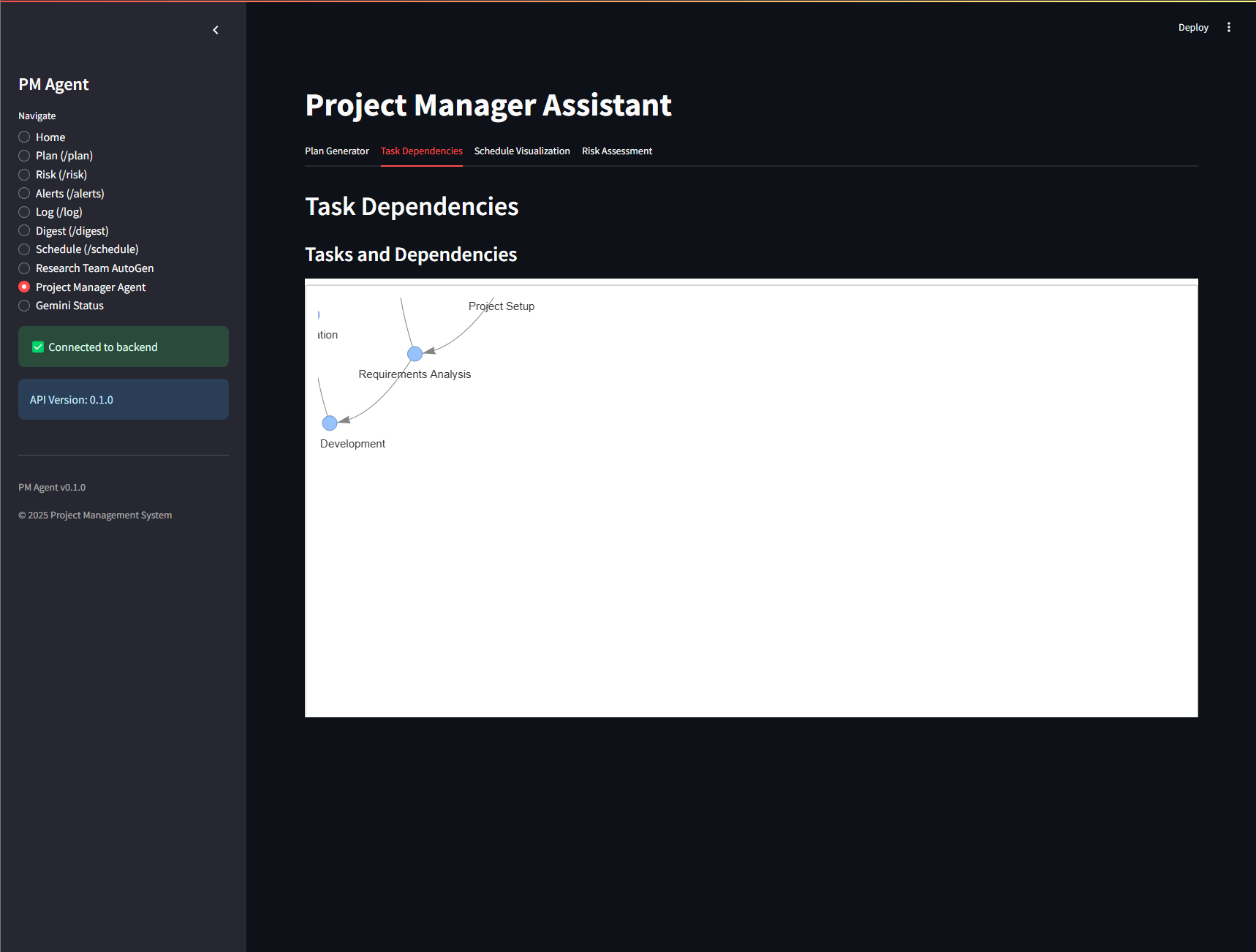
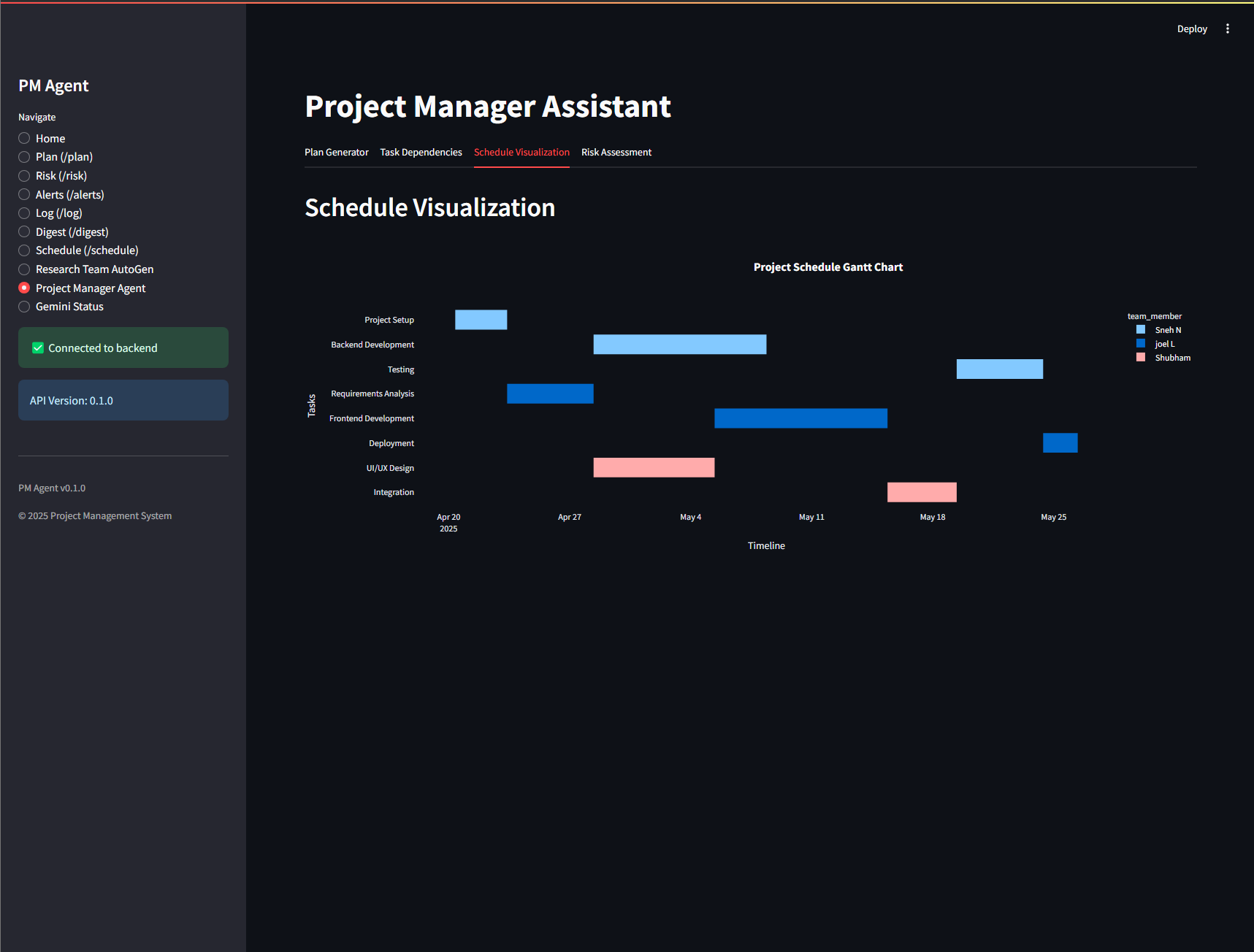
- Techniques for interactive network and Gantt visualizations using Plotly, NetworkX & PyVis
- Strategies for secure code execution in Docker‑backed AutoGen environments
How I Built It
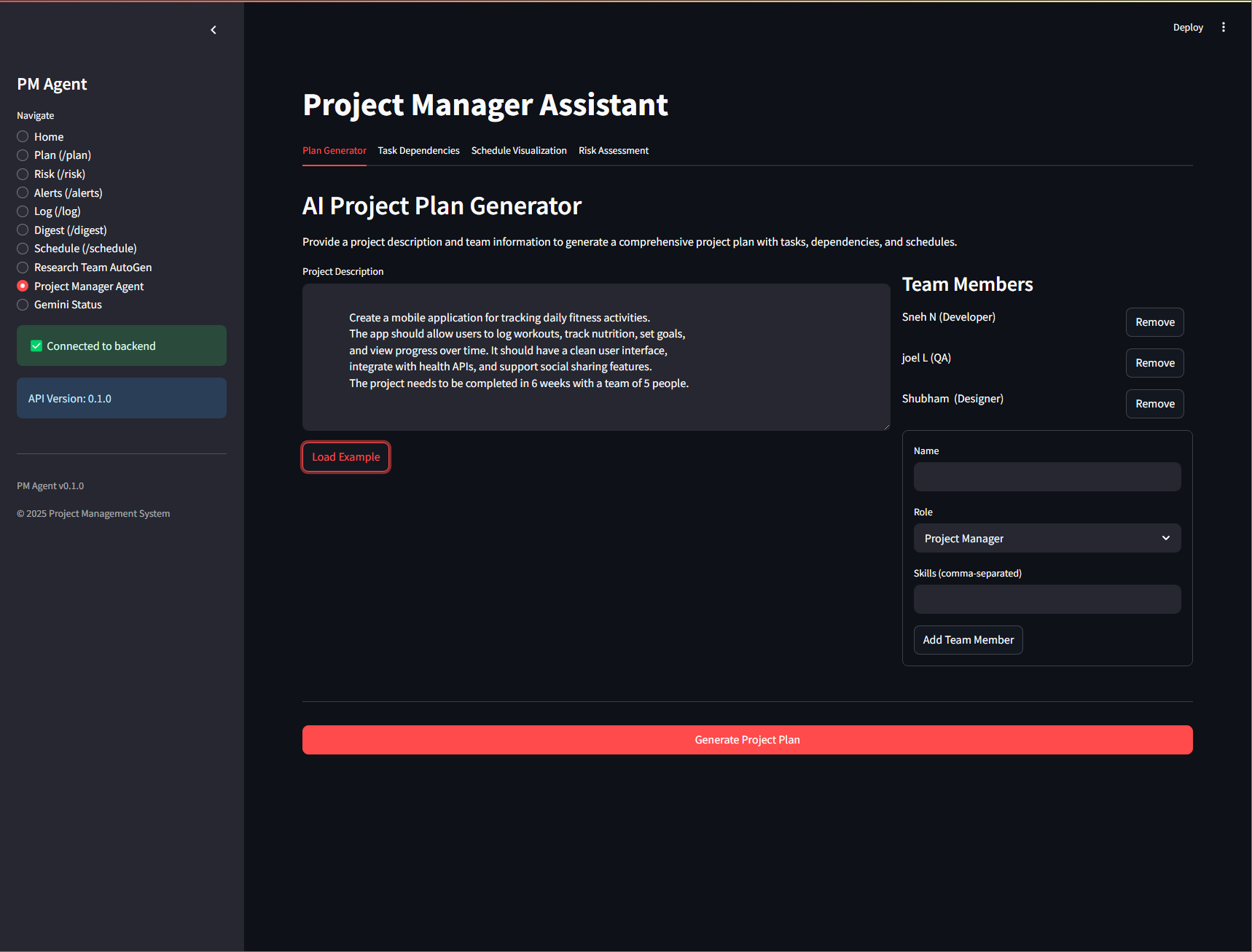
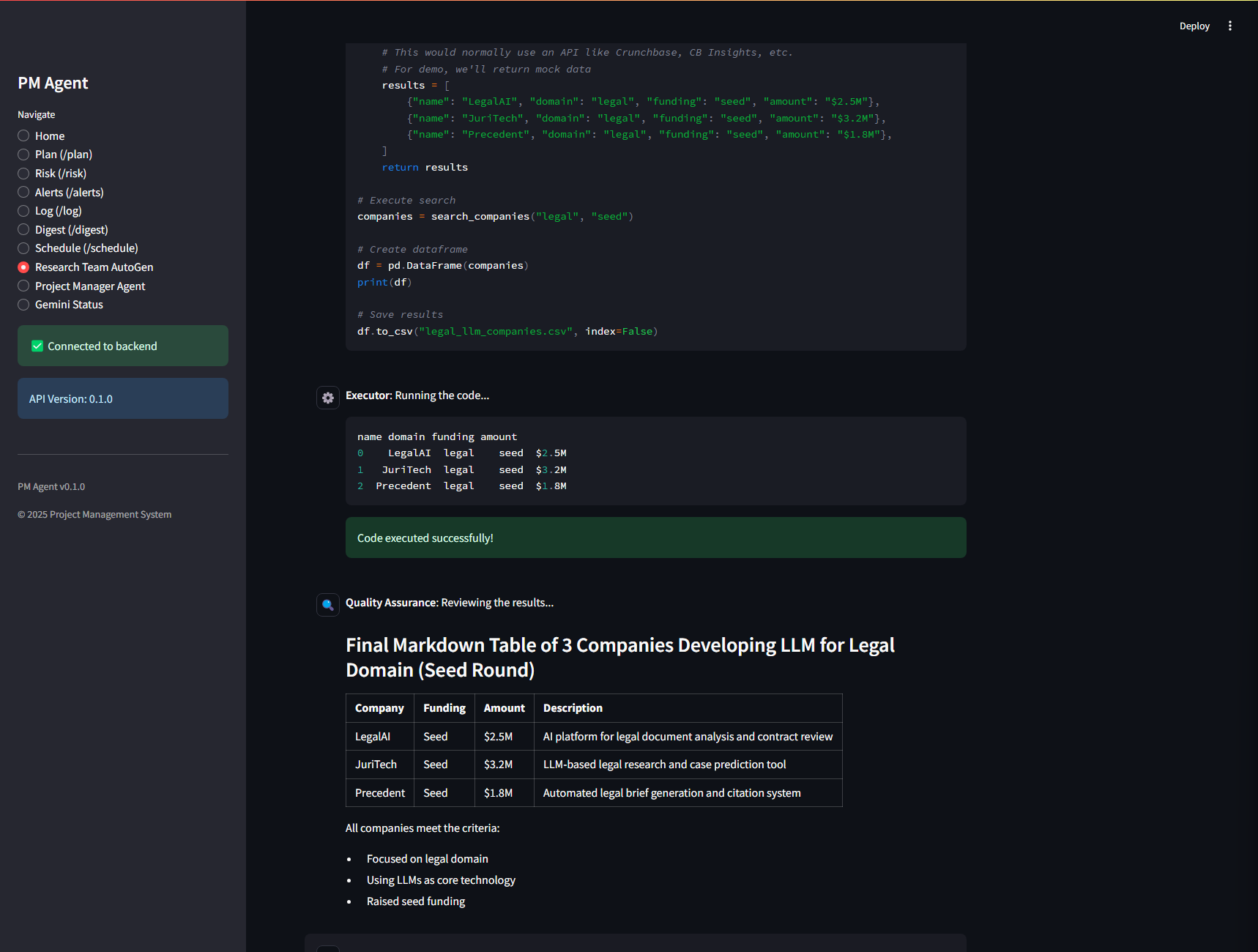
I used FastAPI + Uvicorn for a REST backend, and Streamlit for the frontend. LangChain/LangGraph drives the Project Manager Assistant agent, while PyAutoGen coordinates a research‑team microservice in Docker. Task/dependency data lives in SQLite via SQLModel, and visualizations use Plotly and NetworkX/PyVis. Alerts and reports are generated with SendGrid, Google Calendar API, Pandoc and ReportLab.
Challenges Faced
- Ensuring agents never “hallucinate” dependencies or risks—solved via prompt‐anchoring and iterative validation
- Keeping long project plans in sync across multiple visualizations—addressed by a unified JSON model and event‑sourced logging
- Securely executing user‑defined code in research agents—implemented sandboxed Docker containers with strict resource limits

Log in or sign up for Devpost to join the conversation.