-
-
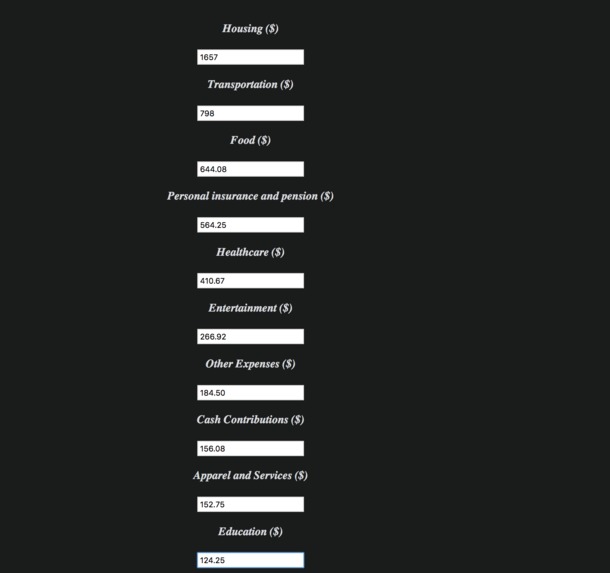
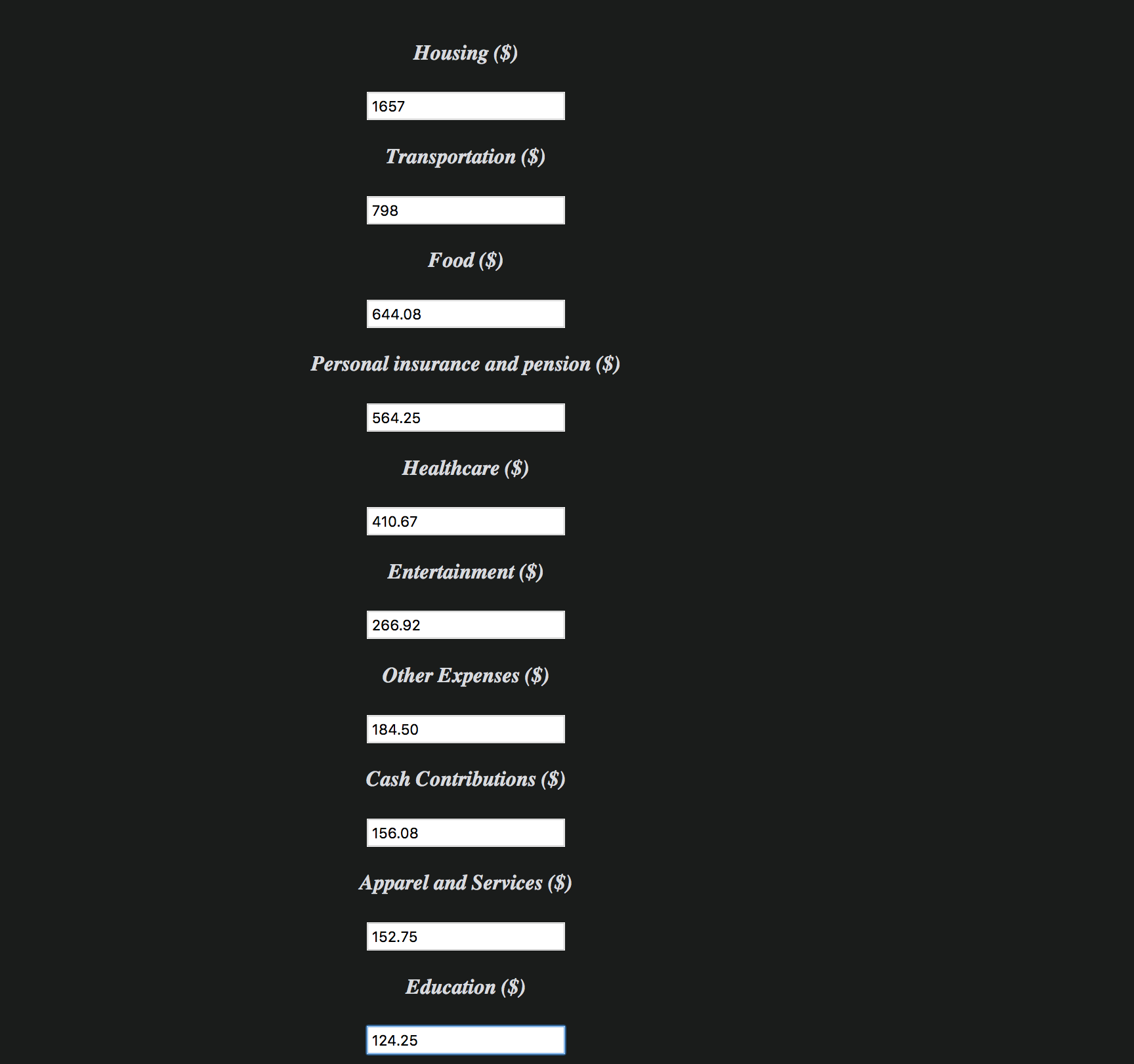
Details regarding monthly expenses are being entered in.
-
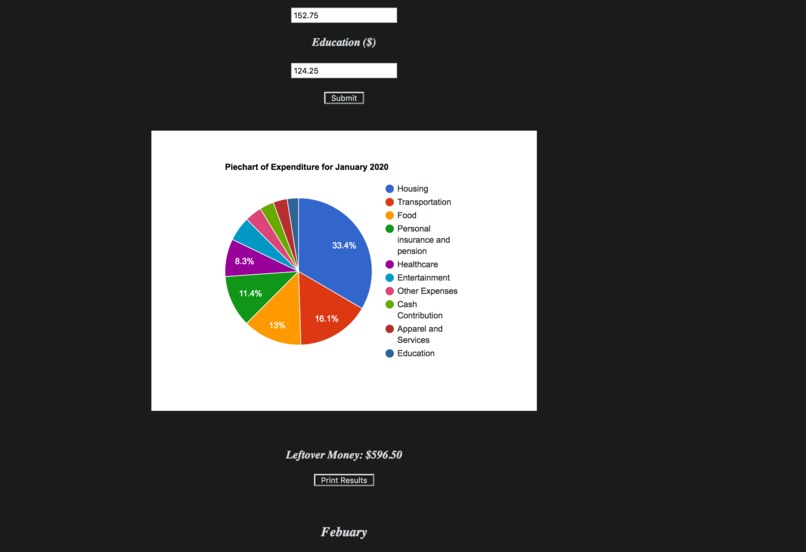
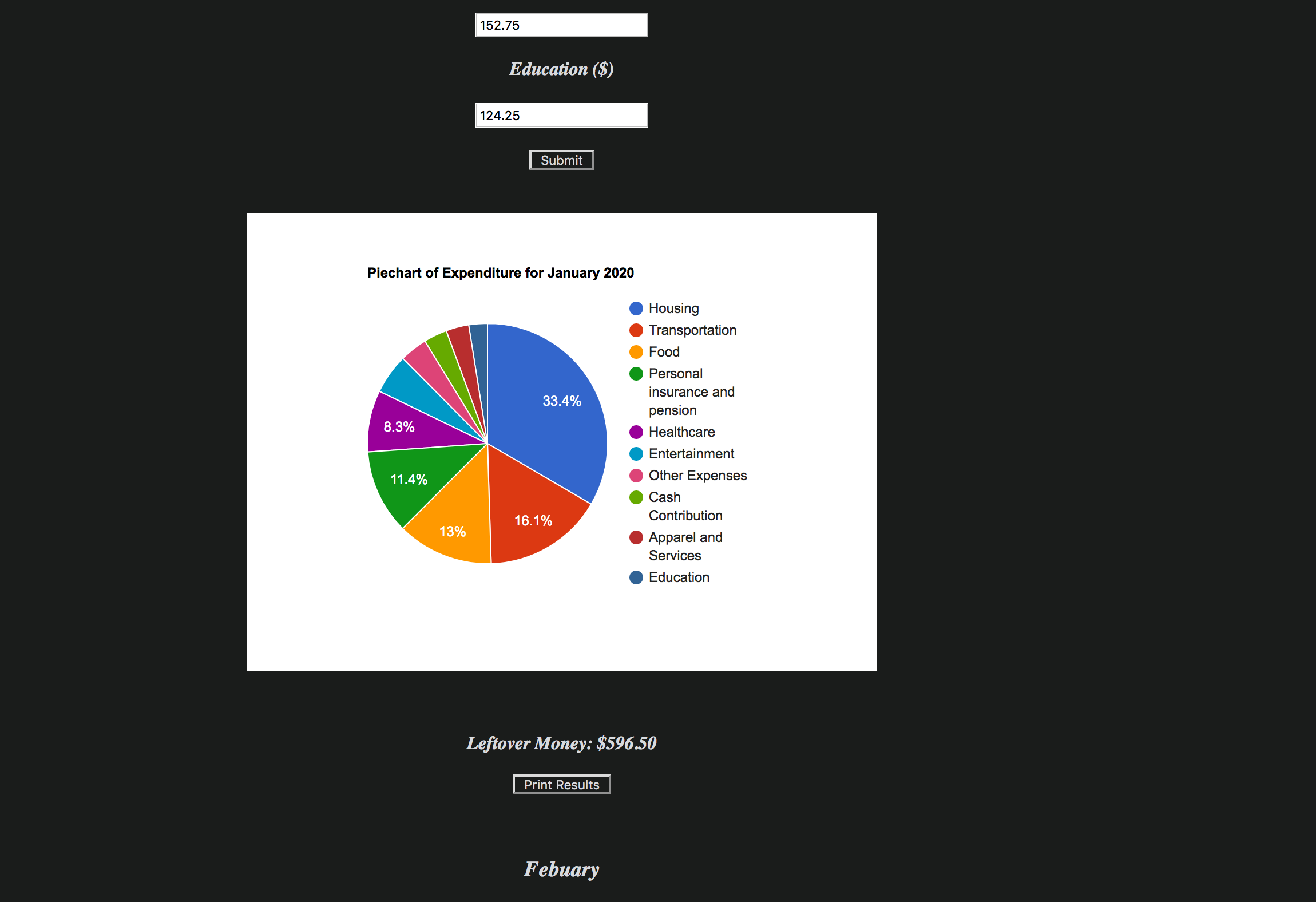
A pie chart shows the ratios of the expenses of each category compared to the whole monthly expenses.
-
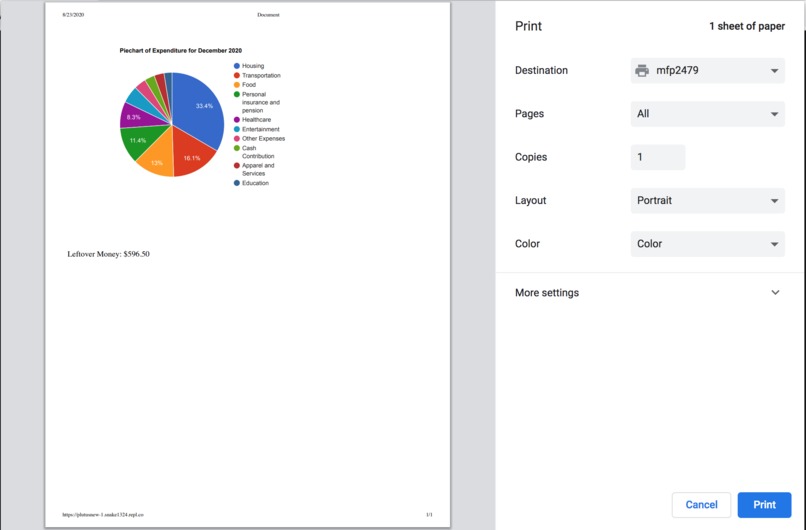
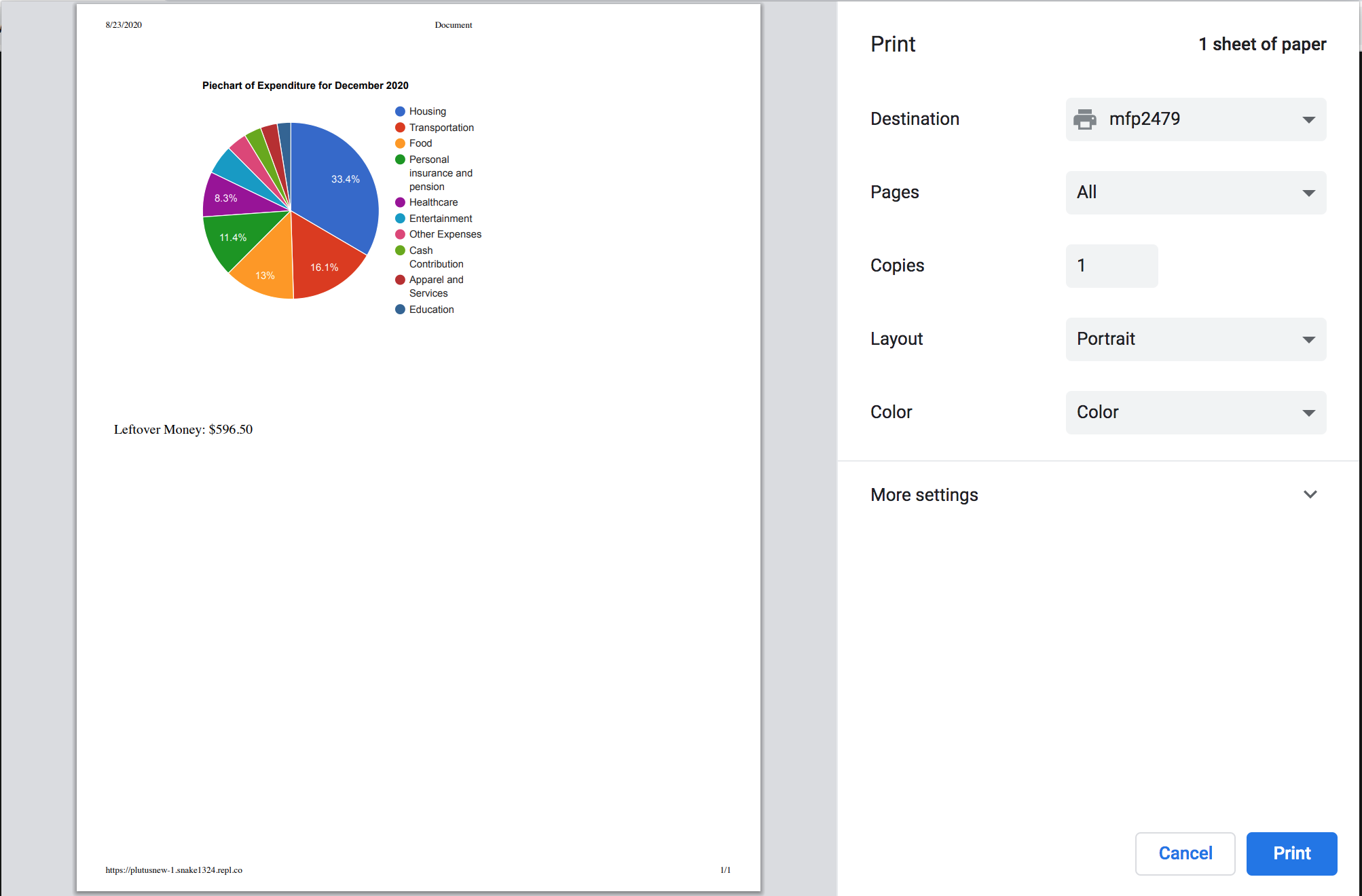
This application has the functionality to print out data.
Inspiration
There are many people that suffer from managing finances appropriately, and this can cause people to remain in poverty. These people tend to not have much knowledge in finances and in turn are not able to experience social mobility. Due to this, there is a wide disparity among the rich and poor. After doing some brainstorming, we decided to create an application that will help people prioritize their needs with fiscal sense. This application was designed to be used unviersally from all working adults, regardless of geography, race, sex, or political backgrounds. By creating this application, we hope to help raise the conditions of those who remain in poverty so that they can achieve the seemingly elusive American Dream. This application was designed to be intuitive and simple to use to be accessible to a wide audience with different educational backgrounds. By ensuring that the application does not need created accounts, people will be more readily available to use our product.
What it does
Plutus is a web application that utilizes various modern web technologies to help create an intuitive all inclusive platform for expense tracking and budgeting. Because maintaining a budget is oftentimes time consuming and lacks organization, our digital platform helps to keep all the numbers in one centralized place and provides clear visualizations of the data inputted. Our application allows users to input their monthly income and expenses via various categories. Upon submission, this application provides a pie chart of expenses as well as how far over or under budget the user had been each month. Furthermore, the user can see an aggregate view of the whole year and print financial results.
How We built it
We built an application using HTML, CSS, and JavaScript. Our code was separated into three files: an index.html file, a style.css file, and a script.js file. The index.html file contained a format with input textboxes, labels, and paragraphs. The style.css file stylized the webpage to be similar to reddit’s dark mode theme. The script.js file read input from the textboxes to make several mathematical calculations and display pie charts. Pie charts were created in JavaScript using the Google Charts JavaScript library. The printing of a section of a page used the PrintJS library.
Challenges We ran into
In this hackathon, our biggest struggle was creating a feasible product that would not be threatened by the time constraints. When we finished a prototype of the product, we temporarily suffered from writer’s block in that we did not know which direction our project should go into. This caused us to reach out to others for feedback and more potential features. During our coding streak, we faced numerous bugs and errors. However, through the use of proper debugging ethics (including the usage of console.log), we were able to fix the errors and clean and maintain our code.
Accomplishments that We’re proud of
We were proud of creating a product that seemed useful to society and received acclaim from those that playtested it. We were also impressed in some new skills that we learned including how to create pie charts and printing sections of pages through JavaScript.
What We learned
Throughout this hackathon, we learned a lot about web development and how to create an interactive web application. We were able to understand how to integrate HTML forms with JavaScript. Finally, we became experienced at importing external libraries into our project and integrating them into our product.
What's next for Plutus
For our next steps, we would like to expand and add an extended feature set such as the ability to save user information onto a database for access across various devices and the ability to specify or remove categories for expenses. We would also like to release our product to the iOS App Store and Android Google Play Store to make our application more accessible.
Built With
- chartjs
- css
- css3
- html
- html5
- javascript


Log in or sign up for Devpost to join the conversation.