-
-
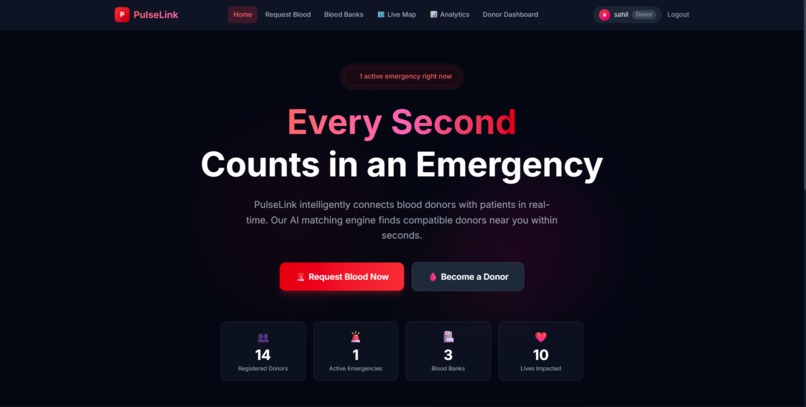
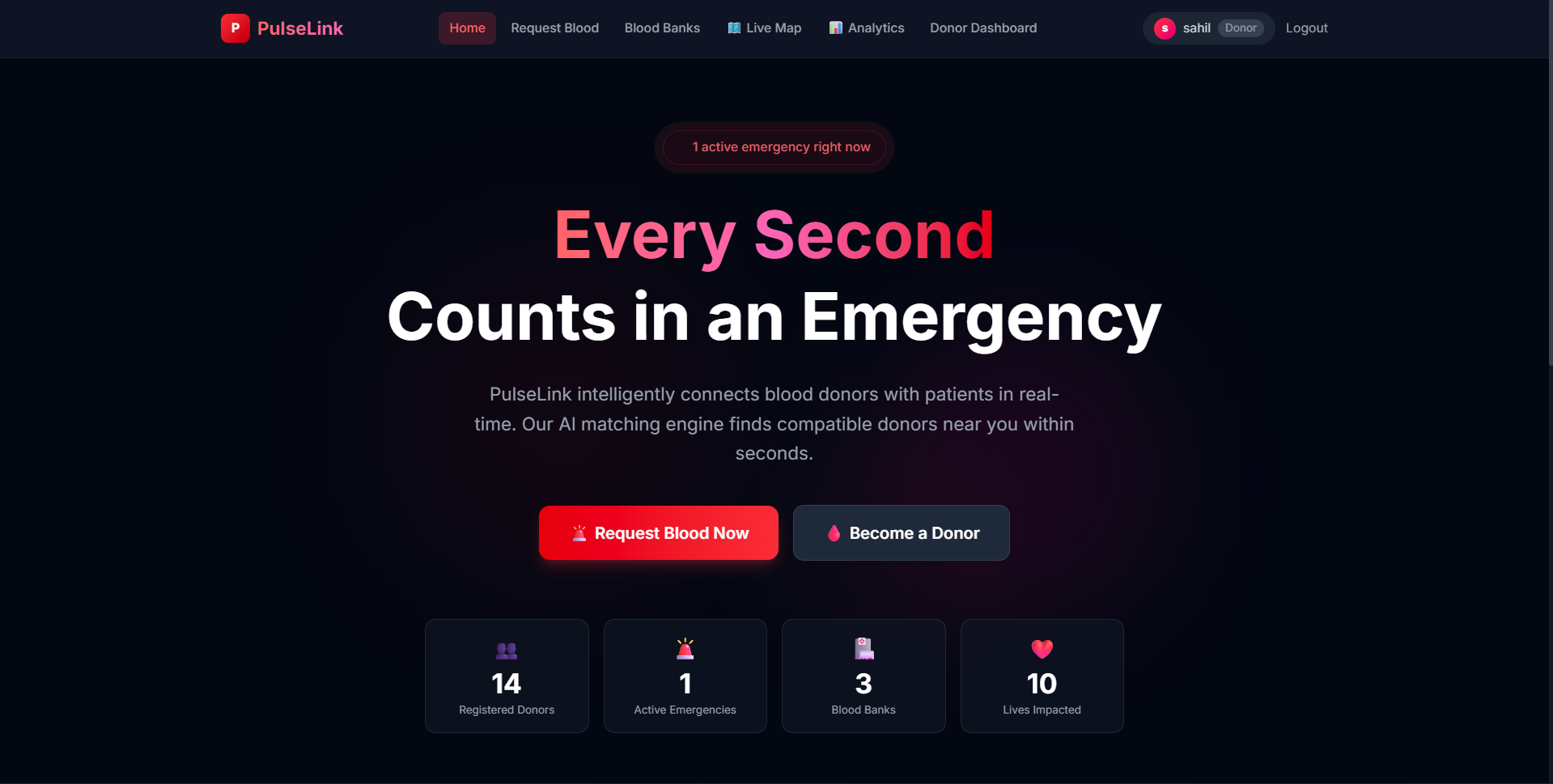
Real-time emergency blood coordination platform with live stats
-
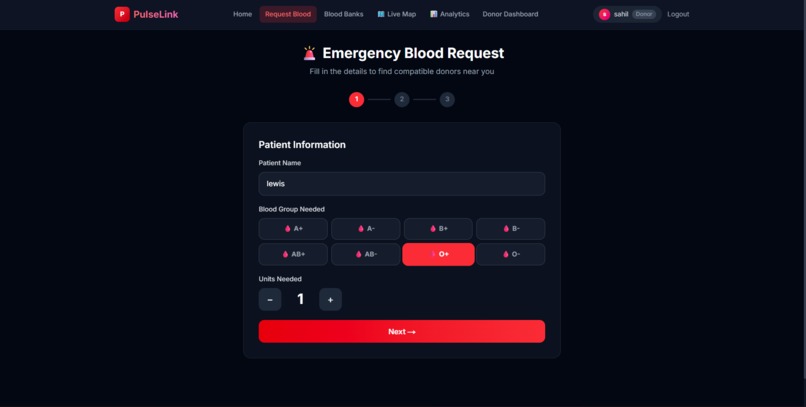
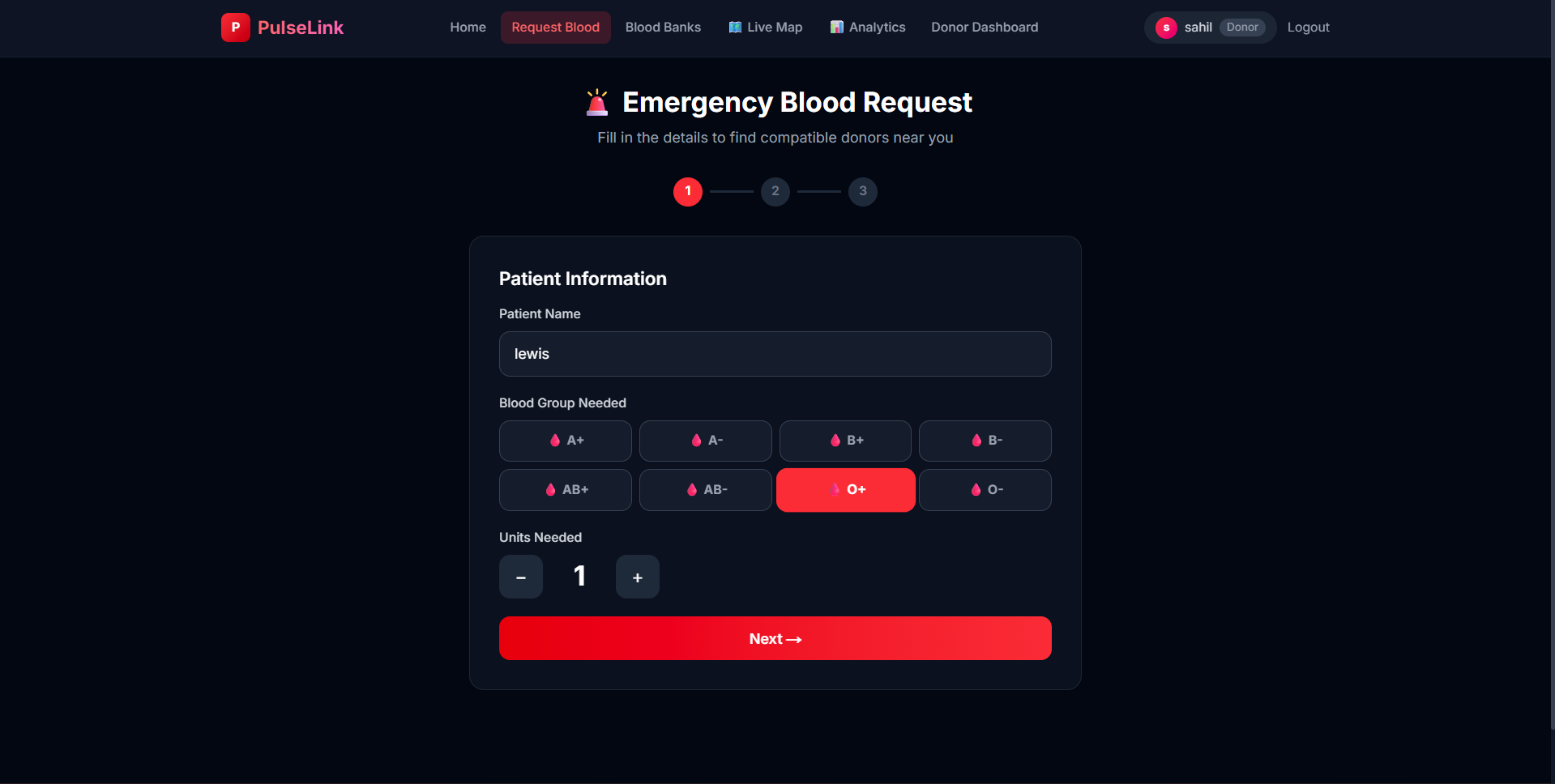
Multi-step emergency request form with blood group selection
-
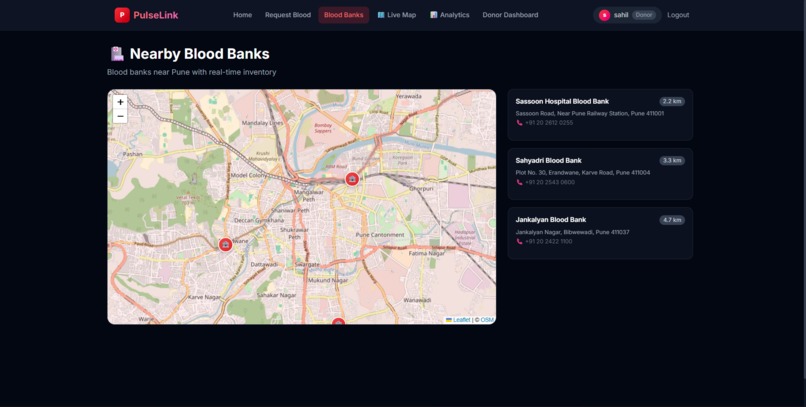
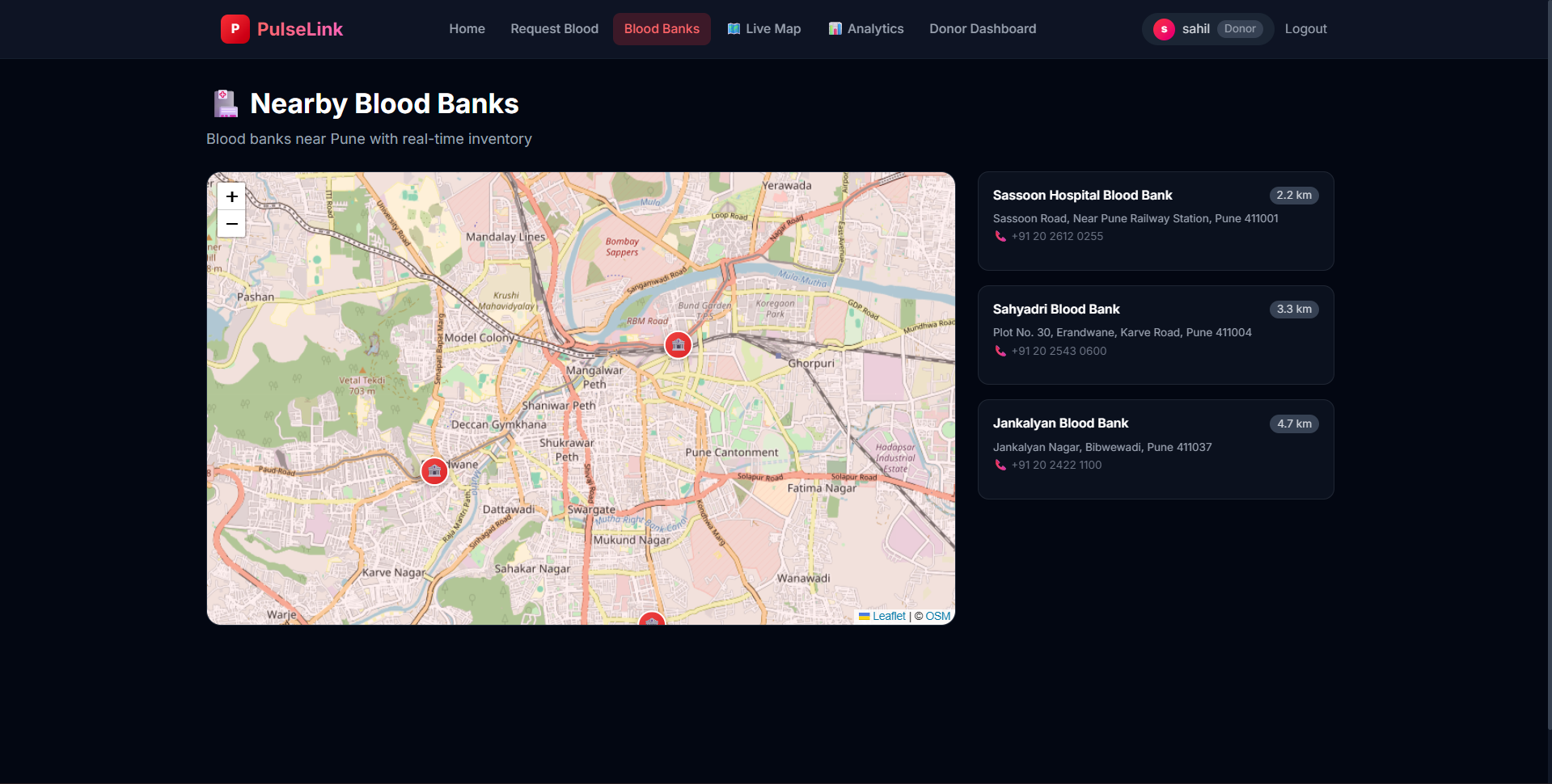
Nearby blood banks with real-time inventory and distance
-
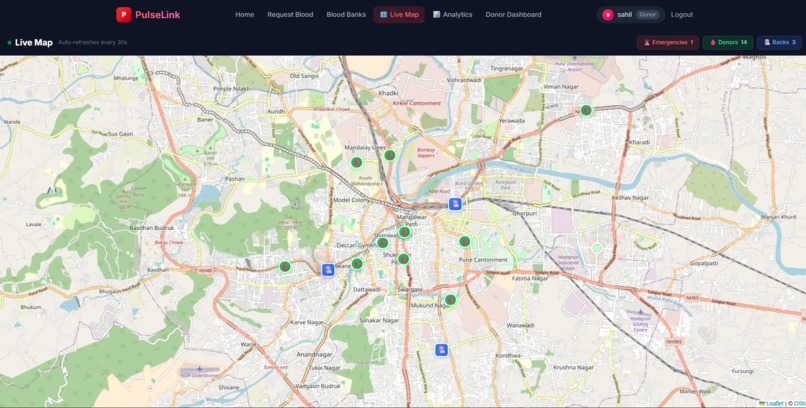
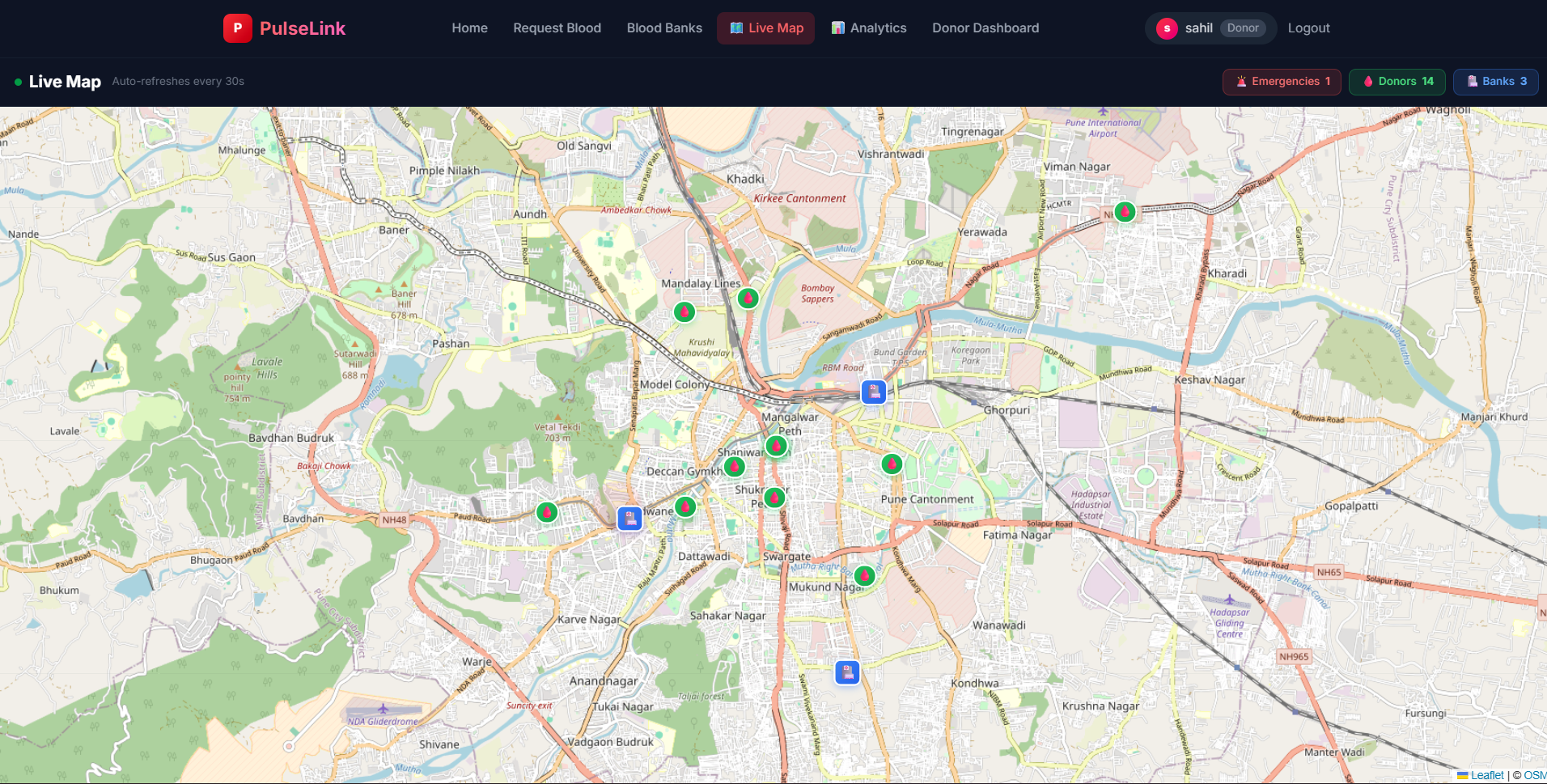
Live map showing 14 donors, 3 blood banks and active emergencies
-
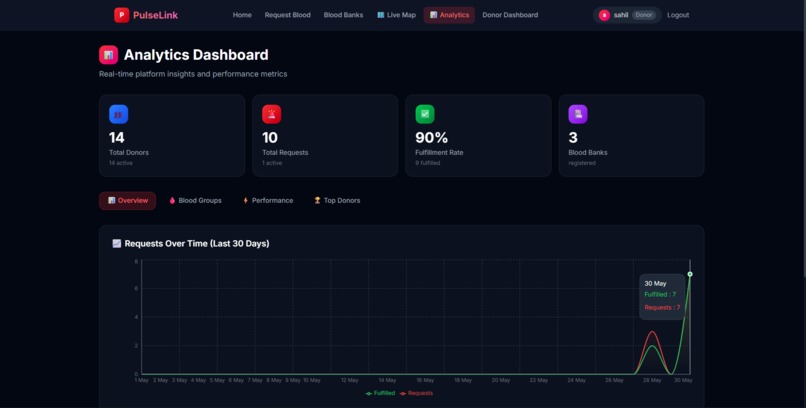
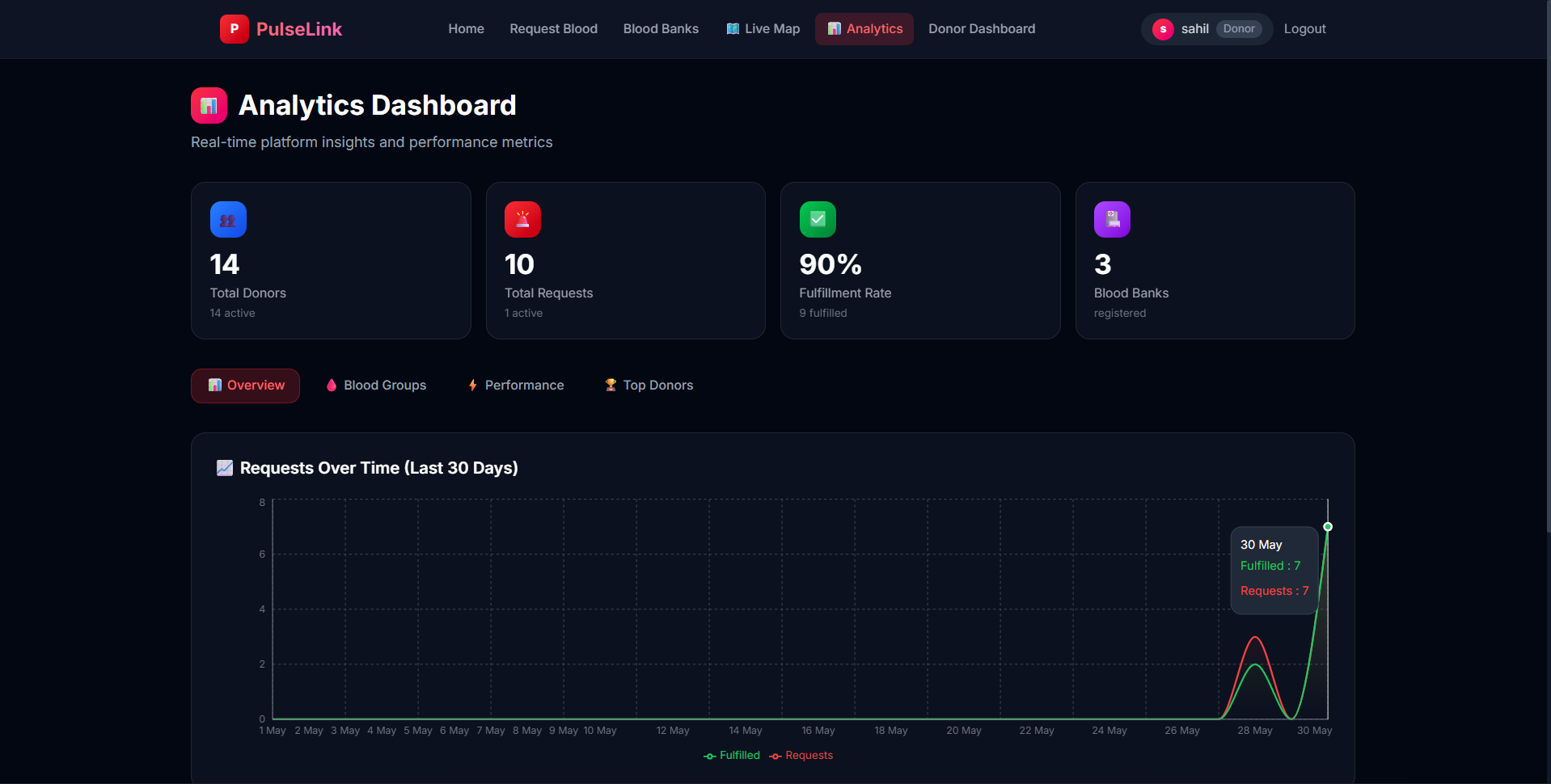
Real-time analytics dashboard with fulfillment rates and charts
-
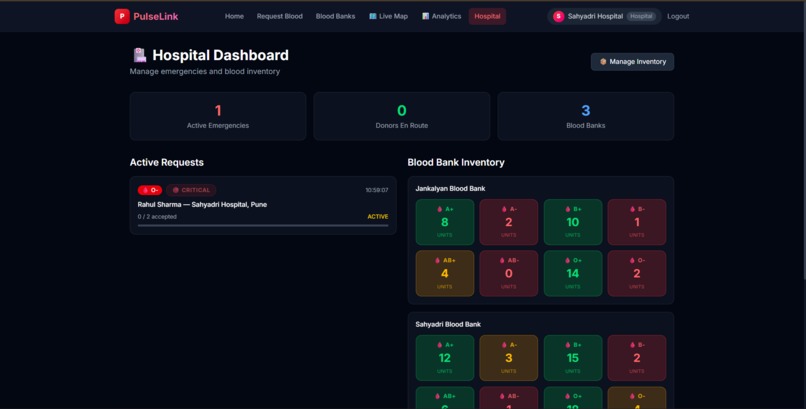
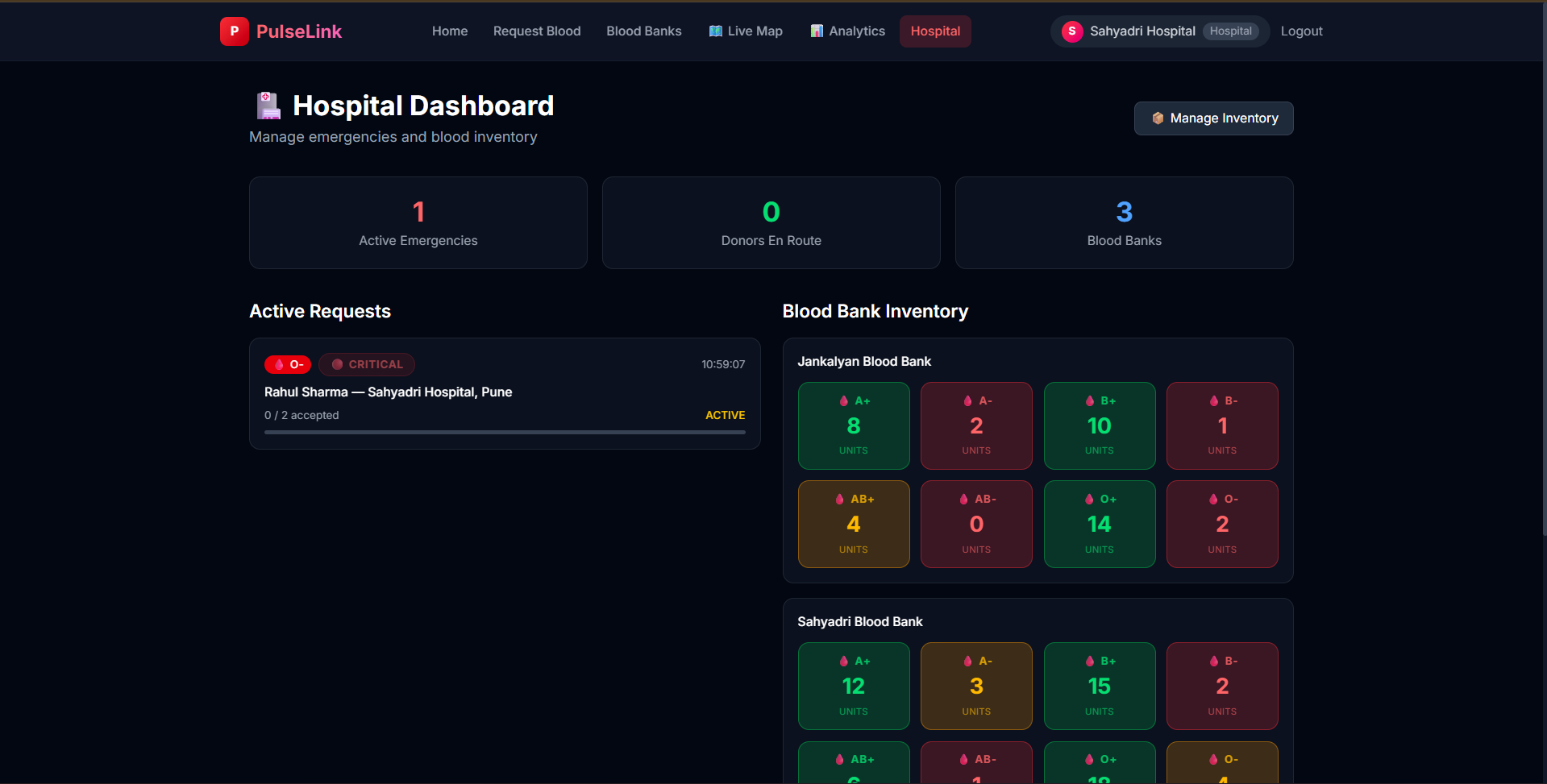
Hospital dashboard with active requests and blood bank inventory
Inspiration
In medical emergencies, finding blood quickly can mean the difference between life and death. We saw how families often spend hours calling hospitals, blood banks, and donors while the patient is still waiting. Most systems are outdated, fragmented, and depend heavily on manual coordination.
We wanted to build something that could reduce this delay and make emergency blood response faster, smarter, and more connected. That idea became PulseLink.
What it does
PulseLink is a real-time emergency blood coordination platform that connects patients, donors, hospitals, and blood banks during critical situations.
When an emergency request is created:
- Nearby compatible donors are matched instantly
- Live alerts are sent in real time
- Donors can accept or reject requests immediately
- Hospitals can track coordination live
- A real-time map shows donor locations and ETA
- The system automatically escalates if nobody responds
Instead of hours of manual searching, PulseLink coordinates emergency blood response within minutes.
How we built it
- Frontend: Next.js 14 + Tailwind CSS
- Backend: Node.js + Express.js
- Real-time: Socket.IO
- Database: MongoDB Atlas with geospatial indexing
- Maps: Leaflet.js + OpenStreetMap
- Auth: JWT-based secure authentication
- Deployment: Vercel (frontend) + Render (backend)
Challenges we ran into
One of the biggest challenges was implementing real-time communication between Vercel and Render while handling CORS, cookies, and WebSocket connections correctly in production.
We also faced challenges designing the donor matching algorithm, handling secure authentication across domains, and managing Socket.IO rooms so alerts reached the correct users instantly.
Accomplishments that we're proud of
- Built a fully working real-time emergency coordination system
- Successfully implemented geospatial donor matching
- Live alerts and dashboards update instantly without refresh
- Deployed the complete full-stack system to production
- Designed and developed within a short hackathon timeline
What we learned
- Real-time system architecture using Socket.IO
- MongoDB geospatial queries and indexing
- Production deployment and authentication challenges
- Cross-domain cookie and CORS handling
- The importance of scalable emergency response systems
What's next for PulseLink
- Government and hospital API integration
- AI-based blood demand prediction
- Rare blood group rapid response network
- React Native mobile application
- Expansion to more cities across India
Our goal is to make emergency blood coordination faster, more reliable, and less stressful for families and hospitals — because every minute matters.
Built With
- css
- express.js
- javascript
- jwt
- leaflet.js
- mongodb
- next.js
- node.js
- render
- socket.io
- tailwind
- vercel


Log in or sign up for Devpost to join the conversation.