-
-
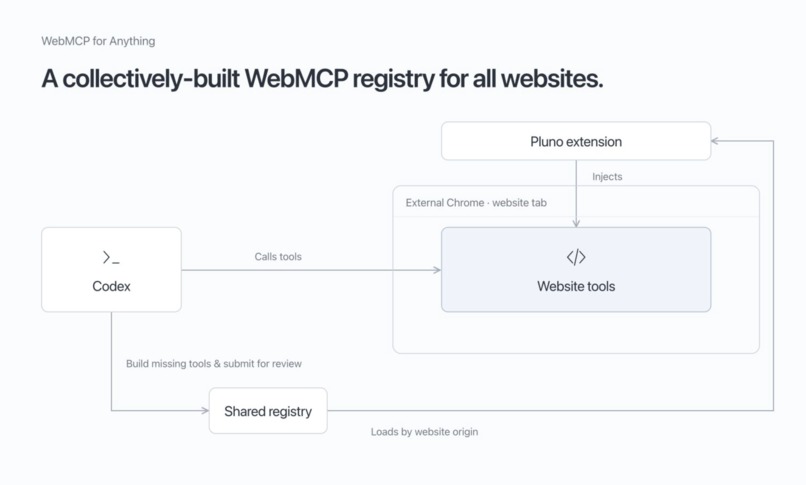
How it works
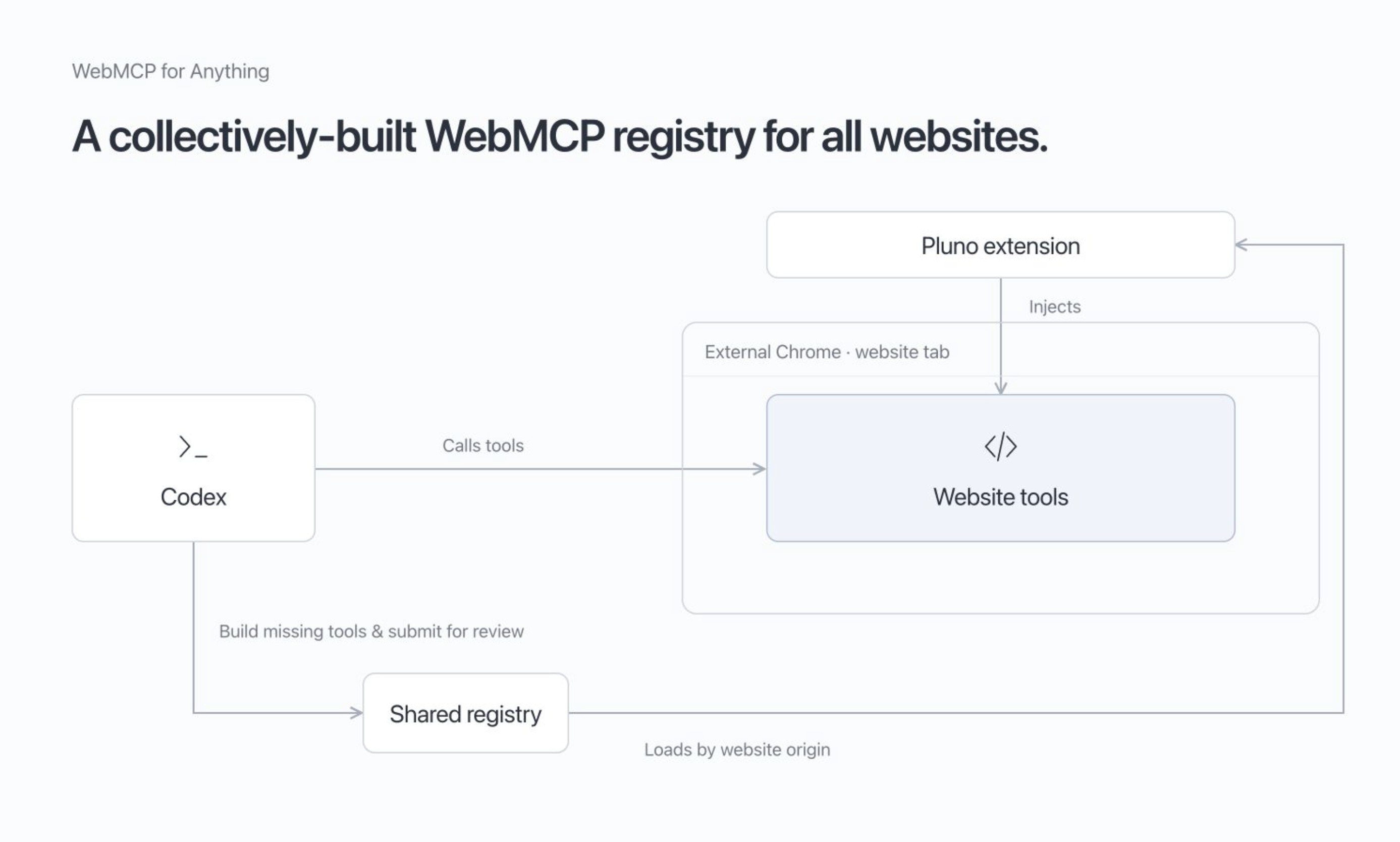
Inspiration
Most websites don’t expose WebMCP tools yet, so agents repeatedly figure out the same interfaces. We built Pluno WebMCP for Anything to turn that repeated work into a shared tool registry.
What it does
A Chrome extension injects the existing tools for each website. Codex uses the available tools to complete the task. If the tools are not sufficient, codex builds a reusable tool while completing the task, then submits it to Pluno for review. Approved tools become available to everyone.
Challenges we ran into
- Codex's built-in browser doesn't support extensions
- Codex via Chrome doesn't support WebMCP -> Made it work via workarounds (injecting as separate Pluno object in page context), but we're really looking forward to both of these being supported to make it work natively.
Accomplishments that we're proud of
Time reduction of >80% for several tasks we tested. Example task (finding getaways on Airbnb):
- Normal codex: 6m 22s
- Codex with Pluno WebMCP - first run: 7m 35s (completing the task + building the necessary tools)
- Codex with Pluno WebMCP - second run: 1m 3s (completing task via available tools)
What we learned
Security is crucial, but ChatGPT really helps for this: We added a Sol-based review of tool suggestions in the backend, and with extensive penetration testing we weren't able get any tool definitions approved that had unintended side effects.
What's next for Pluno - WebMCP for anything
- Submit plugin to marketplace
- Push for native support of WebMCP for external browser, and extension support for native Codex browser.
- Run agents on popular websites to warm up the tool registry.
- Improve the tool-building guidance, harden the security of the tool review.
- Add measures against tool explosion (too many tools for too specific things)
Built With
- codex

Log in or sign up for Devpost to join the conversation.