-
-
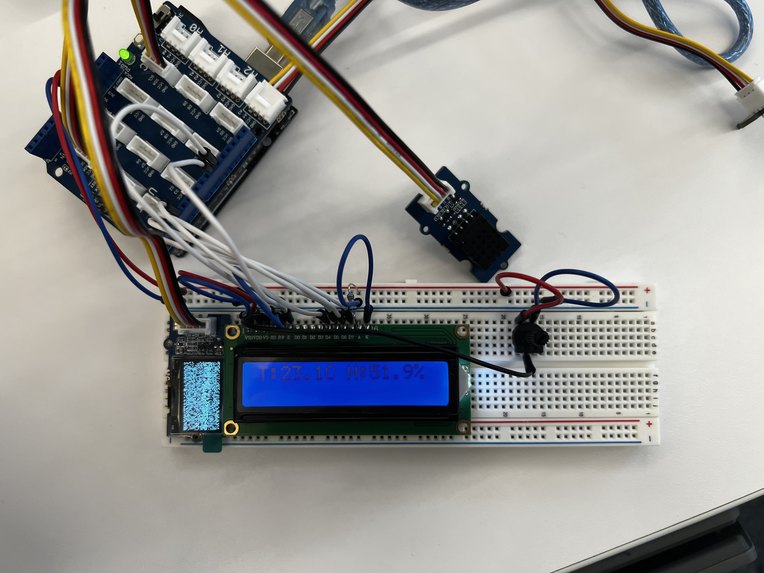
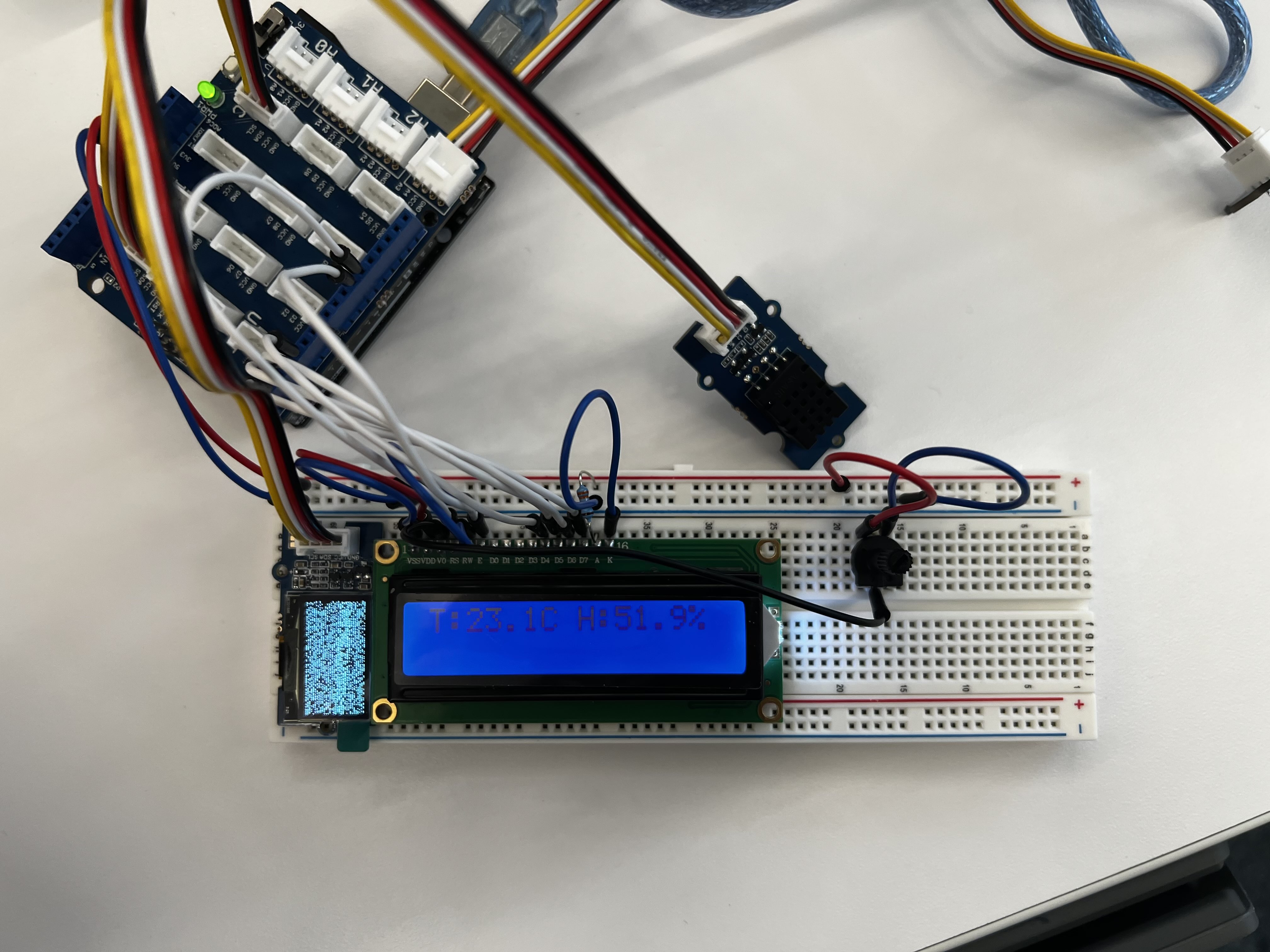
Pluddy circuit on breadboard.
-
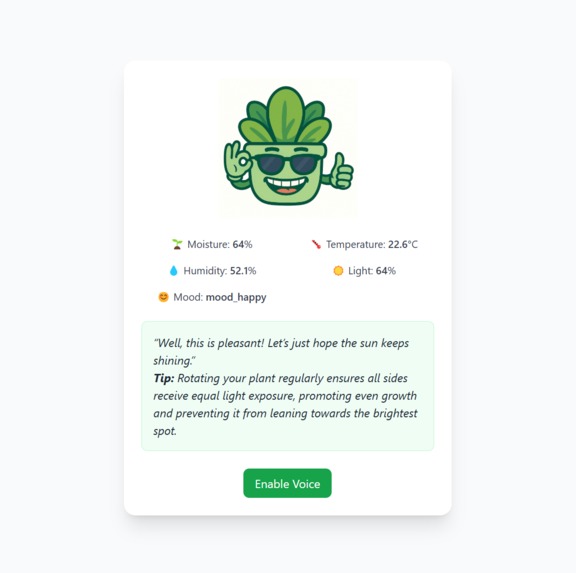
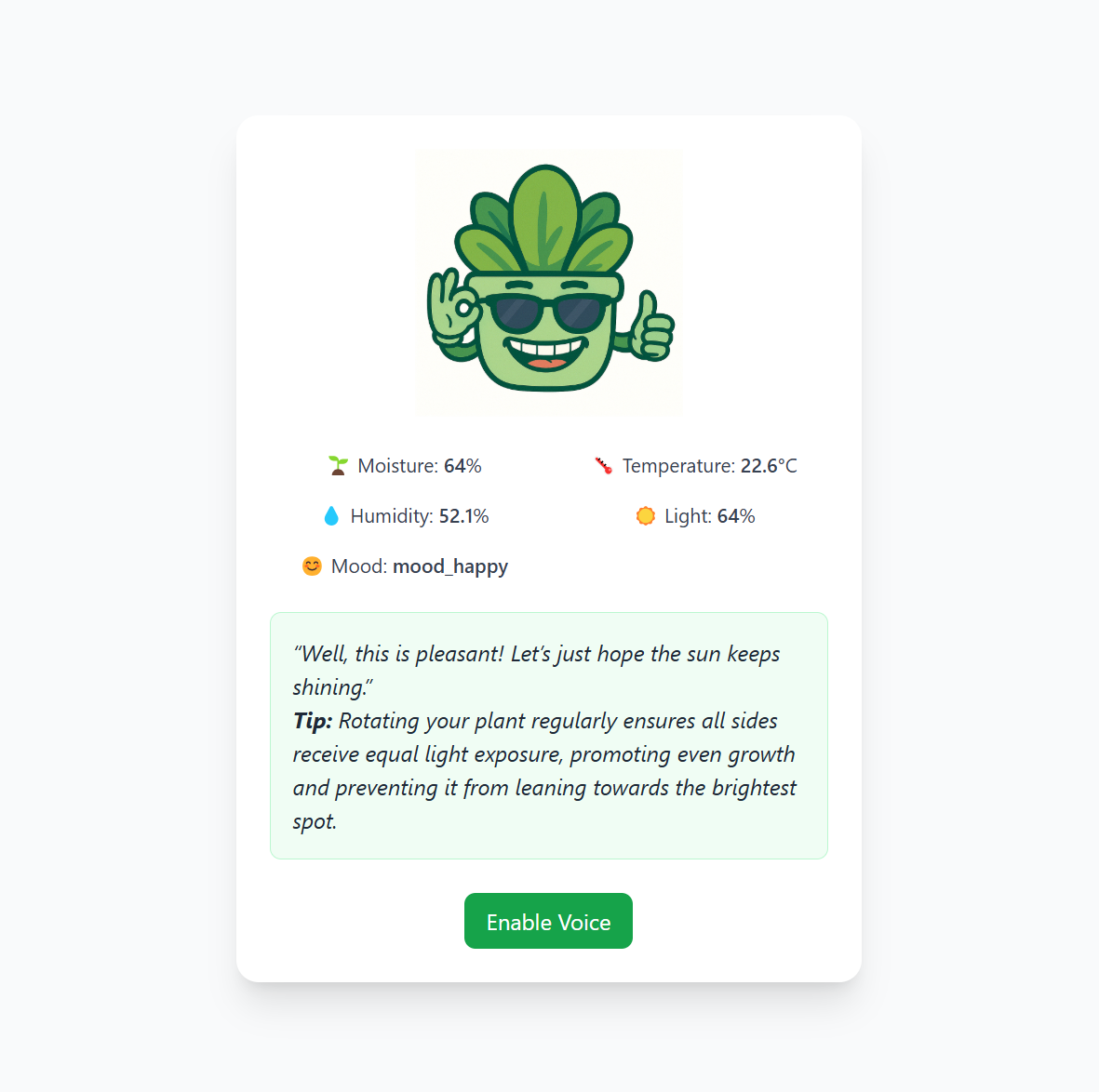
Screenshot of app UI.
Inspiration
Our inspiration came from the nostalgia of Tamagotchis and the desire to create a digital pet that interacts with its environment without the responsibilities and costs of taking care of a real animal. We wanted to blend that retro charm with modern sensor technology, allowing a virtual pet to react to its surroundings, getting sleepy when it's dark or grumpy when it's too humid, without needing feeding or walking. It's a fun, low-maintenance way to enjoy the companionship of a pet, all while learning about sensors and coding.
What it does
The Pluddy is an Arduino-controlled Tamagotchi-style companion that responds to its environment in real time. Using onboard sensors, it gathers data on temperature, humidity, and light levels, then translates these inputs into a specific "mood" displayed through expressive feedback. Whether it's cheerful on a sunny day or sad in dim lighting, the Pluddy reacts just like a tiny digital pet with a personality. This interactive hackathon project blends nostalgic virtual pet charm with modern sensor-driven interactivity, making environmental awareness both fun and engaging.
How we built it
We used Arduino-compatible sensors, specifically a DHT sensor for temperature and humidity and a photoresistor for light detection. These sensors feed real-time environmental data into the Arduino, which processes the input and determines the Pluddy’s current mood based on predefined thresholds. We then mapped each combination of conditions to a unique emotional state. The moods are visualized using LEDs and a simple display interface, giving Pluddy a personality that evolves with its surroundings. All components were wired on a breadboard and programmed using the Arduino IDE.
Challenges we ran into
One of the main challenges we faced was converting the raw sensor data from the Arduino into JSON format to communicate with the frontend. Setting up reliable serial communication and ensuring the data was consistently structured proved to be more complex than expected. We also initially attempted to use an OLED screen to display Pluddy’s mood directly on the device, but due to time constraints and technical difficulties, we ultimately decided to drop that feature and focus on visualizing the mood through the frontend instead. Additionally, we were unable to implement a moisture sensor as originally planned due to both time constraints and limited availability of materials.
Accomplishments that we're proud of
We’re proud of the aesthetic design of the web app, which makes interacting with Pluddy feel smooth and engaging. Another big win was getting the sensors to work correctly on the first try; temperature, humidity, and light data were all accurately read and processed without major debugging. This allowed us to focus more on the creative side of the project, like mapping moods and building a fun user experience.
What we learned
We learned how to take real-time data from Arduino sensors and pass it through a backend system to display it on a frontend interface. This involved setting up serial communication, parsing and formatting sensor data into JSON, and creating a seamless flow from hardware to user-facing visuals. It gave us hands-on experience with integrating hardware and software and helped us understand how different layers of a system work together to create an interactive experience.
What's next for pluddy
Looking ahead, we’d love to revisit the OLED display feature and fully integrate it to give Pluddy an on-device personality. We’re also considering adding more sensors, like sound, motion, and a moisture sensor, to make Pluddy even more responsive to its environment. With the moisture sensor, we could implement features like watering reminders, fertilizer notifications, and even nutrient tracking for the plants on Pluddy. On the software side, we want to expand the web app with more detailed mood animations, historical mood tracking, and maybe even customization options for the pet’s personality. Eventually, we hope to make Pluddy a fully self-contained desktop companion that bridges the gap between physical sensing and emotional expression, offering even more interactive and personalized features.

Log in or sign up for Devpost to join the conversation.