Inspiration
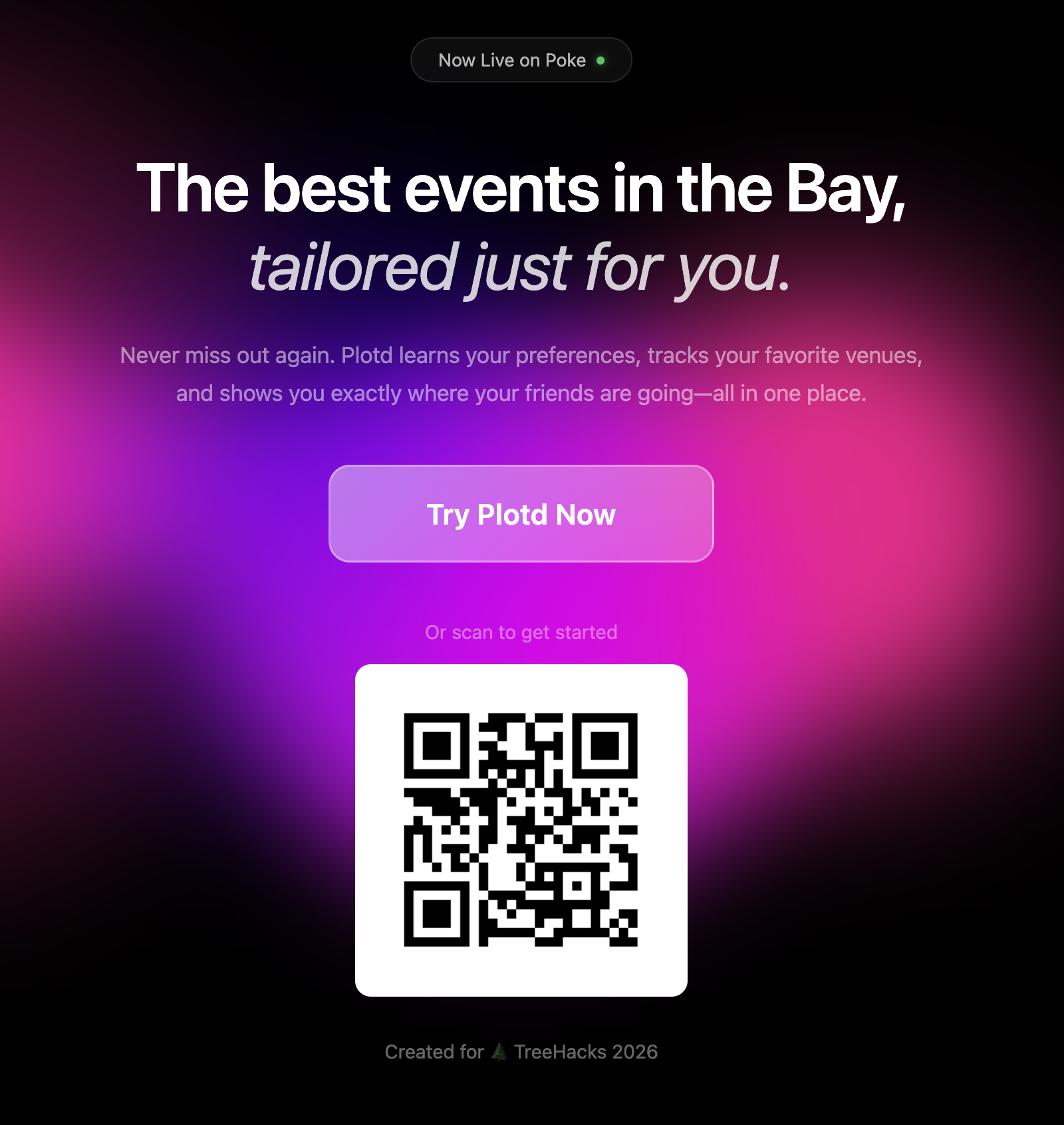
We realized that planning a Friday night shouldn’t feel like research, and coordinating with friends shoudn't feel like a hassle. Events are scattered across platforms like Fizz, Partiful, Luma, and countless group chats and emails. The information exists, but the effort to find it is high, and people miss great events simply because discovery is fragmented. We wanted to make finding something to do feel as easy as sending a text.
What it does
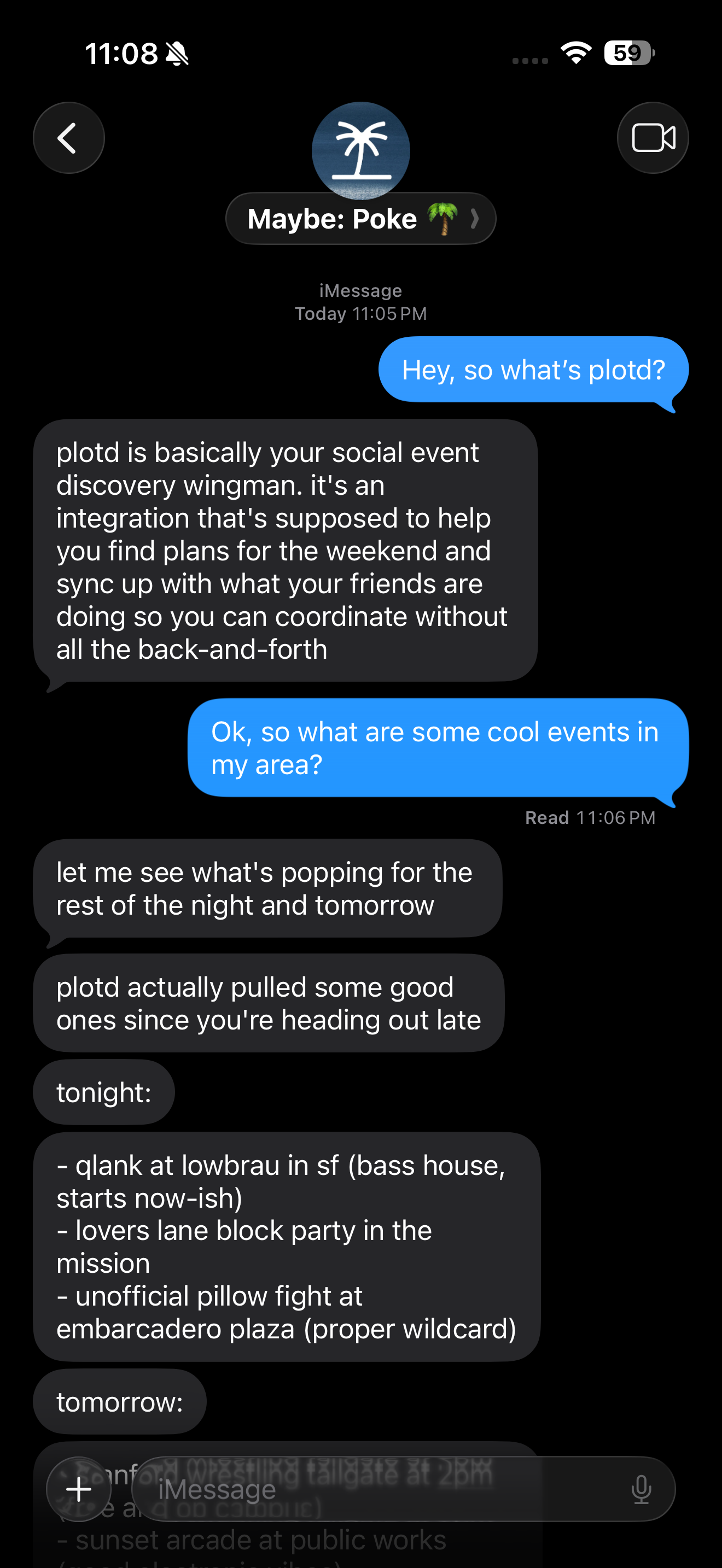
Our product lives in your messages and acts like a personal event agent. It integrates with your calendar and email to understand your availability, social graph, and preferences. You can ask, “What should I do tonight at 6?” and it will pull in private invites, public events, and nearby happenings to generate personalized recommendations based on location, friends attending, and what you actually enjoy.
You can also ask, “What should I do this Saturday night?” and it will suggest options like concerts, basketball games, parties, or smaller community events — all ranked and tailored to you. Instead of jumping between platforms, you just ask once and get a clear, intelligent answer.
How we built it
We started by building autonomous AI agents capable of aggregating nearly all publicly available events across the internet. We then extended them to securely access gated platforms using Bright Data's proxies and retrieve event data that requires authentication. Next, we introduced a social layer that synchronizes schedules between friends in real time. Finally, we designed a personalized recommendation engine that analyzes your calendar, location, preferences, and your friends’ plans to recommend the best events for you.
Challenges we ran into
The hardest part was accessing fragmented and semi private data. Many event platforms don’t have APIs, and important invites live behind logins, dynamic pages, or emails. We had to make agents that could reliably pull structured data without constantly breaking.
Relevance was another challenge. Aggregating events is easy, but good recommendations are not. Early versions either suggested too many popular events or very niche ones, so we spent time tuning signals like location, timing, and which friends were actually going.
Keeping social context up to date was also tricky. Friends change plans, calendars shift, and data updates at different times. Making the results feel live instead of stale required careful syncing under tight hackathon time limits.
Accomplishments that we're proud of
We built a fully working experience where you can ask one question and get a real plan for your night using live events and real availability. It is not a mockup. The system actually gathers data, understands context, and produces a clear answer.
We are especially proud that the recommendations feel social and natural. They consider your friends, your schedule, and your preferences, so the suggestions feel like something you would realistically choose rather than a generic list.
Most importantly, people quickly started using Plotd for actual weekend plans instead of treating it like a demo. That shift from curiosity to real usage showed us we built something genuinely useful. In under 12 hours since launch, we were able to accumulate over 22k views and 1k+ likes across platforms, and 170 real users. We used a combination of social media presence, door-to-door onboarding strategies, and marketing analytics to produce early traction.
What we learned
We learned what it actually feels like to take an idea from zero to something real. From late night ideation to talking to users, validating the pain point, shipping quickly, and pushing for early traction, we learned how to divide ownership, move fast, and adapt when our assumptions were wrong. Building Plotd taught us that execution and tight feedback loops matter far more than the original idea.
What's next for Plotd
Next, we are building more AI agents that can securely access and structure data from additional private event platforms and communities, as well as a more expansive friends feature that contains more integrations to fully personalize the experience. The more sources Plotd can understand, the closer we get to giving users a complete answer without them ever having to search or text anything else.
Built With
- beautiful-soup
- brightdata
- google-calendar
- mcp
- next.js
- poke
- python
- react
- render
- sql
- supabase
- zod


Log in or sign up for Devpost to join the conversation.