-
-
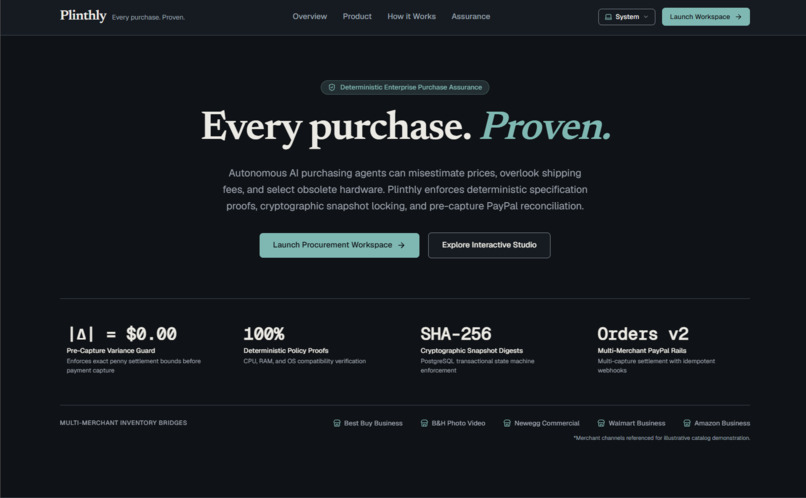
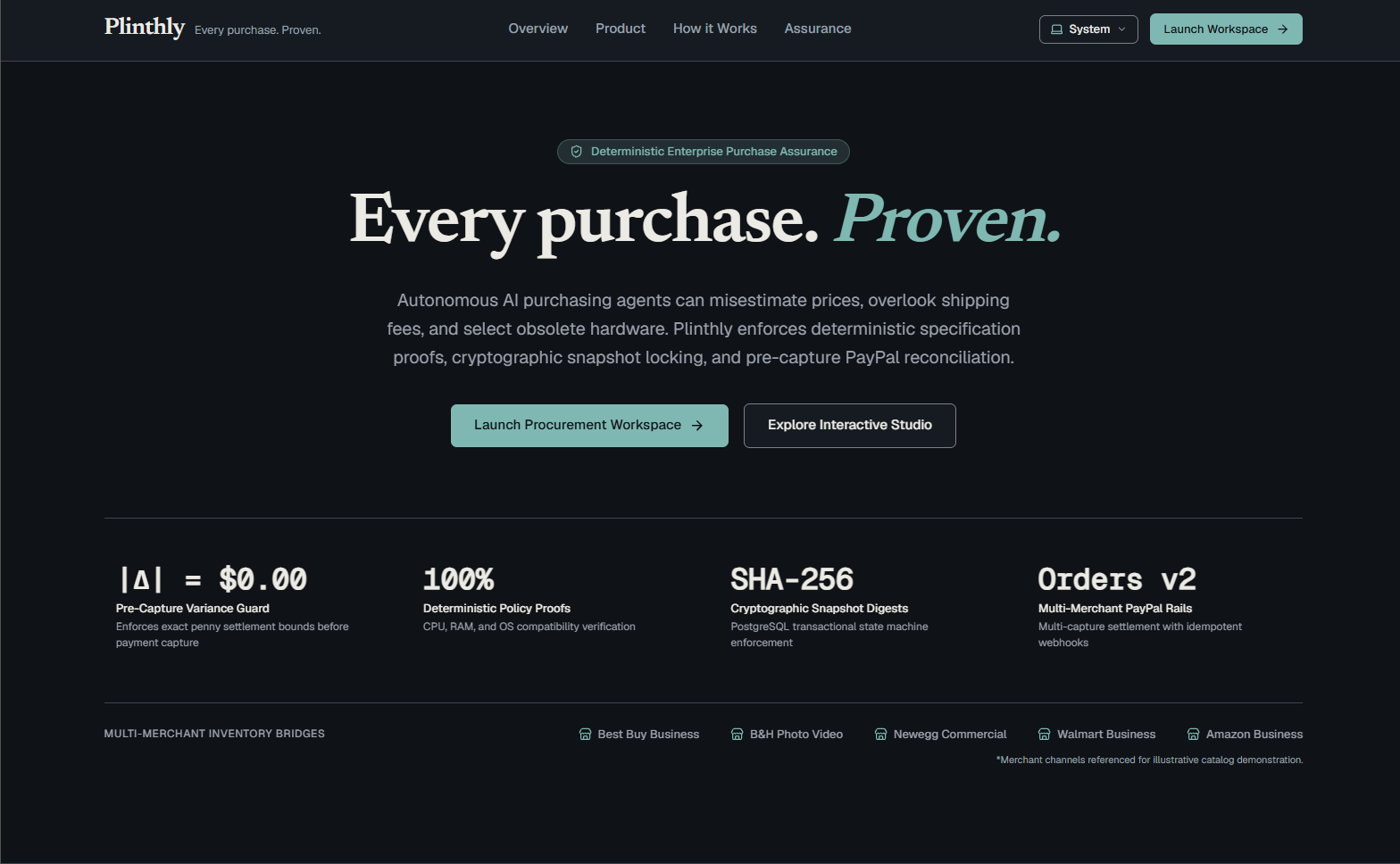
Homepage — Plinthly’s vision for transparent, evidence-based AI procurement
-
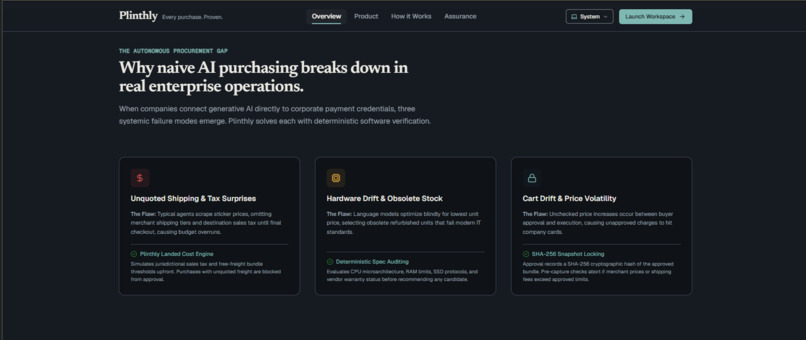
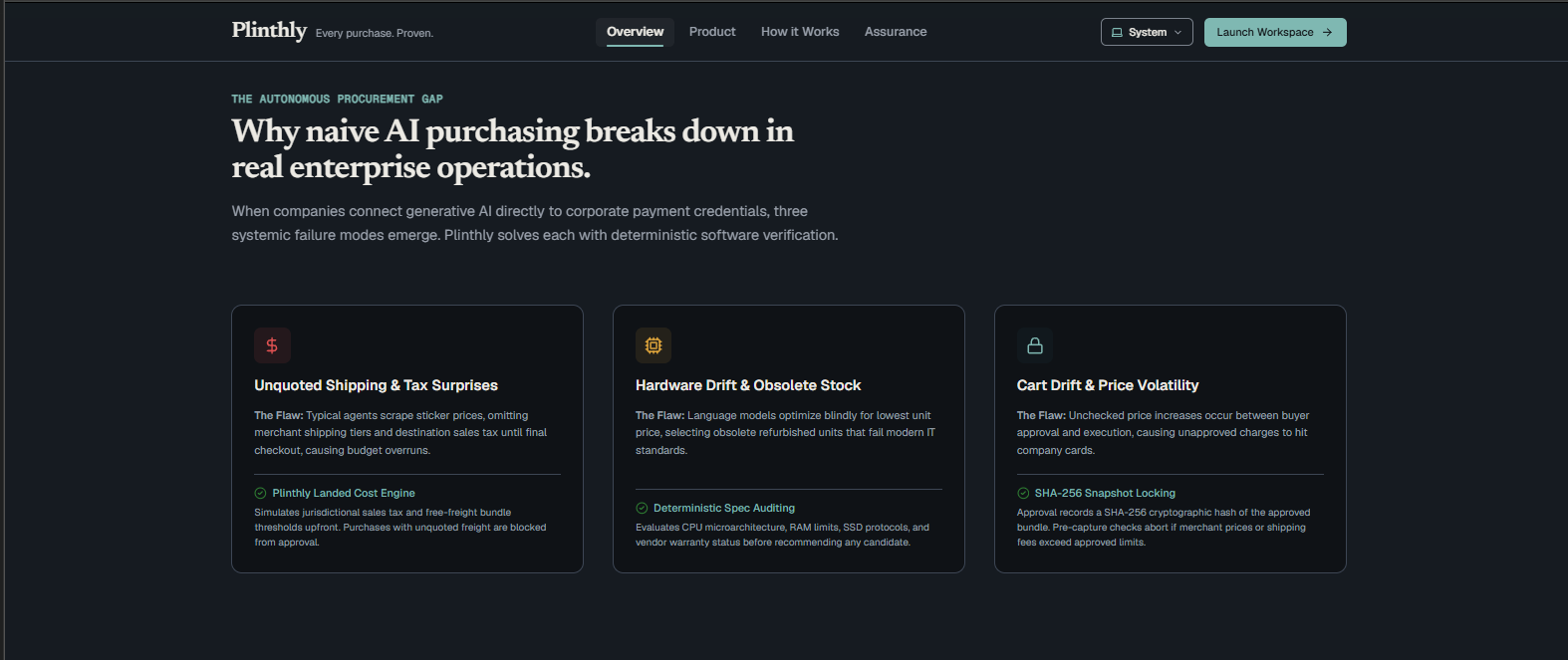
Procurement Challenges — The risks of hidden costs, outdated hardware, and price volatility.
-
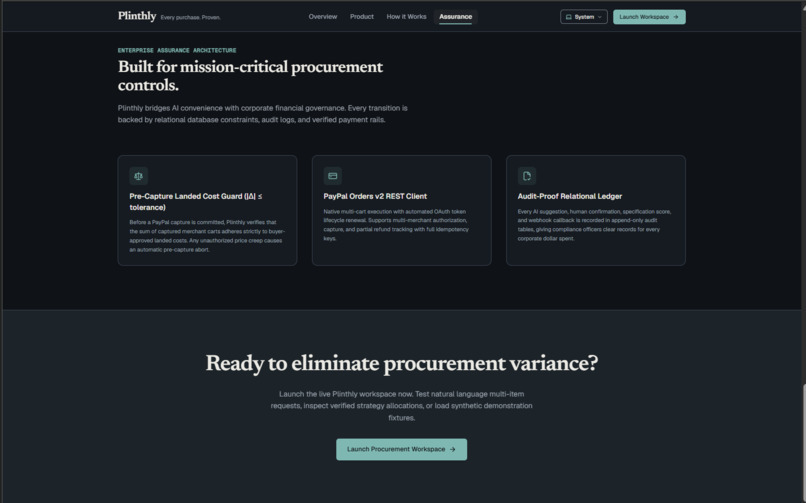
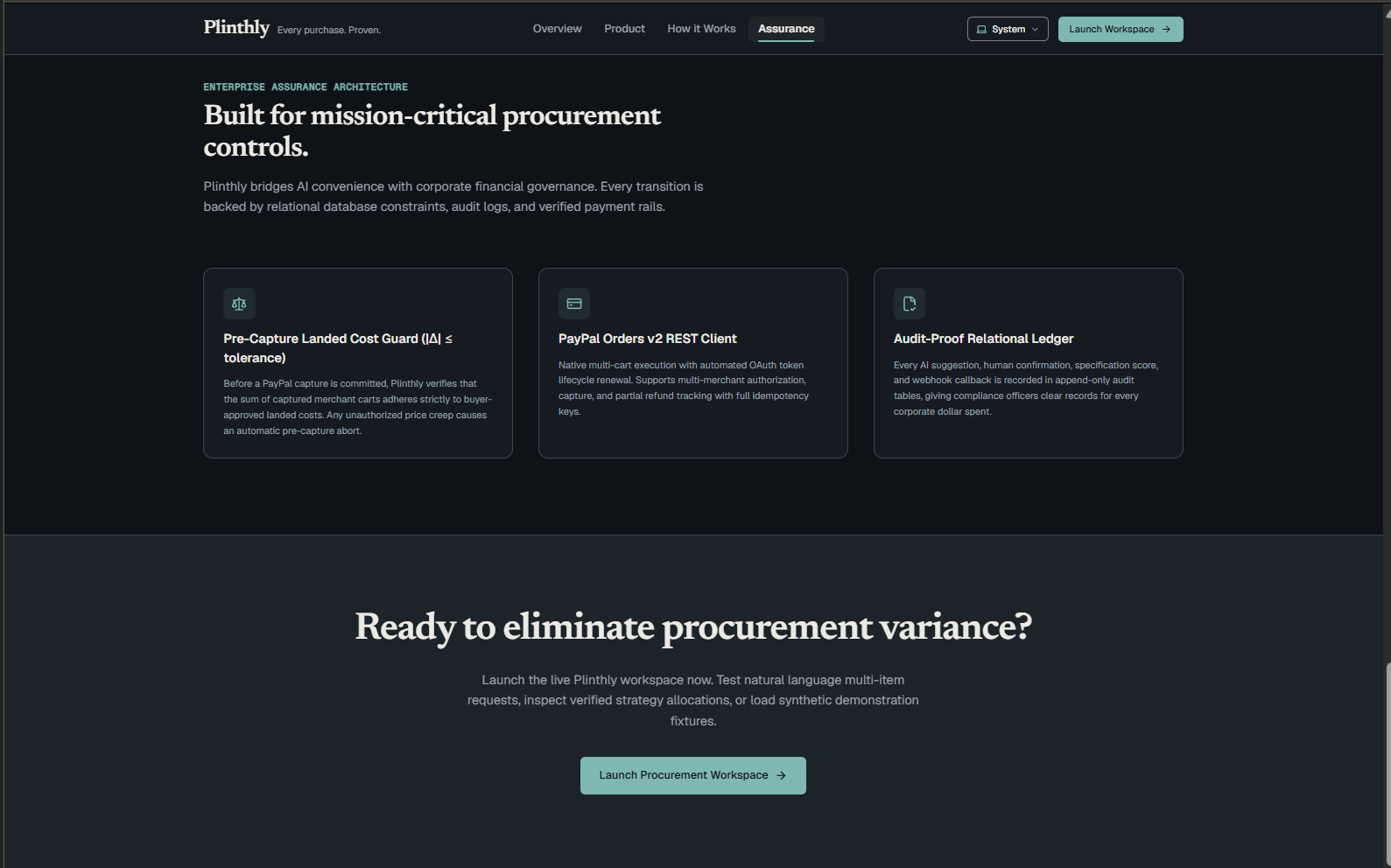
Assurance Architecture — Cost verification, PayPal integration, and audit trails.
-
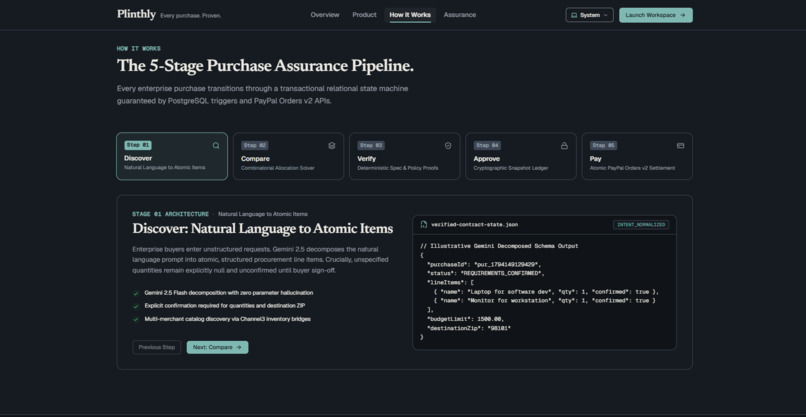
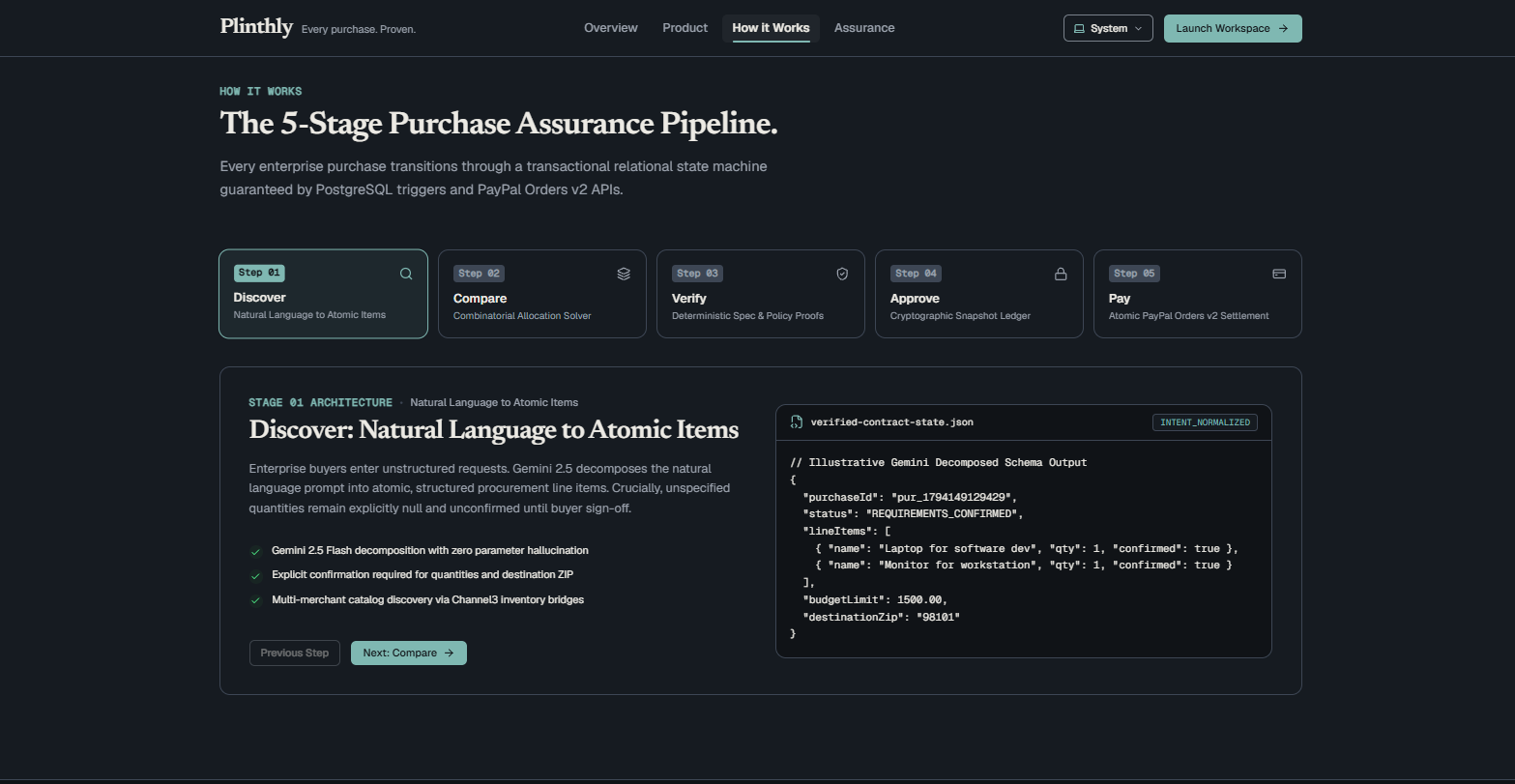
Five-Stage Pipeline — Discover, Compare, Verify, Approve, and Pay.
-
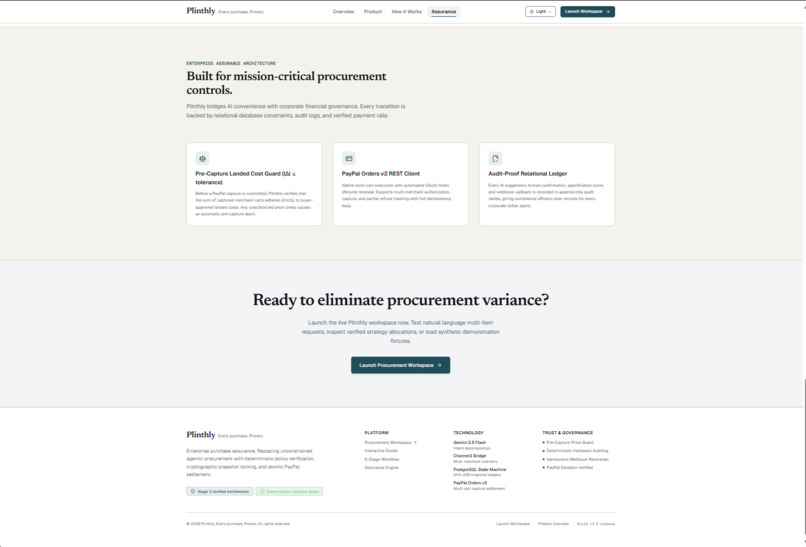
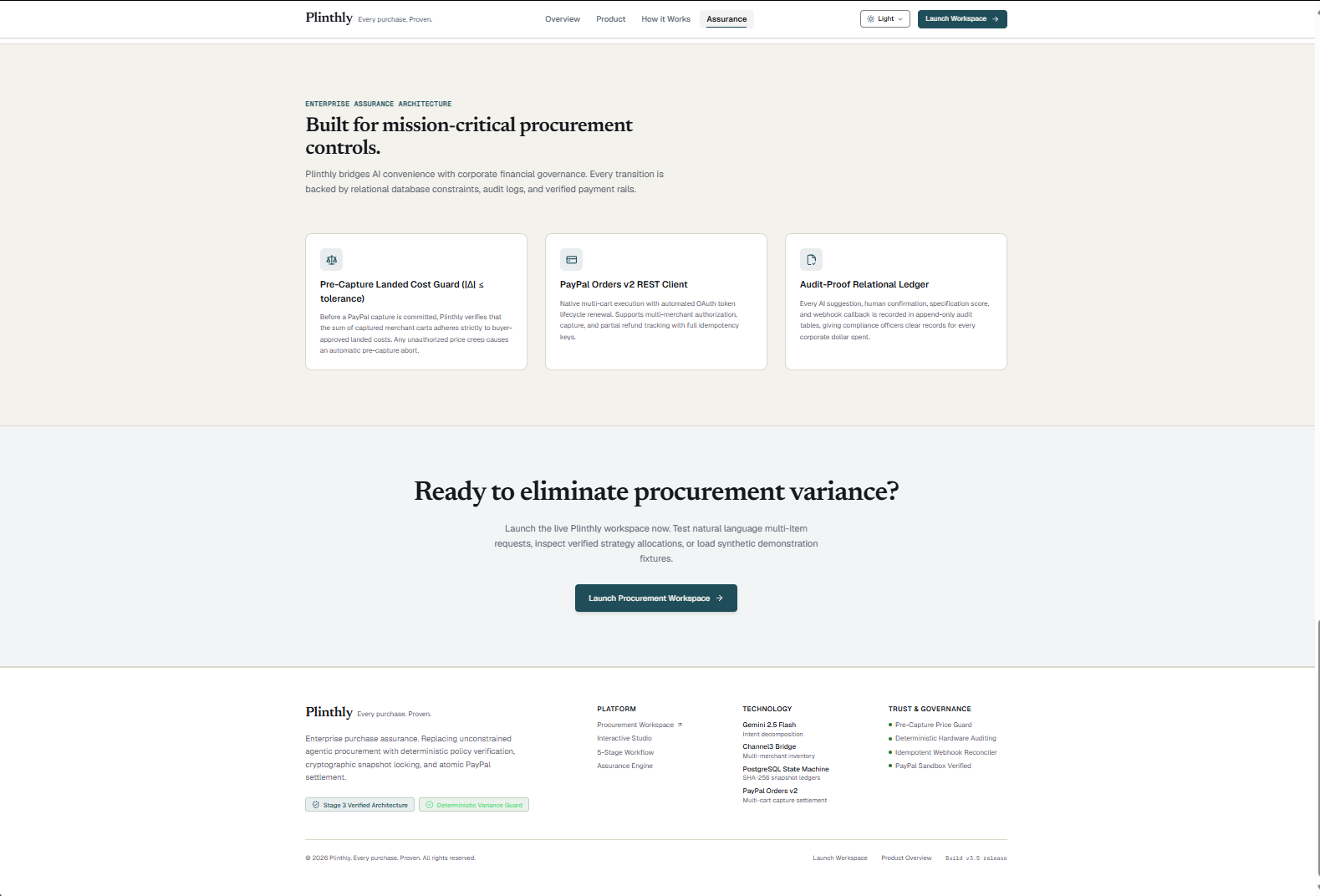
Light Mode — An alternate view of Plinthly’s assurance architecture.
-
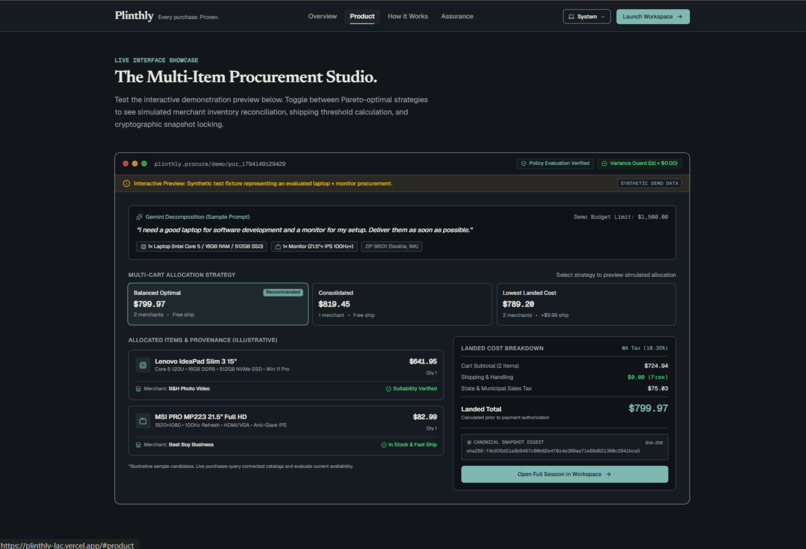
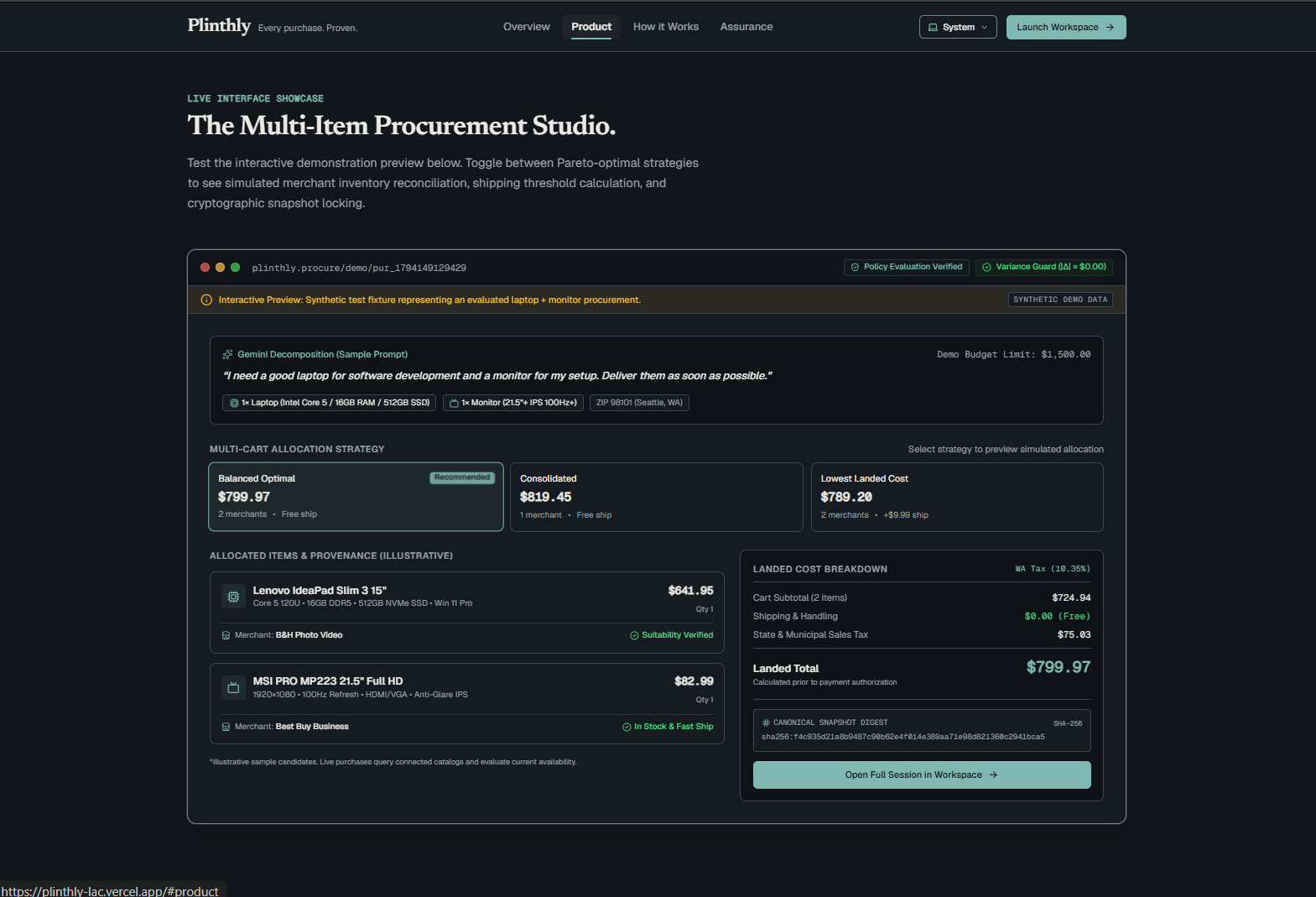
Procurement Studio — Multi-merchant product allocation and landed-cost comparison.
Inspiration
Procurement often involves scattered product listings, inconsistent seller information, unclear delivery costs, and decisions made without sufficient evidence. I wanted to build a system that makes purchasing more transparent, verifiable, and controlled. This led to Plinthly — Every purchase. Proven.
What it does
Plinthly is an AI-powered procurement assurance platform that transforms natural-language purchase requests into structured, evidence-backed procurement workflows. It discovers products across multiple merchants, compares four procurement strategies, evaluates product suitability and seller reliability, and tracks shipping, taxes, and landed costs. It also provides buyer approval controls, PayPal payment integration, and persistent audit records.
How we built it
I built Plinthly using Next.js, React, TypeScript, Tailwind CSS, Node.js, PostgreSQL, and Prisma ORM. Google Gemini powers purchase intent decomposition, while Channel3 supports product discovery. A deterministic procurement engine evaluates product suitability, seller evidence, and procurement strategies. PayPal Orders v2 and Sandbox APIs support payment authorization, capture, refunds, and webhook reconciliation. I also implemented idempotency controls, SHA-256 snapshot digests, and cryptographic attestation.
Challenges we ran into
One of the biggest challenges was ensuring that procurement recommendations were based on evidence rather than assumptions. Product discovery does not always provide reliable shipping and tax information, so I implemented fail-closed validation instead of treating missing costs as zero. I also worked through payment idempotency, webhook reconciliation, database consistency, cryptographic verification, and secure authentication.
Accomplishments that we're proud of
I built a multi-item procurement workflow with four distinct procurement strategies, deterministic product suitability evaluation, seller-evidence verification, and landed-cost validation. I also integrated PayPal Sandbox payment workflows, implemented idempotent payment operations, and developed persistent audit records with cryptographic integrity verification.
What we learned
I learned that building a trustworthy AI-powered procurement system requires more than connecting an LLM to product APIs. AI is useful for understanding intent, but financial decisions need deterministic validation, reliable evidence, explicit human approval, and secure payment controls. I also gained practical experience with PayPal APIs, PostgreSQL transactions, webhook processing, idempotency, and cryptographic verification.
What's next for Plinthly
My next steps include improving merchant coverage, integrating more reliable real-time shipping and tax quotes, strengthening production authentication, expanding procurement analytics, and improving the judge and buyer experience.
I envision Plinthly becoming a dependable procurement assurance layer where every recommendation, approval, and payment can be traced back to verifiable evidence.
Built With
- ag-grid
- anthropic-claude
- channel3
- docker
- google-gemini
- next.js
- node.js
- paypal-developer-platform
- paypal-orders-v2
- paypal-webhooks
- postgresql
- prisma-orm
- react
- sha-256
- tailwind-css
- typescript
- vercel
- vitest
- zod

