-
-
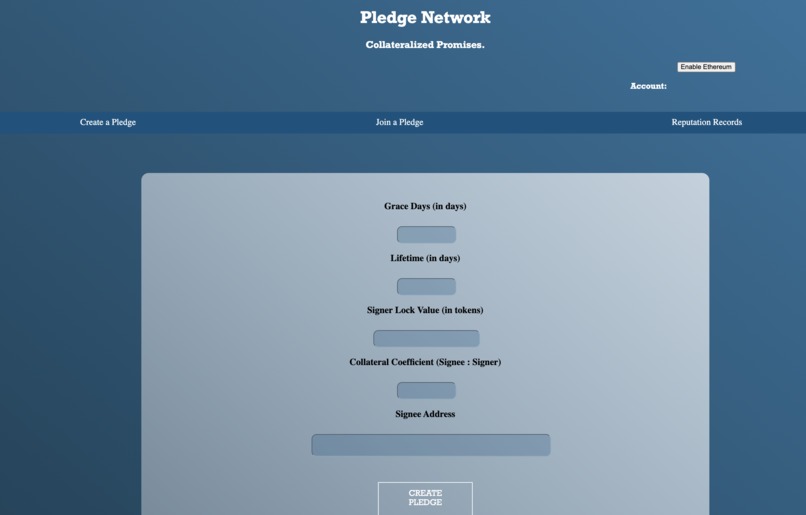
Pledge creation UI
-
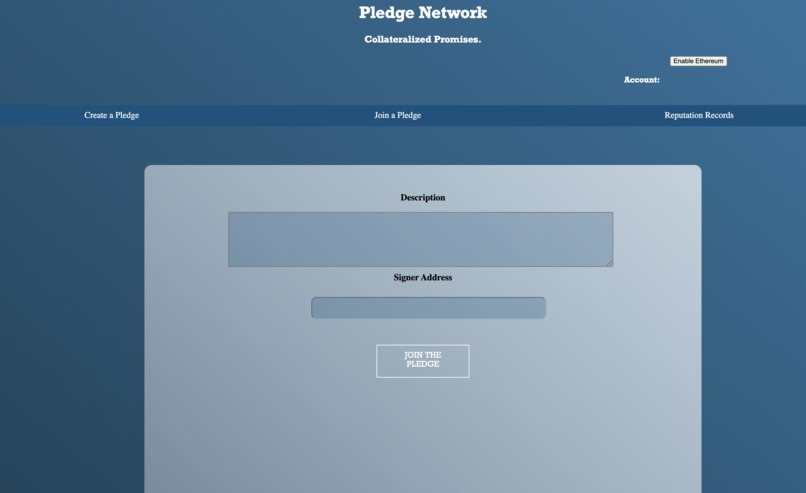
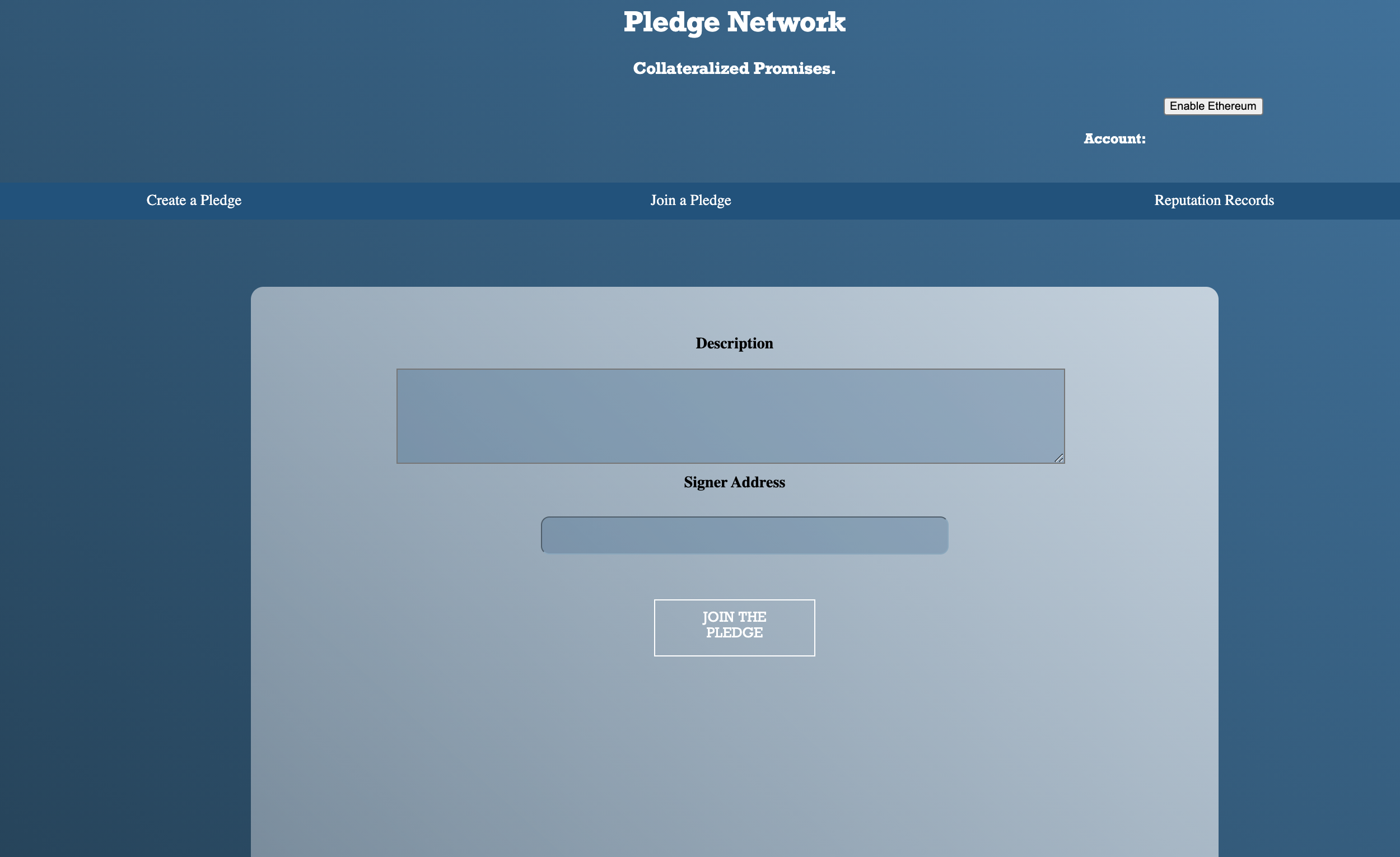
Join Pledge UI
-
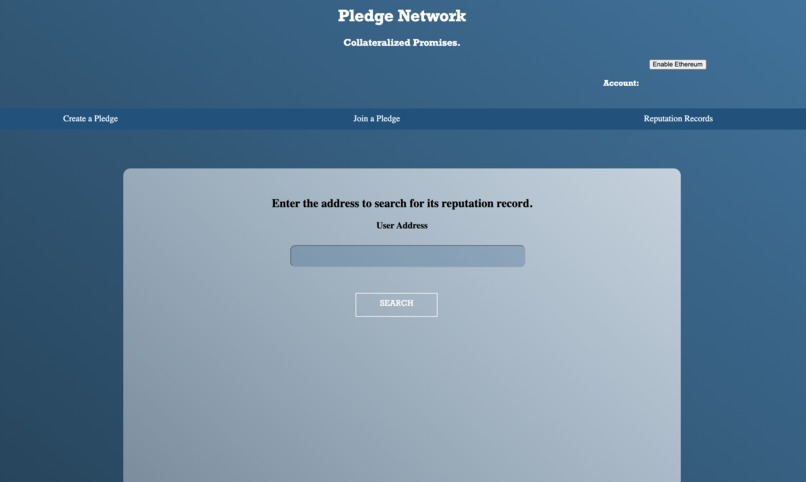
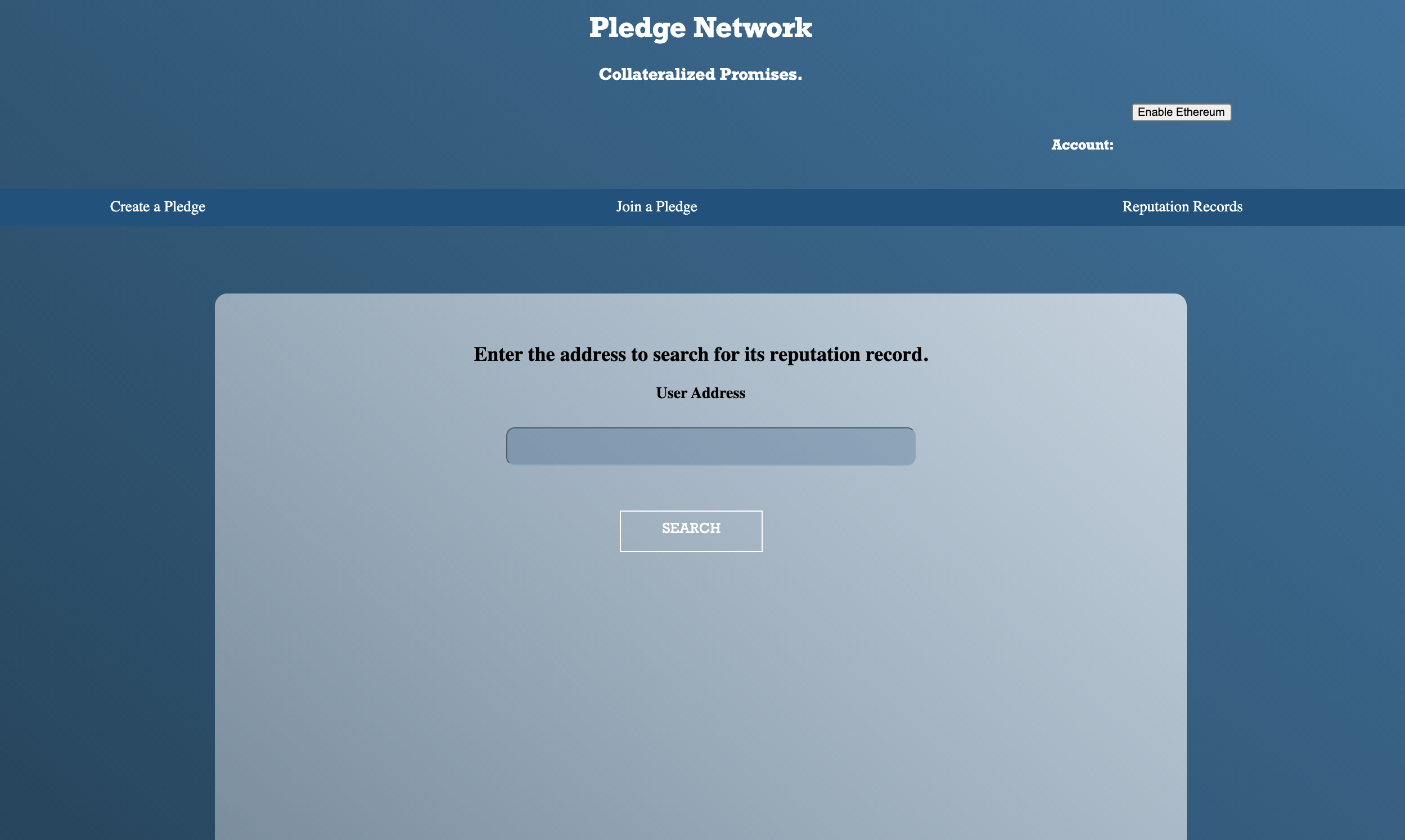
Reputation Record Explorer UI
Inspiration
The nature of any kind of deal requires trust between two parties, therefore it's unlikely that two strangers will take part in a deal without a pre-established trust. Trust is established by putting something valuable at risk:
A client is inclined to trust their lawyer because the lawyer has put his reputation at stake by taking the client's case.
A landlord (signer) trusts the tenant(signee) because s/he received a security deposit.
Pledge Network aims to use the principle advantages of a blockchain (immutability, transparency, security) and tokenomics to depict risk-for-trust model on-chain.
What it does
Pledge network is a protocol that creates time locked smart contracts that can hold the platform's native token as a collateral. There are two roles in the system: Signee and Signer.
Signer and Signee’s off chain deals are represented by smart contracts collateralized from both parties at a ratio determined by the Signer. When both parties have staked their collaterals, a ChainLink alarm clock starts countdown for a time period declared by the Signer. Both parties must mark the contract as passed before the timer expires or their tokens will partially get burned at a rate calculated by the (failedDeals / totalDeals) Reputation Record of each user. After finalization, pledge results are recorded to the Reputation Record for each user.
How we built it
We used Truffle for debugging, testing & deployment. OpenZeppelin's ERC20 template was used to create the platform's native token MERIT. Javascript & Ganache is used for time dependent testing of contracts. Deployment was done on Avalanche FUJI testnet.
Challenges we ran into
We had no Front End experience, so HTML and CSS took an unexpected amount of time. Bridging smart contracts to the UI is still missing.
Accomplishments that we're proud of
Deployed contracts to FUJI for the first time.
What we learned
Developing a net deflationary tokenomics that incentivizes a chosen group of actors. Inheriting from Chainlink Connecting to FUJI.
What's next for pledge.network
We aim to integrate IPFS to upload large PDFs, (residential lease agreement, car rental agreement etc.) save the hash in the contract for further accountability and legal obligation for both parties.
Finish User Interface.
Why Avalanche ?
Superior TPS and security aside, Avalanche will be offering subnets with their own validators. Separate validator sets for each subnet will make sure network congestion in subnets won’t affect each other. Also, protocols will be able to implement their own incentive scheme for their validators. Thus Avalanche’s architecture allows for a more flexible and scalable solution for protocols, and is the most suitable option for Pledge Network.
Contract Addresses at FUJI:
MERIT : 0x08c91410b804B2e97AF4Df4859E24b2c696c4AC4
Main : 0x2fD3C9Fc82cea9469b3298767e1a57c85E44B6C9


Log in or sign up for Devpost to join the conversation.