-
-
GlobalCharge Hackathon VRP Process Flow
Inspiration
At GlobalCharge we’re big fans of open banking payments and believe it has a huge role to play in the payments mix over the next 10 years. From lower processing fees and frictionless user flows, to zero chargebacks and instant settlement the benefits to merchants and users alike are compelling. However, there’s a gap when it comes to subscription billing. Open banking doesn’t offer compelling functionality when it comes to subscription payments and some of our merchant partners are holding back on an open banking roll-out until a solution can be found. Many merchants utilise card on file solutions when it comes to subscription / recurring billing, involving one initial authorisation followed by seamless recurring payments. Our inspiration for the hackathon was to showcase to our merchants an open banking solution to rival or better card on file with a high profile use case. As a merchant with a high percentage of card on file transactions we reached out to our good friends at Sony PlayStation and the project was born. Our goal was to use a VRP consent to link a user’s bank account with their PlayStation user profile to facilitate seamless one click billing.
What we learned
First and foremost we learned this was a solution that digital merchants would love to have! Another key takeaway was just how important card on file payments are in the processing of subscriptions with some merchants sending as many as 90% of card payments through as card on file. In researching the project we also discovered the enormity of the subscription e-commerce industry ( $487B by 2025 ). It’s a market we’re already heavily involved in so we knew it was large but the speed at which the sector is growing and the projected revenues took even us by surprise. Our belief is that for open banking to take a significant slice of this market then it must be feature competitive with existing card solutions.
How we built our project
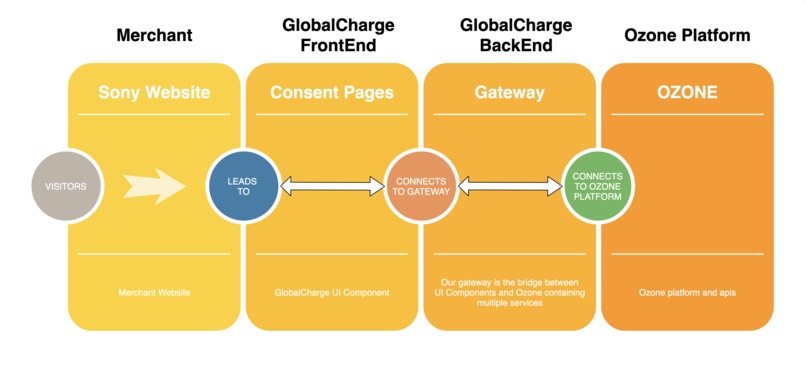
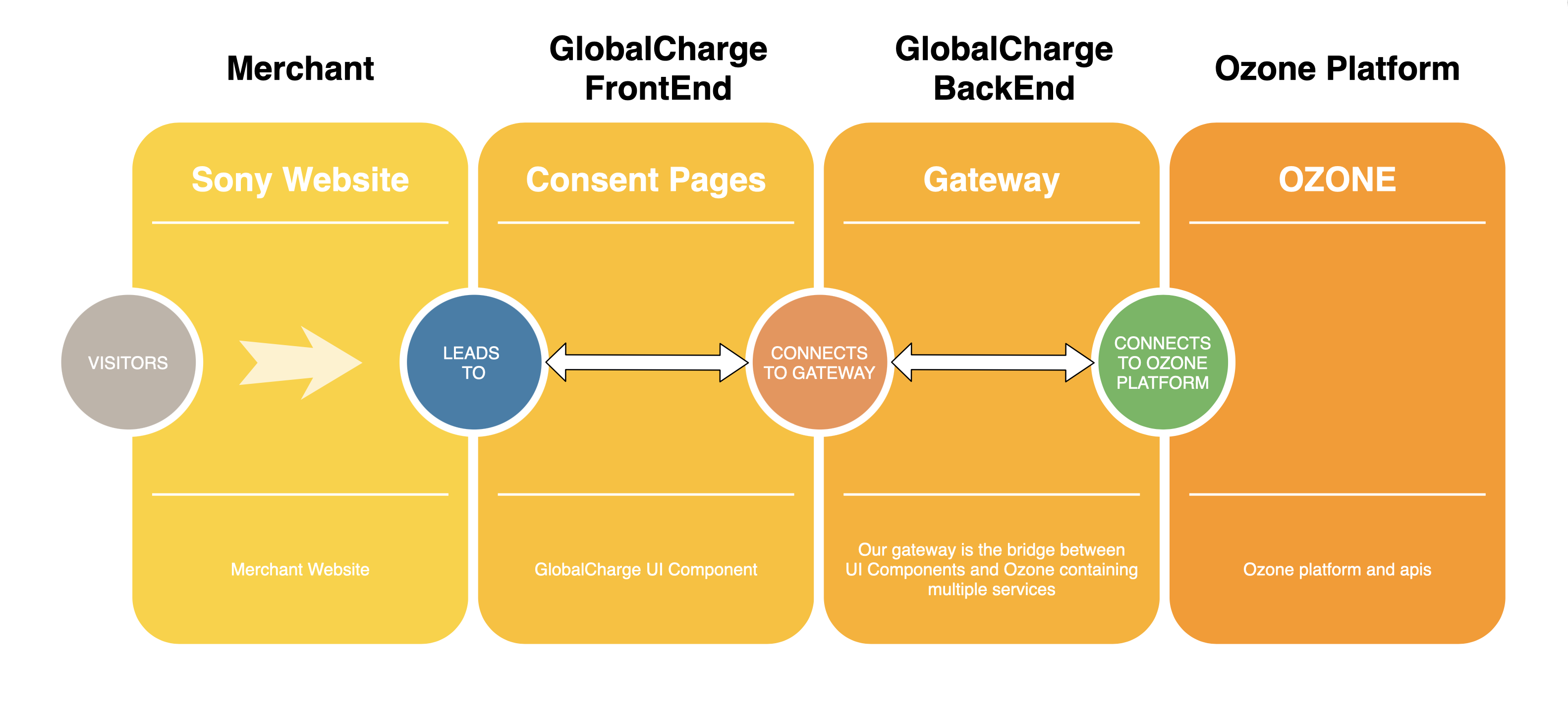
Our project was designed following micro-service architecture pattern and the project was broadly split into 2 halves. The first system is a simple lightweight web application built with AngulerJS and Node.js for demo purpose. This included a mock of the PlayStation website as well as the UI component for interacting with the open banking infrastructure. The second system is the gateway, a combination of several scalable micro-services which integrates with Ozone’s APIs.
The micro-services are executing independent tasks loosely coupled with each other. The services are event driven utilising the messaging broker platform Apache ActiveMQ. Through the gateway, we expose two APIs to complete a VRP transaction. The first API is to authorise the user, by getting a consent through Ozone’s API, and the second API is to trigger a payment using the existing consent. The API endpoints are exposed using HTTPS with a valid jwt token as part of security.
The project started with an initial call with Sony where we outlined our vision for the product. Once we had their buy in, we set to work on recreating the PlayStation website. Wireframes enabled us to plan out the scope of the project and agree on the user journey and UI. Utilising our management tools the project evolved and daily stand ups between the designers, backend team, infrastructure engineer and product owner kept the project on track. We completed several testing sessions using independent reviewers to ensure we achieved our objectives.
Challenges
We were familiar with the technologies chosen and didn’t encounter any major technical difficulties. We found the sandbox documentation clear and easy to follow. We experienced a final redirection issue and a minor certificate incompatibility problem but with Ozone’s help these were quickly resolved.
The biggest decision we faced was to decide on which platform to develop the project. PlayStation’s largest platform is the console itself but there are also PS apps and the main PS website. Having evaluated all the options we felt the website would be the best solution. One of the key hackathon requirements was to share a link to the working project so that ruled out the console itself as it wouldn’t have been practical to ship a PS5 to all interested parties. Although if we had I’m sure there would have been a lot of interested parties! That left the apps and the website. We felt an app user journey may have lost some of its impact without a sandbox bank app to connect to and we were also keen to include QR code technology to show how we might shift the user from a desktop or console environment onto a mobile device so we opted to develop a web solution.
Built With
- angular.js
- apacheactivemq
- docker
- dockerswarm
- java
- jwt
- mariadb
- note.js
- springboot
- websocket


Log in or sign up for Devpost to join the conversation.