-
-

UI screenshot 1
-
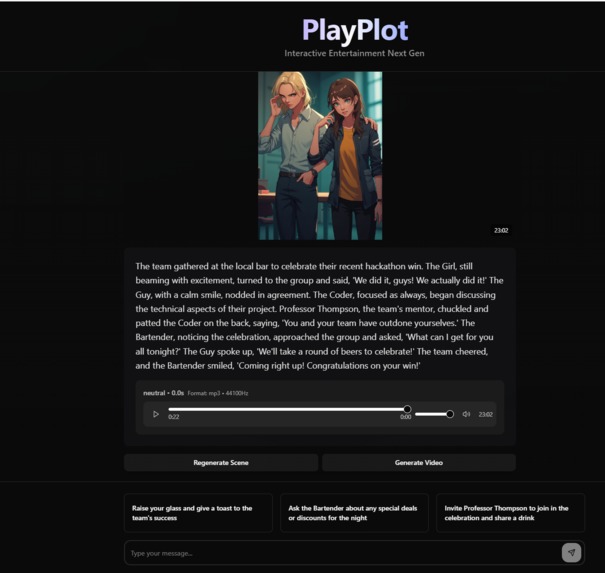
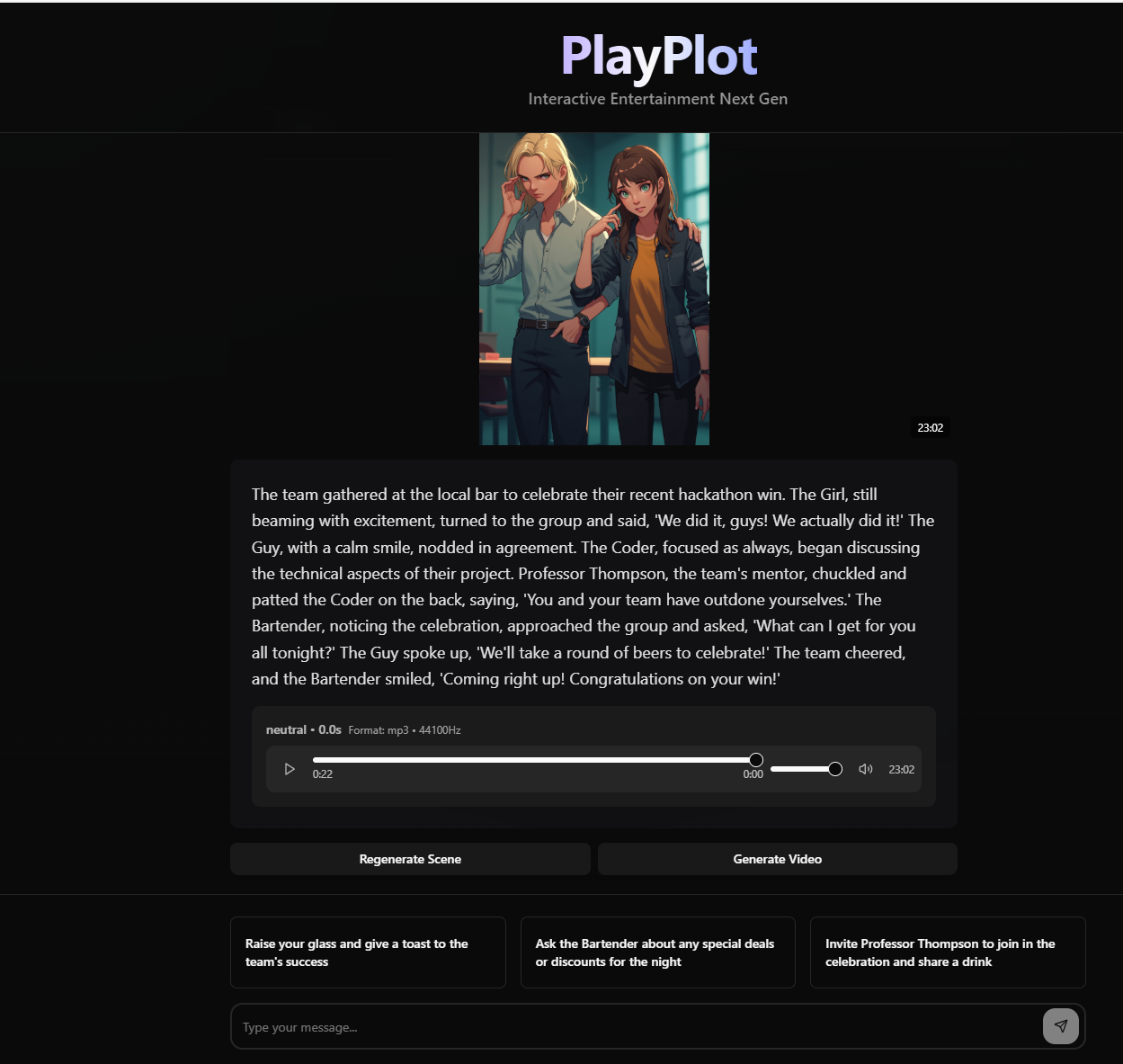
UI screenshot 2
-
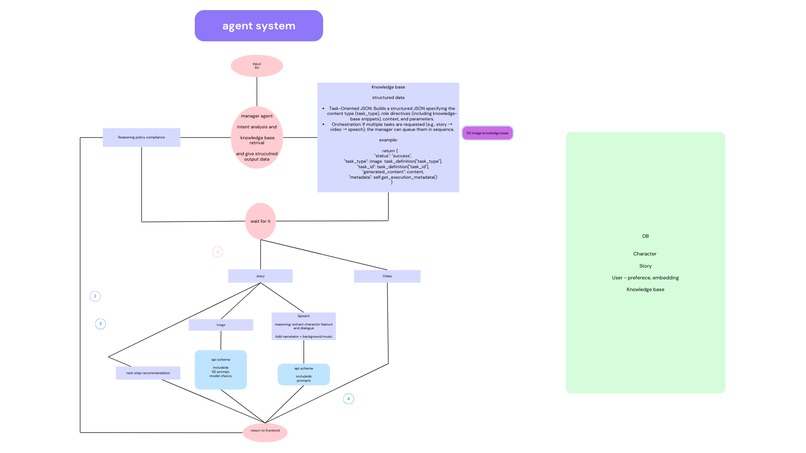
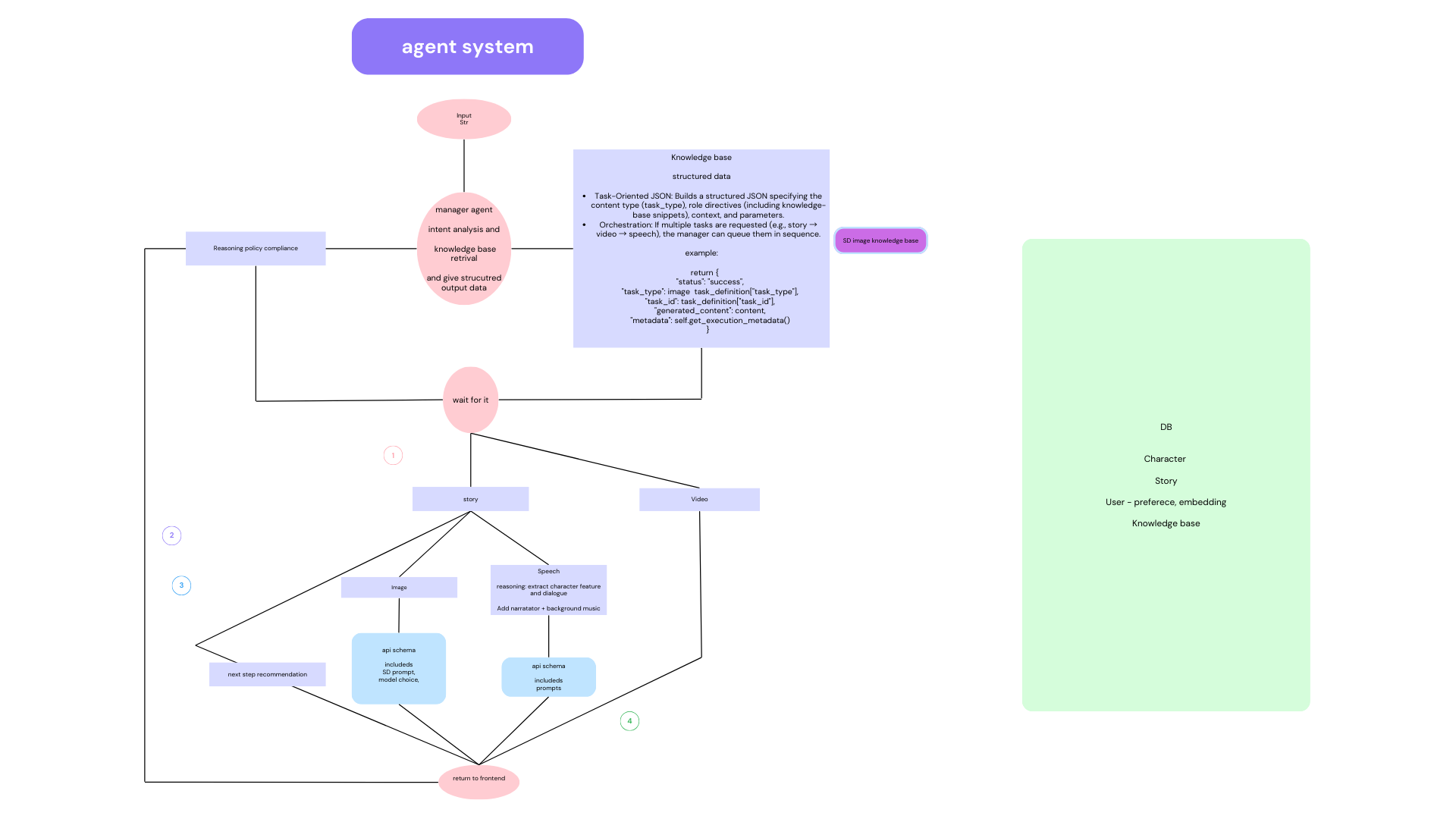
Tech flowchart

Inspiration
The seed for Playplot was planted by the growing demand for engaging, personalized content in today's digital landscape. We saw the potential of AI to revolutionize storytelling, breaking down traditional barriers for creators and offering audiences richer, more immersive experiences. We were particularly inspired by the rise of interactive entertainment and the desire for deeper audience participation. We wanted to create a platform that would empower storytellers, foster creativity, and push the boundaries of how stories are told and experienced.
What it does
Playplot is an AI-powered interactive storytelling platform. It empowers creators to easily generate and share engaging narratives, while offering gamers deeply personalized and immersive experiences. Key features include:
AI-assisted content generation: Creators can leverage AI tools to develop stories, characters, and plot lines, significantly reducing production time and effort. Interactive gameplay: Gamers experience stories in a dynamic way, influencing plotlines and experiencing branching narratives based on their choices. Community platform: A space for creators to collaborate, share their work, and build an audience, while gamers can access a vast library of community-created content. Multi-format support: The platform generates content in various formats including stories, images, and potentially videos, enhancing the storytelling experience.
How we built it
Playplot's foundation is a sophisticated AI system built on custom-trained Large Language Models and fine-tuned generative models. Our system uses a task-oriented knowledge base managed by an agent that analyzes user input, retrieves data, and queues tasks for content generation. We utilize second-layer agents for specific content formats like stories, images, and videos.
Technically, we leveraged: LLMs: Deepseek, Perplexity, OpenAI, and Claude for text and workflow generation. Frontend: Next.js, Tailwind CSS, Radix UI. AI Tools: FAL.AI for image generation (and potentially video), Elevenlabs for voice generation (if applicable). Workflow: Cursor for development efficiency. Version Control: Git, hosted on GitHub (public repository: https://github.com/jessicatsao1/PlayPlot).
Our team consists of: Peter Liu: Backend Development Engineer and overall lead. Jessica Cao: Backend Development Engineer. QuanSheng Zheng: Frontend Development Engineer. Shaun Zhang: Overall Support Engineer.
Challenges we ran into
Maintaining content coherence and quality: Ensuring the AI generated narratives were compelling, consistent, and aligned with the user's creative vision required significant fine-tuning and prompt engineering. Balancing AI assistance with creative control: Finding the right balance between AI-driven generation and user input was crucial. We wanted to empower creators without overwhelming their creative process. Real-time AI moderation: Implementing effective moderation to ensure content compliance while maintaining platform openness presented a complex technical challenge. Integrating various technologies: Connecting different LLMs, frontend frameworks, and AI tools into a seamless workflow required significant technical expertise and problem-solving.
Accomplishments that we're proud of
Developing a functional prototype: We successfully built a working prototype that demonstrates the core features of Playplot, including rapid content generation across multiple formats while maintaining quality and coherence. Building a scalable architecture: Our architecture is designed to handle increasing user traffic and content volume, with clear pathways for incorporating advanced features like Web3 integration and enhanced AI capabilities. Assembling a talented and dedicated team: We brought together a skilled team with the technical expertise and passion needed to bring Playplot to life. Open-sourcing our project: We're proud to share our work with the community through our public GitHub repository, fostering collaboration and learning.
What we learned
The power of prompt engineering: We discovered the critical role of crafting effective prompts to guide AI content generation and achieve desired results. The importance of iterative development: Building a project like Playplot requires constant iteration, testing, and refinement based on user feedback and technological advancements. The collaborative potential of AI and humans: We witnessed firsthand how AI can augment human creativity, enabling new forms of storytelling and interactive experiences. The challenges of managing a complex tech stack: Integrating various cutting-edge technologies requires careful planning, robust testing, and a willingness to adapt to evolving landscapes.
What's next for Playplot
Expanding platform features: We plan to add more advanced features like Web3 integration for decentralized content ownership and creator compensation, enhanced AI capabilities for more dynamic narratives, and deeper character development systems. Growing the community: We'll focus on attracting both creators and gamers to the platform, fostering a vibrant ecosystem of interactive storytelling. Refining AI models: We will continue to refine our AI models to improve content quality, coherence, and personalization. Exploring new content formats: We'll investigate incorporating new formats like audio and interactive video to broaden the storytelling possibilities on Playplot. Seeking partnerships and funding: We'll explore opportunities to collaborate with industry partners and secure funding to further accelerate Playplot's development and growth.
Built With
- calude
- cursor
- deepseek
- elevenlabs
- fal.ai
- lora
- openai
- perplexity
- radix-ui
- tailwindcss


Log in or sign up for Devpost to join the conversation.