-
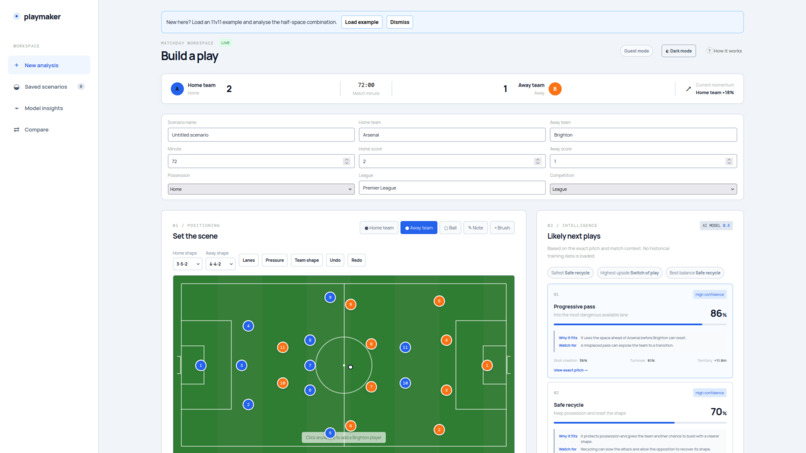
Light mode
-
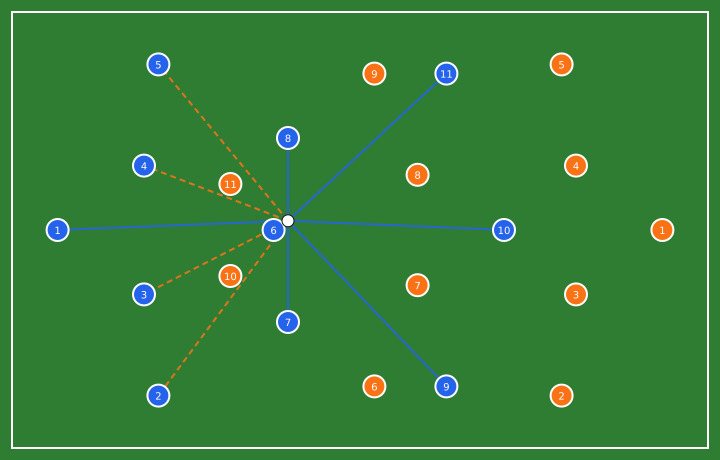
Optimal play breakdown
-
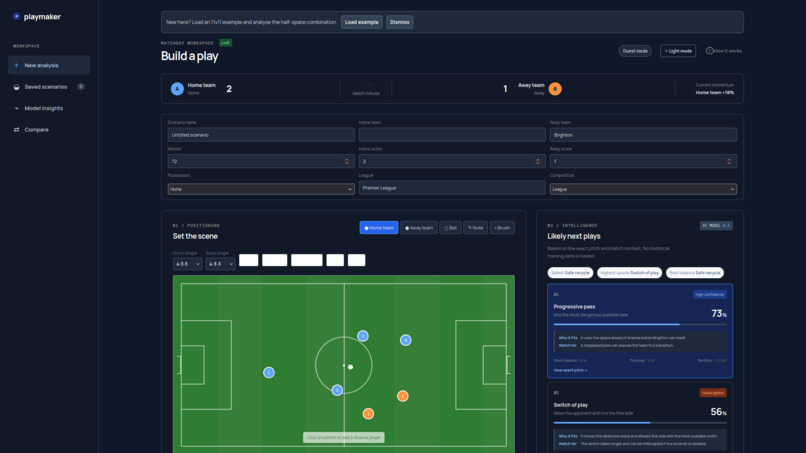
Dark mode

Inspiration
During the 2026 World Cup, I saw BBC showing real-time 3D match animations powered by player-tracking technology. It made complex moments easier to understand and showed how useful visual analysis could be for coaches and fans.
I wanted to explore that idea in a tool of my own: a way for coaches to build a match situation, test possible decisions, and see how a play might develop.
What it does
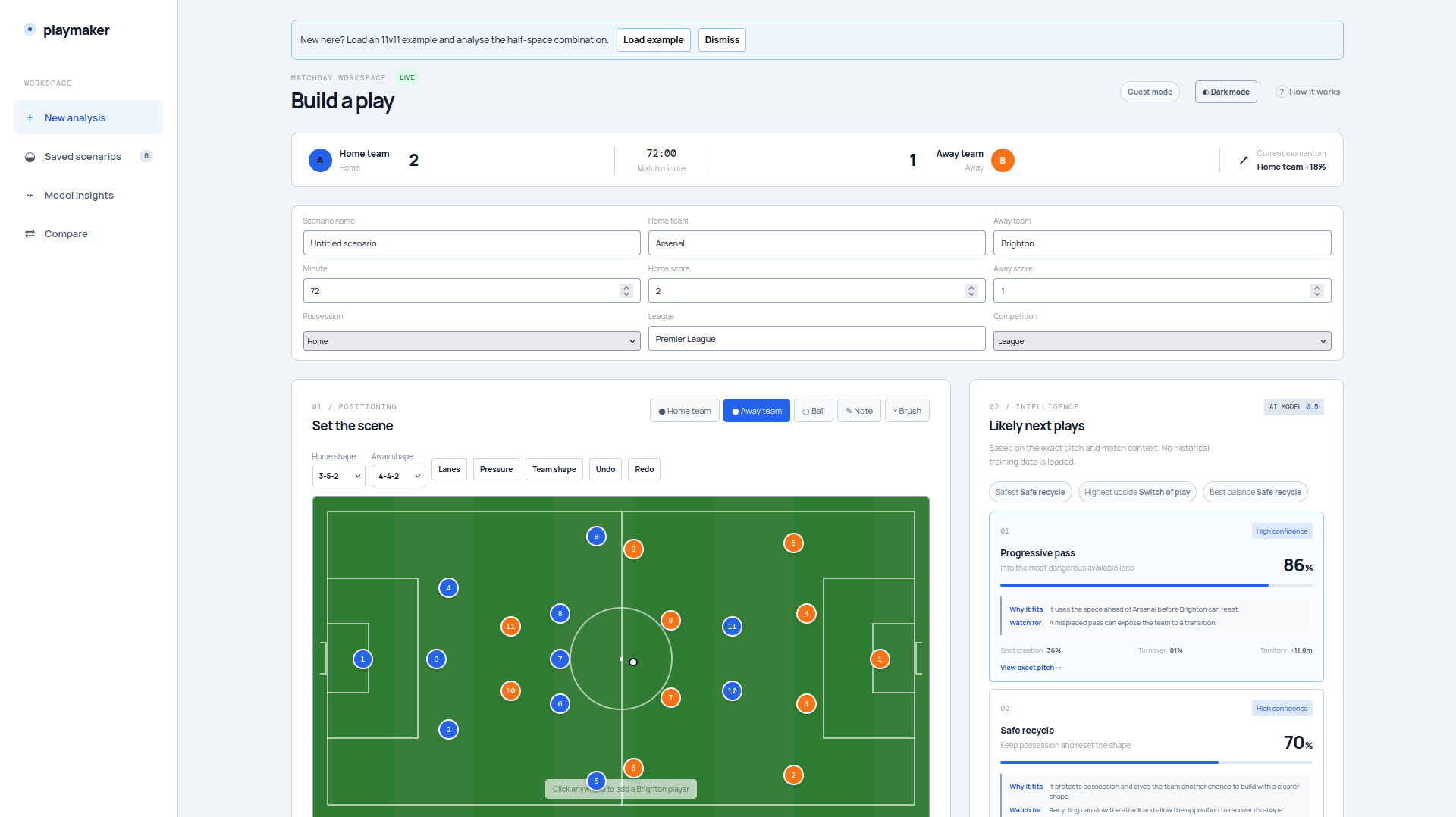
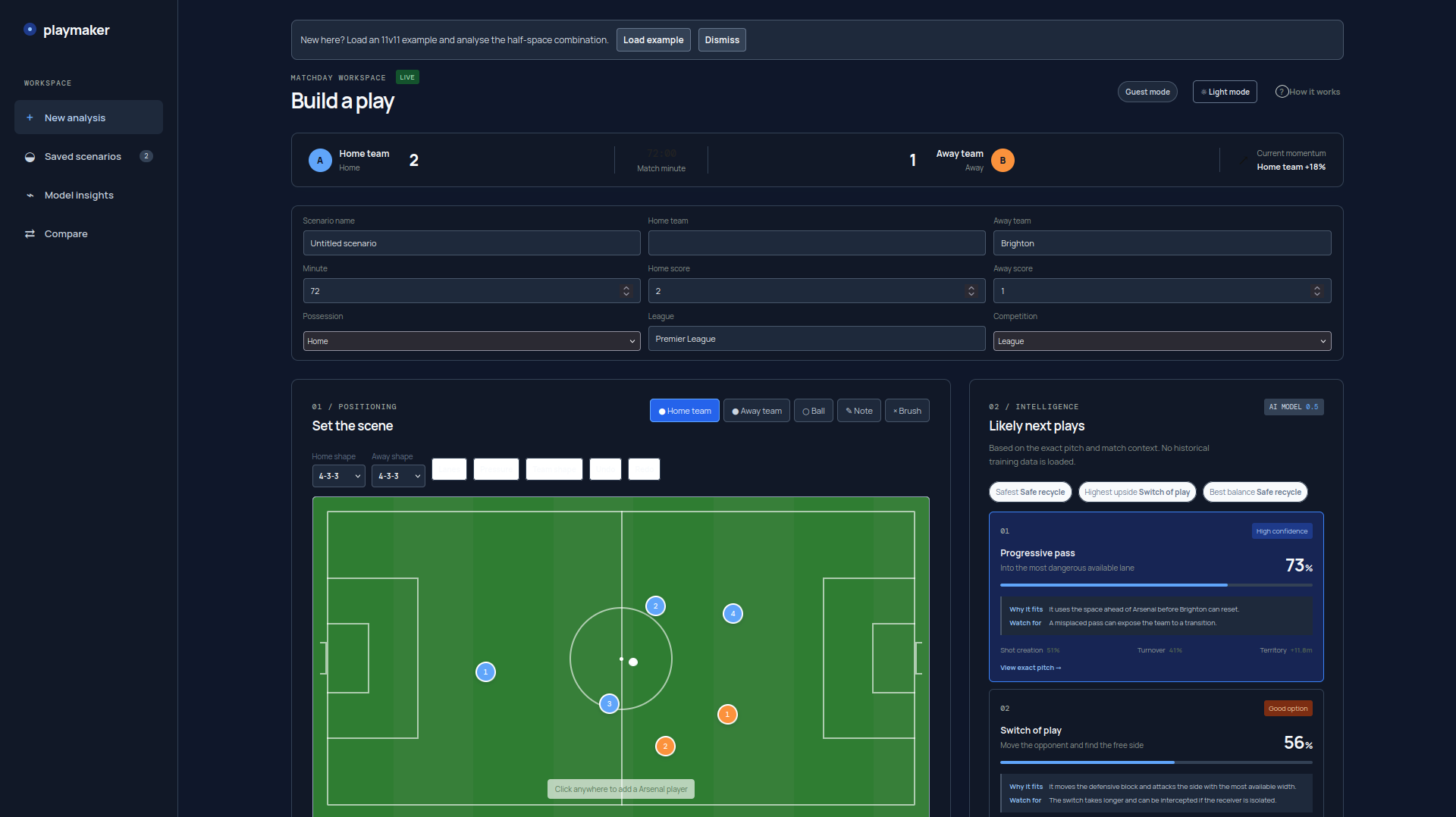
Playmaker is a football tactics platform where users create in-game scenarios on an interactive pitch. They can place and move players and the ball, choose formations, and add match context such as the score, time, possession, team mentality, and risk appetite.
Playmaker analyses the scenario and ranks possible next plays, with estimates for shot creation, turnover risk, and territory gained. It also offers “safest,” “highest upside,” and “best balance” recommendations. Users can replay an animation based on their exact pitch setup, including opponent movement and passing lanes.
How we built it
Playmaker is a web app built with Node.js, HTML, CSS, and JavaScript, with SQLite for accounts and saved scenarios. A Python training script uses StatsBomb Open Data from the 2023/24 Bundesliga season. The model artifact contains 92,391 event samples from 24 matches.
The analysis combines model output with the scenario’s positions and match context. The animations are generated from the user’s pitch setup, so recommendations can be explored visually. Users can also compare and save scenarios, add notes, share them, and export a tactical report or pitch image.
Challenges we ran into
One challenge was translating event data into useful recommendations. Match events provide only part of the picture, so we had to combine model predictions with the players’ positions, opponent pressure, and match context.
We also needed the visualisations to respond to the user’s actual setup. That meant building pitch geometry, movement timelines, and passing-lane checks that use the placed players, rather than showing a fixed example animation.
Finally, we worked to make the recommendations explainable. Showing the reasons, risks, and model coverage helps users understand what shaped a suggestion and where the analysis has limits.
Accomplishments that we’re proud of
We built an interactive scenario editor with drag-and-drop movement, formations, match context, undo and redo, and autosaved drafts. Recommendations can be replayed against the exact scenario, with opponent pressure, passing lanes, and a timeline scrubber.
We’re also proud that Playmaker goes beyond a single prediction: users can compare scenarios, review recommendation trade-offs, collaborate on saved scenarios, and export their analysis. What we learned We learned that a useful prediction needs more than a score. Users need to understand which inputs mattered, what could go wrong, and how a recommendation fits the situation they created.
We also learned to be careful about what the data can support. Event data and freeze frames can inform a tactical baseline, but they are not a substitute for comprehensive, continuous player tracking or validation with coaches.
What’s next for Playmaker
Next, we’d like to validate the recommendations with coaches and compare them against more historical match outcomes. Better tracking data could make player movement and pressure predictions more realistic.
We’d also like to improve the mobile pitch controls, expand model monitoring and feedback, and add reporting and collaboration tools for teams.


Log in or sign up for Devpost to join the conversation.