-
-
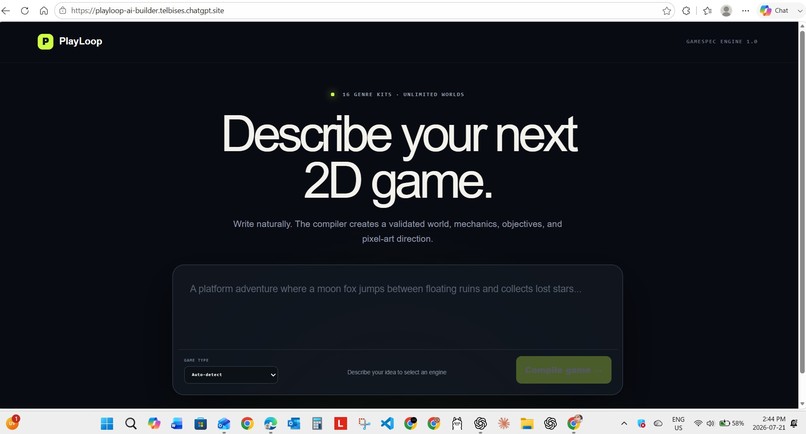
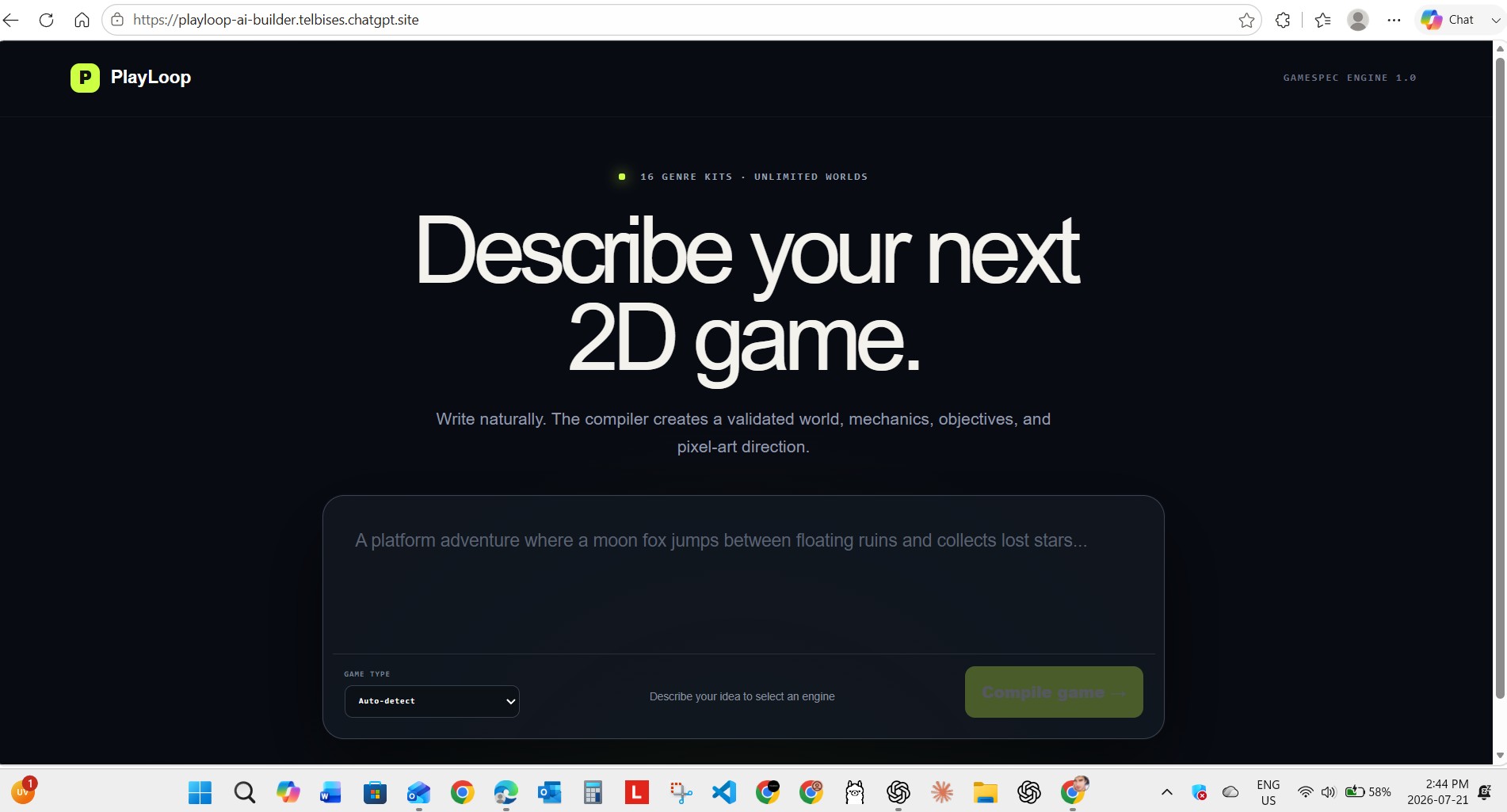
Main Landing Page
-
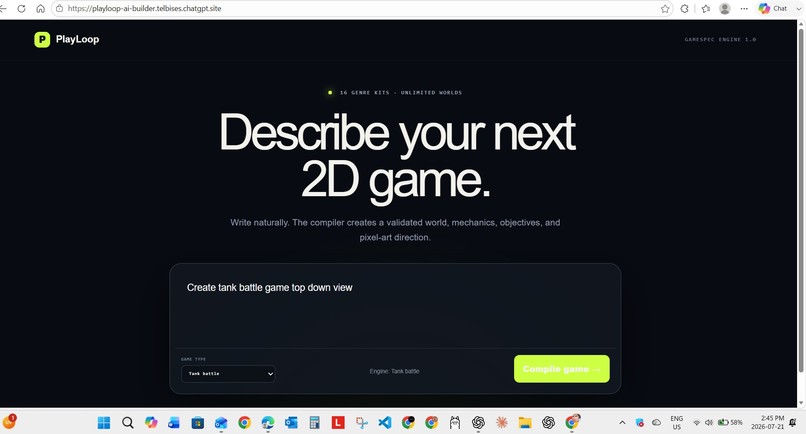
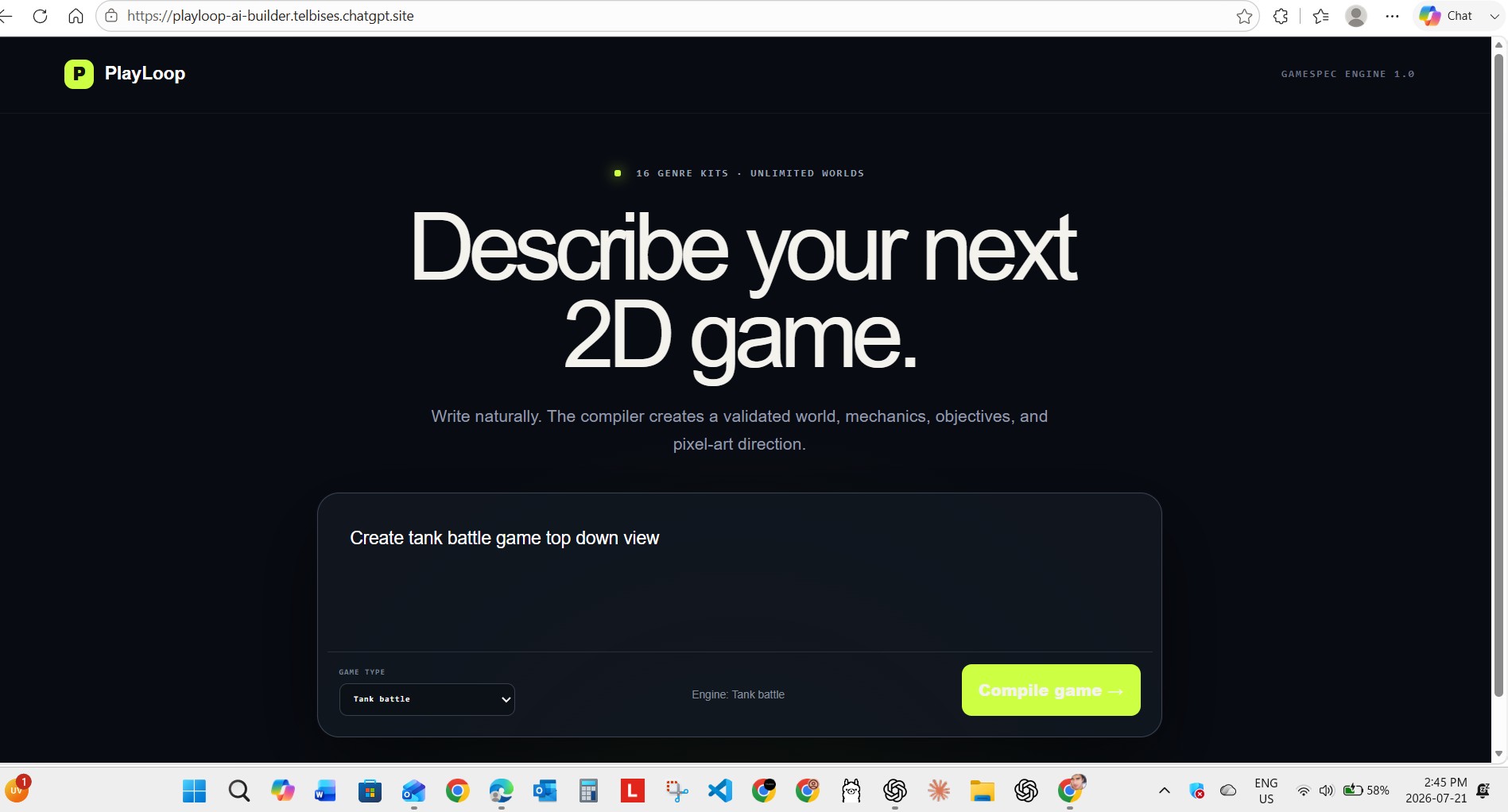
Enter Game Prompt
-
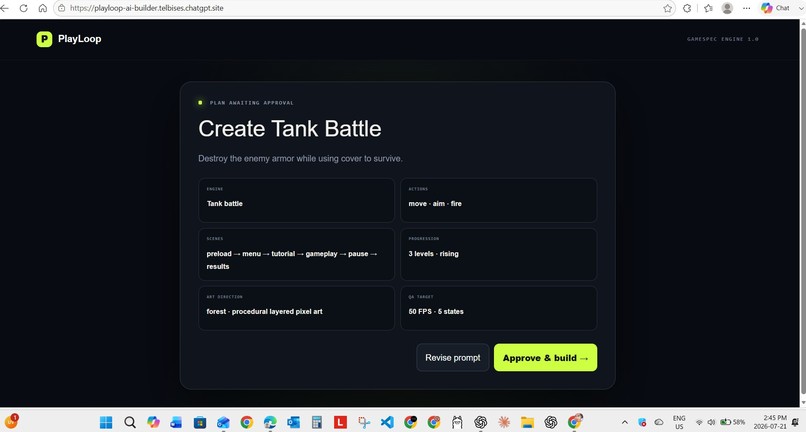
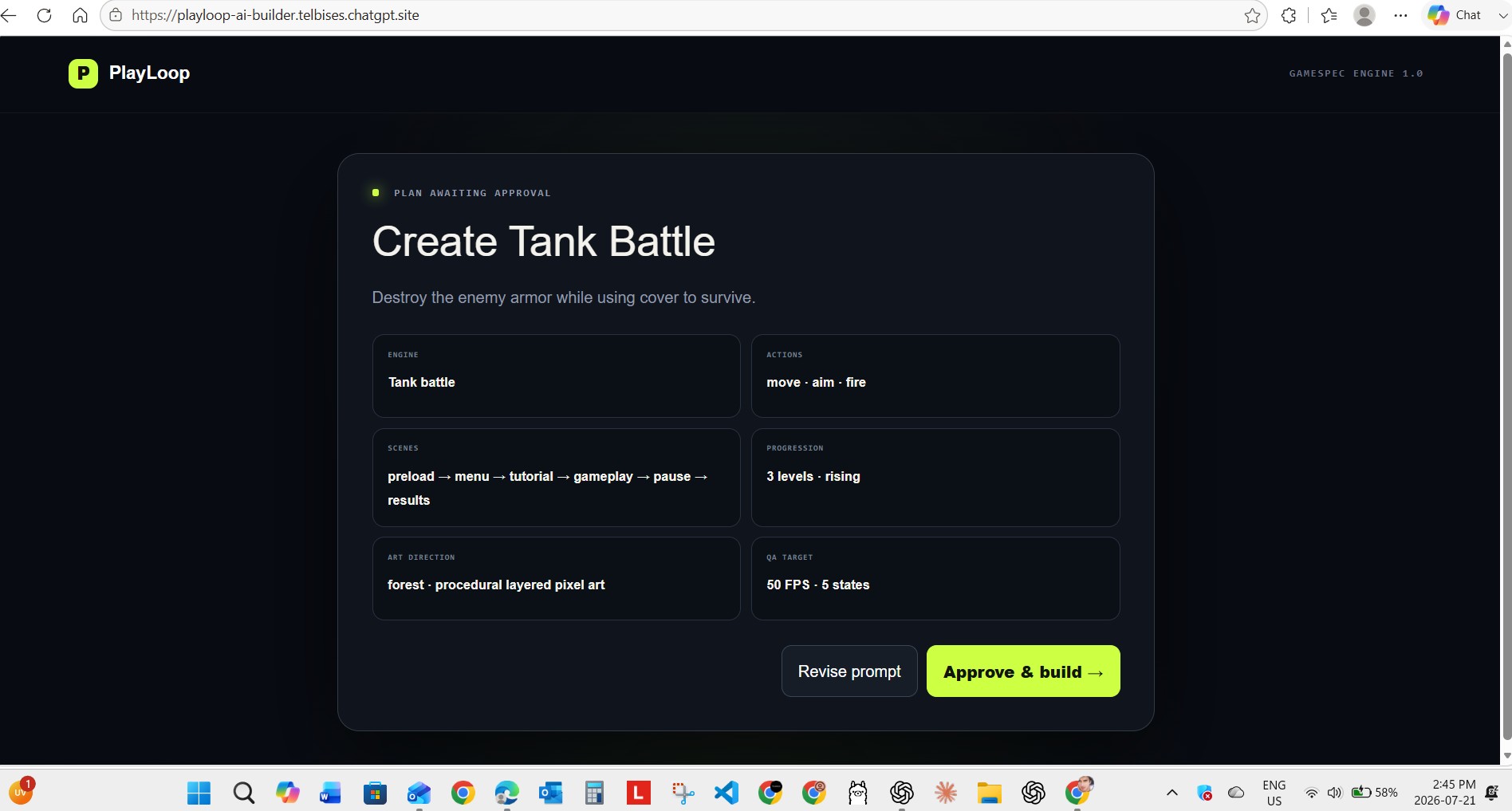
System Identify Theme
-
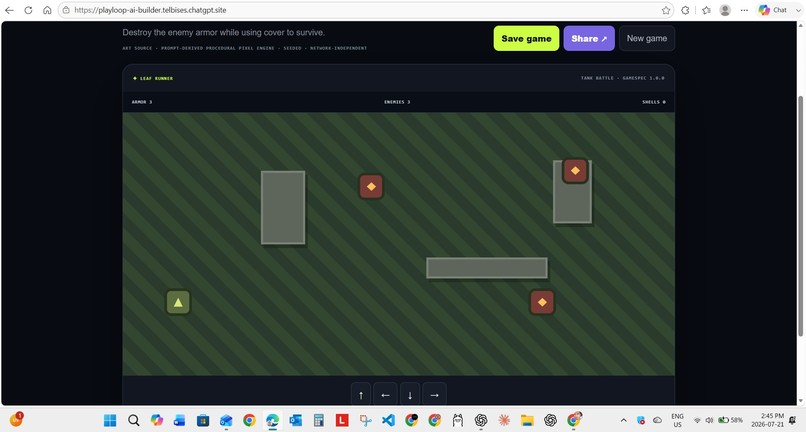
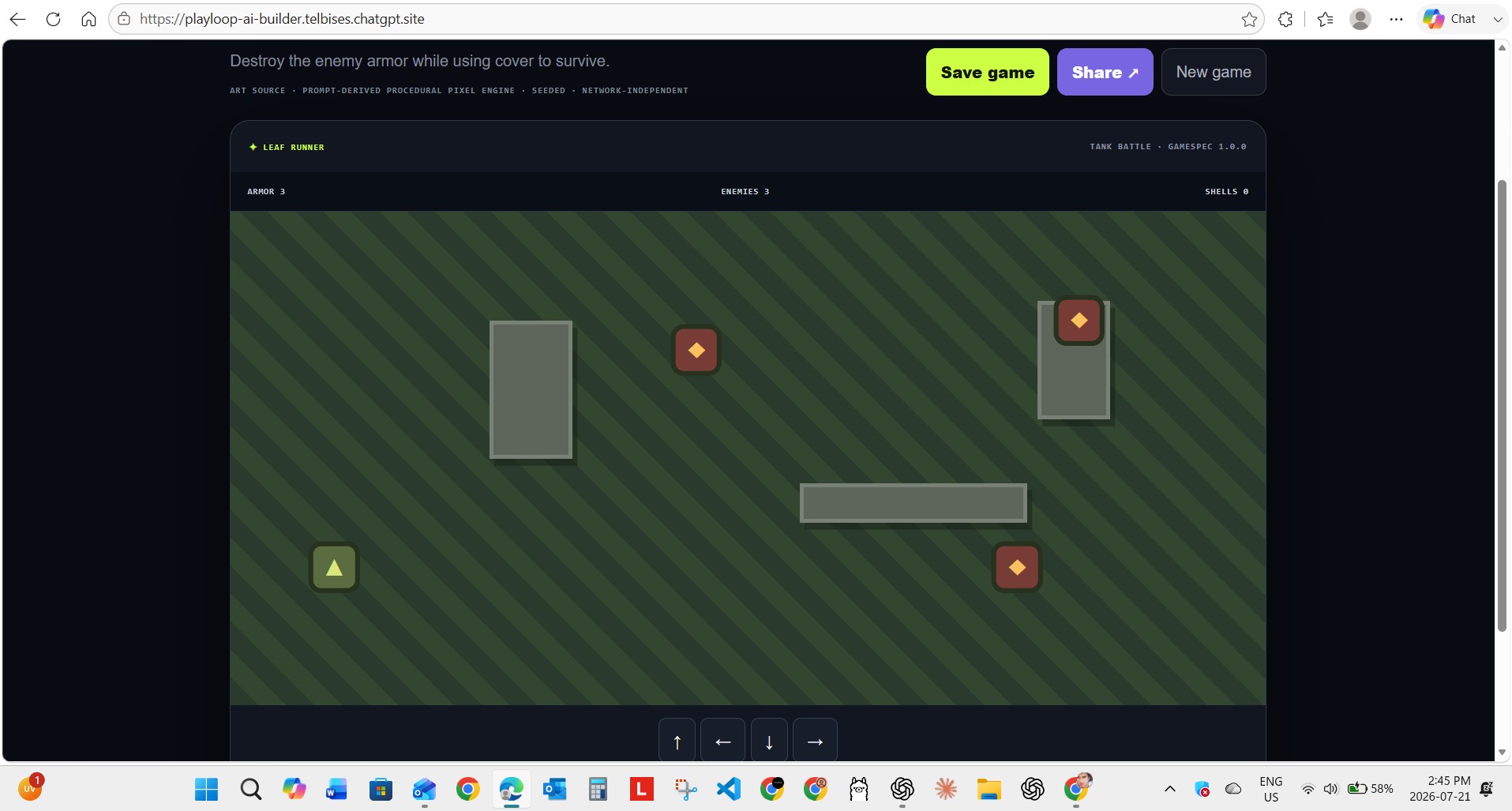
Tank Battle Game
Inspiration
Building even a simple game requires combining game design, programming, artwork, testing, deployment, and debugging. Existing AI coding tools can help write code, but they often expect the creator to understand repositories, frameworks, terminals, and deployment.
We wanted to make game creation feel more like collaborating with a development team.
PlayLoop AI begins with one question:
What game do you want to create?
The platform converts the user’s idea into a structured plan, asks for approval, and presents the development process in a transparent workspace. The left side explains what the AI developer is doing, while the right side shows the evolving game preview.
What it does
PlayLoop AI provides a prompt-first game-building workflow:
The user describes a game. PlayLoop asks the user to sign in or create an account. The planning agent transforms the prompt into a structured GameSpec. The user reviews, edits, approves, or rejects the plan. The development workflow generates the game project. Build activity appears in a live agent panel. The game runs in an isolated preview. Automated tests identify build and gameplay failures. A repair workflow patches validated problems. The completed game can be saved, reopened, exported, published, and shared.
The platform is designed around reusable mechanic kits supporting genre families such as:
Platformers Racing games Space shooters Snake and grid-based games Falling-block and match puzzles Adventure games Role-playing games Tower defence and strategy Card and board games Sports-inspired games Management and simulation games Visual novels and interactive stories
How we built it
User application
The builder experience uses:
Next.js React TypeScript Tailwind CSS Responsive side-by-side workspace Authentication and personal project accounts Persistent project and game-state storage Game runtime
Generated games use:
Phaser TypeScript Vite Modular gameplay systems Keyboard, pointer, and touch controls Responsive browser rendering Agentic workflow
PlayLoop is designed around five specialized responsibilities:
Planner: converts the prompt into a validated game specification Developer: selects mechanic kits and creates the game files Art Director: defines the visual system and asset manifest QA Agent: builds, launches, and tests the game Repair Agent: fixes verified compilation or gameplay failures
The user remains in control through the plan-approval checkpoint.
Proposed production AI architecture OpenAI Responses API for model interactions OpenAI Agents SDK for orchestration, tools, streaming, and traces Codex for repository-level code generation and repair Structured Outputs for dependable GameSpec generation Zod and JSON Schema for validation Image generation for original game assets Speech and audio services for character voices and sound Infrastructure
The production architecture uses:
PostgreSQL for accounts, projects, versions, plans, and saves Object storage for game builds and generated assets Server-Sent Events for live development updates Isolated sandboxes for generated code Playwright and Vitest for automated testing A CDN for published games
Generated code must run separately from PlayLoop’s primary application, without access to application secrets.
Agent workflow Built with
Use these as Devpost technology tags:
OpenAI OpenAI Responses API OpenAI Agents SDK Codex GPT Next.js React TypeScript Phaser Tailwind CSS Zod PostgreSQL Cloudflare Playwright Vitest Vite Server-Sent Events
Only retain technologies actually present in the submitted build.
Challenges we ran into
Genuine generation versus simulated progress
A convincing interface can display development stages without actually generating new software. We had to clearly separate visual workflow simulation from genuine project creation. The production design therefore requires isolated workspaces, generated files, compilation, preview processes, and real build-event streaming.
Supporting many genres
A single unconstrained prompt cannot reliably produce every kind of game. We designed modular mechanic kits and a structured GameSpec so agents can compose tested systems instead of rewriting every game from scratch.
Running generated code safely
AI-generated code cannot run inside the primary application. We designed the builder around isolated sandboxes with restricted networking, dependency allowlists, resource limits, and separate preview origins.
Testing gameplay
A game can compile successfully and still be impossible to play. PlayLoop’s QA design tests complete paths—including starting, moving, scoring, losing, winning, restarting, saving, and reloading.
Maintaining user control
We did not want the system to immediately build an incorrect interpretation. The approval gate lets the creator inspect and edit the proposed mechanics before development begins.
Accomplishments that we're proud of
Created a prompt-first game-builder experience Introduced a human approval gate before development Designed a transparent two-pane agent workspace Built multiple playable 2D game prototypes Added account-based project persistence Added cloud saves and shareable experiences Developed a structured approach to multiple genre families Designed a secure generation, testing, and repair pipeline Kept game creation approachable for users without traditional development experience
What we learned
Reliable AI game development is not simply a code-generation problem. It requires a contract connecting the user’s idea, mechanics, files, assets, runtime, and tests.
Our most important architectural decision was making GameSpec that contract.
We also learned that human approval is essential. Users can identify an incorrect creative direction much faster at the planning stage than after an entire game has been generated.
Finally, automated game testing must evaluate player outcomes, not only whether the page loads.
What's next for PlayLoop AI
The next PlayLoop milestones are:
Complete production OpenAI model integration Launch isolated per-project build sandboxes Stream real file and build events into the workspace Add automatic browser gameplay testing Implement targeted repair loops Generate consistent sprite sheets and environments Add visual game editing after generation Support project versioning, rollback, and remixing Expand tested genre kits Add optional cooperative multiplayer Build a creator marketplace for original games and templates
Built With
- agents
- api
- cloudflare
- codex
- css
- events
- gpt
- next.js
- openai
- penai
- phaser.js
- playwright
- postgresql
- react
- responses
- sdk
- server-sent
- tailwind
- typescript
- vite
- vitest
- zod

Log in or sign up for Devpost to join the conversation.