-
-

Player Two
-
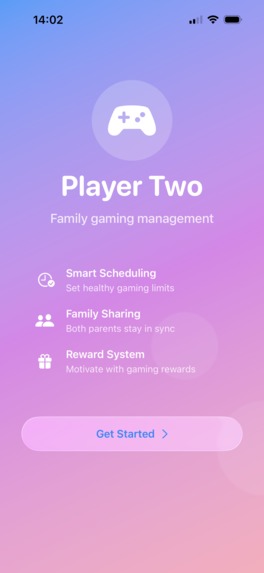
Player Two
-
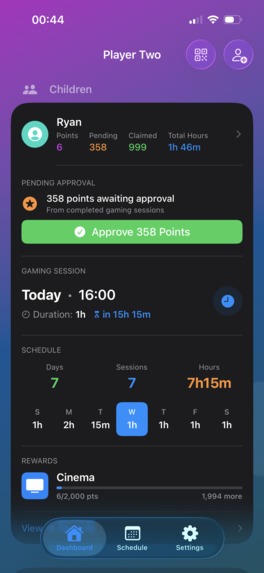
Dashboard
-
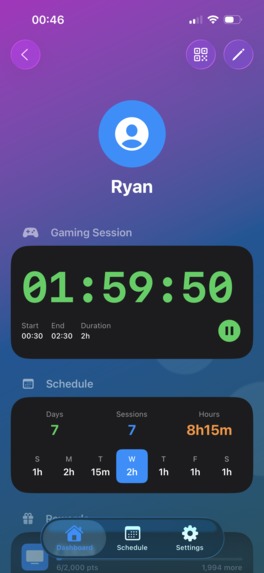
Player Profile
-
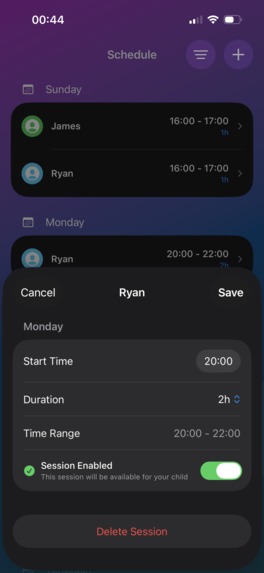
Gaming Schedule
-
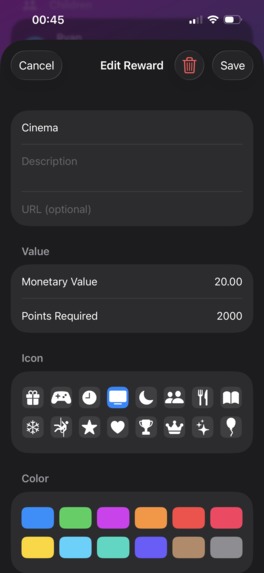
Create Reward


Inspiration
Player Two started from a personal struggle. My son is diagnosed with ADHD, and video games hold his attention more than anything else in the real world. It’s almost addictive — everything outside of gaming feels boring in comparison. Screen time became a constant battle at home, draining both his mental health and our family’s wellbeing. I wanted to build something that turns this challenge into a positive system that supports both kids and parents.
What it does
Player Two helps parents guide healthy gaming habits without endless arguments. Parents set gaming schedules, and kids earn points for finishing sessions on time. Those points can be exchanged for real-world rewards like a visit to the Cinema or to the shop to buy a new Toy. The app isn’t about punishment — it’s about balance, structure, and turning game time into an opportunity to learn responsibility and self-regulation.
How we built it
We designed Player Two with two goals in mind: simplicity for parents and motivation for kids. The app combines scheduling, rewards, and tracking in a way that feels like a game itself. The first version focuses on managing time and rewards, but we’re already laying the groundwork for wellness-focused features that support children’s mental health.
Challenges we ran into
- Creating an app that feels empowering for kids rather than restrictive.
- Designing for children with ADHD, who often resist transitions and limits.
- Ensuring that schedules are reliable and easy to manage without loopholes.
- Balancing the fun of gaming with the responsibility of learning healthy habits.
Accomplishments that we're proud of
- Turning our family’s toughest struggle into a tool that can help others.
- Building a system that reduces screen-time battles and promotes positive habits.
- Early prototypes showing my kids engaging with the reward system voluntarily.
What we learned
- Restriction alone doesn’t work — kids need positive reinforcement and structure.
- Parents value not just screen-time management, but also peace of mind.
- Tech can be a bridge to mental health support if used intentionally.
- Gaming isn’t the problem — it’s how we manage it that matters.
What's next for Player Two
The vision for Player Two goes far beyond just managing game time. We’re building features to support both parent wellbeing and children’s mental health:
- Chores integration – kids can earn bonus time through responsibility.
- Friends & leaderboards – align gaming schedules socially and add healthy competition.
- Bonus time rewards – encourage balance with family activities and learning.
- Mental health tasks – after each gaming session, kids will be prompted with simple activities like breathing exercises, journaling, and emotion check-ins.
Player Two isn’t just about controlling screen time — it’s about giving kids tools for life, helping parents reclaim peace at home, and supporting mental health in a digital-first world.

Log in or sign up for Devpost to join the conversation.