-
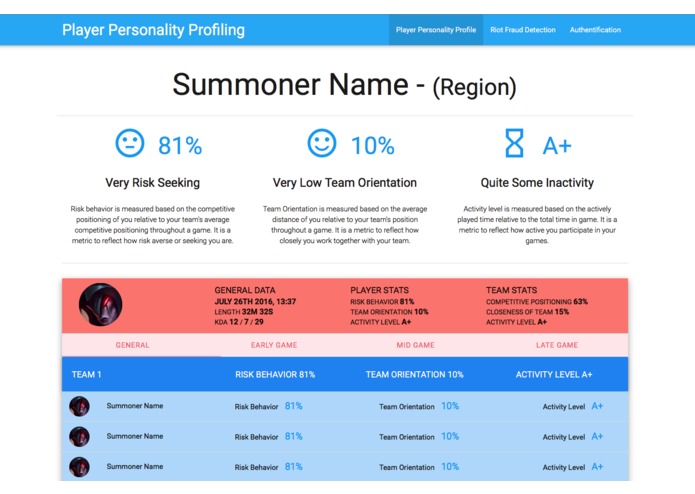
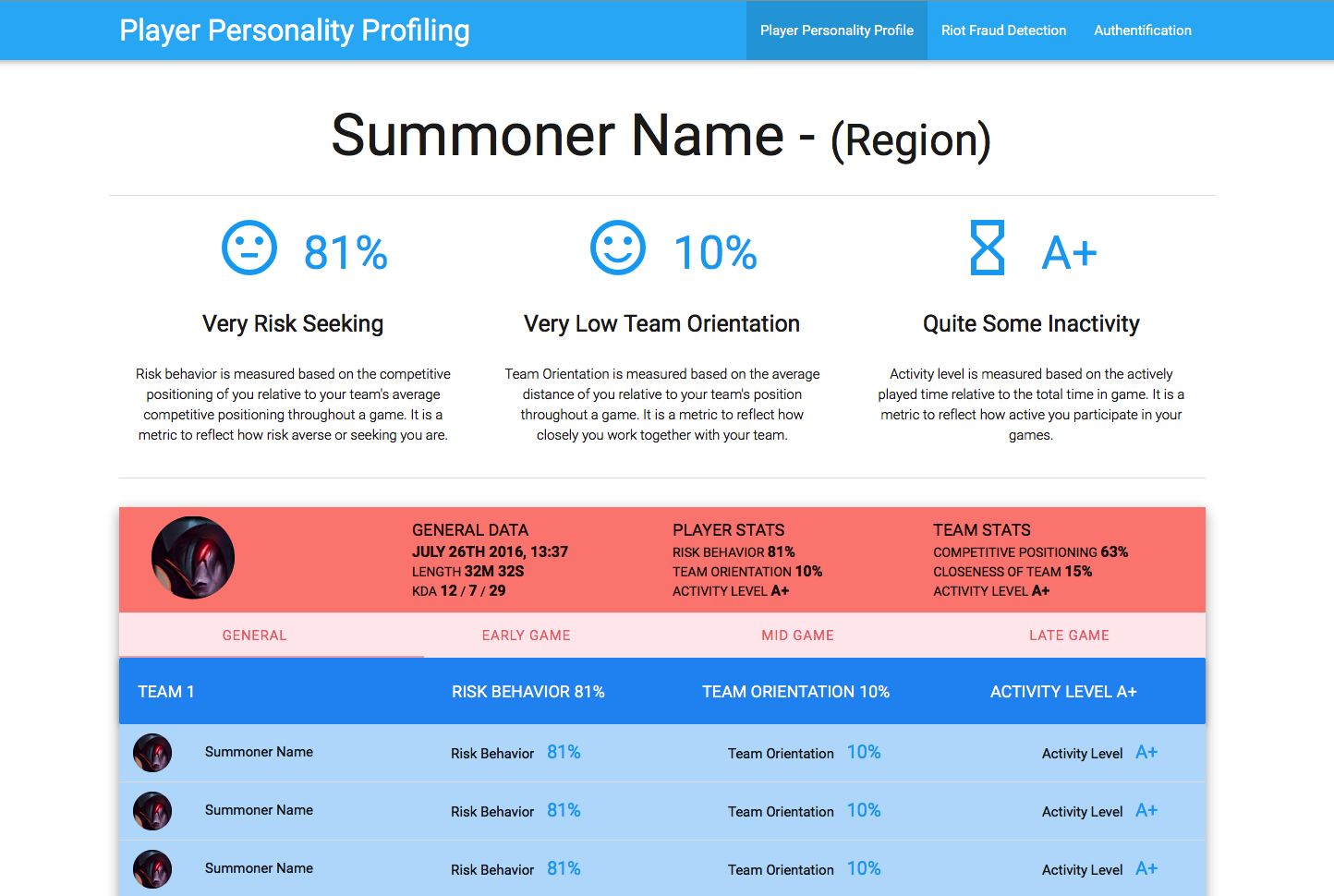
This is a sample image of the front end without actual data in it. This is how it would look like though.
Inspiration: Player coaching, Fraud detection maybe research later on
What it does:
We are using the Riot Games API to characterise different player behavior in their online video game League of Legends. This is the largest online game in the world with approx. 35mio. monthly players. Some players might play more risky and others will try to avoid risk and play more safely. This could then be compared to the team average and more data. By doing that you could:
- coach players to e.g. play more team oriented because the data suggests that you have a higher win percentage
- use the sudden change in player behavior to detect fraud e.g account selling or account sharing
- League of Legends is a very controlled environment so it could be possible to conduct research by using data gathered through the API -> e.g. being risky in game could correlate to being risky when it comes to financial investments
Challenges we ran into:
a normal API key from RiotGames only gave us 10 calls/per 10 seconds which is really really low after some writing back and forth between us and Riot Games we were able to get a Production API key without having an actual application which allowed us to do 500 calls per 10 seconds with a maximum of 30 000 per 10 minutes -> this allowed us to get a lot more match data
Accomplishments that we are proud of:
None of us had worked with the Riot Games API before but after a couple of hours of working through the documentation and experimenting with code we got more and more accustomed to it.
What we learned:
We had different levels of coding knowledge in our group but we were still able to work together and learn from each other. We learned that If you have a lot of experience with developing you see things in a very different way than someone who is fairly new to the field.
What is next for us:
From the beginning we tried to provide a business application context. We spent a lot of time on the concept and design because we are planning to pursue this idea further. This is why we have a "decent" looking frontend but ended up not having enough time to implement the bridge between frontend and backend. We also have ideas for the usage of several more data points that we can get from the API but that we haven't had the time to implement yet.


Log in or sign up for Devpost to join the conversation.