-
-
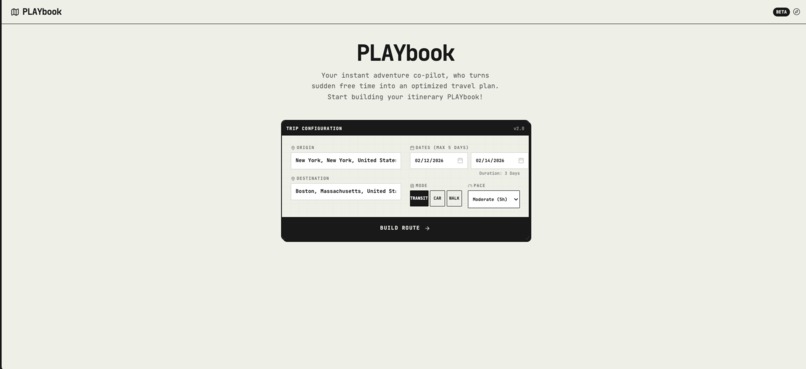
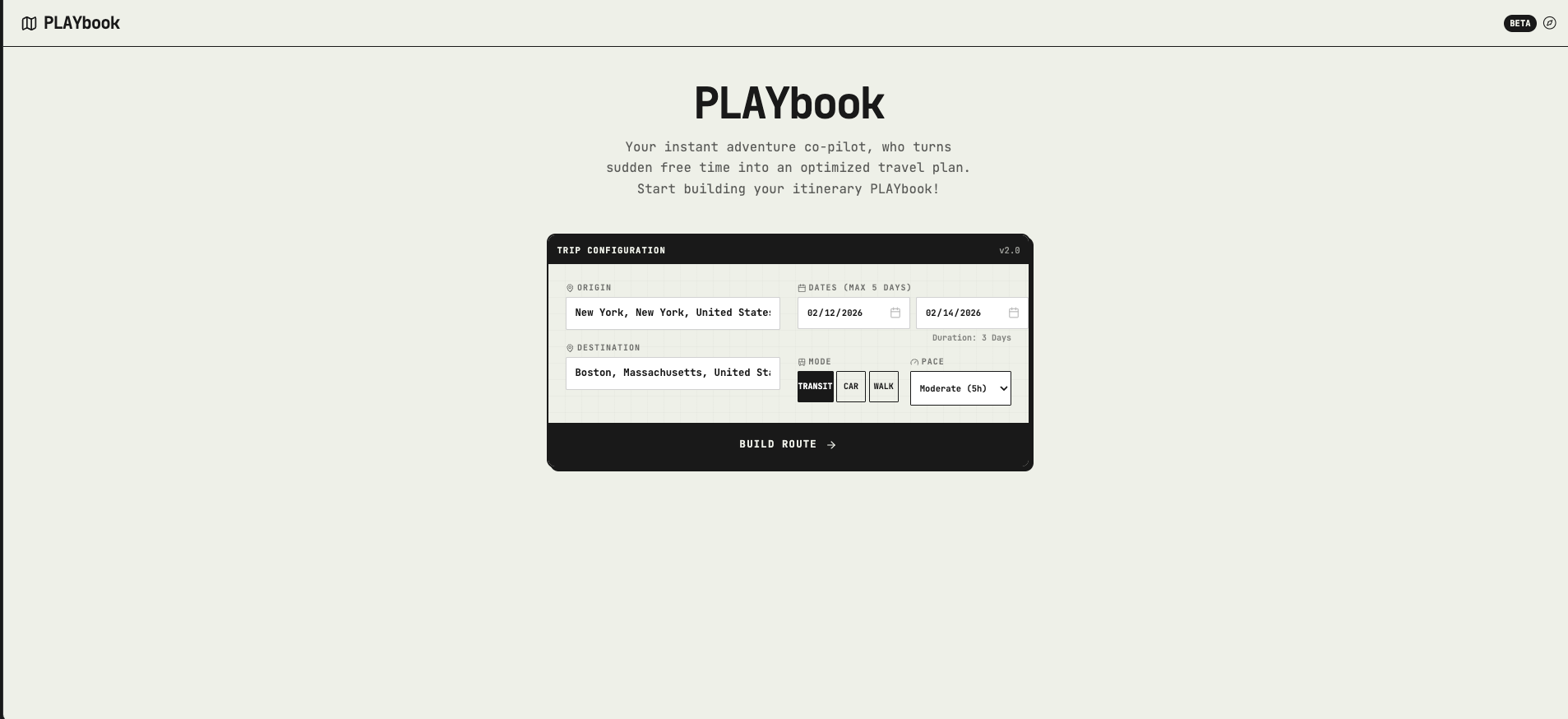
Landing Page
-
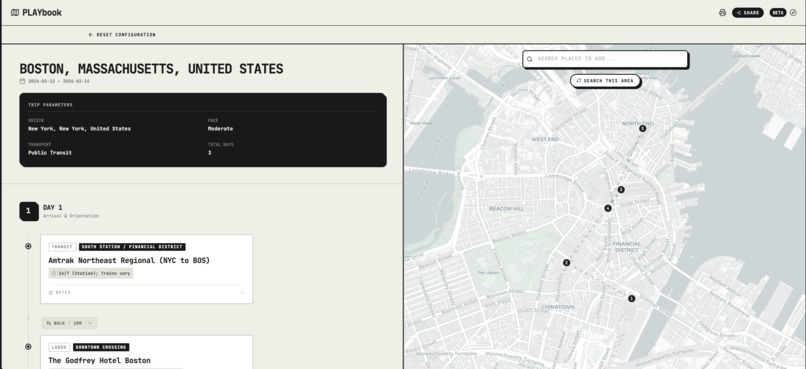
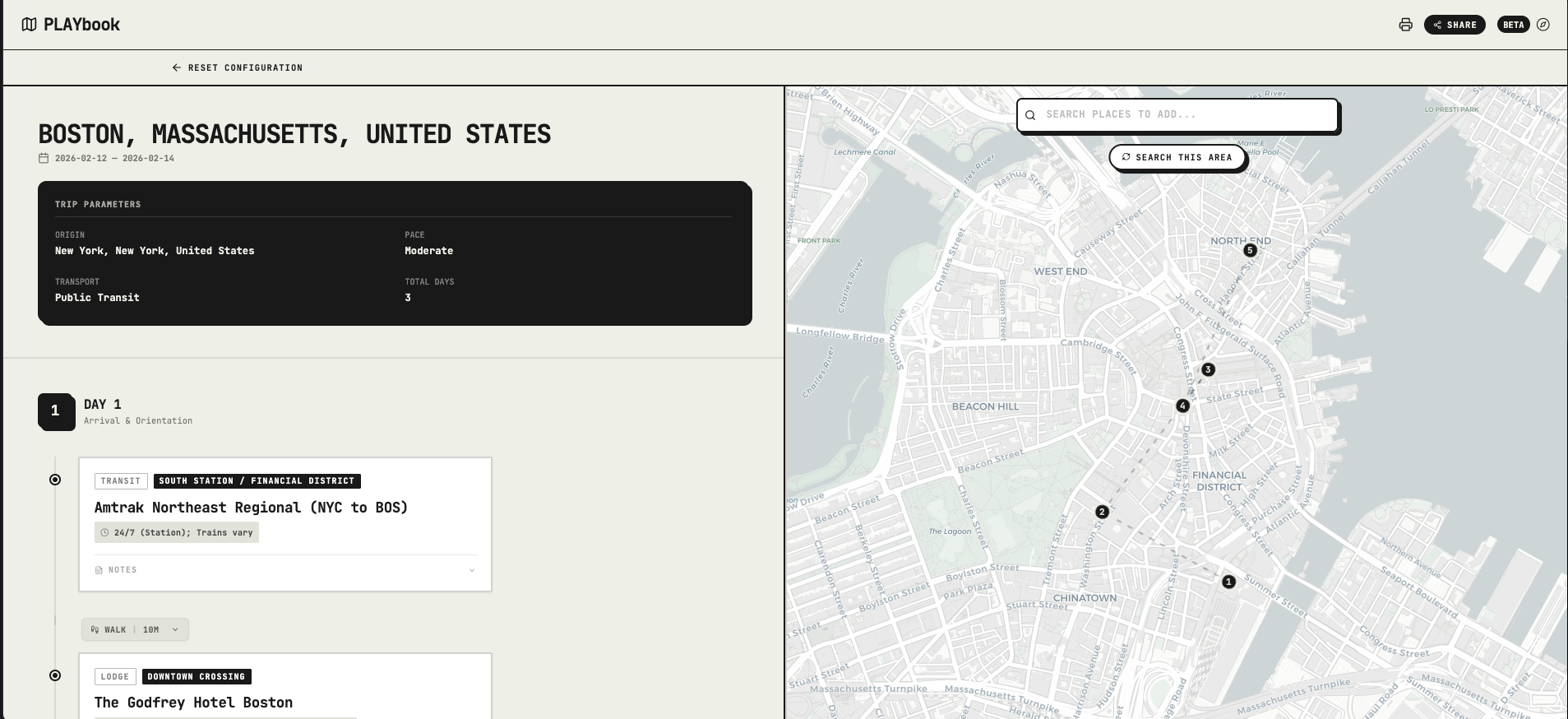
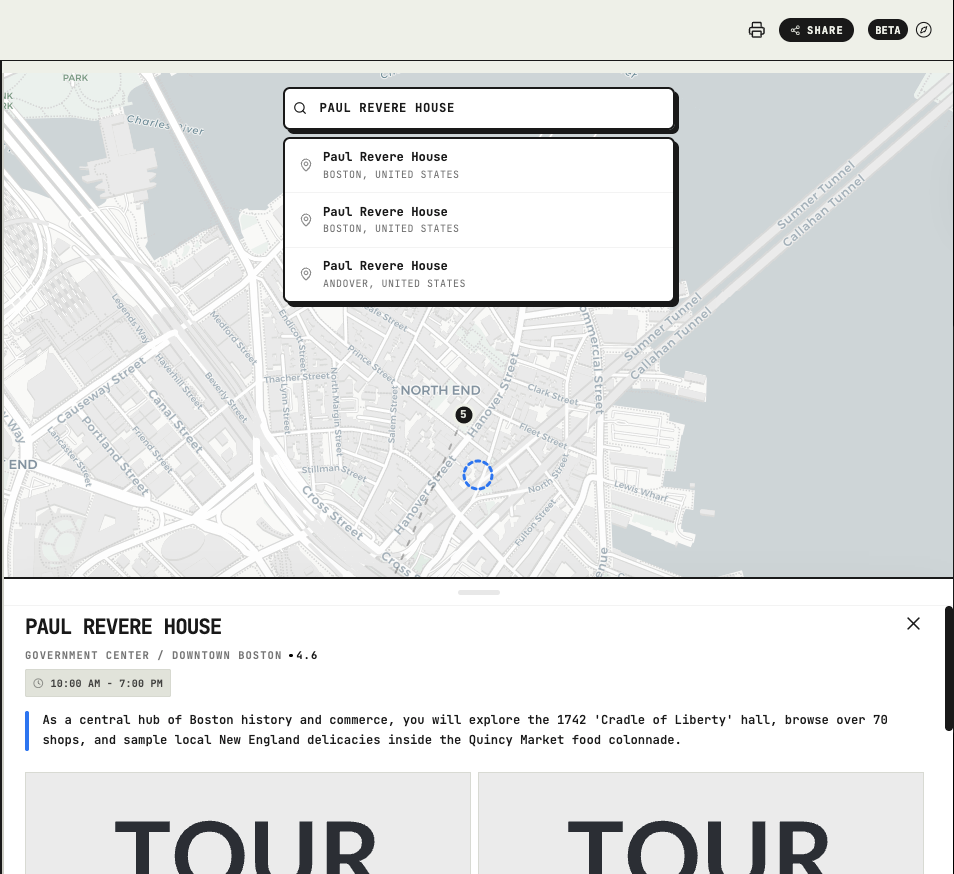
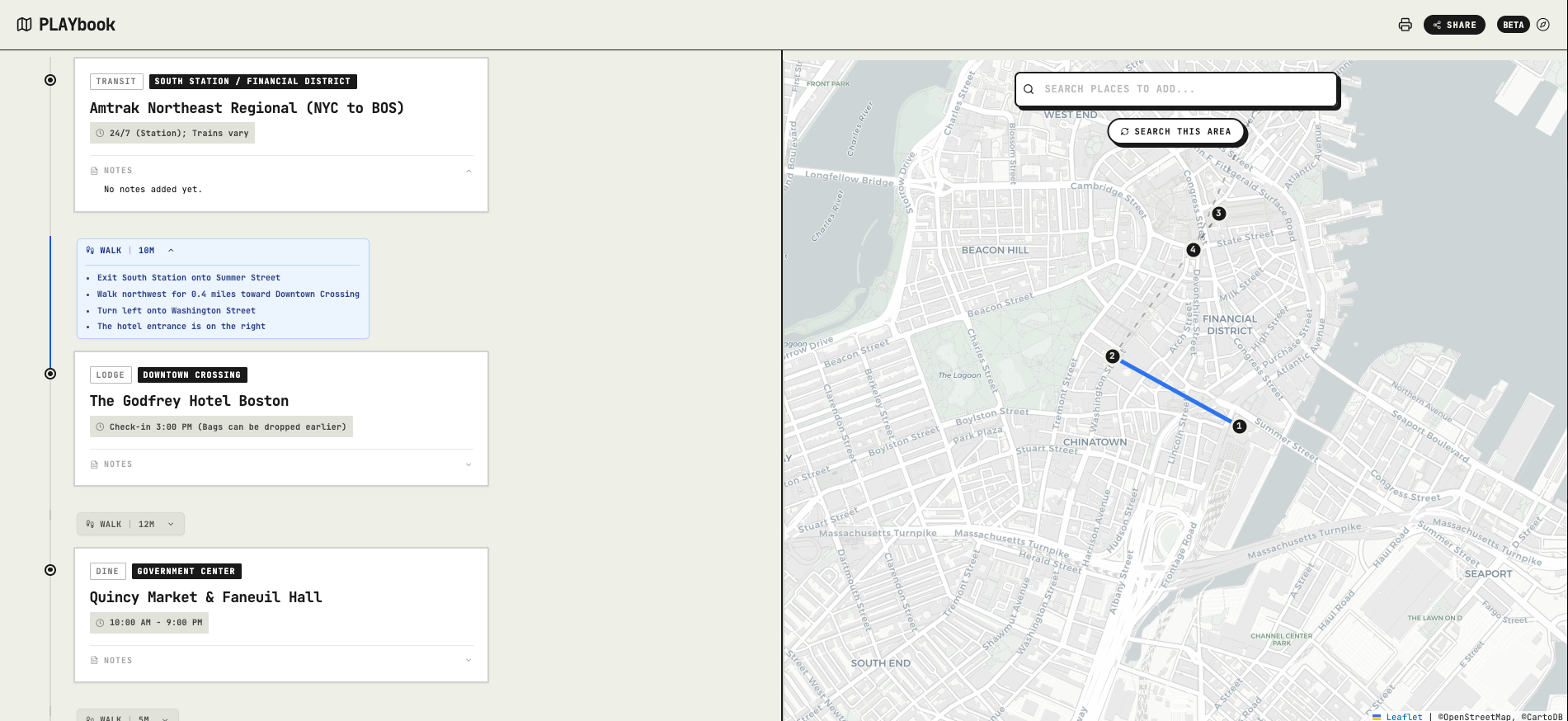
Itinerary plan with map view.
-
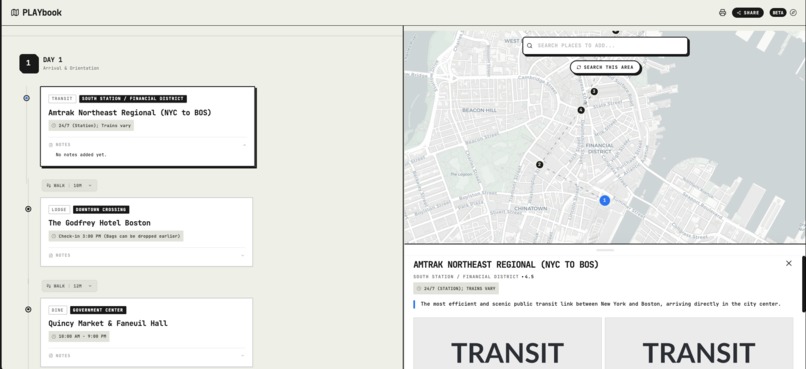
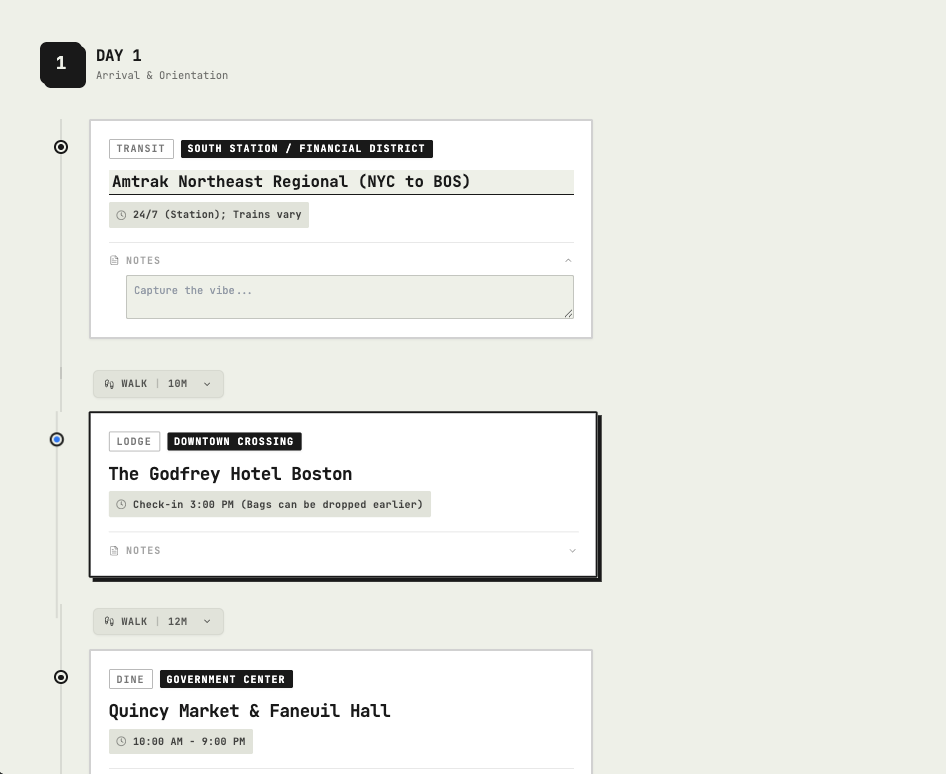
Itinerary details
-
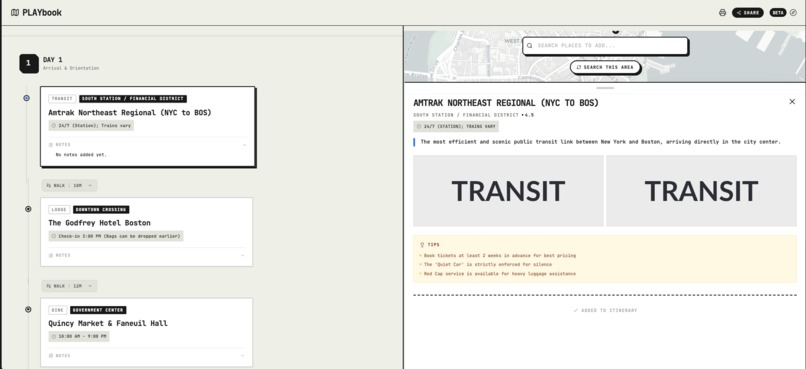
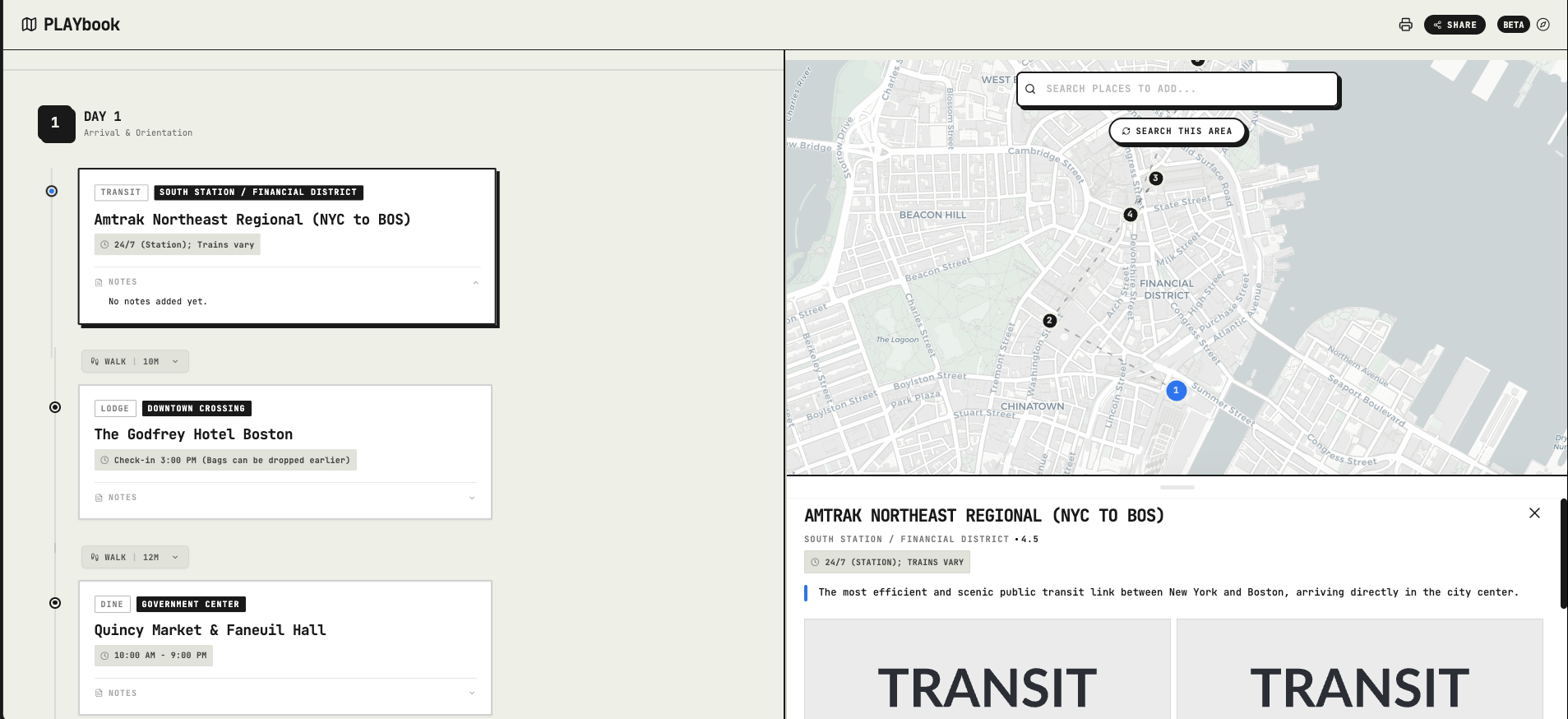
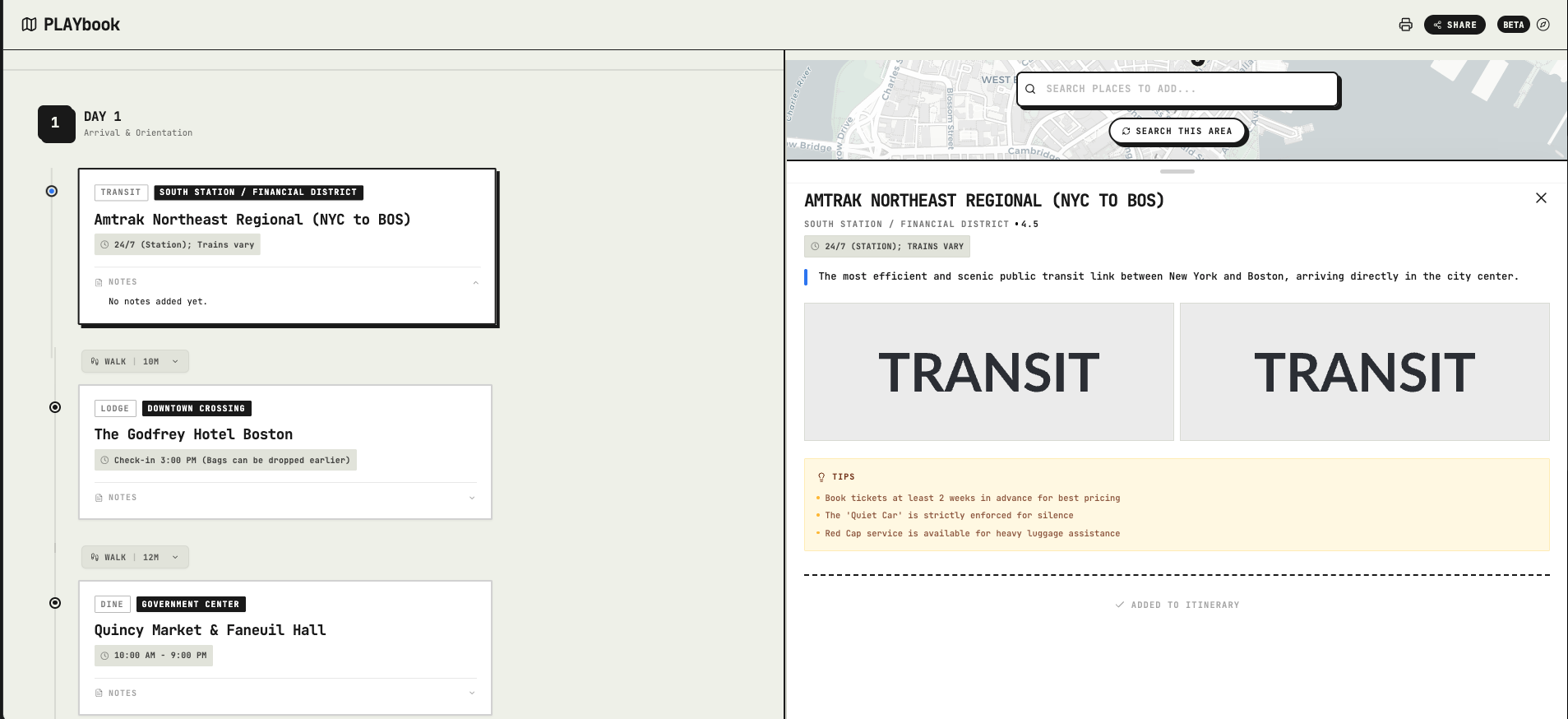
Itinerary details (expanded)
-
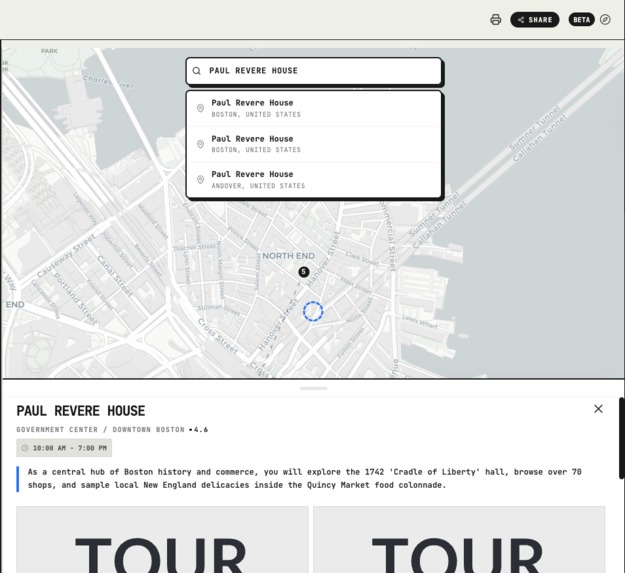
Add a new itinerary via search
-
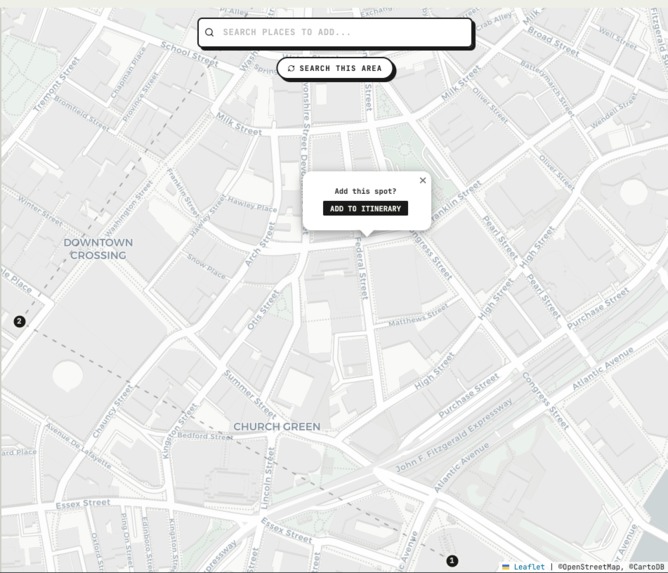
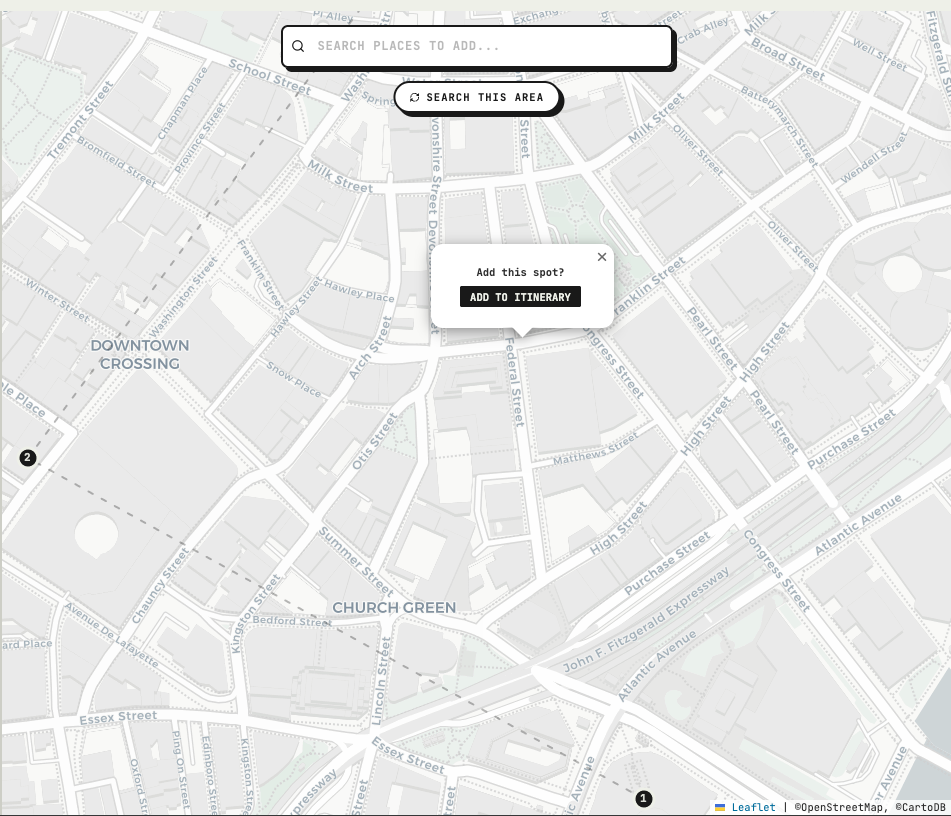
Add a new itinerary via map clicking
-
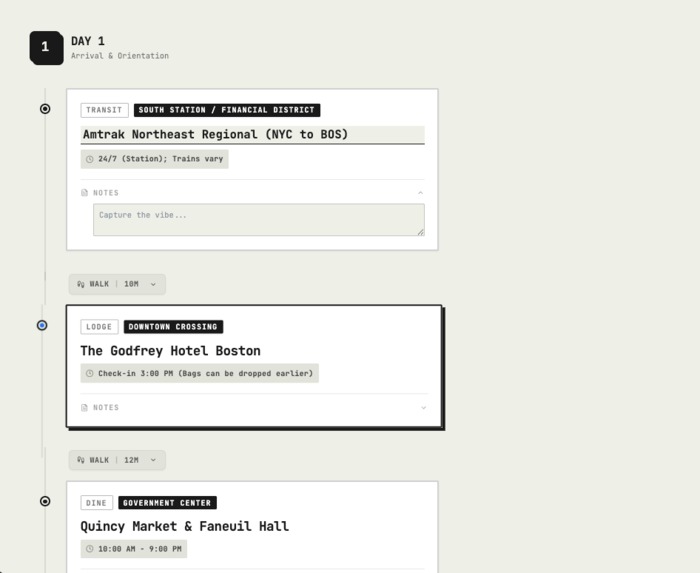
Edit itinerary-- change title, add notes
-
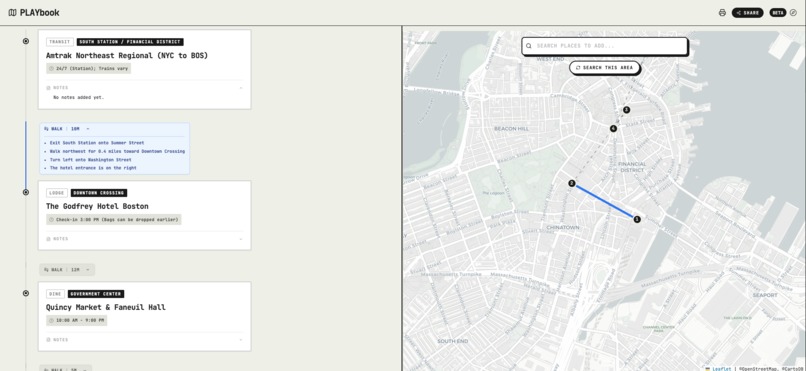
Transit details in itinerary list
Inspiration
We’ve all faced unexpected free time—a cancelled meeting or a sudden weekend off. Current travel tools cater to meticulous planners, leaving spontaneous travelers paralyzed by choice. We wanted to build an "Instant Adventure Co-pilot" that bridges the gap between sudden freedom and instant exploration, turning a messy bucket list into a winning strategy in seconds.
What it does
PLAYbook is an intelligent logistics engine for the spontaneous traveler.
- Input: Users define their location, available time, and preferred pace (e.g., "Relaxed 3hr" vs. "Power 8hr").
- Process: Acting as a real-time navigator, the AI analyzes interests and logically reorders them based on geography to maximize efficiency.
- Output: It generates a "Schematic" timeline—a streamlined itinerary guiding you from Point A to Point B with precise transit instructions, letting you skip the planning and start playing.
How we built it
We adopted a "High Utility, Low Noise" design philosophy:
- The Brain: We leveraged Google's Gemini 3 Pro not just for text, but for spatial reasoning. We engineered complex system prompts to force the model to act as a logistics officer, outputting strict JSON data.
- The Interface: Built with Next.js and Tailwind CSS, we designed a monochromatic "technical manifest" UI to mimic a flight plan rather than a cluttered travel blog.
- The Logic: We implemented a custom algorithm (
optimizeRouteSequence) to ensure new stops are automatically slotted into the most efficient geographical position.
Challenges we ran into
- Transit Accuracy: LLMs can struggle with precise travel times. We had to implement a "Reality Check" layer to cross-reference AI logic with distance heuristics to ensure instructions were physically possible.
- Visual Clarity: Designing the "Vertical Timeline" was difficult. We iterated multiple times to transform a complex list of data into a clean, scannable schematic.
Accomplishments that we're proud of
- The "Unfold" Mechanic: Reducing user anxiety by showing only Day 1 initially, allowing the itinerary to "unroll" on demand.
- Speed: Optimizing our prompt structure to reduce itinerary generation time from 30 seconds to under 8 seconds.
- Aesthetic: Successfully breaking the "travel app" mold with a clean, developer-centric design that respects the user's intelligence.
What we learned
- Prompt Engineering is Backend Engineering: We learned that a robust System Prompt is just as critical as database schema design.
- Less is More: By stripping away the noise of photos and ratings, we increased the app's utility. Users in motion need direction, not more inspiration.
What's next for PLAYbook: Your Instant Adventure Co-pilot
- Real-time Integration: Connecting live transit APIs for pinpoint bus/train accuracy.
- Squad Mode: Enabling multiplayer editing for group trips.
- Offline PWA: Making the itinerary available without signal, so you can get lost in the city without getting lost in the app.
Built With
- nextjs
- react
- tailwindcss
- typescript
- vercel

Log in or sign up for Devpost to join the conversation.